2027 AI Bachelor's Completion Programs for Working Adults

Co-Founder and Chief Data Scientist
For many working adults, the main question is not whether artificial intelligence is worth studying; it is whether they can finish a bachelor's degree in AI without starting over, quitting work, or spending years in a rigid campus program. AI bachelor's completion programs are designed for learners who already have college credits, professional experience, or an associate degree and want a more direct route into AI-related roles.
These programs can be especially useful for adults moving from IT, business analytics, engineering support, software development, operations, or another technical-adjacent field into machine learning, data science, automation, or AI product work. The best options combine transfer-friendly policies, online or hybrid delivery, applied AI coursework, and clear academic advising so students know how long the degree will take and what it will cost before they enroll.
This guide explains how 2027 AI bachelor's completion programs work, how they compare with traditional four-year degrees, what admissions committees usually expect, which formats are available, what students study, and how to evaluate career value, salary potential, certifications, and program quality before committing.
Key Things You Should Know
- AI bachelor's completion programs for working adults emphasize flexible, online formats, enabling 65% of students to balance education and employment successfully as of 2025.
- These programs prioritize practical skills in machine learning, data analysis, and ethics, aligning curricula with the 20% annual job growth in AI-related fields through 2030.
- Tuition costs vary widely, but financial aid and employer tuition reimbursement are increasingly available, helping reduce average student debt by up to 15% for graduates.
What are AI bachelor's completion programs and how do they differ from traditional four-year degrees?
AI bachelor's completion programs are undergraduate degree pathways for students who have already earned college credits but have not completed a bachelor's degree. Instead of asking adults to restart a full four-year plan, these programs apply eligible transfer credits toward general education, electives, and lower-division requirements so students can focus on upper-level coursework in artificial intelligence, computer science, data systems, and applied analytics.
The biggest difference is structure. A traditional bachelor's degree is usually built for first-time college students and commonly requires about 120 credit hours over four years. A completion program is built around what the student has already earned. An adult with an associate degree, prior STEM coursework, or substantial transferable credit may be able to move more quickly into AI-focused classes such as machine learning, data processing, algorithms, statistics, and ethical AI.
Completion programs also tend to offer more flexible pacing. Many are online or hybrid, and some allow part-time enrollment so students can keep working. By contrast, traditional programs often assume a more predictable campus schedule, especially for lab-based courses, advising, and cohort progression.
- Best fit for completion programs: adults with prior college credits, working professionals, career changers, and students who need online or part-time study.
- Best fit for traditional four-year degrees: students starting college for the first time, learners who want a full residential experience, or students who need a broader on-campus foundation before specializing.
- Main risk in completion programs: assuming all prior credits will transfer. Credit acceptance varies by school, course age, grade, accreditation, and whether the credits match degree requirements.
Program length depends heavily on transfer credit and course load. Part-time students typically spend 4.5 to 6 years earning a bachelor's degree, but an IT professional with prior credits might finish an AI bachelor's completion program in 2 to 3 years. Before applying, students should request a preliminary transfer evaluation and compare the remaining credit requirements, not just the advertised completion timeline.
Students comparing degrees in AI should also look beyond the degree title. A strong completion program should have recognized accreditation, current AI coursework, project-based assignments, career support, and enough technical depth to prepare graduates for entry-level AI, data, and software roles.
Which accredited universities offer bachelor's completion programs in artificial intelligence for working adults?
Accredited universities increasingly offer AI-related bachelor's completion pathways through online computer science, data science, information technology, or applied computing programs. Some schools use “artificial intelligence” in the degree name, while others offer AI coursework through concentrations, electives, certificates, or specialization tracks inside a broader computing degree.
Examples include the University of Illinois Urbana-Champaign, which offers an online Bachelor of Computer Science with AI specialization options; Oregon State University, whose fully online Bachelor of Science in Computer Science includes coursework focused on machine learning and AI fundamentals for degree completers; and Arizona State University, which allows students to pursue AI-related electives such as data mining and neural networks within its online program.
For working adults, the most important question is not only which university offers AI coursework, but whether the program is truly completion-friendly. Many bachelor's completion degrees in artificial intelligence for adult learners at accredited institutions typically accept 60-90 transfer credits, allowing completion within 2-3 years. However, the actual timeline depends on how those credits apply to the major, not just how many credits the school accepts overall.
- Check institutional accreditation first. Accreditation affects transfer credit, financial aid eligibility, employer recognition, and graduate school options.
- Confirm where AI appears in the curriculum. AI may be a major, concentration, specialization, minor, or elective sequence. These are not the same.
- Ask for a transfer credit estimate before enrolling. A school may accept credits as electives but still require many major prerequisites.
- Review delivery format carefully. Asynchronous courses are usually easier for working adults, while synchronous evening sessions may offer more direct interaction.
- Look for applied assignments. Courses in AI algorithms, ethics, natural language processing, robotics, data mining, and machine learning are stronger when paired with coding projects or portfolio work.
Enrollment in online bachelor's programs continues to grow, and STEM disciplines, including AI-related fields, make up a substantial share of completions. Students comparing cost and quality may also find the data science major ranking useful when evaluating institutions with adjacent AI, analytics, and computing pathways.
What are the admission requirements and prerequisites for AI bachelor's completion programs?
Most AI bachelor's completion programs expect applicants to bring prior college experience, usually an associate degree or at least 60 transferable college credits. Because AI coursework builds on computing and mathematics, schools commonly look for earlier study in programming, statistics, calculus, linear algebra, discrete mathematics, and introductory computer science.
Not every adult applicant will have that background. According to the American Association of Colleges and Universities (AACU) 2024 survey, approximately 68% of working adults returning to complete bachelor's degrees lack these traditional prerequisites. As a result, many programs use bridge courses, prerequisite modules, placement exams, or preparatory boot camps to help students qualify for upper-division AI coursework.
Typical admission materials may include official transcripts, a minimum transfer GPA between 2.5 and 3.0, recommendation letters, and a personal statement explaining the applicant's interest in AI. International applicants are often required to show English proficiency through tests such as TOEFL or IELTS.
Common prerequisite areas include:
- Programming: Python or Java is commonly expected because AI coursework usually requires coding from the start.
- Mathematics: statistics, calculus, linear algebra, and discrete mathematics support machine learning, optimization, and model evaluation.
- Computer science fundamentals: data structures, algorithms, databases, and basic software development help students handle upper-level technical projects.
- Analytical experience: work in IT, analytics, engineering support, business intelligence, or related fields may strengthen an application, even when it does not replace formal prerequisites.
Some admissions committees will consider professional experience, certifications, military training, or prior learning assessments. These options can help adult learners avoid repeating material they already know, but policies vary widely. Students should ask whether prior learning credit applies to the major, to electives only, or to general education requirements.
The safest approach is to request a course-by-course transcript review before committing. Applicants should identify missing prerequisites, estimate the added time and cost of bridge courses, and compare total expenses with resources such as information on online engineering degree cost when planning an affordable technical degree pathway.
How long do AI bachelor's completion programs take to finish, and what is the typical cost?
AI bachelor's completion programs for working adults generally take between 18 and 36 months to finish. Students with extensive transferable credits, completed prerequisites, and a heavier course load may finish faster. Students who attend part time, need bridge courses, or take breaks for work and family responsibilities may need closer to three years.
Some accelerated tracks allow completion in as little as 12 to 18 months for students with numerous transferable credits. These timelines can be realistic only when credits apply cleanly to the degree plan and required courses are available when the student needs them. A program that accepts many credits but offers key AI courses only once per year may still take longer than expected.
The average cost of AI bachelor's completion programs for working adults ranges from $30,000 to $40,000 in tuition, reflecting a 22% rise since 2022, according to the College Board's 2024 Trends in College Pricing report. This range usually refers to tuition only. Students should also budget for books, software, hardware, technology fees, proctoring fees, graduation fees, and any required campus visits for hybrid or residency components.
Before enrolling, students should calculate the cost of the degree they personally have left to complete, not only the advertised program price. Key questions include:
- How many credits will transfer into the degree? More accepted credits can reduce both time and tuition, but only if they meet requirements.
- Is tuition charged per credit, per term, or by residency status? Pricing models can affect part-time students differently.
- Are prerequisites included in the estimate? Bridge courses may add cost and delay graduation.
- Does the employer offer tuition assistance? Working adults should confirm annual limits, grade requirements, reimbursement timing, and service commitments.
- Will federal aid apply? Eligibility depends on enrollment status, school participation, and the student's financial aid profile.
Students should compare at least a few completion plans side by side: remaining credits, expected months to graduation, tuition, fees, aid eligibility, and course availability. For broader affordability research in adjacent analytics fields, students can review resources on masters in data science online.
Are AI bachelor's completion programs available online, on campus, or in hybrid formats?
AI bachelor's completion programs in 2027 are available in fully online, campus-based, and hybrid formats. The right choice depends on work schedule, location, learning style, access to labs, and how much in-person interaction the student needs to stay engaged.
Fully online programs usually work best for adults who cannot relocate, commute, or attend classes at fixed daytime hours. Asynchronous online courses are especially useful for students with rotating shifts, caregiving responsibilities, or travel-heavy jobs. The trade-off is that students must be comfortable managing deadlines, troubleshooting technology, and seeking help proactively.
Campus-based programs provide direct access to faculty, labs, student organizations, recruiting events, and peer networks. They can be valuable for students who learn better in person or want more immediate support. The drawback is reduced flexibility, especially for adults who work full time or live far from the institution.
Hybrid programs combine online coursework with scheduled on-campus sessions, labs, workshops, or weekend intensives. According to a study by the Educause Center for Analysis and Research (ECAR) 2024, hybrid learning formats show 34% higher retention rates among working adults compared to fully online options. For some students, that structure improves accountability and creates stronger connections with instructors and classmates.
- Choose fully online if flexibility, location independence, and schedule control are the top priorities.
- Choose campus-based if in-person labs, networking, and direct faculty access are essential.
- Choose hybrid if you want online convenience but still need periodic hands-on learning and face-to-face support.
A practical example is a working professional who completes theory-heavy courses online but attends weekend labs or workshops for applied machine learning, robotics, or AI systems projects. Before choosing a format, students should ask whether exams are proctored, whether live attendance is required, how group projects are handled, and whether any campus visits create added travel costs.
What core coursework and technical skills are covered in AI bachelor's completion curricula?
AI bachelor's completion curricula typically combine computer science foundations, mathematics, data analysis, machine learning, and applied AI development. The goal is to help students understand how AI systems are built, trained, evaluated, deployed, and monitored in real-world settings.
Core coursework often includes programming, data structures, algorithms, statistics, linear algebra, databases, machine learning, and AI ethics. Many programs use Python and R because they are widely used in analytics and machine learning. More technical programs may also require Java, cloud computing, software engineering, or systems design.
Specialized courses may cover neural networks, natural language processing, computer vision, robotics, data mining, AI algorithms, and model evaluation. These subjects help students move beyond basic tool use and understand how models perform, fail, and affect users.
Recent curricula also respond to a significant 47% skills gap reported by employers in the 2024 World Economic Forum Future of Jobs Report by incorporating prompt engineering and generative AI development. In stronger programs, students do more than write prompts; they learn how to evaluate outputs, manage risk, use generative AI tools responsibly, fine-tune large language models where appropriate, and apply automation to business or technical problems.
Applied experience is essential. Students should look for coursework that includes:
- Hands-on labs using AI frameworks such as TensorFlow and PyTorch.
- Cloud-based AI platforms for model deployment, scaling, and workflow management.
- Portfolio projects that show employers practical ability, not just completed coursework.
- Capstone projects tied to real datasets, business cases, or industry partnerships.
- Responsible AI training covering bias mitigation, interpretability, privacy, governance, and ethical deployment.
For working adults, a modular curriculum can make the degree more manageable. However, students should avoid programs that rely only on survey courses or tool demonstrations. A competitive AI curriculum should build durable skills in coding, mathematics, data reasoning, model development, and communication so graduates can adapt as AI tools change.
What career roles and job titles can graduates pursue after completing an AI bachelor's degree?
Graduates with a bachelor's degree in artificial intelligence can pursue technical and technical-adjacent roles in technology, healthcare, finance, manufacturing, logistics, retail, government, and consulting. The strongest opportunities usually go to candidates who combine degree coursework with a project portfolio, programming ability, data experience, and familiarity with AI frameworks or cloud tools.
Common job titles include AI engineer, machine learning engineer, data scientist, AI research analyst, AI software developer, natural language processing specialist, computer vision engineer, robotics engineer, AI consultant, and AI product manager. These roles vary in technical depth. Some focus heavily on model development and coding, while others focus on applying AI tools, analyzing data, coordinating products, or advising organizations on AI adoption.
- AI engineer: builds and deploys AI-enabled applications, often working with software teams and data pipelines.
- Machine learning engineer: develops, tests, and improves machine learning models for production use.
- Data scientist: analyzes large datasets, builds predictive models, and communicates findings to decision-makers.
- NLP specialist: works on systems that process human language, including chatbots, search, summarization, and voice tools.
- Computer vision engineer: develops systems that interpret images or video, including applications in manufacturing, healthcare, and autonomous technologies.
- Robotics engineer: applies AI to automated physical systems and intelligent machines.
- AI product manager or consultant: helps organizations select, design, implement, and govern AI solutions.
- AI ethics analyst or AI policy advisor: focuses on risk, fairness, accountability, governance, and the societal effects of AI systems.
According to LinkedIn's 2024 Jobs on the Rise report, roles for AI and machine learning specialists grew 74% faster than the overall job market between 2022 and 2024, adding 128,000 new positions in the U.S. This demand is encouraging, but graduates should still expect competition for the most technical roles. Employers often want evidence that candidates can code, clean data, build models, explain results, and work in production environments.
To improve employability, students should develop proficiency in Python, R, and Java; practice data analysis; learn cloud computing; and gain hands-on experience with TensorFlow, PyTorch, and related AI tools. Certifications, internships, work-based projects, open-source contributions, or capstone portfolios can help a bachelor's graduate stand out, especially when transitioning from another career field.
What is the job outlook and salary potential for AI degree holders in the current job market?
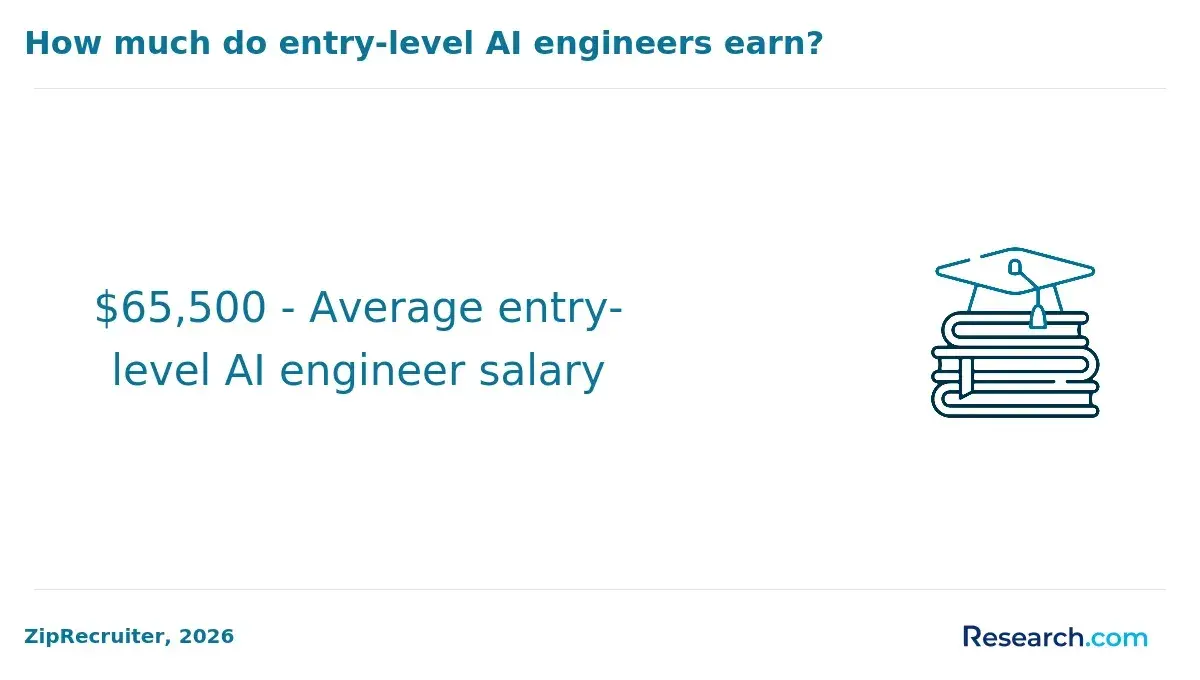
The job outlook for AI degree holders is strong because organizations across technology, finance, healthcare, manufacturing, retail, and government are investing in automation, predictive analytics, machine learning, and generative AI. A bachelor's degree in AI can help graduates qualify for entry-level or early-career roles in AI development, data science, software engineering, analytics, and applied machine learning.
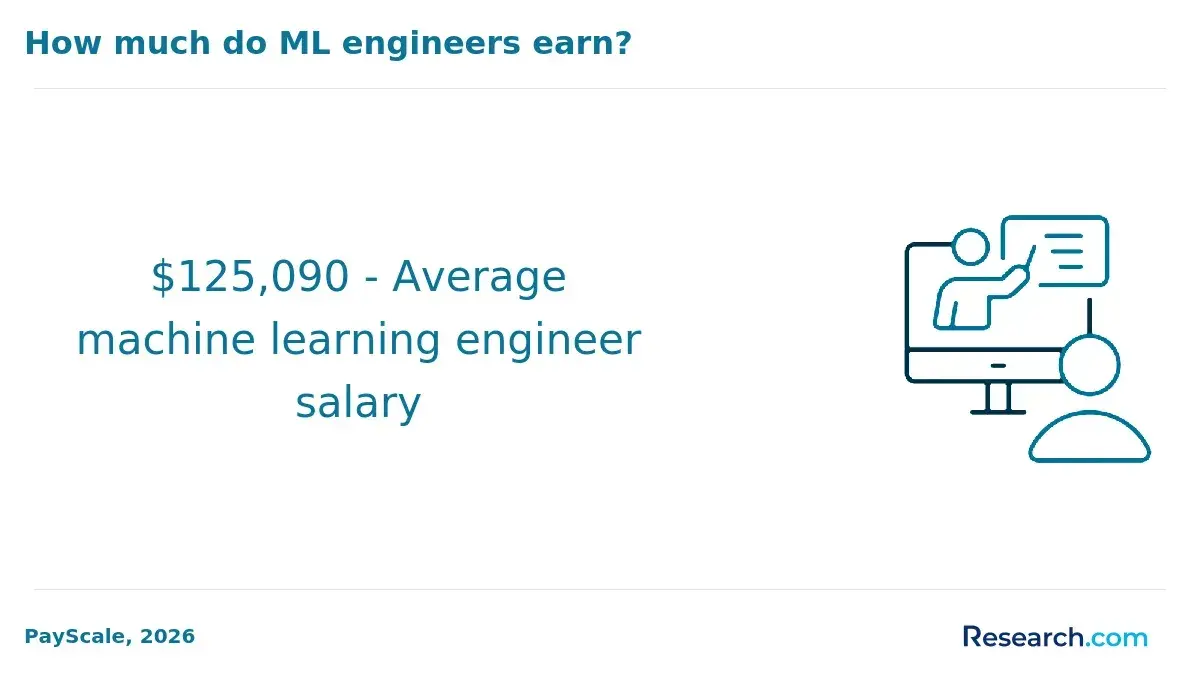
According to Glassdoor's 2024 Occupational Salary Report, professionals with bachelor's degrees in AI earn an average annual salary of $126,000, representing a 31% premium over the $96,000 median for all bachelor's degree holders. This salary premium reflects employer demand for technical AI skills, but individual earnings vary by role, experience, region, industry, portfolio strength, and the complexity of the work.
The U.S. Bureau of Labor Statistics projects a 22% growth in computer and information research specialist roles from 2020 to 2030, propelled by advancements in AI and automation. Related roles such as machine learning engineer, data scientist, AI software developer, and AI research analyst may also benefit from continued investment in intelligent systems and data-driven decision-making.
Location can affect compensation. Major tech hubs such as Silicon Valley and New York often offer salaries above $140,000, while emerging markets start around $100,000. Students should interpret these figures carefully: higher salaries in major hubs may come with higher living costs and stronger competition, while remote and regional roles may offer different trade-offs.
Working adults can improve their return on investment by choosing programs with practical AI projects, employer-recognized tools, career services, and opportunities to build a portfolio. Skills in cloud computing, big data analytics, advanced programming, TensorFlow, PyTorch, and model deployment can increase competitiveness. Certifications and internships may also help, but they should complement—not replace—strong technical fundamentals.
Overall, the salary and job data indicate that an AI bachelor's degree can lead to rewarding and in-demand career paths. The best outcomes are most likely for graduates who pair the degree with applied experience, current tools, and a clear target role.
What professional certifications or industry credentials complement an AI bachelor's degree?
Professional certifications can strengthen an AI bachelor's degree by proving that a graduate can apply AI and machine learning skills in specific platforms, tools, or business environments. They are especially useful for working adults who need to signal current technical ability while changing careers or moving into a more specialized role.
Cloud-based AI credentials are among the most practical options because many organizations deploy AI systems through major cloud platforms. Certifications such as AWS Certified Machine Learning - Specialty and Google Cloud Professional Machine Learning Engineer demonstrate experience with building, training, deploying, and managing machine learning solutions in cloud environments.
Other relevant credentials include Microsoft Certified: Azure AI Engineer Associate and the IBM AI Engineering Professional Certificate. These programs can complement academic coursework by emphasizing applied AI services, scalable model development, and integration of AI into business workflows.
For students aiming at analytics-heavy roles, certifications such as the Certified Analytics Professional (CAP) and the Data Science Council of America's (DASCA) Senior Data Scientist credential may support skills in data interpretation, modeling, and analytics communication. These credentials can be useful when paired with a portfolio that shows real projects and measurable outcomes.
Salary data suggests certifications can add value. Findings from the 2024 Stack Overflow Developer Survey reveal that professionals holding both a bachelor's degree and recognized AI certifications earn approximately 18% higher salaries than those with only a degree. This does not mean every certification will produce a pay increase, but it does show that employers may reward verified, job-ready skills.
Working adults should choose certifications based on their target role, not on name recognition alone. A future machine learning engineer may prioritize cloud machine learning credentials, while an AI product manager may benefit more from analytics, governance, or platform-specific AI credentials. Students should also consider exam cost, preparation time, renewal requirements, and whether the credential aligns with tools used by employers in their preferred industry.
How should working adults evaluate and choose the right AI bachelor's completion program?
Working adults should evaluate AI bachelor's completion programs by asking one central question: will this program help me finish the degree efficiently, affordably, and credibly while building skills employers actually use? The answer depends on accreditation, transfer policy, curriculum depth, format, cost, support services, and career outcomes.
Accreditation should come first. Graduates from accredited programs benefit from a significantly higher job placement rate-89% within six months-compared to 72% for non-accredited programs, according to the National Association for College Admission Counseling (NACAC) 2024 outcomes report. Accreditation can also affect financial aid, employer tuition reimbursement, transferability, and eligibility for graduate study.
Curriculum quality is the next major factor. Strong programs cover machine learning, natural language processing, computer vision, programming, data structures, algorithms, statistics, ethics, and applied AI projects. Students should look for hands-on labs, capstones, industry partnerships, internships, or portfolio-based assignments that show practical ability.
Flexibility matters, but it should not come at the expense of support. Online and hybrid programs can make degree completion realistic for working adults, but students still need responsive advising, tutoring, technical support, career counseling, and clear communication about course sequencing. A flexible program that leaves students isolated can still lead to delays.
Before applying, compare programs using these criteria:
- Accreditation: Is the institution properly accredited, and will employers or graduate schools recognize the degree?
- Transfer credit: How many credits will apply to the degree, and which requirements remain?
- Prerequisites: Are bridge courses required in programming, math, or computer science?
- Curriculum: Does the program teach current AI technologies such as machine learning, natural language processing, and computer vision?
- Applied learning: Are there labs, projects, internships, or capstones that can become portfolio evidence?
- Format: Is the program online, hybrid, or campus-based, and does the schedule fit work and family responsibilities?
- Total cost: What are tuition, fees, materials, technology expenses, and any required travel?
- Financial support: Are federal aid, scholarships, payment plans, or employer tuition assistance available?
- Faculty and advising: Do instructors have relevant AI, data science, or computing expertise?
- Career outcomes: What roles do graduates obtain, and what career services are available after graduation?
Students should also speak with admissions counselors, academic advisors, current students, and alumni before enrolling. Ask for a written degree plan showing remaining courses, estimated graduation date, and total expected cost. The right AI bachelor's completion program should reduce uncertainty, not add to it, and should give working adults a realistic path from prior college credit to a recognized degree and stronger career options.
Other Things You Should Know About Artificial Intelligence
The application process typically includes submitting transcripts, a resume, and a personal statement. Deadlines vary by institution but often fall in early 2027. Some programs may also require proof of work experience and possibly a recommendation letter from an employer.
Yes, students without a computer science background can succeed in AI bachelor's completion programs, though they may need to complete prerequisite courses in programming and foundational computing concepts. Many programs offer introductory classes tailored for non-CS majors to build essential technical skills. Dedication to learning coding and algorithmic thinking is key for progressing in AI studies.
Prerequisites typically include an associate's degree or equivalent credits, a minimum GPA of 2.5, and relevant work experience. Some programs may require coursework in mathematics or programming languages. Verification of these requirements is crucial for successful application and admission.
Yes. Many 2027 AI bachelor's completion programs accept up to 60 semester credits from an accredited associate degree, and some also review military, certification, or prior learning credits. Schools usually require official transcripts and may cap transfer credit at 75% of the degree.
Working adults should evaluate program flexibility, especially the availability of online courses or evening classes. Consider accreditation, faculty expertise, and available support services. For those interested in financial careers, explore options leading to advanced studies, such as an AI and financial technology master’s.
References
- International Bachelor of Science in AI https://psl.eu/en/education/international-bachelor-science-ai
- Artificial Intelligence Concentration https://www.fullsail.edu/degrees/artificial-intelligence-bachelor-degree-program
- Artificial Intelligence (procedure for non-EU students) https://apply.unipv.eu/enter/295
- AI Certification Programs: Which Ones Matter for Your Career https://www.businessplusai.com/blog/ai-certification-programs-which-ones-matter-for-your-career
- Top Artificial Intelligence Courses: Fees and Duration https://collegevidya.com/blog/artificial-intelligence-course-fees-structure-duration/
- Artificial Intelligence BEng (Hons) at Ulster University 2026/27 entry - Full-time Undergraduate Study https://www.ulster.ac.uk/courses/202627/artificial-intelligence-41372
- The AI Jobs Boom: High-Paying Careers and Skills for 2026 https://www.bitdegree.org/ai/tutorials/ai-jobs
- How to Get into a BSc in AI Program | Admission Guide 2025 https://futurense.com/blog/bsc-ai-program
- 59 AI Job Statistics: Future of U.S. Jobs | National University https://www.nu.edu/blog/ai-job-statistics/
- Ultimate Guide: How to Choose the Right AI Training Course to Boost Your Career - ONLC https://www.onlc.com/blog/how-to-choose-ai-training-courses/