2027 Why Students Are Choosing Artificial Intelligence Degrees

Co-Founder and Chief Data Scientist
Graduates from unrelated fields often face difficulty identifying clear pathways to enter the expanding AI industry. Rapid technological advancements and increasing demand create challenges for those without formal training in the field. Many prospective students seek flexible, accredited programs that can bridge their knowledge gaps without sacrificing their current careers or personal commitments.
The complexity of program options and varying quality standards further complicate decision-making. This article examines the rise in enrollment for AI degrees, highlighting key factors driving the trend and offering guidance on selecting educational routes that effectively facilitate career transitions into the AI sector.
Key Things You Should Know
- Enrollment in artificial intelligence degrees rose by 28% in 2025, driven by expanding job markets and technological advances across industries.
- Median starting salaries for AI graduates increased to $95,000 nationwide, reflecting growing employer demand for specialized skills.
- Programs emphasize interdisciplinary study, combining computer science with ethics, data analysis, and human-centered design to meet diverse market needs.
Why are more students choosing artificial intelligence degrees today?
More students are pursuing artificial intelligence degrees in the United States due to promising career opportunities and growing demand across industries. Job growth in AI fields is expected to outpace many others, making AI education a strategic choice for future-proofing one's career. For instance, UCAS and BCS data show that AI program applications in the UK increased by 15% in 2025, even as overall computing applications dropped 10%, reflecting a specific interest in AI studies.
Students recognize the benefits of studying artificial intelligence for career growth, as AI skills apply to diverse sectors such as healthcare, finance, autonomous vehicles, and cybersecurity. AI specialists contribute to developing diagnostic tools in medicine or enhancing financial algorithms, offering clear, impactful career paths.
The interdisciplinary nature of AI appeals to those interested in combining computer science with ethics, psychology, or robotics. Many AI programs emphasize hands-on learning through projects, internships, and research, equipping graduates with practical skills in languages like Python and frameworks such as TensorFlow.
Common roles include machine learning engineers, data scientists, and AI product managers, often accompanied by competitive salaries. The pandemic accelerated digital transformation, intensifying demand for skilled AI professionals and highlighting the value of such degrees in a rapidly automating economy. Prospective students may also explore options like a 2 year computer science degree online to build foundational skills efficiently.
What can you do with an artificial intelligence degree in the U.S. job market?
An artificial intelligence degree jobs in the U.S. offer diverse career opportunities by combining technical skills with real-world applications. Graduates often become machine learning engineers, AI research scientists, data analysts, or robotics developers, focusing on algorithm design, building intelligent systems, and automating complex tasks.
Employment spans multiple sectors including technology companies, healthcare, finance, automotive, and government agencies. For example, professionals contribute to autonomous vehicle development, personalized medicine, fraud detection, and natural language processing tools. These roles require expertise in programming languages like Python, frameworks such as TensorFlow, and solid statistical knowledge.
Careers with an artificial intelligence degree in the United States also include emerging fields like product management and AI policy advising, where understanding ethical AI deployment is critical. The number of AI educational programs has grown rapidly, with the 2025 AI Degree Report showing an increase from 90 bachelor's programs in 2024 to 193 in 2025, and 304 institutions offering AI-related training.
Students improve their job prospects through internships and projects emphasizing applied AI. Combining AI expertise with domain knowledge in areas such as cybersecurity or environmental science broadens opportunities. Those seeking flexible options can explore affordable programs by pursuing an AI online degree.
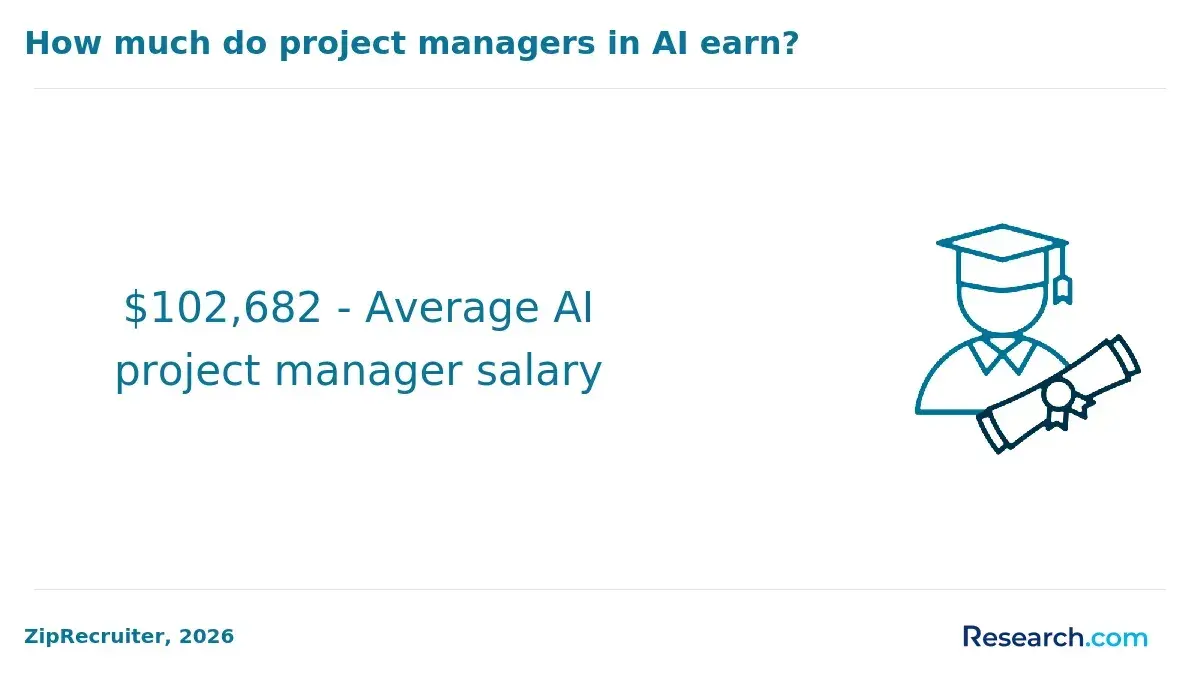
How much do artificial intelligence professionals earn and what is the salary outlook?
Artificial intelligence professionals in the US enjoy competitive salaries with promising growth. Entry-level roles typically start between $85,000 and $110,000 annually, varying by employer and location. Mid-level AI engineers or data scientists earn between $120,000 and $160,000, while experienced specialists and managers often make over $180,000. Tech hubs like Silicon Valley and New York tend to offer higher pay due to demand and living costs.
This reflects current trends in artificial intelligence professional salary trends in the US. The job outlook and earning potential for artificial intelligence specialists remain strong, supported by rapid industry growth and diverse AI applications. The U.S. Bureau of Labor Statistics projects a 22% increase in related occupations from 2020 to 2030-much faster than average job growth.
Demand for AI skills shows in academic enrollment as well. UK data indicates 10,825 students enrolled in AI programs for 2024/25, up 19% from the previous year. This growth signals a sustained talent pipeline and rising interest among students pursuing advanced studies, especially in fields like machine learning, natural language processing, and robotics.
Professionals with advanced degrees or hands-on experience with cloud computing and programming languages such as Python often achieve higher salaries. Job seekers evaluating roles should consider geographic location, industry sector, and specialization to maximize compensation and opportunity. For those seeking advanced education, exploring AI PhD programs can provide an edge in this competitive field.
What types of artificial intelligence degrees are available and how do they differ?
Artificial intelligence degrees vary widely, catering to different career goals and expertise levels. The main types include bachelor's degrees, master's degrees, and specialized certifications. Bachelor's programs blend foundational computer science with AI topics like machine learning, natural language processing, and robotics, preparing students for entry-level roles in software and data analysis. Master's degrees typically focus on advanced, research-driven AI skills. Specializations often involve deep learning, computer vision, or AI ethics, equipping graduates for leadership or research careers.
Examples include Master of Science in Artificial Intelligence or Master of Engineering in AI, emphasizing algorithm innovation, data strategy, and large-scale system design. Specialized AI certifications target professionals seeking concise, flexible skill upgrades without full degree requirements. These cover areas such as AI programming with Python or AI cloud services but offer less comprehensive training than degree programs.
An important trend noted by AI Certs, referencing the National Student Clearinghouse, reveals an 8.1% drop in four-year computer science enrollment in Fall 2025, indicating a preference for focused AI degrees over broader computer science programs. This shift reflects growing demand for curricula aligned with emerging job markets. When comparing artificial intelligence degree programs in the US, students should carefully consider their long-term goals. For guidance on affordable options, explore computer science degrees that often integrate AI foundations.
How do online artificial intelligence programs compare to campus-based options?
Online artificial intelligence programs offer unmatched flexibility, allowing students to manage studies alongside work or family through asynchronous courses and remote access. This is especially valuable for working professionals seeking career advancement without relocating or interrupting employment. In contrast, campus-based programs provide direct faculty mentorship, hands-on labs, and networking opportunities, which are essential for building professional connections and gaining practical experience.
Many institutions now offer hybrid models, combining online theoretical instruction with in-person labs and projects to deliver a balanced learning experience. The choice between online and campus depends on individual preferences and schedules. Students who thrive in structured, immersive environments may prefer campus programs, while those valuing convenience and self-paced study may opt for online formats.
Cost considerations also vary: online degrees often reduce expenses related to commuting and housing, though tuition may remain comparable. Regardless of format, accreditation and program reputation are critical to ensure educational quality and employer recognition.
When deciding, prospective students should investigate:
- Faculty expertise and curriculum relevance.
- Technological support for online platforms.
- Research opportunities and lab facilities in campus programs.
- Networking and career placement resources.
Recent data from the Lumina Foundation-Gallup poll, cited by Agglomerations, shows 42% of bachelor's students reconsidered their degree choices influenced by the growth of artificial intelligence. Evaluating personal goals and learning needs will help ensure the best fit in this evolving field.
What courses and skills are typically taught in an artificial intelligence major?
Students focusing on artificial intelligence blend computer science, mathematics, and specialized courses to build both theoretical knowledge and practical skills. Core topics cover machine learning, deep learning, natural language processing, computer vision, and robotics. These subjects develop the ability to design and optimize models for tasks like image recognition, speech processing, and autonomous decision-making.
Mathematics plays a vital role, with courses in linear algebra, probability, statistics, and calculus forming the backbone of algorithm design and data analysis. Programming in Python, R, and frameworks such as TensorFlow or PyTorch is essential for effectively implementing AI models. A solid understanding of data structures and algorithms ensures computing efficiency and resource management.
Ethics and policy classes address the societal impact of AI, a critical area as adoption grows in sensitive sectors. Hands-on experience through projects and internships with large datasets and cloud platforms complements theoretical learning. Electives enable deeper focus on areas like reinforcement learning, AI for healthcare, or AI security, enhancing career prospects in finance, automotive, biotechnology, and more.
Research from Morgan R. Frank and coauthors, highlighted by Agglomerations, shows that AI graduates experience higher salary potential and faster employment following ChatGPT's introduction. This underscores the value of combining practical AI skills with strong foundational knowledge.
What admission requirements and prerequisites do artificial intelligence programs have?
Admission to artificial intelligence programs typically requires a solid background in mathematics, programming, and related technical fields. For bachelor's degrees, applicants usually need high school coursework in algebra, calculus, and computer science. Master's programs often expect a relevant undergraduate degree in computer science, engineering, mathematics, or a closely related area.
Graduate-level prerequisites commonly include proficiency in linear algebra, probability, statistics, and languages such as Python or Java. Many schools require GRE scores, letters of recommendation, and personal statements highlighting applicants' goals and experience. Some also favor candidates with prior research or work experience in artificial intelligence, machine learning, or data science.
Applicants lacking computer science backgrounds may need to complete foundational or bridge courses in programming and algorithms. Demonstrated competence in calculus and discrete mathematics, often verified through tests or coursework, is frequently required.
- Admissions growth for master's-level AI completions has surged at a 35% compound annual growth rate from 2018 to 2023, reflecting rising demand and competition, according to GrayDI analysis.
- Prospective students should review program prerequisites carefully and prepare academic records to showcase technical readiness.
- Familiarity with AI concepts and practical coding experience strengthens admission chances and readiness for rigorous study.
How long do artificial intelligence degree programs take and what do they cost?
Artificial intelligence degree programs typically last between two and four years, varying by education level and school. Associate degrees generally require two years, while bachelor's degrees need four years of full-time commitment. Graduate options, such as master's degrees, usually take one to two years and offer specialized expertise. Accelerated and part-time formats may suit working professionals seeking flexible schedules.
Costs depend greatly on whether the institution is public or private and the student's residency status. Public universities charge around $10,000 to $25,000 annually for in-state students, while out-of-state and private schools can cost from $25,000 up to $60,000 per year. Additional expenses like textbooks, software, and lab fees can add thousands more. Online programs sometimes provide lower tuition or flexible payment plans to ease financial burdens.
Job demand is surging, especially in natural language processing, where postings more than doubled in March 2025 from the previous year. Prospective students should weigh tuition expenses against salary prospects and market needs in their region. Financial aid, scholarships, and employer sponsorship can significantly reduce costs.
Evaluating program accreditation, curriculum relevance, and industry connections is key for career advancement. These factors help ensure that investment in artificial intelligence education yields strong professional outcomes within reasonable costs and timelines.
How do you evaluate accreditation and program quality for artificial intelligence degrees?
Accreditation is a crucial factor in evaluating artificial intelligence degrees, starting with institutional accreditation by agencies recognized by the U.S. Department of Education or the Council for Higher Education Accreditation (CHEA). Regional accreditation confirms that a school meets essential educational standards.
Program-specific endorsements, such as those from ABET, which accredits computing and engineering programs, can further indicate quality. While not all AI programs have dedicated accreditation, alignment with computer science or data science standards shows rigor. It is important the curriculum reflects current AI technologies and provides practical experience with relevant tools, frameworks, and programming languages.
Faculty expertise is another key consideration. Programs with faculty engaged in AI research or industry partnerships tend to offer stronger learning and networking opportunities. Research-intensive universities or collaborations with tech companies often enhance exposure to the latest developments.
Student outcomes can help measure program effectiveness, including:
- Graduation rates.
- Placement in AI-related jobs or graduate programs.
- Internship or cooperative education opportunities.
Enrollment growth is a sign of program demand and credibility. For instance, MIT's AI major grew from 37 to 328 students in just three years, signaling strong industry relevance. Prospective students should review syllabi, compare courses, and seek alumni feedback to assess program quality.
Are there industry certifications or advanced credentials that support AI career growth?
Industry certifications and advanced credentials significantly boost career advancement in artificial intelligence fields. These credentials confirm expertise beyond academic degrees, meeting employer demand for highly skilled professionals. With AI/ML developer and engineer roles expected to grow at a 40.0% compound annual growth rate-approximately 100 times faster than average according to Validated Insights-up-to-date certifications are critical to maintaining a competitive edge.
Important certifications include:
- Certified Artificial Intelligence Practitioner (CAIP), which focuses on AI strategy, design, and deployment.
- Google Professional Machine Learning Engineer, highlighting applied machine learning skills within cloud platforms.
- Microsoft Certified: Azure AI Engineer Associate, showcasing proficiency in Azure-based AI solutions.
- IBM AI Engineering Professional Certificate, covering deep learning, natural language processing, and computer vision.
Graduate certificates in specialized AI areas like natural language processing, robotics, or ethical AI from accredited universities offer working professionals a path to advance skills without full degree enrollment.
These certifications provide concrete proof of hands-on skills with AI frameworks, programming languages such as Python and TensorFlow, and model deployment. Combining formal AI education with recognized credentials aligns learning with industry standards and improves job placement, especially in tech hubs.
Employers increasingly value candidates who hold these certifications as evidence of current, actionable expertise, making them essential for success in the fast-evolving AI job market.
Other Things You Should Know About Artificial Intelligence
Artificial intelligence is widely regarded as a promising career choice due to rapid advancements in technology and its increasing application across industries. Growth in AI-related jobs is projected to outpace many other fields, offering strong job security and opportunities for innovation. Professionals with AI expertise are in demand to develop, manage, and improve intelligent systems in healthcare, finance, robotics, and more.
Key skills for an artificial intelligence career include programming proficiency in languages like Python, knowledge of machine learning algorithms, and experience with data analysis. Strong foundations in mathematics, particularly linear algebra and statistics, are essential. Additionally, problem-solving abilities and familiarity with AI tools and frameworks enable professionals to design effective AI models and solutions.
Yes, ethical concerns are an important part of artificial intelligence development and deployment. Issues include bias in AI algorithms, data privacy, accountability for decisions made by AI systems, and the impact of automation on employment. Many programs now integrate ethics training to prepare students to address these challenges responsibly.
In 2027, non-engineering students are increasingly embracing AI degrees by utilizing their diverse backgrounds in business, humanities, and social sciences. These students often leverage interdisciplinary studies, gaining technical knowledge alongside skills from their primary fields, to address complex problems with innovative AI applications.
References
- AI Developer Salary by Country in 2025 https://alcor.com/ai-engineer-salary-by-country-2023/
- How Much Does it Cost to Learn AI? https://blog.nobledesktop.com/learn/ai/ai-cost-to-learn
- Artificial Intelligence https://www.th-deg.de/ain-b-en
- [2026] What salary can an Artificial Intelligence Engineer expect? https://liora.io/en/all-about-salary-artificial-intelligence-engineer
- What Do You Learn In an Artificial Intelligence Course? | CompSci https://www.computerscience.org/resources/artificial-intelligence/
- 11 AI certifications to grow your career https://www.cio.com/article/4175403/11-ai-certifications-to-grow-your-career.html
- AI Salaries - How Much AI Jobs Pay https://www.tractionkeys.com/post/ai-salaries---how-much-ai-jobs-pay
- Quality Assurance with AI and Automation: The Prospects for Educational Assessment https://www.ieac.org.uk/40-Quality-Assurance-with-AI-and-Automation-The-Prospects-for-Educational-Assessment-blog.php
- Top AI Certifications to Boost Your Career https://prepzee.com/blog/the-top-ai-certifications/
- How AI Is Changing Careers & Why Students Should Study It Abroad https://www.snycosmos.com/how-a-masters-in-artificial-intelligence-can-future-proof-your-career-in-the-next-decade/