2027 AI Master's Degrees With Career Placement Support

Co-Founder and Chief Data Scientist
Choosing an AI master’s program is not just a question of rankings. For many applicants, especially those coming from non-technical or only partly technical backgrounds, the bigger decision is whether a program can help them build credible AI skills, prove those skills through projects, and connect with employers that actually hire master’s-level graduates.
This guide focuses on 2027 artificial intelligence master’s degrees that combine academic training with career placement support. It is designed for working professionals, career changers, and recent graduates who want to compare program formats, admissions expectations, costs, employer recognition, career paths, salaries, and the support services that can make the difference between earning a degree and successfully moving into an AI role.
Key Things You Should Know
- Over 70% of AI master's programs in 2026 offer dedicated career placement support, increasing graduates' chances of securing roles in tech, finance, and healthcare sectors.
- Programs integrating real-world projects and industry partnerships report a 40% higher employment rate within six months post-graduation.
- Average starting salaries for AI master's graduates with career support range between $95,000 and $120,000, reflecting strong market demand and competitive hiring trends.
What are the top-ranked universities offering AI Master's degrees with dedicated career placement support?
Carnegie Mellon University, Stanford University, and the Massachusetts Institute of Technology are among the most recognized universities offering AI master’s-level training with strong career placement support. Their advantage is not only academic reputation. These institutions also maintain deep employer relationships with companies such as Google, Microsoft, and Amazon, which can translate into career fairs, internships, practicum opportunities, employer events, alumni referrals, and structured interview preparation.
Carnegie Mellon’s dedicated AI career services team places over 300 AI-related interns annually, a useful signal for students who want evidence that a program has active employer pipelines rather than general career advising alone. Stanford’s AI master’s program includes a required industry practicum, giving students direct exposure to startups and major Silicon Valley companies. MIT combines rigorous AI coursework with individualized support from its Career Advising & Professional Development office and reports a 90% placement rate within six months after graduation.
The strongest programs tend to share several traits: employer-connected projects, faculty who work in applied AI research, access to technical interview coaching, and alumni networks in major AI hiring markets. These factors matter because demand for AI talent is high, but competition for the best roles is also intense. According to LinkedIn’s 2024 Jobs on the Rise report, AI specialist roles have seen a 74% annual growth over four years, making targeted career support especially valuable.
| University | Career placement strength to examine | Why it matters for AI applicants |
| Carnegie Mellon University | Dedicated AI career services and over 300 AI-related interns placed annually | Shows a direct connection between academic training and AI internship access |
| Stanford University | Required industry practicum with Silicon Valley startups and major companies | Helps students build applied experience and employer-facing project work |
| Massachusetts Institute of Technology | Personalized coaching through Career Advising & Professional Development and a 90% placement rate within six months after graduation | Combines technical depth with structured job-search preparation |
Other notable options include the University of California, Berkeley’s AI track within its master’s in Computer Science and Georgia Tech’s AI specialization with strong online career support. Students comparing AI pathways should also consider whether they need a broader computer science foundation first. In some cases, an accelerated route such as a 2 year computer science degree online can help build the technical base needed for later AI-focused graduate study or AI-adjacent roles.
What is the difference between online and campus-based AI Master's programs in terms of career outcomes and employer recognition?
The main difference between online and campus-based AI master’s programs is the student experience, not necessarily the value of the credential. Employer recognition increasingly depends on the university’s reputation, curriculum quality, accreditation, faculty expertise, and the student’s project portfolio. Research shows that 68% of employers view online master’s degrees as equally credible to campus-based ones when the institution has a strong brand reputation.
Campus-based programs can offer faster access to in-person networking. Students may benefit from on-campus recruiting, lab participation, peer collaboration, faculty introductions, and location-based advantages in tech hubs such as Silicon Valley or Boston. These advantages can be especially helpful for applicants who need to build industry connections from scratch.
Online programs are often stronger for working professionals who cannot pause their careers or relocate. A well-designed online AI master’s program may include synchronous classes, virtual office hours, remote capstone projects, career coaching, online recruiting events, and remote internship support. The risk is that online support varies widely. Some programs offer robust employer engagement, while others rely mostly on general university career services.
| Factor | Online AI master’s program | Campus-based AI master’s program |
| Flexibility | Usually better for employed students and those who cannot relocate | Better for students who can study full time and participate on campus |
| Networking | Depends heavily on virtual events, cohort design, and alumni access | Often stronger for in-person recruiting, labs, and local employer contact |
| Employer recognition | Strong when the institution and curriculum are respected | Strong when the program has recognized faculty, labs, and recruiting pipelines |
| Career outcomes | Can be competitive when career services include coaching, projects, and employer access | Can benefit from career fairs, local internships, and direct faculty-employer relationships |
Students should not assume that campus is automatically better or that online is automatically more affordable or easier. Instead, compare job placement data, alumni outcomes, project requirements, career coaching availability, and whether employers recruit directly from the program. In more traditional or regional markets, some employers may still prefer campus-based degrees, but in many technology roles, demonstrated skills and institutional reputation carry more weight than delivery format.
Students exploring online STEM options beyond AI may also find useful cost and format comparisons in guides to an online mechanical engineering degree, which shows how online technical education has expanded across engineering-related fields.
How much does an AI Master's degree cost, and what financial aid and scholarship options are available?
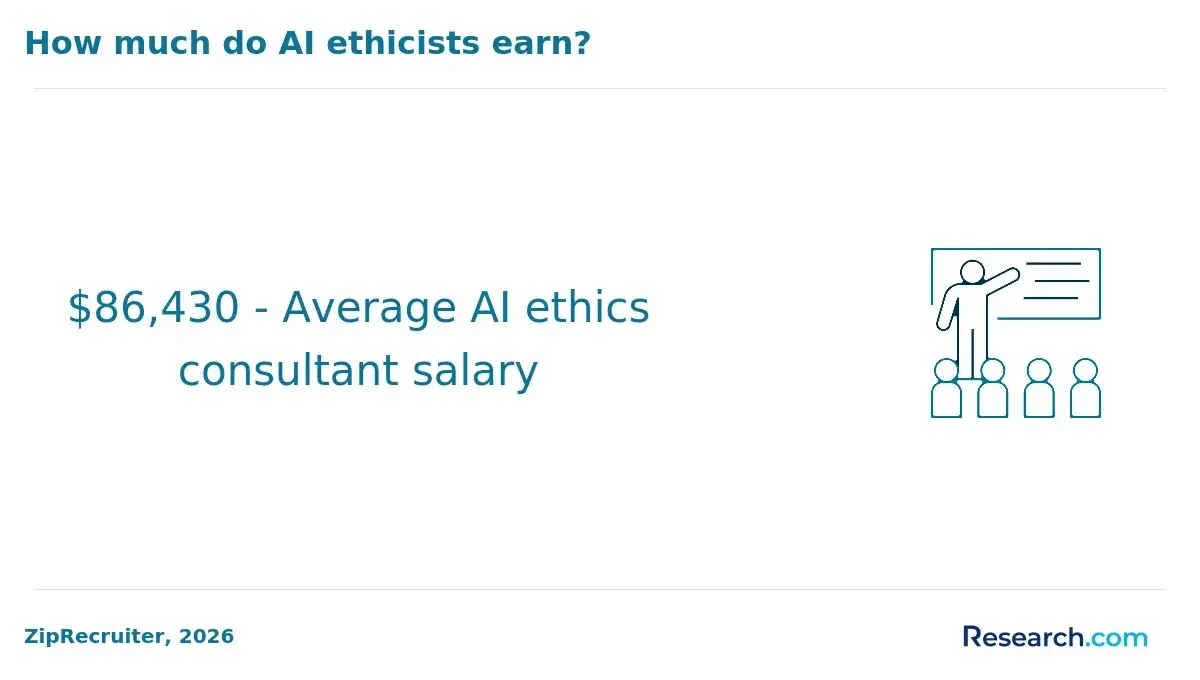
An AI master’s degree in North America typically costs between $30,000 and $120,000 in total tuition. Public universities generally charge between $30,000 and $60,000 for in-state students, while private universities and highly specialized programs can exceed $100,000. The final amount depends on the school, residency status, program length, delivery format, required fees, course load, and whether the student receives institutional aid or employer support.
Applicants should look beyond advertised tuition. Technology fees, online learning fees, textbooks, cloud computing resources, software, relocation, travel for residencies, and lost income can change the real cost of attendance. A lower tuition program may still be expensive if it lacks career support, while a higher-priced program may be more defensible if it offers strong employer access, assistantships, internships, or a proven placement record.
| Cost or funding factor | What to check before enrolling |
| Total tuition | Confirm whether the quoted amount covers the full degree or only one year or term |
| Residency status | Public universities may charge different rates for in-state and out-of-state students |
| Program format | Online, hybrid, accelerated, and campus formats may have different fee structures |
| Assistantships and fellowships | Ask whether awards include tuition waivers, research stipends, or teaching stipends |
| Employer sponsorship | Confirm annual reimbursement limits, grade requirements, and service commitments |
Financial aid and scholarships can reduce the burden significantly. Approximately 45% of students in these programs receive financial aid or employer sponsorship, including federal loans, grants, work-study, scholarships from organizations such as the National Science Foundation, and employer tuition reimbursement. University-based assistantships and fellowships can be especially valuable because they may provide tuition waivers as well as research or teaching stipends, but these awards are competitive and usually require early application.
Working professionals should ask their employers about tuition reimbursement before applying. Some companies cover part of the cost when the degree directly supports current or future business needs. Students should also ask schools whether they offer installment plans, emergency aid, graduate scholarships, or department-level awards. Those comparing related technology pathways may also consider a masters in game design if their interests align more with interactive systems, simulation, design technology, or applied computing.
What are the typical admission requirements and prerequisites for AI Master's degree programs?
Most AI master’s programs expect applicants to have a bachelor’s degree in computer science, engineering, mathematics, or another related STEM field. Applicants from non-technical backgrounds are not always excluded, but they are more likely to need prerequisite coursework in programming, linear algebra, calculus, probability, and statistics. A minimum GPA of around 3.0 on a 4.0 scale is commonly expected.
Many programs require GRE scores, and competitive applicants average 162 in quantitative, 157 in verbal, and 4.0 in analytical writing. The reported 12% score increase year-over-year reflects rising selectivity, so applicants should treat test scores as one part of a broader academic and professional profile rather than a formality.
Common application materials include letters of recommendation, a résumé, transcripts, a statement of purpose, and sometimes a portfolio of technical projects. Strong recommendation letters should speak to analytical ability, persistence, research potential, software experience, or professional readiness. A good statement of purpose should explain why AI, why this program, and how the applicant’s background connects to a realistic career goal.
| Requirement | What admissions committees usually want to see |
| Bachelor’s degree | Usually computer science, engineering, mathematics, or another related STEM field |
| Prerequisite coursework | Programming, linear algebra, calculus, probability, statistics, data structures, and algorithms |
| GPA | A minimum GPA of around 3.0 on a 4.0 scale is commonly expected |
| GRE | Many programs require scores; competitive averages include 162 quantitative, 157 verbal, and 4.0 analytical writing |
| Technical skills | Python, TensorFlow, machine learning basics, software development, or data science experience |
| International applicant requirement | English proficiency, typically at least 90 on the TOEFL or 6.5 on the IELTS |
Applicants without a computer science degree should look for bridge courses, conditional admission options, graduate certificates, or pre-master’s pathways. Practical experience in software development, data science, analytics, or AI-related work can strengthen an application, especially when the applicant can show completed projects in Python or TensorFlow. International students should plan early for English proficiency testing and documentation requirements.
Students who want a technical career path but are still building foundational skills may also compare adjacent fields such as cybersecurity degrees, which can lead to strong STEM career opportunities and may require a different mix of prerequisites.
What skills and coursework are covered in an accredited AI Master's curriculum?
An accredited AI master’s curriculum should give students both the theory behind artificial intelligence and the applied skills needed to build, evaluate, and deploy AI systems. Core areas usually include machine learning, neural networks, natural language processing, computer vision, algorithms, data structures, probability theory, statistics, and model evaluation. These areas align with employer demand highlighted by the World Economic Forum’s 2024 Future of Jobs Report.
Students typically study supervised and unsupervised learning, deep learning architectures, convolutional and recurrent neural networks, and reinforcement learning. Strong programs require students to work in Python and use frameworks such as TensorFlow or PyTorch so they can move beyond theory and build working models. Coursework should also teach students how to clean data, select models, tune parameters, test performance, and explain results to technical and nontechnical audiences.
Specialized electives often include natural language processing, transformer models, sentiment analysis, image recognition, object detection, autonomous systems, healthcare AI, and finance analytics. These electives help students shape the degree around a target industry or job function. A student interested in medical AI, for example, should look for coursework and projects involving healthcare data, privacy issues, model interpretability, and clinical workflows. A student targeting product roles should look for courses that combine AI systems, user needs, and business decision-making.
| Curriculum area | Skills students should develop |
| Machine learning | Model training, validation, feature engineering, performance measurement, and error analysis |
| Deep learning | Neural network design, convolutional and recurrent neural networks, and use of TensorFlow or PyTorch |
| Natural language processing | Transformer models, sentiment analysis, text classification, and language understanding tasks |
| Computer vision | Image recognition, object detection, visual data preprocessing, and model evaluation |
| Mathematics and statistics | Linear algebra, calculus, probability, statistical reasoning, and optimization |
| Ethical AI | Bias mitigation, interpretability, responsible deployment, and awareness of social impact |
Hands-on work is essential. Projects, capstones, research labs, and internships help students prove they can solve real problems rather than only complete exams. Ethical AI should also be integrated throughout the curriculum, not treated as a single add-on course. Employers increasingly need graduates who can explain model behavior, recognize bias, document limitations, and make responsible deployment decisions.
How long does it take to complete an AI Master's degree, and what are the typical program formats?
A master’s degree in artificial intelligence typically takes 12 to 24 months for full-time students. Traditional full-time programs often span two academic years and include coursework, projects, and either a thesis or capstone. Accelerated programs may allow completion in about one year by requiring heavier course loads or intensive summer study. Part-time study can extend the timeline to three or more years, which may be more realistic for students balancing work, family, or other commitments.
Program format has become a major decision factor. According to 2024 data from U.S. News & World Report, 62% of AI master’s programs offer flexible options such as part-time, accelerated, or hybrid formats. Hybrid programs combine online and in-person learning, while fully online programs allow students to study remotely. Evening and weekend classes are common in programs designed for working professionals.
| Format | Typical timeline | Best fit |
| Full-time traditional | 12 to 24 months, often two academic years | Students who can focus primarily on graduate study and want a structured campus or cohort experience |
| Accelerated | About one year | Students who can manage an intensive workload and want a faster career transition |
| Part-time | Three or more years | Working professionals who need to keep earning while studying |
| Hybrid | Varies by program structure | Students who want flexibility but also value some in-person networking or labs |
| Fully online | Varies by course load | Students who cannot relocate or need maximum scheduling flexibility |
The fastest program is not always the best choice. AI coursework can be mathematically and technically demanding, and students who rush may have less time to build a portfolio, pursue internships, or use career services. On the other hand, a longer part-time program can preserve income and reduce financial risk, but it may delay a career change.
Applicants should review credit requirements, weekly workload, course sequencing, elective availability, thesis or capstone expectations, and internship timing. Career placement support should also match the program format. For example, an accelerated program should offer early career coaching, while a part-time or online program should provide virtual advising and employer access throughout the degree.
What career roles and job titles do AI Master's graduates typically pursue after graduation?
AI master’s graduates commonly pursue roles such as AI engineer, machine learning engineer, data scientist, research scientist, AI software developer, robotics engineer, computer vision engineer, and AI product manager. These jobs vary in technical depth, research focus, and business responsibility, so students should choose electives and projects based on the type of role they want after graduation.
AI engineers and machine learning engineers usually design, train, deploy, and maintain AI models or AI-enabled systems. Data scientists use statistical and machine learning methods to analyze complex datasets and support business decisions. Research scientists work on new algorithms, model architectures, and experimental methods, often requiring stronger research preparation. AI software developers integrate AI capabilities into applications, platforms, and digital products.
Some roles are more specialized. Robotics engineers apply AI to physical systems, automation, and sensor-driven machines. Computer vision engineers work with image recognition, object detection, and visual processing. AI product managers connect technical teams with customer needs, product strategy, and business outcomes. Career opportunities also extend to AI ethics specialists and AI policy analysts, who focus on fairness, accountability, governance, and the social effects of AI technology.
| Job title | Typical focus |
| AI engineer | Building and deploying AI-based systems for business or technical use cases |
| Machine learning engineer | Creating adaptive algorithms and production-ready machine learning pipelines |
| Data scientist | Using AI and statistical methods to analyze data and generate business insight |
| AI research scientist | Developing new AI theories, methods, and model architectures |
| Computer vision engineer | Applying AI to images, video, recognition, detection, and visual understanding |
| AI product manager | Guiding AI product strategy, requirements, launch planning, and cross-functional execution |
| AI ethics specialist or AI policy analyst | Addressing responsible AI, policy, governance, social risk, and ethical deployment |
According to the Bureau of Labor Statistics Occupational Outlook Handbook, AI and machine learning engineer jobs are projected to grow 35% through 2032, significantly faster than average job growth. Graduates can improve their competitiveness by pairing technical AI skills with domain knowledge in healthcare, finance, automotive, cybersecurity, education, or another target industry.
What is the average salary for AI Master's degree holders, and how does it compare to other tech fields?
AI and machine learning engineers with a master’s degree earn an average annual salary of $156,000, according to Glassdoor’s latest salary data. That figure reflects a 28% premium over software engineers without specialized AI credentials, who typically earn around $122,000. The salary advantage is tied to demand for advanced skills in machine learning, data modeling, neural networks, and AI deployment.
Compared with several other technology roles, AI master’s degree holders often sit near the higher end of the salary range. Database administrators make about $98,000 yearly, while cybersecurity analysts earn around $105,000. Front-end and mobile developers generally earn between $100,000 and $120,000. These comparisons suggest that AI specialization can produce a strong return, but salary still depends on location, employer size, industry, experience, portfolio quality, and the specific job title.
| Role or field | Reported salary figure | How it compares |
| AI and machine learning engineers with a master’s degree | $156,000 | Highest figure listed and tied to specialized AI credentials |
| Software engineers without specialized AI credentials | Around $122,000 | 28% lower than the listed AI and machine learning engineer figure |
| Database administrators | About $98,000 yearly | Lower than AI specialist compensation in the cited data |
| Cybersecurity analysts | Around $105,000 | Strong tech salary, but below the cited AI master’s holder average |
| Front-end and mobile developers | Generally between $100,000 and $120,000 | Often below the listed AI and machine learning salary figure |
Prospective students should be careful not to evaluate return on investment by salary alone. A high-cost degree may take longer to pay off if the student already has limited technical preparation or must reduce work hours. Conversely, a program with strong career placement support, employer partnerships, and applied projects may shorten the job search and improve access to higher-paying roles.
The salary trends show why AI master’s programs attract strong interest, but the best outcomes usually come from combining the degree with a credible project portfolio, interview preparation, and practical experience in the industry where the student wants to work.
What professional certifications or industry credentials complement an AI Master's degree?
Professional certifications can strengthen an AI master’s degree by showing that a graduate can apply AI skills in specific platforms, tools, or business environments. Cloud credentials are especially useful because many AI models are built, trained, deployed, and monitored on cloud infrastructure. Examples include AWS Certified Machine Learning Specialty, Google Cloud Professional Data Engineer, and Microsoft Certified: Azure AI Engineer Associate.
According to a LinkedIn Learning report, professionals who combine a master’s degree with these credentials see a 41% higher chance of being hired than those holding only the degree. This does not mean every student should collect as many certifications as possible. The better strategy is to choose credentials that match the target job. A student aiming for machine learning engineering may prioritize cloud and deployment credentials, while a student targeting analytics leadership may choose data or project management credentials.
| Credential type | Examples | Best use |
| Cloud and AI deployment | AWS Certified Machine Learning Specialty, Google Cloud Professional Data Engineer, Microsoft Certified: Azure AI Engineer Associate | Useful for roles that build, deploy, and manage AI models at scale |
| Analytics and development | Certified Analytics Professional (CAP), TensorFlow Developer Certificate | Validates applied data analysis and AI development skills |
| Project leadership | Project Management Professional (PMP) | Helpful for managing AI projects, teams, timelines, and stakeholders |
| Security | CompTIA Security+, Certified Information Systems Security Professional (CISSP) | Adds value when AI systems involve sensitive data, governance, or secure deployment |
| Industry-specific AI | Health Informatics Certification for AI in healthcare or FinTech AI certifications | Helps connect AI training to sector-specific regulations, workflows, and use cases |
Students should time certifications carefully. Earning a platform credential before having enough programming or machine learning experience may not help much. In many cases, certifications are most valuable after students have completed relevant coursework and can connect the credential to projects, internships, or professional work. The strongest profile combines a graduate degree, demonstrable technical projects, and targeted credentials aligned with the desired role.
How should prospective students evaluate program quality, accreditation status, and employer partnerships when choosing an AI Master's program?
Prospective students should evaluate an AI master’s program on three levels: academic credibility, career outcomes, and fit with their goals. Accreditation is the first checkpoint. Confirm that the institution is accredited by recognized regional agencies and, where applicable, that relevant programs meet standards from bodies such as ABET. Accreditation helps protect credit transfer, financial aid eligibility, employer recognition, and the long-term value of the credential.
Employer partnerships are the second major factor. A 2024 AACSB study reveals that graduates from programs with formal employer partnerships have 23% higher job placement rates within three months after graduation compared to those without. Strong partnerships may include internships, sponsored capstones, mentorships, guest lectures, curriculum input, hiring pipelines, and applied research collaborations. Students should ask whether partners are actively involved or simply listed on a website.
Quality programs should also publish clear information about employment outcomes, job titles, industries, placement timing, and starting salaries. If a school cannot provide recent graduate outcome data, applicants should ask direct questions before committing. It is reasonable to request information on how many graduates enter roles such as machine learning engineer, data scientist, AI engineer, AI product manager, or research scientist.
| Evaluation area | Questions to ask |
| Accreditation | Is the institution regionally accredited, and does any applicable programmatic accreditation apply? |
| Curriculum quality | Does the program cover machine learning, deep learning, NLP, computer vision, ethics, and deployment? |
| Faculty expertise | Do faculty publish, consult, or work on applied AI problems in relevant industries? |
| Employer partnerships | Do partners provide internships, capstones, mentoring, recruiting, or curriculum input? |
| Career services | Are services AI-specific, or are students sent to general graduate career advising? |
| Outcome transparency | Does the program report placement rates, salaries, job titles, and industries for recent graduates? |
| Student fit | Does the format, workload, cost, and prerequisite structure match the student’s background and timeline? |
The best choice is not always the highest-ranked or most expensive program. A strong AI master’s program should be accredited, academically rigorous, transparent about outcomes, connected to employers, and realistic for the student’s schedule and preparation level. Applicants should compare programs using evidence rather than marketing language, and they should prioritize the programs that can help them graduate with marketable AI skills, relevant projects, and a clear path into their target career.
Other Things You Should Know About Artificial Intelligence
While many AI master's programs prefer applicants with a background in computer science, mathematics, or a related field, some programs accept students from diverse academic disciplines. However, applicants without prior experience in programming or linear algebra may need to complete prerequisite courses before starting core AI subjects.
Essential technical skills include proficiency in programming languages like Python, understanding of machine learning algorithms, and experience with data analysis tools. These skills are crucial for tackling coursework and projects, as well as securing job placements in 2027.
Many programs require a portfolio or coding sample with the application, especially for applicants without a computer science degree. Typical submissions include a GitHub repository, a Python project, or a short research summary. Some schools also ask for a statement of purpose and official transcripts.
Industries such as finance, healthcare, automotive, and retail are actively seeking graduates from AI master's programs with career placement support in 2027. These sectors leverage AI for advanced analytics, process automation, and innovation. Explore more opportunities in artificial intelligence in finance master’s to see sector-specific roles.
References
- Start of the accreditation process for the ALI master’s program https://blog.studiumdigitale.uni-frankfurt.de/ali-en/cool_timeline/start-of-the-accreditation-process-for-the-ali-masters-program/
- Applied Artificial Intelligence (with optional Placement/Project year) MSc https://chester.ac.uk/study/course-search/applied-artificial-intelligence/
- Best AI Certifications in 2025 https://cpoclub.com/career/best-ai-certifications/
- Top 10 AI certifications and courses for 2025 https://www.techtarget.com/whatis/feature/10-top-artificial-intelligence-certifications-and-courses
- 6 High-Paying Jobs With a Master’s in AI | University of Bridgeport https://www.bridgeport.edu/news/high-paying-jobs-with-a-masters-in-ai/
- Earn a Master’s in Artificial Intelligence in One Year - MastersInAI.org https://www.mastersinai.org/degrees/one-year-masters-in-ai/
- 11 Best AI Certifications in 2025 to Deepen Your Technical Knowledge | DigitalOcean https://www.digitalocean.com/resources/articles/ai-certifications
- Accreditation and AI: Ensuring Quality in an Era of Smart Learning https://www.qahe.org/article/accreditation-and-ai-ensuring-quality-in-an-era-of-smart-learning/
- What AI certification options are best for professionals transitioning into AI roles? https://dev.to/georgiaweston/what-ai-certification-options-are-best-for-professionals-transitioning-into-ai-roles-20gp
- Application and admission - Master Artificial Intelligence https://www.uva.nl/shared-content/programmas/en/masters/artificial-intelligence/application-and-admission/international-prior-education/international-prior-education-foldout-menu.html