2027 Artificial Intelligence Degree Programs for Veterans

Co-Founder and Chief Data Scientist
Veterans seeking to transition into the tech sector often face challenges due to gaps between military training and civilian industry requirements. Many struggle to find flexible graduate programs that accommodate their unique schedules and provide relevant skills in artificial intelligence. Additionally, navigating accreditation and program quality can be confusing, leading to costly missteps or extended timelines.
This article explores accredited artificial intelligence degree programs designed for veterans with non-technical undergraduate backgrounds. It offers insights into flexible options that balance rigor and accessibility, helping veterans make informed decisions and successfully pivot into artificial intelligence careers.
Key Things You Should Know
- In 2026, over 40% of U.S. veterans pursuing STEM fields enroll in artificial intelligence degree programs, reflecting growing demand for specialized skills in defense and cybersecurity sectors.
- Military-connected students benefit from expanded GI Bill benefits now covering most online AI master's and bachelor's programs, increasing accessibility and affordability nationwide.
- Leading institutions partner with veteran organizations to offer mentorship and internship pipelines, boosting AI job placement rates to approximately 75% within six months post-graduation.
What are the best AI degree programs for veterans in the United States?
The best artificial intelligence degree programs for veterans in the United States combine a leading academic reputation with strong veteran support services. Top schools include Carnegie Mellon University, Stanford University, MIT, UC Berkeley, and the University of Illinois Urbana-Champaign, all highly ranked for their AI and computer science courses.
Veterans seeking top AI degree options for veterans across the United States should consider specialized tracks in machine learning, robotics, and neural networks. Carnegie Mellon's School of Computer Science is notable for its AI research collaborations with the Department of Defense, offering veteran scholarships and tailored admissions pathways.
Stanford and MIT focus on innovative AI research with close industry ties, providing veterans essential hands-on experience and career opportunities after graduation. UC Berkeley's online master's degree options bring flexibility for veterans balancing education with other responsibilities.
The University of Illinois Urbana-Champaign supports veterans through GI Bill benefits and career counseling, while many universities offer veteran resource centers, mental health services, and peer networks that ease the transition to academic life. Prospective students should verify eligibility for GI Bill funding and explore campuses with Yellow Ribbon programs to reduce tuition costs.
For those looking to advance quickly, consider the fastest way to get a computer science degree, which can accelerate entry into AI careers.
What AI degree levels should veterans consider for their career goals?
Veterans exploring AI degree programs for veterans should consider their career goals carefully. A bachelor's degree in artificial intelligence or a related STEM field, such as computer science, is often the minimum requirement for entry-level technical roles.
This education provides essential knowledge in machine learning, data structures, and programming, qualifying veterans for positions like AI analyst, software developer, or data engineer.
For those pursuing advanced AI education paths for veterans targeting senior technical roles, leadership, or specialized areas such as deep learning research or AI ethics, a master's degree can be highly advantageous. The U.S. Bureau of Labor Statistics reports that workers with a master's degree earn notably more than those with only a bachelor's degree, about $22,000 annually, highlighting the financial value of graduate education in AI.
Combining professional experience with a master's often leads to opportunities in AI project management, advanced algorithm development, or AI policy advising. To accommodate veterans balancing education with personal and work commitments, many institutions offer flexible online or part-time master's programs.
These include specialized tracks in AI applications related to cybersecurity, healthcare, or autonomous systems.
Certifications and bootcamps supplement but generally don't replace the need for advanced degrees in career progression. Veterans should align their education with job targets, income goals, and specialization preferences. For those new to the field, a bachelor's degree is ideal, while a master's degree benefits those seeking expertise and higher earning potential.
Exploring options like an online mechanical engineering bachelor degree can also be a strategic starting point in STEM fields related to AI.
How can veterans use GI Bill benefits for AI degrees and related training?
Veterans can fund artificial intelligence degrees and training programs using GI Bill benefits through several key options. The Post-9/11 GI Bill covers up to 100% of tuition and fees at public in-state schools or a capped amount at private institutions, including accredited AI programs offered online or on-campus.
The Montgomery GI Bill also supports AI certificate courses and associate or bachelor's degrees that provide foundational or specialized training in areas like machine learning or data science. Using GI Bill for artificial intelligence training programs opens up opportunities for veterans to gain cutting-edge skills essential for the tech job market.
Many schools offering AI curricula participate in the Yellow Ribbon Program, which helps cover tuition costs exceeding GI Bill limits, especially at private or out-of-state institutions. This significantly expands options for veterans seeking targeted AI education at high-cost universities.
GI Bill benefits also cover approved coding schools and boot camps focused on AI, such as natural language processing or AI programming languages, allowing veterans quicker paths into AI careers.
Additional support includes housing allowances and stipends for books and supplies. About 1.0 million beneficiaries received over $10 billion in education benefits, demonstrating ample resources for AI-focused veteran students.
Veterans should verify AI programs are VA-approved using tools like the GI Bill Comparison Tool and coordinate with the school's veterans affairs to ensure a smooth benefit application. For those interested in related fields, exploring an online game design degree can also be a valuable career path.
What accreditation should veterans look for in AI and computer science programs?
Veterans pursuing accredited AI and computer science programs for veterans should focus on those accredited by ABET, the recognized authority for computing program quality. ABET ensures programs meet rigorous standards related to curriculum, faculty, and resources, covering areas such as computer science and cybersecurity.
This accreditation not only validates educational quality but also is often required for GI Bill benefits, making it essential for veterans seeking financial assistance.
- ABET accreditation is widely respected by employers and enhances job opportunities in technology and AI fields.
- Programs adhering to ABET standards offer up-to-date curricula that reflect current AI methodologies and tools.
- Regional accreditation from U.S. Department of Education-recognized agencies also matters, as it influences credit transferability and federal aid eligibility.
Veterans should look for programs combining ABET credentials with veteran-friendly support services. Additionally, advanced credentials like specialized AI-focused certifications or recognition by the Computing Accreditation Commission (CAC) add further value.
For those interested in accelerated paths, an accelerated cyber security degree online can be a viable option within the realm of regional accreditation for veterans' AI degrees. Checking program listings on the official ABET website helps ensure enrollment in quality, accredited offerings.
What's the difference between online and on-campus AI degree programs for veterans?
Veterans pursuing ai degree programs can choose between online and on-campus formats, each offering distinct advantages. Online programs provide asynchronous coursework, perfect for veterans juggling military duties, work, or family, and those who relocate frequently or live far from institutions.
They often include virtual labs and simulation tools for hands-on learning, but may lack access to specialized hardware like GPUs.
On-campus programs offer direct access to labs, face-to-face mentorship, and peer collaboration, enhancing practical skills and networking. Many on-campus programs also provide dedicated veteran centers with counseling, tutoring, and career services.
Online programs typically offer virtual advising and peer forums, which can still support academic progress effectively.
Cost differences arise mainly from housing and commuting expenses, with online study often being more affordable. Both formats generally accept GI Bill benefits, but veterans should confirm program eligibility.
Veterans should consider factors such as technology access, learning style, and career goals when selecting a program.
Statistics from the National Center for Education Statistics show that 28% of U.S. postsecondary students took all courses online and 22% took some online, highlighting increasing acceptance of online learning. Veterans can leverage this trend to find a program tailored to their needs and maximize their skill development in ai.
What courses and skills are taught in artificial intelligence degree programs?
Artificial intelligence degree programs cover a broad spectrum of courses designed to build both practical skills and theoretical knowledge needed for AI careers. Key coursework focuses on machine learning algorithms, which enable systems to identify patterns and make autonomous decisions.
Programming languages like Python, valued for its robust AI libraries, and SQL, essential for managing large datasets, are integral parts of the curriculum.
Mathematics plays a crucial role, with emphasis on linear algebra, calculus, probability, and statistics-foundational concepts for developing and enhancing AI models. Cloud computing skills using platforms such as AWS, Google Cloud, and Azure prepare students to deploy and scale AI solutions effectively.
Students also train in data engineering techniques to preprocess and clean data, ensuring high-quality inputs for machine learning. Specialized courses in natural language processing (NLP) teach machines to interpret human language, while computer vision classes focus on processing and analyzing visual information.
Ethical issues and AI governance are increasingly prominent, helping students understand bias, privacy concerns, and societal impact. Many programs include hands-on projects and internships to provide real-world experience.
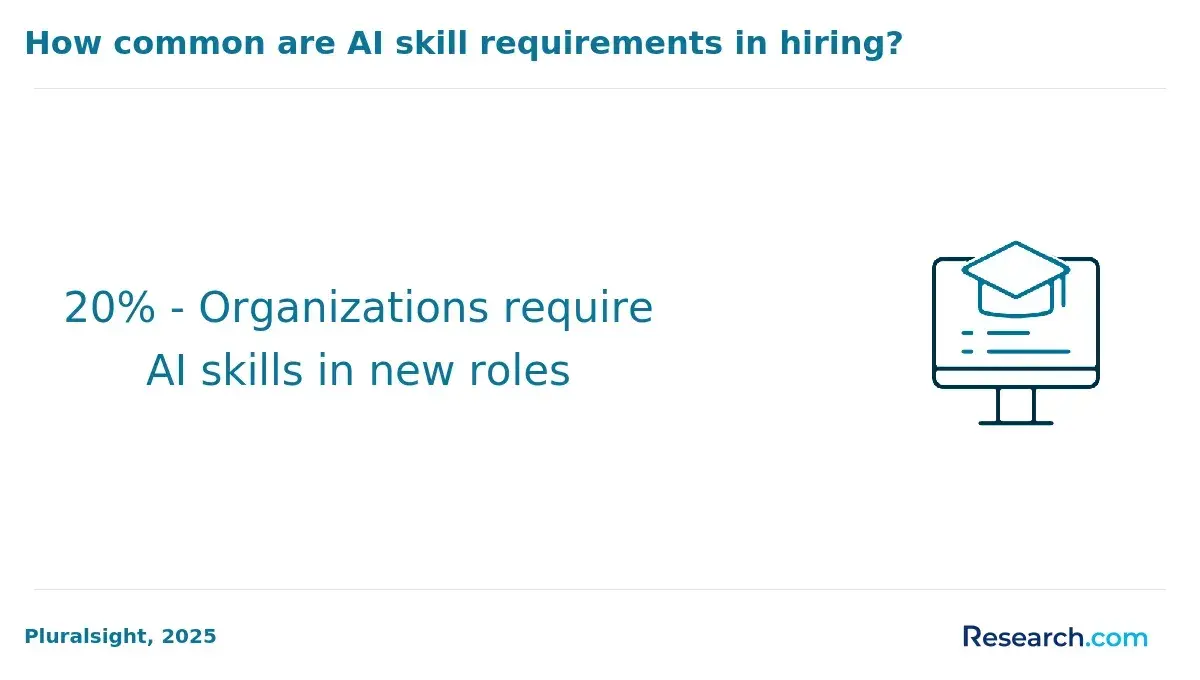
According to Lightcast's "AI Skills & Jobs" labor market analytics, employers particularly seek skills in machine learning, Python, SQL, cloud technologies, and data engineering-underscoring these areas as critical for those entering the AI job market.
What admissions requirements do AI programs typically have for veteran applicants?
Admissions requirements for AI programs aimed at veterans emphasize flexibility and often recognize military experience as equivalent to formal education in certain cases. Most programs ask for a bachelor's degree in fields like computer science, engineering, mathematics, or related STEM disciplines.
Veterans may have the advantage of using military training and documented skills to meet or substitute some prerequisites.
Testing policies have evolved, with many institutions adopting test-optional approaches. For instance, 131 U.S. graduate management programs accepted GMAT Focus scores without requiring them, reflecting a trend toward holistic admissions.
Similarly, veterans applying to ai programs can sometimes waive GRE or other standardized tests if they demonstrate relevant professional experience or prior academic success.
Applicants should prepare to submit key materials such as:
- Official transcripts from all postsecondary institutions attended
- Personal statements highlighting career objectives and military-to-civilian skill conversion
- Letters of recommendation from those familiar with leadership or technical skills
- Proof of military service and any technical certifications earned
- Evidence of English proficiency for non-native speakers
Some programs provide specially designed pathways or prerequisite courses, like online lessons in programming or statistics, to help veterans bridge gaps when their military expertise doesn't fully align with AI coursework. Dedicated counseling is often available to assist with credit transfers and benefits such as the GI Bill, helping veterans navigate their transition to civilian academic life.
How long do AI degree programs take, and what do they cost after benefits?
Artificial intelligence degree programs vary in length from one to four years, depending on the level of study and institution. Associate degrees or certificate programs may take about one year, while bachelor's degrees generally require four years of full-time study.
Master's degrees usually range from one to two years. For veterans using education benefits, the length of the program influences how long they receive tuition and housing support through the GI Bill.
Costs after benefits depend heavily on the school's tuition and the veteran's eligibility. The Post-9/11 GI Bill covers full in-state tuition at public universities and offers a monthly housing allowance based on the Department of Defense Basic Allowance for Housing (BAH) for an E-5 with dependents at the school's zip code.
In some high-cost areas, this housing stipend may exceed $4,000 per month.
Veterans attending private or out-of-state schools might still owe tuition if the GI Bill's cap doesn't cover the full cost. Many schools provide veteran-specific scholarships or income-based aid to help offset remaining expenses.
Online programs can reduce housing costs but may have different tuition rates that affect the total price.
Veterans should carefully consider these factors by:
- Comparing in-state and out-of-state tuition
- Confirming housing allowances based on school location
- Exploring additional veteran financial aid options
- Choosing program length aligned with career goals and benefits
These considerations help veterans plan education finances accurately while pursuing artificial intelligence degrees.
What jobs can veterans get with an AI degree, and what industries hire them?
Veterans with an artificial intelligence degree can pursue diverse roles such as AI engineer, data scientist, machine learning specialist, robotics engineer, and AI research analyst. These jobs involve designing algorithms, building predictive models, developing automation tools, and analyzing complex datasets.
Those with programming skills may qualify for AI software developer or AI system architect positions, focusing on integrating AI solutions into existing platforms.
Industries hiring veterans with AI expertise include professional, scientific, and technical services; finance and insurance; information technology; manufacturing; and healthcare. For example, finance uses AI for fraud detection and automated trading, healthcare applies AI in diagnostics and personalized treatments, while manufacturing utilizes AI-driven robotics to optimize processes and ensure quality control.
Challenges for veterans often involve translating military experience into civilian AI roles. Practical steps to overcome this include obtaining certifications in popular AI frameworks like TensorFlow or PyTorch, building portfolios with real-world projects, and seeking internships or apprenticeships. Networking through veteran-focused technology support groups can ease career transitions.
Geographic factors are important, as cities like San Francisco, Boston, and Washington, D.C. have high demand for AI talent.
Certifications, coding boot camps, and continuing education tailored to veterans boost employability. Veterans might also explore AI ethics or policy specialist roles, which blend technical knowledge with governance needs due to regulatory growth.
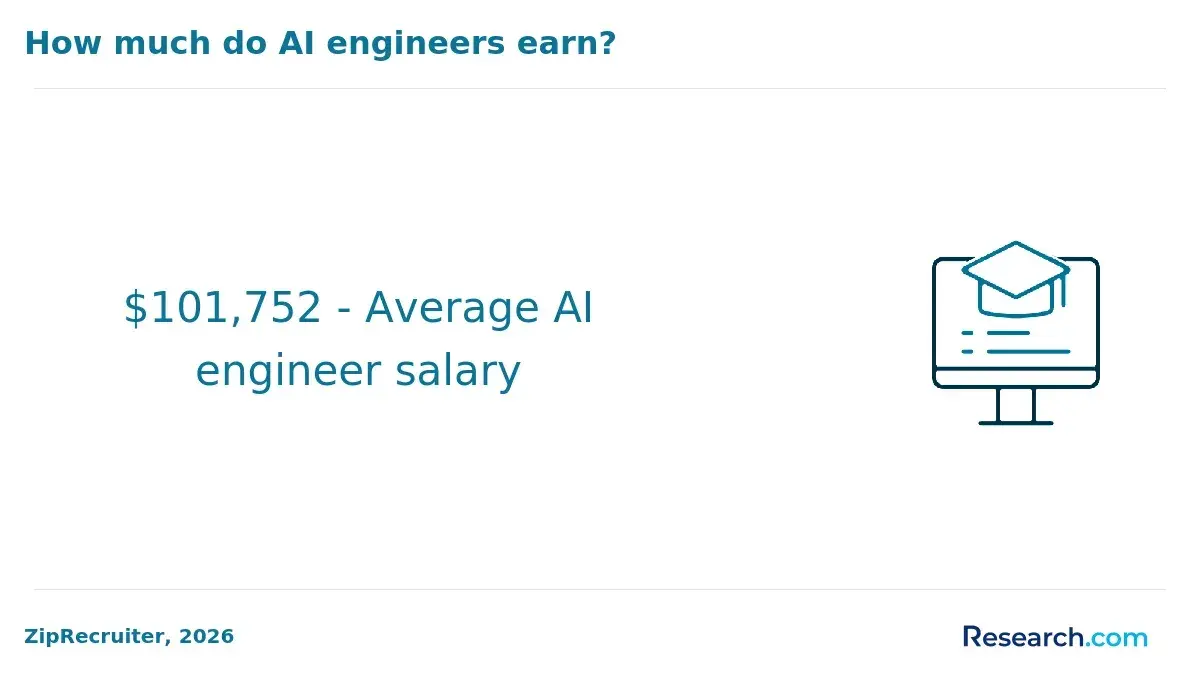
Entry-level AI positions generally start around $85,000 annually and can surpass $150,000 with experience, reflecting robust demand.
What are typical salaries and job outlook for AI-related roles in the U.S.?
Artificial intelligence-related jobs in the U.S. provide strong salary opportunities and impressive job growth. Entry-level roles, such as AI data analysts or junior machine learning engineers, typically offer starting salaries between $80,000 and $95,000 annually.
More experienced professionals, including AI research scientists and senior machine learning engineers, can earn $130,000 to $170,000 or more, especially in major tech hubs.
The outlook for careers in AI and related fields is very positive. The U.S. Bureau of Labor Statistics projects a 35% growth in employment of data scientists from 2022 to 2032, much faster than the average for all occupations.
This demand spans industries like healthcare, finance, robotics, and automotive.
Veterans pursuing degrees in artificial intelligence have promising prospects. Skills in machine learning, natural language processing, and data analytics are highly valued. Familiarity with Python, TensorFlow, and cloud computing platforms is often required.
Veterans with military technical backgrounds can transition more easily and may benefit from GI Bill educational benefits.
Salary varies by sector, location, and role specialization. AI jobs in finance and defense tend to offer higher pay than positions in academia or startups. Earning certifications and gaining experience with AI frameworks can significantly boost salary potential.
Other Things You Should Know About Artificial Intelligence
Yes. Many colleges accept military transcripts through the Joint Services Transcript or CCAF and may award up to 90 transfer credits toward a bachelor’s degree. Schools decide the exact evaluation, and ACE recommendations often guide credit recognition for technical and leadership training.
Veterans can use benefits such as the Post-9/11 GI Bill and the Montgomery GI Bill for artificial intelligence degree programs in 2027. These benefits may cover tuition, fees, and sometimes housing and supplies, providing crucial support for educational advancement.
Artificial intelligence degree programs for veterans in 2027 often include dedicated support systems like veteran liaisons, peer networking groups, and tailored career counseling. These resources aim to enhance learning by addressing unique constraints veterans face during their educational pursuits.
In 2027, veterans can access several financial assistance options, including the GI Bill, scholarships, and tuition discounts specifically for veterans. Additionally, some programs offer specialized assistance for veterans pursuing a master’s degree in healthcare artificial intelligence, helping to cover tuition and other expenses.
References
- Veterans' gateway to cybersecurity careers https://cybersecurityguide.org/resources/veterans-guide-to-cybersecurity/
- Military Service Member and Veteran Guide to AI-Related MOS Options and the Transition to Civilian Careers in AI - AI Degree Guide https://aidegreeguide.com/military-service-member-and-veteran-civilian-careers-in-ai/
- How Long Does It Take to Complete an AI Course https://www.epw.com/blog/courses/how-long-is-ai-course
- The Impact of AI on the Job Market & What Degrees You Should Really Be Pursuing | Jobs for Veterans | G.I. Jobs https://www.gijobs.com/military-to-civilian-transition/the-impact-of-ai-on-the-job-market-what-degrees-you-should-really-be-pursuing/
- AI Training for Veterans https://www.graduateschool.edu/topics/ai-training-for-veterans
- How Military Veterans Can Get into AI - Lightning AI https://lightning.ai/pages/community/how-military-veterans-can-get-into-ai/
- Veterans - a.i. solutions https://ai-solutions.com/veterans/
- 10 High-Demand Tech Jobs for Veterans With AI and Computer Science Degree https://www.westcliff.edu/resources/wu-news/college-of-technology-and-engineering/10-high-demand-tech-jobs-for-veterans/
- AI, Cyber, and Business: AMU’s online degrees for vets and the jobs of the future | Federal News Network https://federalnewsnetwork.com/podcast/eye-on-veterans/ai-cyber-and-business-amus-online-degrees-for-vets-and-the-jobs-of-the-future/
- AI classes and certifications for veterans https://www.timeout.com/usa/things-to-do/ai-classes-and-certificates-for-veterans