2027 Why Healthcare Professionals Are Moving Into AI

Co-Founder and Chief Data Scientist
Healthcare professionals face mounting pressure from administrative tasks, growing patient data, and the need for precise diagnostics. Traditional methods strain resources and limit the ability to deliver timely care. This challenge creates a push for more efficient tools that enhance decision-making and patient outcomes. Many professionals are turning to AI as a solution that automates routine work and improves analytical accuracy. However, entering this tech-driven field requires new skills and education paths tailored for those without a prior computing background. This article explores the reasons behind this career shift and outlines flexible, accredited routes to transition into artificial intelligence effectively.
Key Things You Should Know
- Healthcare professionals are adopting artificial intelligence to improve diagnostic accuracy, with studies showing a 40% reduction in misdiagnosis rates in 2025 clinical trials.
- The integration of artificial intelligence in healthcare enhances personalized treatment plans, boosting patient outcomes by up to 25% according to 2024 health data.
- Rising demand for AI-savvy healthcare workers is driving career transitions, with job growth in medical AI roles projected at 30% through 2028.
Why are healthcare professionals moving into AI careers?
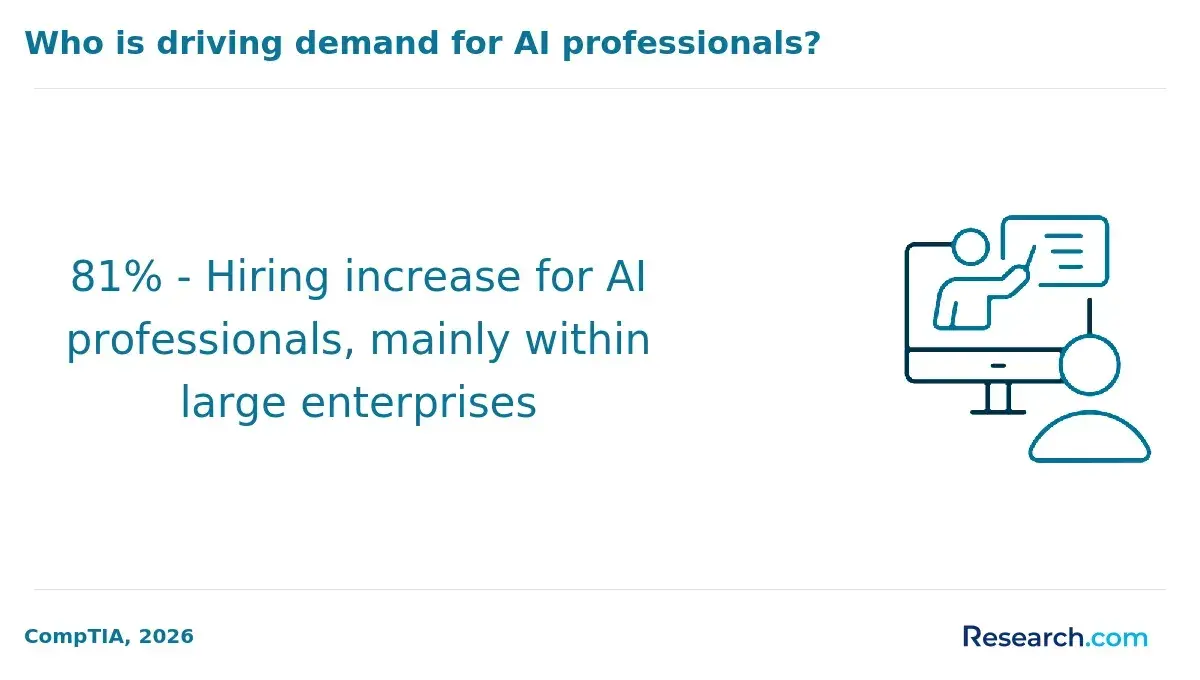
Healthcare professionals are increasingly transitioning to AI careers as these technologies become integral to clinical practice. By 2026, 81% of physicians expect to use AI tools, a jump from 38% in 2023, according to the American Medical Association. This shift highlights a growing need for expertise in interpreting AI outputs to enhance patient care and streamline workflows.
Key benefits of artificial intelligence careers for healthcare workers include:
- Improved diagnostic accuracy through AI algorithms analyzing medical images and patient data more precisely than traditional methods.
- Reduction of administrative burdens, allowing more focus on direct patient interactions.
- Opportunities to develop AI models tailored to clinical challenges such as disease progression prediction and personalized treatment plans.
- Ensuring ethical AI deployment to protect patient safety and privacy.
For healthcare workers, pursuing AI roles allows them to shape technology that meets real-world medical needs. Graduates with combined healthcare and AI education are in demand across research institutions, startups, and hospital innovation teams.
However, acquiring programming skills and AI knowledge can be challenging, making targeted interdisciplinary training essential. Courses covering machine learning, clinical data science, and regulations help bridge these gaps. Students seeking accelerated paths to enter this field may explore options like the fastest computer science degree programs to gain foundational skills efficiently.
What AI degree paths fit healthcare professionals?
Healthcare professionals aiming for advanced knowledge should consider AI degree programs for healthcare professionals that blend medical expertise with data science, machine learning, and health informatics. Programs such as master's degrees or certificates in health informatics, biomedical informatics, or clinical data science prepare students to manage electronic health records, build predictive models, and apply AI tools effectively in clinical environments.
There are also specialized healthcare specializations in artificial intelligence degrees like a master's in artificial intelligence with a healthcare focus. These emphasize developing algorithms for medical imaging, genomics, and patient diagnostics, equipping learners to design AI applications tailored to medical challenges.
The global AI in healthcare market is rapidly expanding, valued at $21.66 billion in 2025 and projected to reach $110.61 billion by 2030 with a 38.6% CAGR, enhancing career opportunities in AI-driven diagnostics, personalized medicine, and hospital management systems.
Professionals without formal technical backgrounds can benefit from bridging degrees or certificates in AI fundamentals or data analytics. Leadership aspirants may also pursue an MBA with an emphasis on healthcare technology or AI strategy. Key factors when selecting a program include accreditation, faculty expertise in healthcare AI, and opportunities for hands-on clinical data experience.
For those seeking flexible options, exploring online masters in AI can provide access to quality education tailored to this evolving field.
Can healthcare professionals earn AI degrees online?
Healthcare professionals can advance their careers through online AI degree programs for healthcare professionals tailored to meet clinicians' unique needs. These programs include fully online master's degrees and certificate options in artificial intelligence or healthcare informatics with AI concentrations. They cover essential topics such as machine learning, data analytics, natural language processing, and AI ethics relevant to clinical practice.
Formats vary, ranging from part-time courses accommodating working professionals to accelerated full-time tracks. For instance, nursing professionals may complete a master's in Artificial Intelligence in Healthcare within 18 to 24 months, benefiting from flexible schedules. Certificate programs often take 6 to 12 months and provide a focused way for clinicians to upskill quickly without a full degree commitment.
Choosing the right program requires careful review of curriculum relevance, faculty expertise, healthcare partnerships for practical AI application, and accreditation or recognized certifications that support career growth. The value of AI skills in healthcare is underscored by an average ROI of $3.20 for every $1 invested in AI and returns within 14 months, according to AdAI, which fuels strong job demand and competitive salaries.
In addition to degrees and certificates, many professionals pursue earning artificial intelligence certifications in healthcare to complement their expertise. For those interested in advanced academic options, exploring a comprehensive online PhD AI can be a strategic step toward leadership roles.
What accreditation should AI programs have?
Accredited AI certification programs for healthcare professionals should be vetted by recognized bodies that ensure clinical applicability and academic rigor. Key accreditations come from organizations like the Commission on Accreditation of Healthcare Management Education (CAHME) or regional agencies acknowledged by the U.S. Department of Education. These accreditations confirm that curricula blend AI fundamentals with healthcare workflows and regulatory standards.
Programs meeting recognized AI program standards in healthcare education often align with criteria from professional bodies such as the American Medical Informatics Association (AMIA). This alignment guarantees practical skills in clinical informatics, including data interpretation, machine learning integration, and patient privacy safeguards.
Healthcare professionals must look for AI training that includes:
- Hands-on experience with AI-powered Electronic Health Record (EHR) systems designed to reduce documentation burden
- Ethical and legal compliance training related specifically to healthcare data
- Instruction on clinician-AI collaboration to improve patient outcomes
A multisite JAMA study showed that AI ambient scribes reduced daily EHR time by over 13 minutes and documentation time by 16 minutes, allowing nearly half an additional patient visit weekly. Such outcomes highlight the importance of accredited programs for mastering AI applications that ease workload and reduce burnout.
Prospective students should verify the currency and recognition of program accreditation to ensure credentials support career growth and compliance. Those interested in accelerated pathways may consider options like the fastest cyber security degree to complement their AI expertise in healthcare technology.
What coursework is in healthcare-focused AI programs?
Healthcare-focused artificial intelligence programs combine medicine and technology through specialized coursework. Core classes often cover machine learning basics, data analytics, biomedical informatics, and programming languages such as Python or R. These foundational skills empower students to manage and analyze healthcare data effectively.
Advanced coursework may include:
- Clinical decision support systems that assist diagnosis and treatment planning
- Natural language processing for interpreting electronic health records
- Medical imaging analysis using AI techniques on radiology and pathology images
- Health data ethics and privacy to ensure regulatory compliance and patient protection
- AI integration into healthcare workflows, focusing on implementation challenges and user-centered design
Hands-on projects and case studies allow learners to develop AI applications tailored for healthcare, such as predicting disease outcomes or optimizing hospital resource use. According to a 2026 Wolters Kluwer survey, 52% of doctors use AI tools daily, highlighting the importance of bridging clinical knowledge with AI solutions.
Interdisciplinary collaboration is emphasized, enabling communication between technical teams and healthcare providers. Many programs offer electives in genomics, pharmacology, or healthcare management to deepen specialized expertise. Students graduate prepared to innovate at the intersection of medicine and AI across diverse healthcare settings.
What admissions requirements do AI programs usually require?
Applicants to AI programs generally need at least a bachelor's degree in fields like computer science, data science, engineering, statistics, or healthcare. Many programs prefer candidates with experience in programming languages such as Python or R and a solid grasp of machine learning principles. For master's and doctoral levels, strong quantitative skills, including calculus, linear algebra, and probability, are frequently required.
Certificate programs and bootcamps designed for healthcare workers often waive formal degree requirements but expect proven healthcare experience and basic computing abilities. These options commonly serve professionals seeking targeted upskilling without full academic commitments.
Standardized test requirements vary: some graduate AI or machine learning programs still request GRE scores, while others emphasize holistic criteria like professional experience, project portfolios, or letters of recommendation. Healthcare professionals moving into AI should highlight interdisciplinary expertise connecting clinical and computational knowledge.
Practical experience, such as internships, research, or jobs involving data analysis and predictive modeling, greatly enhances admission prospects. Applicants may also provide personal statements to explain their motivation for integrating healthcare with AI, focusing on problem-solving capabilities.
Between Q1 and the year-end of 2024, generative AI adoption in healthcare organizations rose from 72% to 85%, according to Vention's 2025 AI in Healthcare statistics. This trend drives demand for accessible education pathways that acknowledge a range of academic and professional backgrounds.
How long do AI programs take and what do they cost?
AI education programs for healthcare professionals vary significantly in duration and cost, depending on the depth of training and program type. Entry-level certificates often span 6 weeks to 3 months with part-time study options, ideal for quick upskilling. Advanced diplomas and graduate degrees may take 6 months to 2 years of full- or part-time study, blending technical AI expertise with clinical applications to prepare graduates for roles in healthcare AI development and management.
Costs differ by program scope and institution: short certificate courses typically range from $1,000 to $5,000, while master's programs and advanced degrees can cost between $15,000 and $60,000. Online or hybrid formats may lower tuition expenses, whereas in-person programs usually demand higher fees. Many employers offer tuition assistance to support workforce training in AI.
The rapid integration of AI in healthcare drives demand for skilled practitioners. For instance, as of 2026, 90% of health systems have implemented AI in imaging and radiology, and all are adopting ambient clinical documentation tools, according to AdAI's Healthcare AI Statistics 2026. This prevalence underscores the value of targeted certifications in AI ethics, data science, or clinical AI applications, which can deliver focused skills without lengthy commitments.
When selecting programs, consider curriculum relevance, hands-on experiences, and alignment with career goals. Cost-effective options with strong industry recognition often provide the best pathways for timely advancement in healthcare AI careers.
What AI jobs can healthcare professionals pursue?
Healthcare professionals have multiple opportunities in AI-related careers that build on their clinical knowledge. Roles include clinical data scientists who refine diagnostic algorithms by analyzing medical data and AI health informatics specialists responsible for embedding AI tools in electronic health records. These experts ensure AI aligns with patient outcomes and clinical needs.
Other key positions involve AI product managers in healthcare technology firms who oversee the creation of AI-enabled devices and software. Regulatory affairs specialists with healthcare backgrounds are vital for navigating FDA approval processes; by May 2025, the FDA had authorized 1,247 AI- or machine learning-powered medical devices, highlighting the importance of regulatory expertise.
Healthcare professionals can also pursue roles as AI ethicists focusing on patient privacy, fairness, and safety, or work in AI-driven personalized medicine and predictive analytics in collaboration with data scientists. Translational AI scientists bridge experimental algorithms and clinical application, while educators integrate AI into medical training and professional development.
Success in these careers often requires additional training in computer science, data analytics, or relevant AI certifications. Assessing one's interests and experience is essential to select roles that maximize contribution in this evolving field.
What salaries do healthcare professionals earn in AI roles?
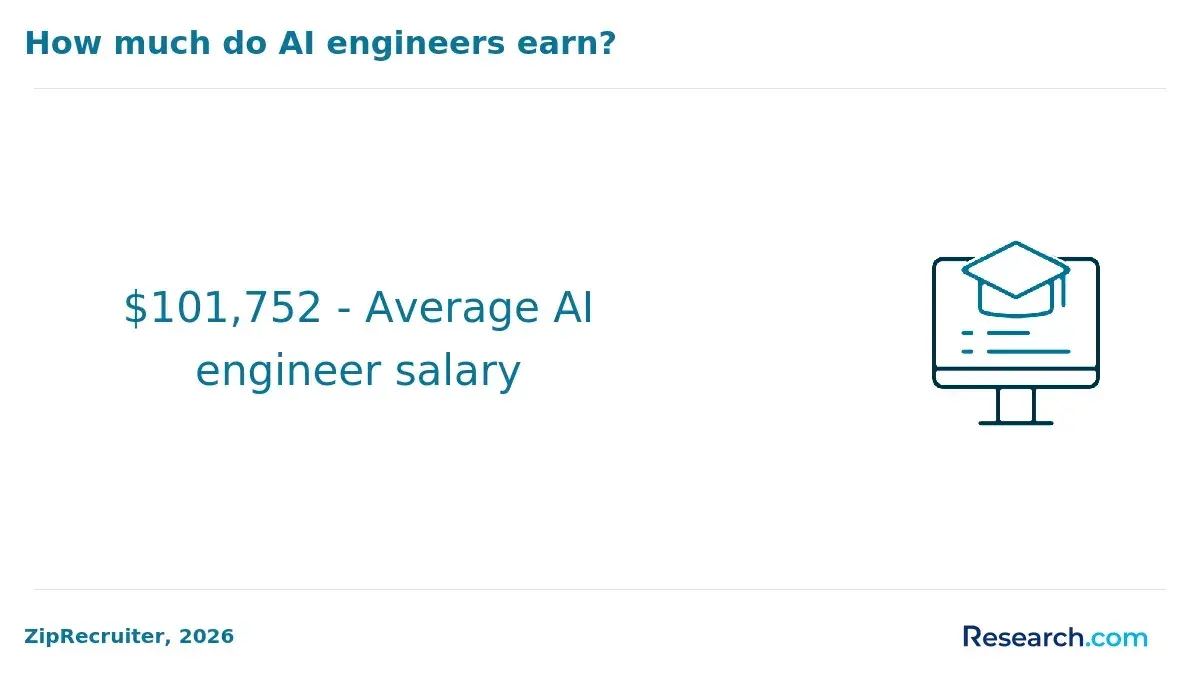
Healthcare professionals moving into AI roles can expect salaries between $90,000 and $180,000 annually, varying by experience, specialization, and specific AI applications. Clinical data scientists and AI-focused healthcare analysts usually earn from $100,000 to $140,000, while senior ai engineers and architects with clinical expertise often reach salaries between $160,000 and $180,000. Positions that merge patient care knowledge with AI system design, such as administrative AI specialists, offer competitive wages reflecting their vital roles.
Administrative AI stands out as a highly lucrative area, garnering 60% of healthcare ai investment in 2025 due to its ability to reduce costs quickly and measurably. Clinicians who develop these cost-saving AI tools can expect strong financial returns. Typical salaries include:
- AI product managers with healthcare backgrounds starting near $120,000 and potentially rising above $150,000 with project success.
- Healthcare AI consultants optimizing administrative workflows earning between $130,000 and $170,000.
- Machine learning specialists working on diagnostic AI tools earning from $110,000 to $160,000.
Certification in AI platforms and ongoing education significantly enhance earning potential. Expertise in integrating AI with electronic health records (EHR) or claim processing increases demand. Geographic location also affects salaries, with metropolitan healthcare tech hubs offering higher pay but more competition. Salary growth in these AI healthcare roles generally surpasses many traditional healthcare careers due to the combination of clinical knowledge and technological innovation.
What certifications help healthcare professionals enter AI?
Certifications supporting healthcare professionals' integration into artificial intelligence combine technical skills with healthcare-specific knowledge. The Certified Artificial Intelligence Practitioner (CAIP) is the most widely recognized, emphasizing AI fundamentals, machine learning algorithms, and ethical use. It is designed for clinicians with limited coding experience by focusing on applied AI rather than deep programming.
Those seeking technical depth often pursue the Professional Certificate in Machine Learning and Artificial Intelligence from institutions like Stanford University or MIT. These programs concentrate on data analysis, algorithm design, and deploying AI models tailored to healthcare data.
Specialized certifications such as the Healthcare AI Engineer Certification address healthcare data standards, electronic health records (EHR) integration, and AI diagnostics, helping clinicians adapt workflows into AI-ready formats. For roles focused on data governance, the Certified Health Data Analyst (CHDA) and Health Informatics Certification develop essential skills for managing healthcare datasets that train dependable AI models.
Healthcare AI investment is projected to reach $1.4 billion in 2025, nearly tripling the previous year's figure, reflecting the growing need for certified experts who bridge medicine and AI technology safely and effectively.
Choosing the right certification involves balancing technical expertise with healthcare relevance to meet evolving hybrid career demands.
Other Things You Should Know About Artificial Intelligence
In 2027, healthcare professionals are actively collaborating with regulatory bodies to develop frameworks for AI use in medicine. They emphasize transparency, patient safety, and data privacy to ensure AI technologies comply with ethical and legal standards.
Ethical concerns around artificial intelligence in medicine include data privacy, bias in algorithms, and transparency in AI decision-making. Ensuring that AI tools do not perpetuate healthcare disparities or make unexplainable recommendations is critical. Healthcare professionals must balance innovation with the responsibility to maintain patient trust and fairness.
Yes, artificial intelligence can enhance patient outcomes by enabling earlier diagnosis, personalized treatment plans, and continuous monitoring. AI algorithms can analyze vast amounts of data quickly, helping clinicians detect patterns that may be missed otherwise. This supports more accurate and timely medical decisions across various specialties.
Healthcare professionals need strong communication skills to explain AI-driven insights to patients and colleagues clearly. Critical thinking is essential to interpret AI recommendations and assess their clinical relevance. Additionally, understanding ethical considerations and maintaining a patient-centered approach are crucial when integrating AI into healthcare practice.
In 2027, healthcare professionals navigating AI roles often confront challenges like learning new technical skills, adapting to rapid technological changes, and understanding AI regulations. Upskilling is crucial, and a responsible AI governance master’s can provide essential knowledge for ethical AI integration.
References
- 2025: The State of AI in Healthcare | Menlo Ventures https://menlovc.com/perspective/2025-the-state-of-ai-in-healthcare/
- Expanding our AI and Healthcare Portfolio - AI Now Institute https://ainowinstitute.org/publications/research/expanding-our-ai-and-healthcare-portfolio
- AI pricing: how much does AI cost in 2025? | Future Processing https://www.future-processing.com/blog/ai-pricing-is-ai-expensive/
- Eligibility Criteria for AI Courses in Germany https://www.yesgermany.com/eligibility-criteria-for-ai-courses-in-germany/
- New Use of Artificial Intelligence Accreditation Policy and Procedures - Middle States Commission on Higher Education https://www.msche.org/2025/07/02/new-use-of-artificial-intelligence-accreditation-policy-and-procedures/
- Why trust GlobalHealth Education? https://globalhealtheducation.com/au/resources/healthcare-jobs-that-ai-cant-replace
- How Much Does it Cost to Learn AI? https://blog.nobledesktop.com/learn/ai/ai-cost-to-learn
- Guidance on the Responsible Use of Artificial Intelligence (AI) in Accredited Continuing Education (CE) - ACCME https://accme.org/resource/guidance-on-ai/
- AI Salaries - How Much AI Jobs Pay https://www.tractionkeys.com/post/ai-salaries---how-much-ai-jobs-pay
- 1,750 professionals ready to embrace AI in healthcare - EIT Health https://eithealth.eu/news-article/1750-professionals-ready-to-embrace-ai-in-healthcare/