2027 Artificial Intelligence Degree Programs With Strong Employer Recognition

Co-Founder and Chief Data Scientist
Many professionals with degrees outside STEM fields face uncertainty when seeking to enter the artificial intelligence industry. Without recognized credentials, employers may overlook candidates despite relevant skills or experience. Traditional degree pathways often lack the flexibility needed by working adults balancing careers and personal commitments. The challenge lies in identifying accredited programs that deliver rigorous training while earning respect among top employers.
This article reviews artificial intelligence degree programs known for strong employer recognition and flexible formats, helping prospective students navigate options to build credentials that open doors in the competitive AI job market.
Key Things You Should Know
- In 2026, 72% of U.S. employers prioritize candidates with degrees in artificial intelligence from accredited programs with strong industry ties and project-based curricula.
- Top AI degree programs integrate interdisciplinary skills, combining computer science, ethics, and data science to meet evolving labor market demands.
- Recent data show graduates of highly recognized AI programs earn an average starting salary 15% above the national STEM average, reflecting strong employer recognition.
What is an artificial intelligence degree, and what careers does it prepare you for?
An artificial intelligence degree offers essential skills in machine learning, data science, algorithms, and programming, preparing students to develop AI-driven solutions across many sectors. Graduates pursuing artificial intelligence degree programs with strong employer recognition often find roles like AI engineer, data scientist, machine learning specialist, and research scientist. These positions focus on creating intelligent systems that automate workflows, analyze complex datasets, and enhance decision-making.
Core coursework typically covers neural networks, natural language processing, robotics, and ethical AI challenges. Many programs emphasize hands-on projects involving fields such as computer vision or speech recognition. This training equips professionals to work in diverse industries including healthcare, finance, manufacturing, and government where AI adoption is accelerating.
Career paths and job opportunities in artificial intelligence degree fields demand a blend of computer science knowledge and domain-specific expertise. For example, healthcare AI roles require medical data familiarity, while autonomous vehicle development combines robotics and sensor integration. Since AI technology rapidly evolves, ongoing skill updating is critical for career success.
U.S. employers particularly seek AI skills in software and IT sectors; software developers, who numbered about 1.65 million, often specialize in AI-enhanced applications or AI model deployment. For those interested in advancing quickly, exploring a computer science accelerated degree can be a strategic step to enter the AI workforce with a competitive advantage.
Which artificial intelligence degree programs have the strongest employer recognition?
Top-ranked artificial intelligence degree programs with employer approval are primarily concentrated at leading universities known for their rigorous computer science and AI offerings. The Massachusetts Institute of Technology (MIT), ranked #1 worldwide for Computer Science & Information Systems by QS World University Rankings by Subject 2025, continues to be highly regarded by employers. Its cutting-edge research, strong industry partnerships, and influential alumni network secure its graduates' strong employer recognition in artificial intelligence degree programs.
Other institutions with notable employer recognition include Stanford University, Carnegie Mellon University, and the University of California, Berkeley. These programs balance practical AI applications with strong theoretical foundations and hands-on projects, which align with industry needs in technology, finance, healthcare, and automotive sectors.
Prospective students should also consider programs that integrate machine learning, natural language processing, and ethical AI. Interdisciplinary concentrations, such as AI combined with data science or robotics, enhance employability. For those exploring flexible options, part-time or online degrees from reputable institutions maintain strong employer respect when academic rigor is upheld.
Cost is another important consideration. Students interested in affordable options can review resources like the mechanical engineering degree online cost as a comparative guide to budgeting educational expenses effectively.
How do you verify accreditation for artificial intelligence programs in the United States?
To verify accreditation for artificial intelligence degree programs in the United States, start by confirming the institution's accreditation is recognized by a U.S. Department of Education (USDE) approved agency. The Department's Database of Accredited Postsecondary Institutions and Programs (DAPIP) is the primary federal resource for legitimacy checks. Using this database verifies that both the institution and its accrediting agency are officially acknowledged, which is crucial for credibility.
Employers and graduate schools often mandate degrees from USDE-recognized accreditors to ensure educational quality. Without such accreditation, graduates may face challenges in employment or licensure. For emerging or non-traditional AI programs, it's vital to contact the school's admissions or registrar's office to clarify accreditation status.
Prospective students should always confirm accreditation before enrollment to avoid programs that may not be accepted by employers or institutions. For those interested in related fields, exploring a game development degree can also be a valuable path linked to artificial intelligence education.
What concentrations or specializations are available within artificial intelligence degree programs?
Many artificial intelligence degree programs offer concentrations tailored to distinct industry needs and technical applications. The most popular specialization is machine learning, which dominates the job market. According to Lightcast's "The Speed of Skill Change" (2025), machine learning appeared in 1.9 million U.S. AI job postings in 2024. This area focuses on algorithms, statistical models, and neural networks that enable systems to learn from data.
Other top regional artificial intelligence concentration options include:
- Natural Language Processing (NLP): Enables AI to interpret and generate human language, useful for chatbots and virtual assistants.
- Computer Vision: Processes visual data for applications like autonomous vehicles and facial recognition.
- Robotics: Merges AI with mechanical engineering to create intelligent machines for manufacturing, healthcare, and logistics.
- Data Science and Analytics: Covers big data management, statistical analysis, and predictive modeling crucial across sectors.
- AI Ethics and Policy: Focuses on the social and legal implications of AI, preparing students for governance roles.
These specializations typically involve practical projects aligned with industries such as finance, healthcare, or cybersecurity. Prospective students seeking AI degree program specializations for career advancement should carefully review curricula to match their professional goals and employer demands. Programs emphasizing machine learning and applied AI fields generally yield stronger employment outcomes in the competitive U.S. market. For those interested in security aspects, exploring a cyber security degree can complement AI knowledge effectively.
What courses and skills are typically taught in artificial intelligence bachelor's and master's programs?
Bachelor's and master's programs in artificial intelligence combine foundational theory and practical skills. Core courses include machine learning, data structures, algorithms, statistics, and probability theory, essential for building models that recognize patterns and predict outcomes.
Programming is pivotal, with Python as the leading language in U.S. job markets. Students work with Python libraries like TensorFlow, PyTorch, and scikit-learn, while some programs also teach R, Java, or C++ for specific uses.
Key subjects include natural language processing, computer vision, robotics, and neural networks, offering hands-on exposure to human language processing, visual data interpretation, and autonomous system control. Ethical AI development and policy are increasingly emphasized to prepare students for responsible innovation.
Mathematics such as linear algebra, calculus, and optimization form the backbone of many AI models. Students gain experience in data engineering, including cleaning and preparing datasets. Many master's programs offer research projects or internships to strengthen practical skills.
Advanced programs often cover model deployment, cloud computing, and system scaling. Familiarity with big data tools like Hadoop and Spark is increasingly valued in graduate curricula.
Prospective students should anticipate a curriculum blending theory, coding proficiency, and applied ethics to align with employer expectations and industry standards.
What are the admission requirements for artificial intelligence undergraduate and graduate programs?
Admission to artificial intelligence undergraduate programs generally requires a high school diploma with strong skills in mathematics, particularly calculus and linear algebra, along with foundational computer science knowledge. Many institutions ask for SAT or ACT test scores, though test-optional policies are becoming more common. Applicants should show proficiency in programming languages like Python or Java through coursework or practical experience. Letters of recommendation and personal statements focusing on interest in AI fields are standard requirements.
Graduate artificial intelligence programs typically expect a bachelor's degree in computer science, engineering, mathematics, or related areas, with a minimum GPA around 3.0. GRE scores remain important for many schools, but test flexibility has increased. For instance, roughly half of U.S. MBA programs accepted GRE scores recently, reflecting evolving admissions trends that affect AI-adjacent fields. Some universities allow GRE or GMAT submission or waive testing for candidates with substantial professional experience.
Graduate applicants often need letters of recommendation, official transcripts, and a statement of purpose detailing AI research interests. Work experience or research publications strengthen applications. While some programs require GRE subject tests in computer science or math, this is rare. International students must provide TOEFL or IELTS scores to prove English proficiency, usually expecting a TOEFL score of 90 or above.
Early preparation of transcripts, recommendation letters, and standardized test arrangements is vital given competitive admission pools for artificial intelligence studies.
How do online artificial intelligence degree programs compare with on-campus programs?
Online artificial intelligence degree programs from accredited U.S. institutions increasingly match the rigor and recognition of their on-campus counterparts. According to the 2024-2025 Best Online Programs rankings by U.S. News, over 1,800 online bachelor's and master's degrees were assessed, showing growing parity in employer and academic acceptance. Many programs combine practical AI skills-like machine learning, natural language processing, and data analytics-with project-based learning, ensuring graduates gain applicable expertise.
When deciding between formats, prospective students should weigh personal learning preferences, access to resources, and career objectives. The consistent quality highlighted by U.S. News rankings means employers respect accredited online degrees, especially when candidates demonstrate applied AI skills and relevant experience.
How long do artificial intelligence degree programs take, and what do they cost?
Artificial intelligence degree programs in the U.S. vary by level and typically take from two to six years to complete. Associate degrees usually require about two years, while bachelor's degrees take four years of full-time study. Master's programs generally last one to two years, depending on full-time or part-time enrollment. Doctoral studies can extend from three to six years, influenced by the research scope and dissertation progress.
Tuition costs for AI majors generally reflect broader trends in U.S. higher education. Average annual tuition and fees stand around $11,610 for public in-state students, $30,780 for public out-of-state students, and $43,350 at private nonprofit four-year universities. AI programs often reside within computer science or engineering departments, so their costs align with these averages.
What jobs can you get with an artificial intelligence degree, and what do employers expect?
Graduates holding a degree in artificial intelligence can pursue diverse roles such as AI engineer, machine learning specialist, data scientist, computer vision engineer, natural language processing (NLP) developer, and AI research scientist. Employers also seek experts in robotics, automation, and AI ethics advisory. These professionals design, implement, and maintain AI models, analyze large datasets, and integrate AI solutions across industries like healthcare, finance, and manufacturing.
Key technical skills include programming proficiency in Python, R, or Java, experience with deep learning frameworks such as TensorFlow or PyTorch, and solid understanding of algorithms, statistics, and data structures. Practical knowledge of cloud platforms like AWS or Azure, along with awareness of AI ethics, data privacy, and bias mitigation, are increasingly valued by employers.
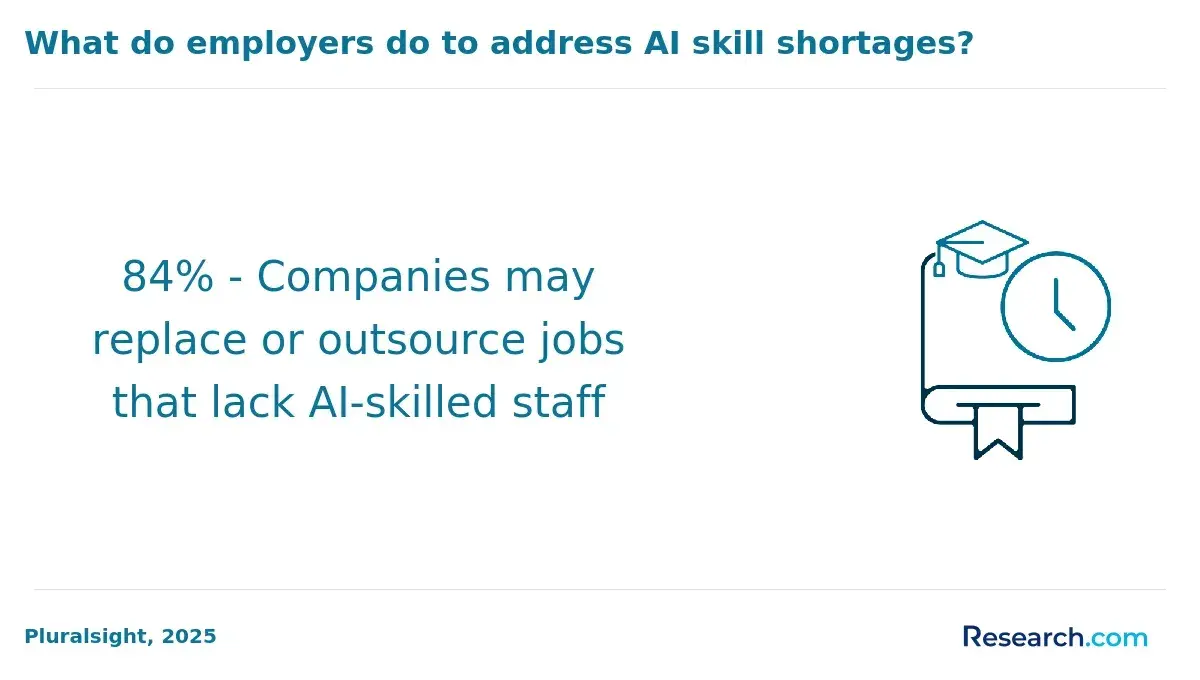
According to the Microsoft & LinkedIn Work Trend Index, 66% of global employers will not hire candidates without AI skills, making AI literacy essential beyond specialized roles. This trend benefits not just AI professionals but also software developers, business analysts, and project managers.
Prospective students should prioritize hands-on coursework, internships, and building a portfolio of AI projects. Certifications and ongoing learning are vital given rapid advances in artificial intelligence tools and applications.
What salary and job outlook can you expect with an artificial intelligence degree?
The median annual salary for professionals with an artificial intelligence degree is notably high. The U.S. Bureau of Labor Statistics reports that Computer and Information Research Scientists, a role closely tied to AI expertise, earned $145,080 in May 2024 (BLS Occupational Employment and Wage Statistics, released 2025). This wage surpasses many other technology sector salaries, reflecting the strong demand for AI skills.
Growth in AI fields is expected to outpace the average across all occupations. Industries such as healthcare, finance, manufacturing, and technology actively seek experts who can build intelligent systems, enhance data analytics, and optimize processes. Common roles include machine learning engineer, data scientist, AI developer, and research scientist.
Specialization in areas like computer vision or autonomous systems can lead to starting salaries above $160,000. Entry-level positions tend to start between $90,000 and $110,000, varying by location and company size.
AI capabilities also provide access to leadership roles in product development and research management. Communication and project management skills complement technical knowledge, further boosting career prospects.
Regional salary differences exist, with tech hubs such as Silicon Valley, Seattle, and Boston offering higher pay but also higher living costs. Certifications and ongoing education in emerging AI tools enhance upward mobility and earning potential in this fast-evolving field.
Other Things You Should Know About Artificial Intelligence
Employers seek graduates with strong foundations in machine learning, data analysis, programming languages like Python, and knowledge of neural networks. Additionally, practical experience with AI frameworks, problem-solving abilities, and proficiency in handling large datasets are highly valued. Communication skills and the ability to work in interdisciplinary teams also enhance employability.
Many artificial intelligence degree programs accept students from diverse academic backgrounds, although some prerequisite knowledge in mathematics and programming is often required. Bridge courses or foundational classes are commonly offered to help non-computer science majors prepare for advanced AI concepts. Prospective students should review program requirements carefully to ensure they meet or can fulfill prerequisites.
In 2027, AI degree programs with strong employer recognition often showcase robust industry connections offering valuable networking opportunities. Notable programs include Stanford University, Carnegie Mellon University, and the Massachusetts Institute of Technology, which maintain strong ties with leading tech companies and regularly host industry events, workshops, and guest speaker sessions.
Internships are highly important for gaining practical experience and enhancing job prospects after graduation. They allow students to apply theoretical knowledge to real-world problems, develop professional networks, and build industry-relevant skills. Many artificial intelligence programs encourage or require internships as part of the curriculum to better prepare students for competitive employment.
References
- Careers in AI: Opportunities and Pathways - ACS https://www.acs-college.com/careers-in-ai-opportunities-and-pathways
- What do you learn in a bachelor's in artificial intelligence? | edX https://www.edx.org/resources/what-do-you-learn-in-a-bachelors-in-artificial-intelligence
- Finding Your Ideal AI Career Path: Which Field in Artificial Intelligence Suits You Best? https://dev.to/furqanahmadrao/finding-your-ideal-ai-career-path-which-field-in-artificial-intelligence-suits-you-best-an5
- New Use of Artificial Intelligence Accreditation Policy and Procedures - Middle States Commission on Higher Education https://www.msche.org/2025/07/02/new-use-of-artificial-intelligence-accreditation-policy-and-procedures/
- Artificial Intelligence Course Eligibility: Requirements & Prerequisites https://www.mygreatlearning.com/artificial-intelligence/courses/eligibility
- Artificial Intelligence Career Paths: Roles, Salaries, and Skills https://www.h2kinfosys.com/blog/artificial-intelligence-career-paths-roles-salaries-and-skills/
- Online vs On-Campus Artificial Intelligence Degrees: Which Is Better? https://hakia.com/degrees/artificial-intelligence/online-vs-campus/
- Top Artificial Intelligence Courses: Fees and Duration https://collegevidya.com/blog/artificial-intelligence-course-fees-structure-duration/
- Top AI Graduate Programs To Kickstart Your Career in Artificial Intelligence Today https://www.investopedia.com/top-ai-graduate-programs-to-kickstart-your-career-in-artificial-intelligence-today-11916749
- A Complete 4-Year Course Plan for an Artificial Intelligence Undergraduate Degree https://www.mihaileric.com/posts/complete-artificial-intelligence-undergraduate-course-plan/