2027 AI Master's Degrees With Co-Op Opportunities

Co-Founder and Chief Data Scientist
Many professionals with degrees outside STEM fields aim to transition into artificial intelligence but face challenges balancing education with work. Traditional programs often lack flexibility or practical experience, making it harder to gain industry-ready skills.
Co-op opportunities offer essential hands-on learning while maintaining income, but finding programs that combine this with a master's degree can be difficult. This article explores accessible master's programs offering co-op placements, designed to help career changers enter artificial intelligence roles effectively and efficiently, providing a clear path into the field through accredited, flexible education options.
Key Things You Should Know
- Co-op opportunities in AI master's programs enhance practical skills and increase employment rates by up to 25% within six months after graduation.
- Leading U.S. institutions updated curricula in 2024 to include ethics, machine learning, and AI infrastructure, reflecting industry demands.
- Over 60% of AI master's degrees now offer flexible part-time or online co-op options, catering to working professionals and diverse student needs.
What is an AI master's degree co-op program, and how does it work?
An AI master's degree co-op program benefits students by combining advanced coursework with paid, structured work experiences at partner companies. This approach integrates academic study with practical industry exposure, allowing students to alternate between terms of study and full-time work placements.
Through these programs, students gain hands-on skills in machine learning, natural language processing, and data analytics by applying theoretical AI concepts in real-world environments.
Co-op placements usually last three to six months and are often counted as academic credit. This structure helps students build professional networks, strengthen technical skills, and develop essential workplace competencies before graduation.
Employers also benefit by assessing potential hires in low-risk settings, often resulting in job offers after program completion. The integration of practical experience is a key feature highlighting how AI master's co-op programs integrate practical experience effectively with academic learning.
Program models vary: some require multiple rotations with different companies, while others focus on single, extended placements. Certain universities offer industry-specific co-ops aligned with specializations like healthcare AI or robotics, and some include remote or hybrid options to accommodate geography.
According to the National Association of Colleges and Employers (NACE) Class of 2024 report, paid co-ops and internships remain a top factor employers use to differentiate candidates.
Prospective students should verify co-op availability, employer partnerships, and support services when choosing programs. For those considering flexible pathways, a 2-year computer science degree online can complement learning in AI and related fields.
Which universities offer accredited AI master's degrees with co-op opportunities?
Several accredited universities in North America offer master's degrees in artificial intelligence with cooperative education opportunities that blend rigorous coursework with paid, supervised work placements.
Prominent programs at institutions like the University of Waterloo, Northeastern University, and Drexel University provide students with industry experience through multiple co-op or internship terms that typically last between 4 and 8 months.
Northeastern's AI master's program, for instance, includes up to three co-op placements with leading tech companies, while Waterloo emphasizes alternating academic and paid co-op terms totaling eight months or more.
These top accredited AI master's degree programs with cooperative education opportunities often list co-op or internship credits as part of their degree requirements, reflecting strong employer partnerships and robust career services support.
Students should verify that universities hold recognized institutional accreditation to qualify for federal Title IV aid, ensuring program quality and access to financial assistance. The U.S. Department of Education College Scorecard indicates that most master's-granting institutions meet these standards.
When comparing programs, consider factors such as flexibility, geographic location, and the strength of professional networks tied to co-op placements, as these influence the depth of industry exposure during the degree.
For students interested in affordability within this field, consulting a data science major ranking can provide useful insights to balance cost and quality.
How do co-op placements affect AI master's career outcomes and employability?
Co-op placements significantly enhance career outcomes and employability for AI master's graduates in North America by offering practical experience highly valued by employers.
According to the NACE Class of 2024 Student Survey / Outcomes Report, graduates with internship or co-op experience received notably higher overall job offer rates than those without.
This advantage in early career stages is especially relevant when considering the career outcomes of AI master's degrees with co-op in Canada, where local industry demand favors graduates with hands-on training.
These programs allow students to apply theoretical knowledge in real-world settings, building technical skills such as working with machine learning frameworks and data handling.
Beyond technical expertise, co-op placements foster professional networks with industry mentors and hiring managers, often leading to referrals or direct job offers following graduation.
Employers frequently retain co-op students since they are already familiar with company-specific workflows, reducing onboarding time. Co-ops also expose students to various AI subfields like computer vision, robotics, and ethical AI development, helping clarify specialization preferences and career directions.
Students should seek co-op programs embedded within their AI master's curricula or pursue paid internships aligned with their career goals. Prioritizing co-op experiences with reputable firms or research labs maximizes learning quality and employment outcomes.
Prospective students can explore options for affordable, flexible education paths such as an AI degree online to complement their practical experiences.
Key benefits of co-op placements include:
- Higher job offer rates, supported by NACE data
- Development of practical AI skills beyond academic theory
- Access to professional networks and mentorship
- Improved readiness and reduced time transitioning into full-time roles
- Clearer career direction through exposure to diverse AI industry sectors
Are AI master's co-op programs available online, on campus, or hybrid?
AI master's co-op programs online and on campus offer flexible formats to meet diverse student needs, including online, on-campus, and hybrid options. Many programs combine coursework with paid fieldwork, helping students gain practical experience alongside their degrees.
The expansion of remote internships for graduate students is notable; the National Center for Education Statistics highlights that a majority of graduate students enroll in at least one distance-education course, reflecting growing opportunities with online degrees.
On-campus AI master's co-op programs usually feature structured placements with local firms or university-affiliated labs, ideal for those seeking face-to-face mentorship and teamwork. Such programs often partner with tech firms in innovation hubs like Silicon Valley or Boston, providing rich hands-on experience.
Hybrid AI master's degree co-op opportunities blend online learning with mandatory in-person residencies and co-op rotations. These designs suit working professionals or distant students by combining remote study with occasional campus visits for collaborative projects and networking.
When choosing, consider factors such as:
- Access to employers: local recruitment is easier through on-campus programs
- Flexibility: online and hybrid formats support balancing work or family
- Geographic reach: remote co-ops open opportunities beyond regional markets
Prospective students should verify co-op availability linked to each delivery method and engage career services early to secure fitting placements.
For those exploring related options, an online cyber security degree can also offer flexible and practical learning pathways.
What accreditation should AI master's co-op programs have in the U.S.?
In the U.S., AI master's co-op programs must hold accreditation from agencies recognized by the Council for Higher Education Accreditation (CHEA) or the U.S. Department of Education (USDE) to ensure quality and industry relevance. Institutional accreditation from these recognized bodies is the primary benchmark that validates the legitimacy of programs nationwide.
While programmatic accreditation specific to AI is less common, it can complement institutional accreditation. For example, ABET accredits computing and engineering programs, which sometimes include AI-focused degrees, reinforcing technical rigor.
However, most AI master's co-op programs rely mainly on institutional accreditation for employer recognition and co-op eligibility.
Prospective students should verify that the institution offering the AI master's co-op is accredited by a CHEA- or USDE-recognized agency.
This accreditation affects federal financial aid eligibility, credit transferability, and degree acceptance in the job market. Regional accreditors like the Middle States Commission on Higher Education or the Western Association of Schools and Colleges are common recognized bodies.
Co-op programs must be administered through accredited institutions to guarantee academic credit for work terms and ensure adherence to labor standards.
When researching AI master's programs with co-op options, check accreditation status through the CHEA directory or USDE databases to avoid low-quality or unrecognized programs that could hinder career progression.
What are the typical admission requirements for AI master's co-op programs?
Admission to AI master's co-op programs typically requires a bachelor's degree in computer science, engineering, mathematics, or related STEM fields, with many schools expecting a minimum GPA of 3.0 on a 4.0 scale. Essential coursework often includes programming, linear algebra, calculus, and probability.
Applicants benefit from a strong resume showcasing internships, research, or projects in AI or machine learning. While GRE scores are increasingly optional, some programs still use them for competitive evaluation, especially if academic records are weaker. It's important to verify requirements for each program.
Letters of recommendation play a crucial role, ideally from professors or professionals familiar with the applicant's technical and research skills. Personal statements should clearly express interest in AI, career goals, and readiness for co-op work terms, demonstrating communication skills and professional motivation.
International students must provide proof of English proficiency through exams like TOEFL or IELTS unless exempted by prior English-language education. Some programs also require interviews to assess technical knowledge and interpersonal skills essential for workplace success.
Applicants with prior co-op or internship experience in AI-related roles often have an advantage, as successful placements depend on demonstrated ability to integrate academic knowledge with practical applications.
What courses and skills are covered in AI master's programs with co-ops?
Master's programs in artificial intelligence with co-op opportunities provide students with essential skills aligned to industry demands. Core courses typically cover machine learning algorithms, deep learning architectures, natural language processing, computer vision, and data mining-foundations necessary for building effective AI systems.
Students gain practical experience in data engineering, model training, and deploying AI workflows on cloud platforms using containerization and APIs. Labs often include working with frameworks like TensorFlow and PyTorch and deploying models with Docker or Kubernetes.
Ethical AI design is also emphasized, focusing on addressing bias, fairness, and explainability to prepare graduates for regulatory and societal challenges. Co-op placements offer hands-on experience with real datasets and business problems, deepening skills in model tuning, hyperparameter optimization, and performance evaluation.
According to LinkedIn's 2025 Work Change report, AI literacy remains the fastest growing skill category among members. This trend drives master's curricula to emphasize machine learning, data manipulation, and model deployment, aligning graduate skills with employer needs.
Supplemental skills taught include programming in Python and R, data visualization, and software engineering practices such as version control. These integrated academic and co-op experiences equip graduates to enter the AI workforce with strong practical expertise.
How long do AI master's co-op programs take, and what do they cost?
AI master's co-op programs usually require 18 to 24 months to finish, varying by the institution and program design. Many include one or two paid co-op work terms lasting 4 to 6 months each, which count toward degree credits.
This approach lets students alternate between academic study and paid work experience, extending the program beyond a typical one-year full-time master's degree.
Tuition costs for AI master's degrees differ widely. According to the NCES Digest of Education Statistics 2024, graduate tuition and fees at U.S. public universities have steadily increased. Annual tuition often ranges between $12,000 and $30,000 or more, depending on the school.
Paid co-op terms provide key financial benefits, helping students offset tuition and living expenses. Earnings typically range from $15 to $30 per hour, which can reduce loan dependency and improve the return on investment of the degree.
Students should confirm the number and length of co-op terms a program offers, as these factors influence both the total program length and cost. Some programs offer flexible part-time or accelerated study options without co-ops, which may shorten time to degree but lack paid work experience.
- Program duration: 18-24 months
- Co-op work terms: 4-6 months each, paid
- Tuition range: $12,000-$30,000+
- Co-op pay: $15-$30/hour
What AI job roles commonly hire graduates from master's co-op programs?
Graduates of AI master's co-op programs often secure roles as machine learning engineers, data scientists, AI research scientists, and AI software developers. Labor-market analysis from Lightcast highlights that "Machine Learning Engineer" and "Data Scientist" rank among the top-demand AI jobs in the U.S., drawing on skills honed through practical co-op experiences.
Machine learning engineers develop and refine algorithms that allow systems to learn from data, applying tools such as Python, TensorFlow, and cloud platforms. Data scientists focus on analyzing complex datasets to produce actionable insights, often involving statistics and data visualization, skills sharpened during co-op assignments.
Additional career paths include AI research scientists exploring emerging methods and AI software developers who embed AI models into products. Both roles benefit from hands-on work in research labs and collaborative projects.
Other positions hiring master's co-op grads include natural language processing specialists, computer vision engineers, and AI product managers, each requiring specialized expertise acquired during co-op placements.
Key advantages of AI co-op placements:
- Practical experience with relevant technologies and tools
- Enhanced understanding of industry-specific needs
- Improved job readiness and employability
Choosing co-op experiences that align with targeted career roles significantly boosts hiring prospects by deepening domain knowledge and technical proficiency.
What salaries and job outlook can AI master's co-op graduates expect?
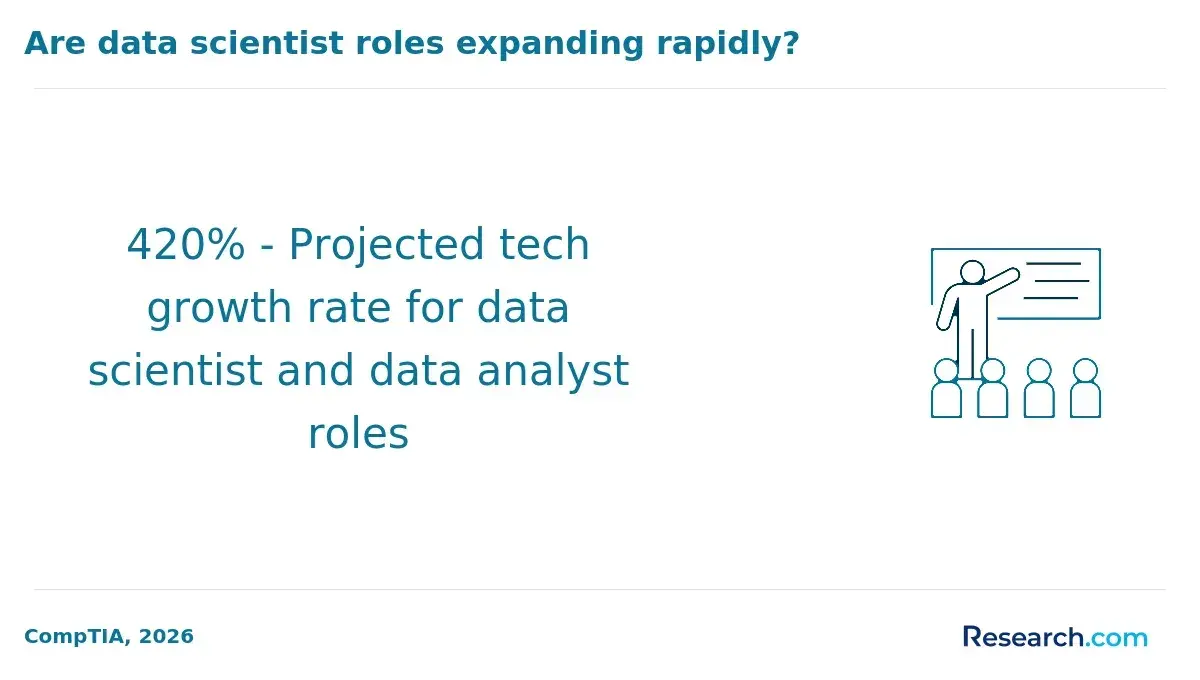
Graduates of AI master's programs with co-op experience are positioned for strong salary offers and excellent job prospects. The U.S. Bureau of Labor Statistics projects employment growth for related roles like data scientists to expand much faster than average through 2032.
This trend is fueled by rapid adoption of AI technologies in industries such as healthcare, finance, and technology.
Starting salaries for AI master's graduates with co-op experience typically range between $85,000 and $110,000, influenced by location, company size, and technical expertise.
The latest BLS Occupational Outlook Handbook highlights the notably high median wage for data scientists, showcasing real earning potential. Hands-on co-op roles provide a competitive edge through practical experience, often leading to faster career advancement compared to those without such exposure.
Common job options include machine learning engineer, AI research scientist, data analyst, and AI product manager. Employers favor candidates who demonstrate applied knowledge in real-world projects as gained through rotational co-op experiences at companies actively investing in AI innovation.
Further career advancement is possible, with senior AI specialists and strategy leaders earning upwards of $150,000 annually. The combination of a master's degree and co-op experience greatly enhances marketability and growth in this fast-evolving field.
Other Things You Should Know About Artificial Intelligence
Co-op placements in AI master's programs typically last between 3 to 6 months. These placements are designed to provide hands-on industry experience, allowing students to apply theoretical knowledge in real-world settings, often within tech companies or research institutions.
In 2027, AI master's students can find co-op opportunities in various industries including technology firms, healthcare, finance, automotive, and retail. These sectors value AI expertise for tasks such as data analysis, algorithm development, and improving customer experiences through AI-driven solutions.
Applicants typically need a bachelor's degree in computer science, engineering, or a related field, along with a minimum GPA of 3.0. Some programs may require GRE scores and foundational courses in machine learning or data analysis for 2027 enrollment.
Many AI master’s programs award 0 to 3 credits for the co-op term. Students usually complete at least one full-time work placement, log employer evaluations, and submit a final reflection or report for academic credit and graduation approval.
References
- Collaborative Specialization in Artificial Intelligence (M.Sc./M.A.Sc.) https://www.uoguelph.ca/programs/csai/
- Artificial Intelligence (AI) https://ai-master.org/requirements
- Applied Artificial Intelligence & Machine Learning (Optional Co-op) https://www.conestogac.on.ca/fulltime/applied-artificial-intelligence-machine-learning
- Udacity Partners with Woolf to Launch a Fully Accredited Master’s in Artificial Intelligence | Woolf News & Updates https://woolf.university/news/news-udacity-woolf-accredited-masters-ai
- 10 graduate roles affected by AI | Handshake https://joinhandshake.co.uk/blog/students/10-graduate-roles-affected-by-ai
- AI Careers - Top AI Jobs with Education Requirements and Pay https://aidegreeprograms.org/ai-careers/
- What can I do with a master's in artificial intelligence? | edX https://www.edx.org/resources/what-can-you-do-with-a-masters-in-artificial-intelligence
- M.SC. IN Artificial Intelligence https://put.poznan.pl/msc-artificial-intelligence
- MS in Artificial Intelligence (AI) in USA: Top Universities & Fees 2025 https://yocket.com/blog/masters-in-artificial-intelligence-in-usa
- Poznan University of Technology https://study.gov.pl/poznan-university-technology-22