2027 AI Bachelor's Degree Programs That Include Big Data Training

Co-Founder and Chief Data Scientist
Many professionals with unrelated undergraduate degrees struggle to enter the rapidly evolving artificial intelligence field due to limited access to programs that combine core AI concepts with big data skills. The lack of flexible, accredited bachelor's degree options poses a barrier for those aiming to pivot their careers efficiently without starting from scratch. Identifying programs that integrate big data training alongside AI fundamentals is crucial for gaining competitive skills in data-driven industries.
This article reviews current AI bachelor's degree programs that include big data education, helping readers select pathways that prepare them for meaningful roles in the AI workforce.
Key Things You Should Know
- In 2026, over 60% of AI bachelor's programs in the U.S. integrate big data training to ensure graduates are proficient in handling large datasets for machine learning and predictive analytics.
- Curricula now emphasize interdisciplinary skills combining AI, statistics, and data engineering, reflecting industry demands for experts who can build scalable AI-driven big data solutions.
- Average program durations remain four years, with more institutions offering hands-on projects and internships focused on big data platforms, enhancing job readiness in sectors like finance and healthcare.
What is an AI bachelor's degree with big data training?
An AI bachelor's degree with big data training combines core principles of artificial intelligence with comprehensive instruction in big data technologies and analytics. Such undergraduate artificial intelligence degrees focusing on big data analytics prepare students to design, develop, and deploy AI systems capable of managing massive datasets. The curriculum typically includes machine learning, data mining, statistical analysis, data engineering, and cloud computing, equipping graduates to handle complex data pipelines and scalable AI architectures.
Program focuses vary, with some prioritizing software development and others emphasizing data science or AI research foundations. Projects may involve real-time analytics in industries such as healthcare or finance, illustrating big data's pivotal role in AI decision-making. The global big data analytics market is projected to soar, driving demand for programs embedding big data pipelines within AI bachelor's degree programs.
For those exploring the AI career path, this integrated training offers practical skills in emerging technologies that dramatically enhance employability in data-driven sectors including technology, healthcare, finance, and manufacturing.
Which U.S. schools offer accredited AI bachelor's programs with big data coursework?
Several U.S. universities offer accredited AI bachelor's degrees with big data coursework designed to meet expanding industry demands. A key marker of quality is accreditation by ABET's Computing Accreditation Commission (CAC), which currently accredits over 500 computing programs nationwide. This accreditation signals programs that deliver a rigorous blend of AI fundamentals and extensive big data training.
Top U.S. universities offering AI and big data undergraduate programs include:
- Carnegie Mellon University: Provides a Bachelor of Computer Science with an Artificial Intelligence track focusing on machine learning, data mining, and scalable data systems.
- Georgia Institute of Technology: Offers a Computer Science BS with specialized threads in AI and big data analytics, highlighting algorithms, distributed computing, and data visualization.
- University of California, San Diego: Features an AI-focused BS with strong components in data structures, databases, and large-scale data processing.
- University of Illinois Urbana-Champaign: Allows specialization combining AI with data management and analytics for data-driven problem-solving roles.
Prospective students should confirm ABET accreditation status to ensure program excellence. Schools with CAC accreditation typically maintain rigorous curricula and offer flexibility, research opportunities, and industry partnerships that provide valuable real-world experience. Candidates aiming for roles like AI data analyst or data engineer benefit from programs emphasizing both algorithmic foundations and practical big data skills.
For those researching options, data science undergraduate rankings can serve as a useful resource in identifying affordable and reputable programs across the U.S.
How do I choose a reputable AI bachelor's program that teaches big data skills?
Choosing how to select top accredited AI bachelor's programs teaching big data skills involves evaluating curriculum that offers deep coursework in data analytics, machine learning, and database management alongside foundational AI topics. Programs providing hands-on training with tools like Python, R, SQL, Hadoop, or Spark better equip students to tackle complex datasets.
Look for programs that embed real-world big data projects or industry partnerships within their curriculum. Practical experience remains essential since employers consistently value expertise with data and analytics. Requirements such as capstone projects using large datasets or internships with companies applying AI-driven analytics give graduates an advantage.
Faculty qualifications are a key factor; prioritize programs with instructors who have published research or industry experience in AI and big data. Active involvement in current AI research helps ensure coursework stays up to date. Accreditation by bodies like ABET or recognized regional agencies confirms academic rigor and quality.
Additional considerations include resources such as data labs, cloud computing access, and collaboration opportunities. Investigate graduate outcomes, focusing on schools with strong job placement rates in AI roles requiring big data knowledge. Many reputable programs also offer electives or certificates in data science, statistics, or business intelligence to expand skill sets.
Finally, weigh tuition costs, financial aid options, and program flexibility-especially for working professionals. For prospective students seeking affordable options, exploring an online masters in AI can be a strategic choice when planning educational pathways.
What big data and AI courses are commonly required in these bachelor's programs?
Bachelor's degree programs that focus on big data analytics and artificial intelligence courses in bachelor's degrees usually include foundational and advanced coursework to develop strong analytical and technical expertise. Core subjects generally cover introduction to machine learning with supervised and unsupervised algorithms, data science fundamentals including data wrangling and visualization, as well as big data technologies like Hadoop and Spark.
These programs often emphasize practical labs using cluster computing and cloud platforms to analyze extensive data sets. Prerequisites typically include statistics and linear algebra to build the mathematical foundation for developing models and interpreting big data. Common AI and big data curriculum requirements for undergraduate programs highlight machine learning and data science to align with employer demands.
According to labor market analytics, skills in machine learning and data science consistently rank highest for AI-related jobs. Students should explore specialized electives such as reinforcement learning, computer vision, or large-scale data mining depending on their career interests. This allows tailoring education toward sectors like finance, healthcare, or autonomous systems.
For students interested in cybersecurity alongside AI, cyber security degrees offer valuable supplementary skills applicable across data-driven fields.
What programming, math, and statistics prerequisites do applicants typically need?
Applicants to AI bachelor's degree programs with a focus on big data typically need strong skills in programming, mathematics, and statistics before admission. Python proficiency is particularly important, as it was the most widely used programming language in 2024, underlining its role in AI and big data education. Students should be familiar with Python syntax, data structures, and libraries like NumPy and pandas.
Mathematics requirements usually involve two semesters of calculus covering limits, derivatives, and integrals. Linear algebra concepts such as matrices, vectors, and eigenvalues are essential for machine learning and data analysis algorithms. Discrete mathematics-including logic, set theory, and combinatorics-supports computational reasoning skills.
Statistics knowledge is critical, with emphasis on probability theory, descriptive and inferential statistics, distributions, hypothesis testing, regression, and Bayesian methods. These areas underpin courses on data mining and predictive analytics.
Programs may ask for coding assignments that demonstrate algorithmic thinking or accept self-study certifications. A foundation in computer science concepts like algorithms and complexity is also advantageous.
Preparatory courses and bootcamps focusing on Python programming, mathematical fundamentals for data science, and applied statistics offer valuable support for applicants needing reinforcement before starting their degree journey.
How do online AI bachelor's programs compare with on-campus options for big data training?
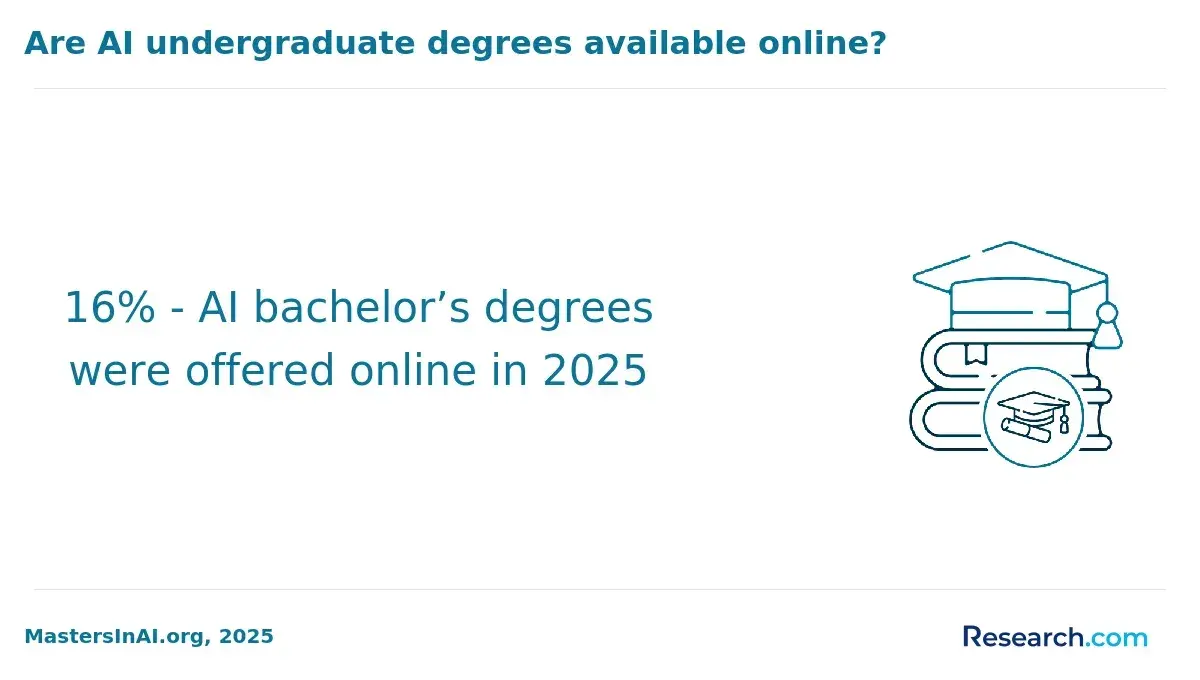
Online ai bachelor's programs provide training in big data comparable to traditional on-campus degrees, with unique benefits and some limitations. Accessibility is notable, as 54% of undergraduates took at least one online course (NCES, Digest of Education Statistics), reflecting both solid infrastructure and widespread acceptance of online education in ai and big data.
These programs often offer flexible scheduling and geographic freedom, ideal for working professionals or students not living near major tech centers. Many include project-based learning and cloud collaboration tools that simulate real-world big data environments. However, online students might face limited access to physical computing labs and in-person mentoring, which can affect practical experience with big data technologies.
On-campus degrees typically provide hands-on access to high-performance computing labs and face-to-face interaction with faculty and peers. These advantages support deeper engagement with advanced big data tools and participation in current research. Still, fixed schedules and location requirements may be restrictive for some students balancing work or other commitments.
When comparing programs, prospective students should consider accreditation, curriculum focus on technologies like Hadoop, Spark, and real-time analytics, and opportunities such as internships or capstone projects with industry partners. Well-designed online ai bachelor's degrees can equal on-campus training quality but demand self-discipline and active participation to succeed.
How long do AI bachelor's programs take, and what do they cost?
AI bachelor's degree programs commonly require four years of full-time study, matching the typical duration of U.S. undergraduate degrees. Accelerated tracks may reduce this to three years by increasing course loads or utilizing summer sessions. Part-time and online programs offer flexible pacing for working individuals, which can extend completion time beyond four years.
The cost of AI degrees varies widely. Public in-state tuition averages about $11,260 annually at four-year institutions, while private nonprofit universities charge around $41,540 per year, significantly impacting the overall investment.
Additional expenses for housing, books, and supplies often add thousands more to the yearly cost. Students aiming to lower costs might consider in-state public universities, community college transfer options, or scholarships focused on AI and data science fields.
Programs that blend AI with big data training typically demand advanced courses in math, statistics, and computer science. Some students may need remedial classes, which can extend their time to degree. Checking curriculum details and academic support availability is important to avoid delays.
What big data tools and platforms will students learn in AI bachelor's programs?
Students pursuing AI bachelor's degrees gain practical experience with essential big data tools and platforms to manage and analyze massive datasets effectively. Apache Spark remains pivotal due to its fast in-memory processing and machine learning library support, making it a core component of AI and big data education. Hadoop ecosystems, including HDFS and MapReduce, are integrated to teach distributed storage and batch processing. Real-time streaming platforms like Apache Kafka are emphasized for applications needing immediate data ingestion and processing.
Curricula also cover SQL and NoSQL databases such as Cassandra and MongoDB to manage diverse data types efficiently. Cloud-based big data services like Amazon EMR and Google BigQuery simulate real-world environments for hands-on learning. Additional tools taught include Apache Flink for stream processing, TensorFlow Extended (TFX) pipelines connecting big data with AI models, and visualization platforms like Tableau and Power BI to derive insights from large datasets.
These programs stress scalability, fault tolerance, and data pipeline design, preparing students for challenges in professional roles. Mastery of this skill set enables graduates to handle complex data workflows, optimize resources, and deploy AI solutions across industries like healthcare analytics and autonomous systems where big data drives model training and real-time enhancements.
What jobs can you get with an AI bachelor's degree that includes big data?
An AI bachelor's degree with big data training prepares graduates for several high-demand roles in technology and analytics. Positions such as Big Data Specialist involve collecting, processing, and analyzing large datasets to guide business decisions. AI and Machine Learning Specialists focus on creating algorithms that help machines learn from data patterns, relying heavily on big data expertise. Data Scientists combine programming, statistical analysis, and domain knowledge to extract insights from complex datasets, often using AI models trained on big data.
Other career options include Data Engineer, responsible for building and maintaining large-scale data infrastructure, and AI Software Developer, who integrates AI functionalities into applications. There is growing demand for AI Ethicists and Analysts to address biases in AI systems, a challenge managed by careful big data use.
These careers span diverse industries such as healthcare, where predictive analytics improve patient care; finance, using AI to detect fraud; marketing, applying AI for consumer behavior insights; and manufacturing, utilizing AI-driven automation from sensor data.
The World Economic Forum highlights Big Data Specialists and AI and Machine Learning Specialists as among the fastest-growing jobs through 2027, emphasizing strong job prospects for graduates combining AI and big data skills (WEF, Future of Jobs Report 2024).
What salaries and job outlook are typical for AI and big data bachelor's graduates?
Bachelor's degree holders specializing in artificial intelligence and big data enjoy promising career opportunities backed by strong industry demand. Employment for data scientists is projected to grow 35% from 2022 to 2032, according to the U.S. Bureau of Labor Statistics, indicating rapid expansion compared to other fields.
Starting salaries usually range from $70,000 to $90,000 annually, depending on location and sector. With experience, these can exceed $120,000 within five years. Popular roles include data scientist, machine learning engineer, and AI analyst, often offering compensation well above average.
To increase employability and salary potential, graduates should build proficiency in programming languages like Python, R, and SQL, alongside big data platforms such as Apache Hadoop and Spark. Strong communication abilities remain essential for translating complex data insights into actionable business strategies. This blend of technical and interpersonal skills positions graduates for upward career mobility and competitive compensation.
Other Things You Should Know About Artificial Intelligence
In 2027, AI and big data bachelor's programs incorporate emerging technologies such as quantum computing, AI-powered cybersecurity tools, machine learning platforms, and advanced data analytics frameworks like TensorFlow and Hadoop. These technologies prepare students for evolving industry demands and innovations.
Yes, these programs often incorporate knowledge from computer science, data science, and domain-specific fields, allowing graduates to apply AI and big data skills in areas like healthcare, finance, and engineering. The interdisciplinary approach helps students build versatile expertise that is valuable across diverse industries requiring data-driven solutions and automation.
Ethical considerations are increasingly integrated into AI bachelor's curricula, especially in the context of big data, to address concerns such as data privacy, algorithmic bias, and responsible AI use. Programs emphasize the importance of ethical decision-making and regulatory compliance to prepare students for the social impact and accountability challenges related to AI technologies.
Many AI bachelor's programs offer opportunities for internships, co-ops, or capstone projects that provide hands-on experience with real-world data and AI systems. These practical components help students apply theoretical knowledge, develop technical skills, and build professional networks, which are crucial for career readiness in AI and big data fields.
References
- Bachelor in Management & Artificial Intelligence https://studyinpoland.pl/en/programme
- Top College Degrees That Will Land You the Highest-Paying AI Jobs in 2026 https://www.investopedia.com/top-college-degrees-that-will-land-you-the-highest-paying-ai-careers-in-2026-11923863
- Top Artificial Intelligence Courses: Fees and Duration https://collegevidya.com/blog/artificial-intelligence-course-fees-structure-duration/
- A Complete 4-Year Course Plan for an Artificial Intelligence Undergraduate Degree https://www.mihaileric.com/posts/complete-artificial-intelligence-undergraduate-course-plan/
- What are the Best Degrees in AI in 2025? – 365 Data Science https://365datascience.com/trending/best-degrees-in-ai/
- Best AI Bachelor's Degrees - AIDegreeProgams.org https://aidegreeprograms.org/rankings/best-ai-bachelor-degrees/
- How to Choose the Best AI Data Science Course in 2026 https://www.eicta.iitk.ac.in/knowledge-hub/data-science/how-to-choose-best-ai-data-science-course
- Master Data AI https://dataai.telecom-paris.fr/
- These 14 colleges offer bachelor's degrees in AI—including one Ivy League school https://www.cnbc.com/2025/01/22/colleges-that-offer-bachelors-degrees-in-ai.html
- 7 Best AI Tools for College Students | Studley AI https://www.studley.ai/blog/best-ai-tools-for-college-students