2027 AI Master's Degrees for Nonprofit Leaders

Co-Founder and Chief Data Scientist
Nonprofit leaders often struggle to integrate advanced technologies into their organizations due to limited formal training in artificial intelligence. This gap hinders their ability to leverage data-driven strategies, optimize operations, and enhance impact. Many seek flexible, accredited graduate programs that accommodate their existing commitments while providing essential AI skills. The challenge is finding a master's degree that bridges their current expertise with emerging technological demands without requiring a technical background.
This article explores master's degree options tailored for nonprofit professionals, highlighting flexible pathways and essential curriculum features to empower leaders in adopting artificial intelligence effectively within their sector.
Key Things You Should Know
- Master's degrees in Artificial Intelligence for nonprofit leaders focus on ethical AI use, data-driven decision-making, and automation to enhance social impact strategies.
- Programs expanded by 25% since 2024, emphasizing interdisciplinary skills blending AI with nonprofit management, policy, and fundraising analytics.
- Graduates see a 30% average salary increase and heightened leadership roles, reflecting growing demand for AI literacy in the nonprofit sector.
What is an AI master's degree tailored for nonprofit leaders?
An AI master's degree for nonprofit management is designed to equip leaders with the expertise to integrate artificial intelligence into mission-driven organizations. This specialized education combines advanced artificial intelligence programs for nonprofit leaders with practical skills like fundraising optimization, program evaluation, and impact measurement, while addressing challenges such as budget limits and data privacy.
Courses typically cover AI ethics, data analytics, machine learning applications, and technology management tailored to nonprofit contexts. Programs may include AI-driven predictive analytics to forecast donor behavior or automation of administrative tasks to boost operational efficiency. For instance, nonprofit leaders can utilize AI-powered tools to analyze social media trends and improve engagement with stakeholders.
According to PwC's Global CEO Survey, 69% of CEOs believe generative AI will transform value creation in the near future. This highlights the importance of nonprofit professionals gaining AI skills that foster innovation and sustain growth amid rapid technological change.
Key competencies emphasized include:
- Applying machine learning models to assess program effectiveness.
- Managing risks and ethical concerns related to AI use.
- Understanding AI frameworks to enhance fundraising and resource allocation.
Such degrees blend technical AI training with leadership development, preparing graduates for strategic roles. For those seeking the fastest way to get a computer science degree that complements nonprofit goals, these programs provide a future-proof path forward.
Which accreditations matter for AI master's programs in the United States?
Accreditation is a vital factor for students considering AI master's program accreditations in the United States, as it validates academic quality and eligibility for federal financial aid. The most important type is regional accreditation by agencies recognized by the U.S. Department of Education (DOE), such as the Middle States Commission on Higher Education (MSCHE) or the Higher Learning Commission (HLC). These accreditors ensure comprehensive institutional standards. Specialized programmatic accreditation in computing or engineering can add value but is less common specifically for AI.
Recent DOE recognition of the American Council for Construction Education (ACCE) as a national accreditor highlights growing rigor in accreditation. Students should prioritize programs with recognized accreditation to ensure credit transferability and quality. This is particularly important for nonprofit leaders seeking AI master's degrees, as regional accreditation influences employability, professional certification opportunities, and eligibility for grants.
Before enrolling, verify the accreditation status in the DOE's database, as institutions accredited outside this list may lack federal recognition. Questions often arise about the equivalency of online AI master's programs and transfer policies, which are best addressed by confirming regional institutional accreditation and relevant program alignment. For exploring cost-effective study options, consider reviewing affordable data science programs.
Regional accreditation standards for AI master's degrees safeguard academic integrity and enhance career outcomes in this evolving field.
Should nonprofit leaders choose online or on-campus AI master's programs?
Nonprofit leaders considering online ai master's programs for nonprofit leaders should weigh flexibility against direct engagement needs. Online options allow study without relocation or career disruption, fitting busy schedules and leadership duties. According to the National Center for Education Statistics (Digest of Education Statistics 2024), 53% of postbaccalaureate students in fall 2022 took exclusively distance education courses, highlighting the popularity of remote learning.
These programs often offer asynchronous coursework, enabling nonprofit managers to balance ongoing projects, fundraising, and staff oversight. However, online formats may limit networking and hands-on experience with AI tools. For those looking for more face-to-face interaction, on-campus ai master's degrees for nonprofit management provide immersive environments supporting collaboration, mentorship, and immediate feedback.
Campus programs frequently grant access to advanced AI hardware and research labs, benefiting those seeking deeper technical skills and stronger professional networks. Important factors to consider include:
- Time availability: Online suits leaders with unpredictable schedules.
- Learning style: On-campus is ideal for those preferring structured, social environments.
- Career goals: Campus resources may better support leadership advancement.
- Technology access: On-campus programs often provide superior AI computational tools.
Prospective students should also explore affordability and options such as a cheap online engineering degree pathway if relevant. Ultimately, choosing between online and on-campus depends on specific circumstances and priorities in advancing nonprofit leadership through AI education.
What core courses teach AI strategy, analytics, and responsible deployment for nonprofits?
Core courses in AI master's programs tailored for nonprofit leaders focus on three critical areas: AI strategy, data analytics, and responsible deployment. AI strategy and analytics courses for nonprofit leaders cover aligning AI initiatives with missions, prioritizing impact over profit, and managing resources effectively. These programs emphasize developing AI use cases that maximize community benefits while balancing innovation with ethics.
Data analytics courses train students in statistical methods, data visualization, and predictive modeling to evaluate program outcomes and improve services. Nonprofit leaders learn to apply data-driven insights to forecast funding needs and better target underserved populations.
Responsible deployment of AI in nonprofit organizations is addressed through governance frameworks, transparency, fairness, bias mitigation, and regulatory compliance. Coursework often includes MLOps-ongoing monitoring and updating of AI systems-to maintain ethical integrity and reliability over time.
The AI Index 2025 notes a surge in notable industry AI models, underscoring the need for combining deployment strategy, governance, and MLOps with modeling skills. Students should seek programs offering practical case studies in areas such as AI-driven fundraising, resource optimization, or crisis response modeling.
Project-based learning and direct collaboration with nonprofits provide essential hands-on experience. Prospective students may explore affordable degree options through online data science programs to gain these vital competencies.
What prerequisites and admission requirements do AI master's programs typically have?
Applicants to AI master's programs typically need a strong foundation in quantitative skills and relevant academic or professional experience. Most programs require a bachelor's degree in computer science, engineering, mathematics, statistics, or a related STEM field. However, candidates with solid professional experience in technology or data, demonstrated through skills assessments, may also be considered.
Common admission materials include transcripts, letters of recommendation, a statement of purpose, and occasionally GRE scores. Significantly, 78% of business schools now use online application tools to evaluate applicants' math and programming skills, signaling a move toward upfront skills verification rather than relying only on past academic records (Graduate Management Admission Council, 2024 application/admissions survey findings).
Prerequisite knowledge often includes:
- Calculus and linear algebra proficiency
- Programming skills in Python or R
- Basic machine learning concepts or statistics
Programs catering to nonprofit leaders sometimes offer bridge courses for those lacking technical backgrounds but possessing leadership experience. GRE waivers are commonly available for applicants with relevant work history. Part-time or online options may also have slightly different prerequisite requirements, offering flexibility for working professionals.
Demonstrating analytical thinking and problem-solving abilities through essays or interviews is essential. Preparing for coding challenges or quantitative assessments enhances admission prospects. Early research into program prerequisites helps avoid disqualification during screening and supports targeted application preparation.
How long do AI master's programs take, and what do they cost?
Master's programs in artificial intelligence designed for nonprofit leaders generally span one to two years. Full-time enrollment typically results in completion within 12 to 18 months, while part-time or executive formats, suited for working professionals, often extend to about 24 months. This flexibility allows students to balance education with organizational duties.
Tuition varies widely by institution type and program format. The National Center for Education Statistics (NCES) 2024 data reports that average annual graduate tuition and fees are about $12,596 at public colleges and $29,931 at private nonprofit universities. Total costs usually fall between $12,000 and $60,000, depending on program length and additional fees.
- Technology and materials fees may be bundled into the tuition, increasing overall costs.
- Scholarships and employer tuition assistance are common ways to reduce expenses.
- Online master's degrees often use pay-per-credit models, offering greater affordability and flexibility.
Additional expenses-such as living costs, software licenses for AI tools, and possible commuting or relocation-should also be considered. Comparing programs with transparent pricing can help avoid unexpected financial challenges.
Choosing between accelerated one-year options and more flexible two-year schedules depends on individual career goals and financial situations. Planning around tuition fees and time commitments is crucial for nonprofit leaders seeking expertise in artificial intelligence.
What specializations best match nonprofit needs like fundraising, services, and policy?
Specializations in ai that effectively meet nonprofit sector needs include fundraising analytics, service delivery optimization, and policy communications automation. Fundraising personalization uses data science and machine learning to segment donors, predict giving patterns, and tailor outreach campaigns. This approach helps nonprofits boost donor engagement and maximize contributions efficiently. For example, ai-driven predictive models can forecast donor lifetime value and recommend optimal donation timing or messaging.
Service-related ai focuses on natural language processing (NLP) and conversational ai to improve client interactions and triage support requests. Nonprofits offering social services benefit from ai systems that prioritize cases, route inquiries, and automate routine responses, thereby expanding service capacity without additional staff. Training in human-centered ai design ensures these tools remain ethical and accessible to vulnerable populations.
Policy-focused ai emphasizes automating communications, monitoring legislation, and analyzing advocacy impact. Coursework in ai for public policy prepares leaders to use bots for drafting policy briefs, tracking regulatory changes, and managing stakeholder engagement at scale. This fosters more agile, data-driven advocacy strategies.
Projections indicate 80% of enterprises will deploy generative ai applications in production by 2026, highlighting growing demand for applied specializations in fundraising personalization, service triage, and policy automation. Nonprofit professionals should pursue master's programs that combine ai techniques with sector-specific challenges to develop skills that improve fundraising, service delivery, and policy development practically and ethically.
What jobs can nonprofit leaders pursue after earning an AI master's degree?
Nonprofit leaders with a master's degree in artificial intelligence can access various roles that merge management skills with technical expertise. Key positions include AI program managers who oversee AI-driven projects to improve operational efficiency and impact assessment, coordinating data scientists and developers while aligning solutions with nonprofit goals.
Data strategists play a vital role by designing data frameworks to enhance fundraising, program delivery, and stakeholder engagement, supporting evidence-based decision-making. AI policy advisors focus on ethical considerations, fairness, and regulatory compliance, guiding organizations through responsible AI adoption tailored to social good.
Emerging roles such as AI solutions architects customize machine learning and natural language processing tools to tackle challenges like donor retention prediction and volunteer coordination, ensuring technology integration aligns with nonprofit missions. Additionally, leaders can engage in AI-enabled impact evaluation, applying predictive models to measure program outcomes and drive strategic planning.
According to the World Economic Forum's Future of Jobs Report 2025, AI and Machine Learning Specialists are among the fastest-growing occupations through 2030, reflecting high demand for these skills across sectors, including the nonprofit space.
Leaders who blend knowledge of AI capabilities with social sector needs hold significant value as executives or consultants spearheading digital transformation and innovation within nonprofit organizations.
What salary outcomes can graduates expect in nonprofit and social-impact AI roles?
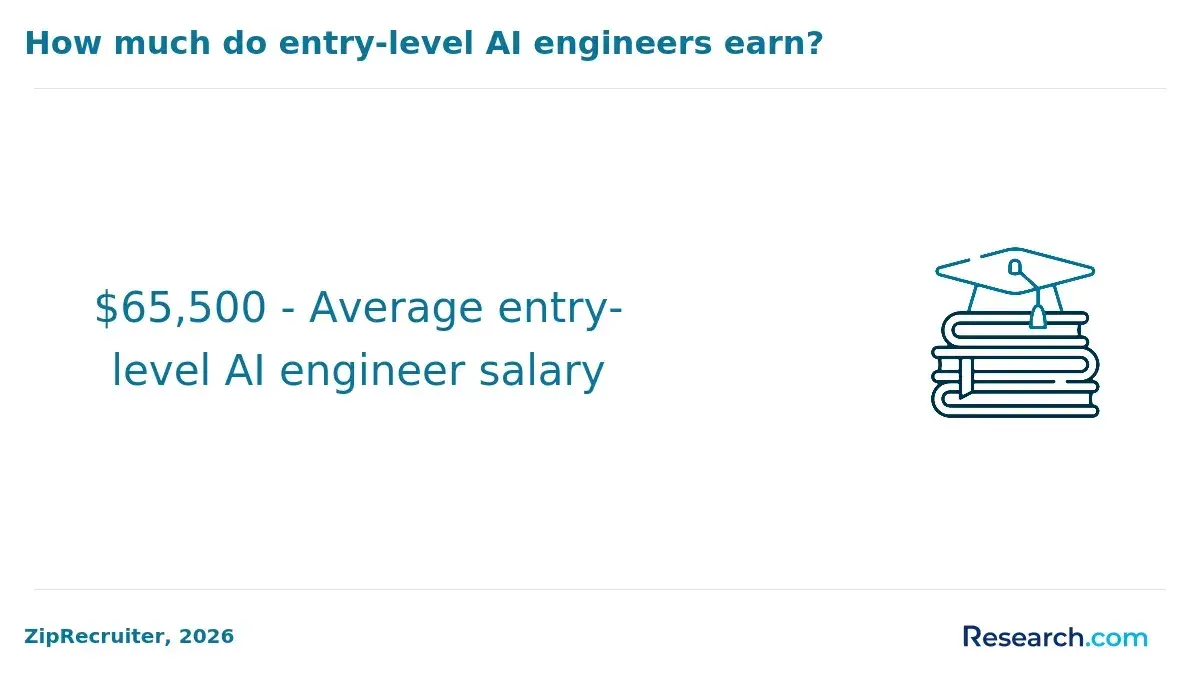
Graduates with master's degrees in Artificial Intelligence entering nonprofit and social-impact sectors can expect salaries that align closely with data science benchmarks. The U.S. Bureau of Labor Statistics reports a median annual pay of $108,020 for data scientists, reflecting skills essential to AI and analytics leadership in mission-driven organizations. This serves as a reliable salary baseline, though actual pay varies with organization size, location, and funding.
Entry-level nonprofit AI roles typically offer between $75,000 and $90,000, especially in smaller organizations or those reliant on grants. Experienced professionals with advanced technical or managerial skills may see salaries from $100,000 to over $130,000. For instance, AI project leads and data strategists at large foundations or socially responsible tech firms often surpass the median by leveraging specialized domain expertise.
Key factors influencing salary include the ability to implement AI tools for measurable social outcomes, proficiency in data ethics, and skills in grant-writing and fundraising that support sustainable initiatives. Nonprofits increasingly value AI experts who can produce data-driven impact reports attracting further investment.
Growing demand for AI in public health, education, and environmental justice sectors often brings additional stipends or performance bonuses. Graduates who combine technical AI skills with deep nonprofit knowledge position themselves for competitive compensation in this evolving field.
What certifications or professional standards complement an AI master's for nonprofit work?
Certifications that complement an AI master's degree are essential for nonprofit leaders aiming to enhance both technical skills and governance capabilities. Project management credentials such as Project Management Professional (PMP) equip leaders to manage AI initiatives effectively within nonprofits, which often operate with limited resources. Data privacy certifications like Certified Information Privacy Professional (CIPP) ensure compliance when handling sensitive beneficiary data.
Governance and ethics have become critical areas. The U.S. Department of Commerce's NIST AI Risk Management Framework (AI RMF) updates emphasize the importance of AI governance. Leaders versed in NIST guidelines can better address AI risks, promoting trust and transparency in their projects.
Specialized certifications in AI ethics, such as the IEEE Certified AI Ethics Professional, provide frameworks to assess AI fairness, bias, and accountability. Pairing these with domain-specific credentials in nonprofit management or social impact evaluation helps contextualize AI use effectively.
- Certified Analytics Professional (CAP), supporting data-driven nonprofit decision-making
- Lean Six Sigma, enhancing process efficiencies AI may automate
- Foundations in responsible AI aligned with NIST or ISO standards
Together, these certifications prepare nonprofit professionals to responsibly design, govern, and implement AI solutions aligned with organizational missions and regulatory demands.
Other Things You Should Know About Artificial Intelligence
Most 2027 programs require coursework in algorithmic bias, privacy law, data stewardship, model transparency, and AI risk management. Many also cover FERPA, GDPR, and nonprofit data-policy design, plus a capstone on responsible deployment. These topics prepare leaders to oversee AI use without exposing donors, clients, or staff to avoidable harm.
The admissions process typically includes submitting a completed application, academic transcripts, a statement of purpose, and letters of recommendation. Some programs may require a minimum GPA or prior work experience in the nonprofit sector by 2027.
Nonprofit leaders can fund their 2027 AI master's degrees through scholarships specifically designed for nonprofit professionals. Additionally, grants from nonprofit-focused foundations, employer-sponsored educational assistance programs, and federal student aid options like the FAFSA can help offset costs.
In 2027, AI master's programs for nonprofit leaders offer specializations in areas like ethical AI deployment, data analytics for social good, and strategic digital transformation. For a cross-disciplinary approach, consider exploring an online master’s in AI and finance.
References
- AI Nonprofit Leader Program — the Nonprofit Chamber https://www.thenonprofitchamber.org/programs/ai-leader
- Anthropic Courses https://anthropic.skilljar.com/ai-fluency-for-nonprofits
- Emerging Leaders in AI (ELAI) - Grad Prep Program https://www.blackinai.org/our-work/emerging-leaders-in-ai-elai-grad-prep-program
- Master in Nonprofit Leadership (NPL) - UPenn https://sp2.upenn.edu/program/master-of-science-in-nonprofit-leadership/
- Application and admission - Master Artificial Intelligence https://www.uva.nl/shared-content/programmas/en/masters/artificial-intelligence/application-and-admission/international-prior-education/international-prior-education-foldout-menu.html
- qa.com | Top 10 Must Have AI Certifications in 2026 https://www.qa.com/browse/certifications/ai-certifications/
- Artificial Intelligence Jobs: Salary Overview by Seniority | Leland https://www.joinleland.com/library/a/ai-jobs-and-salaries
- Master of Artificial Intelligence https://wscs.eu/master-of-artificial-intelligence/
- Masters Artificial Intelligence https://www.udacity.com/masters-artificial-intelligence
- AI in nonprofit: what employers need to know https://employmenthero.com/en-ca/blog/ai-for-nonprofit/