2027 AI Master's vs Business Analytics Master's

Co-Founder and Chief Data Scientist
Choosing between a 2027 AI master's and a business analytics master's can challenge prospective students aiming to shift careers into technology. Many face uncertainty about which path offers better industry alignment, skill relevance, and long-term growth. Given the evolving job market and rapid advancements in AI, understanding the differences is crucial to avoid costly missteps in time and resources.
This article clarifies the unique focuses of each program, compares potential career outcomes, and guides readers in selecting the option that best matches their goals and backgrounds, ultimately supporting an informed educational investment.
Key Things You Should Know
- Master's in AI focuses on algorithms, machine learning, and neural networks, with 35% projected job growth by 2028, reflecting strong demand in tech and research sectors.
- Business analytics master's emphasizes data-driven decision-making and statistical analysis, offering a broader industry application and a 23% employment growth forecast through 2028.
- AI programs often require stronger programming skills and mathematics, while business analytics prioritizes business acumen and data interpretation, influencing career paths and salary ranges.
What is the core difference between an AI Master's degree and a Business Analytics Master's degree?
The core differences between ai master's and business analytics master's degrees lie primarily in their focus and skill development. AI master's programs train students to design and improve machine learning algorithms, neural networks, and computational models. Graduates develop technologies like autonomous systems, natural language processing, and computer vision applications, often building deep learning models for speech recognition or recommendation engines.
In contrast, business analytics master's degrees emphasize statistical inference, data interpretation, and applying analytics to drive strategic business decisions. These programs teach tools such as regression analysis, forecasting, and decision trees to enhance marketing, supply chain, and financial operations. Professionals with this background translate data insights into actionable business strategies rather than creating AI technologies themselves.
Comparing ai master's programs with business analytics degrees also highlights differences in career outcomes and salary potential. AI roles on average command 23% higher salaries due to the technical expertise required in machine learning frameworks like TensorFlow or PyTorch. Business analysts tend to rely on visualization tools like Tableau or Power BI for effective communication and decision-making.
Prospective students should assess their aptitude for coding, mathematics, and computational theory. Those inclined to innovate AI solutions must be comfortable with complex algorithms, while students focused on applying data-driven decision-making in business environments may find business analytics more suitable. For more details on what can you do with an applied artificial intelligence degree, this resource may be helpful.
Which master's degree offers better job prospects and salary potential in 2027?
Data from the U.S. Bureau of Labor Statistics 2024 Occupational Outlook Handbook reveals that graduates with a master's degree job prospects in the US are notably better for AI than for business analytics programs. AI master's graduates earn median salaries between $120,000 and $135,000, compared to $95,000 to $110,000 for business analytics graduates. This represents a 15-25% salary premium for AI graduates, driven by rapid demand in industries such as healthcare, finance, and autonomous systems. These figures highlight the salary potential for AI and business analytics graduates, with AI skills leading to roles in machine learning, natural language processing, and computer vision.
AI master's students typically qualify for higher-paying positions like machine learning engineer or data scientist, which require a strong grasp of algorithms and software development. In contrast, business analytics graduates often fill roles centered on data interpretation, such as analytics consultant or business intelligence analyst, with generally lower compensation. The demand for AI expertise continues to outpace business analytics, partly because AI roles combine both technical development and deployment of models.
Investments in AI-driven products strengthen AI graduates' job prospects, while business analytics graduates face competition from those with undergraduate degrees or MBAs focused on data. Prospective students should consider programs with strong industry ties and practical training. For foundational education, exploring data science undergraduate rankings can help guide early academic choices.
What are the key curriculum differences between AI and Business Analytics master's programs?
Master's programs in artificial intelligence and business analytics differ notably in their core curriculum focus. Artificial intelligence master's programs emphasize technical skills like deep learning and computer vision, essential for creating intelligent systems and image recognition. According to LinkedIn's 2024 Jobs Report, 78% of ai programs require courses in these areas. Students also study neural networks, natural language processing, and reinforcement learning to develop algorithms that simulate human cognition. These key curriculum differences between artificial intelligence and business analytics master's programs define distinct educational paths.
Business analytics master's programs, by contrast, concentrate on quantitative analysis and data management. Statistical modeling and SQL are mandatory in 89% of these degrees, reflecting the need for handling large datasets and extracting actionable insights. Core courses include regression analysis, predictive modeling, and data visualization, supported by training in business intelligence and database management tools. This highlights the different core courses in artificial intelligence versus business analytics master's degrees.
Career goals usually guide program choice: artificial intelligence suits those targeting machine learning engineering, robotics, or advanced software development roles, whereas business analytics prepares graduates for data-driven strategy, marketing analytics, or operational efficiency positions. Some artificial intelligence programs incorporate business analytics modules, while select business analytics degrees offer electives in machine learning fundamentals.
Practical experience differs as well, with artificial intelligence students often involved in coding-intensive projects and simulations, while business analytics students tackle case studies and real-world data problems. Prospective students looking for affordable options might explore the cheapest online master's in artificial intelligence to balance cost with educational goals.
What are the admission requirements and prerequisites for each master's degree?
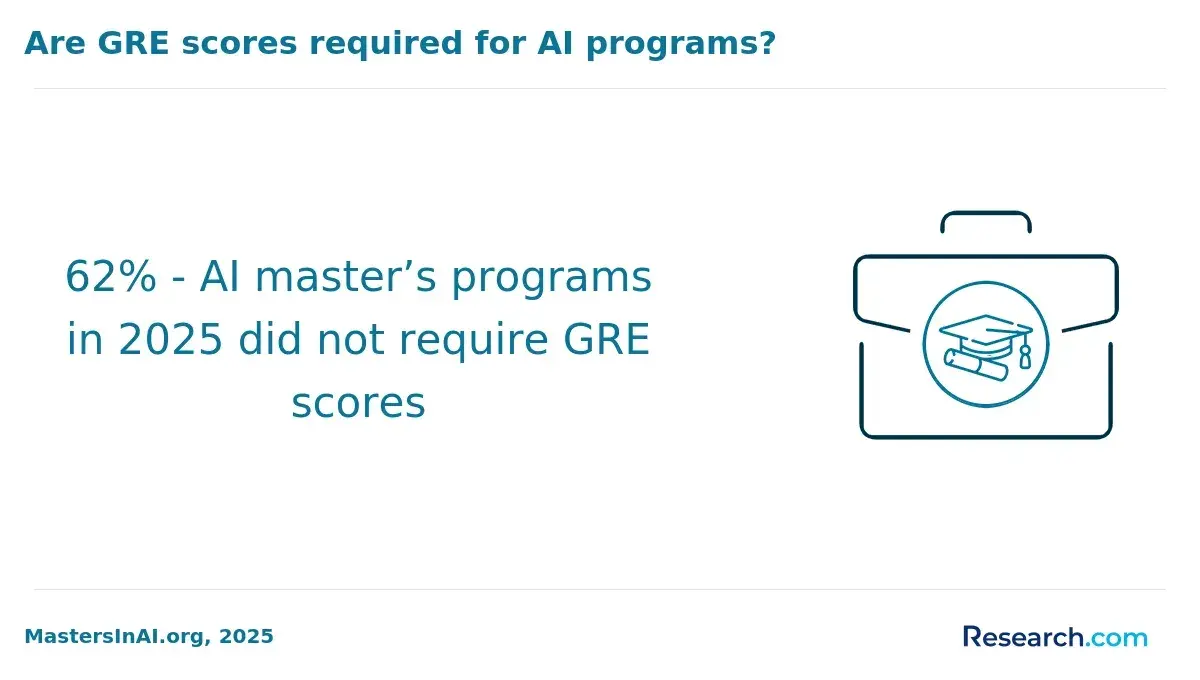
Admission requirements for artificial intelligence master's programs often demand a strong technical foundation. About 82% of these programs require applicants to hold an undergraduate degree in computer science, engineering, mathematics, or related fields. Proficiency in programming languages such as Python or Java, along with knowledge of algorithms, data structures, and statistics, is typically expected. Some programs also request GRE scores, letters of recommendation, and statements of purpose highlighting relevant projects or research experience.
Prerequisites for business analytics master's degree admission tend to be more flexible. Only 45% of these programs require technical skills like coding or advanced mathematics. Many accept diverse undergraduate backgrounds such as business, economics, or social sciences, provided candidates demonstrate quantitative aptitude via coursework or standardized tests. Basic statistics knowledge and familiarity with data analysis tools like SQL or Excel are common expectations. Letters of recommendation and personal statements explaining analytical interests also carry significant weight.
Applicants with non-technical backgrounds considering AI master's programs may need to complete prerequisite courses or bootcamps on programming and math fundamentals before enrollment. Likewise, those targeting business analytics degrees should check for required quantitative courses to prevent admission delays. For those exploring affordable pathways, options like MS data science online programs offer flexibility and accessibility.
How do online, hybrid, and campus-based formats compare for AI and Business Analytics master's programs?
The format of artificial intelligence and business analytics master's programs differs notably due to each field's specific demands. According to Coursera's 2024 State of Online Learning Report, 64% of artificial intelligence master's programs are available only on-campus. This is largely because artificial intelligence coursework often necessitates advanced computational resources and real-time collaboration, which are more accessible in campus labs. Students working with large datasets or machine learning models particularly benefit from high-performance GPUs and direct faculty engagement typically found on campus.
Conversely, 71% of business analytics master's programs offer online or hybrid formats, reflecting the field's flexibility with remote learning. Business analytics curricula focus on data interpretation, statistical analysis, and visualization skills that suit virtual learning environments with cloud-based tools. Hybrid options also allow learners to combine online study with occasional in-person sessions, benefiting working professionals seeking flexible schedules.
When choosing a program format, prospective students should weigh their learning preferences and available technology. Artificial intelligence students may experience constraints with fully remote programs due to hardware needs, whereas business analytics learners typically find online or hybrid models effective. Networking advantages also vary: artificial intelligence programs foster in-person collaboration on complex projects, while business analytics students often engage through virtual forums and industry webinars.
Deciding between campus-based, online, or hybrid programs hinges on technical requirements, professional goals, and personal situations. Assessing flexibility against access to resources is key to selecting the right master's program.
What is the typical cost and duration of AI versus Business Analytics master's degrees?
The cost of a master's degree in artificial intelligence ranges from $60,000 to $90,000, according to the National Association for College Admission Counseling's 2024 report. These programs usually last between two to three years and feature technical depth, specialized faculty, and extensive research or project components. Variations in tuition and duration depend on whether the program is full-time, part-time, or includes co-op and internships. Some universities offer accelerated tracks completing in less than two years but with higher semester credit loads.
Business analytics master's degrees tend to be more affordable, costing between $40,000 and $70,000, with programs typically lasting 1.5 to 2 years. These degrees emphasize data-driven decision-making and often provide flexible schedules to accommodate working professionals. Online options can lower costs and shorten completion time to about 12 months.
Students should weigh the investment against expected returns. Artificial intelligence degrees require greater financial and time commitments but open doors to advanced technical roles with higher salaries. Business analytics degrees offer faster pathways into roles combining business strategy and data interpretation.
Which industries and job roles hire graduates from AI Master's programs versus Business Analytics Master's programs?
Graduates from AI master's programs are primarily employed by technology firms, making up 52% of their job placements according to the 2024 LinkedIn Workplace Learning Report. These roles include machine learning engineer, data scientist, AI research scientist, and robotics developer, where expertise in algorithms, neural networks, and automation is critical. Candidates typically need strong programming skills, familiarity with frameworks like TensorFlow or PyTorch, and experience building scalable AI models.
Meanwhile, business analytics master's graduates find positions in finance (28%), retail (22%), and healthcare (18%). Common roles are business intelligence analyst, data analyst, and analytics consultant. These careers focus more on interpreting data to guide decisions, utilizing statistical methods and visualization tools rather than deep algorithm development. In finance, analytics graduates help optimize risk and portfolio strategies, while healthcare organizations use their skills to improve patient data analysis and operational efficiency.
Students should consider their career objectives relative to these industry demands. Those driven by innovation in AI technology will likely benefit most from an AI master's degree. Conversely, candidates looking to apply data insights across various business functions may find a business analytics master's more suitable. This ensures graduates align their skills and expectations with the sectors they'll enter.
What professional certifications or credentials complement each master's degree?
Professional certifications for graduates with a master's degree in artificial intelligence often emphasize specialized technical skills. Common credentials include the Certified Artificial Intelligence Practitioner (CAIP), Google's Professional Machine Learning Engineer, and Microsoft Certified: Azure AI Engineer Associate. These certifications validate expertise in machine learning models, neural networks, natural language processing, and AI deployment. However, only about 34% of AI master's graduates pursue such specialized certifications within two years, with many choosing to demonstrate their skills through hands-on projects or proprietary platform certifications.
In business analytics, master's graduates frequently earn certifications that bridge the gap between analytics and business strategy. According to the International Institute of Business Analysis' 2024 Credential Survey, 73% of business analytics master's holders obtain the Certification of Analytics Professionals (CAP) within two years. CAP focuses on transforming complex data into actionable insights using statistics, predictive modeling, and performance metrics. Other widely recognized credentials include SAS Certified Data Scientist and Tableau Desktop Specialist, which emphasize practical data manipulation and visualization for business decision-making.
Selecting the right certification depends on career objectives: AI graduates aiming for algorithm development roles should prioritize platform-specific AI credentials, while those interested in AI ethics or product management might consider interdisciplinary options. Business analytics graduates targeting consulting or leadership roles benefit from broad business-focused certifications like CAP. Aligning certifications with employer needs can enhance job prospects by validating competency in advanced tools and methodologies relevant to one's degree specialization.
How should you evaluate program accreditation and reputation when choosing between these two degrees?
Accreditation and program reputation play a crucial role when comparing AI master's and business analytics master's degrees. Only 28% of business analytics graduate programs ranked by U.S. News & World Report hold AACSB accreditation, a significant mark of quality for business schools. Without such accreditation, programs may fall short on curriculum rigor and valuable networking, potentially impacting career opportunities.
In contrast, 61% of top AI master's programs are offered by universities ranked in the top 100 for computer science, highlighting strong academic standing and research capabilities. These programs often provide access to advanced AI techniques, distinguished faculty, and innovative projects, helping graduates secure competitive roles in technology firms and research institutions.
Prospective students should verify if business analytics programs are AACSB-accredited or recognized by similar agencies. Likewise, AI candidates benefit from programs affiliated with highly ranked computer science departments. Specialized accreditation like ABET further enhances technical program credibility and can influence employer trust and professional certification eligibility.
Research output and faculty expertise are especially critical in AI programs, while business analytics may emphasize industry connections. Reviewing program credentials-not just marketing materials-ensures alignment with career goals and protects your educational investment, whether focusing on artificial intelligence or business analytics.
What are the technical skill requirements and mathematical background needed for each master's program?
Master's programs in artificial intelligence require strong technical skills in programming languages such as Python, R, and Java, along with experience in machine learning frameworks like TensorFlow or PyTorch. A 2024 Council of Graduate Schools survey shows that 91% of AI programs demand advanced coursework in linear algebra and multivariable calculus, emphasizing concepts like matrix operations, eigenvalues, and vector spaces. Probability theory and discrete mathematics are also fundamental, as they support algorithm design and optimization techniques. Assignments often involve neural networks or natural language processing models, requiring solid computational and mathematical foundations.
Business analytics master's programs differ by focusing on practical data manipulation and statistical analysis. About 76% of these programs require foundational statistics, including hypothesis testing, regression analysis, and probability distributions. Programming is usually centered on SQL, Excel, and visualization tools such as Tableau, with less emphasis on advanced mathematics. Some business analytics curricula introduce optimization and basic machine learning, but the mathematical rigor remains lower than in AI programs, making them accessible to students with undergraduate-level quantitative coursework.
Applicants for AI master's degrees should evaluate their readiness in linear algebra and calculus, as gaps can affect success in algorithmic and model development courses. Business analytics candidates benefit from developing statistics and data handling skills to meet both academic and industry expectations. Recognizing these distinct requirements helps align educational choices with career objectives in today's data-driven environment.
Other Things You Should Know About Artificial Intelligence
Yes. Many universities ask for TOEFL iBT scores around 80–100 or IELTS scores around 6.5–7.0 for either degree. Admissions offices set the cutoff, and some waive the test only for applicants who earned a prior degree in an English-speaking country.
AI master's capstone projects in 2027 often focus on developing advanced algorithms and machine learning applications, while Business Analytics master's projects typically analyze large datasets to provide actionable business insights. Both aim to apply theoretical knowledge to real-world problems, but their problem-solving approaches differ.
While some level of mathematical understanding is important, many AI master's programs offer foundational courses to help students strengthen their skills in areas like linear algebra, calculus, and probability. However, a willingness to learn and apply mathematical concepts is crucial for success in this field.
In 2027, AI master's programs heavily emphasize research, often requiring students to engage in thesis or project-based work focused on developing novel algorithms and solutions. In contrast, Business Analytics master's programs generally focus less on research, prioritizing applied skills and practical data-driven decision-making projects.
Industries such as retail, healthcare, and tourism often prefer Business Analytics master's graduates for roles focused on data-driven decision-making and strategy. These positions require strong skills in interpreting data trends and business operations, complementary to specialized programs like the quantitative finance and AI master’s.
References
- What Skills Can You Gain From a Master of Business Analytics and AI Curriculum? https://freemannews.tulane.edu/2025/06/09/what-skills-can-you-gain-from-a-master-of-business-analytics-curriculum
- ZigyaAI https://jigya.co.in/insights/detail/what-makes-an-ms-in-ai-in-business-different-from-ai-or-analytics-degrees
- Degree requirements | MS in mathematics | Department of Mathematics and Statistics https://www.unr.edu/math/graduate/ms-in-mathematics-handbook/degree-requirements
- Career Paths After the M.S. in AI-Data Analytics | IWU https://www.indwes.edu/articles/2026/01/career-paths-after-ms-ai-data-analytics
- Business Analytics and AI MSc https://www.imperial.ac.uk/study/courses/postgraduate-taught/2026/business-analytics/
- Graduate Program Requirements: Your Roadmap to Grad School https://bemoacademicconsulting.com/blog/graduate-program-requirements
- Career Paths In Data Analytics & AI: Where Can You Go With An MBA? - Britts Imperial 2026 https://brittsimperial.com/career-paths-in-data-analytics-ai-where-can-you-go-with-an-mba/
- Data Science & AI Careers After Master’s Degree | Job Scope & Growth https://www.mywestford.com/blog/top-career-opportunities-after-earning-a-masters-in-data-science-and-artificial-intelligence/
- Master's in Data Analytics vs. Business Analytics | University of Bridgeport https://www.bridgeport.edu/news/masters-in-data-analytics-vs-business-analytics/
- Master of Science (MSc) in Business Analytics & AI https://escp.eu/programmes/specialised-masters-MSc/MSc-in-Business-Analytics-in-AI