2027 AI Master's Degrees That Include AWS and Azure Skills

Co-Founder and Chief Data Scientist
Many professionals with non-technical backgrounds face challenges breaking into the AI field due to gaps in cloud computing expertise. Employers increasingly seek candidates skilled in both artificial intelligence and popular cloud platforms like AWS and Azure. Without targeted training, transitioning into AI roles remains difficult and time-consuming.
This article explores master's degree programs that combine artificial intelligence fundamentals with hands-on experience in AWS and Azure environments. It aims to guide prospective students toward accredited, flexible graduate paths that equip them with practical cloud skills crucial for a successful career pivot into the evolving AI industry.
Key Things You Should Know
- Master's programs in 2026 increasingly combine AI education with AWS and Azure cloud skills, addressing a 40% industry demand spike for hybrid cloud-AI expertise reported in 2024.
- Top U.S. universities integrate hands-on projects using AWS and Azure to ensure graduates meet employer expectations for cloud-deployed AI solutions and scalable algorithm development.
- Graduates with AI master's including AWS/Azure skills often report 15-25% higher starting salaries, benefiting from cloud computing's growing role in AI-driven industries like fintech and healthcare.
Which AI master's programs teach AWS and Azure cloud skills for machine learning?
Several AI master's programs explicitly integrate AWS and Microsoft Azure cloud platforms to equip students with machine learning deployment skills. Leading universities such as Carnegie Mellon University, the University of California San Diego, and Georgia Institute of Technology offer graduate degrees in AI featuring AWS and Azure cloud skills through hands-on training with AWS SageMaker and Azure Machine Learning Studio.
These programs address strong industry demand for cloud expertise, with Lightcast data showing AWS in roughly 20% and Azure in about 13% of U.S. job postings requiring cloud capabilities. Incorporating both platforms prepares students for diverse real-world deployment environments aligned with employer needs.
Students gain experience in:
- Setting up cloud-based machine learning pipelines on AWS and Azure
- Utilizing managed AI services like AWS Lambda and Azure Cognitive Services
- Managing cloud infrastructure for scalable data processing
- Implementing security and compliance best practices within cloud ecosystems
Many programs offer flexible delivery formats such as fully online, hybrid, or on-campus, allowing working professionals to upskill without career interruption. Electives focusing exclusively on cloud integration within AI workflows further enhance skills.
Applicants should verify curricula that emphasize cloud platform expertise, access to real-world projects, and cloud vendor certifications aligned with coursework. This practical emphasis boosts employability in AI roles requiring cloud fluency. For those interested in accelerated pathways, institutions also offer a fast track computer science degree option.
Ultimately, these AI master's programs blend foundational AI knowledge with essential AWS and Azure competencies, reflecting current market trends and preparing graduates for strategic roles in AI engineering.
How can you verify accreditation for AI master's degrees with cloud coursework?
To verify accreditation for AI master's degree accreditation verification with cloud computing, use the U.S. Department of Education's Database of Accredited Postsecondary Institutions and Programs (DAPIP). This official federal resource ensures the institution meets recognized academic standards and that programs qualify for federal financial aid.
When researching accredited AI graduate programs with AWS and Azure credentials, check the institution's name in DAPIP to confirm regional or national accreditation recognized by the Council for Higher Education Accreditation (CHEA). Accreditation is essential for maintaining quality and advancing toward professional certifications or further study.
Many programs offering AI degrees including AWS or Azure coursework partner with cloud providers for specialized training. Verify whether the cloud components are part of a fully accredited graduate program or exist as separate vendor certificates, which may not apply toward accreditation.
If the program's accreditation status is unclear, contact the school's registrar or accreditation office directly to confirm if the cloud curriculum is covered by the institution's accreditation scope. Complementary cloud certificates may enhance employability but do not replace formal accreditation.
Accredited AI master's degrees that integrate AWS and Azure skills provide strong career benefits in cloud computing fields. Prospective students should also consider factors like program costs, which can be explored further through resources such as the mechanical engineering degree cost data for insight into affordable options.
What jobs can you get with an AI master's plus AWS and Azure skills?
An AI master's degree combined with AWS and Azure skills opens doors to numerous high-demand roles across technology and data-driven industries. Key careers in artificial intelligence with aws and azure expertise include data scientist, machine learning engineer, cloud AI specialist, AI solutions architect, and business intelligence analyst. These roles involve designing AI models, deploying scalable cloud-based AI solutions, and managing complex data pipelines using AWS and Azure platforms.
Data scientists frequently utilize cloud services to analyze large datasets. Employment for data scientists is projected to grow 35% from 2022 to 2032, far exceeding average job growth. This trend highlights the ongoing need for professionals adept at integrating AI algorithms with cloud infrastructure for real-time analytics and strategic decision-making. Machine learning engineers with AWS and Azure experience develop, optimize, and deploy AI models using tools like AWS SageMaker and Azure Machine Learning.
Cloud AI specialists enable seamless migration of AI workloads to cloud environments, boosting scalability and cost-efficiency. AI solutions architects create comprehensive AI systems leveraging strengths from both cloud providers to meet specific business requirements. Business intelligence analysts apply AI in cloud settings to extract actionable insights, aiding operational and strategic improvements. Employers value candidates skilled in multiple cloud platforms to facilitate cross-platform integration and flexibility.
Those pursuing an ai master's degree jobs with aws and azure skills should focus on mastering foundational AI techniques alongside hands-on experience with both cloud services. This combination addresses organizational demands for scalable, reliable AI-powered applications and supports career growth in sectors such as finance, healthcare, retail, and technology services. Prospective students can find helpful information on the online engineering degree cost when considering educational investments.
Which courses cover AWS SageMaker, Azure ML, and MLOps in these degrees?
Multiple master's degrees in ai integrate comprehensive courses covering AWS SageMaker, Azure ML, and MLOps, addressing the growing need for cloud-based machine learning deployment and operations expertise. Graduate courses featuring AWS SageMaker, Azure ML, and MLOps integration often embed these platforms in advanced ai engineering, machine learning operations, or cloud ai specialization tracks.
AWS SageMaker courses provide hands-on experience with building, training, and deploying models at scale, focusing on data wrangling, model tuning, and endpoint deployment through project-based labs. Similarly, Azure ML courses emphasize automated workflows, experiment tracking, and deployment pipelines within the Microsoft cloud ecosystem.
MLOps is a crucial cross-cutting theme in these programs, covering continuous integration and delivery (CI/CD) for machine learning, version control, and production model monitoring. This relevance aligns with Gartner's forecast that by 2025, 30% of new applications will use AI-driven development and testing tools, highlighting the importance of skills in SageMaker and Azure ML platforms.
- Real-world deployment scenarios using AWS SageMaker and Azure ML for model lifecycle management
- Training on Kubernetes-based MLOps pipelines supporting both cloud providers
- Data governance and reproducibility techniques crucial in regulated industries
Prospective students pursuing AI master's degree programs with AWS SageMaker and Azure ML training should carefully review course syllabi for platform coverage and practical labs. Programs designed for working professionals often offer asynchronous cloud environment access, enabling flexibility. Incorporating these advanced skills prepares graduates to meet industry demands for agile cloud-based AI solutions. Those interested in expanding their tech qualifications may also explore online cyber security degrees as a complementary pathway.
Are online AI master's programs with AWS and Azure training as credible as campus?
Online AI master's programs that include AWS and Azure training have gained wide acceptance, with 56% of U.S. employers viewing online and traditional campus degrees as equally credible, according to the GMAC Corporate Recruiters Survey 2024. This reflects growing confidence in online education driven by strong curricula, industry-aligned certifications, and effective virtual collaboration tools.
These programs emphasize cloud computing skills crucial for AI deployment, such as AWS Certified Machine Learning Specialist and Microsoft Azure AI Fundamentals certifications, providing graduates with practical, hands-on experience. Access to vendor-led labs and digital certificates enhances job market value.
While online formats face challenges in networking and real-time interactions, many institutions offer virtual conferences, online study groups, and mentorship programs to bridge this gap. Prospective students should verify these opportunities to boost learning and career prospects.
Accreditation and faculty expertise remain key factors ensuring credibility. Degrees from accredited universities with experienced AI and cloud service instructors hold weight regardless of delivery mode.
Meeting employer expectations and industry demands involves choosing quality online programs that combine recognized certifications and interactive learning support systems.
What admission prerequisites are common for AI master's programs with cloud components?
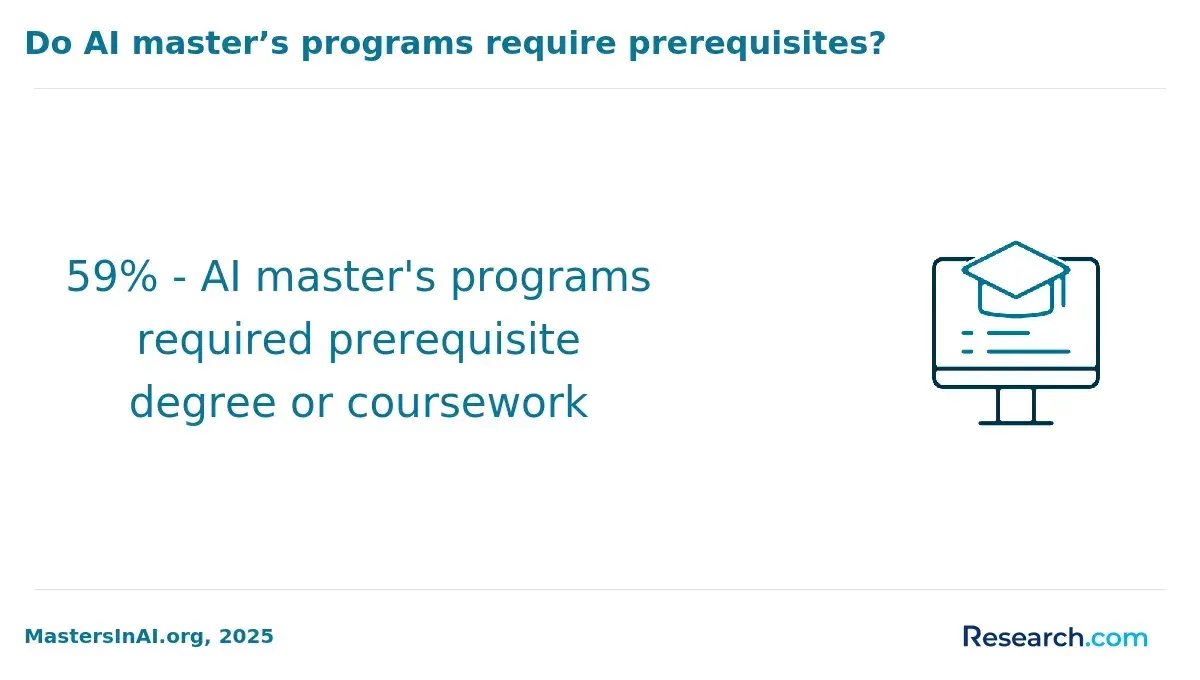
Admission prerequisites for AI master's programs involving AWS and Azure typically require solid skills in programming and mathematics. Python is the most commonly expected programming language, reflecting its top ranking in AI-related job postings. This preparation helps students handle cloud-based AI model development and deployment effectively.
Mathematics knowledge, especially in calculus, linear algebra, and statistics, is crucial as these areas support machine learning algorithms and cloud infrastructure management. Proof of competency through coursework or standardized testing is often requested.
A bachelor's degree in computer science, engineering, data science, or related STEM fields is generally mandatory. However, applicants from other disciplines may be considered if they demonstrate equivalent technical capabilities, such as physics majors with relevant coding and cloud experience.
Familiarity with cloud platforms AWS or Azure is commonly expected. Entry-level certifications like AWS Certified Cloud Practitioner or Microsoft Azure Fundamentals are frequently accepted as supplementary qualifications by admissions committees.
How long do these AI master's programs take, and what do they cost?
AI master's programs that incorporate AWS and Azure skills usually take between one and two years to finish, depending on whether students attend full- or part-time. Full-time study often lasts 12 to 18 months, providing an accelerated option, while part-time paths can extend beyond two years, offering flexibility for working professionals. Many programs offer cohort-based or online formats that let students balance coursework alongside their jobs.
Tuition costs align with broader graduate education pricing trends. For public in-state institutions, annual tuition averages about $12,600, while private nonprofit schools charge close to $29,900, based on the College Board's Trends in College Pricing 2024. Since AI master's degrees typically require 30 to 36 credit hours, total tuition can range from roughly $18,900 at public universities to upwards of $50,000 at private ones. Additional expenses may come from specialized cloud certification fees or technology access related to AWS and Azure platforms.
Programs with integrated cloud training sometimes carry a premium tuition due to partnerships and hands-on labs. However, these costs often include valuable resources like bundled cloud credits and certification vouchers. Financial aid, employer tuition assistance, and certificate stackability can help reduce net cost.
- Full-time: 12-18 months
- Part-time: up to 2+ years
- Tuition range: $18,900-$50,000+
- Includes AWS/Azure certification opportunities
Balancing duration and cost is key for career advancement. Accelerated completion minimizes opportunity cost, while recognized cloud platform training enhances employability. Comparing total investment against expected salary growth helps inform smart educational choices.
Do these degrees include hands-on labs using AWS and Azure credits or sandbox accounts?
Many AI master's degree programs include hands-on labs that provide access to AWS and Azure credits or sandbox accounts, critical for building practical skills. In 2024, 73% of employers preferred candidates with real-world experience over coursework alone (CompTIA, Workforce and Learning Trends 2024). These labs let students manage cloud infrastructure, configure services like Amazon SageMaker or Azure Cognitive Services, and deploy scalable AI workflows.
Programs may offer cloud credit packages-ranging from $200 to $500 per semester-to let students experiment without personal costs. Others provide sandbox accounts with pre-configured environments, ensuring safe, guided access while minimizing expenses. These experiences support learning in cloud management, cost optimization, and security practices essential in today's industry.
Integration depth varies by program. Some universities require capstone projects on AWS or Azure platforms, while others offer optional labs or collaborate with cloud providers for certifications. Prospective students should check if cloud credits or sandbox accounts are explicitly included, as hands-on opportunities directly impact skill development.
To ensure a program aligns with career goals-whether focused on data pipelines, hybrid cloud deployments, or cloud AI services-review course details carefully or contact admissions about cloud lab arrangements.
Which certifications pair best with an AI master's focused on AWS and Azure?
Certifications tied to cloud architecture, machine learning, and data engineering on AWS and Azure significantly enhance career prospects for those with an AI master's focused on these platforms. The AWS Certified Machine Learning - Specialty credential validates skills in building, implementing, and optimizing machine learning solutions using Amazon's cloud services, emphasizing data engineering and exploratory data analysis.
On the Azure side, the Microsoft Certified: Azure AI Engineer Associate certification confirms expertise in deploying AI models with Azure Cognitive Services, Azure Machine Learning, and knowledge mining. This credential equips professionals to manage secure and scalable AI workloads integrated with other Azure services.
Since AWS and Azure are among the leading cloud platforms widely used by developers, holding dual certifications can improve job opportunities, especially as employers increasingly expect AI professionals to operate across multi-cloud environments.
Other valuable certifications include:
- Certified Azure Data Scientist Associate - focuses on applying Azure machine learning models in production environments.
- AWS Certified Data Analytics - Specialty - emphasizes critical skills in data collection, storage, and visualization for AI pipelines.
- Certified Kubernetes Administrator - supports AI deployment using container orchestration technologies on cloud platforms.
Practical experience with AWS SageMaker or Azure Machine Learning Studio is essential to complement certifications, addressing real-world challenges in AI engineering. Certifications alone may not guarantee readiness without hands-on project work.
How do you compare reputable schools offering AI master's degrees with cloud specialization?
Top universities with ai master's degrees and cloud specialization place significant weight on research environment and research quality, as reflected in the Times Higher Education rankings. Strong research ecosystems provide students with advanced ai coursework and practical projects using AWS and Azure, ensuring well-rounded training in theory and cloud-based applications.
When choosing programs, look for explicit integration of AWS and Azure platforms through certifications, lab work, or cloud service modules embedded within ai courses. For example, Carnegie Mellon University offers applied experience with AWS SageMaker and Azure ML, aligning skills with industry needs.
Faculty research backgrounds and industry partnerships also play a crucial role in offering students exposure to cutting-edge cloud and ai technologies. These connections can enhance internship and job placement prospects. Some programs provide dedicated cloud computing tracks within ai, demonstrating curriculum depth rather than superficial inclusion.
Graduate outcomes are important indicators. Reliable schools publicly report employment rates in ai roles requiring cloud infrastructure experience. Balancing research excellence with flexibility and cost is essential, as top research institutions may not always emphasize cloud certifications thoroughly.
Other Things You Should Know About Artificial Intelligence
AI master's programs with AWS and Azure training typically emphasize programming languages such as Python and R, which are widely used for data analysis and machine learning. Additionally, students often learn SQL for database management and familiarity with languages like Java or Scala for specific cloud services and big data frameworks.
Many AI master's programs that focus on AWS and Azure include coursework on cloud security principles relevant to protecting AI models and data. This often covers identity and access management, data encryption, and compliance standards ensuring that students understand how to secure AI solutions within cloud environments.
Yes, practical projects are essential in AI master's programs with cloud components, allowing students to apply their skills in real-world scenarios. These projects often include building and deploying machine learning models using AWS SageMaker or Azure Machine Learning, providing hands-on experience with cloud-based AI tools.
Admission prerequisites often include a bachelor's degree in a related field, like computer science. Some programs also accept degrees in non-technical fields if foundational programming courses are completed. For more details, consider a master’s in AI for non-technical students.
References
- Microsoft, Google, AWS AI Certifications Guide https://whitefiretechnologies.com/microsoft-google-aws-ai-certification-guide/
- Azure Machine Learning | Become a Machine Learning Engineer | Udacity https://www.udacity.com/course/machine-learning-engineer-for-microsoft-azure-nanodegree--nd00333
- Hands-on Labs on Microsoft Azure | Cloud Platform https://cloudlabs.ai/blog/hands-on-labs/
- Can I Get A Master's Degree in Artificial Intelligence Online? | CSU Global https://csuglobal.edu/blog/can-i-get-masters-degree-artificial-intelligence-online
- How to Check if a Graduate Program is Accredited (and Why This Matters) | ProFellow https://www.profellow.com/tips/how-to-check-if-a-graduate-program-is-accredited-and-why-this-matters/
- How to Choose AI Certifications: Google vs AWS vs Microsoft in March 2026 https://learni-group.com/en/blog/how-to-choose-ai-certifications-google-aws-microsoft-march-2026
- Masters in AI: The Most Popular US Programs for 2024 https://globalcolliance.com/masters-in-ai-the-most-popular-us-programs-for-2024
- How an Online Master’s in AI Can Prepare You for the Future of Tech https://www.ucumberlands.edu/blog/how-online-masters-ai-can-prepare-you-future-tech
- Application and admission - Master Artificial Intelligence https://www.uva.nl/shared-content/programmas/en/masters/artificial-intelligence/application-and-admission/international-prior-education/international-prior-education-foldout-menu.html
- 25 Best Master's in AI Programs - MastersInAI.org https://www.mastersinai.org/degrees/best-masters-in-artificial-intelligence/