2027 Are There Any One-Year Online Accounting Degree Programs Worth Considering?

Co-Founder and Chief Data Scientist
A one-year online accounting degree sounds appealing because it promises a faster route to accounting jobs, CPA-related coursework, or career advancement. The catch is that “one year” means different things depending on the credential. It may describe a transfer-based bachelor’s completion plan, a master’s degree, a post-baccalaureate certificate, or a short accounting certificate—not necessarily a full bachelor’s degree from scratch.
The right question is whether the timeline matches your starting point. Students with many transfer credits, a prior bachelor’s degree, or accounting experience may be able to finish quickly. Students beginning college with no credits should be cautious: accounting degrees require sequenced coursework, and a legitimate bachelor’s program cannot usually be compressed into 12 months without substantial prior credit.
This guide explains when a one-year online accounting path is realistic, which types of programs are available, what to check before enrolling, how costs and aid work, and how to decide whether an accelerated accounting program supports your career, CPA, or skill-building goals.
Key Points About One-Year Online Accounting Degree Programs
- One-year online accounting degrees focus on core principles like financial reporting and auditing, offering accelerated paths compared to traditional four-year programs.
- Students should expect intense coursework with practical software training, as accounting demands up-to-date knowledge of tools such as QuickBooks and Excel.
- These programs appeal mostly to professionals seeking fast career advancement, with reported enrollment growth of 15% annually in accelerated accounting courses.
Is It Feasible to Finish a Accounting Degree in One Year?
Finishing an accounting degree online in one year is feasible only in specific situations. It is most realistic for students who are completing a degree with substantial transfer credits, entering a graduate accounting program after already earning a bachelor’s degree, or pursuing a certificate designed for focused skill development.
For bachelor’s degrees, credit requirements are the main barrier. A traditional accounting bachelor’s program includes general education, business core courses, and upper-level accounting classes. Some universities allow students to transfer up to 90 credits, which can leave about one year of remaining coursework if the student enrolls full time and courses are offered year-round.
Students with no prior college credit should not expect to earn a credible online bachelor’s degree in accounting in 12 months. Accounting is cumulative: financial accounting leads into managerial accounting, intermediate accounting, taxation, auditing, accounting information systems, and advanced reporting topics. Rushing through these courses without the right foundation can make later coursework—and professional work—much harder.
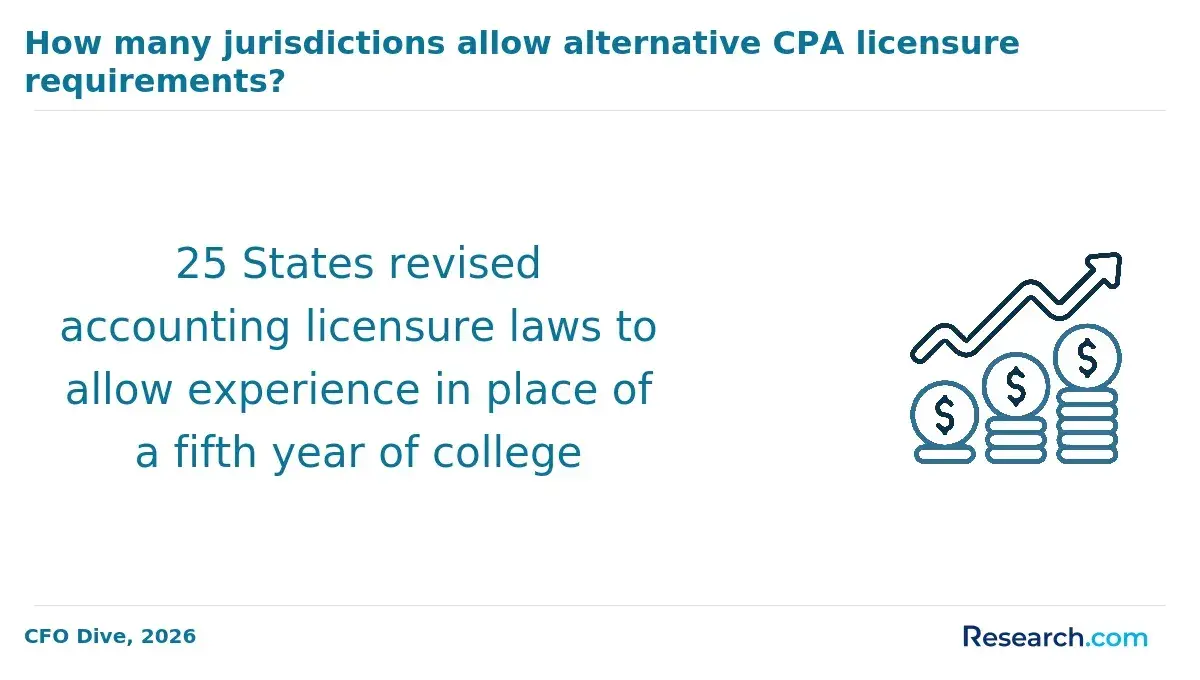
CPA plans also affect feasibility. Many states require 150 credit hours for CPA certification, so even a completed bachelor’s degree may not be enough. A one-year accounting program can help add credits or specialized coursework, but it does not automatically satisfy CPA education requirements. Students should check their state board’s rules before choosing a program.
| Student situation | Is one year realistic? | What to verify |
| No college credits | Usually no for a bachelor’s degree | Total credits, accreditation, and realistic completion time |
| Many transferable credits | Possibly, for a bachelor’s completion program | Written transfer evaluation and remaining course sequence |
| Already has a bachelor’s degree | Often realistic for a master’s or post-baccalaureate certificate | Prerequisites, CPA alignment, and program length |
| Working bookkeeper or accounting professional | Possible in competency-based or accelerated formats | How prior learning affects pace and completion requirements |
The practical answer: a one-year online accounting degree is realistic when you are finishing, adding, or upgrading a credential. It is rarely realistic when you are starting an undergraduate degree from zero.
Are There Available One-year Online Accounting Degree Programs?
There are currently no accredited one-year online bachelor’s degree programs in Accounting in the United States for students starting from zero credits. A traditional bachelor’s degree requires at least 120 credits, and even accelerated bachelor’s options generally take between 2.5 to 3.5 years to complete.
However, some students can finish much faster than the standard timeline. A learner with substantial transfer credit may be able to complete an online accounting bachelor’s degree in as little as one year if the institution accepts enough prior coursework and offers the remaining classes on a schedule that supports full-time completion. Students who already hold a bachelor’s degree may be better served by a master’s in accounting or a post-baccalaureate certificate rather than starting another undergraduate degree.
The strongest accelerated options usually have several features in common: high transfer-credit limits, competency-based learning, online course delivery, year-round start dates, clear degree maps, and written transfer evaluations before enrollment. If you are still asking can you get an accounting degree online, the answer is yes—but the realistic timeline depends on how much college-level work you have already completed.
Students comparing accelerated online accounting bachelor degree options may also want to review the fastest adult degree programs online to understand how different completion models work.
- Western Governors University (WGU): WGU offers a fully online, competency-based BS in Accounting. Students progress by demonstrating mastery rather than following only a fixed semester schedule. This model can help some learners finish faster than the average three years, depending on transfer credits, prior knowledge, available study time, and consistency.
- Temple University: Temple’s online Bachelor of Business Administration in Accounting includes an accelerated three-year track for full-time students. The AACSB-accredited program requires 124 credits and includes coursework in auditing, cost accounting, federal taxes, and data analytics.
- Old Dominion University: This AACSB-accredited program is designed for transfer students and may accept up to 90 credits. With full-time enrollment, the remaining coursework, about 30 credits, can be completed in one year while covering advanced accounting topics and business fundamentals.
Before applying, ask the school for a written transfer evaluation and a degree plan. “Finish in one year” is meaningful only after the institution confirms how many of your prior credits apply to the accounting program and when the remaining required courses are available.
Why Consider Taking Up One-year Online Accounting Programs?
A one-year online accounting program is worth considering when speed supports a specific outcome: earning a promotion, meeting accounting prerequisites, preparing for CPA-related coursework, changing careers, or adding practical accounting skills to an existing business background. The best accelerated programs are not simply short; they are structured around a clear academic or professional goal.
- Faster credential completion: A master’s in accounting, post-baccalaureate certificate, or transfer-based bachelor’s completion pathway can help students move toward accounting roles faster than a traditional multi-year route.
- Flexible scheduling: Many online programs use asynchronous coursework, allowing students to complete lectures, assignments, discussions, and exams around work and family obligations. This is especially useful for adults who cannot relocate or attend daytime classes.
- CPA preparation: Some one-year programs are designed to help students work toward the 150-credit hour requirement for CPA exam eligibility. Others include coursework in taxation, auditing, financial reporting, or CPA exam preparation. Students should still confirm their state board’s exact requirements.
- Career-change efficiency: Professionals in finance, administration, analytics, operations, or business management may use an accelerated accounting program to build the technical foundation for bookkeeping, staff accounting, audit, tax, or financial reporting roles.
- Technology-focused training: Modern accounting work increasingly involves spreadsheets, accounting systems, analytics, databases, enterprise software, and data-driven decision-making. Strong programs teach these tools alongside accounting rules and reporting standards.
Students seeking accelerated accounting degree career advancement should choose a program tied to a measurable result, such as CPA eligibility, a bachelor’s completion plan, a graduate credential, or a targeted certificate. For learners comparing shorter credentials with degree options, the broader market for easy online certifications that pay well may also help clarify alternatives.
The best reason to choose a one-year format is fit. If the program matches your prior credits, work experience, weekly availability, and licensing plan, it can be efficient. If it is fast but does not meet employer expectations, transfer needs, or CPA requirements, it may not be the right investment.
The biggest drawback of a one-year online accounting program is the pace. Accounting requires accuracy, repetition, and conceptual understanding. Compressing coursework into a short timeline can work for prepared students, but it can also leave gaps if the student is new to the field or cannot study consistently.
- Heavy workload: Accelerated schedules may require students to complete what feels like two years of coursework within a single year. Expect frequent assignments, exams, case problems, projects, and limited breaks between terms.
- Less time to master complex subjects: Intermediate accounting, auditing, taxation, and cost accounting are not memorization-only courses. They require practice, feedback, and repeated problem-solving.
- Limited applied experience: Some fast online programs may not include internships, practicums, or extensive applied projects. This can be a disadvantage for students without prior accounting experience.
- Fewer networking opportunities: Online students may have fewer informal interactions with classmates, faculty, recruiters, and local employers unless the program actively provides career events, advising, and employer connections.
- CPA credit uncertainty: The 150-credit hour requirement for CPA eligibility can be difficult to satisfy through a short program alone. Students may need additional coursework after graduation depending on their previous credits and state rules.
- Few true one-year bachelor’s options: Credible online accounting degrees that can be completed in one year are uncommon. Programs advertising a broad “one-year degree” should be reviewed carefully for accreditation, transfer assumptions, and actual graduation requirements.
A one-year program is not automatically lower quality, but it gives students less margin for missed deadlines, weak study habits, or unclear course planning. Before enrolling, estimate your weekly study time honestly and ask whether you already have the foundation to move quickly through upper-level accounting work.
Eligibility for one-year online accounting programs usually depends on academic preparation. Schools offering accelerated or completion-based pathways want to see that applicants can begin advanced coursework without spending several terms on prerequisites.
Requirements vary by credential. A bachelor’s completion program may focus on transfer credits, while a master’s program may require a completed bachelor’s degree and prior accounting or business coursework. Certificate and diploma programs may be easier to enter, but they may not provide the same career, transfer, or licensure value as a degree.
- Prior college credits: Many accelerated bachelor’s completion programs require substantial transfer credit. Some may expect applicants to have around 60 transferable college credits, while the fastest completion options usually require more.
- Relevant professional experience: Some adult-focused or competency-based programs consider accounting, bookkeeping, payroll, tax, finance, or business experience when evaluating readiness.
- Prerequisite coursework: Foundational classes in financial accounting, managerial accounting, economics, business law, statistics, or other business subjects may be required before upper-level accounting coursework begins.
- Placement exams or assessments: Certain institutions may use assessments to determine whether students are ready for advanced coursework or need additional preparation.
- Minimum academic standing: Schools may require official transcripts, a minimum GPA, and evidence that prior credits came from recognized institutions.
- Background checks or interviews: These are less common but may apply to programs with specialized tracks, employer partnerships, or institution-specific admissions policies.
Because online accounting degree admission requirements differ widely, students should request a transcript review before committing. Ask which credits transfer, which prerequisites remain, how many credits must be completed at the institution, and whether the program supports your CPA or career goals.
Students considering graduate-level alternatives can also compare cost and program structure through this affordable online master’s degree resource.
When comparing one-year online accounting degree programs, start with legitimacy, then evaluate fit. A fast credential is useful only if the school is properly accredited, the credits count toward your goal, and the curriculum prepares you for the roles or licensure path you want.
- Accreditation: Look for accredited online accounting programs. Institutional accreditation is essential, and business or accounting-related accreditation from AACSB, ACBSP, or IACBE can strengthen credibility. Accreditation may affect transfer credit, graduate admission, employer recognition, and CPA-related coursework.
- CPA alignment: If CPA licensure is your goal, confirm whether the program’s credits satisfy your state’s accounting and business coursework rules. Do not rely only on general marketing language about CPA preparation.
- Transfer-credit policy: A one-year completion timeline usually depends on generous transfer acceptance. Ask how many credits can transfer, whether old credits expire, whether community college credits count, and how many credits must be completed in residence.
- Curriculum depth: Strong programs cover financial accounting, managerial accounting, intermediate accounting, auditing, taxation, accounting information systems, data analytics, ethics, and business fundamentals. Be cautious of programs that move quickly but omit core accounting competencies.
- Faculty qualifications: Instructors should have relevant academic credentials and practical accounting experience. Faculty with CPA, audit, tax, corporate accounting, analytics, or systems experience can make coursework more useful and job-relevant.
- Course delivery format: Asynchronous courses offer flexibility, synchronous courses provide live interaction and structure, and competency-based programs work best for independent learners who already know some material.
- Student support: Advising, tutoring, writing support, accounting labs, career services, and CPA guidance are especially important in accelerated programs because there is little time to recover from a poor course plan.
- Technology and software: Accounting programs should expose students to current tools used in reporting, analysis, spreadsheets, databases, and accounting systems.
- Cost and aid: Compare tuition, fees, textbooks, software, exam-prep costs, and financial aid eligibility. Students looking for lower-cost options may also review cheapest online schools that accept FAFSA.
A practical screening method is to request three items before enrolling: a written transfer evaluation, a one-year course schedule, and an explanation of how the program supports your intended career path or CPA objective.
Costs vary because “one-year online accounting program” can refer to several different credentials: certificates, diplomas, bachelor’s completion programs, and graduate programs. A short certificate may cost less than a degree, but it may also have different value for employers, transfer credit, or CPA preparation.
Certificate programs can be comparatively affordable. For example, Penn Foster’s online accounting certificate is typically priced around $2,899 in total. This type of program may help students build practical accounting knowledge quickly, but students should confirm whether it meets their employment, transfer, or certification goals.
By comparison, standard four-year online bachelor’s degrees in accounting can range from $10,500 to $17,000 annually. A one-year certificate may be a lower-cost option for focused skills, while a bachelor’s or master’s degree may be more appropriate for students who need a recognized academic credential for advancement, graduate study, or CPA-related coursework.
| Cost factor | Why it matters |
| Institution type | Public institutions may charge lower rates for in-state students, while private institutions may use one online tuition rate. |
| Residency status | In-state and out-of-state tuition policies can significantly affect total cost. |
| Transfer credits | The more credits accepted toward a degree, the fewer courses students need to pay for. |
| Fees and materials | Online fees, textbooks, accounting software, exam preparation, and graduation fees can add to tuition. |
| Financial aid eligibility | Degree programs are more likely than non-degree certificates to qualify for federal financial aid, though eligibility depends on the institution and program. |
The lowest advertised tuition is not always the lowest total cost. Compare total program cost, not just cost per credit, and confirm whether the one-year plan requires full-time enrollment across multiple terms.
Students in one-year online accounting programs should expect a demanding, highly structured experience. The courses move quickly, deadlines arrive often, and success depends on consistent study habits. These programs are best suited for students who are organized, comfortable learning online, and prepared to work through technical material without long gaps between classes.
The accelerated online accounting degree curriculum usually builds on prior knowledge. Depending on the credential, students may study financial reporting, auditing, taxation, accounting analytics, accounting information systems, cost accounting, business law, ethics, and electives such as forensic accounting or data analytics.
Online does not mean easy. Courses may include recorded lectures, live sessions, discussion boards, quizzes, case studies, spreadsheet assignments, exams, group projects, and software-based exercises. In compressed terms, assignments often have short turnaround times.
Students should also expect technology-heavy coursework. Accounting work increasingly involves spreadsheets, reporting systems, data analysis, financial statement preparation, accounting software, and systems-based problem solving. Programs that integrate these tools can better prepare students for modern accounting roles.
For CPA-focused students, some programs include CPA exam preparation or coursework aligned with CPA subject areas. However, program completion does not guarantee CPA eligibility. State boards set their own education rules, including the 150-credit hour expectation, so students should verify requirements before enrolling.
Students who want to combine accounting with another field may also explore dual degree programs in USA as an alternative path, especially if their goals include finance, analytics, business administration, or information systems.
Financial aid may be available for one-year online accounting programs, but eligibility depends on the school, credential type, enrollment status, and whether the program is approved for aid. Degree programs are generally more likely to qualify for federal aid than short non-degree certificates.
- Federal financial aid: Students usually begin by completing the FAFSA. Federal aid may include loans, and unsubsidized loans are available to most graduate students in eligible accelerated programs. Enrollment intensity and credit requirements can affect eligibility and disbursement timing.
- State-specific aid: State grants or scholarships may be available, especially for residents attending public institutions. Some programs, such as Brooklyn College’s one-year online master’s, align with CPA credit requirements and may support professional certification goals. Others, such as SUNY Old Westbury’s program, restrict eligibility to residents of certain states.
- Institutional scholarships: Colleges may offer merit-based, need-based, transfer, graduate, or department-specific awards. Accelerated students should ask whether scholarships apply across all terms in the one-year schedule.
- Accounting organization scholarships: Professional accounting organizations may offer awards for students pursuing accounting degrees, CPA preparation, or specific career paths.
- Employer tuition assistance: Many employers help pay for accounting coursework, especially when the program supports CPA credential attainment, promotion readiness, or job-related skills.
- Private loans: Private loans can help cover gaps, but students should compare interest rates, fees, repayment terms, and whether payments begin while enrolled.
The compressed schedule can affect when aid is applied. Before enrolling, ask the financial aid office how funds are disbursed across the academic calendar, whether summer or accelerated terms are covered, and what happens if you complete courses faster or slower than planned.
What Accounting Graduates Say About Their Online Degree
- : "Enrolling in the one-year online Accounting degree completely transformed my career trajectory. The accelerated format allowed me to finish quickly while gaining practical skills that impressed employers immediately. Plus, the cost was manageable, making it a valuable investment. — Ryker"
- : "Choosing a competency-based Accounting program online was the best decision for balancing work, family, and education. I appreciated how the curriculum focused on mastering skills rather than just time spent, so I progressed efficiently without feeling rushed. Reflecting on the experience, I feel well-prepared and confident stepping into the industry. — Eden"
- : "The one-year Accounting degree offered a professional and rigorous education that exceeded my expectations. The clear structure and focused coursework enabled me to complete the program quickly without sacrificing depth of knowledge. Considering the average cost of attendance, I found it to be an excellent blend of quality and affordability in advancing my accounting expertise. — Benjamin"
Other Things You Should Know About Pursuing One-Year Accounting Degrees
Typically, applicants need a high school diploma or equivalent, and sometimes prerequisite coursework in math or business. Check specific program requirements for exact prerequisites, as these can vary by institution. Some schools may also require English proficiency tests for international students.
In 2027, some one-year online accounting programs may require completion of exams such as the CPA Exam or other institution-specific assessments. These assessments ensure students meet the professional standards necessary for careers in accounting.
Yes, many U.S.-based institutions offering one-year online Accounting degrees accept international students since the programs can be completed entirely online without requiring physical presence on campus.
However, international applicants should verify language proficiency requirements, program access based on geographic location, and any limitations regarding eligibility for internships or licensure based on their home country regulations.
- Online Finance & Accounting Courses | HBS Online https://online.hbs.edu/subjects/finance-accounting/
- Best Online Accounting Degrees of 2025 | Accounting.com https://www.accounting.com/degrees/accounting/bachelors/best-online-programs/
- Online Accounting Degrees: How to Choose a Program That Can Boost Your Career https://money.com/online-accounting-degrees/
- The Most Valuable Skills You'll Develop in an Online Accounting Program https://www.ucumberlands.edu/blog/most-valuable-skills-youll-develop-online-accounting-program
- Online Accounting Degree https://www.snhu.edu/online-degrees/bachelors/bs-in-accounting
- Best Accounting Courses & Certificates Online [2025] | Coursera https://www.coursera.org/courses
- 8 Key Benefits of Earning an MBA in Accounting Online https://www.baker.edu/about/get-to-know-us/blog/benefits-of-earning-an-mba-in-accounting-online/
- 10 Best Online Accounting Degrees of 2025 https://www.forbes.com/advisor/education/business-and-marketing/best-accounting-degrees/
- 2025 Most Affordable Online Accounting Degrees https://www.onlineu.com/most-affordable-colleges/accounting-degrees
- Accounting Online Degree Pathway - Year 1 https://www.learndirect.com/course/accounting-online-degree-pathway-year-one
- National Student Clearinghouse Research Center. (2025). Clearinghouse Enrollment Insights Series: Final Fall Enrollment Trends. https://nscresearchcenter.org/final-fall-enrollment-trends
- AICPA. (2025). AICPA 2025 Trends Report. https://www.aicpa-cima.com/professional-insights/download/2025-trends-report
- Sadovi, M. (2026, January 20). Accounting student enrollment rises 7.3%, outpacing rate across majors. CFO Dive. https://www.cfodive.com/news/accounting-student-enrollment-rises-73-outpacing-rate-across-majors/810040/
- AICPA & CIMA. (2025). MAP survey executive summary. https://www.aicpa-cima.com/resources/download/map-survey-executive-summary