2027 Questions to Ask About Online Accounting Degree Programs Before You Enroll

Co-Founder and Chief Data Scientist
An online accounting degree can be a strong path into bookkeeping, auditing, tax, corporate finance, public accounting, and CPA-focused roles—but only if the program fits your goals, state requirements, budget, and schedule. The choice is not simply “online or on campus.” Students need to compare accreditation, curriculum depth, licensure preparation, transfer policies, experiential learning, total cost, and career support before enrolling.
That decision matters because program quality and career alignment vary widely. Approximately 7% of all U. S. college students are enrolled in accounting programs, yet nearly 40% of graduates face challenges securing relevant employment within six months of graduation. A degree alone is not enough; students need the right coursework, recognized credentials, practical experience, and a clear plan for the jobs they want after graduation.
This guide explains the questions to ask before choosing an online accounting program, including how to check accreditation, what admissions requirements usually look like, which classes to expect, how long completion may take, whether internships are required, how licensure works, what costs to plan for, and which careers and salaries may be realistic after graduation.
Key Benefits of Enrolling in Online Accounting Degree Programs
- Online accounting programs offer flexible schedules, allowing students to balance studies with work or family commitments, with 70% of enrollees reporting improved time management skills.
- They typically reduce costs by eliminating commuting and housing expenses, making degree completion more affordable for 60% of students compared to traditional programs.
- Many students benefit from enhanced work-life balance, as asynchronous learning formats enable studying during optimal personal hours without sacrificing job responsibilities.
Is the Online Accounting Degree Program Accredited?
Yes, accreditation should be one of the first things you verify before applying to an online accounting degree program. Accreditation signals that a school or program has been reviewed against recognized academic standards. It can affect whether employers respect the degree, whether credits transfer, whether financial aid is available, and whether the coursework may count toward CPA exam eligibility.
For accounting students, two levels of accreditation matter:
- Institutional accreditation: This applies to the college or university as a whole. Students should confirm that the accrediting agency is recognized by the U.S. Department of Education or the Council for Higher Education Accreditation (CHEA).
- Programmatic business or accounting accreditation: This applies to business schools or accounting programs. Key accrediting bodies include the Accreditation Council for Business Schools and Programs (ACBSP) and the Association to Advance Collegiate Schools of Business (AACSB), with AACSB often seen as the highest quality benchmark for accounting programs.
According to the National Association of State Boards of Accountancy (NASBA), candidates from non-accredited programs may struggle to meet CPA exam qualifications, since many states mandate graduation from accredited degrees. That makes accreditation especially important if your long-term plan includes becoming a CPA, working in public accounting, or pursuing graduate study.
Before enrolling, check the school’s accreditation page, then verify the status directly through the accreditor’s website. Do not rely only on marketing language such as “recognized,” “approved,” or “high quality.” If a school cannot clearly identify its accreditor, or if the accreditor is not recognized by the U.S. Department of Education or CHEA, treat that as a serious warning sign.
Students comparing accounting degrees with other business-focused online options may also review accredited online MBA programs to understand how accreditation standards apply across graduate and undergraduate business education.
What Are the Admission Requirements for Online Accounting Programs?
Admission requirements for online accounting programs vary by school and degree level, but most programs look for evidence that applicants can handle college-level quantitative, business, and writing coursework. Requirements are often more flexible for adult learners and transfer students, but students should still review each program’s policies carefully before applying.
Common admission requirements include:
- High school diploma or equivalent: Undergraduate programs typically require proof of secondary school completion, such as a high school diploma or GED.
- Minimum GPA: Some schools set a minimum GPA for first-year or transfer applicants. A stronger GPA may also improve scholarship eligibility or admission to more selective programs.
- Standardized test scores (SAT/ACT): Though not universal, some programs require or accept SAT or ACT scores to assess college readiness. Many online programs have test-optional or test-flexible policies, so applicants should check current requirements.
- Prerequisite courses: Programs may expect prior coursework in math, economics, business, or introductory accounting, especially for transfer students or applicants to bachelor’s completion programs.
- Application essay or personal statement: This helps the school understand an applicant’s goals, motivation, and readiness for online learning.
- Letters of recommendation: Some programs request recommendations from teachers, supervisors, or professional contacts who can speak to the applicant’s academic ability, work ethic, or career potential.
Transfer students should also ask how many previously earned credits can apply toward the degree, whether accounting courses expire after a certain number of years, and whether the school accepts credits from nationally or regionally accredited institutions. These policies can change the total cost and time to graduation.
Students comparing online accounting programs with broader business options can review online business degree programs to see how admissions expectations, cost, and curriculum structure may differ across related fields.
What Classes Do You Take in an Online Accounting Program?
An online accounting curriculum should build more than bookkeeping knowledge. A strong program teaches students how to prepare and interpret financial information, apply tax and auditing rules, use accounting technology, analyze business decisions, and communicate findings clearly. With online degree enrollment increasing by more than 20% in recent years, evaluating curriculum quality has become even more important.
Most online accounting programs include three main types of coursework:
- Core courses: These usually cover financial accounting, managerial accounting, taxation, auditing, accounting information systems, cost accounting, and business law. These courses form the technical foundation for accounting jobs and CPA-focused study.
- Electives: Electives may allow students to focus on forensic accounting, financial analysis, nonprofit accounting, fraud examination, advanced taxation, or data analytics. The best elective choices depend on whether the student wants to work in public accounting, corporate accounting, government, tax, or financial services.
- Practical components: Some programs use case studies, simulations, capstone projects, and applied accounting assignments instead of—or in addition to—traditional internships. These experiences help students practice problem-solving, documentation, and professional judgment.
Students who plan to pursue CPA licensure should compare the curriculum with their state board’s education requirements before enrolling. In particular, they should check whether the program includes enough upper-level accounting credits, business credits, auditing coursework, taxation coursework, and ethics content to support exam eligibility.
When I spoke to a student currently enrolled in an online accounting degree program, he said the most difficult part was not the online format itself but the pace and complexity of core courses such as taxation. Recorded lectures helped because he could replay explanations while working through technical problems. He also described capstone projects as stressful but useful because they forced him to connect multiple accounting concepts rather than study each topic in isolation.
The key lesson: do not choose a program only because it is flexible. Choose one with enough rigor, feedback, and applied work to prepare you for accounting tasks that employers actually expect graduates to perform.
How Long Does It Take to Complete an Online Accounting Degree?
The time required to complete an online accounting degree depends on the degree level, enrollment pace, transfer credits, course availability, and whether the program uses standard semesters, accelerated terms, or self-paced formats. Students should compare timelines carefully because completion speed affects tuition planning, workload, and how soon they can pursue accounting roles.
- Full-time study: Most students complete an associate degree in about two years and a bachelor's degree in roughly four years when studying full-time. This is usually the clearest path for students who can commit significant weekly time to coursework.
- Part-time options: Students balancing work, caregiving, or military responsibilities often take three to six years to finish their degree. Part-time study can reduce stress each term but may extend costs and delay career advancement.
- Accelerated programs: These programs may allow learners to earn a bachelor's degree in two to three years by using shorter terms or heavier course loads. This option can save time, but it requires strong organization and consistent availability.
- Programs with practical components: Some courses incorporate internships or clinical hours, adding time to complete the degree. These experiences can be valuable, but students should understand the scheduling expectations before enrolling.
- Individual factors: Prior credits, transfer policies, course sequencing, failed or repeated courses, and personal time management can all change the graduation timeline.
Before choosing a program, ask for a degree plan that shows exactly which courses you would take each term. Transfer students should request a transcript evaluation early, not after admission, so they can estimate the true remaining time and cost.
Does an Online Accounting Program Require Internships or Practicums?
Some online accounting programs require internships or practicums, while others make them optional or replace them with capstones, simulations, or applied projects. The right choice depends on your experience level. Students who already work in accounting may not need the same type of placement as career changers or first-time college students.
Practical experience can be especially valuable because accounting employers often want evidence that graduates can use software, meet deadlines, communicate with clients or internal teams, and apply rules to real financial records. Over 70% of employers prefer candidates with relevant internship experience, underscoring its value for career readiness.
When reviewing internship requirements, ask these questions:
- Is the internship required or optional? Required internships may strengthen career preparation but can complicate scheduling for working adults.
- Can the placement be completed remotely? Some online programs support virtual internships or remote accounting projects, but others expect local in-person work.
- Does the school help students find placements? A program that only tells students to “find an internship” may be less useful than one with employer partnerships, career coaching, or placement support.
- Can current work experience count? Students already employed in accounting or finance should ask whether their job can satisfy experiential requirements.
- Will the experience support licensure or certification goals? Some states or credentials may have specific experience expectations, so students should verify requirements early.
A graduate of an online accounting degree described the process as both challenging and worthwhile. Finding a placement that allowed remote work took time, but the program’s support helped her connect with organizations that offered meaningful exposure. She said the practicum strengthened her confidence and helped her understand workplace dynamics better than expected.
For online students, the practical takeaway is simple: flexibility is helpful, but career preparation still requires real accounting practice. If a program has no internship, practicum, capstone, employer projects, or career services, ask how it helps students demonstrate job-ready skills.
Can You Get Licensed with an Online Accounting Degree?
Yes, graduates of accredited online accounting degree programs can qualify for professional licensure, including the CPA credential, if they meet their state’s requirements. The online format itself is not the issue. What matters is whether the school is accredited, whether the credits are accepted by the state board, and whether the student completes the required coursework and experience.
Most states require candidates to complete 150 credit hours of education, pass the Uniform CPA Examination, and accumulate a set number of supervised work experience hours. Because requirements vary by state, students should not assume that any accounting degree automatically qualifies them for licensure.
Before enrolling, prospective CPA candidates should confirm:
- Credit-hour alignment: Whether the program helps students reach the 150 credit hours commonly required for CPA eligibility.
- Accounting coursework: Whether the curriculum includes the upper-level accounting, auditing, taxation, and ethics courses required by the relevant state board.
- Business coursework: Whether the program includes the business credits that some states require in addition to accounting credits.
- Experience requirements: Whether the school explains supervised work expectations and helps students understand how to document qualifying experience.
- State authorization: Whether the online program is authorized to enroll students in the student’s state and whether it makes licensure disclosures clearly available.
Licensure remains a major consideration because it can affect job options, promotion potential, and access to public accounting roles. According to the National Association of State Boards of Accountancy, around 79% of practicing accountants hold CPA licenses, highlighting its importance for career advancement.
Students exploring online professional degrees in other fields can also compare licensure-focused program disclosures with online marriage and family therapy programs, where state eligibility and supervised experience are also central to career planning.
How Much Do Online Accounting Programs Cost?
Online accounting program costs vary by school type, residency status, degree level, transfer credits, and required fees. On average, tuition for online accounting degrees ranges between $300 and $700 per credit hour. Since programs generally require between 120 and 150 credit hours, the total tuition can vary from $36,000 to $105,000, depending on whether the institution is public or private.
Students should look beyond the advertised tuition rate and calculate the full cost of attendance. Common cost categories include:
- Tuition per credit: This is usually the largest expense. Public institutions may charge different rates for in-state and out-of-state students, while some online programs use one flat rate.
- Additional fees: Technology fees, application fees, graduation fees, proctoring fees, and exam fees can add several hundred to a few thousand dollars to the overall cost.
- Course materials and software: Accounting textbooks, access codes, spreadsheet tools, tax software, data analytics platforms, and accounting systems may add hundreds or even thousands of dollars over the duration of the program.
- Tuition inflation trends: Tuition costs for online degrees, including accounting programs, tend to rise annually by approximately 2-3%. Students should plan for increases if they expect to study part-time over several years.
To compare programs accurately, request a written estimate that includes tuition, required fees, expected materials, transfer credit assumptions, and projected completion time. A lower per-credit rate may not be the cheapest option if the school accepts fewer transfer credits or requires more total credits.
Students focused on cost can compare affordable online accounting programs while also reviewing broader online education cost patterns, such as those found in affordable online EdD programs.
What Financial Aid Is Available for Online Accounting Students?
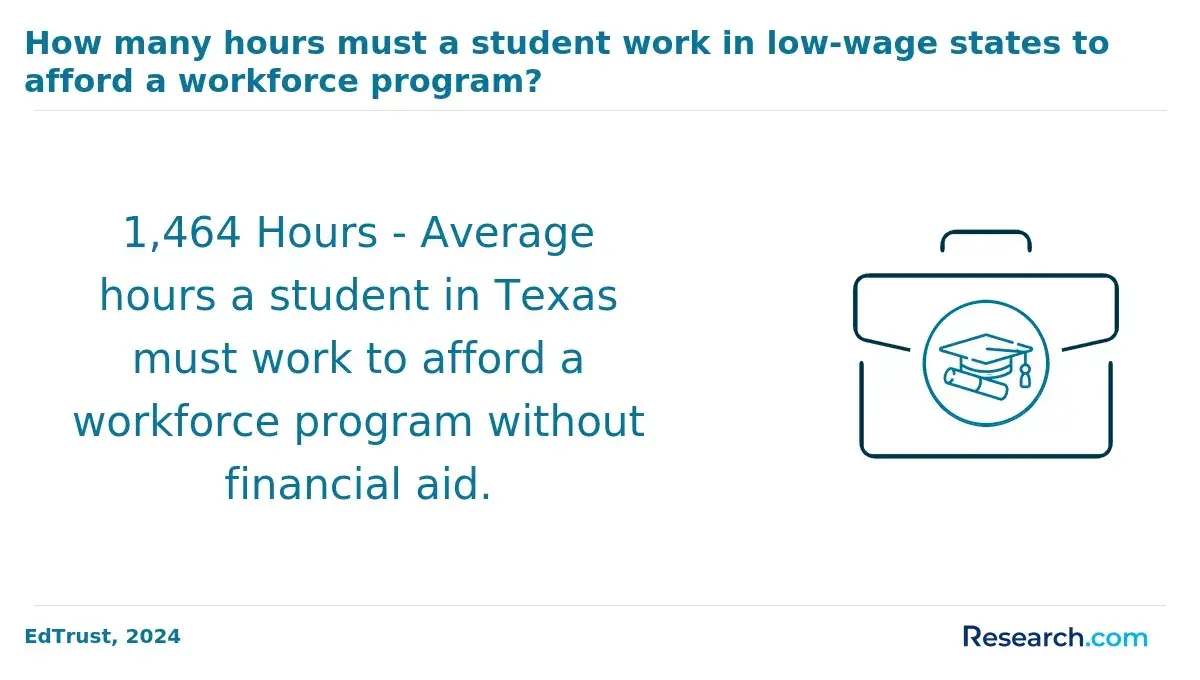
Online accounting students may qualify for many of the same financial aid options as on-campus students, as long as the school and program meet eligibility requirements. Nearly 85% of college students use some form of financial assistance, illustrating its critical role in making higher education accessible and affordable.
Common financial aid options include:
- Federal Pell Grants: These need-based grants are awarded to eligible undergraduate students and do not require repayment.
- Federal student loans: Students typically complete the FAFSA to determine eligibility. Federal loans may offer low-interest rates and flexible repayment plans compared with many private loan options.
- Scholarships: Scholarships for online accounting students may be merit-based, need-based, demographic-specific, employer-sponsored, or tied to accounting organizations and professional associations.
- Employer tuition assistance: Some employers provide tuition reimbursement or direct assistance for workers pursuing job-related education. These benefits may require grade minimums, continued employment, or repayment if the employee leaves too soon.
- State grants and aid: Many states provide aid for residents pursuing online degrees, often based on income, residency, enrollment status, or academic performance.
Students should complete the FAFSA early, ask the school’s financial aid office whether online learners qualify for institutional scholarships, and compare net price rather than sticker price. It is also wise to ask whether aid applies to summer terms, accelerated sessions, part-time enrollment, and required accounting software or exam fees.
Students considering faster graduate pathways can compare financial aid structures with one-year master's programs, where accelerated pacing may affect how tuition and aid are distributed across terms.
What Jobs Can You Get With an Online Accounting Degree?
An online accounting degree can lead to many of the same roles as an on-campus accounting degree, provided the program is accredited and the graduate has the right skills, experience, and credentials. According to the U.S. Bureau of Labor Statistics, employment in accounting and auditing is projected to grow 6% from 2022 to 2032, reflecting steady demand.
Common roles for accounting graduates include:
- Staff accountant: Staff accountants prepare financial statements, maintain ledgers, reconcile accounts, and support month-end or year-end closing. This is a common entry point into corporate accounting, nonprofit accounting, and public accounting support roles.
- Auditor: Auditors examine financial records, internal controls, and compliance practices. They may work for public accounting firms, corporations, government agencies, or internal audit departments.
- Tax specialist: Tax specialists prepare returns, research tax rules, support compliance, and help individuals or organizations plan for tax obligations. This path may lead to tax advisory or consulting roles with additional experience.
- Financial analyst: Financial analysts use accounting and finance data to evaluate performance, forecast trends, and support business decisions. This role may require stronger modeling, spreadsheet, and communication skills.
- Controller: Controllers oversee accounting operations, financial reporting, internal controls, and accounting teams. This is typically a senior role that requires several years of experience and may favor candidates with credentials such as the CPA.
Students should match their coursework and electives to their target career. For example, auditing and taxation courses are especially important for CPA-focused students, while analytics, information systems, and finance courses may help those pursuing corporate finance or analyst roles.
What Is the Average Salary for Online Accounting Graduates?
Salary outcomes for online accounting graduates depend on role, education level, experience, credentials, employer type, and location. With the median annual wage for accountants and auditors in the U.S. hovering around $77,000 and an expected 7% job growth over the next decade, accounting can offer stable long-term potential. However, graduates should avoid assuming that every accounting degree leads to the same salary.
Key factors that influence earning potential include:
- Level of education: A bachelor's degree can qualify graduates for many accounting roles, while a master's degree or MBA may support advancement into management, specialized accounting, or CPA-focused pathways.
- Specialization: Forensic accounting, tax accounting, auditing, financial analysis, and accounting information systems may offer different salary potential because each requires distinct technical skills.
- Experience: Entry-level graduates typically earn less than experienced accountants. Salaries often rise as professionals gain responsibility, manage complex accounts, lead audits, supervise staff, or earn credentials.
- Geographic location: Pay varies by region. Metropolitan areas and places with higher costs of living often offer higher compensation, while rural or lower-cost areas may pay less.
- Work setting: Public accounting firms, private companies, government agencies, nonprofits, and corporate finance departments use accounting skills differently and may offer different pay structures.
Students evaluating salary potential should look at the specific jobs they want, not just the degree title. A graduate pursuing CPA licensure, internships, advanced Excel or analytics skills, and relevant work experience may have a different career trajectory than a graduate who completes only the minimum degree requirements.
What Graduates Say About Enrolling in an Online Accounting Degree
- : "The cost of the online accounting degree program was surprisingly affordable compared to traditional colleges, which made it an easy choice for me. The flexibility of studying at my own pace allowed me to balance work and education effectively, and the comprehensive curriculum truly prepared me for real-world challenges. Since graduating, I've seen a significant boost in my career opportunities and confidence. — Ryker"
- : "I chose the online accounting degree program after careful reflection on both price and convenience; the average cost fit well within my budget without sacrificing quality. The coursework was intensive but rewarding, and engaging with instructors and peers online gave me a unique perspective on teamwork in a digital environment. Professionally, this degree opened doors to new roles in finance that I wouldn't have considered before. — Eden"
- : "Opting for the online accounting degree was a practical decision driven by cost efficiency-the program cost was reasonable and allowed me to avoid student debt. My experience was highly structured, with clear milestones and support that made the learning process very efficient. This degree has helped me advance steadily in my profession while applying the knowledge directly to day-to-day accounting tasks. — Benjamin"
Other Things You Should Know About Accounting Degrees
Look for regional accreditation for the school and, for the business school, AACSB accreditation; some accounting programs also seek ACBSP or IACBE approval. For CPA preparation, confirm that the curriculum meets your state board’s 150-credit-hour and course-content rules before you apply.
Online accounting programs in 2027 often incorporate virtual networking events, webinars, and online forums. Many programs utilize platforms like LinkedIn and specialized career service portals to connect students with industry professionals, peers, and alumni, facilitating meaningful professional relationships despite the remote learning environment.
In 2027, many online accounting programs have incorporated virtual internships and collaborations with partner companies, offering students practical experience and exposure to real-world scenarios. Check if your prospective program has formal partnerships and support systems in place for securing such opportunities.
In 2027, most online accounting programs align their curricula with CPA exam requirements. They offer courses specifically designed to help students meet certification criteria and provide access to practice exams, study resources, and, often, guidance from faculty experienced in the certification process.
References
- Accounting Bachelor's Degree Online - Penn State World Campus https://www.worldcampus.psu.edu/degrees-and-certificates/penn-state-online-accounting-bachelor-of-science-degree
- Online Bachelor's Degree: Accounting https://www.umgc.edu/online-degrees/bachelors/accounting
- Online Accounting Certificates https://www.snhu.edu/online-degrees/certificates/accounting
- Best Online Accounting Degrees of 2025 | Accounting.com https://www.accounting.com/degrees/accounting/bachelors/best-online-programs/
- Accountant Salary and Jobs for Accounting Careers https://teach.com/online-ed/business-degrees/online-masters-accounting/salary-and-career-outlook/
- Bachelor of Science Degree in Accounting | 4-week Classes | NU https://www.nu.edu/degrees/accounting-finance-economics/programs/bachelor-of-science-accounting/
- How Long Does It Take to Get an Accounting Degree? https://www.warnerpacific.edu/blog/how-long-does-it-take-to-get-accounting-degree/
- Remote Accounting Jobs Online - Work From Home | Remote.co https://remote.co/remote-jobs/accounting