
2027 Easiest Types of Doctor to Become & How to Get There

Co-Founder and Chief Data Scientist
As an education and career expert, I know firsthand the immense difficulty of finding accurate, current information on medical careers. The volume of data can feel overwhelming and often contradictory.
To help you get past that noise, this guide cuts directly to the core facts for 2025. It details the 7 specialties generally considered less competitive to enter in the USA: Family Medicine, Psychiatry, Physical Medicine and Rehabilitation, Pediatrics, Emergency Medicine, Internal Medicine, and Anesthesiology. I will provide you with a clear roadmap of what to expect for each one, from the education path to earning potential. This is the precise, reliable information you need to make one of the most important decisions of your life.
What are the benefits of becoming one of these 7 types of doctors?
- Anesthesiology: A highly specialized field with a well-defined role, often with a good work-life balance and high earning potential.
- Emergency Medicine: Provides a fast-paced environment and a wide range of cases, making it a good fit for those who thrive under pressure and enjoy variety.
- Family Medicine: Shorter residency (3 years) allows for a quicker start to your career and a broad scope of practice, treating patients of all ages.
- Internal Medicine: These physicians, known as internists, focus exclusively on adults, offering comprehensive, long-term care for a variety of health conditions.
- Pediatrics: Work is focused exclusively on children, allowing for a deep specialization in pediatric health and development.
- Psychiatry: The work is generally less physically demanding than surgical specialties, often with a more predictable schedule and a strong focus on mental health.
- Physical Medicine and Rehabilitation: Focuses on improving function and quality of life for patients with physical disabilities or injuries, often avoiding surgical operations.
What can I expect from becoming one of these 7 doctors?
- Anesthesiology: The 4-year residency curriculum is focused on patient safety and critical care, with training that includes managing patients through a wide variety of surgeries and specialized rotations in cardiac, neurosurgical, and pediatric anesthesia.
- Emergency Medicine: The 3- to 4-year residency is a hands-on curriculum focused on critical care, trauma, and the rapid diagnosis and treatment of a wide variety of urgent medical conditions in the emergency department.
- Family Medicine: The 3-year residency is a comprehensive curriculum covering general care for patients of all ages, from newborns to the elderly, focusing on chronic disease management and preventive medicine in both inpatient and outpatient settings.
- Internal Medicine: This 3-year residency curriculum provides in-depth training on the diagnosis and non-surgical treatment of adult diseases, with rotations in both inpatient general medicine and various subspecialties.
- Pediatrics: The 3-year residency curriculum is dedicated to the physical, mental, and social health needs of children, with training that includes rotations in the newborn nursery, pediatric intensive care unit (PICU), and outpatient clinics.
- Physical Medicine and Rehabilitation: This 4-year residency is centered on non-surgical treatment and pain management, with a curriculum that includes rotations in spinal cord injury, traumatic brain injury, and musculoskeletal medicine.
- Psychiatry: This 4-year residency focuses on a curriculum of psychotherapy and psychopharmacology, training you to diagnose and treat a wide range of mental and behavioral health issues across different age groups and settings.
Where can I work as one of these 7 doctors?
- Family Medicine: Primarily work in private practices, community clinics, and outpatient settings, with some providing inpatient care in hospitals.
- Psychiatry: Can be found in private practices, general and psychiatric hospitals, community mental health centers, and even government settings like prisons and the military.
- Physical Medicine and Rehabilitation: Work in a variety of settings including hospitals, rehabilitation centers, and private practices, helping patients to restore function.
- Pediatrics: The majority work in private offices or group practices, but many also work in hospitals, clinics, or academic medical centers involved in teaching and research.
- Emergency Medicine: Work almost exclusively in the fast-paced environment of a hospital's emergency department, and some also work in urgent care clinics.
- Internal Medicine: A large number of internists work in an ambulatory setting (office or clinic), while others, known as "hospitalists," specialize in caring for patients exclusively in the hospital.
- Anesthesiology: Work primarily in hospitals in the operating room, but can also be found in outpatient surgical centers, pain management clinics, and private physician offices.
How much can I make as one of these 7 doctors?
- Anesthesiology: Among the highest-paid specialties, with an average of approximately $405,000.
- Emergency Medicine: Average salary around $373,000.
- Family Medicine: Median annual salary is around $240,000 to $280,000, with top earners exceeding $300,000.
- Internal Medicine: Average salary near $264,000.
- Pediatrics: Average annual salary circa $244,000.
- Physical Medicine and Rehabilitation (PM&R): Average salary of approximately $322,000.
- Psychiatry: The Bureau of Labor Statistics lists a median of $239,200 (with a range from about $73,278 to $431,620).
- The 7 Easiest Types of Doctor to Become & How to Get There Easy Doctor Types
- What are the average residency lengths for various medical fields? Residency
- How much debt does the average medical school graduate have? Student Debt
- What are the average salaries of the 7 easiest medical fields? Salaries
- How have physician salaries changed in recent years? How have physician salaries changed in recent years?
- Where can I work with an MD in the 7 easiest medical fields? Where can I work with an MD in the 7 easiest medical fields?
- What additional certifications are available for doctors in the 7 easiest medical fields? Certifications
- What are the biggest challenges faced by doctors in the 7 easiest medical fields? Challenges
- Could Complementary Online Education Enhance Your Medical Career? Could Complementary Online Education Enhance Your Medical Career?
- What are the biggest opportunities for doctors in the 7 easiest medical fields? Opportunities
- Can Supplementary Administrative Training Enhance Your Medical Career? Can Supplementary Administrative Training Enhance Your Medical Career?
- What are some current and future trends in the 7 easiest medical fields? Trends
The 7 Easiest Types of Doctor to Become and How to Choose the Right Path
If you are planning for medical school or preparing to apply for residency, the question is not simply, “Which doctor earns the most?” A better question is, “Which specialty can I realistically enter, complete, afford, and practice for the long term?” Every physician route is demanding. Medical school, residency, licensing exams, clinical accountability, night calls, difficult patient conversations, and ongoing learning are part of the profession. Still, some medical specialties are generally more accessible because they have shorter core residencies, more available positions, broader practice settings, or less extreme match competition than fields such as neurosurgery, orthopedic surgery, or dermatology.
This guide explains the 7 easiest types of doctors to become for 2027 using a practical definition of “easy”: residency accessibility, training length, work setting flexibility, income potential, stress profile, and long-term fit. You will also see how these specialties compare by salary, debt, residency duration, workplace options, additional certifications, and common challenges so you can make a more informed specialty decision.
Quick answer: What are the easiest doctor specialties to enter?
The 7 easiest types of doctors to become for 2027 are commonly considered:
- Anesthesiology
- Emergency Medicine
- Family Medicine
- Internal Medicine
- Pediatrics
- Physical Medicine and Rehabilitation
- Psychiatry
These specialties are not easy jobs. They still require four years of medical school, residency training, board preparation, and state licensure. They are considered more accessible because they may offer more realistic match options, shorter residency pathways, flexible career settings, or less intense applicant competition than many highly selective surgical and procedural fields. Many students start by asking whether a biology degree is useful for medical school preparation, but specialty choice later depends on clinical performance, board scores, residency strategy, mentorship, and personal fit.
What does “easiest medical field” actually mean?
In medicine, “easy” is a relative term. A field can be easier to match into but still emotionally draining, clinically complex, or physically exhausting. The more useful comparison is whether a specialty fits your academic profile, preferred work environment, tolerance for uncertainty, desired patient population, and financial goals.
- Residency competitiveness: A specialty may be more accessible if it has many residency slots, accepts applicants from varied academic backgrounds, or does not require the most competitive combination of exam scores, research, and honors. Many of the highest-paying careers in medicine also attract especially strong applicant pools.
- Applicant flexibility: Some fields are more open to qualified MD students, DO students, and international medical graduates, which can improve match opportunities for students from different training routes.
- Training timeline: Shorter residencies allow physicians to reach attending-level practice sooner, although fellowship training can add years for those who subspecialize.
- Schedule and lifestyle: Outpatient clinics, predictable shifts, telehealth options, and lower overnight call can make some specialties more sustainable than others.
- Type of stress: Emergency medicine, anesthesiology, psychiatry, pediatrics, and primary care all involve pressure, but the pressure looks different. The key is whether that pressure matches your strengths.
The least competitive option is not automatically the best choice. A student who wants fast procedures and acute decisions may feel frustrated in a continuity clinic. A student who values long-term relationships may dislike a shift-based emergency department role. Treat “easiest” as one factor in a larger decision, not as the deciding factor.
| Specialty | Typical training path | Why it may be more accessible | Best fit for students who like | Main trade-off |
| Anesthesiology | 4 years med school, 4 years residency | Defined training structure and several clinical practice environments | Procedures, physiology, technology, and operating room teamwork | High-stakes patient monitoring with little room for delay |
| Emergency Medicine | 4 years med school, 3-4 years residency | Broad acute-care training and shift-based practice models | Variety, trauma, urgent decisions, and team response | Night shifts, crowding, irregular schedules, and burnout risk |
| Family Medicine | 4 years med school, 3 years residency | Large primary care demand and wide residency availability | Whole-person care, prevention, and long-term patient relationships | Heavy documentation and lower pay than many specialties |
| Internal Medicine | 4 years med school, 3 years residency | Large specialty with many residency positions and fellowship routes | Adult medicine, complex diagnosis, and inpatient care | High patient complexity and substantial administrative work |
| Pediatrics | 4 years med school, 3 years residency | Straightforward training route and ongoing need for child healthcare | Child development, family education, and preventive care | Emotional strain when children are seriously ill |
| Physical Medicine and Rehabilitation | 4 years med school, 4 years residency | Lower public visibility than many specialties and diverse practice settings | Function, mobility, recovery, and interdisciplinary care | Slow progress and insurance barriers can affect care plans |
| Psychiatry | 4 years med school, 4 years residency | Growing mental health need and many practice models | Human behavior, communication, neuroscience, and longitudinal care | Stigma, safety concerns, and complex social needs |
The sections below explain what each of these seven doctor careers is like in practice.
Anesthesiology
Anesthesiologists are physicians who keep patients safe and comfortable before, during, and after surgery or procedures. They administer anesthesia, control pain, manage airways, monitor vital signs, and respond quickly when a patient’s breathing, blood pressure, heart rhythm, or level of consciousness changes.
This path often fits students who like applied physiology, hands-on procedures, pharmacology, technology, and operating room collaboration. Anesthesiologists may also pursue work in pain medicine, critical care, pediatric anesthesia, obstetric anesthesia, or outpatient surgical centers. The role can be financially rewarding and clinically focused, but it demands constant attention because a delayed response can have serious consequences.
- Best Universities: Duke University, Johns Hopkins University, Stanford University, University of California—San Francisco
- Cost: Average medical school debt > $200,000. Annual salaries for residents from $60,000 to $80,000.
- Curricula: Pain management, critical care, patient safety
- Duration: 4 years med school, 4 years residency
- Skills: Calm under pressure, technical dexterity, vigilance
Emergency Medicine
Emergency medicine physicians evaluate, stabilize, and treat patients with urgent or life-threatening conditions. They see patients with trauma, chest pain, infections, stroke symptoms, fractures, allergic reactions, psychiatric emergencies, overdoses, and unclear symptoms that must be sorted quickly.
This specialty suits students who want rapid decision-making and constant variety rather than a predictable outpatient clinic schedule. Emergency physicians usually work in hospital emergency departments, although some practice in urgent care centers, trauma centers, rural hospitals, or tele-triage roles. The shift model can provide blocks of time away from work, but nights, weekends, holidays, high patient volume, and crowding can make the job intense.
- Best Universities: Harvard University, Stanford University, University of California—San Francisco
- Cost: Average medical school debt > $200,000. Annual salaries for residents from $60,000 to $80,000.
- Curricula: Critical care, trauma, resuscitation
- Duration: 4 years med school, 3-4 years residency
- Skills: Decisive, composed under pressure, teamwork
Family Medicine
Family physicians provide primary care for patients across the lifespan. Their work may include preventive visits, chronic disease management, acute illness care, vaccinations, screenings, medication management, women’s health, behavioral health support, and coordination with specialists.
Family medicine is one of the broadest and most flexible physician paths. Family doctors can work in private practices, group clinics, community health centers, rural clinics, urgent care, academic medicine, and some hospital-based settings. It is a strong option for students who want broad medical knowledge and long-term patient relationships. The trade-off is that primary care often involves short visits, extensive documentation, insurance friction, and lower average compensation than many specialist careers.
- Best Universities: Oregon Health & Science University, University of California—San Francisco, University of Wisconsin
- Cost: Average medical school debt > $200,000. Annual salaries for residents from $60,000 to $80,000.
- Curricula: Pediatrics, obstetrics, internal medicine
- Duration: 4 years med school, 3 years residency
- Skills: Communication, empathy, broad diagnostic ability
Internal Medicine
Internal medicine physicians, or internists, care for adults. They diagnose and manage diseases affecting the heart, lungs, kidneys, digestive system, endocrine system, immune system, blood, and other organ systems. Many internists treat adults with multiple chronic conditions that interact in complicated ways.
Internal medicine is also a major starting point for fellowship training. After residency, physicians can practice as general internists, become hospitalists, or pursue subspecialties such as cardiology, gastroenterology, infectious disease, pulmonary disease, or hematology/oncology. This specialty works well for students who enjoy diagnostic reasoning and adult medicine, but the work can be demanding because patients often have layered medical and social needs.
- Best Universities: Johns Hopkins University, Massachusetts General Hospital, Mayo Clinic, University of California—San Francisco
- Cost: Average medical school debt > $200,000. Annual salaries for residents from $60,000 to $80,000.
- Curricula: General medicine, critical care, subspecialty rotations
- Duration: 4 years med school, 3 years residency
- Skills: Analytical thinking, diagnostic acumen, meticulous
Pediatrics
Pediatricians care for infants, children, adolescents, and young adults. Their responsibilities include growth and development monitoring, immunizations, newborn care, acute illness visits, chronic condition management, behavioral concerns, family counseling, and preventive health education.
This field requires strong communication because pediatricians often need information from both the child and a parent or guardian. Pediatrics is rewarding for students who care deeply about child health, prevention, development, and family-centered medicine. It can also be emotionally difficult when children are critically ill or family circumstances make care more complicated. Students who want a dedicated pathway overview can read this guide on becoming a pediatrician.
- Best Universities: Harvard Medical School, Perelman School of Medicine at the University of Pennsylvania, University of California—San Francisco
- Cost: Average medical school debt > $200,000. Annual salaries for residents from $60,000 to $80,000.
- Curricula: Newborn care, intensive care, adolescent medicine
- Duration: 4 years med school, 3 years residency
- Skills: Patience, empathy, communication with kids
Physical Medicine and Rehabilitation
Physical Medicine and Rehabilitation physicians, often called physiatrists, help patients regain or improve function after injury, illness, disability, or chronic pain. Their patients may be recovering from stroke, spinal cord injury, traumatic brain injury, sports injury, amputation, neuromuscular disease, musculoskeletal pain, or mobility-limiting conditions.
PM&R is a good match for students who want non-surgical medicine, team-based care, and long-term recovery planning. Physiatrists often coordinate care with physical therapists, occupational therapists, speech-language pathologists, prosthetists, nurses, psychologists, social workers, and other professionals. The work can be highly meaningful, but improvement may be gradual, and insurance limits can shape what treatment is available.
- Best Universities: Shirley Ryan AbilityLab at Northwestern, Stanford University, University of Pittsburgh Medical Center
- Cost: Average medical school debt > $200,000. Annual salaries for residents from $60,000 to $80,000.
- Curricula: Musculoskeletal, neurological rehab, pain management
- Duration: 4 years med school, 4 years residency
- Skills: Patience, collaboration, diagnostic proficiency
Psychiatry
Psychiatrists are medical doctors who diagnose and treat mental, emotional, and behavioral disorders. Because they complete medical training, psychiatrists can prescribe medication. Their work may include psychiatric evaluation, medication management, psychotherapy, crisis intervention, addiction treatment, consultation with other medical teams, and long-term treatment planning.
This specialty often appeals to students interested in mental health, neuroscience, communication, social context, and human behavior. Psychiatrists may work in private practice, hospitals, community mental health centers, correctional facilities, academic settings, and telepsychiatry. The field offers varied practice models, but it also requires comfort with diagnostic uncertainty, stigma, safety planning, and patients with complex medical and social needs. For a step-by-step overview, see this guide on how to become a psychiatrist.
- Best Universities: Columbia University, Harvard University, Johns Hopkins University, University of Pennsylvania
- Cost: Average medical school debt > $200,000. Annual salaries for residents from $60,000 to $80,000.
- Curricula: Psychotherapy, psychopharmacology, addiction medicine
- Duration: 4 years med school, 4 years residency
- Skills: Active listening, analytical, empathy
How long is residency for different medical specialties?
Residency length affects when you can practice independently, how long you earn a resident salary, how much interest may accumulate on loans, and how quickly you can begin receiving attending-level pay. Among the seven specialties in this guide, family medicine, internal medicine, and pediatrics usually have three-year residencies. Emergency medicine generally takes 3-4 years. Anesthesiology, physical medicine and rehabilitation, and psychiatry commonly require four years of residency.
Other fields require longer training. Anesthesiology, dermatology, neurology, OB-GYN, ophthalmology, pathology, physical medicine and rehabilitation (PM&R), and psychiatry all require a four-year residency. General surgery, otolaryngology (ENT), diagnostic radiology, orthopedic surgery, urology, and vascular surgery average five years. Plastic surgery and neurosurgery take longer, requiring six and seven years, respectively, as shown in the graph below.
The main point is that all doctor careers require a serious training commitment, but specialty choice can change the timeline significantly. This is similar to how graduate students in counseling compare CACREP and MPCAC accreditation options before selecting a program: the credential pathway should line up with the career outcome.
| Residency length | Examples of specialties | What students should consider |
| 3 years | Family medicine, internal medicine, pediatrics | Core training is shorter, which can help physicians enter practice sooner, although fellowships may extend the timeline. |
| 3-4 years | Emergency medicine | The residency is relatively short, but the practice environment is fast-paced, shift-based, and often stressful. |
| 4 years | Anesthesiology, dermatology, neurology, OB-GYN, ophthalmology, pathology, PM&R, psychiatry | These specialties generally add one year beyond the three-year primary care pathways. |
| 5 years | General surgery, otolaryngology (ENT), diagnostic radiology, orthopedic surgery, urology, vascular surgery | Longer training often reflects more intensive procedural, surgical, or technical preparation. |
| 6-7 years | Plastic surgery, neurosurgery | These are among the longest residency commitments listed here. |
How much debt does the average medical school graduate have?
Medical school is expensive no matter which specialty you choose. According to Laurel Road, as of the 2023-2024 academic year, graduates leave with approximately $264,000 in student loan debt on average when both medical school and undergraduate borrowing are included.
The Association of American Medical Colleges (AAMC) reported that the median annual cost of attendance was $42,668 for public schools and $72,689 for private schools. Since medical school usually lasts four years, tuition, fees, living costs, interest, and previous undergraduate debt can create a large financial obligation before a physician reaches attending income.
Resident pay is much lower than attending physician pay. Residents commonly earn $60,000 to $80,000 while interest may continue to accrue. When comparing specialties, students should look at debt alongside residency length, expected salary, loan repayment options, geographic plans, cost of living, and the possibility of fellowship training.
What are the average salaries in the 7 easiest medical fields?
Compensation should not be the only reason to choose a specialty, but it matters for loan repayment, family decisions, housing, geographic flexibility, and long-term financial planning. According to 2025 PayScale salary data, the average salaries for these seven fields range from $175,871 for pediatricians to $349,870 for anesthesiologists.
| Specialty | Average salary cited | How to read the figure |
| Pediatrics | $175,871 | This is the lowest average salary on this list, but the specialty can be a strong fit for physicians committed to child health. |
| Family Medicine | $217,541 | This broad primary care role serves major community needs and offers many practice settings. |
| Internal Medicine | $235,514 | General internists may earn less than some subspecialists, but internal medicine offers many fellowship pathways. |
| Emergency Medicine | $251,159 | Pay reflects acute-care responsibility, shift work, and high-pressure clinical decision-making. |
| Psychiatry | $252,602 | Mental health demand can support varied practice models, including telepsychiatry. |
| Physical Medicine and Rehabilitation | $272,764 | Earnings can vary by setting, procedure mix, pain work, and rehabilitation focus. |
| Anesthesiology | $349,870 | This is the highest average salary on this list and reflects procedural work and perioperative responsibility. |
These figures show that pay differs widely even among specialties that may be more accessible to enter. Anesthesiology and rehabilitation medicine sit at the higher end of this group, while pediatrics and family medicine are lower. Salary comparisons are also important in other healthcare routes; for example, reviewing acute care nurse practitioner salary information can help advanced nursing students compare education costs with career outcomes.
How have physician salaries changed in recent years?
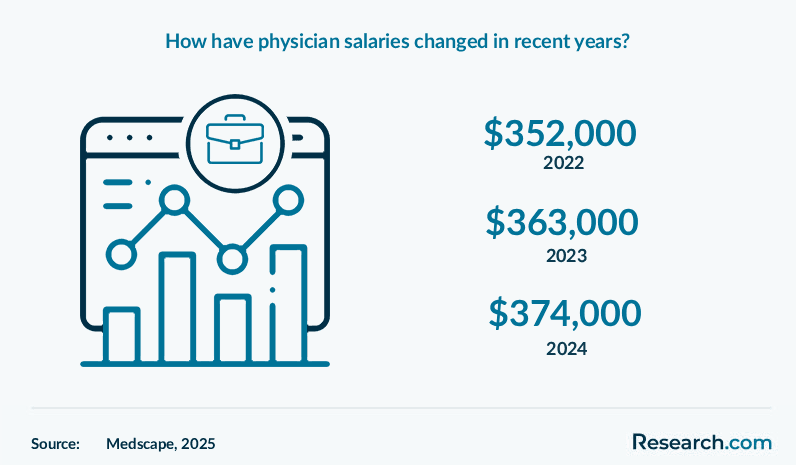
Physician pay has risen in recent years. Overall physician compensation increased from $352,000 in 2022 to $363,000 in 2023 and $374,000 in 2024, reflecting an average growth rate of 2.9% across that period. Both primary care physicians and specialists saw gains, although specialists continued to earn more.
Average primary care physician pay rose from $265,000 in 2022 to $277,000 in 2023 and $287,000 in 2024. Specialist pay increased from $382,000 in 2022 to $394,000 in 2023 and $404,000 in 2024. For students deciding between primary care and specialty practice, the pay gap should be weighed against lifestyle, mission, debt, training length, and preferred patient care.
Where can doctors in these seven fields work?
Work setting can change a physician’s daily life as much as specialty choice. Some doctors want hospital-based acute care. Others prefer outpatient clinics, telehealth, academic medicine, community health, private practice, or rural care. Before choosing a specialty, think about where you actually want to spend your working days.
- Anesthesiology: Operating rooms, outpatient surgery centers, labor and delivery units, intensive care units, and pain management clinics.
- Emergency Medicine: Emergency departments, urgent care centers, trauma centers, rural hospitals, and tele-triage roles.
- Family Medicine: Private practices, group clinics, community health centers, rural clinics, outpatient systems, and selected hospital-based roles.
- Internal Medicine: Hospitalist services, adult medicine clinics, academic medical centers, and subspecialty practices after fellowship.
- Pediatrics: Children’s hospitals, private pediatric offices, community clinics, academic centers, and school- or population-health settings.
- Physical Medicine and Rehabilitation: Inpatient rehabilitation hospitals, long-term care settings, outpatient musculoskeletal clinics, pain clinics, sports medicine practices, and disability-focused programs. If you are interested in rehabilitation work outside the physician route, this guide to becoming a rehabilitation counselor explains a related career path.
- Psychiatry: Private practice, psychiatric hospitals, general hospitals, community mental health centers, correctional facilities, academic programs, and telepsychiatry platforms.
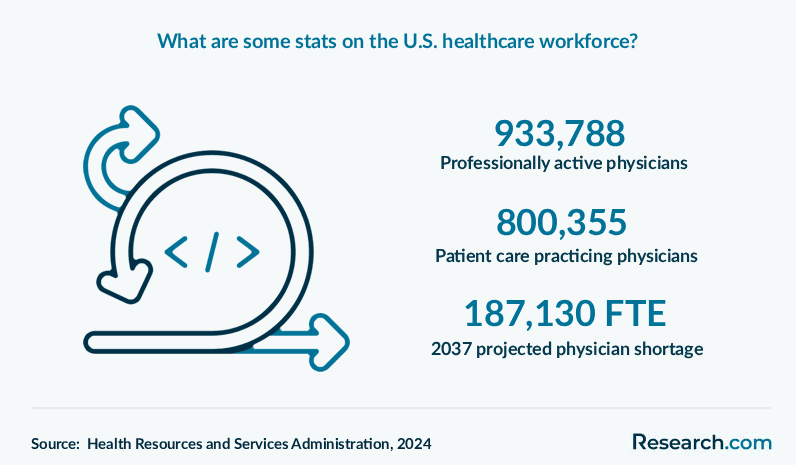
The U.S. physician workforce is also shifting. According to a November 2024 report by the Health Resources and Services Administration, there are 933,788 professionally active physicians in the United States, with 800,355 actively engaged in patient care. Internists and family medicine physicians together account for almost a quarter of all patient-care doctors.
Women now represent 38.9% of patient-care physicians and outnumber male students in medical schools. The same report projects a shortage of 187,130 full-time equivalent (FTE) physicians by 2037, with non-metro areas expected to face more severe shortages.
What additional certifications can physicians pursue after residency?
Residency does not have to be the final stage of training. Many physicians complete fellowships or added qualifications to focus on a population, organ system, procedure type, or care environment. Additional training can expand practice options, support leadership roles, and create a more specialized career.
Anesthesiology
Anesthesiologists can pursue fellowships connected to pain, intensive care, surgical subspecialties, and specific patient populations.
- Critical Care Medicine: Treatment of severely ill patients in intensive care units.
- Pain Medicine: Evaluation and management of acute and chronic pain.
- Pediatric Anesthesiology: Anesthesia care for infants, children, and adolescents.
- Hospice and Palliative Medicine: Symptom relief and support for patients with life-limiting illness.
- Neuroanesthesiology: Anesthesia management for neurosurgical procedures.
- Cardiac Anesthesiology: Perioperative care for patients undergoing heart surgery.
- Obstetric Anesthesiology: Pain control and anesthesia for labor, delivery, and pregnancy-related procedures.
Emergency Medicine
Emergency physicians can subspecialize in areas that extend their acute-care expertise into toxicology, pediatrics, disaster response, sports injuries, addiction, or critical care.
- Medical Toxicology: Care for poisoning, overdose, and medication-related emergencies.
- Sports Medicine: Prevention and treatment of athletic and activity-related injuries.
- Critical Care Medicine: Intensive treatment for patients with life-threatening illness.
- Pediatric Emergency Medicine: Emergency care designed for children.
- Undersea and Hyperbaric Medicine: Treatment involving pressure-related conditions and hyperbaric oxygen therapy.
- Hospice and Palliative Medicine: Comfort-focused care and symptom support for serious illness.
- Addiction Medicine: Medical care for substance use disorders.
Family Medicine
Family physicians can add focused expertise while maintaining a broad primary care foundation. These options can help them serve specific age groups, conditions, or clinical settings.
- Adolescent Medicine: Medical care for teenagers and young adults.
- Geriatric Medicine: Healthcare for older adults.
- Hospice and Palliative Medicine: Supportive care for patients with serious or terminal illness.
- Pain Medicine: Diagnosis and management of chronic pain.
- Sleep Medicine: Treatment of sleep disorders.
- Sports Medicine: Care for athletic and exercise-related injuries.
- Hospital Medicine: Medical care for hospitalized patients.
- Medical Toxicology: Treatment of poisoning and drug-related emergencies.
Internal Medicine
Internal medicine has one of the widest fellowship menus in healthcare. Students who enjoy adult medicine but want to narrow their clinical focus often use internal medicine residency as the foundation.
- Cardiology: Diagnosis and treatment of heart disease.
- Gastroenterology: Care for digestive system conditions.
- Pulmonary Disease: Treatment of lung and breathing disorders.
- Endocrinology: Management of hormone and metabolic conditions.
- Infectious Disease: Diagnosis and treatment of infections.
- Nephrology: Care for kidney disease and related disorders.
- Hematology/Oncology: Treatment of blood disorders and cancer.
- Rheumatology: Care for autoimmune, joint, and connective tissue diseases.
- Critical Care Medicine: Intensive care for patients with severe illness.
- Allergy and Immunology: Treatment of allergic and immune system disorders.
- Geriatric Medicine: Healthcare for older adults.
- Hospice and Palliative Medicine: Symptom-focused care for serious illness.
Pediatrics
Pediatricians can subspecialize when they want to focus on newborns, adolescents, childhood cancer, pediatric emergencies, developmental concerns, or other child-specific conditions.
- Adolescent Medicine: Care for teenagers and young adults.
- Neonatology: Treatment for premature or critically ill newborns.
- Pediatric Cardiology: Heart care for children.
- Pediatric Hematology-Oncology: Treatment of childhood blood disorders and cancer.
- Pediatric Emergency Medicine: Emergency care for infants, children, and adolescents.
- Child Abuse Pediatrics: Medical evaluation and care related to suspected abuse or neglect.
- Developmental-Behavioral Pediatrics: Care for developmental, learning, and behavioral conditions.
- Pediatric Infectious Diseases: Treatment of infections in children.
Physical Medicine and Rehabilitation
PM&R physicians can focus on neurologic recovery, pain, sports medicine, disability care, pediatric rehabilitation, or nerve and muscle disorders.
- Spinal Cord Injury Medicine: Care for patients with spinal cord injuries.
- Brain Injury Medicine: Rehabilitation and medical management after brain injury.
- Pain Medicine: Treatment of acute and chronic pain.
- Pediatric Rehabilitation Medicine: Rehabilitation for children with disabilities or injuries.
- Sports Medicine: Prevention and treatment of activity-related injuries.
- Neuromuscular Medicine: Diagnosis and care of nerve and muscle disorders.
- Hospice and Palliative Medicine: Symptom management for serious illness.
Psychiatry
Psychiatrists can use additional training to serve particular age groups, addiction patients, medically complex patients, legal settings, or people facing serious illness.
- Addiction Psychiatry: Treatment of substance use and co-occurring psychiatric disorders.
- Child and Adolescent Psychiatry: Mental health care for children and teenagers.
- Geriatric Psychiatry: Psychiatric care for older adults.
- Forensic Psychiatry: Psychiatric evaluation and expertise in legal contexts.
- Consultation-Liaison Psychiatry: Psychiatric care for patients with medical illness.
- Pain Medicine: Chronic pain management from medical and behavioral perspectives.
- Hospice and Palliative Medicine: Emotional and psychiatric support for patients with life-limiting illness.
Psychiatry is also different from related behavioral health professions. Psychiatrists are physicians who can prescribe medication, while psychology and counseling paths focus more on assessment, therapy, and behavioral interventions. If you are comparing non-physician mental health careers, this comparison of clinical psychology and counseling psychology degree paths can help clarify the differences.
What are the biggest challenges in these seven medical fields?
A specialty that is easier to enter can still be hard to practice. Each field has pressures that can affect burnout, satisfaction, and long-term career fit.
| Specialty | Common challenges | Question to ask before choosing it |
| Anesthesiology | Patient safety pressure, drug shortages, medically complex patients, long procedures, and sudden emergencies | Can I maintain focus for long stretches and respond calmly when a patient becomes unstable? |
| Emergency Medicine | Crowding, burnout, staffing shortages, unpredictable shifts, and high patient volume | Do I handle uncertainty, interruptions, nights, weekends, and rapid triage well? |
| Family Medicine | Documentation, primary care shortages, short appointments, complex coordination, and insurance friction | Do I want broad continuity care even when administrative pressure is high? |
| Internal Medicine | Complex chronic disease, high workload, documentation, regulatory demands, and less procedural prestige in some settings | Do I enjoy careful diagnostic reasoning and long-term management of adult illness? |
| Pediatrics | Family dynamics, limited communication from young children, emotional strain, and serious illness in children | Can I communicate clearly with children and caregivers during stressful visits? |
| Physical Medicine and Rehabilitation | Limited public awareness, complex disability care, insurance barriers, and gradual patient progress | Am I motivated by function, recovery, team-based planning, and long rehabilitation timelines? |
| Psychiatry | Stigma, workforce shortages, diagnostic complexity, safety concerns, and overlapping social needs | Can I work with ambiguity while building trust with patients facing serious mental health challenges? |
Students drawn to behavioral health should also compare overlapping roles. A clinical psychology vs counseling psychology comparison can show how non-physician providers approach diagnosis, therapy, and treatment differently from psychiatrists.
Could complementary online education strengthen medical preparation?
Extra coursework can help students strengthen science foundations before applying to medical school or while preparing for advanced health study. Online biochemistry coursework may support knowledge of metabolism, molecular biology, disease mechanisms, and pharmacology foundations. Students who need structured science study outside a traditional campus format can compare affordable online biochemistry degree programs, paying close attention to accreditation, transfer policies, academic rigor, and medical school relevance.
What opportunities are growing in these seven specialties?
Healthcare is moving toward team-based care, telehealth, chronic disease management, data-supported decisions, and expanded access in underserved areas. These changes create options for physicians who want careers beyond a traditional full-time hospital or clinic model.
Anesthesiology
- Pain Medicine Specialization: Anesthesiologists can lead multidisciplinary care for patients with chronic pain.
- Perioperative Medicine: Physicians can help improve care before, during, and after surgery.
- Leadership Roles: Operating room operations, patient safety, and surgical service efficiency can lead to administrative opportunities.
Emergency Medicine
- Telehealth and Virtual Care: Emergency physicians can support remote triage, urgent consultations, and access initiatives.
- Mobile Integrated Healthcare: Care teams can manage selected patients outside the hospital and reduce avoidable emergency visits.
- Urgent Care and Rural Medicine: Broad acute-care skills are valuable where specialist access is limited.
Family Medicine
- Value-Based Care: Family physicians can play central roles in models that reward prevention, outcomes, and coordinated care.
- Team-Based Practice: Primary care increasingly includes nurses, social workers, pharmacists, nutritionists, and behavioral health providers.
- Digital Health Tools: Remote monitoring, portals, and electronic communication can improve chronic disease care while adding workflow demands.
Internal Medicine
- Hospitalist Career Path: Internists who prefer inpatient care can focus on hospitalized adults.
- Subspecialty Fellowships: Internal medicine remains a common pathway to cardiology, gastroenterology, infectious disease, and other specialties.
- Leadership and Administration: Internists’ broad view of adult healthcare can support roles in quality improvement, hospital leadership, and public health.
Pediatrics
- Mental Health Integration: Pediatricians are increasingly involved in screening for behavioral and mental health concerns.
- Telemedicine: Remote visits can help families in rural areas and children with chronic conditions access care.
- Genetic Therapies: Treatment advances may expand options for children with congenital and genetic disorders.
Physical Medicine and Rehabilitation
- Telerehabilitation: Remote follow-up can help patients with mobility limits or transportation barriers.
- Regenerative Medicine: Some physiatrists work with treatments such as platelet-rich plasma (PRP) and stem cell therapies.
- Prosthetics and Robotics: Advanced prosthetics, robotics, and exoskeletons can support mobility, recovery, and independence.
Psychiatry
- Telepsychiatry: Remote psychiatric care can improve access and allow more flexible scheduling models.
- Psychedelic-Assisted Therapy: Research and therapeutic use are developing for conditions such as depression and PTSD.
- Digital Therapeutics: Apps, wearables, and patient-reported data may support treatment planning.
Can administrative training help future physicians?
Medical expertise is essential, but physicians also work within documentation rules, billing systems, payer requirements, quality measures, compliance expectations, and practice operations. Learning the administrative side of healthcare can help students interested in private practice, leadership, compliance, healthcare management, or revenue cycle improvement. One nonclinical option is to review accredited online medical billing and coding schools with financial aid to understand claims, coding, reimbursement, and healthcare operations more clearly.
Current and future trends affecting these physician careers
The specialties often described as easier to enter are also changing. Artificial intelligence, telehealth, remote monitoring, value-based care, team-based practice, and physician shortages are reshaping daily workflows. These developments may create new opportunities, but they also require physicians to adapt to new tools, expectations, and documentation demands.
Anesthesiology
- AI and Patient Safety: AI tools are being explored to analyze patient data, support dosing decisions, and flag possible complications.
- Personalized Anesthesia: Future protocols may incorporate genetics, biomarkers, and patient-specific risk profiles.
- Chronic Pain Management: Anesthesiologists are taking larger roles in multidisciplinary pain care.
Emergency Medicine
- Telehealth: Remote screening, pre-hospital consultation, and specialist access can help manage emergency demand.
- Mobile Integrated Healthcare: EMS-connected models can deliver selected care outside the hospital.
- AI for Logistics: Hospitals are exploring AI for patient flow, staffing, and resource allocation.
Family Medicine
- Value-Based Care: Payment models are emphasizing prevention, outcomes, and chronic disease management.
- Preventive Medicine: Family physicians remain central to screening, vaccination, counseling, and early intervention.
- Digital Health Tools: Remote monitoring and patient portals can improve engagement but may also increase message volume.
Internal Medicine
- Rise of Hospitalists: Hospital medicine continues to provide a distinct career route for internists.
- Subspecialization: Many internists pursue fellowship to focus on complex adult disease areas.
- Data-Driven Care: Electronic health records and clinical analytics are increasingly used to manage complicated patients.
Pediatrics
- Mental Health Integration: Pediatric primary care is increasingly involved in early identification of behavioral and mental health concerns.
- Telemedicine: Virtual care can connect children and families with clinicians when travel is difficult.
- Advanced Therapies: Genetic and regenerative medicine may change treatment options for some congenital disorders.
Physical Medicine and Rehabilitation
- Telerehabilitation: Remote visits and digital therapy support can reduce access barriers for rehabilitation patients.
- Robotics and Advanced Prosthetics: Exoskeletons, smart prosthetics, and assistive technologies are expanding rehabilitation possibilities.
- Regenerative Medicine: Treatments such as stem cells and PRP are being used in some tissue-repair contexts.
Psychiatry
- Telepsychiatry: Virtual psychiatric care continues to expand access for patients who have difficulty finding local services.
- Novel Therapeutics: Psychedelic-assisted therapy and digital therapeutics are active areas of research and clinical development.
- Integration with Primary Care: Collaborative care models increasingly place mental health support inside general medical settings.
How to choose among the easiest medical specialties
Do not choose a specialty only because it appears less competitive. A better decision comes from comparing your clinical interests, preferred pace, patient population, work setting, debt tolerance, lifestyle goals, and openness to fellowship.
- Clarify the patients you want to serve. Decide whether you are most drawn to children, adults, families, patients in crisis, surgical patients, rehabilitation patients, or people with mental health conditions.
- Picture the workday, not just the title. Some fields are clinic-based, some are hospital-based, and others are shift-based. Shadow physicians in several settings if you can.
- Compare training length with financial goals. A three-year residency can move you into attending practice sooner, while a four-year residency or fellowship may better fit your preferred specialty identity.
- Investigate burnout risks directly. Ask residents and early-career physicians what makes the specialty hard in real life, not only what looks appealing from the outside.
- Use salary data cautiously. Average pay does not guarantee your income. Location, employer, call schedule, procedures, payer mix, and subspecialty training can all change compensation.
- Plan for residency competitiveness early. Clinical grades, board scores, evaluations, letters, research, service, and away rotations may influence your match options.
- Think beyond the first few years. Choose a field where the routine work still feels meaningful after the excitement of training fades.
Common mistakes when choosing a “less competitive” doctor path
- Thinking easier to match means easier to practice: Primary care, pediatrics, psychiatry, and emergency medicine can be emotionally, clinically, and administratively demanding.
- Letting salary make the decision: Higher pay may not offset a work environment that conflicts with your personality, values, or stress tolerance.
- Ignoring residency culture: Mentorship, call schedules, supervision, patient volume, and resident morale can shape training as much as the specialty itself.
- Underestimating debt during training: Medical school borrowing, resident income, fellowship years, interest, and repayment options should be reviewed together.
- Assuming telehealth makes work simple: Virtual care can improve access, but it also adds licensing, documentation, workflow, and quality-of-care challenges.
- Not comparing related careers: If your main goal is mental health care, rehabilitation, or primary care support, compare physician and non-physician routes before committing to medical school.
- Choosing based on prestige alone: A famous specialty or program is not automatically the best match for your career goals or day-to-day satisfaction.
Questions to ask before ranking residency programs
| Question | Why it matters |
| What career settings do graduates enter most often? | Program outcomes should match your goals, whether you want outpatient care, hospital medicine, fellowship, academic medicine, rural practice, or private practice. |
| How do faculty supervise and mentor residents? | Strong supervision, clear feedback, and accessible mentors can improve training quality and reduce avoidable stress. |
| What are the call schedule and typical workload? | Two programs in the same specialty can feel very different depending on nights, weekends, staffing, patient volume, and expectations. |
| How does the program prepare residents for boards? | Board performance affects independent practice, credentialing, and future career options. |
| Can residents pursue research, electives, or fellowship preparation? | This matters if you may subspecialize or want academic opportunities. |
| What do residents say when faculty are not present? | Private resident feedback can reveal culture, morale, workload, support, and hidden problems. |
| How will the location affect cost of living and personal support? | A resident salary goes further in some regions, and family or community support can matter during demanding training years. |
Here's What Graduates Say About Their Medical Degrees
- : "My pediatrics rotation showed me that medical knowledge is only part of the job. A clear explanation, a calm tone, and a little warmth can completely change how a child and parent experience a stressful visit. Seeing children improve over time made the work feel personal and meaningful. — Amanda"
- : "Internal medicine drew me in because complicated cases felt like real clinical puzzles. You have to connect symptoms, lab results, imaging, history, medications, and social factors before the answer becomes clear. The training is tough, but thoughtful adult care is exactly the work I wanted. — Quentin"
- : "Emergency medicine taught me how to make decisions quickly without becoming careless or overwhelmed. Every shift brings a different mix of patients, problems, and urgency. It is intense, but stabilizing someone at a critical moment is deeply rewarding. — Mateo"
Key Insights
- No physician specialty is truly easy. The seven fields in this guide are considered easier only in a relative sense, usually because of match access, training length, flexibility, or lifestyle factors.
- Family medicine, internal medicine, and pediatrics have the shortest listed core residencies. Each typically requires 4 years med school and 3 years residency. Emergency medicine takes 3-4 years, while anesthesiology, PM&R, and psychiatry usually require 4 years of residency.
- Salary differences are substantial. The cited 2025 PayScale averages range from $175,871 for pediatricians to $349,870 for anesthesiologists.
- Debt can change the specialty decision. Average debt is approximately $264,000, and residents commonly earn $60,000 to $80,000 while completing training.
- Primary care offers access and social impact but comes with administrative strain. Family medicine, internal medicine, and pediatrics can be highly meaningful, but paperwork, coordination, and time pressure are real challenges.
- Work setting matters as much as specialty. An outpatient psychiatrist, rural emergency physician, academic pediatrician, private family physician, and hospitalist internist may have very different schedules and stress levels.
- Technology is reshaping all seven fields. AI, telehealth, remote monitoring, digital therapeutics, robotics, and value-based care are creating new possibilities while adding new workflow expectations.
- The best specialty is the one you can practice sustainably. Choose based on patient population, pace, training length, stress type, work environment, debt, and long-term professional identity—not match odds alone.
References:
- Association of American Medical Colleges. (2025). Education debt manager for medical school students. AAMC.
- Association of American Medical Colleges. (2025). Tomorrow’s doctors, tomorrow’s cures. AAMC.
- Health Resources and Services Administration. (2024, November). State of the U.S. health care workforce. U.S. Department of Health and Human Services.
- Laurel Road. (2025, May 12). What is the average medical student debt? Laurel Road.
- McKenna, J. (2025, April 11). Medscape physician compensation report 2025: Comparing your pay against your peers. Medscape.
- McKenna, J. (2025, August 22). Feeling the impact of the physician shortage: Medscape report 2025. Medscape.
- PayScale. (2025, July 27). Anesthesiologist salary. PayScale.
- PayScale. (2025, June 3). Emergency medicine physician hourly rate. PayScale.
- PayScale. (2025, August 12). Family physician / doctor salary. PayScale.
- PayScale. (2025, July 10). Physician / doctor, internal medicine salary. PayScale.
- PayScale. (2025). Physician / doctor, rehabilitation medicine salary. PayScale.
- PayScale. (2025, May 10). Pediatrician, general salary. PayScale.
- PayScale. (2025). Psychiatrist salary. PayScale.
- Ross University School of Medicine. (2025). How long is a medical residency? Ross University.
Other Things You Should Know About the 7 Easiest Types of Doctor
Most physician routes require passing a national licensing exam: in the United States, medical students take USMLE Step 1, Step 2 CK, and Step 3 for MD programs, while DO students take COMLEX-USA Level 1, Level 2 CE, and Level 3. Residency completion and state medical board licensure are also required.
The cost of becoming a doctor in one of the easiest specialties in 2026 can range from $250,000 to $450,000. This includes tuition, fees, and living expenses during medical school, but costs may vary depending on the institution and location.


