
2027 Highest Paying Medical Jobs with Little Schooling: 2-year Degrees That Pay Well

Co-Founder and Chief Data Scientist
You do not need to become a physician or complete a bachelor’s degree to build a solid healthcare career. Many well-paid medical roles are in allied health, imaging, dental care, respiratory care, rehabilitation, and health technology. The harder part is separating truly career-ready programs from short programs that look convenient but may not meet employer, certification, or state requirements.
This guide is designed for students, adult learners, and career changers searching for medical jobs with little schooling. It explains which two-year healthcare careers offer strong pay, what training is typically required, how online and hybrid programs work, why accreditation matters, and how to compare programs before you spend time or money.
Quick Answer: Which Medical Jobs Pay Well With Less Schooling?
Some of the best-paying medical careers that commonly require an associate degree include radiation therapist, nuclear medicine technologist, dental hygienist, diagnostic medical sonographer, MRI technologist, respiratory therapist, radiologic technologist, occupational therapy assistant, cardiovascular technologist, and hearing aid specialist. Most of these jobs require classroom instruction, in-person labs, supervised clinical experience, and either professional certification, registry eligibility, or state licensure.
The shortest program is not automatically the smartest choice. For clinical healthcare careers, the better question is whether the program is accredited, prepares students for required exams, provides reliable clinical placements, and is recognized by employers in your state.
What to Confirm Before Enrolling in a Short Healthcare Program
- Many strong-paying healthcare careers with less schooling are allied health jobs, especially in imaging, respiratory therapy, dental hygiene, rehabilitation, cardiovascular technology, and medical records or coding.
- The highest-paying options on this list usually require an Associate of Science (AS) or Associate of Applied Science (AAS), not only a short certificate.
- Salary depends on geography, employer, shift type, credentials, specialty area, and experience, so published salary figures should be used as planning benchmarks rather than guaranteed outcomes.
- Fully online training is limited for direct patient-care roles because students generally need labs, simulations, competency checks, and supervised clinical rotations.
- Accreditation can affect financial aid, eligibility for certification or registry exams, state licensure, credit transfer, and whether employers accept your credential.
- Highest-paying medical jobs with little schooling for 2027
- Can you enter healthcare without a bachelor’s degree?
- Fastest paths into better-paying healthcare jobs
- Can a medical associate degree be completed fully online?
- Financial aid options for healthcare associate degrees
- Healthcare credentials that may take less than 2 years
- When online healthcare associate degrees make sense
- How to compare two-year healthcare programs
- Online versus traditional healthcare training
- Why accreditation matters in two-year healthcare programs
- Using public health education to expand healthcare options
- Fast-growing healthcare careers with short training paths
- How interdisciplinary skills can support allied health careers
- Business skills and ROI for two-year healthcare graduates
- States often associated with higher pay for two-year medical careers
- Certifications that may improve healthcare salary potential
- Can a two-year healthcare degree lead to administration roles?
Highest-Paying Medical Jobs With Little Schooling for 2027
The careers below are strong options for people who want healthcare training shorter than a bachelor’s degree but still want access to technical, credentialed roles. Most require an associate degree or a shorter formal program combined with hands-on clinical training. Because requirements vary by state, employer, and profession, confirm licensing, certification, and program approval rules before applying.
| Career | Annual Salary | Common education route | Best fit if you want to... |
| Radiation Therapist | $98,300 | Associate of Science in Radiation Therapy | Join oncology teams and operate specialized radiation treatment equipment |
| Nuclear Medicine Technologist | $92,500 | Associate of Applied Science in Nuclear Medicine Technology | Work with diagnostic imaging, patient care, and radioactive drug procedures |
| Dental Hygienist | $88,530 | Associate of Science in Dental Hygiene | Deliver preventive oral healthcare in dental offices or community settings |
| Diagnostic Medical Sonographer | $84,470 | Associate of Applied Science in Diagnostic Medical Sonography | Create ultrasound images used in diagnosis and monitoring |
| MRI Technologist | $83,740 | Associate of Applied Science in Magnetic Resonance Imaging | Use advanced imaging technology while following strict safety procedures |
| Respiratory Therapist | $77,960 | Associate of Science in Respiratory Therapy | Treat patients with breathing, lung, and cardiopulmonary conditions |
| Radiologic Technologist and Technician | $73,410 | Associate of Applied Science in Radiologic Technology | Perform X-ray and related diagnostic imaging procedures |
| Occupational Therapy Assistant | $67,010 | Associate of Applied Science in Occupational Therapy Assistant | Help patients rebuild everyday functional skills |
| Cardiovascular Technologist and Technician | $66,170 | Associate of Applied Science in Cardiovascular Technology | Support heart and vascular testing, monitoring, or procedures |
| Hearing Aid Specialist | $58,670 | Associate of Applied Science in Hearing Instrument Science | Evaluate hearing needs and fit or adjust hearing devices |
1. Radiation Therapist
Annual Salary: $98,300
Radiation therapists administer radiation treatments prescribed for patients with cancer and some other medical conditions. Their responsibilities include positioning patients precisely, operating treatment machines, following radiation safety rules, recording treatment details, and monitoring patients during each session. They typically work with radiation oncologists, medical physicists, oncology nurses, and dosimetrists in hospitals, cancer treatment centers, and outpatient facilities. A common preparation path is a two-year Associate of Science (AS) in Radiation Therapy.
2. Nuclear Medicine Technologist
Annual Salary: $92,500
Nuclear medicine technologists prepare and administer radioactive drugs according to approved protocols, then use imaging tools such as PET and SPECT scanners to help physicians evaluate organs, tissues, cardiac function, cancer, and other conditions. The work requires precision, radiation safety knowledge, patient communication, image-quality awareness, and accurate documentation. Hospitals, diagnostic laboratories, and imaging centers are typical employers. Many workers enter the field through an Associate of Applied Science (AAS) in Nuclear Medicine Technology.
3. Dental Hygienist
Annual Salary: $88,530
Dental hygienists help prevent and identify oral health problems. They clean teeth, remove plaque and tartar, assess oral disease indicators, take dental images where allowed, apply preventive treatments, and teach patients better oral hygiene routines. Most work in dental practices, though some are employed by public health programs, clinics, or educational organizations. The standard entry route is an Associate of Science (AS) in Dental Hygiene. As a point of comparison, the listed pay is slightly higher than a BSN salary and career path benchmark of more than $86,000 according to the U.S. Bureau of Labor Statistics.
4. Diagnostic Medical Sonographer
Annual Salary: $84,470
Diagnostic medical sonographers operate ultrasound equipment to produce images physicians use to evaluate pregnancy, abdominal structures, blood flow, the heart, and other body systems. They prepare patients, capture the required views, recognize when additional images may be needed, and communicate technical observations to the interpreting provider. Hospitals, outpatient imaging facilities, and diagnostic labs frequently hire sonographers. A typical credential is an Associate of Applied Science (AAS) in Diagnostic Medical Sonography.
5. Magnetic Resonance Imaging (MRI) Technologist
Annual Salary: $83,740
MRI technologists create detailed internal images using magnetic resonance imaging systems. Because MRI machines use powerful magnets, the role requires careful safety screening and strict procedure compliance. Technologists check patients for contraindications, explain the scan, position patients correctly, evaluate image quality, and help patients remain comfortable during the exam. Common workplaces include hospitals, outpatient imaging centers, and specialty clinics. Many students prepare through an Associate of Applied Science (AAS) in Magnetic Resonance Imaging.
6. Respiratory Therapist
Annual Salary: $77,960
Respiratory therapists care for patients with breathing and cardiopulmonary disorders, including asthma, COPD, pneumonia, and acute respiratory distress. Their work may involve lung-function assessment, oxygen therapy, ventilator management, emergency response, patient education, and treatment support in intensive care or emergency settings. Hospitals are major employers, especially in ICUs, emergency departments, and pulmonary units, while some therapists work in home health or outpatient care. The usual educational route is an Associate of Science (AS) in Respiratory Therapy.
7. Radiologic Technologist and Technician
Annual Salary: $73,410
Radiologic technologists and technicians perform diagnostic imaging exams such as X-rays and may later add CT or other modalities depending on training and credentials. They prepare patients, position the body properly, apply radiation protection standards, operate imaging systems, and review whether images are adequate for diagnostic use. Many work in hospitals, outpatient imaging centers, and diagnostic facilities. A common entry credential is an Associate of Applied Science (AAS) in Radiologic Technology.
8. Occupational Therapy Assistant (OTA)
Annual Salary: $67,010
Occupational therapy assistants help patients regain or improve daily living skills after illness, injury, disability, or developmental challenges. Working under occupational therapists, OTAs lead therapeutic activities, track patient progress, and support goals related to mobility, self-care, work tasks, and independence. They may be employed in rehabilitation centers, skilled nursing facilities, hospitals, schools, and home health agencies. The common preparation route is an Associate of Applied Science (AAS) in Occupational Therapy Assistant.
9. Cardiovascular Technologist and Technician
Annual Salary: $66,170
Cardiovascular technologists and technicians assist with testing and procedures used to evaluate heart and vascular conditions. Depending on their focus, they may work with electrocardiograms, echocardiography, vascular studies, or cardiac catheterization support. Their duties often include preparing patients, monitoring vital signs, operating specialized equipment, and documenting accurate results. Hospitals, cardiac labs, and diagnostic centers are common employers. Many students train through an Associate of Applied Science (AAS) in Cardiovascular Technology.
10. Hearing Aid Specialist
Annual Salary: $58,670
Hearing aid specialists assess hearing-related needs, perform basic hearing tests, fit and program hearing aids, make device adjustments, and teach patients how to use and care for their devices. They commonly work in hearing clinics, audiology offices, and retail hearing aid centers. State requirements differ, and some states require licensure in addition to education or training. One common educational pathway is an Associate of Applied Science (AAS) in Hearing Instrument Science.
Can You Enter Healthcare Without a Bachelor’s Degree?
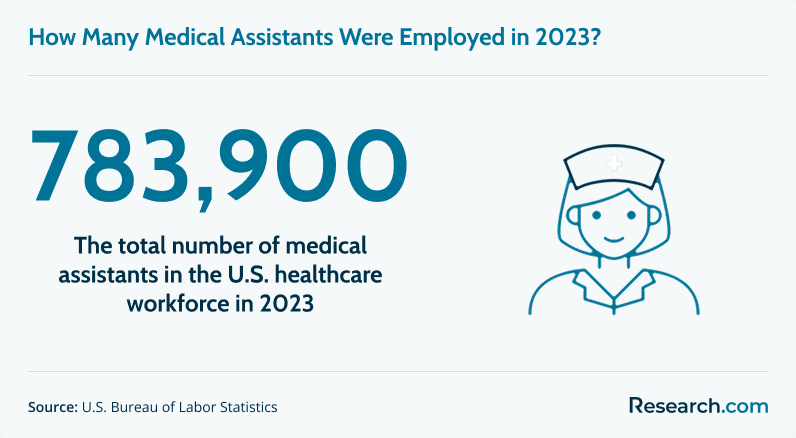
Yes. Many healthcare roles are open to workers who do not hold a four-year degree. Depending on the occupation, entry may require a high school diploma, certificate, diploma, associate degree, supervised clinical experience, certification exam, state license, or a combination of these. Medical assistants, phlebotomists, pharmacy technicians, dental hygienists, radiologic technologists, and respiratory therapists are examples of workers who can often begin without a bachelor’s degree. In 2023, the U.S. healthcare workforce included 783,900 medical assistants.
The right route depends on your priority. A short certificate can be useful if you need to start working quickly. An accredited associate degree may be better if you want a more technical role, stronger earning potential, and clearer advancement options. If your long-term plan includes leadership, comparing a healthcare management versus healthcare administration degree can help you understand which path fits future administrative goals.
| Path | Main benefit | Possible drawback | Best use case |
| Short certificate | Can move you into healthcare support work quickly | May offer less pay growth or advancement than licensed technical careers | You need fast entry and want to build experience first |
| Associate degree | Can qualify graduates for technical, credentialed, or licensed allied health jobs | Usually includes required in-person labs or clinical rotations | You want a career-focused healthcare role without completing a bachelor’s degree first |
| Bridge or bachelor’s program later | Can support leadership, specialization, or broader healthcare opportunities | Adds more tuition, time, and planning | You expect to move into supervision, management, or advanced study |
What Is the Quickest Way to Get a High-Paying Job in the Medical Field?
The fastest practical route is to choose a credential that matches local hiring demand, a training timeline you can realistically complete, and clear eligibility for required exams or licensure. Some short degrees that pay well can lead to allied health careers more quickly than a traditional bachelor’s program.
Radiologic technology, dental hygiene, respiratory therapy, and diagnostic medical sonography are examples of associate-level paths that can lead to pay above many entry-level jobs. If your main goal is the fastest possible workforce entry, phlebotomy technician, medical coding specialist, certified nursing assistant (CNA), EMT, and pharmacy technician programs may be completed in months in some cases, although pay and promotion potential can vary substantially.
Do not choose based on speed alone. A short program without the right accreditation, clinical support, certification preparation, or employer reputation may delay your career instead of accelerating it. Surgical technology is one shorter healthcare path with notable demand; in 2024, surgical technologists had one of the largest staffing market sizes at 13.2%.
Current healthcare workers may also have a faster path than outside applicants. Hospitals, clinics, dental offices, and long-term care facilities sometimes offer on-the-job training, tuition reimbursement, internal transfer pathways, or accelerated credential support for employees moving into higher-skilled roles.
The chart below outlines allied healthcare service areas and can help readers see where staffing needs and job opportunities may be concentrated.
A Step-by-Step Way to Pick a Fast Healthcare Path
- Review local job ads first. Look at the exact credentials, licenses, and experience employers near you request.
- Check state requirements. Some healthcare roles require approved training, registration, certification, or licensure before employment.
- Verify program accreditation. Make sure the program meets the requirements for the credential or license tied to your career goal.
- Ask how clinical training works. A program may advertise online classes but still require labs or clinical rotations at approved sites.
- Calculate the full price. Include tuition, fees, books, uniforms, health screenings, background checks, certification exams, commuting, and reduced work hours.
- Think beyond the first job. Choose a field where additional credentials, specializations, or bridge programs can expand future options.
Can You Get a Medical Associate Degree Completely Online?
Some medical associate degree programs offer online coursework, but fully online formats are rare for clinical careers that involve direct patient care. Imaging, respiratory therapy, dental hygiene, laboratory science, and rehabilitation programs usually require campus labs, simulations, and supervised clinical practice. When comparing online associate degree options, separate online lecture courses from in-person competency and clinical requirements.
Programs that often work better online include:
- Medical administration and health information: Medical office administration, medical billing and coding, and health information technology programs often place much of their coursework online, including medical terminology, coding systems, records management, insurance processes, and office workflows.
- Health sciences foundations: Some online health sciences associate degrees cover anatomy, physiology, biology, healthcare systems, and introductory clinical concepts. These programs may support transfer or preparation goals, but they do not automatically qualify graduates for every clinical license.
Clinical programs usually have limits on online delivery:
- Supervised practice is commonly required. Radiologic technology, respiratory therapy, sonography, physical therapist assisting, and similar programs generally require clinical hours in approved healthcare settings.
- Hands-on laboratory learning may be mandatory. Medical laboratory and technical healthcare programs often require in-person practice with equipment, specimens, safety procedures, and diagnostic workflows.
| Program type | Can classes be online? | Usually needs in-person training? | Important question |
| Medical billing and coding | Often, yes | Less commonly than patient-care programs | Does the curriculum prepare students for respected coding credentials? |
| Health information technology | Often, yes | Depends on the program | Does the degree include a practicum, internship, or applied experience? |
| Radiologic technology | Some general education courses may be online | Yes | Which facilities host clinical rotations? |
| Respiratory therapy | Some didactic courses may be online | Yes | Does the program satisfy state and credentialing requirements? |
| Dental hygiene | Online components may be limited | Yes | Are clinic hours, patient requirements, and board preparation clearly included? |
Can You Get Financial Aid for Associate Degrees in Healthcare?
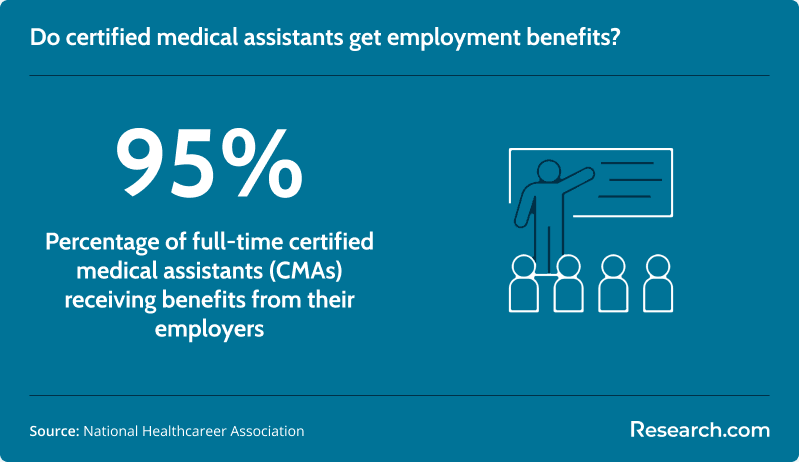
Yes. Students enrolled in eligible healthcare associate degree programs may be able to use federal aid, state aid, institutional aid, scholarships, or employer support. Eligibility depends on the school, program accreditation, enrollment status, financial need, and whether the specific program participates in aid programs. Although 95% of full-time certified medical assistants (CMAs) receive a benefits package from their employer, those benefits do not always include education funding. Students who later want to move into administration can also research an MHA degree career path as part of a longer-term plan.
Federal Financial Aid
- Federal Pell Grants: Need-based grants that generally do not require repayment when both the student and program meet eligibility rules.
- Federal Direct Loans: Federal student loans that must be repaid and typically include borrower protections that differ from private loans.
- Federal Work-Study: Part-time work opportunities that allow eligible students to earn money for education-related expenses.
State Financial Aid
State agencies may provide grants, workforce-development scholarships, tuition assistance, or career training funds for healthcare students. Because availability differs by state, check your state higher education agency and workforce development office.
Institutional Aid
Community colleges, technical colleges, and universities may offer scholarships, grants, payment plans, or program-specific awards. Ask the financial aid office whether funding applies to your exact healthcare program, not only to the institution generally.
Healthcare Scholarships
Scholarships may come from hospitals, professional associations, employers, community foundations, rural health programs, and service-based organizations. Some awards focus on financial need, academic performance, public service, rural healthcare, or a specific occupation.
Expenses Healthcare Students Often Miss
- Program fees in addition to tuition
- Textbooks, software, and online learning platforms
- Uniforms, clinical shoes, and required supplies
- Background checks, drug screening, immunizations, and CPR certification
- Certification, registry, or licensure exam costs
- Travel to clinical locations
- Lost or reduced income when clinical schedules conflict with work
Which Healthcare Degrees or Credentials Can Be Completed in Less Than 2 Years?
Some healthcare credentials take less than two years, especially certificate and diploma programs. These options can be useful for students who need rapid employment, but they may have lower pay ceilings or narrower scopes of practice than the highest-paying associate-level careers. Students comparing accelerated options can also review six-month online associate degree information, while remembering that clinical healthcare training often still requires in-person work.
- Medical Assisting: Medical assistants perform administrative and clinical duties in clinics, physician offices, and other healthcare settings. Some fast-track programs can be completed in 9 to 18 months.
- Pharmacy Technician: Pharmacy technicians assist pharmacists with medication preparation, inventory, customer service, and pharmacy operations. Some states allow entry through short-term training, and online coursework may be available.
- Phlebotomy Technician: Phlebotomists draw blood for testing, donation, transfusion, and medical procedures. Many training programs can be finished in a few months.
- Medical Billing and Coding: Billing and coding professionals assign medical codes, process claims, and support accurate patient recordkeeping. Many programs are available online and may be completed in less than a year.
- Emergency Medical Technician (EMT): EMTs deliver urgent care in emergency situations. Basic EMT certification can be completed in as little as six months, while advanced levels may take up to a year.
Are Online Associate Degrees in Healthcare a Good Option?
Online healthcare associate degrees can be worthwhile when they are accredited, honest about clinical requirements, and aligned with the student’s intended job. They tend to fit administrative healthcare, billing, coding, health information, and some hybrid allied health programs better than highly hands-on clinical programs. They are a poor fit for students who expect to complete a patient-care career with no campus labs, local clinical placements, or supervised practice.
Demand should also influence your decision. By 2037, the projected shortage for dental hygienists is 29,740, which may create opportunities for students exploring allied health services. Credentials can affect pay as well. In 2024, 56% of institutions reported increasing pay for employees who earned professional certification.
Advantages of Online or Hybrid Study
- More schedule control: Online coursework can help working adults, parents, and caregivers complete lectures and assignments around existing responsibilities.
- Access without relocation: Students may be able to enroll from their current location, especially in administrative healthcare programs.
- Lower commuting expenses: Online delivery can reduce transportation, parking, and campus-related costs.
- Independent pacing: Some programs give students more control over when they study and complete assignments.
Limitations to Watch For
- Clinical placement can be challenging: Patient-care programs require supervised practice. Even online sonography associate programs may involve travel, site approval, or required clinical rotations.
- Self-management is required: Online learners must stay organized across assignments, exams, labs, and clinical schedules without daily in-person reminders.
- Networking may be less direct: Fewer face-to-face interactions can make it harder to build relationships with instructors, classmates, and local employers.
- Accreditation still needs verification: A program without the right accreditation may limit certification, licensure, financial aid, or job options.
The chart below shows how frequently organizations require certificates when hiring allied healthcare professionals, which reinforces the value of recognized credentials in many healthcare workplaces.
How to Compare a Two-Year Healthcare Education Program
A strong two-year healthcare program should prepare you for the job’s real tasks, not simply provide a diploma or degree. Compare accreditation, clinical placement support, exam eligibility, curriculum quality, faculty background, student outcomes, schedule flexibility, and total cost. Low tuition matters, but it is not a good deal if the program lacks clinical sites, poor exam preparation, or weak employer recognition. Students considering administrative healthcare roles can compare a low-cost online medical billing and coding program against local hiring expectations.
| What to evaluate | Why it matters | Question to ask |
| Program accreditation | May influence certification eligibility, licensure, transfer credit, financial aid, and employer acceptance | Which accrediting body approves this specific program, and is that status current? |
| Clinical placements | Clinical careers require supervised practice in approved settings | Does the school place students, or are students responsible for finding sites? |
| Exam preparation | Many healthcare jobs require certification, registry, or licensing exams | Which exams are graduates eligible to sit for after completing the program? |
| Career support | Employer relationships can help graduates transition into entry-level roles | Which local hospitals, clinics, offices, or practices regularly hire graduates? |
| Total cost | Fees, supplies, travel, and exams can significantly change the real price | What is the complete estimated cost from enrollment through certification or licensure? |
| Schedule format | Labs and clinical hours may conflict with work, childcare, or commuting limits | Are evening, weekend, or flexible clinical options available? |
Are Online Healthcare Programs as Effective as Traditional Programs?
Online healthcare programs can be effective if they meet the same academic, clinical, competency, and credentialing standards as campus-based options. The format matters less than the quality of instruction, faculty support, clinical supervision, technology, assessment methods, and exam preparation. When reviewing options such as an online ultrasound tech school, look past convenience and ask exactly how hands-on skills are taught, practiced, and evaluated.
| Online or hybrid may be a good fit if... | Campus-based training may be better if... |
| You are studying medical billing, coding, administration, or health information | You need repeated hands-on practice with equipment and immediate instructor feedback |
| You can manage deadlines and independent study well | You learn best in a structured classroom or lab environment |
| The school has approved clinical partners near your location | The strongest clinical sites are connected to a nearby campus network |
| The program is accredited and clearly tied to required exams | You are not confident evaluating online program quality on your own |
Why Accreditation Is Critical in a Two-Year Healthcare Program
Accreditation is one of the most important safeguards for healthcare students. It indicates that a program’s curriculum, faculty qualifications, clinical training, student support, and outcomes have been reviewed against recognized standards. In many healthcare fields, graduating from an accredited program can determine whether you qualify for certification exams, licensure, financial aid, or employment. Students pursuing coding or health records careers should confirm whether an accredited online medical billing and coding certification program fits the credential expectations of employers and certification bodies.
Common Mistakes to Avoid
- Choosing only because a program is short. A fast credential has little value if licensing boards or employers do not recognize it.
- Comparing tuition alone. Clinical fees, exams, supplies, commuting, and missed work can change the true cost.
- Assuming online means fully remote. Many healthcare programs still require in-person labs, simulations, or clinical rotations.
- Skipping state requirement research. Licensure and certification rules can differ by occupation and state.
- Using rankings as the only decision tool. A program can look strong on paper but still be a poor fit if clinical sites are too far away or the schedule is impossible.
- Ignoring transfer options. If you may pursue a bachelor’s degree later, ask which credits will transfer and under what conditions.
Can Affordable Online Public Health Degrees Strengthen a Healthcare Career?
Public health education can help healthcare workers who want to move from technical or direct-care roles into prevention, community health, health education, program coordination, or population health work. It is usually not the quickest path to a high-paying clinical job, but it can complement allied health experience for professionals who want a broader healthcare role. Students comparing flexible study options can review affordable online public health degrees after deciding whether their main goal is clinical practice, community impact, or leadership.
Which Healthcare Careers With Little Schooling Will Grow the Fastest?
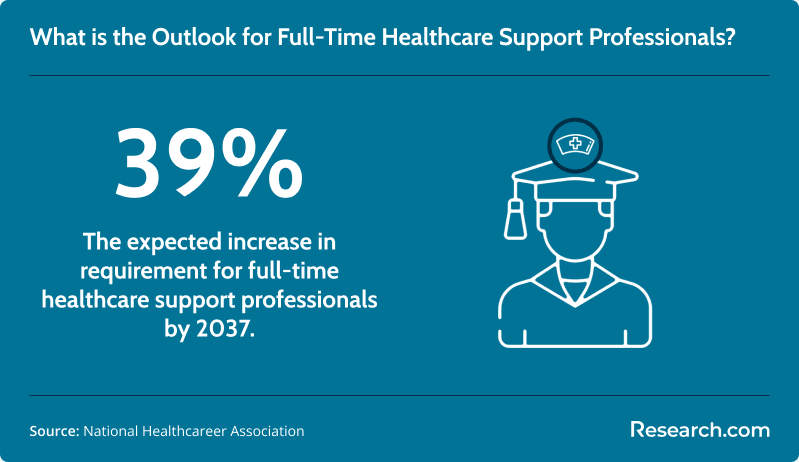
Healthcare support jobs are expected to expand as the population ages, chronic conditions remain common, and more patients need care in hospitals, clinics, long-term care settings, and homes. Healthcare support professional roles are projected to rise by 39%, from 2.42 million full-time equivalent positions in 2022 to 3.37 million by 2037.
If you want a shorter training route, research these roles carefully:
- Medical Assistants: Medical assistants combine administrative and basic clinical duties in physician offices, outpatient clinics, hospitals, and other care environments.
- Medical Administrative Assistants: These workers manage appointments, patient records, office communication, insurance tasks, and billing-related workflows.
- Physical Therapist Assistants (PTAs): PTAs work under physical therapists to help patients improve movement and function after injury, illness, or surgery. Students seeking flexibility can compare online physical therapy assistant program options while confirming clinical requirements.
- Home Health Aides: Home health aides assist people who need support at home, a field influenced by aging demographics and demand for home-based care.
- Phlebotomists: Phlebotomists collect blood for testing, donation, transfusion, or research and play an important role in diagnostic and laboratory services.
Can Interdisciplinary Skills Help Two-Year Healthcare Graduates Advance?
Yes, when the skills match your career direction. For clinical workers, communication, digital literacy, patient education, scheduling, quality improvement, and workflow coordination can improve day-to-day performance and advancement potential. For workers targeting supervisory roles, business operations and healthcare-specific management skills are often more useful than unrelated credentials. An option such as an affordable online sports management degree may teach transferable ideas in team coordination and operations, but healthcare management training is usually the more direct route for administration-focused goals.
Can Business Skills Improve the ROI of a Two-Year Healthcare Degree?
Business skills can increase the long-term value of a two-year healthcare degree when they support a specific advancement plan. Knowledge of budgeting, scheduling, compliance, billing, operations, data reporting, and team leadership can help allied health workers move toward lead, coordinator, supervisor, office manager, or department support positions. Students who want formal business training on a compressed timeline can compare accelerated online business degree programs with healthcare administration or healthcare management options.
What Are the Best States for High-Paying Two-Year Medical Careers?
The best state for a two-year medical career depends on more than wages. Compare salary, cost of living, licensing requirements, local job openings, employer mix, commute patterns, and quality of life. Some states are commonly associated with higher healthcare pay, but higher wages may be offset by housing, taxes, transportation, and other living expenses. Students can review states known for stronger healthcare pay while also checking state licensure rules and current local postings.
- California: Many healthcare roles may offer high pay, but the cost of living can also be substantial.
- Hawaii: Compensation may be attractive, though living costs are a major factor.
- Oregon: Healthcare professionals may find competitive pay in this market.
- Washington: The state, particularly the Seattle area, has a large healthcare sector.
- Massachusetts: Major hospitals, academic medical centers, and research institutions can shape pay opportunities.
- Alaska: Employers may use higher wages to attract workers, especially in remote locations.
What Drives Pay Differences by State?
- Cost of living: A higher wage does not always create a higher standard of living.
- Local demand: Shortages in a specific healthcare role can improve hiring conditions.
- Employer type: Hospitals, outpatient centers, specialty clinics, public agencies, and private practices may pay differently.
- Urban versus rural location: Metro areas may offer higher salaries, while rural employers may have different incentives or staffing needs.
Students considering nursing-related acceleration may also research one-year accelerated online nursing degree programs, especially in markets where nursing demand and compensation are strong.
What Certifications Can Boost Salaries for Two-Year Healthcare Degrees?
Certifications can improve job prospects and salary potential when employers recognize them and when they align with your duties. In some healthcare roles, certification is optional but preferred. In others, it is connected to licensure, scope of practice, specialty work, or advancement.
- Certified Professional Coder (CPC): Offered through the American Academy of Professional Coders (AAPC), this credential demonstrates coding knowledge used in billing and reimbursement.
- Certified Clinical Medical Assistant (CCMA): Offered by the National Healthcareer Association (NHA), this credential validates clinical medical assisting knowledge and skills.
- Certified Medical Administrative Assistant (CMAA): Also offered by the NHA, this certification focuses on administrative capabilities used in healthcare offices.
- Certified Surgical Technologist (CST): Offered by the National Board of Surgical Technology and Surgical Assisting (NBSTSA), this credential is widely recognized in surgical technology.
- Certified Electronic Health Records Specialist (CEHRS): This credential shows competency in managing electronic health records.
- American Registry of Radiologic Technologists (ARRT) credentials: Students typically need an associate degree pathway such as online radiology tech programs, and additional modality credentials such as MRI or CT can support specialization.
- Cardiovascular Credentialing International (CCI) certifications: CCI provides credentials in cardiovascular technology areas, including echocardiography and vascular technology.
Can a Two-Year Healthcare Degree Lead to Administration Roles?
Yes, but usually after experience. A two-year healthcare degree can build a strong foundation because it exposes workers to patient care, documentation, scheduling, safety practices, compliance, workflows, and team coordination. Moving into administration often requires workplace experience, leadership ability, additional coursework, certifications, or a higher degree. If management is your long-term goal, compare clinical programs with advancement pathways and consider whether healthcare administration roles pay well enough to justify further education.
One Possible Advancement Path
- Finish an accredited certificate or associate degree program.
- Pass any required certification, registry, or licensing exams.
- Build experience in a clinical, technical, or administrative healthcare setting.
- Take on duties related to scheduling, training, quality improvement, documentation, or team support.
- Add skills in healthcare management, billing, compliance, data reporting, operations, or leadership.
- Apply for coordinator, lead worker, supervisor, office manager, or department support roles.
What Healthcare Professionals Say About Two-Year Degrees
-
: "
I was surprised by how much opportunity a two-year program created. As a radiologic technologist, I have steady work and get to support patients during important diagnostic procedures. Sandra
"
-
: "
Once I started working, the demand for surgical technologists was obvious. I found a job soon after graduation, and the operating room environment is challenging, fast-paced, and rewarding. Michael
"
-
: "
Dental hygiene gave me the balance I wanted: good earning potential, flexible scheduling, and meaningful patient interaction. I like helping people protect their oral health in a practical way. Analin
"
Key Insights
- The best-paying medical jobs with little schooling are usually skilled allied health roles, not the broadest entry-level support jobs.
- Radiation therapist, nuclear medicine technologist, dental hygienist, diagnostic medical sonographer, and MRI technologist are among the strongest salary options listed, with annual salaries from $83,740 to $98,300.
- Healthcare support professional roles are projected to grow by 39%, from 2.42 million full-time equivalents in 2022 to 3.37 million by 2037.
- The projected shortage of 29,740 dental hygienists by 2037 suggests meaningful opportunity for students considering dental hygiene.
- Certification can matter for compensation and advancement. In 2024, 56% of institutions reported pay increases for employees who earned professional certification.
- Benefits are common in some healthcare roles; 95% of full-time Certified Medical Assistants receive benefits, though those benefits do not necessarily include education scholarships.
- Fully online associate degrees are limited for hands-on healthcare careers because clinical practice, labs, and competency checks are often required in person.
- Surgical technologists and radiological/MRI/CT technologists showed strong market demand, with market sizes of 13.2% and 18.2% respectively in 2024.
- The U.S. healthcare workforce included 783,900 medical assistants in 2023, showing how large the short-training healthcare labor market is.
- The right program is not simply the cheapest or fastest option. Choose an accredited program with strong clinical placements, exam preparation, transparent costs, and clear alignment with your state’s requirements.
Sources
- American Association of Medical Assistants. (2024). Compensation and Benefits Report, 2024.
- Bureau of Health Workforce. (2024). Health workforce supply and demand projections.
- Bureau of Health Workforce. (2024). Long Term Services and Supports projections fact sheet.
- Bureau of Labor Statistics. (2024). Healthcare occupations overview.
- Bureau of Labor Statistics. (2024). Medical assistants occupational profile.
- Bureau of Labor Statistics. (2023). Occupational Employment and Wage Statistics.
- Staffing Industry Analysts. (2024). US Allied Health Benchmarking Survey: Select Findings 2024.
Other Things You Should Know About the Highest Paying Medical Jobs with Little Schooling
Entry-level certifications like Certified Medical Assistant (CMA) or Emergency Medical Technician (EMT) are beneficial for 2-year degree medical jobs. These certifications, often obtained in a few months, enhance employability and offer an initial career boost in the medical field in 2027.
In 2027, high-paying medical careers requiring a 2-year degree include dental hygienists, diagnostic medical sonographers, and radiation therapists. These roles offer strong salaries and are in demand, providing excellent opportunities with relatively little schooling.
Most states require passing the ARRT Radiography exam after graduating from an accredited associate degree program. The exam has 220 scored questions, and candidates must also complete an ethics review and meet state licensing rules before they can work independently in radiography.


