
2027 Guide to Landing Your Dream Job

Co-Founder and Chief Data Scientist
Finding work is no longer just about sending applications and waiting for replies. A strong job search in 2026 requires clear career direction, a tailored resume, evidence of current skills, interview readiness, salary research, and a network that can help you discover opportunities before they are widely advertised. This guide is for first-time job seekers, career changers, recent graduates, and professionals who want a more deliberate path toward work that fits their skills, values, income needs, and long-term goals.
You will learn how to identify a realistic “dream job,” read employment trends without chasing every hot role, customize your application materials, prepare for interviews, evaluate job offers, negotiate compensation, use education strategically, and protect your work-life balance while building a stronger career.
Quick answer: How do you land your dream job?
To land your dream job, define the type of work you want, confirm that the role has real market demand, close skill gaps, tailor every resume to the job description, build relationships in the field, prepare specific interview examples, and evaluate offers based on total compensation, growth potential, culture, flexibility, and values fit. A dream job should not be judged only by title or salary. It should also match your strengths, preferred work style, financial goals, and long-term career direction.
Key facts to keep in mind
- Employment growth is not evenly distributed across the economy. Government, health care, social assistance, and construction have shown upward movement, while transportation and warehousing have lost jobs.
- Healthcare roles such as nurse practitioners, physician assistants, and physical therapy assistants remain strong options for job seekers who want fields with sustained demand.
- The first practical step is to clarify what you want from work: the problems you want to solve, the skills you want to use, the environment you prefer, and the lifestyle you need.
- A generic resume is rarely competitive. Strong candidates adapt their resumes to the language, requirements, and priorities of each job posting.
- Upskilling and reskilling matter because technology, automation, and industry changes continue to reshape employer expectations.
- Networking works best when it is relationship-based, specific, and consistent rather than transactional or rushed.
- Current employment trends to understand before choosing a career path
- How to identify a dream job that is realistic and sustainable
- How to tailor your resume to a specific job posting
- Job search strategies that work best
- Job interview do’s and don’ts
- Why continuous learning and upskilling affect career growth
- How additional education can improve career prospects
- How specialized degrees can shape long-term career options
- How to future-proof your career
- How to build and maintain a professional network
- How to protect work-life balance during an ambitious career move
- How to evaluate a job offer beyond salary
- Whether an accelerated bachelor’s degree can speed up career growth
- How an accredited bachelor’s degree can support long-term mobility
- How to compare your values with an employer’s mission
- How personal branding helps you get noticed Values fit checklist
- Salary negotiation mistakes to avoid
- How mentorship can shorten your learning curve
- How online certifications can strengthen your profile Negotiation preparation reminder
What are the current trends in employment across various industries?
The job market is mixed: some fields are expanding quickly, while others face hiring slowdowns, worker shortages, or regional imbalances. For job seekers, the lesson is simple. Do not choose a career only because it sounds popular. Compare labor demand, required credentials, entry barriers, salary potential, location flexibility, and the likelihood that the role will change because of automation or AI.
Industries showing growth
Employment in government, health care, social assistance, and construction has been trending upward. At the same time, transportation and warehousing have lost jobs. The solar power industry is expected to see revenue growth of 26.4% in 2024, while areas of the IT sector, including social media consulting, web design services, and laptop repair shops, are also expected to perform well.
Other areas to watch include US manufacturing, especially employers adopting new technology and digital transformation. Construction is also expected to remain favorable, along with related providers such as distributors and subcontractors. The medical devices industry is expected to boom in 2027 because of advanced technology integration and demand for specialized devices.
Roles with strong demand
Healthcare occupations continue to offer promising pathways. Nurse practitioners, physician assistants, and physical therapy assistants are among the roles employers need. AI-related work is another area gaining attention. Smith reported that artificial intelligence engineers and artificial intelligence consultants became in-demand roles in San Francisco, Chicago, and Boston in 2024, with salary ranges of $60,500 to $277,500.
Labor shortages and hiring gaps
A strong job market does not mean every industry can hire easily. The US Chamber of Commerce noted that several industries have faced severe worker shortages in recent years. As of September 2023, the professional and business services industry had filled only 42% of its job vacancies, and manufacturing had 616,000 unfilled jobs. Construction showed a different pattern, with about 123,000 unemployed workers because there were not enough openings.
Projected job growth
The Bureau of Labor Statistics projects growth from 2022 to 2032 for several occupations, including medical and health services managers at 28.4%, information security analysts at 31.5%, and data scientists at 35.2%. Use projections as a guide, not a guarantee. Growth rates can help you shortlist fields, but your location, credentials, experience, and network still affect your results.
How to use job market trends without chasing hype
| Trend to evaluate | What it means for your job search | Question to ask before committing |
| Industry growth | A growing industry may create more openings, but some roles still require licenses, degrees, or specialized experience. | What entry-level roles are available now, and what credentials do they require? |
| Labor shortages | Shortages can improve hiring odds, but they may also signal difficult working conditions, high turnover, or location-specific gaps. | Why are employers struggling to fill these positions? |
| AI adoption | AI can create new roles while changing tasks in existing jobs. Workers who can use AI tools responsibly may have an advantage. | Which tasks in this career are being automated, and which human skills are becoming more valuable? |
| Remote or hybrid work | Flexible roles may draw more applicants, which can increase competition. | Am I competitive against national or global candidates for this role? |
| Credential requirements | Some careers value portfolios and certifications; others require accredited degrees or licensure. | Is a certificate enough, or does this career require a degree, exam, or supervised experience? |
What strategies can help in identifying a dream job or career path?
A dream job is not simply the most exciting job title you can imagine. It is a role that fits your interests, strengths, lifestyle needs, values, and earning goals while offering a realistic path to entry and advancement. The best approach combines self-assessment with market research and hands-on testing.
Start with self-reflection
Clarify what kind of work energizes you. Look at projects, classes, volunteer experiences, or past jobs where you felt engaged. Ask what problems you enjoy solving, what settings help you perform well, and what trade-offs you are willing to accept.
Inventory your skills
List your technical abilities, transferable skills, and personal strengths. Technical skills might include coding, writing, financial analysis, design, laboratory work, or data visualization. Transferable skills include communication, organization, leadership, conflict resolution, and customer service.
Use career assessments carefully
Career assessments such as the Myers-Briggs Type Indicator or Holland Code (RIASEC) can help you notice patterns in your personality and work preferences. Treat them as starting points, not final answers. A test can suggest fields to research, but it cannot replace real conversations with professionals or firsthand experience.
Research careers before investing time or money
Read job descriptions, compare required qualifications, study salary ranges, and review growth projections. If you are already in healthcare, you might examine career options for registered nurses who want a new direction. If you are exploring business leadership, carefully compare costs, outcomes, and flexibility before enrolling in programs such as MBA programs under 10k.
Test the career before making a major leap
Use internships, freelance projects, volunteer work, informational interviews, shadowing, or part-time roles to see whether the day-to-day work matches your expectations. Many people discover that they like an industry but prefer a different function within it.
Set a target, then work backward
Once you identify a promising role, map the requirements. Determine what education, experience, portfolio evidence, certifications, network contacts, or geographic flexibility you need. A strong career plan turns a vague goal into specific next steps.
Consider professional guidance when you are stuck
A career counselor, coach, academic advisor, mentor, or workforce development office can help you interpret your options. This is especially useful if you are changing industries, reentering the workforce, or deciding whether another credential is worth the cost.
Dream job decision checklist
| Decision factor | Why it matters | Green flag | Warning sign |
| Interest | Motivation is easier to sustain when the work connects to subjects or problems you care about. | You willingly learn about the field outside of formal requirements. | You only like the title, salary, or prestige. |
| Skill fit | Strong alignment lowers the barrier to entry and helps you build confidence faster. | Your existing strengths match common job requirements. | You would need extensive training for tasks you strongly dislike. |
| Market demand | Demand affects the number of openings, competition, and advancement options. | Employers regularly post roles that match your target path. | Openings are rare or require years of experience for “entry-level” roles. |
| Credential requirements | Degrees, licenses, certifications, and supervised hours can affect cost and timeline. | You understand the required path before enrolling in a program. | You assume a program qualifies you for a role without verifying requirements. |
| Lifestyle fit | Schedule, commute, stress level, travel, and flexibility shape long-term satisfaction. | The work pattern matches your health, family, and personal priorities. | The job requires a lifestyle you cannot sustain. |
| Values alignment | People are more likely to stay engaged when their work environment supports their principles. | The employer’s actions, policies, and culture match its stated mission. | The company’s messaging sounds appealing, but employee reviews and practices tell a different story. |
How can one tailor a resume to a specific job description?
A tailored resume helps employers quickly see why you match their needs. It also improves your chances of passing Applicant Tracking Systems (ATS), which may screen applications for relevant keywords before a human recruiter reads them.
On average, an employer spends 6-10 seconds scanning your resume. That means the top third of the document must communicate your fit quickly: target role, relevant skills, measurable achievements, and evidence that you understand the job.
Step-by-step resume tailoring process
- Read the posting closely. Identify the required skills, preferred qualifications, tools, responsibilities, and repeated phrases.
- Highlight the must-haves. Separate essential qualifications from nice-to-have items so you know what to emphasize first.
- Rewrite your summary. Use the opening section to connect your background directly to the role.
- Reorder your experience bullets. Put the most relevant accomplishments near the top of each role rather than listing tasks chronologically without strategy.
- Use the employer’s language honestly. If the job posting mentions a tool, method, or skill you have used, include the same term naturally.
- Quantify results when possible. Use numbers, scope, frequency, time saved, revenue, cost reduction, quality improvements, or customer outcomes when you can document them.
- Cut unrelated details. Keep the resume focused. One page is often best for early-career candidates, but relevance matters more than arbitrary length.
Resume tailoring table
| Job posting clue | What to do on your resume | Example approach |
| “Manage cross-functional projects” | Show project leadership across teams, not just task completion. | Describe a project involving operations, marketing, finance, engineering, clients, or vendors. |
| “Experience with data analysis” | Name tools, methods, and business decisions supported by your analysis. | Mention Excel, SQL, dashboards, reporting, forecasting, or data cleaning if accurate. |
| “Customer-facing communication” | Emphasize client service, presentations, conflict resolution, or account support. | Use a bullet showing how you improved satisfaction, response time, retention, or issue resolution. |
| “Fast-paced environment” | Show prioritization, adaptability, and performance under deadlines. | Describe how you handled multiple priorities without sacrificing quality. |
| “Bachelor’s degree preferred” | Include relevant education clearly, especially if it supports the role. | List your degree, major, coursework, capstone, honors, or applied projects when relevant. |
What are the most effective strategies for finding your dream job?
The most effective job searches combine focus and volume. You need enough applications to create opportunities, but each application should still be targeted. A better strategy is to choose a narrow set of roles, build evidence that you can do the work, and use networking to reach people who understand the hiring process.
- Choose target industries and roles. Identify sectors that match your skills and goals. If you are interested in technology, compare different computer science career paths rather than assuming all tech jobs are the same.
- Keep your resume current. Update your resume before you need it. Add new projects, metrics, tools, credentials, and responsibilities as they happen. If relevant, present your business degree in a way that connects to the employer’s needs.
- Use multiple search channels. Job boards are useful, but they should not be your only source. Use company career pages, alumni networks, professional associations, recruiters, conferences, and referrals.
- Create a weekly application system. Track jobs, deadlines, contacts, follow-ups, interview stages, salary ranges, and notes about company culture.
- Build proof of skill. Portfolios, case studies, GitHub repositories, writing samples, presentations, clinical hours, certifications, and project results can make your application more credible.
Job search channel comparison
| Search method | Best for | Limitations | How to use it well |
| Online job boards | Finding posted openings quickly | High competition and duplicate postings | Apply early, tailor materials, and track responses. |
| Company career pages | Targeting employers you already admire | You may miss roles at companies you have not heard of | Create a target employer list and check postings weekly. |
| Referrals | Getting visibility with hiring teams | Requires relationship-building before you ask | Start with informational conversations, not immediate requests. |
| Recruiters | Roles in fields where third-party recruiting is common | Recruiters work for employers, not job seekers | Be clear about your target role, salary range, and location preferences. |
| Professional associations | Industry-specific openings and networking | May require membership fees or event attendance | Attend webinars, volunteer, and join committees where possible. |
| Alumni networks | Warm introductions and career advice | Quality depends on school engagement and your outreach | Ask for insight, not a job, in the first message. |
What are the do’s and don’ts during a job interview?
A job interview is not only a test of qualifications. It is also a conversation about judgment, communication, motivation, and fit. Your goal is to prove you can solve the employer’s problem while also deciding whether the employer meets your needs.
Interview do’s
- Research the organization. Learn what the company does, who it serves, how it makes money, and what challenges the role may address.
- Understand the role deeply. Read the job posting again before the interview and prepare examples for the most important responsibilities.
- Dress appropriately for the setting. Match the employer’s culture while leaning professional if you are unsure.
- Arrive or log in early. For in-person interviews, plan for travel delays. For virtual interviews, test your camera, audio, lighting, and internet connection.
- Prepare evidence-based answers. Use the STAR method to structure behavioral answers around the Situation, Task, Action, and Result.
- Listen before answering. A strong answer responds to the actual question, not a memorized script.
- Use confident body language. Good posture, appropriate eye contact, and calm pacing help communicate professionalism.
- Ask thoughtful questions. Ask about success metrics, team structure, onboarding, challenges, management style, and next steps.
- Follow up promptly. Send a brief thank-you message that confirms your interest and references a specific topic from the conversation.
Interview don’ts
- Do not criticize former employers. You can discuss challenges without sounding resentful or unprofessional.
- Do not exaggerate your experience. Inflated claims can fall apart during reference checks, technical interviews, or the job itself.
- Do not use overly casual language. Keep your tone conversational but professional.
- Do not interrupt. Let the interviewer finish before responding.
- Do not confuse confidence with arrogance. Show results while acknowledging teamwork and learning.
- Do not check your phone. Silence notifications and give the conversation your full attention.
- Do not leave without understanding the process. If the interviewer does not explain next steps, ask about timing and follow-up.
Questions to ask in an interview
| Topic | Question to ask | What the answer can reveal |
| Success expectations | What would strong performance look like in the first 90 days? | Whether the role has clear priorities and reasonable onboarding expectations |
| Team structure | Who would I work with most often, and how is the team organized? | Collaboration patterns, reporting lines, and potential bottlenecks |
| Management style | How does the manager typically give feedback and set priorities? | Whether the leadership approach fits how you work best |
| Workload | What are the busiest periods for this role? | Seasonality, overtime risk, and workload predictability |
| Growth | What skills would help someone advance from this position? | Whether the employer invests in development or expects you to figure it out alone |
How important is continuous learning and upskilling in career progression?
Continuous learning is essential because job requirements change faster than many formal job titles. Upskilling means improving skills for your current field or next promotion. Reskilling means preparing for a different type of work. Both can help you stay employable, but the best choice depends on whether you want to grow in your current path or move into a new one.
- Staying competitive: New technology, changing business models, and more specialized employer needs make current skills an advantage.
- Closing skill gaps: If job descriptions repeatedly list tools or abilities you do not have, targeted training can improve your competitiveness.
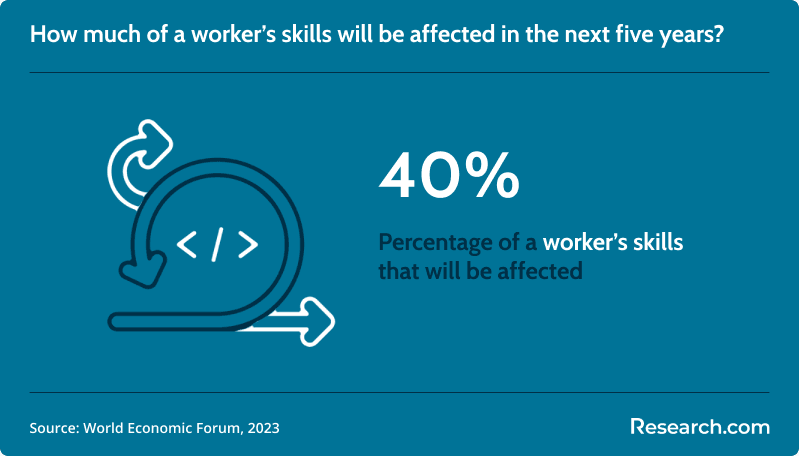
- Adapting to disruption: Over 40% of workers’ skills will be disrupted within the next five years, making regular learning important for workers across many fields.
- Improving employability: Employers often look for candidates who can show recent, relevant knowledge. For example, software professionals may compare top coding bootcamps to strengthen practical skills and expand their networks.
- Advancing into higher roles: Additional skills can prepare you for leadership, technical specialization, or cross-functional opportunities.
- Supporting personal growth: Learning can build confidence, curiosity, and resilience during career transitions.
Upskilling vs. reskilling: which do you need?
| Path | Use it when | Examples | Best evidence to show employers |
| Upskilling | You want to grow within your current field or qualify for a promotion. | Learning a new software platform, improving analytics skills, earning a management certificate | Projects, performance improvements, certifications, supervisor feedback, measurable outcomes |
| Reskilling | You want to move into a substantially different role or industry. | Transitioning from retail to IT support, from teaching to instructional design, or from nursing to healthcare administration | Portfolio projects, internships, bridge programs, entry-level certifications, volunteer experience |
| Formal degree | The target role requires deeper academic preparation, a degree credential, or eligibility for graduate study. | Bachelor’s, master’s, MBA, legal studies, healthcare, education, engineering, or doctoral programs | Accredited transcript, capstone work, licensure eligibility where applicable, field experience |
| Short certification | You need a specific tool, method, or employer-recognized credential quickly. | Project management, cloud platforms, cybersecurity, coding, data analytics, HR, bookkeeping | Verified certificate, exam result, applied project, practical demonstration |
How can further education boost your career prospects?
Further education can improve your career prospects when it gives you skills, credentials, or professional access that employers actually value. The key is to connect the program directly to a career goal. For instance, if you are interested in law-adjacent roles, compliance, policy, or legal administration, comparing options such as a legal studies degree online can help you understand whether the curriculum matches the roles you want.
Before enrolling, ask whether the program is accredited, whether credits transfer, whether it prepares you for any required exams or licenses, what career services are available, and how graduates commonly use the credential. Education can be powerful, but it should be a targeted investment rather than a way to postpone career decisions.
How do specialized degrees influence your long-term career trajectory?
A specialized degree can help you build credibility in a defined field, develop technical knowledge, and strengthen communication, research, and analytical skills. This can be useful in fields where employers expect subject-matter depth or where advancement depends on formal credentials.
The value depends on fit. If you are considering communications, reporting, media, or content-related careers, researching whether journalism is a good major can help you compare the curriculum with the realities of the labor market. A specialized degree is most useful when it aligns with real job requirements, includes applied work, and supports a clear career plan.
How can you future-proof your career?
You cannot fully predict the labor market, but you can make your career more resilient. Focus on skills that travel across employers: problem-solving, communication, data literacy, digital fluency, ethical judgment, project management, and the ability to learn new tools. Combine those broad capabilities with field-specific expertise.
For advanced academic or research-oriented paths, some professionals explore online PhD courses to deepen discipline-specific expertise. This route is not necessary for every career, so compare the time, cost, admissions requirements, and expected outcomes before committing.
Practical ways to future-proof your work
- Review job postings in your field every few months to spot emerging skills.
- Build a portfolio of measurable outcomes, not just a list of responsibilities.
- Learn how AI tools are affecting your role, including their limits and ethical risks.
- Develop both technical and human skills, since employers often need workers who can interpret, communicate, and apply information responsibly.
- Maintain relationships outside your current employer so you are not dependent on one organization for career mobility.
- Keep a record of achievements, training, metrics, projects, and feedback so you can update your resume quickly.
How to build and maintain a professional network
A strong network helps you learn how industries really work, identify unposted opportunities, get referrals, and receive advice during career decisions. Networking is not asking strangers for jobs. It is the process of building professional relationships through curiosity, usefulness, and follow-through.
1. Define your networking purpose
Be specific about what you need. You might be exploring a new field, looking for a mentor, trying to understand hiring expectations, seeking referrals, or learning which skills to build next. A clear purpose makes outreach easier and more respectful.
2. Schedule networking as a recurring activity
Attend conferences, job fairs, workshops, alumni events, meetups, webinars, professional association meetings, and employer information sessions. Consistency matters more than one large burst of activity when you urgently need a job.
3. Prioritize quality over quantity
A useful network includes people who understand your field, trust your professionalism, and are willing to exchange information. Follow up after conversations, share relevant resources, and stay in touch without always asking for favors.
4. Offer value before asking for help
Share useful articles, introduce people when appropriate, volunteer at professional events, or offer your own knowledge. Networking works better when people experience you as helpful and reliable.
5. Use professional platforms strategically
Use networking platforms such as LinkedIn and join relevant online groups. Post thoughtfully, comment on industry discussions, and connect with people whose work genuinely interests you. Avoid generic connection requests when a short personalized note would be more effective.
6. Follow up consistently
After meeting someone, send a brief message thanking them and referencing the conversation. If they shared advice, update them later on how you used it. Small follow-ups can turn one conversation into a lasting professional relationship.
Networking outreach template
-
: "
Hello [Name], I’m exploring roles in [field/role] and noticed your experience in [specific area]. I would appreciate 15 minutes to ask about your career path and what skills are most important for someone trying to enter this field. I am not asking for a job; I am hoping to learn from your perspective. Thank you for considering it.
"
How to maintain a healthy work-life balance while pursuing your dream job?
Ambition should not require burnout. A demanding job search, career change, or education plan can become unsustainable if you ignore sleep, relationships, finances, and health. Work-life balance is not about perfect equality every day. It is about setting boundaries that allow you to keep making progress without damaging the rest of your life.
- Manage your time deliberately. Plan job search blocks, learning time, interviews, networking, and recovery time instead of letting everything compete at once.
- Reduce avoidable stress. Set daily priorities, use a manageable task list, and limit distractions while applying or studying.
- Protect basic self-care. Sleep, movement, healthy meals, and restorative activities make your search more effective, not less.
- Create work-life boundaries. Decide when you will apply for jobs, answer messages, study, and stop working for the day.
- Use your support system. Friends, family, peers, mentors, and colleagues can provide accountability and emotional perspective.
- Communicate early. If you are employed while searching or studying, discuss workload concerns professionally before they become crises.
Survey data from Horowitz and Parker of Pew Research Center shows that many employees value paid time off because it allows them to rest when sick or take vacations. The chart below highlights additional benefits workers value when trying to maintain a healthier work-life balance.
How can you evaluate a job offer comprehensively?
A job offer should be reviewed as a full package, not just a salary number. Base pay matters, but so do health benefits, retirement contributions, bonuses, paid time off, schedule flexibility, commute, remote-work policies, learning opportunities, promotion paths, manager quality, job stability, and culture.
Use salary comparison tools and cost-of-living information to judge whether the offer supports your needs. Also consider whether additional education, such as one of the most affordable online bachelors programs, could improve your long-term mobility if the role has limited advancement.
Job offer evaluation table
| Offer component | What to examine | Why it matters |
| Base salary | Market range, location, experience level, internal equity, and cost of living | Determines immediate income and affects future raises and retirement contributions |
| Benefits | Health insurance, dental, vision, disability, life insurance, and dependent coverage | Weak benefits can reduce the real value of a higher salary |
| Retirement | Employer match, vesting schedule, plan options, and contribution rules | Long-term wealth can be affected by retirement benefits |
| Paid time off | Vacation, sick leave, holidays, parental leave, and carryover policies | Time away from work affects health, family life, and sustainability |
| Flexibility | Remote options, hybrid schedule, flexible hours, travel, and commute | Flexibility can strongly influence quality of life and work-life balance |
| Growth potential | Promotion history, training budget, mentorship, performance reviews, and role scope | A lower starting offer may be acceptable if growth is real and documented |
| Culture and manager fit | Communication style, workload norms, employee turnover, and leadership behavior | A poor environment can outweigh attractive compensation |
Can an accelerated bachelor's degree fast-track my career growth?
An accelerated bachelor’s degree can shorten the time to completion for some students by condensing coursework into a faster schedule. This may help working adults, transfer students, or career changers who need a credential sooner. However, speed should not be the only factor. The program must still be accredited, academically credible, affordable, manageable with your schedule, and relevant to your target career.
If you need a faster route to a bachelor’s credential, compare options such as the fastest accelerated bachelor's degree online. Ask how transfer credits are evaluated, whether courses are asynchronous, how many terms run each year, what support services are available, and whether the pace is realistic for your work and family obligations.
How can an accredited bachelor's degree shape your long-term career path?
An accredited bachelor’s degree can support career mobility by providing a recognized credential, structured knowledge, stronger writing and research skills, and eligibility for roles or graduate programs that require a degree. Accreditation matters because it signals that an institution or program has met established quality standards.
When comparing online accredited bachelor degrees, verify accreditation status, transfer policies, total cost, student support, graduation requirements, and whether the program aligns with your intended career. Be especially careful in fields tied to licensure, because not every online degree automatically meets state requirements.
How to align personal values with a company’s mission and values
Values alignment means your priorities are compatible with how an organization actually operates. Mission statements can sound inspiring, but the real test is how a company treats employees, customers, communities, and ethical decisions when pressure is high.
Start by naming your non-negotiables. These may include transparency, inclusion, work-life boundaries, environmental responsibility, patient care, public service, innovation, stability, autonomy, or social impact. Then compare those values with evidence from the employer’s policies, employee reviews, leadership communication, benefits, interview behavior, and public actions.
Questions to test values fit
- What does the company reward: collaboration, individual output, speed, accuracy, sales volume, innovation, or service quality?
- Do leaders communicate openly about challenges, or only promote success stories?
- How does the company support employees during high-demand periods?
- Are diversity, equity, and inclusion reflected in leadership, policies, and advancement practices?
- Does the organization’s mission connect to the daily responsibilities of the role?
- Would I feel comfortable representing this employer publicly?
What role does personal branding play in landing a job?
Personal branding helps employers understand what you are known for, what problems you solve, and why your background is relevant. It is not about creating a fake persona. It is about presenting a clear, consistent professional identity across your resume, LinkedIn profile, portfolio, interviews, and networking conversations.
- Clarify your value proposition. Identify the combination of skills, experience, strengths, and interests that makes you useful to your target employers.
- Build a credible online presence. Use LinkedIn, a portfolio, a personal website, or professional profiles to show projects, achievements, writing, presentations, case studies, or technical work.
- Keep your message consistent. Your resume, profile headline, summary, and interview pitch should point toward the same target role.
- Engage with your field. Comment thoughtfully, share useful resources, attend events, and participate in groups where your target employers or peers are active.
- Tell your career story clearly. Explain transitions, accomplishments, setbacks, and goals in a way that feels honest and coherent.
Simple personal brand formula
-
: "
I help [type of employer or audience] solve [type of problem] using [skills, tools, or experience], with a focus on [outcome or value].
"
What are common mistakes to avoid in a salary negotiation?
Salary negotiation is one of the most important parts of accepting a job because it can affect your income, benefits, motivation, and long-term financial trajectory. Negotiation should be professional, evidence-based, and focused on finding an agreement that works for both sides.
- Skipping market research: You need salary context before negotiating. For example, if you do not know how much ICU nurses make or what comparable professionals earn in your location, you may set a weak or unrealistic target.
- Accepting too quickly: Taking the first offer immediately can leave money or benefits unaddressed, especially when employers expect discussion.
- Underselling your value: Be ready to explain your skills, achievements, credentials, and market fit with confidence.
- Looking only at salary: Health benefits, retirement contributions, bonuses, stock options, vacation time, professional development funds, and flexibility can materially affect the value of the offer.
- Using the wrong communication channel: When possible, discuss negotiation by phone, video, or in person so tone and rapport are easier to manage.
- Making vague requests: Use a researched range and explain the basis for your request.
- Ignoring non-salary options: If salary is fixed, consider negotiating for remote work, schedule flexibility, additional time off, training funds, title adjustment, or an earlier performance review.
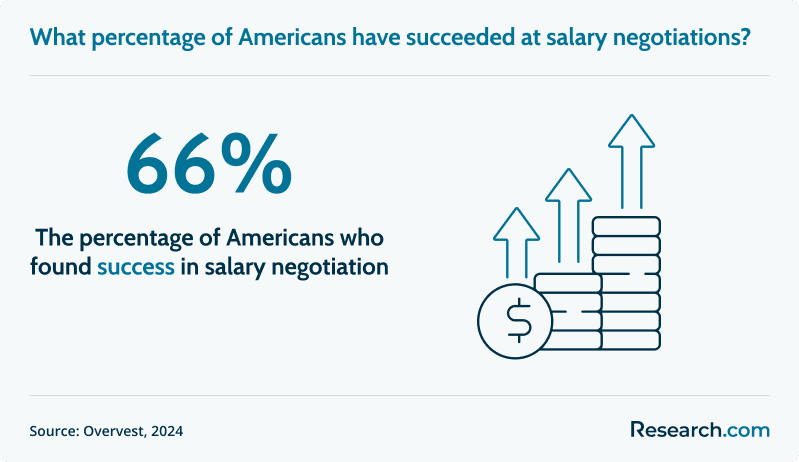
Overvest reported that around 66% of Americans who attempted to negotiate their salaries had successful results. That does not mean every negotiation will work, but it does show that a respectful, prepared conversation can be worthwhile.
Salary negotiation preparation checklist
| Before negotiating | What to prepare | Why it helps |
| Research compensation | Salary ranges by role, location, experience, industry, and company size | Prevents requests that are too low, too high, or unsupported |
| Know your minimum | Your walk-away number based on expenses, goals, and alternatives | Helps you avoid accepting an offer you cannot sustain |
| Document your value | Achievements, metrics, credentials, hard-to-find skills, and relevant experience | Turns the conversation from personal preference into business value |
| Evaluate the full package | Benefits, bonus, retirement, PTO, flexibility, commute, and growth | Shows whether the offer is strong overall, not just on base pay |
| Practice your ask | A concise script with a range and rationale | Reduces anxiety and improves clarity |
How can mentorship accelerate your career success?
A mentor can help you understand unwritten rules, avoid predictable mistakes, identify skill gaps, and make better decisions about jobs, education, and advancement. Mentorship is especially valuable during transitions, such as entering a new industry, preparing for leadership, returning to work, or deciding whether another credential is worth it.
A mentor may also help you compare alternative learning paths, including options such as quick degrees for high paying jobs, if your goal is to improve marketability without spending unnecessary time or money. The best mentorship relationships are specific: you bring goals and questions, and the mentor offers perspective, accountability, and introductions when appropriate.
How to make mentorship useful
- Choose someone whose experience connects to your goals, not just someone with an impressive title.
- Ask focused questions instead of expecting the mentor to design your entire career.
- Act on advice and report back on results.
- Respect the mentor’s time by scheduling thoughtfully and preparing in advance.
- Seek more than one perspective when making major decisions.
How can online certifications boost your career prospects?
Online certifications can help when they teach a specific, job-relevant skill and provide evidence that employers recognize. They are especially useful for technical tools, project management, analytics, cybersecurity, coding, digital marketing, bookkeeping, HR, and other skill-based areas. However, a certificate is not a substitute for a required license or degree.
To choose wisely, compare the best online courses with certificates based on employer recognition, curriculum depth, applied projects, cost, time commitment, instructor quality, and whether the credential aligns with job postings in your target field.
Common job search mistakes and better alternatives
| Mistake | Why it hurts your search | Better approach |
| Applying everywhere with the same resume | Employers may not see a clear match. | Target fewer roles and tailor each application. |
| Choosing education without checking accreditation | Credits, financial aid, licensure, or employer recognition may be affected. | Verify accreditation and program requirements before enrolling. |
| Focusing only on tuition | Fees, books, lost income, commute, and time to completion can change the real cost. | Compare total cost and return on investment. |
| Assuming online programs meet licensure rules | State requirements can vary by field and location. | Confirm licensure eligibility with the state board or relevant authority. |
| Relying only on rankings | A highly ranked option may still be a poor fit for your schedule, budget, or goals. | Use rankings as one input alongside outcomes, cost, support, and accreditation. |
| Waiting to network until you need a job | Relationships take time to develop credibility. | Build connections before you are actively searching. |
| Assuming salary outcomes are guaranteed | Pay depends on location, experience, employer, industry, and negotiation. | Research ranges and compare multiple sources before making decisions. |
Key Insights
- A dream job should be evaluated by fit, demand, growth, values, compensation, and sustainability—not title alone.
- Healthcare, social assistance, construction, government, IT-related services, solar power, manufacturing, and medical devices are important areas to watch, but job seekers should verify local demand and role-specific requirements.
- Strong resumes are built around the employer’s needs. Use the job description to shape your summary, skills, and accomplishment bullets.
- Networking is most effective when it is consistent, specific, and based on mutual value rather than last-minute requests.
- Upskilling and reskilling are now core career strategies because over 40% of workers’ skills will be disrupted within the next five years.
- Further education can help when it is accredited, affordable, career-aligned, and connected to real employer requirements.
- Job offers should be judged by total compensation, flexibility, benefits, growth opportunities, culture, and manager fit.
- Salary negotiation is worth preparing for. Around 66% of Americans who attempted to negotiate their salaries had successful results, but outcomes depend on research, timing, and professionalism.
- Certifications, accelerated degrees, and specialized programs can improve marketability, but only when they match your target role and are recognized by employers.
- The best career plan is practical and adaptable: know your goals, track market changes, build proof of skill, protect your well-being, and keep learning.
References
- Bureau of Labor Statistics (2023 September 6). Occupations with the most job growth. https://www.bls.gov/emp/tables/occupations-most-job-growth.htm
- Horowitz, J. and Parker, K. (30 March 2023). How Americans View Their Jobs. Pew Research Center. https://www.pewresearch.org/social-trends/2023/03/30/how-americans-view-their-jobs
- Overcast, M. (2024 January 2). Salary Negotiation Statistics 2024 — 20 key Figures. https://procurementtactics.com/salary-negotiation-statistics
- Smith, M. (2024 January 19). The 10 fastest-growing jobs in the U.S. right now—many can be remote and pay over $100,000. https://www.cnbc.com/2024/01/19/the-10-fastest-growing-jobs-in-the-usmany-are-remote-can-pay-over-100000.html
- World Economic Forum (2023 April 30). The Future of Jobs Report 2023. https://www.weforum.org/publications/the-future-of-jobs-report-2023
Other Things You Should Know About Landing Your Dream Job
To land your dream job in 2027, focus on tailoring your resume to highlight relevant skills, networking in your industry, upskilling through online courses, and practicing for interviews. Staying updated with industry trends and being proactive in seeking opportunities will also increase your chances.
An ideal dream job is a position that aligns with your passions, utilizes your unique skills, and provides a sense of fulfillment. It often involves working with supportive colleagues, offering great pay and benefits, and allowing for freedom and flexibility. Examples of dream jobs include roles such as a writer/author, coral reef restorationist, luxury travel critic, or running a cafe or a small pub in a picturesque village. Ultimately, a dream job is highly personal and varies from person to person based on their individual interests and aspirations.
The most in-demand skills in today’s job market include a mix of technical and soft skills. Here are some skills that you can develop:
Technical skills:
- Artificial intelligence
- Data analysis
- Cloud computing
- Software development
- Digital marketing
Soft skills:
- Communication
- Leadership
- Project management
- Analytical skills
- Teamwork


