2027 Most Affordable Online Associate Degree Programs in Cyber Security

Co-Founder and Chief Data Scientist
Choosing an affordable online associate degree in cybersecurity is a practical way to enter the security side of information technology without committing immediately to a four-year program. The decision matters because cyber threats are no longer isolated technical problems. Ransomware, phishing, smishing, and business email compromise affect businesses, hospitals, schools, financial institutions, government agencies, and individual users.
The demand signal is clear. The United States experienced 246 ransomware attacks in 2023, compared with 158 in 2020. Phishing, smishing, and business email compromise attacks in the US reached 438 in 2023, compared with 383 in 2020 (Petrosyan, 2024). At the same time, employment for information security analysts is projected to grow by 33% from 2023 to 2033, according to the US Bureau of Labor Statistics (BLS, 2024).
This guide is for students, working adults, career changers, military-affiliated learners, and IT support workers who want a lower-cost path into cybersecurity. You will learn what an online associate degree covers, how much affordable programs cost, how long they take, what jobs may be available, how to compare schools, and when this credential is worth pursuing instead of a certificate, bootcamp, bachelor’s degree, or campus-based program.
Quick Answer: Is an Affordable Online Associate Degree in Cybersecurity a Good Starting Point?
Yes, an affordable online associate degree in cybersecurity can be a strong entry-level option if you want structured training in networking, operating systems, security tools, and cyber defense while keeping tuition manageable. Most programs take about 2 years for full-time students and often require 60 to 70 credit hours. Graduates commonly pursue support, technician, analyst-assistant, and junior cybersecurity roles, while many later transfer credits toward a bachelor’s degree or add industry certifications.
This path is most useful when the program is accredited, includes hands-on labs, teaches current security practices, supports certification preparation, and offers transfer options. It may be less suitable if your target role requires a bachelor’s degree right away, if the program lacks technical lab work, or if the online format does not match your learning style.
What are the benefits of getting an affordable online associate degree in cybersecurity?
- Lower upfront cost: An associate degree can help you build cybersecurity fundamentals without taking on the cost of a longer degree first. This matters for students who want to enter the workforce quickly or test whether cybersecurity is the right long-term field.
- Flexible scheduling: Online coursework can make it easier to study while working, parenting, serving in the military, or managing other responsibilities. Some programs offer asynchronous classes, while others combine online lectures with scheduled labs or hybrid requirements.
- Transfer value: Many associate programs are designed to move into bachelor’s programs in cybersecurity, information technology, computer science, or related fields. If you choose carefully, your credits may reduce the time and cost of a future degree.
- Career-relevant foundation: Students usually learn networking, systems administration, security fundamentals, digital forensics, and threat response. These skills can support entry-level IT and cybersecurity work.
- Certification preparation: Some programs align courses with industry-recognized certifications, which can strengthen a graduate’s job applications when paired with hands-on experience.
What can I expect from an affordable online associate degree in cybersecurity?
An affordable online associate degree in cybersecurity usually combines general education, computing fundamentals, networking, operating systems, and introductory cyber defense. The goal is not to make students senior security engineers immediately. Instead, the degree builds the technical base needed for help desk, support, network, security operations, and junior analyst work.
| Program feature | What it usually means for students | Why it matters |
| Technical foundation | Courses often introduce networking, Linux or Windows administration, scripting, databases, cloud concepts, and security basics. | Cybersecurity work depends on understanding how systems operate before learning how to defend them. |
| Hands-on practice | Many online programs use virtual labs, simulations, packet analysis tools, capture-the-flag exercises, or remote lab environments. | Employers value applied skill. A program with only textbook assignments may leave graduates underprepared. |
| Security-focused coursework | Common areas include network defense, ethical hacking concepts, risk management, digital forensics, cryptography, and incident response. | These topics help students understand threats, vulnerabilities, controls, and investigation methods. |
| Flexible delivery | Classes may be fully online, hybrid, synchronous, asynchronous, full-time, or part-time. | The best format depends on your schedule, motivation, and need for instructor interaction. |
| Career and transfer support | Programs may offer advising, tutoring, résumé help, internship referrals, and articulation agreements. | Support services can affect whether you finish, transfer smoothly, and compete for entry-level roles. |
Where can I work with an affordable online associate degree in cybersecurity?
Cybersecurity is needed in nearly every industry that stores data, processes payments, operates networks, or uses connected systems. With an associate degree, graduates often begin in technical support, IT operations, network support, junior security, or compliance-adjacent roles rather than advanced security architecture positions.
- Information technology services: IT service providers, managed service providers, and internal IT departments hire support and technician-level staff to monitor systems, troubleshoot user issues, maintain endpoints, and help reduce security risks.
- Healthcare: Hospitals, clinics, insurers, and health technology vendors need workers who understand data privacy, access controls, electronic health records, and security practices tied to regulations such as the Health Insurance Portability and Accountability Act (HIPAA).
- Finance and banking: Banks, credit unions, payment processors, and insurance firms use cybersecurity staff to help protect customer records, prevent fraud, monitor networks, and support secure digital transactions.
- Government and public sector: Local, state, tribal, and federal agencies need security-aware IT professionals to protect public systems and sensitive records.
- Education: Schools, colleges, and universities increasingly rely on cybersecurity support to protect student data, learning platforms, networks, and institutional systems.
How much can I make with an affordable online associate degree in cybersecurity?
Salary depends on job title, location, employer, prior experience, certifications, and whether the role is truly cybersecurity-focused or broader IT support. An associate degree can help qualify students for entry-level technology roles, but some higher-paying cybersecurity jobs may require a bachelor’s degree, substantial experience, or advanced certifications.
Across the US, computer support specialists had a median annual wage of $60,810 in 2023. Computer systems analysts had a median annual wage of $103,800 in the same period (US BLS, 2024).
More advanced cybersecurity and technology leadership roles may pay more, but they typically require additional education, experience, and demonstrated technical skill. In 2023, information security analysts had a median annual wage of $120,360; database administrators and architects had $117,450; and computer and information systems managers had $169,510 (US BLS, 2024).
| Role | 2023 median annual wage | Typical fit for associate degree graduates |
| Computer support specialists | $60,810 | Common entry point, especially when paired with networking and security coursework. |
| Computer network support specialists | $71,530 | Possible path for graduates with strong networking and troubleshooting skills. |
| Computer user support specialists | $59,240 | Often accessible for new IT workers and useful for building professional experience. |
| Computer systems analysts | $103,800 | Often requires broader systems knowledge and may require a bachelor’s degree. |
| Information security analysts | $120,360 | High-growth role, but many employers expect experience, certifications, or a bachelor’s degree. |
| Database administrators and architects | $117,450 | Usually requires database expertise and may involve additional education or experience. |
| Computer and information systems managers | $169,510 | Advanced leadership role usually requiring years of experience. |
- Best Affordable Online Associate Degrees in Cybersecurity Programs for 2027
- How long does an affordable online associate degree in cybersecurity take?
- Online vs. on-campus cybersecurity associate programs
- Average cost of an affordable online associate degree in cybersecurity
- Financial aid options for cybersecurity associate degree students
- Admission requirements and prerequisites
- Common courses in cybersecurity associate programs
- Cybersecurity associate degree specializations
- Is an Affordable Online Associate Degree in Cybersecurity Worth the Investment?
- Is Accreditation Important for Affordable Online Cybersecurity Degrees?
- How to choose the best affordable online cybersecurity associate program
- How advanced degrees can support cybersecurity career growth
- How online associate programs are responding to cybersecurity trends
- How industry partnerships improve job readiness
- Student support services in online cybersecurity associate programs
- Career paths after an affordable online associate degree in cybersecurity
- How interdisciplinary learning can contribute to cybersecurity innovation
- Challenges of online cybersecurity associate programs
- Ethical and legal responsibilities in cybersecurity education
- Career advancement and continuing education options
- Internships and networking for cybersecurity students
- How computer science study can strengthen cybersecurity skills
- How game programming skills can support cybersecurity work
- Job market outlook for cybersecurity associate degree graduates
Best Affordable Online Associate Degrees in Cybersecurity Programs for 2027
The programs below are examples of affordable online or online-accessible associate degree options in cybersecurity. They can help students compare tuition, credit requirements, format, and accreditation before building a broader shortlist. The list was developed using the Research.com methodology and data from the IPEDS database, Peterson's database, the College Scorecard database, and the National Center for Education Statistics.
| School | Program | Length | Cost information | Credits | Accreditation |
| Western Nebraska Community College | Associate of Arts in cybersecurity | 2 years | $109.50 per credit for residents; $128.50 per credit for non-residents | 62 credits | Higher Learning Commission (HLC) |
| Southeast Community College | Associate of Applied Science in cybersecurity | 2 years | $7,872 estimated total cost for residents; $9,216 for non-residents | 64 credits | HLC |
| Bismarck State College | Associate of Applied Science in cybersecurity and computer networks | A minimum of 2 years | $173.63 per credit for residents; $260.45 to $303.86 for non-residents | 61 to 64 credits | HLC |
| Ivy Tech Community College | Associate of Applied Science in cybersecurity or information assurance | 2 to 4 semesters | $178.38 per credit for residents; $348.97 for non-residents | 60 credit hours | HLC |
| Minnesota State College-Southeast Technical | Associate of Applied Science in cybersecurity and network administration | A minimum of 2 years | $215.54 per credit | 60 credits | HLC |
1. Western Nebraska Community College (WNCC)
Western Nebraska Community College (WNCC) offers an Associate of Arts degree in cybersecurity that students can complete online or on campus. The program is built around smaller classes, applied learning, and instruction from industry professionals. Core information technology courses include introduction to IT, microcomputer applications, IT technical support, networking essentials, and Python.
- Program Length: 2 years
- Cost per Credit: $109.50 (Resident); $128.50 (Non-resident)
- Required Credits to Graduate: 62 credits
- Accreditation: Higher Learning Commission (HLC)
2. Southeast Community College (SCC)
Southeast Community College (SCC), based in Nebraska, operates campuses in Beatrice, Lincoln, and Milford, along with several learning centers. Its Associate of Applied Science in cybersecurity is offered through the Lincoln campus and includes both online and in-person class requirements. Students may enroll part time or full time.
- Program Length: 2 years
- Estimated Total Cost: $7,872 (Resident); $9,216 (Non-resident)
- Required Credits to Graduate: 64 credits
- Accreditation: HLC
3. Bismarck State College (BSC)
Bismarck State College (BSC) provides an Associate of Applied Science in cybersecurity and computer networks that can be completed online and on campus. Students can also pursue certificate options in security and hacking, computer networking, and offensive and defensive security.
- Program Length: A minimum of 2 years
- Cost per Credit: $173.63 (Resident); $260.45 to $303.86 (Non-resident)
- Required Credits to Graduate: 61 to 64 credits
- Accreditation: HLC
4. Ivy Tech Community College
Ivy Tech Community College serves students across Indiana through multiple locations and online learning options. Its online Associate of Applied Science in cybersecurity or information assurance includes an accelerated option that can be completed in 2 semesters.
- Program Length: 2 to 4 semesters
- Cost per Credit: $178.38 (Resident); $348.97 (Non-resident)
- Required Credits to Graduate: 60 credit hours
- Accreditation: HLC
5. Minnesota State College-Southeast Technical
Minnesota State College-Southeast Technical offers an online Associate of Applied Science in cybersecurity and network administration. The curriculum aligns with Department of Homeland Security (DHS) and National Security Agency (NSA) requirements for the NSA Certificate of Academic Excellence (CAE-CD) designation. Courses include IT fundamentals, cybersecurity fundamentals, network security, security threats and countermeasures, and cybersecurity operations.
- Program Length: A minimum of 2 years
- Cost per Credit: $215.54
- Required Credits to Graduate: 60 credits
- Accreditation: HLC
How to Use This Program List Wisely
A low tuition rate is important, but it should not be the only deciding factor. Before enrolling, compare total cost, online delivery format, transfer policies, lab access, certification alignment, career services, and whether the program’s schedule fits your life. Also confirm whether “online” means fully online or hybrid, since some programs require in-person labs, exams, or campus-based courses.
Key Findings
- Full-time students can often finish an online associate degree in cybersecurity in about 2 years, with many programs requiring 60 to 70 credit hours.
- Core topics commonly include network security, ethical hacking, cryptography, system administration, operating systems, and digital forensics.
- Cybersecurity students may qualify for financial aid options such as CyberCorps®: Scholarship for Service (SFS), which supports eligible students preparing for cybersecurity and information technology service roles.
- Internships can help online learners gain experience. For example, Cisco offers short-term, long-term, and summer internships in areas such as engineering, information technology, and security and trust.
- Cybersecurity associate degree graduates often start in support-oriented roles. Computer network support specialists in the US had a median annual wage of $71,530 in 2023, while computer user support specialists had $59,240 (US BLS, 2024).
- Employment for computer support specialists is projected to grow by 6% from 2023 to 2033 (US BLS, 2024).
How long does it take to complete an affordable online associate degree in cybersecurity program?
Most online associate degree programs in cybersecurity take about 2 years for full-time students. The typical credit range is 60 to 70 credit hours, which allows programs to cover general education, networking, security fundamentals, ethical hacking concepts, cryptography, and system administration.
Part-time students may need closer to 3 years, depending on course availability and how many credits they take each term. Some accelerated programs can shorten the timeline to as little as 18 months by using condensed courses, year-round enrollment, or heavier course loads.
| Enrollment pace | Typical completion time | Best for | Trade-off |
| Full time | About 2 years | Students who can prioritize school and complete multiple courses per term. | Requires more weekly study time and may be harder with full-time work. |
| Part time | Closer to 3 years | Working adults, parents, and students with irregular schedules. | Delays graduation and may affect financial aid pacing. |
| Accelerated | As little as 18 months | Motivated students with strong time management and prior technical experience. | Condensed terms can be intense, especially for lab-heavy technical courses. |
If you are comparing cybersecurity with broader computing programs, a dedicated degree in cyber security may be more focused on defense, risk, and incident response, while computer science may provide deeper programming and theory. Students interested in later technology leadership can also review the highest paying MBA concentrations to understand how business education may complement cybersecurity experience.
How does an affordable online associate degree in cybersecurity program compare to an on-campus program?
Online and on-campus cybersecurity associate programs can lead to similar academic credentials, but the learning experience may differ substantially. The right format depends on your schedule, preferred learning style, access to labs, and need for in-person support.
| Factor | Online associate degree | On-campus associate degree |
| Schedule | Often more flexible, especially when courses are asynchronous. | Usually follows fixed class meeting times. |
| Lab access | May use virtual labs, remote desktops, cloud environments, and simulations. | May provide physical computer labs and in-person technical help. |
| Interaction | Communication often happens through discussion boards, email, video meetings, and learning platforms. | Students can ask questions in person and build relationships on campus. |
| Cost considerations | Can reduce commuting, relocation, and housing costs. | May involve transportation, campus fees, parking, or housing costs. |
| Best fit | Self-directed learners who need flexibility. | Students who learn better through face-to-face instruction and structured schedules. |
Online programs can be especially useful for students who live far from campus or need to continue working. However, students should check whether the program includes live support, virtual labs, tutoring, and clear instructions for completing technical assignments. A low-cost online program is not automatically better if students struggle to get help when labs break or software configurations fail.
Students who want short, skills-focused training before or alongside a degree can compare the best cyber security courses online. Learners from adjacent fields may also find cybersecurity relevant. For example, an online human services degree can connect to privacy advocacy, digital safety, and crisis response, while healthcare professionals comparing MSN vs RN pathways may need cybersecurity awareness to protect patient data and comply with privacy requirements.
The chart below shows degrees in computer and information sciences awarded by US postsecondary institutions in the 2021–2022 academic year, based on National Center for Education Statistics (NCES) data prepared in November 2023.
What is the average cost of an affordable online associate degree in cybersecurity program?
The cost of an online cybersecurity associate degree varies by institution, residency status, fees, books, technology requirements, and whether courses are fully online or hybrid. Students comparing technology programs often ask, How much does a computer science degree cost? For cybersecurity associate programs, the examples in this guide show several lower-cost options.
| School | Resident cost | Non-resident cost | Notes |
| Western Nebraska Community College (WNCC) | $109.50 per credit hour | $128.50 per credit hour | One of the lowest per-credit options in this list. |
| Southeast Community College (SCC) | $7,872 estimated total program cost | $9,216 estimated total program cost | Useful for students who want a full-program cost estimate. |
| Bismarck State College (BSC) | $173.63 per credit hour | $260.45 to $303.86 per credit hour | Non-resident cost depends on location. |
| Ivy Tech Community College | $178.38 per credit hour | $348.97 per credit hour | Offers an accelerated route. |
| Minnesota State College-Southeast Technical | $215.54 per credit hour | $215.54 per credit hour | Uses a flat per-credit rate listed here. |
When estimating total cost, include tuition, mandatory fees, online course fees, textbooks, software, testing fees, certification exam costs, laptop requirements, transcript fees, and graduation fees. Also ask whether tuition rates change after a set number of credits or for out-of-state online students.
Students exploring other professional paths may also compare flexible legal education options, including guides that discuss what are the easiest law programs. As with cybersecurity, the best program is not simply the one that looks easiest or cheapest; it is the one that matches your goals, schedule, academic preparation, and career requirements.
The chart below visualizes current cost-per-credit information for the online associate degree in cybersecurity programs included in this guide.
What are the financial aid options for students enrolling in an affordable online associate degree in cybersecurity program?
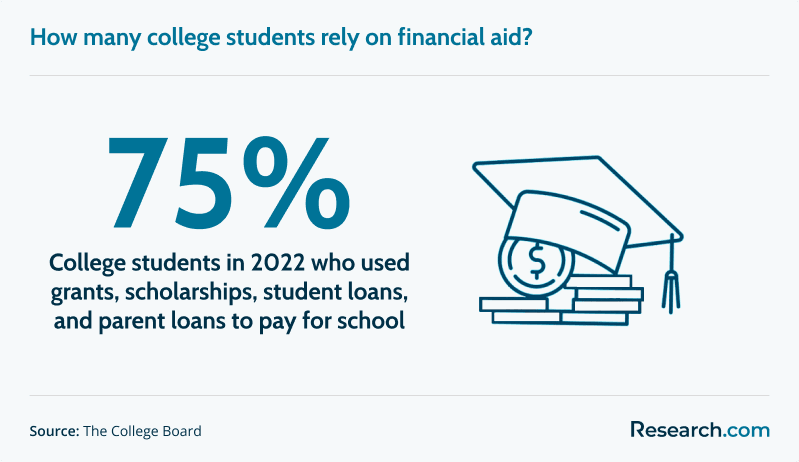
Cybersecurity students should complete the financial aid process early and compare net price, not just tuition. Some students reduce costs through federal grants, scholarships, employer benefits, military education benefits, work-study, transfer credits, and part-time enrollment.
- CyberCorps®: Scholarship for Service (SFS) Program: CyberCorps®: Scholarship for Service helps aspiring information technology professionals pay for education and training at eligible institutions. The scholarship covers tuition, a stipend, a professional allowance stipend, and a maximum of 3 years of support. Recipients must work as cybersecurity professionals in federal, state, local, or tribal government or approved organizations. The service obligation lasts for a period equal to the scholarship support received.
- Federal Pell Grant: Pell Grants are need-based federal awards that generally do not have to be repaid. Eligibility depends on financial need and federal aid rules.
- Federal Work-Study Programs: Work-study allows eligible students to earn money through part-time employment while enrolled. A technology-related campus or remote role can also build useful experience.
- Employer Tuition Reimbursement: Some employers help pay for cybersecurity or IT education when the coursework supports business needs. Ask about reimbursement limits, grade requirements, repayment clauses, and approved schools.
- Scholarships from colleges and foundations: Community colleges, state systems, professional associations, and cybersecurity organizations may offer awards for technology students.
- Military and veteran education benefits: Eligible service members, veterans, and dependents should ask schools how benefits apply to online associate programs.
| Funding option | Repayment required? | Key question to ask |
| Federal Pell Grant | Usually no | Am I eligible based on my financial aid application? |
| CyberCorps®: Scholarship for Service | No repayment if service terms are met | Is my school and program eligible, and can I meet the work requirement? |
| Federal Work-Study | No | Are technology-related work-study roles available? |
| Employer tuition reimbursement | Usually no if employer conditions are met | What happens if I leave the company before the required period? |
| Student loans | Yes | What will my monthly payment likely be after graduation? |
What are the prerequisites for enrolling in an affordable online associate degree in cybersecurity program?
Admission requirements for online cybersecurity associate programs are usually accessible, especially at community colleges. However, students should still review placement, technology, and readiness requirements before enrolling.
- College application: Applicants typically submit an admissions form with personal information, academic history, residency details, and intended program.
- High school diploma or GED: Most programs require proof of high school completion or an equivalent credential.
- Placement assessment: Some colleges use placement tests or prior coursework to determine whether students are ready for college-level math, English, or technical classes.
- Minimum age requirement: Certain institutions set age requirements. Southeast Community College (SCC) in Nebraska, for example, requires students to be at least 16 years old.
- Technology access: Online cybersecurity students usually need a reliable computer, stable internet connection, webcam or microphone for some courses, and the ability to install or access lab software.
- Basic computer literacy: Students do not always need prior cybersecurity experience, but they should be comfortable using computers, managing files, troubleshooting simple issues, and learning technical tools independently.
What courses are typically in an affordable online associate degree in cybersecurity program?
Cybersecurity associate programs usually start with the fundamentals of computing and networking before moving into defensive security, ethical hacking concepts, and investigation. The strongest programs combine theory with labs, projects, and scenarios.
| Course area | What students learn | Career relevance |
| Introduction to Cybersecurity | Basic terminology, common threats, security principles, risk, and defensive strategies. | Gives students the language and context needed for later technical courses. |
| Network Security | Firewalls, intrusion detection, encryption protocols, secure network design, and access control. | Supports network support, security operations, and technician roles. |
| Ethical Hacking and Penetration Testing | How vulnerabilities are found, tested, documented, and addressed within legal and ethical limits. | Builds attacker-mindset awareness for defensive work. |
| Computer Forensics | Digital evidence collection, analysis, preservation, and investigative procedures. | Useful for incident response, investigations, and compliance support. |
| Operating Systems and Security | Windows and Linux security features, account management, permissions, patching, and hardening. | Essential for securing endpoints and servers. |
| Scripting or Programming | Basic automation, logic, Python, or command-line skills. | Helps students automate tasks and understand technical workflows. |
| Risk Management and Policy | Security controls, compliance, governance, policies, and organizational risk. | Connects technical work to business and legal responsibilities. |
What types of specializations are available in an affordable online associate degree in cybersecurity program?
Associate programs may not offer as many concentrations as bachelor’s or master’s programs, but many allow students to choose electives or certificates that emphasize a particular cybersecurity area.
- Network Security: Focuses on protecting networks from unauthorized access, malware, intrusions, and data exposure. Students study firewalls, secure configurations, monitoring, and safe data transmission.
- Digital Forensics: Prepares students to identify, preserve, and analyze digital evidence. This area is useful for learners interested in incident investigation and cybercrime analysis.
- Ethical Hacking and Penetration Testing: Teaches students to evaluate systems from an attacker’s perspective while following legal boundaries and professional standards.
- Cybersecurity Operations: Emphasizes monitoring, alert triage, incident response, log analysis, and security operations center processes.
- Systems Administration Security: Focuses on securing servers, endpoints, user accounts, and operating system environments.
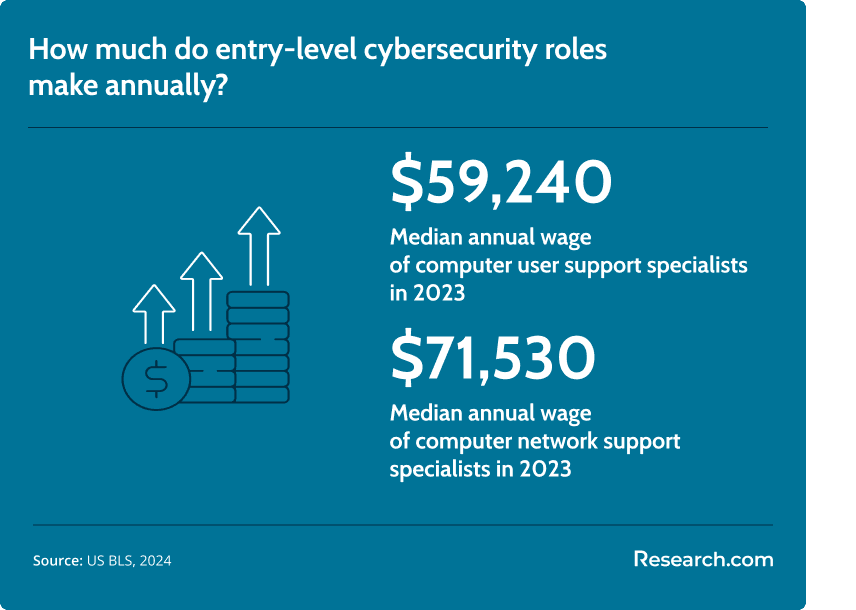
Specialization matters because entry-level cybersecurity hiring often rewards demonstrable skills. For example, computer network support specialists in the US had a median annual wage of $71,530 in 2023, while computer user support specialists had $59,240 in the same year (US BLS, 2024).
Is an Affordable Online Associate Degree in Cybersecurity Worth the Investment?
An affordable online associate degree in cybersecurity is worth considering if it helps you gain marketable technical skills, qualify for entry-level IT or cybersecurity roles, reduce the cost of future bachelor’s study, and prepare for certifications. The investment is stronger when tuition is low, credits transfer, labs are substantial, and the school provides career support.
It may not be the best investment if the program is not accredited, does not include hands-on technical work, has weak student support, or does not align with your target job market. Before enrolling, compare the program’s total cost with likely starting roles in your region and review compensation trends using resources such as Research.com’s guide to cyber security jobs salary.
| This degree may be worth it if... | You may want another path if... |
| You want an affordable first credential in cybersecurity or IT. | You already have a bachelor’s degree and need only targeted certification training. |
| You need an online format because of work, family, or location. | You learn best in a physical lab with in-person instructor support. |
| You plan to transfer credits into a bachelor’s program later. | Your preferred employers require a bachelor’s degree for entry-level security roles. |
| You want structured academic support and a broad technical base. | You need a very short training option focused on one tool or certification. |
Is Accreditation Important for Affordable Online Cybersecurity Degrees?
Yes. Accreditation is one of the most important checks when evaluating an online cybersecurity associate degree. It helps confirm that the college meets recognized academic standards, and it can affect federal financial aid eligibility, credit transfer, employer confidence, and admission to future bachelor’s programs.
Students should verify institutional accreditation through official accreditor or government sources, not only through marketing pages. If a program advertises cybersecurity-specific recognition, ask what organization awarded it, what it covers, and whether it applies to the specific degree you plan to enter. For broader comparisons, see Research.com’s guide to cyber security schools online.
How do you choose the best affordable online associate degree programs in cybersecurity?
The best affordable program is the one that fits your budget, schedule, career goals, and transfer plans while providing real technical practice. Use the checklist below before applying.
| Selection factor | What to verify | Why it matters |
| Accreditation | Confirm institutional accreditation and any program-specific recognition. | Accreditation affects aid, transfer, and employer trust. |
| Total cost | Compare tuition, fees, books, software, equipment, and certification exam costs. | The cheapest per-credit rate may not be the cheapest total program. |
| Online format | Ask whether courses are asynchronous, live, hybrid, or campus-required. | “Online” can mean different things at different schools. |
| Labs and tools | Look for virtual labs, simulations, cloud environments, and security tools. | Cybersecurity skills are learned through practice, not only reading. |
| Transfer pathway | Review articulation agreements and bachelor’s transfer policies. | Good transfer planning can save time and money later. |
| Certification alignment | Ask whether coursework supports certifications such as CompTIA Security+, Certified Ethical Hacker (CEH), or other credentials. | Certifications may strengthen job applications, especially for entry-level candidates. |
| Career support | Check résumé help, mock interviews, internship support, employer connections, and job boards. | Online students need structured career access, not only coursework. |
Questions to ask before enrolling
- Is the program fully online, or are there required campus visits?
- What cybersecurity tools and lab platforms will I use?
- Can I complete labs on my own computer, or do I need special hardware?
- Which credits transfer into bachelor’s programs?
- Are there extra fees for online courses, labs, proctored exams, or certifications?
- What job titles have recent graduates pursued?
- Does the school help online students find internships?
- How quickly do instructors and technical support respond to online students?
How can an advanced degree further enhance your cybersecurity career?
An associate degree can open the door, but many advanced cybersecurity, analytics, architecture, management, and policy roles require deeper education or experience. A bachelor’s degree can help with roles that list four-year education as a requirement, while graduate study can support specialization in areas such as security engineering, data analytics, risk management, artificial intelligence, or technology leadership.
Students who want to move beyond entry-level roles can compare options such as online master of computer science programs after gaining professional experience and completing a bachelor’s degree. The right next step depends on whether you want to become a hands-on technical specialist, security manager, cloud security professional, digital forensics investigator, or technology executive.
How are affordable online associate degree programs adapting to emerging cybersecurity trends?
Cybersecurity programs are under pressure to keep pace with changing threats and employer expectations. Stronger online associate programs increasingly emphasize cloud security, identity and access management, secure remote work, incident response, virtual labs, threat intelligence, and practical security operations workflows. They may also update assignments to reflect phishing, ransomware, endpoint attacks, and misconfigured cloud services.
Students should not assume a program is current because it uses the word “cyber.” Ask when the curriculum was last updated, what tools are used in labs, whether instructors have current industry experience, and how the program incorporates new risks. Learners who later want faster graduate options can research the quickest masters degree programs, but speed should not replace quality, accreditation, or career fit.
How do industry partnerships enhance program quality and job readiness?
Industry partnerships can improve a cybersecurity associate program when they lead to practical projects, internship pipelines, guest lectures, advisory board input, updated lab scenarios, and exposure to tools used by employers. These relationships help schools understand what entry-level workers need to know now, not only what appeared in older textbooks.
Partnerships are most valuable when they produce measurable student benefits. Ask whether employers review the curriculum, recruit graduates, sponsor projects, or provide internship interviews. Students interested in combining cybersecurity with automation and intelligent systems may also compare programs such as an online MS in AI later in their academic path.
What student support services are available with affordable online associate degree in cybersecurity programs?
Support services can determine whether an online student stays on track. Cybersecurity coursework can be technical and frustrating, especially when labs, command-line tools, virtual machines, or networking configurations do not work the first time.
- Academic advising: Helps students choose the right course sequence, avoid unnecessary credits, and plan transfer pathways.
- Technical support: Assists with learning platforms, lab environments, software access, and account issues.
- Tutoring: Supports students in networking, programming, math, writing, and cybersecurity concepts.
- Career counseling: Helps with résumés, interview preparation, LinkedIn profiles, job search strategy, and internship applications.
- Virtual labs: Gives online learners a safe environment to practice security concepts without damaging real systems.
- Faculty access: Office hours, email support, discussion boards, and live review sessions can make technical courses more manageable.
Students planning to broaden their technical profile later may also explore data-focused graduate options, including guides to the cheapest master in data science.
What career paths are available for graduates of an affordable online associate degree in cybersecurity program?
Graduates may qualify for several entry-level technology roles, especially when they combine the degree with labs, internships, certifications, and a portfolio of projects. Some advanced job titles below may require additional education or experience, but they show how a cybersecurity associate degree can fit into a longer career path.
| Career path | What the role does | How an associate degree helps |
| Computer Support Specialist | Helps users resolve hardware, software, login, device, and network problems. | Builds troubleshooting, customer support, and security-awareness experience. |
| Cybersecurity Technician | Assists with monitoring, patching, access control, endpoint protection, and basic security tasks. | Uses associate-level knowledge of systems, networks, and cyber defense. |
| Network Support Specialist | Maintains and troubleshoots networks, connectivity, equipment, and performance issues. | Network security coursework can support this path. |
| Computer Systems Analyst | Evaluates IT systems and recommends improvements to meet business and technical needs. | May require additional education, but associate training can provide a starting foundation. |
| Information Security Analyst | Monitors threats, implements controls, investigates incidents, and supports security strategy. | Often requires experience or a bachelor’s degree, but an associate degree can be an early step. |
| Database Administrator or Architect | Manages, structures, secures, and maintains organizational data systems. | Additional database training is usually needed, but security coursework is relevant. |
| Computer and Information Systems Manager | Leads technology teams and aligns IT systems with organizational goals. | This is a longer-term advancement goal requiring experience and leadership skill. |
How can interdisciplinary perspectives, including biochemistry, contribute to cybersecurity innovation?
Cybersecurity increasingly benefits from people who can think across disciplines. Scientific fields can strengthen analytical reasoning, evidence handling, systems thinking, and careful experimentation. For example, students exploring the best online biochemistry degree programs may develop problem-solving habits that translate to threat analysis, digital forensics, biosecurity, medical device protection, or healthcare data privacy.
Interdisciplinary learning is not a substitute for cybersecurity fundamentals, but it can help professionals approach complex problems from more than one angle. This is especially useful in fields where security intersects with healthcare, biotechnology, research data, and regulated information systems.
What challenges do affordable online associate degree programs in cybersecurity present?
Online cybersecurity programs can be effective, but they are not effortless. Students need discipline, reliable technology, and willingness to troubleshoot independently. The most common challenges involve lab access, limited real-time feedback, isolation, and difficulty translating coursework into job-ready experience.
| Common challenge | Why it happens | Better approach |
| Choosing based only on tuition | Low tuition may hide weak labs, poor support, or transfer limitations. | Compare total cost, lab quality, support, accreditation, and outcomes. |
| Assuming online means self-paced | Some online courses still have weekly deadlines or live sessions. | Ask about course format before enrolling. |
| Ignoring hands-on requirements | Cybersecurity cannot be mastered through lectures alone. | Prioritize programs with virtual labs, projects, and simulations. |
| Waiting too long to pursue experience | Graduates with no projects or internships may struggle to stand out. | Build a portfolio, apply for internships, and join security communities early. |
| Not checking transfer policies | Credits may not apply cleanly to a bachelor’s degree. | Request written transfer guidance before committing. |
Students who later want broader leadership preparation may consider programs such as an affordable online masters in engineering management, but that path generally comes after additional undergraduate study and professional experience.
What are the ethical and legal implications of pursuing an online cybersecurity degree?
Cybersecurity students learn techniques that can be used to protect systems or harm them. For that reason, ethical and legal training is essential. Students must understand authorization, privacy, data protection, responsible disclosure, intellectual property, compliance, and the consequences of unauthorized system access.
Online students should complete labs only in approved environments and never test tools against real systems without written permission. They should also learn the legal and regulatory expectations of industries they may enter. Healthcare, for example, has strict privacy obligations, which is why students interested in health data protection may later explore an accelerated online health informatics masters degree.
What are the career advancement and continuing education options for affordable online associate degrees in cybersecurity program graduates?
An online associate degree can be the first step in a longer cybersecurity career plan. After graduation, many students combine work experience with certifications and further education.
- Industry certifications: Credentials such as CompTIA Security+, Certified Ethical Hacker (CEH), and Certified Information Systems Security Professional (CISSP) can support professional growth, although some certifications require experience.
- Bachelor’s degree transfer: Graduates may transfer credits into cybersecurity, information technology, computer science, or related bachelor’s programs.
- Specialized technical training: Short courses in cloud security, Linux administration, scripting, digital forensics, and security operations can close skill gaps.
- Professional experience: Help desk, network support, systems administration, and junior security roles can build the foundation for analyst or engineering positions.
- Related degree pathways: Some students combine cybersecurity with fields such as criminal justice, data science, or forensic science online degree programs.
The best advancement plan depends on your target role. A future security operations center analyst may need different training than someone aiming for digital forensics, cloud security, governance, or technology management.
How can internships and networking help boost your career with an online associate degree in cybersecurity?
Internships, networking, and project experience are especially important for online learners because they provide evidence of practical skill beyond transcripts. Even part-time, remote, short-term, or volunteer technical experience can help students demonstrate readiness for entry-level roles.
- Cybersecurity & Infrastructure Security Agency (CISA): CISA offers internship opportunities for individuals ranging from high school students to master’s degree students. Interns may gain experience developing tools, databases, and scripts used to identify and analyze cybersecurity threats.
- Cisco’s Emerging Talent: Cisco offers different kinds of internships, including short-term, long-term, and summer internships. Students can apply in areas such as engineering, information technology, and security and trust. Cisco also offers the Security & Trust University Program for interns and recent graduates.
- Microsoft’s Cybersecurity Internship Opportunities: Microsoft provides cybersecurity internship opportunities for students at the bachelor’s, master’s, or PhD level in relevant fields such as cybersecurity, engineering, computer science, and data science.
Practical ways to build experience while studying
- Create a lab portfolio that documents security projects, network diagrams, scripts, and incident response exercises.
- Join cybersecurity clubs, online communities, and local technology meetups.
- Attend employer information sessions, virtual career fairs, and security conferences when possible.
- Ask instructors about research projects, competitions, and capture-the-flag events.
- Apply early for internships, even if you are not sure you meet every preferred qualification.
How can integrating complementary computer science programs enhance your cybersecurity career?
Cybersecurity professionals benefit from understanding programming, algorithms, data structures, operating systems, software development, and computer architecture. These areas help security workers analyze vulnerabilities, automate tasks, understand malware behavior, and communicate more effectively with engineering teams.
Students who want a deeper computing foundation can consider a computer science accelerated program after or alongside cybersecurity study. This path may be especially useful for learners interested in secure software development, application security, reverse engineering, cloud security, or security engineering.
How can skills from game programming complement your cybersecurity expertise?
Game programming schools teach programming logic, interactive systems, graphics pipelines, simulations, user behavior, and real-time performance constraints. These skills can complement cybersecurity in areas such as threat simulation, security training environments, adversarial modeling, software testing, and virtual lab design.
Game development is not a direct replacement for cybersecurity training, but students with programming and simulation skills may bring useful strengths to security education, cyber ranges, and interactive awareness tools.
What is the job market for graduates with affordable online associate degrees in cybersecurity programs?
The labor market is favorable for cybersecurity and technology workers, but job access varies by role. An associate degree may be enough for some support and technician roles, while analyst and management positions often require more experience, a bachelor’s degree, or specialized credentials.
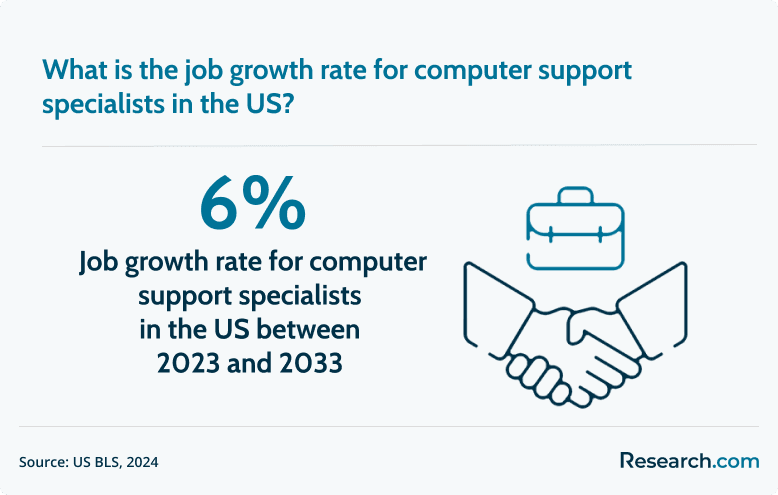
Employment for computer support specialists in the US is projected to grow by 6% from 2023 to 2033, faster than the average for all occupations (US BLS, 2024). Some candidates can enter this occupation with a high school diploma and related certifications, so an online associate degree in cybersecurity may help applicants show stronger preparation than candidates with less formal training.
Computer systems analyst employment is projected to grow by 11% during the same period (US BLS, 2024). This occupation typically requires at least a bachelor’s degree in a related field.
Advanced technology and cybersecurity roles are also projected to grow. Database administrators and architects are projected to grow by 9% from 2023 to 2033. Computer and information systems managers are projected to grow by 17%, and information security analysts are projected to grow by 33% during the same period (US BLS, 2024). These roles can also be compared with the highest paying computer science jobs, but students should remember that high median wages usually reflect advanced skills, experience, and responsibility.
| Occupation | Projected employment growth, 2023 to 2033 | What this means for associate degree students |
| Computer support specialists | 6% | A common entry route for building IT experience before moving deeper into cybersecurity. |
| Computer systems analysts | 11% | Often requires further education, but associate-level technical training can be a foundation. |
| Database administrators and architects | 9% | May require additional database and systems training. |
| Computer and information systems managers | 17% | A longer-term leadership pathway after experience and additional education. |
| Information security analysts | 33% | A high-growth cybersecurity role, but competition may favor candidates with experience, certifications, and higher credentials. |
Common Mistakes to Avoid When Choosing an Online Cybersecurity Associate Degree
- Choosing a school without checking accreditation: Always verify accreditation before applying. It can affect financial aid, transfer credits, and employer acceptance.
- Focusing only on tuition: Compare total program cost, including fees, books, software, certification exams, and equipment.
- Assuming all online programs are fully online: Some programs require campus labs, in-person testing, or hybrid courses.
- Ignoring hands-on learning: Cybersecurity requires practice. Look for virtual labs, projects, simulations, and real tool exposure.
- Skipping transfer planning: If you may pursue a bachelor’s degree, ask for written information about transfer agreements and accepted credits.
- Expecting the degree alone to guarantee a cybersecurity job: Employers may also look for certifications, internships, projects, soft skills, and prior IT experience.
- Waiting until graduation to network: Start building contacts, applying for internships, and documenting projects during the first year.
Key Insights
- An affordable online associate degree in cybersecurity is a practical first credential for students who want structured, lower-cost technical training and an entry point into IT or cybersecurity.
- Most programs take about 2 years full time and require 60 to 70 credit hours, though part-time and accelerated formats can change the timeline.
- The best programs combine accreditation, hands-on labs, current security coursework, career support, and transfer-friendly credits.
- Entry-level graduates commonly begin in support, technician, network, or junior security roles. Higher-paying analyst, architect, and management roles usually require more experience, certifications, or additional degrees.
- Do not judge affordability by tuition alone. Include fees, books, software, equipment, certification exams, and transfer value in your cost comparison.
- Cybersecurity is a skills-based field. A degree is more valuable when paired with labs, internships, projects, certifications, and professional networking.
- Before enrolling, ask whether the program is fully online, what tools you will use, how labs work, whether credits transfer, and what support is available to online students.
References:
- National Center for Education Statistics. (2023, November). Table 325.35. Degrees in computer and information sciences conferred by postsecondary institutions, by level of degree and sex of student: Academic years 1964-65 through 2021-22. Digest of Education Statistics. https://nces.ed.gov/programs/digest/d23/tables/dt23_325.35.asp
- Petrosyan, A. (2024, November 09). Annual number of cyber attacks resulting in data compromises in the United States from 2020 to 2023, by type. Statista. https://www.statista.com/statistics/1367217/us-annual-number-of-cyber-attacks-leading-data-compromises-by-type
- US Bureau of Labor Statistics. (2024, December 17). Computer and Information Systems Managers. Occupational Outlook Handbook. https://www.bls.gov/ooh/management/computer-and-information-systems-managers.htm
- US Bureau of Labor Statistics. (2024, August 29). Computer Support Specialists. Occupational Outlook Handbook. https://www.bls.gov/ooh/computer-and-information-technology/computer-support-specialists.htm
- US Bureau of Labor Statistics. (2024, August 29). Computer Systems Analysts. Occupational Outlook Handbook. https://www.bls.gov/ooh/computer-and-information-technology/computer-systems-analysts.htm
- US Bureau of Labor Statistics. (2024, August 29). Database Administrators and Architects. Occupational Outlook Handbook. https://www.bls.gov/ooh/computer-and-information-technology/database-administrators.htm
- US Bureau of Labor Statistics. (2024, August 29). Information Security Analysts. Occupational Outlook Handbook. https://www.bls.gov/ooh/computer-and-information-technology/information-security-analysts.htm
Other Things You Should Know About Affordable Online Associate Degrees in Cybersecurity
Most affordable online associate degree programs in cybersecurity for 2027 require a high school diploma or equivalent. Some programs may also require basic math or computer science proficiency. It's important to check specific program requirements to ensure eligibility before applying.
To identify affordable programs, students should compare tuition rates, financial aid opportunities, and potential scholarships. It's also crucial to evaluate the total cost, including technology fees and textbook expenses. Additionally, consider programs with strong cybersecurity partnerships offering internships or job placement services, as these can enhance value.
Yes. Many programs align coursework with CompTIA Security+ topics such as risk management, network security, cryptography, and incident response. Students usually need about 60 credit hours, and some schools require passing a final exam or capstone before graduation.