2027 MSN vs. RN: Preparing for a Career in Nursing

Co-Founder and Chief Data Scientist
Choosing between becoming an RN and earning an MSN is not really a choice between two equal credentials. An RN is a nursing license that allows you to practice as a registered nurse, while an MSN is a graduate degree that licensed nurses often use to move into advanced clinical, leadership, education, or administrative roles. Understanding that distinction matters because the decision affects your time in school, tuition costs, scope of practice, licensure requirements, salary potential, and long-term career options.
This guide is for prospective nursing students, current LPNs or RNs, career changers, and nurses deciding whether graduate school is worth the investment. You will learn how RN and MSN pathways compare, how long each route can take, what programs may cost, what licensing steps are required, which careers each credential can support, and how to evaluate whether an MSN is the right next move for your nursing career.
Quick answer: RN vs. MSN
An RN is a licensed registered nurse who has completed an approved nursing program and passed the NCLEX-RN. An MSN is a Master of Science in Nursing, a graduate degree that usually builds on RN licensure and prepares nurses for advanced roles such as nurse practitioner, clinical nurse specialist, nurse educator, or healthcare administrator. In practical terms, the RN is the entry point for professional nursing practice; the MSN is an advancement credential for nurses who want greater specialization, leadership responsibility, or advanced practice authority.
| Comparison point | RN | MSN |
| What it is | A professional nursing license | A graduate nursing degree |
| Common education route | ADN or BSN followed by NCLEX-RN | Graduate study after nursing preparation, often after a BSN |
| Main career focus | Direct patient care and care coordination | Advanced practice, leadership, education, policy, or administration |
| Typical next step | Gain clinical experience, specialize, or complete a BSN | Earn specialty certification, pursue APRN licensure, or move into leadership |
| Best for | Students who want to enter nursing practice as efficiently as possible | Licensed nurses who want advanced responsibility or a specialized role |
What are the benefits of getting a degree in nursing?
- A nursing degree can lead to several professional pathways, including Registered Nurse, Nurse Practitioner, Clinical Nurse Specialist, nurse educator, and healthcare leadership roles.
- RNs have a median annual salary of approximately $77,600, while Nurse Practitioners earn around $117,000 annually.
- Online nursing programs may make school more manageable for working adults because some coursework can be completed asynchronously; however, students should still confirm clinical placement requirements, accreditation, and state authorization before enrolling.
- What is the difference between an RN and an MSN degree?
- How long does it take to get an RN and an MSN degree?
- What is the cost of an RN and an MSN program?
- What are the prerequisites for an MSN program?
- What are the licensing requirements for RNs and MSNs?
- What are the day-to-day responsibilities of an RN and an MSN?
- Can an RN become a nurse practitioner?
- How can I finance my nursing education?
- Which nursing specialties are the least stressful?
- What are the different career paths for RNs and MSNs?
- How much do RNs and MSNs earn?
- What are the key benefits of online direct-entry NP programs for non-nurses?
- How do I choose the right advanced nursing program?
- Which online FNP programs offer both affordability and quality?
- Can I enroll in an RN to BSN program without clinical requirements?
- What are the job outlook and salary for RNs and MSNs?
- Can LPN to RN bridge programs expand career opportunities effectively?
- How can I verify the accreditation and quality of online MSN programs?
- Are admission requirements a key factor in nursing career success?
- Is an online DNP program a viable option for career advancement?
- What factors contribute to variations in advanced nursing salaries?
- Is an accelerated BSN program the optimal pathway for career advancement?
What is the difference between an RN and an MSN degree?
The core difference is that RN refers to licensure, while MSN refers to graduate education. A registered nurse is legally licensed to provide nursing care after completing an approved program and passing the NCLEX-RN. Many RNs enter the field through an Associate Degree in Nursing or a Bachelor of Science in Nursing. Some students also start with practical nursing and later bridge upward; for example, those comparing entry routes may review fast-track LPN programs online before deciding whether to continue toward RN licensure.
An MSN is a Master of Science in Nursing. It is not the same thing as becoming an RN, and it does not automatically replace state licensure. Instead, it gives nurses graduate-level preparation in an advanced area such as family practice, psychiatric-mental health, women’s health, nursing education, informatics, healthcare administration, or clinical leadership. Some MSN graduates use the degree to qualify for advanced practice registered nurse roles, while others use it to teach, manage teams, improve care systems, or move into policy and administration.
The distinction matters because each option serves a different career stage. If your goal is to begin practicing as a nurse, you need an approved RN pathway and licensure. If you are already a nurse and want more authority, a higher-level specialty, or a leadership role, an MSN may be the more relevant credential.
| Question to ask | If your answer points to RN | If your answer points to MSN |
| Do I need to enter nursing practice? | Yes, I need initial RN licensure. | No, I am planning beyond entry-level practice. |
| Do I already have nursing experience? | Not yet, or only limited healthcare experience. | Yes, or I am preparing for graduate-level nursing practice. |
| Do I want direct bedside care? | Yes, patient care is my immediate goal. | Possibly, but with advanced assessment, diagnosis, leadership, or education duties. |
| Am I comparing nursing to nondegree career training? | I may need to understand alternatives such as what trade school is. | I am already committed to graduate-level nursing or advanced healthcare work. |
How long does it take to get an RN and an MSN degree?
The timeline depends on your starting point. An ADN pathway usually takes about two years, while a BSN generally requires four years of study. Accelerated options may allow students who already hold a degree to complete RN preparation in about 18 months to two years. Students focused on shorter academic routes sometimes compare nursing prerequisites with flexible options such as 1 year associate degree programs online, although nursing programs also require approved clinical preparation and licensure eligibility.
An MSN normally adds another two to three years after the BSN. The exact length depends on the specialty, whether the student enrolls full time or part time, clinical hour requirements, and whether the program is built for BSN-prepared nurses, ADN-prepared RNs, or non-nurses entering through a direct-entry pathway. Many MSN programs also prefer or require clinical RN experience before admission, especially for advanced practice tracks.
| Pathway | Typical time described | Best fit |
| ADN to RN | About two years | Students seeking a faster route to RN licensure |
| BSN to RN | Generally four years | Students who want broader undergraduate nursing preparation |
| Accelerated RN pathway | Often around 18 months to two years | Students with prior degrees who can handle an intensive schedule |
| BSN to MSN | An additional two to three years | Licensed nurses preparing for advanced practice, education, or leadership |
If you are drawn to healthcare but not certain that nursing is the right fit, compare clinical nursing with adjacent fields before committing. For example, students interested in behavioral health can review affordable online substance abuse counseling programs to understand another patient-support career path.
What is the cost of an RN and an MSN program?
Nursing education costs vary widely by degree level, school type, delivery format, residency status, fees, supplies, and clinical requirements. The total cost for an ADN program typically ranges from $23,900 to $66,320 for a two-year program, with an average yearly cost of around $12,300. A BSN program can cost between $89,556 and $211,392, with an average of about $30,884 per year.
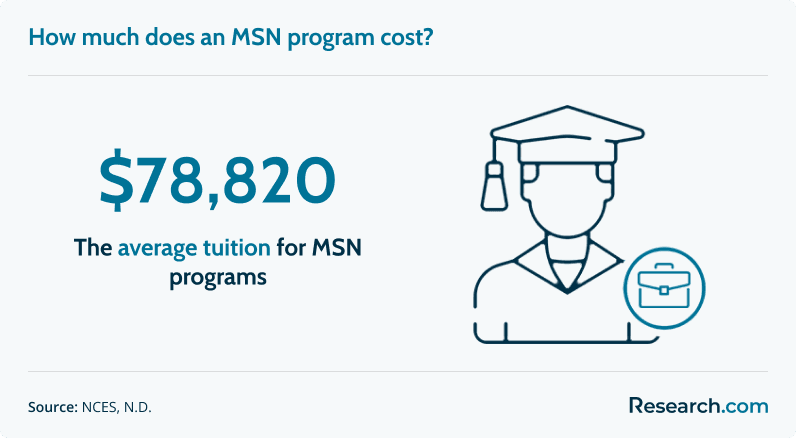
MSN programs also require a substantial investment. The total cost for MSN programs ranges from $28,060 to $78,820, with an average yearly cost of approximately $33,150. When comparing RN and MSN costs, remember that the MSN usually comes after prior nursing education, so the full career investment may include undergraduate tuition, licensure fees, certification exams, clinical supplies, technology fees, background checks, and lost income if you reduce work hours.
| Program type | Cost range stated | Planning note |
| ADN | $23,900 to $66,320 for a two-year program | Often the lower-cost route to initial RN eligibility, but BSN completion may be useful later. |
| BSN | $89,556 to $211,392 | May create a stronger foundation for graduate study and some employer preferences. |
| MSN | $28,060 to $78,820 | Best evaluated against the specific advanced role you want, not just the degree title. |
Cost should not be judged by tuition alone. Ask whether clinical placement assistance is included, whether online students pay additional fees, whether transfer credits are accepted, and whether the program prepares you for the license or certification required in your state.
If you are comparing healthcare and helping-profession degrees, alternatives may have different cost structures and career outcomes. A human services degree online can prepare students for social service and community support roles, while students interested in movement science may want to ask whether kinesiology is an easy degree before choosing a science-heavy program.
What are the prerequisites for an MSN program?
MSN admissions requirements vary by school and specialization, but most programs expect applicants to show that they can handle graduate-level nursing coursework and clinical expectations. Students preparing for graduate nursing study should review the school’s official admissions page and may also benefit from general guidance on how to prepare for nursing school.
- Educational background: Many MSN programs expect a bachelor’s degree from an accredited institution. A BSN is commonly preferred or required, though some direct-entry MSN programs accept applicants with non-nursing bachelor’s degrees.
- Minimum GPA: Most MSN programs require a minimum cumulative GPA of 3.0 in undergraduate study.
- Prerequisite coursework: Programs may require courses such as Human Anatomy and Physiology, Microbiology, Nutrition for Health Sciences, Psychology or Sociology, and Statistics. These courses often must be completed with a grade of "C" or higher.
- RN license: Traditional MSN tracks usually require an active RN license. Direct-entry options for non-nurses follow a different structure and should be checked carefully for state eligibility.
- Healthcare or nursing experience: Some programs require or prefer relevant work or volunteer experience, particularly for advanced clinical specialties.
- Entrance exams: The GRE is not universally required. Some programs do not require it, while others may allow scores if they strengthen an application.
- Application materials: Schools commonly request transcripts, letters of recommendation, a personal statement, and sometimes a resume or interview.
What are the licensing requirements for RNs and MSNs?
Licensure is one of the most important differences between RN and MSN planning. RN licensure is required to practice as a registered nurse. An MSN, by itself, is an academic degree; the graduate may still need RN licensure, specialty certification, APRN recognition, and state approval depending on the role.
RN licensing requirements
- Complete an approved nursing program: Candidates must graduate from an accredited or state-approved ADN or BSN program. Working RNs who want to strengthen their academic credentials may later compare affordable online RN to BSN programs.
- Pass the NCLEX-RN: Graduates must pass the National Council Licensure Examination for Registered Nurses to demonstrate entry-level nursing competence.
- Apply through the state board of nursing: Applicants generally submit proof of education, exam results, background information, and any state-specific documentation.
MSN-related licensing and certification requirements
- Maintain RN licensure: Most MSN graduates pursuing advanced roles must already hold an active RN license.
- Complete the required graduate specialty: A nurse practitioner, clinical nurse specialist, nurse midwife, nurse anesthetist, nurse educator, or administrative track may have different requirements.
- Pass specialty certification when required: Advanced practice roles often require a certification exam through a recognized professional organization.
- Meet state scope-of-practice rules: State regulations determine whether an advanced practice nurse needs separate APRN licensure, prescriptive authority, physician collaboration, or additional documentation.
Before enrolling, contact the state board of nursing where you plan to work. This is especially important for online programs, direct-entry programs, and advanced practice tracks, because a program that is academically reputable may still not meet every state’s licensure or clinical placement rules.
What are the day-to-day responsibilities of an RN and an MSN?
The daily work of RNs and MSN-prepared nurses can overlap, but the level of responsibility is often different. RNs typically provide direct care, monitor patients, administer treatments, document changes, educate families, and coordinate with the healthcare team. A helpful overview of responsibilities of Registered Nurses can give prospective students a clearer view of clinical expectations.
Common RN responsibilities
- Assessing patients: RNs check symptoms, monitor vital signs, collect health histories, and identify changes that may require provider attention.
- Administering medications and treatments: They follow care orders, deliver medications safely, watch for reactions, and document patient responses.
- Educating patients and families: RNs explain conditions, discharge instructions, medication schedules, preventive care, and warning signs.
- Coordinating care: They work with physicians, advanced practice providers, therapists, social workers, and other professionals to support a patient’s care plan.
- Documenting care: Accurate charting is essential for patient safety, compliance, communication, and continuity of care.
Common MSN-prepared nurse responsibilities
- Advanced clinical decision-making: MSN-prepared nurses in advanced practice roles may assess, diagnose, treat, and manage patients within state scope-of-practice rules.
- Specialized care management: They may focus on family health, acute care, psychiatric-mental health, women’s health, pediatrics, or another specialty area.
- Leadership and quality improvement: MSN graduates may lead teams, design care protocols, evaluate outcomes, or manage clinical programs.
- Teaching and mentoring: Nurse educators and clinical leaders may train nursing students, new nurses, or healthcare staff.
- Evidence-based practice: Graduate nursing education often emphasizes research use, quality improvement, and applying evidence to patient care systems.
| Work area | RN focus | MSN-prepared nurse focus |
| Patient care | Direct assessment, monitoring, treatment support, and education | Advanced assessment, diagnosis, treatment planning, or specialty care when authorized |
| Leadership | Charge nurse or unit-based coordination may be possible with experience | Broader leadership, administration, quality improvement, or program management |
| Education | Patient and family teaching; precepting may occur | Formal nurse education, curriculum work, clinical instruction, or staff development |
| Autonomy | Works within RN scope and provider orders | May practice with expanded authority depending on role and state rules |
Can an RN become a nurse practitioner?
Yes. An RN can become a nurse practitioner, but the transition requires graduate education, clinical preparation, certification, and state authorization. Most aspiring nurse practitioners complete a BSN or bridge into an eligible graduate pathway, gain RN experience, and then enroll in an MSN or DNP program with a nurse practitioner specialty.
Clinical experience can be valuable before applying because it helps nurses understand patient populations, specialty interests, and the realities of advanced practice. Many NP programs recommend or prefer experience, and some expect at least two years. After completing graduate education, the nurse typically must pass a specialty certification exam and satisfy the state’s advanced practice requirements.
How can I finance my nursing education?
Nursing school financing should start with the full cost of attendance, not just tuition. Include fees, uniforms, books, technology, transportation, exam costs, background checks, immunizations, and the possibility of reducing work hours during clinical rotations. Students can compare federal student loans, private loans, scholarships, grants, payment plans, military or public service benefits, and employer tuition reimbursement.
Before borrowing, estimate what the credential can realistically do for your career. ADN, BSN, MSN, and DNP pathways can all make sense, but the right investment depends on your current education, target role, local hiring market, and willingness to complete additional licensure or certification. For a deeper cost breakdown, review how much nursing school costs.
Which nursing specialties are the least stressful?
Stress in nursing depends on setting, staffing, schedule, patient acuity, leadership, and personal fit. Some nurses prefer fast-paced acute care; others are better suited to settings with more predictable routines, daytime hours, or lower emergency intensity. When evaluating specialties, ask whether you can tolerate rotating shifts, high-stakes decisions, emotional exposure, and heavy documentation.
Students and working nurses who want a more sustainable path can compare roles by schedule, patient load, autonomy, and emotional demands. For a broader look at options, see this guide to less stressful nursing specialties and nursing career paths.
What are the different career paths for RNs and MSNs?
RN and MSN credentials can lead to very different career ladders. RNs often build expertise through clinical experience, specialty units, certifications, leadership assignments, and BSN completion. MSN graduates usually target roles that require graduate preparation or benefit from advanced clinical, educational, or administrative training. Students comparing healthcare leadership with public-sector leadership may also explore an online master’s in public policy to understand nonclinical graduate alternatives.
Career paths for Registered Nurses
- Staff nurse: Provides direct care in hospitals, clinics, long-term care, rehabilitation, home health, or outpatient settings.
- Specialty nurse: Focuses on areas such as pediatrics, oncology, critical care, perioperative nursing, emergency care, or maternal-child health.
- Public health nurse: Works with communities, schools, public agencies, or outreach programs to support prevention and population health.
- Charge nurse or clinical coordinator: Helps manage shifts, patient assignments, workflow, and communication among care teams.
- RN to BSN student or graduate: Builds on RN licensure to qualify for broader roles or graduate school admission.
Career paths for MSN graduates
- Nurse Practitioner: Provides primary or specialty care, including assessment, diagnosis, treatment, and ongoing management within state rules. The demand for NPs is projected to grow by 46% from 2021 to 2031.
- Clinical Nurse Specialist: Improves care quality and outcomes in a defined specialty, patient population, or healthcare setting.
- Nurse Educator: Teaches nursing students, develops curriculum, mentors clinical learners, or trains healthcare staff.
- Nurse Administrator or leader: Oversees operations, staffing, budgets, quality initiatives, or clinical departments.
- Nurse Anesthetist: Administers anesthesia and monitors patients during surgical procedures. This role will transition to requiring a Doctor of Nursing Practice by 2025.
| If your goal is... | Credential path to consider | Why it may fit |
| Enter nursing quickly | ADN to RN | Focuses on eligibility for RN licensure and direct care roles. |
| Build a broader undergraduate foundation | BSN to RN | May support advancement, graduate school, and employer preferences. |
| Move from RN to provider-level practice | BSN to MSN or DNP nurse practitioner track | Prepares for advanced assessment, diagnosis, and treatment responsibilities. |
| Teach or lead nursing teams | MSN in education, leadership, or administration | Supports roles beyond bedside care. |
How much do RNs and MSNs earn?
RN and MSN earnings vary by role, location, experience, specialty, shift, employer type, and credential level. As of May 2023, the median annual wage for RNs was approximately $86,070, with the national average salary reported at around $81,220 in 2022. State differences can be significant, with top-paying states including California at $133,340, Hawaii at $113,220, and Oregon at $106,610.
MSN graduates often pursue advanced practice roles with higher earning potential. Nurse Practitioners earn an average salary of about $126,260, while CRNAs can earn around $212,650. Nurses comparing MSN and doctoral-level outcomes may also want to review how much DNP-prepared nurses make by state.
| Role or group | Salary figure stated | Important context |
| Registered Nurses | Median annual wage of approximately $86,070 as of May 2023 | Pay varies by state, specialty, shift, experience, and employer. |
| Registered Nurses | National average salary of around $81,220 in 2022 | Use salary data as a planning benchmark, not a guarantee. |
| Nurse Practitioners | Average salary of about $126,260 | Requires graduate preparation and role-specific certification or authorization. |
| CRNAs | Around $212,650 | Among the highest-paid nursing roles and subject to advanced education requirements. |
What are the key benefits of online direct-entry NP programs for non-nurses?
Online direct-entry NP pathways are designed for students who do not already hold nursing credentials but want a structured route into advanced nursing education. These programs may combine foundational nursing preparation with graduate-level clinical study, allowing career changers to move toward advanced practice without first completing a traditional separate nursing degree sequence.
The main advantages are structure and flexibility, but the risks are also important. Students must confirm accreditation, clinical placement support, state authorization, licensure eligibility, and whether the program’s pace is realistic. If you are comparing options, review online direct-entry NP programs and verify each program directly with the school and your state board of nursing.
How do I choose the right advanced nursing program?
The right advanced nursing program is the one that fits your target role, state requirements, budget, schedule, and learning needs. Do not choose only by speed or name recognition. A shorter program is not helpful if it lacks clinical support, does not align with certification requirements, or leaves you ineligible for licensure where you plan to work.
- Confirm accreditation: Look for recognized nursing program accreditation and institutional accreditation.
- Match the specialty to your goal: Family practice, psychiatric-mental health, acute care, education, leadership, and women’s health tracks prepare students for different roles.
- Ask about clinical placements: Find out whether the school places students or requires students to secure sites independently.
- Compare total cost: Include fees, travel, technology, exam preparation, and lost work time.
- Review certification and licensure outcomes: Ask how graduates perform on required exams and where they are authorized to practice.
- Evaluate support services: Advising, tutoring, faculty access, simulation resources, and career support can affect completion.
Nurses seeking a family practice route can compare flexible options through this guide to the best FNP programs online.
Which online FNP programs offer both affordability and quality?
An affordable online Family Nurse Practitioner program should still meet the standards that matter: accreditation, strong clinical training, transparent costs, faculty access, state authorization, and preparation for certification. A low tuition rate is not enough if clinical placements are difficult to secure or if the program does not support your state licensing goals.
When comparing programs, ask for the full cost of attendance, clinical placement policy, expected weekly workload, certification preparation resources, and whether graduates from your state have successfully completed licensure steps. For a cost-focused comparison, review the cheapest FNP programs.
Can I Enroll in an RN to BSN Program Without Clinical Requirements?
Some RN to BSN programs are designed for licensed, working RNs and may emphasize leadership, community health, evidence-based practice, and professional development rather than traditional bedside clinical rotations. That format can be useful for experienced nurses who already practice clinically and need a flexible completion pathway.
Before enrolling, confirm whether the program truly has no traditional clinicals, whether it uses projects or practicum-style experiences instead, and whether your employer or future graduate program will accept the degree. For examples, see RN to BSN programs with no clinicals.
What are the job outlook and salary for RNs and MSNs?
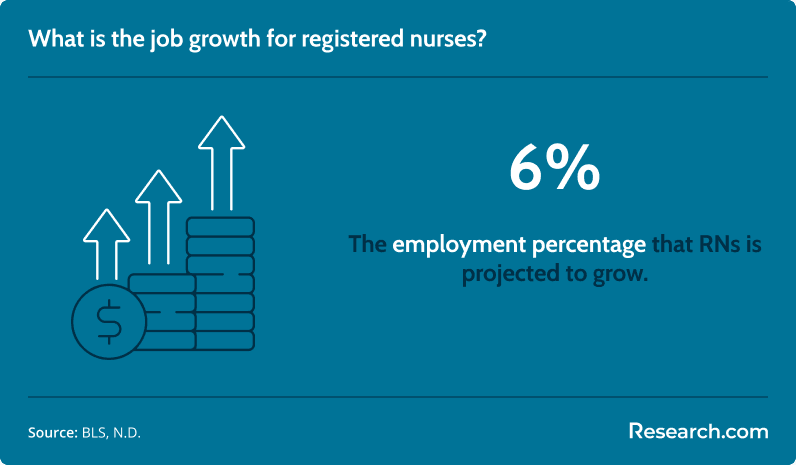
The employment outlook for RNs and many MSN-related roles remains favorable in the data provided. According to the U.S. Bureau of Labor Statistics, employment of RNs is projected to grow by 6% from 2021 to 2031, resulting in over 222,000 new RN positions being added to the workforce.
MSN-prepared nurses who become Nurse Practitioners are associated with stronger projected growth in the cited data. Nurse Practitioners are expected to see a projected increase of 40% from 2021 to 2031. This reflects the importance of advanced practice nurses in primary care, specialty care, chronic disease management, and healthcare access.
Students interested in counseling or behavioral health should not assume nursing is the only route into patient-facing work. A drug and alcohol counselor degree may be more appropriate for those whose primary interest is addiction counseling rather than nursing practice.
Can LPN to RN bridge programs expand career opportunities effectively?
Yes, LPN to RN bridge programs can expand career opportunities by helping practical nurses qualify for RN licensure and broader clinical responsibilities. These programs are often designed to build on existing practical nursing experience while adding the academic and clinical preparation needed for RN-level practice.
When comparing bridge programs, focus on accreditation, NCLEX-RN preparation, clinical scheduling, transfer credit policies, cost, and state approval. Affordability matters, but licensure eligibility matters more. To compare cost-conscious options, review the most affordable LPN to RN bridge programs.
How can I verify the accreditation and quality of online MSN programs?
Start by checking whether the institution is accredited and whether the nursing program holds recognized programmatic accreditation, such as accreditation from the Commission on Collegiate Nursing Education or the Accreditation Commission for Education in Nursing. Then confirm that the program is approved or accepted for your intended license, certification, and state of practice.
Quality checks should go beyond accreditation. Ask about clinical placement partnerships, faculty credentials, student support, graduation outcomes, certification exam preparation, and whether the program has experience supporting students in your state. Students comparing specialty tracks can also review examples such as fast online MSN women’s health nurse practitioner programs, then verify all claims with the school directly.
Are admission requirements a key factor in nursing career success?
Admission requirements matter because they shape who enters the program and how prepared students are for the academic and clinical workload. A program with flexible admissions can be helpful for students with nontraditional backgrounds, but easy admission does not guarantee an easy program, strong clinical support, or good career outcomes.
Use admissions criteria as one factor in a larger decision. Compare prerequisite requirements, GPA standards, entrance exams, transfer credit rules, support services, clinical placement expectations, and licensure alignment. Students looking for accessible options can explore nursing schools with high acceptance rates, but should still evaluate quality and outcomes carefully.
Common mistakes to avoid when comparing RN and MSN pathways
| Mistake | Why it can hurt you | Better approach |
| Assuming RN and MSN are the same type of credential | RN is licensure; MSN is graduate education. Confusing them can lead to the wrong program choice. | Decide first whether you need initial licensure or advanced nursing preparation. |
| Choosing the cheapest program without checking approval | A low-cost program may not meet licensure, certification, or employer expectations. | Verify institutional accreditation, nursing accreditation, state approval, and clinical requirements. |
| Ignoring clinical placement policies | Some students struggle if they must find their own clinical sites. | Ask whether the school arranges placements and whether sites are available near you. |
| Assuming online means fully remote | Nursing programs often require labs, simulations, intensives, or in-person clinical hours. | Request a written breakdown of all campus visits, clinical hours, and travel requirements. |
| Comparing salaries without considering role requirements | Higher-paying nursing roles may require graduate education, certification, experience, and state authorization. | Map the full pathway from your current credential to the specific job you want. |
| Relying only on rankings | A highly ranked program may not fit your budget, schedule, location, or state licensing needs. | Use rankings as one input, then verify fit, cost, outcomes, and licensure alignment. |
Questions to ask before choosing an RN or MSN program
- Is the program approved for the nursing license or certification I plan to pursue?
- Does the school have recognized institutional and nursing accreditation?
- What is the full cost of attendance, including fees, supplies, travel, and exams?
- How many clinical hours are required, and who is responsible for finding clinical sites?
- Can I complete the program while working, or will I need to reduce my hours?
- What support is available for online students, working nurses, or career changers?
- Does the program meet requirements in the state where I plan to practice?
- What are the graduation, licensure, and certification outcomes?
- Will transfer credits, prior learning, or existing nursing experience reduce my time or cost?
- Does the credential align with the specific role I want within the next few years?
Here’s what graduates have to say about their nursing degrees
“Nursing school challenged me academically and personally. The coursework and clinical rotations required constant adjustment, but they also helped me become a stronger problem-solver and a more thoughtful caregiver.” - Alex
“Working toward a nursing career has been deeply meaningful. Direct patient care gives me the chance to help people during difficult moments, and my training prepared me to respond with skill and confidence.” - Mia
“The support system I found in nursing school made a major difference. My classmates, instructors, and mentors helped me through demanding clinical days and long study sessions, and those relationships continue to matter.” - Riley
Is an online DNP program a viable option for career advancement?
An online Doctor of Nursing Practice program can be a viable advancement option for nurses who want the highest level of practice-focused nursing education, leadership preparation, or expanded advanced practice expertise. It may be especially relevant for nurses whose target role, employer, or specialty increasingly expects doctoral preparation.
As with MSN programs, the key is fit. Check accreditation, clinical requirements, faculty support, state authorization, and whether the curriculum aligns with your professional goal. If you are comparing doctoral pathways, review this list of online DNP programs.
What factors contribute to variations in advanced nursing salaries?
Advanced nursing salaries differ because roles, locations, specialties, employers, experience levels, and scopes of practice differ. A nurse practitioner in a high-demand specialty or region may see different compensation from a nurse educator, administrator, or clinical specialist. Leadership responsibility, call schedules, shift differentials, certification, and practice setting can also influence pay.
Specialty choice can be especially important. For example, psychiatric-mental health practice has its own patient needs, market dynamics, and compensation patterns. Nurses considering that track can review psychiatric nurse practitioner salary information to compare state-level variation.
Is an accelerated BSN program the optimal pathway for career advancement?
An accelerated BSN can be a strong pathway for people who already hold a non-nursing degree and want to move into RN practice without completing a traditional four-year undergraduate sequence from the beginning. It may also help career changers qualify for RN licensure and later apply to graduate nursing programs.
However, accelerated does not mean easy. These programs can be intensive, and students should evaluate admissions requirements, clinical schedules, accreditation, NCLEX-RN preparation, and total cost. To compare options, review this guide to the best accelerated BSN degree online.
Key Insights
- RN and MSN are not interchangeable. RN is the license needed for registered nursing practice; MSN is a graduate degree used for advanced clinical, education, leadership, or administrative roles.
- The fastest route to RN practice is often an ADN pathway, which usually takes about two years, while a BSN generally takes four years and an MSN commonly adds two to three more years after the BSN.
- Cost varies significantly: ADN programs typically range from $23,900 to $66,320, BSN programs from $89,556 to $211,392, and MSN programs from $28,060 to $78,820.
- Most MSN programs require a minimum cumulative GPA of 3.0, and many require or prefer a BSN, RN licensure, prerequisite science courses, and clinical experience.
- Licensure should drive program choice. Always confirm state board requirements, accreditation, clinical placement rules, and certification eligibility before enrolling.
- Salary potential is generally higher for advanced practice roles, but higher pay usually requires additional education, certification, and responsibility. The median annual wage for RNs was approximately $86,070, while NPs earn an average salary of about $126,260 and CRNAs can earn around $212,650.
- The employment of RNs is projected to grow by 6% from 2021 to 2031, while Nurse Practitioners are expected to see a projected increase of 40% from 2021 to 2031.
- The best pathway depends on your current credential, budget, target role, state requirements, and tolerance for clinical intensity—not simply whether a program is online, fast, or inexpensive.
References:
- Incredible Health. (2024). STATE OF US NURSING REPORT 2024. https://www.incrediblehealth.com/wp-content/uploads/2024/03/2024-Incredible-Health-State-of-US-Nursing-Report.pdf
- Indeed.com (2023). How Long Is Nursing School? (7 Levels of Education). https://www.indeed.com/career-advice/career-development/how-long-is-nursing-school
- Jotwani, R. (2023). How Much Does Nursing School Cost? https://www.inspiraadvantage.com/blog/how-much-does-nursing-school-cost
- US Bureau of Labor Statistics. (2024). May 2023 National Occupational Employment and Wage Estimates, United States. Occupational Employment and Wage Statistics. https://www.bls.gov/oes/current/oes_nat.htm
- US Bureau of Labor Statistics. (2024). Nursing Assistants and Orderlies. Occupational Outlook Handbook. https://www.bls.gov/ooh/healthcare/nursing-assistants.htm
- US Bureau of Labor Statistics. (2024). Registered Nurses. Occupational Outlook Handbook. https://www.bls.gov/OOH/healthcare/registered-nurses.htm
Other Things You Should Know About MSN vs. RN Degrees
In 2027, consider career goals, time, and financial investment. An RN requires less education and offers quicker entry into patient care. An MSN expands roles to leadership, education, or advanced practice, but requires more time and financial commitment. Evaluate long-term objectives and potential salary differences.
RN candidates must pass the NCLEX-RN after completing an approved nursing program. The exam is used by state boards of nursing and the National Council of State Boards of Nursing to determine entry-level licensure for registered nurses in the United States.