
2027 Best Online MSN to FNP Programs

Co-Founder and Chief Data Scientist
Registered nurses considering a family nurse practitioner role are making a high-stakes decision: whether the added time, clinical hours, tuition, and certification requirements will lead to the scope of practice and career flexibility they want. The decision matters because the U.S. is projected to have a shortage of 87,150 full-time equivalent (FTE) primary care physicians by 2037 (National Center for Health Workforce Analysis, 2024a), and advanced practice nurses are increasingly part of the solution in clinics, hospitals, community health centers, and virtual care settings.
An online MSN to FNP pathway is usually designed for licensed RNs who already have graduate nursing preparation and want to qualify for family nurse practitioner certification. This guide explains what these programs include, how online study compares with campus-based formats, what they cost, which programs stand out, how clinical placements work, and what career outcomes nurses can realistically expect after earning the FNP credential.
Quick Answer: Is an Online MSN to FNP Program Worth It?
An online MSN to FNP program can be worth it for MSN-prepared registered nurses who want to move into primary care, expand their clinical authority, and qualify for family nurse practitioner certification while continuing to work. The best fit is usually a nurse who already has strong RN experience, can manage graduate-level coursework independently, and has a realistic plan for completing required in-person clinical hours.
- Online formats can make advanced practice education more manageable for working nurses because lectures, assignments, and discussions are often built around flexible schedules.
- FNP preparation can lead to broader clinical responsibility, including assessment, diagnosis, treatment planning, health education, and, depending on state law, prescribing medication.
- Salary potential is a major reason nurses consider this route. According to the Bureau of Labor Statistics, nurse practitioners earn more than $100,000 annually, although income varies by state, employer, specialty, and experience.
What Is an Online MSN to FNP Program?
An online MSN to FNP program is a graduate-level pathway that helps registered nurses become family nurse practitioners. In many schools, this option is structured as a post-master’s FNP certificate for nurses who already completed an MSN and now need the population-focused coursework and clinical practice required for FNP certification.
Although the classroom portion is delivered online, FNP training is not fully remote. Students still complete supervised clinical experiences in approved healthcare settings. These experiences are essential because family nurse practitioners must learn to evaluate patients across the lifespan, manage acute and chronic conditions, provide preventive care, and make safe clinical decisions in real practice environments.
| Program Feature | What It Usually Means for Students |
| Online coursework | Lectures, readings, assignments, case studies, and discussions are commonly completed through a learning platform. Some programs are asynchronous, while others include scheduled live sessions. |
| Clinical hours | Students must complete supervised practice, often around 600 to 750 hours, in settings such as primary care offices, family practices, outpatient clinics, and community health centers. |
| Focused curriculum | Because many students already hold an MSN, the certificate often concentrates on FNP-specific content such as advanced assessment, pharmacology, diagnostics, and management of common conditions. |
| Intensives or residencies | Some schools require short campus visits, simulation sessions, skills assessments, or virtual residencies to confirm clinical readiness. |
| Certification preparation | Programs typically prepare graduates to pursue national FNP certification through recognized certification bodies, but students should verify eligibility before enrolling. |
Where Can Family Nurse Practitioners Work?
Graduates of online MSN to FNP programs commonly work in primary care and preventive care roles. They may serve as a patient’s first point of contact, manage ongoing conditions, coordinate referrals, and educate families about wellness, medication use, screenings, and chronic disease prevention.
- Physician offices: This is the largest employment setting for nurse practitioners. The U.S. Bureau of Labor Statistics (BLS) reports that 143,210 NPs work in offices of physicians. FNPs in these practices may diagnose common illnesses, manage medications, perform exams, and provide patient education, depending on state scope-of-practice rules.
- General medical and surgical hospitals: FNPs may work in inpatient units, outpatient specialty clinics, discharge planning, transitional care, or collaborative care teams that manage acute and chronic conditions.
- Outpatient care centers: These settings often focus on routine visits, preventive screenings, immunizations, urgent but non-emergency concerns, and chronic disease follow-up.
- Offices of other health practitioners: Integrated care practices may pair FNPs with behavioral health professionals, physical therapists, or other clinicians to address physical, mental, and social needs together.
- Home health care services: FNPs in home-based care assess patients who may be older, chronically ill, disabled, or recovering from hospitalization and may educate caregivers on treatment plans.
The strongest opportunities often go to FNPs who understand local scope-of-practice laws, have experience with electronic health records and telehealth, and can manage complex patients with limited supervision.
How Much Can You Earn With an MSN to FNP Certificate?
BLS data show that a nurse practitioner with this type of advanced preparation can earn $132,000 yearly. The reported wage range for nurse practitioners runs from $97,960 in the 10th percentile to $169,950 in the 90th percentile. These numbers should be treated as benchmarks rather than guarantees because pay depends heavily on geography, employer type, specialization, schedule, and clinical experience.
Location is one of the clearest salary drivers. Nurse practitioners in California earn the highest salary nationally, at $173,190 yearly. New York, Oregon, Massachusetts, and Washington follow with salaries within the $140,000 range. Some California metropolitan areas report annual wages above $202,000.
Industry also matters. Nurse practitioners working in Residential Intellectual and Developmental Disability, Mental Health, and Substance Abuse Facilities earn the highest wages, at $163,000. In these environments, FNPs may care for patients with overlapping physical, behavioral, cognitive, and social needs.
Other high-paying settings include Scientific Research and Development Services, Psychiatric and Substance Abuse Hospitals, Other Ambulatory Health Care Services, and Outpatient Care Centers, where nurse practitioners earn between $143,000 and $155,000. FNPs in these roles may provide direct care, manage chronic illness, contribute to evidence-based projects, or support specialty services.
Experience can also influence earnings. Payscale reports that an FNP with one to four years of experience earns around $106,000, while an FNP with more than 20 years of experience earns around $115,000 or more.
| Salary Factor | Why It Changes Earnings | Examples From Current Data |
| State and metro area | Higher cost of living, stronger healthcare demand, and large health systems can raise compensation. | California reports $173,190 yearly, and some California metro areas exceed $202,000. |
| Employer setting | Specialized or high-acuity settings may pay more than routine primary care settings. | Residential Intellectual and Developmental Disability, Mental Health, and Substance Abuse Facilities report $163,000. |
| Experience | Seasoned FNPs may qualify for senior clinical, specialty, leadership, or higher-volume roles. | Payscale reports around $106,000 for one to four years of experience and around $115,000 or more after 20 years. |
- Best Online MSN to FNP Programs for 2027
- How long does an online MSN to FNP program take?
- Online vs. campus MSN to FNP programs: which format fits you?
- How much does an online MSN to FNP program cost?
- What financial aid can online FNP certificate students use?
- What are the admission requirements for an online MSN to FNP program?
- What courses are included in an online MSN to FNP curriculum?
- Can FNP students specialize?
- How do online FNP programs teach telehealth and healthcare technology?
- How should you choose an online MSN to FNP program?
- What career paths are available after an online MSN to FNP program?
- What challenges should online MSN to FNP students expect?
- How is an MSN to FNP program different from an accelerated LPN to RN pathway?
- What is the job outlook for FNP graduates?
Best Online MSN to FNP Programs for 2027
How Research.com Evaluates Schools
Selecting an online MSN to FNP program should involve more than scanning tuition rates or choosing the fastest option. Research.com reviewed programs through a transparent ranking methodology that considers data quality, academic structure, affordability, and student-relevant factors. The analysis draws from the Integrated Postsecondary Education Data System, Peterson’s database including its Distance Learning Licensed Data Set, College Scorecard, and the National Center for Education Statistics (NCES).
| Rank | School | Program Length | Credits | Published Cost | Accreditation |
| 1 | West Governors University | 1 year | 33 | $6,850 per six-month term | CCNE |
| 2 | Drexel University | 1 to 1.5 years | 38 | $1,260 per credit | CCNE |
| 3 | Ohio University | 1 year | 20 | $674 resident; $693 non-resident per credit | CCNE |
| 4 | National University | 1 year | 53–62 | $442 per credit | CCNE |
| 5 | Walden University | 1 to 1.5 years | 38 quarter credits | $775 per quarter hour | CCNE |
| 6 | University of Cincinnati Online | 1 to 1.5 years | 38 | $892 per credit | CCNE |
| 7 | University of Missouri-Kansas City | 1 year | 18 | $512.40 per credit | CCNE |
| 8 | Wilkes University | 1 to 1.7 years | 30 | $751 per credit | CCNE |
| 9 | Grand Canyon University | 16 weeks | 37 | $750 per credit | CCNE |
| 10 | University of South Carolina | 1 to 2 years | 18–32 | $572.25 resident; $1,240 non-resident per credit | CCNE |
1. West Governors University
West Governors University offers an online Post-Master’s Certificate for MSN-prepared nurses seeking FNP preparation. The program follows an evidence-based curriculum aligned with National Organization of Nurse Practitioner Faculties (NONPF) expectations and concentrates on the advanced coursework needed for family nurse practitioner certification. Students can access assessments and course materials at any time, and many plan for 15 to 20 hours of weekly study. The track emphasizes clinical competence, primary care, and compassionate care without requiring students to repeat prior MSN content.
- Program length: 1 year
- Track/concentration: Primary Care Across Lifespans
- Cost per six-month term: $6,850
- Credits required: 33
- Accreditation: Commission on Collegiate Nursing Education (CCNE)
2. Drexel University
Drexel University offers an online FNP Post-Master’s Certificate for nurses who already hold an MSN and want to provide primary care to patients from infancy through older adulthood. The curriculum covers wellness, disease prevention, acute care, and chronic disease management. Courses are mainly online, but students also complete required campus-based and virtual intensives for applied learning and clinical skill development. Drexel uses four 10-week quarters each academic year, which creates a structured pace for working nurses.
- Program length: 1 to 1.5 years
- Track/concentration: Primary Care Across Lifespans
- Cost per credit: $1,260
- Credits required: 38
- Accreditation: CCNE
3. Ohio University
Ohio University provides an online Post-Graduate FNP Certificate for MSN-educated nurses preparing for advanced primary care practice. The program includes advanced pharmacology, health assessment, and clinical decision-making, with coursework delivered in a flexible online format. Students complete 750 clinical hours in approved practice environments such as primary care clinics and community health centers. The program is designed to connect classroom knowledge with real-world patient care.
- Program length: 1 year
- Track/concentration: Primary Care Across Lifespans
- Cost per credit: $674 resident; $693 non-resident
- Credits required: 20
- Accreditation: CCNE
4. National University
National University offers an online MSN to FNP program centered on clinical reasoning, evidence-based practice, and culturally responsive primary care. Students learn to care for diverse patient populations, with emphasis on prevention, health promotion, chronic disease management, and acute conditions. The program includes at least 600 clinical hours at an approved site with an appropriate preceptor. Students also have access to free tutoring, individualized career support, and resources related to ethical and equitable healthcare delivery.
- Program length: 1 year
- Track/concentration: Primary Care Across Lifespans
- Cost per credit: $442
- Credits required: 53–62
- Accreditation: CCNE
5. Walden University
Walden University offers a Post-Master’s Certificate in FNP that prepares nurses to provide care across the lifespan. The curriculum covers health promotion, disease management, assessment, and clinical decision-making, with additional attention to women’s health through education, diagnosis, and treatment. Students participate in virtual meetings with faculty and peers to work through clinical cases and strengthen diagnostic judgment. The format is built for nurses who need flexibility while pursuing advanced practice preparation.
- Program length: 1 to 1.5 years
- Tracks/concentrations: Primary Care Across Lifespans and Women’s Health
- Cost per quarter hour: $775
- Credits required: 38 quarter credits
- Accreditation: CCNE
6. University of Cincinnati Online
The University of Cincinnati Online offers a Post-Master’s FNP Certificate for nurses preparing to deliver primary care to patients of all ages. The asynchronous format includes spring, summer, and fall start dates and does not require campus visits. Students receive assistance from a clinical site coordinator for practicum planning and can meet with faculty during virtual office hours. The curriculum emphasizes evidence-based care, advanced assessment, pharmacology, diagnostics, and patient management.
- Program length: 1 to 1.5 years
- Track/concentration: Primary Care Across Lifespans
- Cost per credit: $892
- Credits required: 38
- Accreditation: CCNE
7. University of Missouri-Kansas City
The University of Missouri-Kansas City offers an online Post-Master’s Certificate for Nurse Practitioners that prepares experienced nurses to diagnose, manage, and prescribe within primary care practice. The program uses evidence-based guidelines, clinical reasoning, and current care theories. Clinical hours take place in approved outpatient or community-based settings with faculty-approved preceptors. Most coursework is online, while occasional live sessions are scheduled on Thursdays or Fridays and announced in advance.
- Program length: 1 year
- Track/concentration: Primary Care Across Lifespans
- Cost per credit: $512.40
- Credits required: 18
- Accreditation: CCNE
8. Wilkes University
Wilkes University offers an online Post-Graduate FNP Certificate for MSN- or DNP-prepared nurses moving into family-focused primary care. The program is designed to prepare students for ANCC and AANP certification exams. Coursework and clinical training focus on preventive care, chronic condition management, and patient education across the lifespan. Built-in clinical placement support helps students identify local sites and qualified preceptors.
- Program length: 1 to 1.7 years
- Track/concentration: Primary Care Across Lifespans
- Cost per credit: $751
- Credits required: 30
- Accreditation: CCNE
9. Grand Canyon University
Grand Canyon University offers a Post-Master’s FNP Certificate Program that combines online coursework, evening classes, and two in-person campus experiences. Students develop primary care decision-making skills related to health promotion, prevention, and management of acute and chronic illness across the lifespan. The curriculum also incorporates evidence-based practice in culturally and spiritually diverse settings. Students complete 675 supervised clinical hours and participate in realistic case-based learning with peers.
- Program length: 16 weeks
- Track/concentration: Primary Care of Adults
- Cost per credit: $750
- Credits required: 37
- Accreditation: CCNE
10. University of South Carolina
The University of South Carolina offers an online Post-Master’s Certificate in FNP for nurses who need a flexible path to advanced practice. The program combines didactic coursework, clinical practice, and immersion experiences. Courses address acute and chronic health concerns, pediatric primary care, and applied clinical practice. Students build the skills needed to deliver primary care across the lifespan.
- Program length: 1 to 2 years
- Track/concentration: Primary Care Across Lifespans
- Cost per credit: $572.25 resident; $1,240 non-resident
- Credits required: 18–32
- Accreditation: CCNE
How Long Does It Take to Complete an Online MSN to FNP Program?
Most full-time online MSN to FNP certificate students can finish in about one year, but the actual timeline depends on prior graduate coursework, transfer credit, course sequencing, enrollment status, and how quickly clinical placements can be secured.
Some focused programs that include only the remaining FNP content may be completed in 16 to 18 weeks on a full-time schedule. Students who can transfer approved advanced practice courses may also shorten their path. Part-time students often need 1.5 years to 2 years, especially when balancing employment, family responsibilities, and clinical schedules.
This timeline differs from direct entry MSN programs online, which are built for students entering advanced nursing from a non-nursing background and generally last around 30 to 36 months. Those students usually need foundational nursing coursework, licensure preparation, and then advanced practice content.
The 2024 National Nursing Workforce Survey (Smiley et al., 2025) reported that 468,651 U.S. registered nurses, or 9.9%, have nurse practitioner certifications, while 4.1 million, or 86.7%, are not certified as advanced practice registered nurses (APRNs). For qualified RNs, post-master’s FNP programs can be a bridge from experienced nursing practice into advanced primary care roles.
| Student Situation | Likely Timeline | What to Check Before Enrolling |
| Full-time MSN-prepared RN | About 1 year | Course sequence, clinical hour requirements, and certification eligibility |
| Student with transferable graduate APRN coursework | Potentially shorter | Transfer credit limits and whether prior courses meet recency rules |
| Part-time working nurse | 1.5 years to 2 years | Clinical schedule flexibility and maximum time to completion |
| Non-nurse entering nursing through a direct-entry MSN | Around 30 to 36 months | RN licensure steps, foundational nursing coursework, and advanced practice progression |
Online vs. On-Campus MSN to FNP Programs: Which Format Fits You?
Online and campus-based MSN to FNP programs can prepare students for the same advanced practice goal, but the learning experience is different. The better choice depends on your schedule, learning style, location, and ability to complete clinical requirements.
| Factor | Online MSN to FNP Program | On-Campus MSN to FNP Program |
| Schedule | Often offers asynchronous coursework and more flexibility for working nurses. | Usually follows set class times, labs, and campus-based learning activities. |
| Clinical training | Completed in person at approved local or regional sites; placement support varies by school. | May use established local clinical partners near campus. |
| Faculty interaction | Occurs through virtual office hours, video meetings, online discussions, and messaging. | Includes face-to-face meetings, in-person labs, and immediate classroom interaction. |
| Access | Can reduce relocation and commuting barriers, especially for nurses far from graduate nursing schools. | May be better for students who want consistent in-person structure and campus resources. |
| Best for | Self-directed nurses who need flexibility but can stay organized and proactive. | Students who prefer live instruction, regular campus contact, and structured routines. |
Many nurses choose post masters FNP online options because they need to keep working while completing the FNP track. However, online programs still require in-person clinical practice, and students should not enroll until they understand how placements are arranged.
The American Association of Nurse Practitioners (AANP) reports that 68.7% of nurse practitioners are prepared to care for families across the lifespan, making family-focused primary care the most common preparation area. Whether the program is online or campus-based, the goal is the same: build the clinical judgment needed to care for patients of different ages and backgrounds.
This chart displays the areas of primary care for nurse practitioners.
How Much Does an Online MSN to FNP Program Cost?
Online MSN to FNP program costs vary widely because schools charge different rates, require different credit totals, and may apply separate fees for clinical coordination, technology, labs, or campus intensives. Certificate programs can cost less than full graduate degrees, particularly when students receive credit for prior MSN coursework.
Students can expect costs between $500 and $2,500 per credit hour, with total program costs ranging from $13,000 to $76,000. For comparison, College Board data show that tuition and fees at public four-year institutions average around $9,560, while private four-year institutions can charge up to $31,930 (Ma et al., 2024).
Tuition is only part of the total price. Students may also need to budget for textbooks, malpractice insurance, background checks, health documentation, uniforms, clinical travel, lab equipment, online learning fees, and certification exam preparation. Some schools charge the same online tuition for all students, while others use resident and non-resident pricing.
| Cost Item | Why It Matters | Question to Ask the School |
| Tuition per credit or term | This is usually the largest cost and may differ by residency status. | Is tuition charged per credit, per term, or through a flat-rate model? |
| Clinical placement fees | Some programs charge for placement coordination or site compliance processing. | Are clinical coordination costs included in tuition? |
| Campus intensives | Travel, lodging, meals, and time away from work can raise the real cost. | How many in-person visits are required? |
| Technology and platform fees | Online programs may add recurring fees for learning platforms or remote services. | What mandatory fees are charged each term? |
| Certification preparation | Students may buy review materials or exam resources before certification testing. | Does the program include certification preparation in the curriculum? |
What Financial Aid Options Are Available for Online MSN to FNP Students?
Online MSN to FNP students may be able to reduce out-of-pocket costs through loan repayment programs, scholarships, employer benefits, university aid, and federal or state funding. Eligibility can differ for post-master’s certificate students, so applicants should confirm aid rules before committing to a program.
- National Health Service Corps: The NHSC offers scholarships and loan repayment options for nurse practitioners who commit to serving in underserved areas. Eligible participants may receive up to $70,000 for a service commitment in an underserved area.
- American Red Cross: The organization provides scholarships and grants for nursing students, including some pursuing advanced practice preparation. These awards are intended to support students who have completed at least one year of nursing education.
- Institutional scholarships and discounts: Nursing schools may offer merit-based awards, need-based scholarships, regional discounts, or program-specific tuition support.
- Employer tuition reimbursement: Hospitals, clinics, and healthcare systems may help pay for graduate nursing education, sometimes in exchange for a work commitment after graduation.
- Federal or state aid: Some post-graduate certificate students may qualify for federal or state aid, but rules vary by institution and program structure.
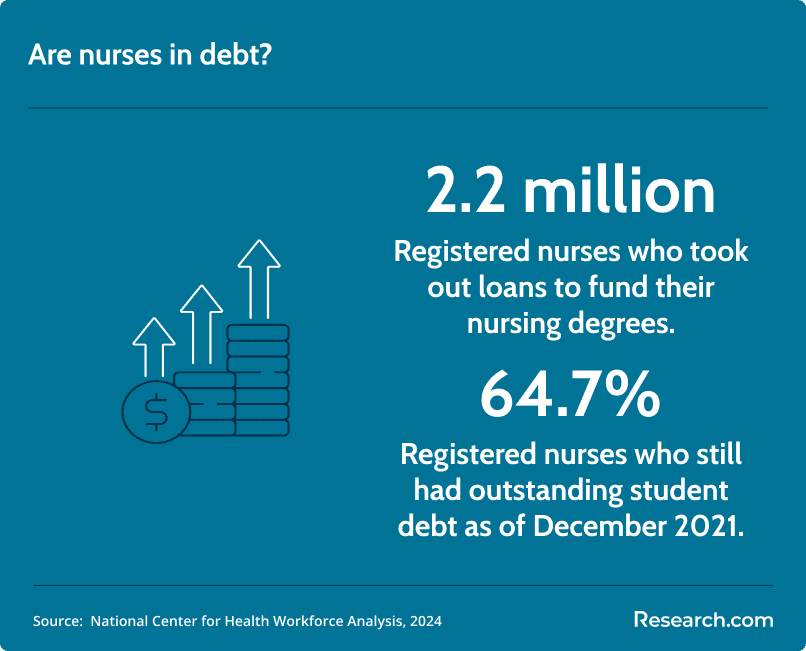
The National Center for Health Workforce Analysis (2024b) reported that 2.2 million registered nurses used loans to pay for an initial nursing degree, an additional degree, or both. As of December 2021, about 64.7% of those nurses still had student debt. That makes it important to compare net cost, not just tuition, and to apply early for any aid that requires deadlines, service commitments, or employer approval.
Accreditation can affect financial aid, employer reimbursement, and certification eligibility. While accreditation is often discussed in other fields through comparisons such as IACBE vs AACSB, healthcare students should pay special attention to nursing program accreditation through recognized agencies such as CCNE or ACEN.
What Are the Admission Requirements for an Online MSN to FNP Program?
Admissions requirements vary, but online MSN to FNP programs generally expect applicants to show that they are licensed, academically prepared, and ready for advanced clinical training. Requirements may be stricter for programs that lead to certification eligibility.
- Active RN license: Applicants usually need an active, unrestricted registered nurse license before starting advanced practice coursework.
- Nursing degrees: Schools commonly require a BSN and MSN from accredited nursing programs. Some also accept applicants with a Doctor of Nursing Practice (DNP).
- Clinical experience: Many programs prefer or require professional nursing experience and may ask for a resume or CV documenting relevant practice.
- Minimum GPA or GRE scores: A GPA of at least 3.0 on a 4.0 scale is a common benchmark. GRE scores may be requested if an applicant’s GPA falls below the school’s preferred threshold.
- Prerequisite courses: Programs may require prior coursework in Advanced Pharmacology, Advanced Health Assessment Skills, Advanced Pathophysiology, statistics, nursing, or health sciences.
- Letters of recommendation: Schools may request recommendations from supervisors, faculty, or healthcare professionals who can speak to the applicant’s clinical judgment and readiness.
- Personal statement: Applicants often explain why they want the FNP role, how it fits their career goals, and what patient populations they hope to serve.
- Compliance documents: Some programs require background checks, health clearance, malpractice insurance, immunization records, and Basic Life Support (BLS) certification.
Applicants comparing BSN to MSN FNP online programs should expect overlapping requirements, though those programs may include more MSN coursework than a post-master’s certificate. The key is to confirm whether your existing nursing education satisfies the school’s advanced practice prerequisites.
Do not assume that rules from another profession apply to nursing. For example, someone asking can I become a teacher with an associate's degree is evaluating an entry path in education, while an FNP applicant is seeking advanced clinical practice authority that typically requires graduate nursing education, RN licensure, supervised clinical hours, and national certification eligibility.
What Courses Are Typically Included in an Online MSN to FNP Program?
Online MSN to FNP courses are designed to move nurses from general graduate nursing preparation into family-focused primary care. The curriculum usually combines advanced science, clinical reasoning, pharmacology, assessment, prevention, ethics, and supervised practice.
- Advanced Pathophysiology for the APRN: Students examine disease processes, including how acute and chronic conditions develop and affect body systems at cellular and systemic levels.
- Advanced Pharmacology for the APRN: This course covers medication classes, interactions, dosing, pharmacokinetics, pharmacodynamics, safety, and prescribing considerations.
- Advanced Health Assessment for the APRN: Students build skills in history-taking, physical examination, diagnostic assessment, and recognition of abnormal findings.
- Advanced Diagnostic Reasoning: This course trains students to create differential diagnoses, interpret patient data, select appropriate diagnostic tests, and make evidence-informed decisions.
- Health Promotion: Students study prevention, wellness counseling, lifestyle change, screenings, social determinants of health, and patient education.
- Legal, Ethical, and Professional Issues: Topics include confidentiality, informed consent, scope of practice, professional accountability, documentation, and regulatory responsibilities.
Students who want to understand how these courses connect to advanced practice responsibilities can review an APRN career guide. It can help clarify the broader APRN role, certification expectations, and skill development beyond the FNP track.
Online healthcare education is not limited to nursing. Programs such as MRI tech programs online also use flexible formats for working adults, although the clinical responsibilities, licensure expectations, and career outcomes differ from advanced practice nursing.
Can FNP Students Specialize?
Most online MSN to FNP programs focus on primary care across the lifespan, but FNPs may later develop additional expertise in areas such as cardiology, dermatology, oncology, nephrology, critical care, emergency and trauma care, medical-surgical care, or other specialty settings. These areas may require additional experience, employer training, or specialty certification depending on the role.
For example, an FNP working in cardiology may help monitor chronic heart disease, adjust medications under applicable practice authority, support post-surgical follow-up, and educate patients on risk reduction. An FNP in emergency or trauma-related settings may assess acute injuries, prioritize urgent symptoms, and make quick decisions in collaboration with other clinicians.
FNPs who want to move into another APRN population focus, such as psychiatric-mental health, adult-gerontology, pediatrics, midwifery, or leadership, often need additional post-graduate education and certification. Some FNP programs also include focused coursework in women’s health, pediatrics, adolescent care, or geriatrics.
For nurses still clarifying their long-term pathway, comparing LPN vs RN roles can help show how nursing credentials build from entry-level licensure toward advanced practice authority.
How Do Online MSN to FNP Programs Teach Telehealth and Healthcare Technology?
Online FNP programs increasingly prepare students for technology-supported care because many primary care settings now use electronic health records, patient portals, remote monitoring tools, virtual visits, and digital documentation. Students may practice telehealth communication, learn how to collect and interpret patient-reported data, and use case simulations that mirror modern outpatient care.
Technology training is especially important because FNPs may care for patients who cannot easily travel, live in underserved communities, or need frequent follow-up for chronic conditions. Strong programs help students understand both the benefits and limits of telehealth, including privacy, documentation, state practice rules, patient safety, and when an in-person assessment is necessary.
Students weighing where to practice after graduation may also consider regional living and employment conditions. Research.com’s guide to the best states for nurses cost of living can help nurses think beyond salary and evaluate quality of life, affordability, and local healthcare demand.
How to Choose the Best Online MSN to FNP Program
The best online MSN to FNP program is not always the cheapest, fastest, or highest ranked. The right program is the one that is accredited, fits your schedule, supports clinical placement, prepares you for certification, and makes financial sense based on your career goals.
- Verify nursing accreditation: Look for programs accredited by the Commission on Collegiate Nursing Education (CCNE) or the Accreditation Commission for Education in Nursing (ACEN). Accreditation can affect certification, licensure, transferability, and financial aid.
- Ask how clinical placements work: Some schools help secure sites and preceptors, while others expect students to find their own. This can determine whether you graduate on time.
- Review certification alignment: Confirm that the curriculum and clinical hours meet FNP certification requirements before enrolling.
- Compare total cost: Include tuition, fees, travel, books, background checks, insurance, and unpaid time away from work.
- Check state authorization and licensure fit: Online programs may not be authorized in every state, and state practice laws vary.
- Evaluate student support: Strong advising, faculty access, tutoring, technical support, and clinical coordination can make online study more manageable.
- Consider schedule realism: A short program may be attractive, but it may not be realistic if you work full time and need to complete hundreds of clinical hours.
- Look for employer connections: Alumni networks, career services, and clinical partners can support job searches after graduation.
The American Association of Colleges of Nursing (AACN, 2024) reported that enrollment in master’s nursing programs declined by 0.9% from 2022, representing 1,176 fewer students and marking the third straight year of reduced interest. In a healthcare system facing access challenges, choosing a rigorous and supportive FNP program matters for both individual career outcomes and workforce needs.
| Common Mistake | Why It Can Hurt You | Better Approach |
| Choosing a program without checking accreditation | You may run into certification, licensure, employer, or financial aid problems. | Confirm CCNE or ACEN accreditation before applying. |
| Focusing only on tuition | Fees, travel, clinical costs, and lost work hours can change the real price. | Calculate the full cost of attendance and ask for a written fee breakdown. |
| Assuming the school finds every clinical site | Delayed placements can delay graduation. | Ask whether the program guarantees placement support or only provides guidance. |
| Ignoring state authorization | An online program may not meet requirements in your state. | Confirm eligibility for your state before submitting a deposit. |
| Picking the fastest option without considering workload | Accelerated formats can be difficult while working full time. | Match program pace to your work schedule, family responsibilities, and clinical availability. |
| Assuming salaries are guaranteed | NP wages vary by region, setting, specialty, and experience. | Compare BLS, employer postings, and local healthcare market conditions. |
What Career Paths Are Available After an Online MSN to FNP Program?
FNP graduates are prepared for primary care roles across the lifespan, but the credential can also support work in telehealth, leadership, education, research, and specialized clinical environments. Career direction often depends on prior RN experience, state scope-of-practice law, certification, employer needs, and additional training.
| Career Path | Reported Salary | Typical Focus |
| Clinical Nurse Researcher | $78,947 | Designs or supports studies that improve patient care, clinical practice, and healthcare policy. |
| Nurse Educator | $87,090 | Teaches nursing students or healthcare staff in academic or clinical education settings. |
| Nurse Manager | $98,158 | Supervises nursing teams, manages resources, and supports safe and compliant care delivery. |
| Clinical Nurse Specialist | $104,417 | Improves care quality in specialized areas such as pediatrics, oncology, or critical care. |
| Telehealth Nurse Practitioner | $130,295 | Provides virtual evaluation, treatment, education, and follow-up through remote care platforms. |
| Chief Nursing Officer | $148,452 | Leads nursing strategy, policy, staffing, quality, and regulatory compliance at the executive level. |
Some FNPs remain in direct primary care throughout their careers. Others move into administration, education, quality improvement, or executive leadership. Nurses interested in senior leadership can review what a chief nursing officer does and how clinical expertise can translate into organizational decision-making.
This chart displays the average wages of U.S. nurses.
What Challenges Should Online MSN to FNP Students Expect?
Online FNP study is flexible, but it is not easy. Students must manage graduate-level assignments, clinical documentation, exam preparation, preceptor communication, and often a full-time or part-time nursing job at the same time.
- Clinical placement pressure: Finding qualified preceptors can be one of the biggest barriers, especially in competitive metro areas or rural communities with limited sites.
- Time management: Clinical hours, coursework, studying, and employment can quickly collide without a detailed weekly schedule.
- Limited in-person connection: Online students may need to be intentional about building relationships with faculty, classmates, and mentors.
- Technology demands: Students must be comfortable with learning platforms, virtual simulations, telehealth tools, and electronic documentation.
- Licensure and certification complexity: Requirements can vary by state, and students should confirm that their program supports their intended practice location.
Prospective students should ask programs about advising, clinical coordination, faculty availability, and student success support. Nurses comparing longer doctoral options may also want to review fastest online BSN to DNP programs to understand how FNP certificate pathways differ from DNP-level preparation.
How Is an Online MSN to FNP Program Different From an Accelerated LPN to RN Pathway?
An online MSN to FNP program and an accelerated LPN to RN pathway are built for different career stages. The MSN to FNP route is for licensed registered nurses with graduate nursing preparation who want advanced practice authority in family primary care. An accelerated LPN to RN pathway is for licensed practical nurses who want to become registered nurses.
| Pathway | Who It Serves | Main Goal | Clinical Level |
| Online MSN to FNP program | MSN-prepared registered nurses | Prepare for family nurse practitioner certification and advanced primary care practice | Advanced assessment, diagnosis, treatment planning, and prescriptive preparation where allowed |
| Accelerated LPN to RN pathway | Licensed practical nurses | Move into registered nurse licensure as quickly as program rules allow | Core RN competencies, foundational nursing judgment, and broader patient care responsibilities |
Nurses who are earlier in their education may find a resource such as an LPN to RN 6 month program useful. That pathway does not replace advanced practice education, but it can be part of a longer progression from practical nursing to registered nursing and eventually graduate nursing study.
What Is the Job Market for MSN to FNP Graduates?
The job market for nurse practitioners is strong. The BLS projects 46.3% growth for NPs from 2023 to 2033, which is much faster than the average for all occupations. The projection includes around 29,000 job openings yearly throughout the decade and places nurse practitioner among the third fastest-growing occupations in the U.S.
Growth is driven by several pressures: aging patients, expanded healthcare access needs, replacement of retiring professionals, and persistent demand for primary and specialty care. FNPs are especially relevant in rural and underserved communities where physician shortages can restrict access to timely care.
FNP graduates may find roles in private practices, hospitals, outpatient care centers, urgent care clinics, home health, telehealth, and community health settings. The best outcomes often go to graduates who combine certification eligibility with strong clinical experience, comfort with technology, and willingness to practice in high-need regions.
The World Health Organization (2025) has also reported a global nursing workforce imbalance, with 78% of nurses concentrated in countries that represent only 49% of the world’s population. That imbalance highlights why advanced practice training and strategic workforce deployment remain important both in the U.S. and internationally.
Online education is also expanding in other fields tied to national workforce priorities. Similar to the best online military studies degree programs, online FNP programs serve professionals seeking specialized preparation in a field with public need and strong labor-market relevance.
This chart reveals the job growth of nursing professionals.
References
- American Association of Nurse Practitioners. (2025, February). 2025 NP infographic_Update. Retrieved May 14, 2025, from https://www.aanp.org/about/all-about-nps
- Ma, J., Pender, M., & Oster, M. (2024). Trends in College Pricing and Student Aid 2024. https://research.collegeboard.org/media/pdf/Trends-in-College-Pricing-and-Student-Aid-2024-ADA.pdf
- National Center for Health Workforce Analysis. (2024a, November). State of the Primary Care Workforce, 2024. https://bhw.hrsa.gov/sites/default/files/bureau-health-workforce/state-of-the-primary-care-workforce-report-2024.pdf
- National Center for Health Workforce Analysis. (2024b, March). Nursing Education and Training: Data from the 2022 NSSRN. https://bhw.hrsa.gov/sites/default/files/bureau-health-workforce/data-research/nssrn-education-training-report.pdf
- Payscale. (2025, March 11). Average Chief Nursing Officer (CNO) Salary. Retrieved May 14, 2025, from https://www.payscale.com/research/US/Job=Chief_Nursing_Officer_(CNO)/Salary
- Smiley, R. A., Kaminski-Ozturk, N., Reid, M., Burwell, P., Oliveira, C. M., Shobo, Y., Allgeyer, R. L., Zhong, E., O’Hara, C., Volk, A., & Martin, B. (2025). The 2024 National Nursing Workforce Survey. Journal of Nursing Regulation, 16(1), S1–S88. https://www.journalofnursingregulation.com/article/S2155-8256(25)00047-X/fulltext
- U.S. Bureau of Labor Statistics. (2024a). Nurse Practitioners [Interactive data]. May 2024 OEWS Profiles, Occupational Employment and Wage Statistics (OEWS) Profiles. Retrieved May 14, 2025, from https://data.bls.gov/oesprofile
- U.S. Bureau of Labor Statistics. (2024b, August 29). Occupational projections, 2023–33, and worker characteristics, 2023 (Numbers in thousands). Employment Projections. https://www.bls.gov/emp/tables/occupational-projections-and-characteristics.htm
- ZipRecruiter. (2025, May 2). Telehealth Nurse Practitioner Salary. Retrieved May 14, 2025, from https://www.ziprecruiter.com/Salaries/Telehealth-Nurse-Practitioner-Salary
Key Insights
- An online MSN to FNP program is best suited for licensed RNs with graduate nursing preparation who want to qualify for family nurse practitioner certification while maintaining work flexibility.
- The online format can reduce commuting and relocation barriers, but students still complete substantial in-person clinical training, often around 600 to 750 hours.
- Program length commonly ranges from 1 year to 2 years, although some focused full-time options can be shorter and some part-time plans take longer.
- Costs vary sharply, with tuition commonly falling between $500 and $2,500 per credit hour and total program costs ranging from $13,000 to $76,000.
- Accreditation, clinical placement support, state authorization, certification alignment, and total cost are more important than rankings alone.
- Salary potential is strong, but not guaranteed. BLS data show $132,000 yearly for nurse practitioners, with wages ranging from $97,960 to $169,950 depending on percentile, location, employer, and experience.
- The job outlook is favorable: BLS projects 46.3% growth for nurse practitioners from 2023 to 2033, with around 29,000 job openings yearly throughout the decade.
- The biggest mistakes are choosing a non-accredited program, underestimating clinical placement challenges, ignoring state practice requirements, and assuming the fastest program is automatically the best fit.
Other Things You Should Know About Online MSN to FNP Programs
Most online MSN to FNP programs require students to secure preceptors at approved clinical sites, and the school must confirm the site before hours begin. Programs commonly require about 500 to 700 supervised clinical hours, plus documentation of state compliance and liability coverage.
The best online MSN to FNP programs in 2027 typically require between 45 and 60 credit hours. These programs may include coursework in advanced pharmacology, health assessment, and clinical practice hours to ensure students are well-prepared for certification.
Top online MSN to FNP programs in 2027 typically require between 500 to 700 clinical hours. This hands-on experience is essential for advancing nursing skills and meeting graduation and certification requirements set by accrediting bodies.


