2027 How to Compare Online Electrical Engineering Degrees by Lab and Project Support

Co-Founder and Chief Data Scientist
Choosing an online electrical engineering degree is really a question about evidence: Will the program give you enough lab, design, and project experience to be credible after graduation?
The stakes are high because the U.S. Bureau of Labor Statistics projects 9% employment growth for electrical and electronics engineers from 2023 to 2033, faster than the average for all occupations. This guide is for prospective students comparing online programs and explains accreditation, lab formats, capstones, costs, admissions, licensure, and career outcomes so you can choose with fewer surprises.
Key Things You Should Know
- For most engineering careers, the safest online option is an ABET-accredited electrical engineering program because accreditation can affect employer screening, graduate school admission, and eventual Professional Engineer licensure.
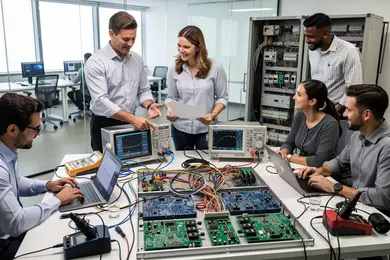
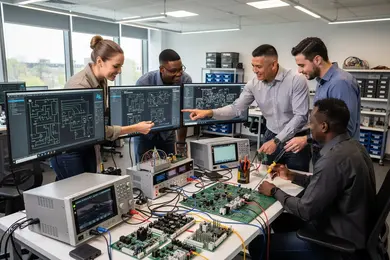
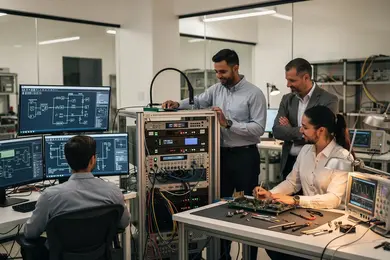
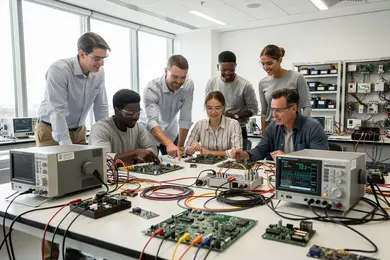
- Strong online programs do not eliminate labs; they replace campus-only work with mailed lab kits, simulation software, remote-controlled equipment, local proctoring, short residencies, or hybrid intensives.
- Cost varies widely, but the College Board reported average published tuition and fees of $11,610 for in-state public four-year students and $43,350 for private nonprofit four-year students in 2024-25, so total price should be compared before enrollment.
How do online electrical engineering degrees compare in lab and project support?
Online electrical engineering degrees should be compared less by whether they are "online" and more by how they prove hands-on competence. Electrical engineering is built around circuits, signals, controls, power systems, embedded devices, communications, and design trade-offs, so a credible program needs structured practice with instruments, software, and team-based engineering problems.
The best way to compare programs is to separate instructional convenience from technical depth. A flexible schedule is useful, but it should not replace supervised experimentation, instructor feedback, documented design work, and access to industry-standard tools. When you evaluate programs, look for evidence in the course catalog, syllabi, lab descriptions, software access policies, and capstone requirements.
The table below summarizes the main ways online electrical engineering programs support labs and projects. Use it to identify which delivery model fits your learning style, location, work schedule, and career goal.
| Support model | How it usually works | Best fit | Trade-off to check |
| Mailed lab kits | Students receive circuit boards, microcontrollers, sensors, breadboards, meters, or other equipment for home experiments. | Students who need maximum flexibility and can work safely at home. | Confirm whether equipment fees are included and whether kits support upper-division labs. |
| Simulation software | Courses use tools for circuit simulation, digital logic, signal analysis, control systems, electromagnetics, or power systems modeling. | Students preparing for design, analysis, embedded systems, or graduate-level study. | Simulations should complement, not fully replace, measurement-based lab work. |
| Remote labs | Students access real equipment through an internet-connected interface and collect live experimental data. | Students far from campus who still need exposure to physical instruments. | Ask whether access is available outside business hours and how troubleshooting is handled. |
| Local or partner-site labs | Students complete supervised activities at an approved location, community college, employer site, or testing center. | Working adults with nearby technical facilities or employer support. | Approval rules can be strict, so verify requirements before enrolling. |
| Short campus residencies | Students travel to campus for intensive lab weekends, summer sessions, or design reviews. | Students who want a mostly online program but can travel occasionally. | Budget for travel, lodging, time off work, and missed family obligations. |
Strong programs are transparent about how students receive lab support. Before applying, ask for examples of recent lab assignments and senior design projects, not just a general statement that the program is interactive. If a school cannot explain how students build, test, document, and revise engineering work, that is a red flag.
Online learning quality also varies across disciplines. A research-heavy or information-focused program such as a library science masters may rely more on readings, databases, and professional projects, while electrical engineering requires physical systems, measurement, and technical design validation. That difference is why lab delivery deserves special scrutiny.
What accreditation should an online electrical engineering program have?
The most important accreditation question is whether the electrical engineering program itself is accredited by ABET's Engineering Accreditation Commission. Institutional accreditation tells you the college or university meets broad academic and administrative standards, but ABET programmatic accreditation evaluates whether the engineering curriculum meets discipline-specific expectations.
ABET accreditation matters because it signals that the program has been reviewed for math, science, engineering fundamentals, design, ethics, assessment, faculty qualifications, and continuous improvement. For students, it can influence transferability, graduate school options, employer confidence, and licensure pathways. It is especially important if you may later pursue Professional Engineer status.
The table below shows the major accreditation checks and why each one matters when comparing online electrical engineering programs.
| Accreditation or approval | What it means | Why it matters |
| Institutional accreditation | The college or university is recognized by an approved institutional accreditor. | Usually required for federal financial aid, credit transfer, and graduate admission review. |
| ABET Engineering Accreditation Commission | The specific electrical engineering program meets engineering education standards. | Often the strongest signal for employers and the cleanest path toward engineering licensure. |
| State authorization | The school is allowed to offer distance education to students in your state. | Protects students from enrolling in programs that cannot legally serve them where they live. |
| Licensure board acceptance | Your state engineering board recognizes the degree for EIT or PE eligibility. | Important for power, utilities, public infrastructure, consulting, and regulated engineering work. |
Do not rely only on the phrase "accredited university." That may refer to the institution, not the electrical engineering degree. The safer approach is to search the ABET program database, confirm the exact program name, and save a copy of the listing for your records.
Common mistakes include enrolling in an electrical engineering technology program when you need an engineering degree, assuming an online format automatically limits accreditation, or trusting marketing language without checking the accreditor. Engineering technology degrees can be valuable, but they may lead to different job duties, licensure rules, and graduate school options.

How do online and campus electrical engineering programs differ?
Online and campus electrical engineering programs often cover similar academic foundations: calculus, differential equations, physics, circuit analysis, electronics, signals and systems, electromagnetics, controls, digital logic, microprocessors, power systems, communications, and senior design. The biggest difference is not usually the subject matter; it is how students access equipment, peers, faculty, advising, and project feedback.
The right format depends on your constraints. Campus programs may offer easier access to labs and informal faculty interaction, while online programs can be better for working adults, military students, caregivers, and transfer students who cannot relocate. Neither format is automatically better; the question is which one gives you enough structure to finish and enough technical experience to compete.
The table below compares the practical differences that affect learning, cost, and career preparation.
| Comparison point | Online electrical engineering | Campus electrical engineering |
| Lab access | May use kits, simulations, remote instruments, local facilities, or short residencies. | Usually offers scheduled access to campus laboratories and equipment rooms. |
| Schedule | Often built for part-time or asynchronous study, though deadlines still apply. | More likely to require fixed class times, commuting, and daytime lab availability. |
| Peer interaction | Usually happens through discussion boards, video meetings, team platforms, and shared repositories. | Often easier through in-person study groups, labs, clubs, and design teams. |
| Cost structure | May reduce relocation and commuting costs but can add technology, shipping, or residency expenses. | May include campus fees, housing, transportation, and opportunity costs from schedule rigidity. |
| Career networking | Depends heavily on virtual career services, employer partnerships, and project visibility. | May provide easier access to career fairs, faculty labs, and student engineering organizations. |
Online engineering students should also consider whether they learn well without the immediate social pressure of a classroom. Electrical engineering is mathematically demanding, and students who postpone weekly problem sets or lab reports can fall behind quickly.
If your interests are closer to software systems than hardware, circuits, or power, comparing an electrical engineering program with a computer science degree online can be useful. Computer science usually emphasizes algorithms, programming, databases, and software architecture, while electrical engineering places more weight on physical systems, electronics, and signal behavior.
What lab components are required in online electrical engineering degrees?
Lab requirements vary by school, but credible online electrical engineering programs normally include a sequence of experiments tied to core engineering subjects. Students should expect to collect data, compare results with theory, document uncertainty, troubleshoot unexpected behavior, and explain design decisions in formal reports.
Labs are not just a graduation requirement. They teach the habits that employers expect from entry-level engineers: careful measurement, safety awareness, debugging, documentation, and the ability to connect mathematical models with real systems.
Most programs build lab work around several recurring technical areas. The following list shows common lab categories and why they matter for career preparation:
- Circuits and electronics: Students analyze voltage, current, impedance, filters, amplifiers, diodes, transistors, operational amplifiers, and printed circuit behavior.
- Digital systems and embedded devices: Students work with logic design, microcontrollers, programmable devices, sensors, firmware, and hardware-software interaction.
- Signals, communications, and controls: Students model, sample, filter, transmit, and control systems using both theoretical tools and experimental data.
- Power and energy systems: Students examine motors, transformers, power electronics, grid concepts, renewable integration, protection, or energy conversion depending on the program track.
- Measurement and instrumentation: Students learn to use oscilloscopes, multimeters, function generators, data acquisition tools, and software-based analysis environments.
When comparing programs, ask whether the lab sequence becomes more advanced over time. A program that only uses introductory kits may not offer the same preparation as one that adds remote instruments, advanced simulation, supervised design reviews, and upper-level specialization labs.
Safety and academic integrity are also part of lab quality. A responsible program should provide safety rules, equipment limits, calibration expectations, academic honesty policies, and clear procedures for getting help when an experiment fails. Lab failure is normal in engineering; lack of support is not.
How are projects, capstones, and design courses delivered online?
Projects and capstones are where an online electrical engineering degree proves whether students can do more than pass exams. In a strong program, students move from isolated homework problems to open-ended design work that includes constraints, trade-offs, documentation, testing, and revision.
Online capstones are usually delivered through learning platforms, video meetings, collaborative documents, version-control tools, simulation files, design notebooks, prototype demonstrations, and faculty reviews. Some programs assign individual projects, while others form remote teams that mimic distributed engineering workplaces.
Students should evaluate project support before enrolling because capstone quality can influence portfolios, interview conversations, and early-career confidence. A strong online project sequence usually includes the following features:
- Defined design milestones: Students submit proposals, requirements, schematics, simulations, test plans, prototypes, final reports, and presentations across multiple checkpoints.
- Faculty or industry feedback: Instructors, mentors, or external reviewers comment on feasibility, safety, technical rigor, cost, and design trade-offs.
- Team collaboration tools: Programs often use shared repositories, project management boards, video meetings, and peer evaluations to manage remote teamwork.
- Evidence of testing: Students should be expected to validate a design through measurements, simulations, user requirements, or performance benchmarks.
- Portfolio-ready deliverables: Final reports, demos, code, schematics, posters, or presentations can help students explain their work to employers.
Current technology trends make project support even more important. AI-assisted design tools, advanced simulation environments, digital twins, low-cost microcontrollers, and cloud collaboration have made remote engineering work more realistic, but they also raise expectations. Students should learn how to use tools responsibly, verify outputs, and explain their own engineering judgment.
A common mistake is choosing a program with vague capstone descriptions. Ask admissions or the department for recent project examples, the number of faculty reviews, whether students can propose employer-based projects, and how intellectual property is handled if a project is completed at work.
What admission requirements do online electrical engineering programs usually have?
Admission requirements depend on whether you are applying as a first-year student, transfer student, degree-completion student, or graduate student. Online bachelor's programs often look for evidence that you can handle calculus-based engineering coursework, while master's programs usually expect prior engineering, physics, mathematics, or closely related technical preparation.
Electrical engineering is cumulative, so prerequisites matter. Students who enter without enough math or physics may spend extra time completing foundation courses before they can begin upper-division engineering work.
Most online electrical engineering programs ask for a combination of academic records, prerequisite proof, and readiness documentation. Review these requirements early so you can avoid delays:
- High school or college transcripts: First-year applicants usually submit high school records, while transfer and degree-completion applicants submit all prior college transcripts.
- Math preparation: Programs commonly expect readiness for calculus or completion of calculus, depending on entry level.
- Science preparation: Calculus-based physics is often required before advanced electrical engineering courses.
- Transfer credit evaluation: Schools may review general education, math, science, and engineering courses separately because technical credits can expire or fail to match course outcomes.
- Minimum GPA: Requirements vary, and engineering departments may require a higher GPA for admission to upper-division coursework than the university requires for general admission.
- Technology access: Students may need a capable computer, webcam, reliable internet, approved software, and a safe workspace for lab activities.
Graduate programs may also ask for a bachelor's degree in engineering or a related field, letters of recommendation, a statement of purpose, and prerequisite coursework in circuits, signals, electronics, or mathematics. Some programs admit students conditionally if they complete bridge courses first.
Before applying, request a written transfer evaluation if you have prior credits. One of the most expensive mistakes is assuming that community college or earlier engineering courses will apply automatically. Course titles can look similar while learning outcomes, lab hours, or accreditation expectations differ.
How long do online electrical engineering degrees usually take and cost?
A full online bachelor's degree in electrical engineering usually takes about four years of full-time study, while transfer-friendly degree-completion programs may take two to three years if you already have the right calculus, physics, and lower-division engineering credits. Part-time students often need longer because prerequisites must be taken in sequence.
Cost depends on residency, institution type, transfer credits, lab fees, software, textbooks, equipment shipping, and travel for any required residency. The College Board's 2024-25 figures show why students should compare total cost, not just sticker tuition.
Average published tuition and fees were $11,610 for in-state public four-year students and $43,350 for private nonprofit four-year students. Those figures are not program-specific, but they provide a useful benchmark for judging whether a quoted price is unusually high or low.
The table below breaks down the main cost and timeline variables that affect online electrical engineering students. Use it to build a realistic budget before you apply.
| Factor | What to compare | Why it changes the total investment |
| Transfer credits | How many prior credits apply to the major, not just to electives. | Accepted technical credits can shorten the degree, but rejected credits can add terms. |
| Residency status | Whether online students pay in-state, out-of-state, or a separate distance-learning rate. | Public universities may price online students differently by state. |
| Lab and technology fees | Kit costs, software licenses, shipping, replacement parts, and testing fees. | Engineering programs can have costs that are not obvious in base tuition. |
| Course sequencing | Whether required courses are offered every term or only once per year. | Missing one prerequisite can delay graduation even if you can afford more credits. |
| Travel requirements | Any campus residency, proctored exam, or in-person lab requirement. | Travel can add lodging, transportation, meals, and lost work time. |
To reduce cost without weakening academic fit, take a systematic approach. The goal is not to choose the cheapest program automatically; it is to choose the lowest-cost program that still supports your intended career, accreditation needs, and schedule.
- Confirm ABET status and state authorization before comparing prices.
- Request a degree audit showing exactly which credits transfer into the electrical engineering major.
- Ask for a full list of lab kits, software, proctoring, residency, and graduation fees.
- Compare course rotation calendars so you know whether part-time enrollment will delay key prerequisites.
- Review financial aid, employer tuition assistance, military benefits, scholarships, and payment deadlines before committing.
If affordability is your main constraint but you are still comparing engineering fields, reviewing options such as the cheapest online civil engineering degree can help you benchmark how public universities, transfer pathways, and distance-learning fees differ across engineering disciplines.
What jobs can you get with an online electrical engineering degree?
An online electrical engineering degree can lead to many of the same roles as a campus degree when the program is accredited, technically rigorous, and supported by strong projects. Employers generally care about degree quality, skills, work samples, internships, communication, and problem-solving ability more than the delivery format alone.
Electrical engineering graduates work in power and utilities, electronics, aerospace, defense, telecommunications, automotive systems, semiconductors, robotics, manufacturing, medical devices, renewable energy, and embedded systems. The right role depends on electives, internships, lab experience, certifications, and the technologies you can discuss confidently.
The table below outlines common career directions and the kind of preparation that helps students compete for them.
| Career path | Typical responsibilities | Helpful preparation |
| Electrical engineer | Design, test, and improve electrical systems, components, controls, or equipment. | Circuits, electronics, design projects, testing, documentation, and ABET-accredited coursework. |
| Power systems engineer | Work with generation, transmission, distribution, protection, renewable integration, or grid reliability. | Power systems, machines, energy conversion, protection concepts, and possible PE pathway planning. |
| Embedded systems engineer | Develop hardware-software systems using microcontrollers, sensors, firmware, and communication interfaces. | Digital logic, C or C++, microprocessors, real-time systems, labs, and portfolio projects. |
| Controls engineer | Design and tune systems used in automation, robotics, manufacturing, or process control. | Control theory, signals, modeling, sensors, actuators, and industrial systems exposure. |
| Test engineer | Create test procedures, analyze failures, validate prototypes, and document performance. | Instrumentation, statistics, lab reporting, troubleshooting, and quality standards. |
| Electronics design engineer | Design or evaluate analog, digital, RF, or mixed-signal circuits and boards. | Electronics, PCB design, simulation tools, measurement skills, and design reviews. |
Students should build evidence while they study. Employers are more likely to understand your readiness if you can show a capstone, lab reports, code repository, schematic, prototype video, simulation output, or technical presentation.
If you discover that you prefer statistical modeling, machine learning, or analytics more than circuits and physical systems, the cheapest data science degree comparison may be worth exploring as an alternative. Data science can overlap with signal processing and automation, but the day-to-day work is usually more software- and data-focused.
What salary and job outlook can electrical engineering graduates expect?
Salary depends on location, industry, degree level, experience, clearance requirements, licensure, and specialization. The U.S. Bureau of Labor Statistics reported a median annual wage of $111,910 for electrical engineers in May 2024. That figure is a national median, not a starting salary, so new graduates should use it as a labor-market reference point rather than a personal income prediction.
The job outlook is also positive but not uniform. BLS projects 9% growth for electrical and electronics engineers from 2023 to 2033, which reflects demand across areas such as engineering services, electronics, communications, energy, automation, and technology-driven manufacturing. Students should still research regional employers because opportunities can cluster around defense hubs, utilities, semiconductor corridors, advanced manufacturing regions, and major metropolitan areas.
The table below gives a practical view of how salary potential can vary by career direction. It does not guarantee outcomes, but it helps you connect program choices to labor-market realities.
| Factor | How it can affect earnings | What students should do |
| Industry | Semiconductors, aerospace, utilities, consulting, and defense may value different technical strengths. | Choose electives and projects that match target industries. |
| Location | Pay can rise in high-cost or high-demand regions but may be offset by living expenses. | Compare local job postings, not only national salary data. |
| Experience | Internships, co-ops, military technical work, or technician experience can improve entry-level competitiveness. | Build applied experience before graduation when possible. |
| Licensure | PE licensure may matter more in utilities, consulting, public infrastructure, and safety-critical work. | Plan early if you expect to work in regulated engineering roles. |
| Specialization | Power, embedded systems, RF, controls, and hardware design can lead to different labor markets. | Use technical electives and capstones to signal specialization. |
AI and automation are changing the skill mix rather than removing the need for engineers. Employers increasingly value engineers who can use simulation, data analysis, AI-assisted design, and automated testing while still understanding the physics, safety limits, and verification steps behind the tools.
When does an electrical engineering degree lead to licensure or certification?
An electrical engineering degree can support licensure, but it does not automatically make someone a licensed engineer. In the United States, Professional Engineer requirements are set by state licensing boards, and rules can vary. The common pathway includes an ABET-accredited engineering degree, passing the Fundamentals of Engineering exam, gaining qualifying supervised experience, and later passing the Principles and Practice of Engineering exam.
Licensure is most relevant when engineers offer services to the public, sign and seal engineering documents, work in utilities, design public infrastructure, or take legal responsibility for safety-critical systems. It may be less central in some electronics, software, semiconductor, or private research and development roles, although it can still strengthen credibility.
If licensure might matter to you, take these steps before enrolling. They can prevent a costly mismatch between your degree and your state's requirements.
- Check whether the exact electrical engineering program is ABET-accredited by the Engineering Accreditation Commission.
- Review your state engineering board's education requirements for Engineer in Training or Engineer Intern status.
- Ask the program whether graduates have historically been eligible to sit for the FE exam in your state.
- Confirm whether online labs, transfer credits, or engineering technology courses affect licensure review.
- Keep syllabi, lab descriptions, transcripts, and accreditation records in case a board requests documentation later.
Certifications can also support specific career goals, but they are not substitutes for a degree when a job requires engineering education. Examples may include software, project management, cybersecurity, quality, safety, or vendor-specific technical certifications. Choose certifications only after you know the role you want, because a power systems path and an embedded systems path may call for very different credentials.
The biggest red flag is a program that implies licensure is automatic. A responsible school should explain that licensure is controlled by state boards and should encourage students to verify requirements where they plan to work.
Other Things You Should Know About Electrical Engineering Degrees
Yes, but it is demanding. Many students take a part-time course load because calculus, physics, circuits, and labs require consistent weekly study. If you work full time, ask the program how often courses are offered and whether labs or exams require fixed meeting times.
Many employers consider online degrees credible when they come from accredited institutions, especially if the specific engineering program is ABET-accredited. Your projects, internships, technical interview performance, and ability to explain your work often matter as much as the delivery format.
Ensure programs offer virtual lab simulations and real-world project opportunities. Check partnerships with tech companies for enhanced learning experiences and assess faculty involvement in project guidance. Look for reviews or testimonials about the program's support structure.
Look for programs that provide remote access to circuit simulation software, such as MATLAB, Simulink, Multisim, or LTspice, plus hardware kits shipped to students for home experiments. Strong programs also require structured project milestones, instructor feedback, and documented lab hours tied to specific course outcomes.
References
- Best Online Electrical Engineering Degrees 2025 https://www.onlineu.com/degrees/electrical-engineering
- Applying to Electrical Engineering Programs: Graduate School Admissions Overview https://blog.accepted.com/applying-to-electrical-engineering-programs-graduate-school-admissions-overview/
- Online Electrical Engineering Degrees https://www.affordablecollegesonline.org/degrees/engineering-programs/electrical-engineering/
- Inside the Best Online Bachelor's in Electrical Engineering Degrees https://www.onlinecolleges.me/engineering-degrees/bachelors/electrical-engineering/
- Electrical and Electronic Engineering (Top-up) (Online) BEng Tech (Hons) https://www.tees.ac.uk/undergraduate_courses/engineering_&_construction/beng_tech_(hons)_electrical_and_electronic_engineering_(top-up)_(online).cfm
- The Significance of Electrical Engineering Certification for Professional Advancement - CertLibrary Blog https://www.certlibrary.com/blog/the-significance-of-electrical-engineering-certification-for-professional-advancement/
- Accreditation - ABET https://www.abet.org/accreditation/