
2027 Fastest Online RN to BSN Programs

Co-Founder and Chief Data Scientist
Choosing the fastest online RN to BSN program is not just about finishing quickly. For licensed registered nurses, the real decision is whether an accelerated bachelor’s pathway can fit around shifts, family responsibilities, clinical requirements, tuition costs, employer expectations, and long-term career goals.
An online RN to BSN program is designed for practicing RNs who already hold an ADN or nursing diploma and want to complete a Bachelor of Science in Nursing. The fastest options can compress upper-division nursing coursework into two semesters, but the right program must still be accredited, manageable, affordable, and accepted by employers or graduate schools.
This guide explains how accelerated online RN to BSN programs work, what they cost, how long they take, which schools offer fast completion options, what to check before enrolling, and how a BSN can support leadership, specialty nursing, graduate nursing study, and advanced practice pathways.
Quick answer: What is the fastest online RN to BSN program?
The fastest online RN to BSN programs in this guide can be completed in 8 months/2 semesters. These programs are built for licensed RNs who can handle an intensive course load and already meet admission, transfer credit, general education, and prerequisite requirements. Speed should not be the only deciding factor: accreditation, clinical or practicum expectations, total cost, employer recognition, and state authorization matter just as much.
| Best for | What to look for | Potential concern |
| Working RNs who want the quickest BSN completion route | 8 months/2 semesters, asynchronous coursework, local practicum options | Heavy weekly workload and limited time for breaks |
| Cost-conscious nurses | Low total tuition, employer reimbursement, transfer credit policies | Fees, books, background checks, and clinical costs can add up |
| RNs planning graduate school | CCNE or ACEN accreditation, research and leadership coursework, articulation pathways | Not every RN to BSN program includes graduate-level bridge options |
| Nurses seeking management or specialty roles | Leadership, community health, quality improvement, evidence-based practice | A BSN may improve eligibility, but it does not guarantee promotion |
What are the benefits of choosing a fast online RN to BSN program?
- Broader career mobility: A BSN can help RNs qualify for roles that prefer or require bachelor’s-prepared nurses, including nurse manager, clinical nurse leader, nurse educator, public health nurse, and some specialty nursing positions.
- Stronger preparation for advancement: RN to BSN coursework usually emphasizes leadership, evidence-based practice, health assessment, community health, quality improvement, and healthcare policy—skills often needed beyond bedside care.
- Flexible study format: Online delivery allows many nurses to continue working while completing coursework remotely. This can be especially useful for RNs on rotating shifts or those who cannot relocate.
- Possible income growth over time: BSN-prepared nurses often pursue roles with higher earning potential than ADN-only roles, although pay depends on location, experience, employer, specialty, and additional credentials.
- Graduate school readiness: A BSN is commonly required before entering MSN, DNP, nurse practitioner, nurse anesthetist, and other advanced nursing pathways.
What should you expect from the fastest online RN to BSN program?
A fast online RN to BSN program is usually a compact, upper-division bachelor’s completion pathway. Instead of repeating basic RN preparation, it builds on your existing nursing license and prior clinical education. Expect condensed courses, frequent deadlines, writing-intensive assignments, group discussions, applied projects, and practicum or community-based experiences that connect academic work to real nursing settings.
Accelerated programs often require strong time management because several courses may run at once or in short terms. You may study leadership, nursing research, population health, ethics, informatics, quality improvement, and health policy while continuing to work as an RN. Some programs allow local practicum completion, while others use project-based clinical learning, simulation, or community health assignments.
| Program feature | What it means for students | Question to ask before applying |
| Accelerated schedule | You may finish faster, but weekly study demands are higher | How many hours per week should I expect per course? |
| Online coursework | Lectures, discussions, assignments, and exams are completed remotely | Are courses asynchronous, synchronous, or a mix? |
| Practicum or clinical project | You may need an approved local site, preceptor, or community health setting | Does the school help arrange placements in my state? |
| Transfer credit review | Previous ADN, diploma, and general education credits may reduce remaining requirements | How many credits will transfer before I enroll? |
Where can you work after completing an online RN to BSN program?
Graduates of online RN to BSN programs continue to work across the healthcare system, including hospitals, outpatient clinics, long-term care facilities, rehabilitation centers, public health departments, home health agencies, community health organizations, and academic or administrative settings. The degree may also help nurses move into care coordination, case management, quality improvement, leadership, informatics, and education-related roles.
An RN to BSN does not by itself qualify a nurse for advanced practice roles such as nurse practitioner, nurse anesthetist, or nurse-midwife. However, it is an important academic step for nurses who later plan to apply to graduate nursing programs.
How much can you make with an online RN to BSN degree?
Registered nurse pay varies widely by state, metro area, specialty, employer, union status, shift differential, experience, and education level. According to the Bureau of Labor Statistics, the median annual salary for registered nurses in 2023 was $86,070. BSN-prepared nurses may be more competitive for roles that carry higher pay, particularly leadership, specialty, and graduate-prepared positions, but salary outcomes are never guaranteed by the degree alone.
- 2027 fastest online RN to BSN programs
- How long does the fastest online RN to BSN program take?
- Online RN to BSN vs. on-campus RN to BSN: Which is better?
- How much does a fast online RN to BSN program cost?
- What financial aid options are available for RN to BSN students?
- What are the admission requirements for fast online RN to BSN programs?
- What courses are included in an accelerated RN to BSN curriculum?
- What specializations are available in fast online RN to BSN programs?
- Can you complete an RN to BSN program without traditional clinical rotations?
- What accreditation and quality benchmarks matter?
- What challenges come with a fast online RN to BSN program?
- Is an online RN to BSN worth the investment?
- Can non-nurses use accelerated online pathways into nursing?
- Do employers respect an online RN to BSN degree?
- What trends are changing online RN to BSN programs?
- What student support should online RN to BSN students expect?
- Can an online RN to BSN prepare you for graduate nursing degrees?
- What affordable routes lead from BSN to higher nursing degrees?
- What certifications can strengthen your nursing career?
- How should you choose the fastest online RN to BSN program?
- What career paths are available after a fast online RN to BSN program?
- What is the job market for online RN to BSN graduates?
- Can an accelerated RN to BSN lead to advanced practice degrees?
2027 List of the Fastest Online RN to BSN Programs
How do we rank schools?
Research.com evaluates accelerated online RN to BSN programs with a focus on practical decision-making for working nurses. Because speed, tuition, accreditation, and flexibility can affect whether a program is realistic, the ranking is designed to help prospective students compare options using structured data rather than marketing claims alone.
The ranking follows a transparent methodology and draws from established education data sources, including the Integrated Postsecondary Education Data System (IPEDS), Peterson's databases and its Distance Learning Licensed Data Set, and the College Scorecard database from the National Center for Education Statistics. These sources support comparisons across program structure, cost-related factors, institutional characteristics, and online learning availability.
| Rank | School | Program Length | Estimated Cost | Credits | Accreditation |
| 1 | Lake-Sumter State College (FL) | 8 months/2 semesters | $3,668 | 27 | Accreditation Commission for Education in Nursing |
| 2 | Albany State University (GA) | 8 months/2 semesters | $5,307 | 27 | Accreditation Commission for Education in Nursing |
| 3 | North Carolina Central University (NC) | 8 months/2 semesters | $5,535 | 30 | Accreditation Commission for Education in Nursing |
| 4 | Southeastern University (FL) | 8 months/2 semesters | $6,650 | 30 | Commission on Collegiate Nursing Education (CCNE) |
| 5 | Georgia Southern University (GA) | 8 months/2 semesters | Cost per Credit: $7,180 | 31 | Commission on Collegiate Nursing Education (CCNE) |
| 6 | CSU Sacramento (CA) | 8 months/2 semesters | $7,602 | 30 | Commission on Collegiate Nursing Education (CCNE) |
| 7 | University of Utah (UT) | 8 months/2 semesters | $7,800 | 30 | Commission on Collegiate Nursing Education (CCNE) |
| 8 | University of South Alabama (AL) | 8 months/2 semesters | $7,872 | 24 | Commission on Collegiate Nursing Education (CCNE) |
| 9 | Utah State University (UT) | 8 months/2 semesters | $8,305 | 31 | Accreditation Commission for Education in Nursing |
| 10 | Delta State University (MS) | 8 months/2 semesters | $8,435 | 27 | Commission on Collegiate Nursing Education (CCNE) |
1. Lake-Sumter State College (FL)
Lake-Sumter State College (LSSC) offers an affordable online RN to BSN route that may be especially attractive to Florida nurses seeking a short completion timeline. The curriculum includes customizable electives, such as Medical Disaster Management, and a required Capstone project that allows students to connect coursework to applied nursing practice. Its ACEN accreditation and strong NCLEX-RN pass rates strengthen its profile despite the institution’s smaller size.
- Program Length: 8 months/2 semesters
- Tracks/concentrations: Online RN-to-BSN
- Estimated Cost: $3,668
- Required Credits to Graduate: 27
- Accreditation: Accreditation Commission for Education in Nursing
2. Albany State University (GA)
Albany State University provides an accredited and cost-conscious RN to BSN option through the Department of Nursing in the Darton College of Health Professions. The school’s tuition level and solid NCLEX-RN performance make it a practical choice for many licensed RNs. Students should review tuition details carefully because eMajor courses carry a higher tuition cost. The department also offers graduate-level FNP and Nurse Educator tracks for nurses thinking beyond the BSN.
- Program Length: 8 months/2 semesters
- Tracks/concentrations: Online RN-to-BSN
- Estimated Cost: $5,307
- Required Credits to Graduate: 27
- Accreditation: Accreditation Commission for Education in Nursing
3. North Carolina Central University (NC)
North Carolina Central University offers a fully online RN-BSN pathway for North Carolina RNs. Students can pursue an accelerated full-time option that takes two semesters or choose a part-time format that extends to two years. With summer, fall, and spring entry points, the program gives students multiple start opportunities. Most courses last eight weeks, and the 15-week Community Health Nursing practicum may be completed locally.
- Program Length: 8 months/2 semesters
- Tracks/concentrations: Online RN-to-BSN
- Estimated Cost: $5,535
- Required Credits to Graduate: 30
- Accreditation: Accreditation Commission for Education in Nursing
4. Southeastern University (FL)
Southeastern University (SEU) may be a good fit for nurses looking for a faith-based academic environment. Its College of Natural & Health Sciences offers a CCNE-accredited BSN program at a relatively accessible cost for both in-state and out-of-state students. Prospective students should review recent NCLEX-RN pass rate information and student outcomes as part of their due diligence.
- Program Length: 8 months/2 semesters
- Tracks/concentrations: Online RN-to-BSN
- Estimated Cost: $6,650
- Required Credits to Graduate: 30
- Accreditation: Commission on Collegiate Nursing Education (CCNE)
5. Georgia Southern University (GA)
Georgia Southern University (GSU) structures its RN to BSN program for Georgia-licensed RNs or nurses holding a multi-state compact license. While the School of Nursing’s NCLEX-RN pass rates may not stand out, graduate nursing certification pass rates are strong. Student feedback highlights experienced faculty and useful clinical connections, including Savannah-area hospital relationships. GSU also offers a BSN to DNP pathway for nurses planning doctoral study.
- Program Length: 8 months/2 semesters
- Tracks/concentrations: Online RN-to-BSN
- Cost per Credit: $7,180
- Required Credits to Graduate: 31
- Accreditation: Commission on Collegiate Nursing Education (CCNE)
6. CSU Sacramento (CA)
Sacramento State University (Sac State) is a public California institution with an RN to BSN program available to California RNs. The School of Nursing is better known regionally than nationally, but it has maintained a solid record of NCLEX-RN pass rates. Alumni frequently point to the program’s responsiveness to the realities of working nurses.
- Program Length: 8 months/2 semesters
- Tracks/concentrations: Online RN-to-BSN
- Estimated Cost: $7,602
- Required Credits to Graduate: 30
- Accreditation: Commission on Collegiate Nursing Education (CCNE)
7. University of Utah (UT)
The University of Utah gives online RN to BSN students several pacing choices: two, three, or four semesters. Its Geriatric Nursing Leadership (GNL) track follows a four-semester format. The two-semester accelerated plan is demanding, with five courses in the first 16-week semester and four courses in the second. The program includes 113 hours of clinical practicum and allows students to begin at the start of any semester.
- Program Length: 8 months/2 semesters
- Tracks/concentrations: Online RN-to-BSN
- Estimated Cost: $7,800
- Required Credits to Graduate: 30
- Accreditation: Commission on Collegiate Nursing Education (CCNE)
8. University of South Alabama (AL)
The University of South Alabama College of Nursing charges a fixed tuition rate for RN to BSN students regardless of state residency. The program has reported strong NCLEX-RN pass rates, including 93% in recent years. Students may benefit from the college’s clinical connections with USA Health hospitals, undergraduate nursing scholarships, and combined RN to BSN/MSN pathway.
- Program Length: 8 months/2 semesters
- Tracks/concentrations: Online RN-to-BSN
- Estimated Cost: $7,872
- Required Credits to Graduate: 24
- Accreditation: Commission on Collegiate Nursing Education (CCNE)
9. Utah State University (UT)
The Utah State University online RN to BSN program is ACEN-accredited and offers two-, three-, and four-semester pacing options. The fastest route requires six courses in the first semester and five in the second, including Population Health and Capstone practicums. Applicants must have completed an AAS/ADN RN program from a U.S. Department of Education-approved institution.
- Program Length: 8 months/2 semesters
- Tracks/concentrations: Online RN-to-BSN
- Estimated Cost: $8,305
- Required Credits to Graduate: 31
- Accreditation: Accreditation Commission for Education in Nursing
10. Delta State University (MS)
Delta State University allows registered nurses to finish the RN to BSN in two semesters with a fall start, while also offering part-time study. The first 15-week semester includes Health Assessment and Community/Public Health Nursing practicums, and the second includes a Nursing Leadership & Management practicum. Applicants need 41 General Education credits and 13 Special Degree prerequisites. After students complete selected 300-level RN to BSN courses, DSU awards 39 hours of validation credit for prior associate or diploma nursing coursework.
- Program Length: 8 months/2 semesters
- Tracks/concentrations: Online RN-to-BSN
- Estimated Cost: $8,435
- Required Credits to Graduate: 27
- Accreditation: Commission on Collegiate Nursing Education (CCNE)
How long does it take to complete the fastest online RN to BSN program?
The fastest online RN to BSN programs can be completed in 8 months/2 semesters, while other accelerated options may take as little as nine months. Many programs fall in the 12 to 18 months range, depending on transfer credits, start dates, course sequencing, and whether the student enrolls full time or part time. Nurses comparing speed and affordability can also review cheapest online accelerated BSN programs and guidance on how fast can you go from RN to BSN.
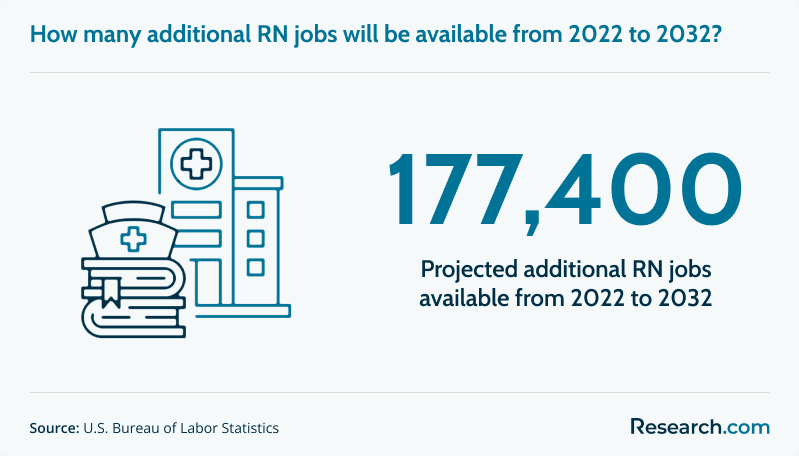
A total of 177,400 additional RN jobs will be available from 2022 to 2032. For working nurses, the better question is not only “How fast can I finish?” but “How fast can I finish without risking poor grades, burnout, or scheduling conflicts?”
- Credit requirements: Programs commonly require 24 to 35 credit hours of upper-division or completion coursework.
- Transfer credit: ADN, diploma, general education, and prior bachelor’s credits may reduce the number of remaining courses.
- Course format: Eight-week, seven-week, or compressed terms can shorten completion time but increase weekly intensity.
- Practicum requirements: Community health, leadership, or capstone placements can affect scheduling.
- Enrollment status: Full-time study is faster, while part-time study may be more realistic for nurses working full shifts.
How does an online RN to BSN compare to an on-campus program?
As of 2022, 72% of employers strongly preferred baccalaureate-prepared nurses. Both online and campus-based RN to BSN programs can lead to the same degree when properly accredited, but the learning experience, schedule, cost structure, and support model can differ significantly.
| Factor | Online RN to BSN | On-campus RN to BSN |
| Schedule | Often better for working nurses because courses may be asynchronous or mostly remote | More structured, with set class meeting times |
| Location | Accessible from home if the program is authorized in your state | Requires commuting or living near campus |
| Cost | May reduce commuting, parking, and housing costs; compare nursing degree online options carefully | May include more campus-based fees and travel expenses |
| Interaction | Uses discussion boards, video meetings, email, and virtual advising | Offers face-to-face class discussion and campus networking |
| Clinical or practicum work | May be local, project-based, simulation-supported, or arranged with approval | May use established regional clinical partners |
| Best fit | Self-directed RNs comfortable with technology and independent study | Students who prefer in-person structure and regular classroom interaction |
Online learning can be demanding. Students often ask whether RN to BSN online programs are hard. The challenge usually comes from balancing coursework with work and life obligations, not from online delivery alone. A strong program should provide advising, technical help, faculty access, library resources, and clear practicum guidance.
What is the average cost of the fastest online RN to BSN program?
Fast online RN to BSN programs often cost between $5,000 and $20,000, although the final price depends on tuition rates, required credits, transfer credits, fees, textbooks, technology charges, background checks, uniforms or equipment, and practicum-related expenses. Students weighing other healthcare leadership options may also compare nursing routes with programs such as the cheapest 1-year MPH programs online, but those degrees serve different career goals.
| Cost factor | Why it matters | How to evaluate it |
| Public vs. private institution | Public schools often charge lower tuition, especially for residents | Compare total program cost, not only cost per credit |
| In-state vs. out-of-state pricing | Some schools charge different rates based on residency | Ask whether online RN to BSN students receive a flat rate |
| Credit requirements | More required credits usually mean higher total tuition | Request an official transfer evaluation before committing |
| Employer benefits | Tuition reimbursement can substantially reduce out-of-pocket cost | Confirm reimbursement caps, grade requirements, and service obligations |
| Fees and supplies | Application fees, graduation fees, software, and compliance checks can raise the final bill | Ask for a full cost sheet before enrollment |
If you are considering a broader career change outside nursing, compare outcomes carefully. For example, exploring what jobs can you get with a master’s in library science can be useful for information management careers, but it should not be treated as a substitute for a BSN if your goal is nursing advancement.
What are the financial aid options for students enrolling in the fastest online RN to BSN program?
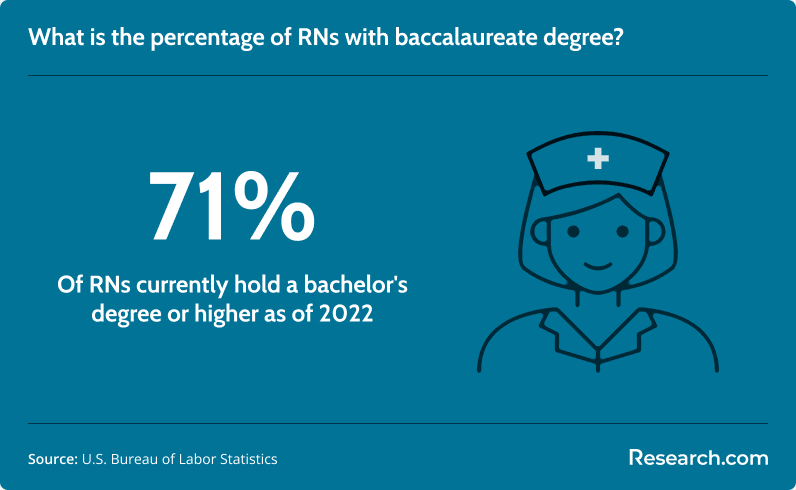
Among RNs, 71% currently hold a bachelor's degree or higher. Financial aid can make an RN to BSN more affordable, but eligibility depends on enrollment status, school participation, FAFSA results, employer policies, and scholarship criteria.
Federal financial aid
- Federal Pell Grants: Need-based grants for eligible undergraduate students with significant financial need.
- Federal Direct Loans: Federal student loans available to eligible students and, in some cases, parents.
- Federal Work-Study: Part-time employment opportunities that help students cover educational expenses when available through the institution.
State grants and scholarships
- State grants: Many states fund grant programs for residents enrolled in approved colleges or universities.
- State scholarships: Awards may be based on merit, financial need, nursing major status, workforce need, or service commitments.
Private and nursing-specific scholarships
- Nursing scholarships: Professional associations, hospitals, healthcare foundations, and community organizations may offer awards for nursing students.
- General scholarships: Students may also qualify for awards that are not limited to nursing majors.
Employer tuition reimbursement
- Employer benefits: Hospitals and healthcare systems may reimburse part of the tuition for employees pursuing career-relevant degrees. Similar benefits may apply in adjacent fields, including affordable online masters in healthcare administration programs.
What are the prerequisites for enrolling in the fastest online RN to BSN program?
Admission requirements vary, but fast online RN to BSN programs generally expect applicants to already be licensed registered nurses or be eligible for licensure. Because accelerated programs move quickly, missing prerequisite or general education credits can delay graduation.
- Active RN license: Most programs require a valid RN license in your state of residence or intended practice.
- ADN or nursing diploma: Applicants typically need an accredited associate degree or diploma in nursing. Students without nursing credentials should review an online nursing degree for non nurses instead.
- Minimum GPA: Many schools require prior nursing coursework GPA around a 2.5 or 3.0.
- Current CPR certification: Programs may request proof of active CPR certification.
- Background check and drug screen: These may be required for admission, compliance, or practicum placement.
- General education requirements: Students may need English, statistics, humanities, science, social science, or other bachelor’s-level requirements before graduation.
- State authorization: Online programs may not be available in every state, so confirm eligibility before applying.
What courses are typically in the fastest online RN to BSN program?
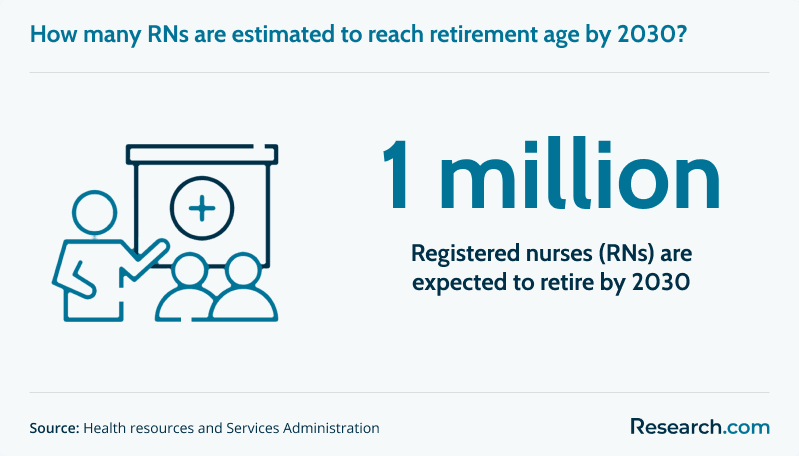
Accelerated online RN to BSN programs focus on the bachelor’s-level competencies that complement prior RN training. Coursework is often writing-heavy and practice-oriented, especially in leadership, evidence-based care, community health, informatics, and quality improvement. These programs are also preparing nurses amid a workforce shift, with approximately one million RNs expected to retire by 2030.
- Advanced Health Assessment: Builds more comprehensive assessment skills, including health histories, physical assessment methods, and interpretation of patient findings.
- Nursing Research: Introduces research design, evidence-based practice, literature review, and critical analysis of nursing studies.
- Leadership and Management: Covers leadership styles, team coordination, healthcare policy, conflict resolution, delegation, and systems thinking. Nurses interested in broader healthcare business training may later compare this content with affordable online healthcare MBA programs.
- Community Health Nursing: Focuses on population health, community assessment, prevention, and health promotion outside acute care settings.
- Health Promotion and Disease Prevention: Examines prevention strategies, chronic disease management, patient education, and wellness planning.
- Professional Issues in Nursing: Addresses ethics, legal responsibilities, professional standards, interprofessional collaboration, and nursing identity.
- Nursing Informatics: Explores electronic health records, data use, telehealth, patient safety technology, and digital communication.
- Capstone or Practicum: Applies BSN competencies to a leadership, community health, quality improvement, or evidence-based practice project.
What types of specializations are available in the fastest online RN to BSN programs?
Most accelerated RN to BSN programs are generalist completion degrees rather than deeply specialized tracks. This is because the primary goal is to help licensed RNs complete bachelor’s-level nursing requirements efficiently. Still, some schools may offer electives, certificates, or focused pathways that align with nursing interests.
- Nursing Education: Useful for nurses interested in patient education, staff development, simulation labs, or future teaching roles.
- Nursing Administration: Helpful for RNs pursuing charge nurse, unit leadership, management, or healthcare operations roles.
- Public Health Nursing: Relevant for nurses interested in community health, prevention, health equity, and population-based care.
- Geriatric Nursing Leadership: Useful for nurses serving aging populations, long-term care settings, or geriatric specialty environments.
Many specialized nursing roles require graduate education or certification beyond the BSN. If a specialization is important to your plan, ask whether it appears on the transcript, counts toward graduate prerequisites, or is simply an elective cluster.
Can I complete an RN to BSN program without traditional clinical rotations?
Some accredited RN to BSN programs reduce or replace traditional bedside clinical rotations because applicants are already licensed RNs with prior clinical preparation. Instead, they may use community health projects, leadership practicums, simulation, telehealth activities, case-based assignments, or workplace-based capstone experiences. Students comparing these options can review online rn to bsn programs without clinicals.
Before choosing a program with limited in-person clinical requirements, verify three things: the program’s nursing accreditation, your state’s expectations, and whether graduate programs or employers you may later apply to accept the practicum model. “No traditional clinicals” does not always mean “no applied practice requirements.”
What accreditation and quality benchmarks should you look for in an online RN to BSN program?
Accreditation is one of the most important filters when comparing online RN to BSN programs. Look for institutional accreditation and nursing program accreditation from recognized bodies such as ACEN or CCNE. These accreditations help confirm that the curriculum, faculty qualifications, student outcomes, and academic policies meet established standards.
Quality also involves more than accreditation. Review faculty credentials, student support, practicum placement processes, graduation policies, state authorization, NCLEX-RN history where relevant, employer partnerships, and graduate school acceptance. Nurses comparing bridge pathways from practical nursing backgrounds may also find it useful to review the LPN to BSN online route for additional context.
What challenges might you encounter in a fast-paced online RN to BSN program?
Accelerated RN to BSN programs can be efficient, but they are not easy simply because they are online. The most common difficulties include competing work schedules, weekly writing assignments, discussion deadlines, group projects, unfamiliar learning platforms, practicum documentation, and limited recovery time between terms.
| Common challenge | Why it happens | Better strategy |
| Underestimating workload | Fast terms compress reading, papers, projects, and exams | Ask for weekly hour estimates before enrolling |
| Choosing speed over fit | The shortest program may not match your work schedule | Compare full-time and part-time plans honestly |
| Ignoring practicum details | Applied projects may require approval, documentation, or a local site | Confirm requirements in writing with the program |
| Weak technology setup | Online courses require stable internet, software, and file management | Test the learning platform and support services early |
| Poor academic support | Accelerated students need quick answers from faculty and advisors | Ask about tutoring, advising response times, and writing support |
Students considering longer-term graduate rigor may compare support structures with advanced options such as a DNP program online, where clinical hours and scholarly projects become even more demanding.
Is an Online RN to BSN Program a Sound Financial Investment?
An online RN to BSN can be a sound investment when it supports a clear career goal, costs are controlled, the program is accredited, and the schedule allows you to finish without reducing income unnecessarily. It may be especially valuable for nurses seeking leadership roles, specialty practice, magnet hospital environments, graduate nursing admission, or broader mobility across healthcare settings.
Return on investment depends on local salary patterns, employer requirements, tuition reimbursement, loan borrowing, and your career timeline. Advanced practice roles may offer stronger earning potential, but they require additional graduate education. For example, nurses researching psychiatric advanced practice careers can examine psych NP salary information by state as part of a longer-term planning process.
Can non-nurses access accelerated online pathways to a nursing career?
Non-nurses generally cannot enroll in an RN to BSN program because these programs are built for licensed registered nurses. People without an RN license need a different route, such as an ADN, traditional BSN, accelerated BSN for second-degree students, direct-entry MSN, or another approved prelicensure pathway.
Admission standards, clinical requirements, licensure preparation, and timeline differ significantly from RN to BSN completion programs. If you do not already hold an RN license, explore online RN programs for non-nurses to compare appropriate entry points into nursing.
Do employers value an online RN to BSN degree?
Employers generally focus less on whether coursework was online and more on whether the institution and nursing program are accredited, whether the nurse holds a valid RN license, and whether the curriculum prepared the graduate for BSN-level responsibilities. A well-designed online RN to BSN from an accredited school can be respected when it includes strong academic standards, applied learning, and verifiable outcomes.
That said, not all programs carry the same reputation. Before enrolling, ask local nurse recruiters, HR departments, or nurse managers whether they recognize the school. Also compare cost-effective options such as the cheapest accredited RN to BSN online programs so affordability does not come at the expense of accreditation or support.
What emerging trends are shaping online RN to BSN programs?
Online RN to BSN programs are changing as healthcare becomes more digital, data-driven, and team-based. Programs increasingly use virtual simulation, telehealth case studies, electronic health record activities, adaptive learning tools, quality improvement projects, and online collaboration spaces. These tools can help students practice decision-making and communication without requiring every learning activity to happen in a hospital unit.
Another trend is smoother academic progression. Some schools create RN to BSN-to-MSN pathways, BSN-to-DNP pathways, or advising maps for advanced practice study. Nurses planning family practice roles, for example, may compare future options such as affordable online FNP programs while choosing a BSN completion program.
What student support services and resources are available?
Support services are especially important in an accelerated program because students have less time to recover from registration problems, technology issues, unclear assignments, or practicum delays. Strong online RN to BSN programs should provide academic advising, transfer credit evaluation, online library access, writing support, tutoring, technology help, career services, faculty office hours, and clear practicum guidance.
Applicants should also ask whether the program offers dedicated support for working nurses, including flexible advising hours and fast response times. Students comparing entry difficulty across nursing routes may find additional context in What's the easiest nursing program to get into?, but RN to BSN admission should still be evaluated separately because applicants already hold RN preparation.
Can an online RN to BSN program prepare you for advanced nursing degrees?
Yes, an accredited online RN to BSN can prepare nurses for MSN, DNP, and advanced practice study by strengthening research literacy, leadership, evidence-based practice, health policy understanding, and academic writing. These skills are essential for graduate nursing coursework, clinical decision-making, and scholarly projects.
If graduate school is part of your plan, confirm that the RN to BSN program is properly accredited and that its credits will be recognized by the graduate programs you may apply to. Nurses planning doctoral study can compare next-step options such as the best affordable online DNP programs.
What affordable pathways exist for advancing to higher nursing degrees?
RNs who want to move beyond the BSN should look for programs with clear progression routes, transfer-friendly policies, tuition discounts, employer partnerships, and combined degree options. Some schools offer RN to BSN/MSN pathways or allow BSN students to plan early for doctoral study, reducing duplication and helping students sequence prerequisites efficiently.
For nurses aiming at doctoral-level preparation, affordable BSN-to-DNP options may be worth comparing. Programs such as cheap BSN to DNP online pathways can help students evaluate cost, accreditation, clinical placement expectations, and long-term career alignment.
What additional certifications can enhance your nursing career?
After completing an RN to BSN, nurses may strengthen their career profile through specialty certifications, leadership credentials, continuing education, or graduate certificates. The right credential depends on your specialty, employer requirements, patient population, and career direction.
Examples include certifications in critical care, emergency nursing, oncology, case management, informatics, public health, wound care, or nurse leadership. Nurses pursuing women’s health and advanced practice options may also examine degree pathways such as the cheapest WHNP degree. Before paying for a certification, confirm eligibility requirements, renewal obligations, certifying body reputation, and employer recognition.
How do you choose the fastest online RN to BSN program?
As of 2024, 47% of hospitals are experiencing RN vacancies. That workforce pressure can make fast BSN completion attractive, but speed should be evaluated alongside quality and feasibility.
- Confirm accreditation first. Look for institutional accreditation and nursing accreditation from CCNE or ACEN.
- Request a transfer credit evaluation. Do not rely on advertised timelines until the school reviews your transcripts.
- Compare total program cost. Include tuition, fees, books, software, background checks, and graduation fees.
- Ask about practicum requirements. Find out whether you need a site, preceptor, community partner, or employer approval.
- Check state authorization. Make sure the program can enroll students in your state and support any required applied experiences there.
- Review course pacing. Ask how many courses run at once and whether terms are seven, eight, 15, or 16 weeks.
- Evaluate student support. Look for advising, tutoring, writing help, library access, and technical support outside standard business hours.
- Ask employers for feedback. If you plan to stay with your current healthcare system, confirm whether HR recognizes the program for tuition reimbursement or advancement.
- Consider your next step. If graduate school is likely, verify that the BSN meets MSN or DNP admission expectations.
Questions to ask before enrolling
| Question | Why it matters |
| Is the nursing program accredited by CCNE or ACEN? | Accreditation can affect employer recognition and graduate school eligibility. |
| What is my exact remaining credit requirement after transfer review? | Advertised completion speed may not apply if you lack prerequisites. |
| Are there required live sessions? | Live class meetings can conflict with nursing shifts. |
| Can I complete practicum requirements near where I live or work? | Placement rules can affect your schedule and completion timeline. |
| What happens if I need to slow down? | Accelerated students should know whether part-time pacing is available. |
| Does my employer offer tuition reimbursement for this school? | Employer benefits can reduce out-of-pocket cost. |
What career paths are available for graduates of the fastest online RN to BSN programs?
A BSN can support a wide range of nursing career paths and may strengthen access to some of the highest paying degrees pathways in healthcare when combined with experience, certification, or graduate education.
Clinical nursing roles
- Staff Nurse: Continue providing direct patient care in hospitals, clinics, home health agencies, rehabilitation centers, and long-term care facilities.
- Specialty Nurse: Build expertise in critical care, pediatrics, geriatrics, oncology, emergency nursing, perioperative nursing, or other specialty areas.
- Public Health Nurse: Support community health programs, prevention initiatives, screenings, and population-level interventions.
Leadership and systems roles
- Nurse Manager: Supervise staff, scheduling, quality initiatives, patient flow, and unit operations.
- Nurse Administrator: Lead broader departments, programs, or healthcare service lines.
- Clinical Nurse Leader: Coordinate care, improve patient outcomes, and support evidence-based practice at the unit level.
- Case Manager or Care Coordinator: Help patients navigate treatment plans, transitions of care, insurance requirements, and community resources.
Advanced practice pathways
- Nurse Practitioner: Diagnose and treat patients, prescribe medications where authorized, and provide patient education after completing graduate preparation. The growth opportunities for nurse practitioners are projected to increase by 45% through 2032.
- Certified Nurse-Midwife: Provide reproductive, pregnancy, childbirth, and postpartum care after completing the required graduate-level preparation and certification.
- Certified Registered Nurse Anesthetist: Provide anesthesia-related care after meeting advanced education, clinical, and certification requirements.
What is the job market for graduates with an online RN to BSN?
The job market for BSN-prepared nurses remains supported by several forces: ongoing RN vacancies, an aging population, expanding care needs, nurse retirements, and employer preference for bachelor’s-level preparation. A BSN can also make nurses more competitive for leadership, specialty, quality improvement, and graduate education pathways.
However, the market is not identical everywhere. Geographic location, specialty, hospital system, union environment, shift availability, and experience all influence hiring and pay. While demand for BSN-prepared nurses is high in many areas, applicants should still research local openings, employer education preferences, and specialty requirements before assuming the degree will automatically lead to a specific job.
The strongest candidates usually combine the BSN with current clinical competence, strong references, specialty experience, leadership initiative, professional certifications, and a clear career direction.
Is the Accelerated RN to BSN a Stepping Stone to Advanced Practice Degrees?
An accelerated RN to BSN can be an effective bridge to graduate nursing education when the program is accredited, academically rigorous, and aligned with your long-term plan. Many RN to BSN programs include leadership, evidence-based practice, community health, and research coursework that prepares students for MSN or DNP expectations.
If advanced practice is your goal, ask whether the school offers RN to BSN/MSN options, BSN-to-DNP planning, graduate advising, or articulation agreements. Nurses comparing doctoral pathways may also review the easiest DNP program online, while remembering that “easiest” should never replace accreditation, clinical quality, and licensure alignment as selection criteria.
Common mistakes to avoid when choosing a fast online RN to BSN program
- Choosing only by speed: The shortest program may not be realistic if you work full time, have family responsibilities, or need prerequisite credits.
- Skipping accreditation checks: A low-cost or fast program is risky if employers or graduate schools do not recognize it.
- Looking only at tuition: Fees, textbooks, software, compliance checks, and practicum expenses can change the true cost.
- Assuming online means easier: Accelerated online nursing courses often require significant writing, discussion, research, and project work.
- Ignoring state authorization: Not every online program can enroll students in every state or support local practicum requirements.
- Failing to confirm transfer credits: A program advertised as two semesters may take longer if you are missing general education or prerequisite courses.
- Assuming a BSN guarantees a raise: The degree may improve eligibility, but pay depends on employer policy, market conditions, specialty, and experience.
Key Insights
- The fastest online RN to BSN programs in this ranking can be completed in 8 months/2 semesters, but students should confirm their own timeline through a transcript evaluation.
- A total of 177,400 additional RN jobs will be available from 2022 to 2032, and in 2024, 47% of hospitals are experiencing RN vacancies.
- As of 2022, 71.7% of the RN workforce had earned a baccalaureate or higher degree as their highest level of nursing education.
- 72% of employers in 2022 strongly preferred baccalaureate-prepared nurses, making the BSN a valuable credential for mobility and advancement.
- Program quality matters more than speed alone. Prioritize CCNE or ACEN accreditation, state authorization, transparent costs, realistic course pacing, and practicum support.
- Online RN to BSN programs can work well for employed nurses, but they require discipline, reliable technology, strong writing skills, and careful calendar planning.
- The growth opportunities for nurse practitioners are projected to increase by 45% through 2032, but advanced practice roles require graduate education beyond the BSN.
- 1 million RNs are expected to retire by 2030, reinforcing the importance of BSN-prepared nurses who can step into leadership, education, quality, and specialty roles.
Here’s what graduates have to say about their fastest online RN-to-BSN programs
“The online RN to BSN program changed the direction of my career. I could keep working while completing my classes, and the flexible format helped me manage school around a demanding schedule. I later moved into nurse management, and the leadership coursework gave me confidence for that transition.” - Sydney
“I had doubts about online nursing education at first, but the program was more engaging than I expected. The faculty were responsive, the assignments connected to real practice, and the clinical projects helped me prepare for the next stage of my nursing career.” - Michael
“As a working parent, attending a campus program would have been extremely difficult. The online RN to BSN format let me study from home while staying present for my family. The program helped me build the knowledge and confidence I needed to move forward professionally.” - Jenna
References:
- American Association of Colleges of Nursing (n.d.). Nursing Workforce Fact Sheet.
- National Nursing Institutes (n.d.). NSI National Health Care Retention Report.
- People Element (2024). 2024 Nursing Shortage Statistics.
- U.S. Bureau of Labor Statistics (2024). Registered nurses.
- U.S. Department of Health and Human Services Health Resources and Services Administration (2022). 2022 National Sample Survey of Registered Nurses Snapshot.
Other Things You Should Know About the Fastest Online RN-to-BSN Programs
Yes. Most fast online RN to BSN programs use asynchronous classes, letting registered nurses complete weekly assignments on their own schedule. Many accelerated options still run in 5- or 8-week terms and require about 30 to 36 BSN credit hours after transfer credit is applied.
Yes, many fast-track online RN to BSN programs in 2027 include clinical components. Typically, these are arranged locally at a healthcare facility. The clinical hours vary by program, but they are often a crucial part of the curriculum, offering hands-on experience.
Admission requirements generally include an active RN license, a minimum GPA of 2.5 in prior coursework, and completion of prerequisites in science and humanities. Some programs may also require professional references or a personal statement as part of the application process.


