
2027 Most Affordable Online Women’s Health Nurse Practitioner Degree Programs

Co-Founder and Chief Data Scientist
Choosing an online women’s health nurse practitioner degree is not just a question of tuition. You are deciding whether a graduate nursing program will qualify you for advanced practice, prepare you for certification, help you complete clinical hours, and fit around work and family responsibilities. The decision matters because women’s health providers remain a small share of the nurse practitioner workforce: the U.S. has more than 385,000 licensed nurse practitioners, but only around 2% focus on primary care for women (American Association of Nurse Practitioners, 2024).
This guide is for registered nurses comparing affordable online women’s health nurse practitioner programs, nurse-midwifery tracks, and related advanced practice options. You will learn what WHNP programs include, how online study works, what programs cost, what admission requirements to expect, how salaries and job outlook compare, and how to avoid choosing a program that does not support your certification or clinical goals.
Quick answer: Is an online women’s health nurse practitioner degree worth considering?
An online women’s health nurse practitioner degree can be a strong option for licensed RNs who want advanced clinical authority in reproductive, gynecologic, prenatal, postpartum, and preventive women’s health care. The best programs combine online coursework with in-person clinical training, prepare graduates for certification, and hold nursing accreditation from agencies such as CCNE, ACEN, or ACME. It is most worthwhile for nurses who can manage graduate-level study, secure or complete required clinical placements, and verify that the program meets certification and state practice requirements.
What are the benefits of getting an online women’s health nurse practitioner degree?
- Specialized career preparation: WHNP programs train nurses for advanced practice roles focused on women’s health across the lifespan, including contraception, sexual health, pregnancy-related care, menopause, chronic condition management, and preventive screenings.
- Competitive earning potential: Nurse practitioners, nurse midwives, and related advanced practice nurses can earn strong salaries, with many roles paying around $120,000 or more depending on specialty, employer, location, experience, and credentials.
- Flexibility for working nurses: Online delivery can make graduate nursing study more manageable for RNs who need to keep working while completing lectures, discussions, assignments, and exam preparation.
- Clinical relevance: Students build advanced assessment, diagnostic, prescribing, counseling, and care coordination skills that directly apply to women’s health practice settings.
- Impact on access to care: WHNPs can help address gaps in reproductive and preventive care, especially in communities where access to women’s health clinicians is limited.
What can I expect from an online women’s health nurse practitioner program?
An online women’s health nurse practitioner program usually delivers didactic coursework through a learning management system while requiring in-person clinical experiences at approved sites. The “online” format typically applies to lectures, assignments, discussions, exams, simulations, and faculty interaction—not to all patient-care training. Before enrolling, students should confirm how clinical placements work, whether campus visits are required, and whether the program supports certification eligibility.
| Program component | What it usually involves | What to verify before enrolling |
| Online coursework | Graduate nursing courses delivered through recorded lectures, live sessions, readings, case studies, assignments, and exams. | Ask whether courses are asynchronous, synchronous, or a mix of both. |
| Clinical practicum | In-person patient-care hours completed in approved clinics, hospitals, community practices, or specialty settings. | Confirm who finds placements, how far you may need to travel, and whether your state is eligible. |
| Skills training | Advanced assessment, diagnostic reasoning, prescribing, care planning, counseling, and procedure-related preparation. | Check whether the program requires campus intensives, simulations, or lab visits. |
| Certification preparation | Coursework and clinical experiences aligned with advanced practice competencies and specialty certification expectations. | Request certification pass-rate information and graduate outcome data. |
| Student support | Advising, faculty access, clinical coordination, technology help, library resources, and career guidance. | Ask how online students receive support during difficult clinical or academic terms. |
Where can I work with a women’s health nurse practitioner degree?
WHNP graduates can work in many settings where reproductive, gynecologic, prenatal, postpartum, and preventive services are delivered. According to the U.S. Bureau of Labor Statistics (BLS, 2024), 49% of APRNs worked in physician’s offices and 25% were stationed in hospitals. WHNPs may also work in community health, telehealth, education, research, and policy settings depending on credentials and experience.
- OBGYN and women’s health practices: WHNPs may provide wellness visits, contraceptive counseling, reproductive health care, prenatal services, and follow-up management for common conditions.
- Community health clinics: These settings often focus on accessible care, family planning, STI treatment, screening, prevention, and patient education.
- Hospital outpatient departments: WHNPs may support specialty clinics, prenatal care programs, gynecology services, or follow-up care after procedures or hospitalization.
- University and student health centers: Common services include sexual health counseling, routine screenings, contraception, wellness visits, and health education.
- Telehealth services: Virtual care can expand access to counseling, medication management, follow-up care, and patient education, although some services still require in-person evaluation.
How much can I make with a women’s health nurse practitioner degree?
BLS data show that nurse practitioners, including those in women’s health, earn as much as $128,490 yearly, while nurse midwives take home $131,570. Across NP roles, salaries can range from $94,530 at the 10th percentile to $168,030 at the 90th percentile.
Pay varies widely. A WHNP in a high-volume urban clinic, hospital system, specialty reproductive health practice, or private setting may see different compensation than a provider in a rural clinic or community health organization. Experience, certification, shift expectations, call requirements, patient volume, state scope-of-practice rules, and employer benefits can all affect total compensation.
Advanced preparation may also influence opportunities. WHNPs with a Doctor of Nursing Practice (DNP) or PhD in nursing may pursue leadership, academic, policy, or research roles, with salaries that start at $112,000 and reach upwards of $140,000. These figures should be treated as planning estimates, not guaranteed outcomes.
- Most affordable online women’s health nurse practitioner degree programs for 2027
- How long does an online women’s health nurse practitioner program take?
- Online vs. on-campus WHNP programs: which format fits you?
- How much does an online women’s health nurse practitioner program cost?
- Financial aid options for online WHNP students
- Admission requirements for online WHNP programs
- Common courses in an online WHNP curriculum
- How to move faster after earning an online WHNP degree
- How additional online credentials can support advancement
- WHNP specializations and related focus areas
- Challenges students face in online WHNP programs
- How to evaluate the ROI of an online WHNP degree
- Student support services in online WHNP programs
- How to choose the best online WHNP program
- Why certification outcomes matter
- How LPNs can work toward a WHNP role
- Mentorship and career development in online WHNP programs
- Digital health training in online WHNP programs
- Career paths for online WHNP graduates
- How to verify online WHNP program credibility
- Can you finish an online WHNP program without clinical rotations?
- How WHNP salary compares with other NP specialties
- Job market outlook for online WHNP graduates
List of the Most Affordable Online Women’s Health Nurse Practitioner Degree Programs for 2027
How do we rank schools?
Affordability matters, but it should not be evaluated separately from accreditation, clinical requirements, specialty fit, and certification preparation. Research.com developed this ranking of affordable online women’s health nurse practitioner and related nurse-midwifery programs using a detailed methodology. The analysis draws on information from the Integrated Postsecondary Education Data System, Peterson’s database and its Distance Learning Licensed Data Set, College Scorecard, and the National Center for Education Statistics (NCES).
| School | Track or concentration | Cost per credit | Credits | Accreditation |
| Texas Tech University | Nurse Midwifery | $272.43 (in-state), $682.43 (out-of-state) | 51 | ACME, CCNE |
| East Carolina University | Nurse-Midwifery | $1,003.69 (in-state), $1,413.69 (out-of-state) | 53 | ACME, CCNE |
| Old Dominion University | Nurse Midwifery | $642 | 70 | CCNE, ACME (SU) |
| Kent State University Online | Women’s Health Nurse Practitioner | $594.78 (in-state), $604.78 (out-of-state) | 35-42 | CCNE |
| Stony Brook University | Nurse Midwifery | $471 (in-state), $565 (out-of-state) | 45 | ACME |
| Georgia College & State University | Women’s Health Nurse Practitioner | $787 | 40 | CCNE |
| University of Missouri-Kansas City Online | Women’s Health Nurse Practitioner | $880.65 | 46 | CCNE |
| Frontier Nursing University | Women’s Health Care Nurse Practitioner | $685 | 55 | ACEN |
| University of Cincinnati Online | Women’s Health Nurse Practitioner | $892 (in-state), $907 (out-of-state) | 49 | CCNE |
| Regis College | Women’s Health Nurse Practitioner | $995 | 46-61 | ACEN |
1. Texas Tech University
Texas Tech University offers an online MSN in Nurse Midwifery that combines distance coursework with limited campus sessions in Lubbock. The program emphasizes evidence-based, population-focused care for women during the childbearing years and beyond. Students complete preceptor-supported clinical work in or near their home communities, and graduates are positioned to sit for the American Midwifery Certification Board (AMCB) exam after meeting program requirements.
- Program Length: Two to three years
- Tracks/Concentrations: Nurse Midwifery
- Cost per Credit: $272.43 (in-state), $682.43 (out-of-state)
- Required Credits to Graduate: 51
- Accreditation: Accreditation Commission for Midwifery Education (ACME), Commission on Collegiate Nursing Education (CCNE)
2. East Carolina University
East Carolina University structures its MSN in Nurse-Midwifery around online learning, campus-based skill development, and local clinical placement. Students use digital platforms for assignments, assessments, communication, and course engagement. Campus visits at the start of clinical courses last two to four days and support hands-on preparation. Labor and delivery experience is preferred; students without it may need Doula training or an independent study experience.
- Program Length: Two to three years
- Tracks/Concentrations: Nurse-Midwifery
- Cost per Credit: $1,003.69 (in-state), $1,413.69 (out-of-state)
- Required Credits to Graduate: 53
- Accreditation: ACME, CCNE
3. Old Dominion University
Old Dominion University delivers an MSN concentration in Nurse Midwifery through a partnership with Shenandoah University (SU). Students take advanced practice nursing coursework through Old Dominion during the first year and midwifery-focused coursework through Shenandoah in the second year. The hybrid format includes two required immersion sessions at SU and prepares graduates for Certified Nurse Midwife (CNM) practice and the AMCB exam.
- Program Length: Two to three years
- Tracks/Concentrations: Nurse Midwifery
- Cost per Credit: $642
- Required Credits to Graduate: 70
- Accreditation: CCNE, ACME (SU)
4. Kent State University Online
Kent State University Online offers an MSN with a Women’s Health Nurse Practitioner focus. The curriculum prepares students for primary care, prevention, health promotion, and management of acute and chronic concerns affecting women. Practicum experiences take place in ambulatory and specialty clinic environments with guidance from faculty mentors and clinical preceptors.
- Program Length: Two to three years
- Tracks/Concentrations: Women’s Health Nurse Practitioner
- Cost per Credit: $594.78 (in-state), $604.78 (out-of-state)
- Required Credits to Graduate: 35-42
- Accreditation: CCNE
5. Stony Brook University
Stony Brook University offers a hybrid Nurse Midwifery program focused on care for women and healthy newborns, including normal birth across multiple care environments. The curriculum emphasizes leadership, advocacy, education, research-informed decision-making, and change management. Course topics include Advanced Health Assessment, Primary Care, and Clinical Pharmacology.
- Program Length: Two to three years
- Tracks/Concentrations: Nurse Midwifery
- Cost per Credit: $471 (in-state), $565 (out-of-state)
- Required Credits to Graduate: 45
- Accreditation: ACME
6. Georgia College & State University
Georgia College & State University offers an MSN in Women’s Health Nurse Practitioner that pairs online coursework with required campus labs and simulations once per semester. Students prepare to provide general wellness care, gynecologic services, pregnancy and postpartum care, and STI treatment. The program includes 675 clinical hours that must be completed within the state of Georgia.
- Program Length: Two to three years
- Tracks/Concentrations: Women’s Health Nurse Practitioner
- Cost per Credit: $787
- Required Credits to Graduate: 40
- Accreditation: CCNE
7. University of Missouri-Kansas City Online
The University of Missouri-Kansas City Online offers a Women’s Health Nurse Practitioner track covering gynecologic, prenatal, and primary care. Students study assessment, evidence-based diagnosis, treatment planning, wellness promotion, and care for childbearing patients. Clinical work occurs in community or outpatient environments under preceptor supervision, and the blended format includes required campus visits.
- Program Length: Two to three years
- Tracks/Concentrations: Women’s Health Nurse Practitioner
- Cost per Credit: $880.65
- Required Credits to Graduate: 46
- Accreditation: CCNE
8. Frontier Nursing University
Frontier Nursing University offers an MSN in Women’s Health Care Nurse Practitioner with full-time and part-time options. Students complete online coursework, attend two brief immersion sessions, and complete clinical training with a certified women’s health care nurse practitioner in their community. Courses include Gynecologic Health, Psychological Concepts for APRNs, and Care During Normal Pregnancy.
- Program Length: Two to three years
- Tracks/Concentrations: Women’s Health Care Nurse Practitioner
- Cost per Credit: $685
- Required Credits to Graduate: 55
- Accreditation: Accreditation Commission for Education in Nursing (ACEN)
9. University of Cincinnati Online
The University of Cincinnati Online offers a Women’s Health Nurse Practitioner program for registered nurses who want graduate-level women’s health preparation. Students complete 672 clinical hours and may finish in six semesters or two years. A two-day virtual synchronous intensive helps students connect with faculty and peers while completing the program online.
- Program Length: Two to three years
- Tracks/Concentrations: Women’s Health Nurse Practitioner
- Cost per Credit: $892 (in-state), $907 (out-of-state)
- Required Credits to Graduate: 49
- Accreditation: CCNE
10. Regis College
Regis College offers an online WHNP program with three entry points. Students build on prior nursing preparation through MSN core courses in leadership, community health, and advanced pharmacology before moving into women’s health coursework such as Care of the Childbearing Woman and Primary Care of the Woman seminars. The program addresses family planning, wellness exams, breast cancer, osteoporosis, pregnancy, childbirth, and postnatal care.
- Program Length: Two to three years
- Tracks/Concentrations: Women’s Health Nurse Practitioner
- Cost per Credit: $995
- Required Credits to Graduate: 46-61
- Accreditation: ACEN
How to use this affordability list wisely
The lowest tuition program is not automatically the best choice. A program may be inexpensive but still create problems if it does not accept students from your state, lacks clinical placement support, requires travel you cannot manage, or does not align with your desired certification. Compare total cost, accreditation, clinical logistics, certification outcomes, faculty expertise, and state authorization before applying.
Key Findings
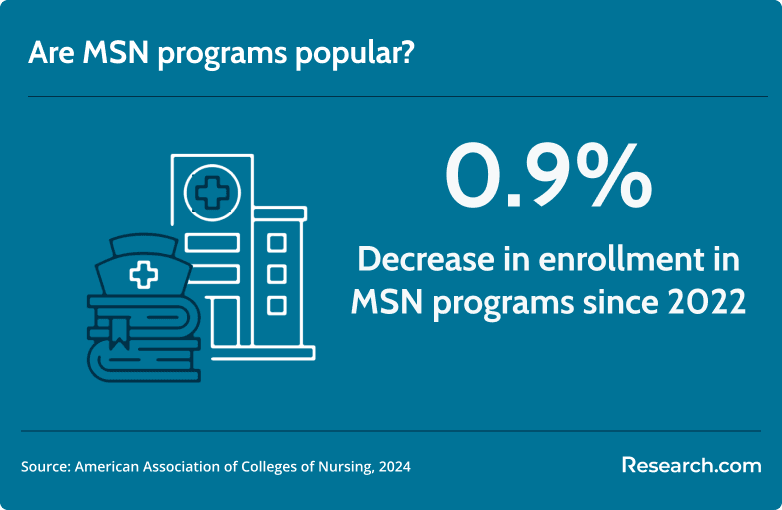
- The American Association of Colleges of Nursing (AACN, 2024) reported a 0.9% decrease in master’s program enrollment, equal to 1,176 fewer students since 2022.
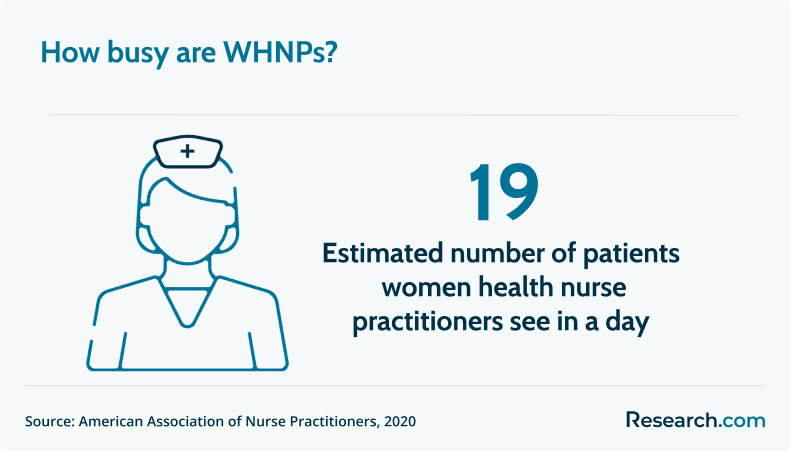
- Most WHNPs see about 19 patients a day (AANP, 2020), making time management, communication, and clinical efficiency essential skills.
- Maternal health professionals, including WHNPs, nurse midwives, and clinical nurse specialists, account for approximately 200,733 members of the U.S. maternal health workforce.
- Employment for NPs is projected to grow by 46% from 2022 to 2032, with approximately 29,000 annual job openings.
- The National Association of Nurse Practitioners in Women’s Health (NPWH, 2023) reported that 70% of its members are certified in this specialty, while 16% are FNPs and 11% are CNMs.
How long does it take to complete an online women’s health nurse practitioner program?
Most online women’s health nurse practitioner programs take two to three years for part-time students. Full-time students may finish in 18 to 24 months, but that pace usually requires a heavier academic and clinical workload. Program length depends on your entry point, credit requirements, transfer policies, clinical hour requirements, and whether you pause or reduce enrollment during demanding work periods.
Some nurses compare WHNP programs with 1 year NP programs, but accelerated timelines are usually designed for students with prior graduate nursing preparation, advanced clinical experience, or a specific bridge pathway. Shorter does not always mean easier; compressed programs can be more intense because coursework and clinical hours are concentrated into fewer terms.
Students exploring adjacent behavioral health pathways may also compare flexible online options such as the most affordable substance abuse counseling programs online, especially if their long-term interests include addiction, reproductive health counseling, community care, or patient advocacy.
Clinical requirements are a major driver of completion time. Online WHNP programs generally require in-person practicum hours, often within a defined timeframe and at program-approved healthcare sites. Students should ask early whether the school arranges placements, approves student-identified preceptors, or limits clinicals to certain states.
The American Association of Colleges of Nursing (AACN, 2024) reported a 0.9% decrease in master’s enrollment, or 1,176 fewer students since 2022, marking the third consecutive year of decline. Time burden, cost, clinical placement complexity, and work-life balance can all influence whether nurses start or finish graduate study.
How does an online women’s health nurse practitioner program compare to an on-campus program?
Online and on-campus WHNP programs often share similar academic goals: advanced nursing knowledge, women’s health clinical competence, and preparation for certification. The difference is usually how students attend class, interact with faculty, access resources, and complete required skills training.
| Factor | Online WHNP program | On-campus WHNP program | Best fit |
| Schedule | Often offers asynchronous coursework, though some live sessions may be required. | Usually follows set class meeting times on campus. | Online works better for nurses with variable shifts; campus may suit students who want routine. |
| Clinical training | Completed in person at approved local or regional sites. | Often coordinated near the campus or affiliated health systems. | Choose the format with the stronger clinical placement plan for your location. |
| Faculty access | Virtual office hours, messaging, video meetings, and online discussions. | Face-to-face meetings, in-person advising, and campus interaction. | Online requires proactive communication; campus offers more spontaneous contact. |
| Learning resources | Digital libraries, telehealth simulations, online tutoring, recorded lectures, and virtual tools. | Physical libraries, in-person labs, study spaces, and campus-based resources. | Choose based on how you learn best and what support you will actually use. |
| Networking | Connections may span multiple states and practice settings. | Networking may be stronger locally through faculty, classmates, and nearby clinical sites. | Online can expand geographic reach; campus can strengthen local employer ties. |
Nurses comparing graduate pathways should also understand the distinction between broader MSN preparation and advanced practice roles. This guide to MSN nursing vs. nurse practitioner paths can help clarify whether your goal is leadership, education, or direct patient care.
Some students compare healthcare degrees with other online career options before committing to nursing graduate school. For example, the cheapest associate in cyber security online may appeal to readers weighing a lower-cost entry into information security instead of an advanced clinical path.
If your interest is counseling rather than advanced nursing practice, you may also want to review what do you need to be a substance abuse counselor to understand degree, supervised experience, and state licensure expectations in that field.
What is the average cost of an online women’s health nurse practitioner program?
Program cost depends on public or private status, residency rules, tuition model, required credits, fees, and clinical expenses. Average tuition and fees for master’s programs at public institutions are around $9,560, while private nonprofit universities can cost $31,930 (Ma et al., 2024).
Many MSN programs charge $300 to $1,500 per credit hour and require 40 to 60 credit hours. That means total tuition often ranges from $12,000 to $90,000, while costs at competitive nursing schools may reach as much as $102,000. These figures do not include every possible expense, so students should request a complete cost breakdown before enrolling.
When researching how much does nursing school cost, include the following expenses in your budget:
- Technology and platform fees: Online programs may charge digital access fees for learning systems, virtual libraries, exam proctoring, or technical tools, often from $50 to $300 per semester.
- Course and simulation fees: Some advanced nursing courses add charges for labs, simulations, standardized patients, or specialized software, often between $100 and $500 per course.
- Clinical placement fees: Some programs charge for placement coordination or clinical administration, which may cost $500 to $2,000 depending on provider or location.
- Liability insurance: Students may need coverage before entering clinical rotations, with annual premiums typically ranging from $30 to $100.
- Practice supplies: Scrubs, stethoscopes, equipment, background checks, drug screenings, immunization documentation, and other clinical requirements can add $200 or more.
What are the financial aid options for students enrolling in an online women’s health nurse practitioner program?
Financial aid for online WHNP students may include scholarships, grants, loans, employer tuition benefits, work-study, and loan repayment programs. The best funding plan often combines multiple sources rather than relying on one award.
- March of Dimes Graduate Nursing Scholarship: Registered nurses pursuing graduate maternal-child nursing education, including women’s health, may receive up to $10,000 for tuition, books, and related expenses.
- TYLENOL Future Care Scholarship: Healthcare students may receive $5,000 to $10,000 based on academic achievement, leadership, and community involvement.
- Nurses Educational Funds, Inc. (NEF) Scholarship: NEF supports registered nurses pursuing advanced degrees, with award amounts varying by merit and financial need.
- Employer tuition reimbursement: Hospitals and healthcare systems may help working nurses pay for graduate study, sometimes in exchange for continued employment after graduation.
- Nurse Corps Loan Repayment Program: This federal program repays up to 85% of unpaid nursing education debt for nurses who work in approved underserved areas.
Students who want to reduce borrowing should also compare the cheapest online MSN programs and ask each school whether WHNP students qualify for institutional scholarships, clinical placement support, or graduate assistant opportunities.
What are the prerequisites for enrolling in an online women’s health nurse practitioner program?
Admission requirements vary, but most online WHNP programs are designed for licensed registered nurses with strong academic preparation and patient-care experience. Requirements are meant to confirm that applicants can handle graduate coursework, advanced clinical decision-making, and supervised practice.
- Active RN license: Most programs require an unencumbered registered nurse license. Some schools also require licensure in the state where clinicals will occur.
- BSN and official transcripts: A Bachelor of Science in Nursing from a CCNE- or ACEN-accredited program is commonly required, although some bridge pathways may exist.
- Minimum GPA: Many programs set a minimum GPA, often 2.7 or higher. GRE requirements are becoming less common but may still appear at some schools.
- Professional nursing experience: Programs may prefer applicants with labor and delivery, obstetrics, gynecology, community health, or women’s health experience, although requirements vary.
- Prerequisite coursework: Statistics, research, and health assessment courses may be required before or during early enrollment.
- Personal statement: Applicants usually explain why they want to become a WHNP, how their experience supports that goal, and what population they hope to serve.
- References: Schools commonly request three academic or professional recommendations.
- Health and safety documentation: Immunizations, background checks, drug screening, Basic Life Support (BLS), and other clearances may be required for clinical placement.
- Additional requirements: Interviews, writing samples, portfolios, TOEFL scores for non-native English speakers, or course evaluations may be part of the process.
Applicants entering nursing through traditional or second-degree routes should check whether their prior program meets admission standards. Students who began through online accelerated BSN programs should confirm accreditation, transcript requirements, and clinical documentation before applying.
WHNP preparation also requires awareness of access and equity issues. A KFF report (2024) found that 10% (9.5 million) of the 97.1 million women aged 19 to 64 in the U.S. remain uninsured. Because insurance status affects screening, prenatal care, contraception, chronic disease management, and follow-up access, WHNP students should expect coursework and clinical discussions that connect patient care with policy, social determinants, and resource navigation.
The chart below provides additional context on women’s health insurance coverage.
What courses are typically in an online women’s health nurse practitioner program?
Online WHNP curricula combine advanced nursing core courses with specialty women’s health content and supervised clinical practice. Even students researching the easiest NP schools to get into should expect rigorous academic expectations because WHNP graduates must be prepared for advanced assessment, diagnosis, prescribing, counseling, and patient management.
- Health Policy: Students examine how regulations, reimbursement, public programs, and legal decisions influence access to women’s health services.
- Advanced Pharmacology: This course covers medication selection, prescribing considerations, safety, drug interactions, and treatment management for women’s health and primary care needs.
- Informatics, Quality, and Safety: Students learn to use data, electronic health records, quality improvement methods, and technology to support safer and more efficient care.
- Transition to Nurse-Midwifery/Women’s Health Practice: This course helps students move from general nursing practice toward specialized women’s health or midwifery-related responsibilities.
- Advanced Health Assessment: Students build advanced physical, psychosocial, and reproductive health assessment skills needed for diagnosis and treatment planning.
- Reproductive Physiology: Coursework explores reproductive systems, pregnancy, childbirth, menopause, sexual health, and patient education across genders.
- Evidence-Based Research for Nursing Practice: Students learn to evaluate research and apply evidence to improve clinical decisions and patient outcomes.
Technical knowledge is only part of the preparation. WHNPs also need excellent communication, cultural humility, emotional intelligence, critical thinking, and organization. These skills matter because WHNPs often manage sensitive conversations and complex care needs while seeing about 19 patients a day (AANP, 2020).
How can I accelerate my career progression after earning my online WHNP degree?
After graduation, advancement depends on certification, clinical performance, continuing education, mentorship, and the type of women’s health setting you enter. New WHNPs can strengthen their trajectory by seeking roles with structured onboarding, pursuing specialty continuing education, joining professional associations, and documenting outcomes such as patient education, quality improvement, or access-to-care initiatives. Nurses who want to understand earlier nursing pathways can also review the quickest way to become a nurse for context on how nursing careers can progress from entry-level preparation to advanced practice.
How can I enhance my career with additional online credentials?
Additional credentials can support leadership, education, research, policy, or specialized clinical practice. A DNP may be useful for WHNPs who want to lead clinical programs, improve systems of care, teach, or influence policy. When comparing programs such as DNP programs online accredited, confirm accreditation, practicum requirements, project expectations, and whether the program fits your long-term role rather than choosing only by speed.
What types of specializations are available in online women’s health nurse practitioner programs?
Some WHNP programs offer formal concentrations, while others build specialization through clinical placements, electives, and faculty expertise. The right focus depends on whether you want primary care, reproductive health, pregnancy-related care, neonatal care, midwifery, education, or leadership.
- Primary Care of Women: Focuses on preventive care, wellness visits, chronic condition management, mental health considerations, lifestyle counseling, and care across the lifespan.
- Gynecological Care: Covers menstrual concerns, contraception, menopause, STI diagnosis and treatment, screenings, counseling, and routine gynecologic exams.
- Antepartum and Postpartum Care: Prepares students to support patients during pregnancy and after delivery, including education, monitoring, recovery, and breastfeeding-related support.
- Comprehensive Perinatal Care: Addresses the continuum from preconception through postpartum, including maternal and fetal considerations and higher-risk situations.
- Neonatal Care: Focuses on newborn care, especially for infants who are premature or medically fragile. Students interested in this path may compare Neonatal nurse practitioner programs.
- Nurse-Midwifery Management: Prepares nurses for leadership in midwifery-related care, prenatal and postnatal services, family planning education, and patient advocacy.
According to the National Center for Health Workforce Analysis (2024), maternal health professionals, including WHNPs, nurse midwives, and clinical nurse specialists, make up approximately 200,733 members of the U.S. maternal health workforce. That scale highlights why specialized preparation matters for patient access, continuity of care, and quality improvement.
The chart below shows the total number of maternal health workers from 2021 to 2023.
What challenges might I face during an online women’s health nurse practitioner program?
Online WHNP programs are flexible, but they are not easy. Students must manage graduate coursework, clinical scheduling, professional responsibilities, and personal commitments at the same time. The biggest challenges often involve time management, clinical placement logistics, technology demands, limited in-person networking, and the emotional load of women’s health care topics.
- Clinical placement stress: Finding qualified preceptors can be difficult in some regions. Ask each school how placement support works before enrolling.
- Work-school overload: Many RNs underestimate how much time clinical documentation, readings, exams, and assignments require.
- Technology dependence: Reliable internet, video platforms, digital testing systems, and simulation tools are essential for online learning.
- Less informal networking: Online students may need to be intentional about joining professional groups, attending virtual events, and building faculty relationships.
- Fit of pathway: Students entering nursing from another field may need a different route, such as direct-entry nurse practitioner programs online, depending on prior education and licensure status.
How can I evaluate the return on investment of my online WHNP degree?
ROI should be measured by more than salary. Compare total tuition, fees, travel, lost work hours, clinical placement costs, certification preparation, expected job options, and whether the degree supports the role you actually want. If you are still completing earlier nursing education, consider how costs accumulate across the pathway, including RN to BSN cost, before committing to graduate study.
| ROI question | Why it matters | What to ask the school |
| Will this program qualify me for certification? | Certification can affect employability and advanced practice readiness. | Which certification exam do graduates typically pursue, and what are recent outcomes? |
| Can I complete clinicals near me? | Clinical barriers can delay graduation and increase costs. | Who secures preceptors, and what happens if a placement falls through? |
| What is the true total cost? | Fees, travel, supplies, and lost wages can change affordability. | Can you provide a full cost estimate for my entry point and residency status? |
| Do graduates get WHNP roles? | Employment alignment matters more than generic graduate outcomes. | Where do recent graduates work, and what roles do they hold? |
What student support services are available during my online WHNP program?
Strong online programs support students academically, clinically, technically, and professionally. Look for advising, faculty office hours, library access, writing support, exam preparation, clinical coordination, career services, mental health resources, and financial aid counseling. Students comparing family practice routes may also find information on the cheapest RN to FNP online programs useful when weighing WHNP against broader primary care preparation.
How to choose the best online women’s health nurse practitioner program?
The best online WHNP program is the one that fits your state, schedule, budget, clinical placement needs, certification goal, and preferred patient population. Use the checklist below before applying.
- Confirm accreditation: Look for CCNE, ACEN, or ACME accreditation, depending on the program and track.
- Check state authorization: Some online nursing programs cannot enroll students or place clinicals in every state.
- Verify certification alignment: Ask which certification exam the curriculum is designed to support.
- Understand clinical placement responsibility: Determine whether the school finds sites, assists with placements, or expects students to locate preceptors independently.
- Compare full cost, not just tuition: Include fees, campus visits, travel, supplies, testing, lost wages, and clinical expenses.
- Review faculty expertise: Faculty experience in women’s health, reproductive care, midwifery, health equity, or specialty practice can shape your training.
- Request outcomes: Ask about graduation rates, certification pass rates, employment outcomes, and recent student clinical sites.
- Evaluate format: Decide whether you need asynchronous flexibility or prefer live interaction and structured deadlines.
- Ask about support: Strong advising and clinical coordination can make the difference between finishing on time and facing delays.
Common mistakes to avoid when choosing an online WHNP program
- Choosing the cheapest program without checking accreditation: Low tuition is not helpful if the program does not support certification or licensure needs.
- Assuming “online” means no campus visits: Many programs require immersions, labs, simulations, or intensives.
- Ignoring clinical placement policies: A weak placement plan can delay graduation and increase stress.
- Comparing tuition only: Fees, travel, supplies, testing, insurance, and lost work hours can significantly change total cost.
- Overlooking state restrictions: Your location can affect admission, clinical approval, and practice eligibility.
- Assuming salary outcomes are guaranteed: Earnings vary by region, employer, scope of practice, experience, and specialty.
- Relying only on rankings: Rankings are a starting point, not a substitute for program-specific verification.
How Do Certification Outcomes Impact My Career Success?
Certification outcomes help show whether a program prepares students for advanced practice expectations. Employers may review certification status, clinical experience, and program reputation when hiring WHNPs. Ask programs for recent board exam pass rates, graduate employment outcomes, and support resources for students who do not pass on the first attempt. Nurses still completing undergraduate preparation may also compare options such as the best accelerated BSN programs before planning a future WHNP path.
How can LPNs transition into a Women’s Health Nurse Practitioner role?
LPNs cannot usually move directly into WHNP practice. The typical pathway is LPN to RN, then BSN completion if needed, then graduate-level NP preparation in women’s health. Bridge programs can shorten parts of that journey, but students must still meet RN licensure, BSN or equivalent admission expectations, graduate coursework, clinical hours, and certification requirements. Cost-conscious LPNs can start by comparing the most affordable online LPN to RN programs.
What mentorship and career development support do online WHNP programs offer?
High-quality online WHNP programs often connect students with faculty mentors, clinical preceptors, alumni, and career advisors. Useful support may include resume review, interview preparation, specialty conference access, professional association guidance, certification planning, and job-search coaching. Students who want a shorter timeline can review the fastest womens health nurse practitioner MSN programs, but they should still evaluate clinical support and certification readiness.
How are digital health innovations integrated into online WHNP programs?
Digital health is increasingly relevant in women’s health care because telehealth, electronic health records, remote monitoring, secure messaging, and digital patient education tools are now common in many practice environments. Online WHNP programs may include telehealth simulations, EHR documentation practice, virtual case discussions, quality data exercises, and training on privacy and ethical communication. Students comparing broader nursing entry options may also review easy nursing schools to get into, but advanced practice programs should be judged by clinical rigor, not admission ease alone.
What career paths are available for graduates of online women’s health nurse practitioner programs?
Graduates may pursue direct women’s health practice, midwifery-related roles, education, research, policy, telehealth, or healthcare management, depending on certification, state scope-of-practice rules, and experience. The salary figures below draw from BLS and PayScale data cited in the original article.
| Career path | Salary figure | Typical focus |
| Women’s Health Nurse Practitioner | $103,030 | Primary and specialty care for women across the lifespan. |
| Certified Nurse-Midwife | $131,570 | Pregnancy, birth, postpartum care, reproductive health, and newborn-related care within scope. |
| Nursing Educator | $86,530 | Teaching, curriculum development, clinical instruction, and academic support. |
| Clinical Nurse Specialist in Women’s Health | $102,435 | Clinical leadership, evidence-based practice, quality improvement, and patient outcome support. |
| Health Policy Advisor | $67,776 | Policy analysis, advocacy, program development, and access-to-care work. |
| Family Nurse Practitioner | $128,490 | Primary care across the lifespan, including preventive and chronic disease care. |
| Clinical Research Coordinator | $55,946 | Study coordination, participant management, data collection, and women’s health research support. |
| Telemedicine Provider | $82,834 | Virtual visits, follow-up care, counseling, medication management, and patient education. |
| Medical Manager | $134,440 | Operations, staffing, budgets, compliance, and healthcare service management. |
The chart below summarizes nursing-related roles and salary figures.
How can I verify the credibility of my online women’s health nurse practitioner program?
Start with accreditation, then verify state authorization, certification alignment, faculty qualifications, clinical placement arrangements, and graduate outcomes. A credible online WHNP program should clearly explain clinical requirements, disclose whether campus visits are required, identify applicable accrediting bodies, and provide support for certification preparation. For a broader framework, review is an online nursing degree credible.
Can I complete my online WHNP program without traditional clinical rotations?
In most cases, no. WHNP preparation requires supervised, in-person clinical practice because graduates must be ready for direct patient care. Simulations, virtual cases, and telehealth training can strengthen learning, but they generally do not replace required clinical practicum experiences. Programs with fewer traditional clinical requirements should be reviewed carefully to ensure they still meet certification and state requirements. By contrast, some earlier-stage nursing completion pathways, such as RN to BSN online programs without clinicals, may have different expectations because they are not preparing students for the same advanced practice role.
How do salary prospects differ across nurse practitioner specialties?
Salary varies by NP specialty, but specialization alone does not determine earnings. Region, employer type, demand, scope of practice, schedule, experience, and certifications all matter. WHNPs may find strong opportunities in reproductive health, gynecology, prenatal care, community health, and telehealth, while other specialties may have different compensation patterns. Nurses comparing specialty pay can review data such as PMHNP salary by state to see how location can affect advanced practice compensation.
What is the job market for graduates with an online women’s health nurse practitioner degree?
The job market for nurse practitioners is strong. BLS data project employment for NPs to grow by 46% from 2022 to 2032, creating approximately 29,000 annual job openings. Nurse-midwives are projected to see 7.1% job growth, with 400 new openings each year.
Demand is connected to preventive care, chronic disease management, reproductive health needs, primary care shortages, and access gaps. The need may be especially important in underserved areas where patients face barriers to women’s health services (National Center for Health Workforce Analysis, 2024).
The National Association of Nurse Practitioners in Women’s Health (NPWH, 2023) reported that 70% of its members are certified in this specialty, while 16% are FNPs and 11% are CNMs. WHNPs may also contribute beyond the exam room by supporting contraceptive access, patient education, maternal health improvement, reproductive health policy, and equitable care delivery.
Questions to ask before enrolling in an online WHNP program
- Is the program accredited by CCNE, ACEN, or ACME, and which accreditor applies to this specific track?
- Does the program accept students from my state and approve clinical placements where I live?
- Who is responsible for finding clinical preceptors?
- How many campus visits, immersions, labs, or live sessions are required?
- Which certification exam does the program prepare graduates to take?
- What are the recent certification pass rates and graduation rates?
- What is the full estimated cost, including fees, travel, supplies, and clinical expenses?
- Can I attend part time while working as an RN?
- What happens if I cannot secure a clinical site on schedule?
- Where do recent graduates work, and how many enter WHNP roles?
References:
- American Association of Nurse Practitioners. (2020, April 15). Are You Considering a Career as a Women’s Health Nurse Practitioner? http://aanp.org/news-feed/are-you-considering-a-career-as-a-womens-health-nurse-practitioner
- American Association of Nurse Practitioners. (2024). 2024 NP Infographic. https://storage.aanp.org/www/documents/NP_Infographic_111122.pdf
- Ma, J., Pender, M., & Oster, M. (2024). Trends in College Pricing and Student Aid 2024. College Board. https://research.collegeboard.org/trends/college-pricing
- National Association of Nurse Practitioners in Women’s Health. (2023). 2023 Year in Review. https://cdn.ymaws.com/npwh.org/resource/resmgr/about/2023_npwh_year_in_review.pdf
- National Association of Nurse Practitioners in Women’s Health. (2024, September 4). What is a certified Women’s Health Nurse Practitioner (WHNP-BC)? https://cdn.ymaws.com/npwh.org/resource/resmgr/positionstatement/Updated_What_is_a_WHNP_2024_.pdf
- National Center for Health Workforce Analysis. (2024, November). State of the U.S. Maternal Health Workforce, 2024. https://bhw.hrsa.gov/sites/default/files/bureau-health-workforce/state-of-the-maternal-health-workforce-report-2024.pdf
- U.S. Bureau of Labor Statistics. (2024b, August 29). Nurse Anesthetists, Nurse Midwives, and Nurse Practitioners. Occupational Outlook Handbook. https://www.bls.gov/ooh/healthcare/nurse-anesthetists-nurse-midwives-and-nurse-practitioners
Key Insights
- An online WHNP degree is best for licensed RNs who want advanced clinical practice in women’s health and can complete required in-person clinical training.
- Affordability should be judged by total cost, not tuition alone. Include clinical placement fees, travel, campus intensives, supplies, testing, and lost work time.
- Accreditation is nonnegotiable. Prioritize programs accredited by CCNE, ACEN, or ACME and verify certification alignment before applying.
- Clinical placement support can determine whether you graduate on time. Ask exactly who finds preceptors and what support exists if placements are delayed.
- Online and on-campus WHNP programs can lead to similar academic outcomes, but online learning requires more self-management and proactive communication.
- NP employment is projected to grow by 46% from 2022 to 2032, but individual salaries and job opportunities depend on location, employer, certification, experience, and scope-of-practice rules.
- The best program is not always the fastest or cheapest. Choose the option that fits your state, schedule, clinical access, certification goal, and long-term women’s health career path.
Other Things You Should Know About Online Women’s Health Nurse Practitioner Degrees
Most online Women’s Health Nurse Practitioner programs require about 500 to 700 supervised clinical hours before graduation. Clinical placements usually cover gynecologic care, prenatal care, family planning, and primary care for women. Programs also require a preceptor and approval of the site by the school.
Admission requirements for these programs typically include a Bachelor of Science in Nursing (BSN), a valid RN license, and relevant clinical experience. Some schools may also require GRE scores, letters of recommendation, and a statement of purpose. It's crucial to check specific program requirements from each institution.
In 2027, students can access federal loans, scholarships, and grants for affordable online Women’s Health Nurse Practitioner programs. Additionally, some schools may offer specific tuition discounts or payment plans to reduce costs further. Check individual program websites for detailed financial aid options.


