2027 Most Affordable Online Family Nurse Practitioner Graduate Certificate Programs

Co-Founder and Chief Data Scientist
Choosing an affordable online Family Nurse Practitioner graduate certificate is not just a tuition decision. You are choosing a pathway that must meet certification requirements, support clinical placement, fit your state’s licensure rules, and prepare you for advanced primary care practice. For MSN-prepared nurses, the right post-master’s FNP certificate can expand practice authority and open doors to family-focused care without completing another full graduate degree.
This guide is built for registered nurses and advanced practice nurses comparing online post-master’s FNP certificate options in the United States. It explains what these programs include, how to judge affordability beyond the advertised tuition rate, which certifications matter, what admissions requirements to expect, and how to evaluate salary, job outlook, accreditation, clinicals, and return on investment before enrolling.
Quick answer: What is the most affordable online FNP graduate certificate?
The most affordable online Family Nurse Practitioner graduate certificate is usually the accredited program that requires the fewest additional credits after a formal gap analysis, charges transparent tuition and fees, and helps you complete required clinical hours in your state. A low per-credit price is useful, but it does not guarantee the lowest total cost if the program requires more credits, extra campus visits, expensive clinical fees, or delays caused by preceptor issues.
For most students, the best choice is a CCNE- or ACEN-accredited post-master’s FNP certificate that prepares graduates for ANCC or AANPCB certification, offers clear clinical placement expectations, and confirms in writing that the program meets educational requirements for the state where the student plans to practice.
What are the benefits of getting an online family nurse practitioner graduate certificate qualification?
- Expanded clinical practice options: A post-master’s FNP certificate prepares qualified nurses for family primary care roles across the lifespan.
- Strong earning potential: Common salary ranges cited for FNPs include a median hourly wage around $50-$60 and annual earnings of $100,000-$125,000.
- Flexible access for working nurses: Online coursework can make it easier to continue working while completing advanced didactic courses and supervised clinical hours.
- Focused pathway for MSN-prepared nurses: The certificate route is typically more targeted than earning another full graduate degree.
- Preparation for national certification: Quality programs are structured around eligibility for FNP certification through organizations such as ANCC or AANPCB.
What can I expect from an online family nurse practitioner graduate certificate program?
An online FNP graduate certificate is a post-master’s nursing program for nurses who already have graduate-level preparation and want to add the Family Nurse Practitioner population focus. Coursework is usually online, but clinical training is completed in approved healthcare settings under qualified preceptors. Some programs also require campus intensives, simulation experiences, or synchronous sessions.
- Advanced nursing core content: Students typically study advanced physical assessment, advanced pharmacology, advanced pathophysiology, diagnostic reasoning, and primary care management.
- Lifespan primary care focus: FNP programs prepare nurses to care for children, adults, older adults, and families in primary care settings.
- Required clinical practice: Programs include supervised clinical hours, and students may need to help identify approved preceptors near their location.
- Certification alignment: The curriculum is intended to support eligibility for national FNP certification exams such as ANCC or AANP/AANPCB.
- Flexible but not effortless delivery: Online learning can reduce commuting, but clinical scheduling, assignments, exams, and preceptor coordination still require significant time.
| Program feature | What it means for you | What to verify before enrolling |
| Online coursework | You complete lectures, discussions, exams, and assignments remotely. | Ask whether classes are asynchronous, live, or a mix of both. |
| Clinical hours | You gain supervised primary care experience in approved settings. | Confirm the number of hours, preceptor rules, and placement support. |
| Gap analysis | The school reviews your previous graduate coursework to determine remaining requirements. | Request a written degree plan before making a financial commitment. |
| Certification preparation | The program should prepare you for national FNP certification. | Ask which exams graduates are eligible to take and request pass-rate information. |
| State authorization | Online programs may not be approved for clinical education in every state. | Confirm eligibility for your state of residence and intended practice state. |
Where can I work with an online family nurse practitioner graduate certificate qualification?
After completing an eligible FNP certificate, passing national certification, and meeting state licensure or recognition requirements, graduates may pursue family-focused nurse practitioner roles in a wide range of care settings. Employment options depend on state scope-of-practice laws, employer requirements, clinical experience, and certification status.
- Physician offices: Many FNPs work in primary care, family medicine, pediatrics, internal medicine, and specialty outpatient practices.
- Hospitals and hospital-affiliated clinics: FNPs may provide care in primary care networks, urgent care units, specialty clinics, and transitional care programs.
- Ambulatory care centers: These settings often use FNPs for outpatient evaluation, chronic disease management, prevention, and follow-up care.
- Community health centers: FNPs can serve patients in underserved, rural, and low-income communities where primary care access is limited.
- Private and specialized clinics: Opportunities may include women’s health, pediatrics, family practice, occupational health, and chronic care management.
- Telehealth providers: FNPs increasingly deliver virtual primary care, triage, medication follow-up, and chronic disease support.
- Schools, corporate health programs, and public health settings: Some FNPs work in population health, employee wellness, student health, or preventive care roles.
- Healthcare leadership, education, and advanced specialty pathways: With experience, an FNP background can support movement into clinical leadership, teaching, care coordination, or additional specialty certification.
How much can I make with an online family nurse practitioner graduate certificate qualification?
Salary after an FNP graduate certificate varies by location, employer type, prior nursing experience, certification, state practice authority, and patient population. The figures below should be used as planning benchmarks, not guarantees.
- Entry-level salaries: New FNPs commonly see annual earnings in the $90,000-$105,000 range.
- Experienced salaries: FNPs with more experience may earn $105,000-$120,000 annually.
- Advanced or leadership roles: Some experienced FNPs in higher-paying markets or leadership positions may reach $120,000-$150,000+ annually.
- Most Affordable Online Family Nurse Practitioner Graduate Certificate Programs for 2027
- FNP certification options: ANCC, AANPCB, and related credentials
- Coursework in an affordable online FNP graduate certificate
- Admission requirements for online FNP graduate certificates
- How to match an FNP curriculum to your career goals
- Scholarships, grants, employer benefits, and financial aid
- Career prospects after an online FNP graduate certificate
- Salary expectations after completing an FNP certificate
- Job outlook and employment demand for FNP certificate holders
- How accreditation and faculty qualifications affect program quality
- How to assess the ROI of an online FNP certificate
- Certificate vs. degree programs for nursing career advancement
- Quality factors to compare before enrolling
- Technology requirements for online FNP students
- Current trends shaping FNP education and employment
- Can non-nurse applicants become FNPs through online programs?
Most Affordable Online Family Nurse Practitioner Graduate Certificate Programs for 2027
How do we rank schools?
Because a post-master’s FNP certificate can involve substantial tuition, clinical time, and licensing consequences, Research.com evaluates programs using a transparent methodology that draws from established education data sources. These include:
• the IPEDS database
• Peterson's database (including their Distance Learning Licensed Data Set)
• the College Scorecard database, and
• the National Center for Education Statistics.
The programs below are presented as affordable online options to compare. Before applying, verify current tuition, state authorization, clinical requirements, certification eligibility, and whether your previous MSN coursework reduces the number of credits you must complete.
| School | Program length | Tuition information | Credits and clinical hours | Accreditation |
| Duquesne University | 2.5 years | $1,840 per credit | 33 credits; 700 clinical hours | Commission on Collegiate Nursing Education (CCNE) |
| The George Washington University | Varies; typically 1.5-2 years | $1,630 per credit | 17 credit hours and 500 clinical hours | Commission on Collegiate Nursing Education (CCNE) |
| Purdue Global | Varies; can be completed in as few as 1.5 years | $750.00 per credit hour | 10-34 hours of course credit; 300-645 clinical hours | Commission on Collegiate Nursing Education (CCNE) |
| Northern Arizona University | Varies; typically 1.5-2 years | $11,970 (online) | 39 credits | Commission on Collegiate Nursing Education (CCNE) |
| Wilkes University | 1.67 years | $729 per credit | 30 credits; 584 clinical hours | Commission on Collegiate Nursing Education (CCNE) |
| University of Texas at Arlington (UTA) | Varies; typically 1.5-2 years | $654 per credit | 50 credits; 360 clinical hours | Commission on Collegiate Nursing Education (CCNE) |
| Maryville University | 12-24 months | $17,709 - $37,144 total tuition | 18 credits | Commission on Collegiate Nursing Education (CCNE) |
| Regis College | Varies; typically 1-2 years | $995 per credit | Not specified | Commission on Collegiate Nursing Education (CCNE) |
| University of Cincinnati | Varies; typically 1-2 years | Total per semester: resident $8,922.00; non-resident $9,072.00 | Dependent on educational background | Commission on Collegiate Nursing Education (CCNE) |
| Spring Arbor University | Varies; typically 1-2 years | $782 per credit hour | Credits not specified; 250 to 625 clinical hours | Commission on Collegiate Nursing Education (CCNE) |
1. Duquesne University
Duquesne University offers a Post-Master's Family (Individual Across the Lifespan) Nurse Practitioner Certificate for MSN-prepared nurses who want to add family primary care to their professional scope. The program emphasizes evidence-based clinical practice, prevention, health promotion, and care for patients at different life stages. Students complete advanced pharmacology, advanced physical assessment, and advanced pathophysiology while also building clinical judgment through supervised rotations. Graduates are prepared to pursue national certification and provide primary care in varied healthcare environments.
- Program Length: 2.5 years
- Tracks/Concentrations: Family (Individual Across the Lifespan) Nurse Practitioner
- Tuition Cost: $1,840 per credit
- Required Credits to Graduate: 33 (700 clinical hours)
- Accreditation: Commission on Collegiate Nursing Education (CCNE)
2. The George Washington University
George Washington University provides an online Post-Master's FNP Certificate for nurses who already hold an MSN and want to qualify for family nurse practitioner practice. The curriculum centers on primary care for individuals and families from infancy through older adulthood. Students study advanced health assessment, pharmacology, pathophysiology, and primary care while completing clinical rotations. The program also requires two on-campus simulation-based learning events, which students should factor into cost and scheduling decisions.
- Program Length: Varies (typically 1.5-2 years)
- Tracks/Concentrations: Family Nurse Practitioner
- Tuition Cost: $1,630 per credit
- Required Credits to Graduate: 17 credit hours and 500 clinical hours
- Accreditation: Commission on Collegiate Nursing Education (CCNE)
3. Purdue Global
Purdue Global offers a Post-Master's Family Nurse Practitioner Certificate for MSN-prepared registered nurses who want to deliver comprehensive primary care to individuals and families. Its online format is designed for flexibility, while required FNP coursework covers advanced clinical foundations and population-focused care. Clinical experiences may be arranged in the student’s local community, and graduates may apply for national FNP certification through the ANCC or AANP.
- Program Length: Varies (can be completed in as few as 1.5 years)
- Tracks/Concentrations: Family Nurse Practitioner
- Tuition Cost: $750.00 per credit hour
- Required Credits to Graduate: 10-34 hours of course credit; 300-645 clinical hours (645 hours for those who do not hold certification as NP in another specialty)
- Accreditation: Commission on Collegiate Nursing Education (CCNE)
4. Northern Arizona University
Northern Arizona University offers a Post-Master's Family Nurse Practitioner Certificate for master’s-prepared nurses seeking FNP certification. The program focuses on primary healthcare for diverse populations across the lifespan. Coursework emphasizes advanced clinical concepts, evidence-based care, and diagnostic reasoning. Students complete supervised clinical hours in approved primary care settings with qualified preceptors, preparing them for FNP practice and national certification.
- Program Length: Varies (typically 1.5-2 years)
- Tracks/Concentrations: Family Nurse Practitioner
- Tuition Cost: $11,970 (online)
- Required Credits to Graduate: 39 credits
- Accreditation: Commission on Collegiate Nursing Education (CCNE)
5. Wilkes University
Wilkes University offers an online Post-Graduate APRN Certificate in the FNP population focus. The certificate helps MSN-prepared nurses develop the competencies needed for family nurse practitioner certification and primary care practice. Students study prevention, health promotion, and management of acute and chronic conditions across the lifespan. The curriculum combines advanced nursing coursework with supervised clinical training and is designed to support readiness for national certification exams.
- Program Length: 1.67 years
- Tracks/Concentrations: Family Nurse Practitioner
- Tuition Cost: $729 per credit
- Required Credits to Graduate: 30 credits, 584 clinical hours
- Accreditation: Commission on Collegiate Nursing Education (CCNE)
6. University of Texas at Arlington (UTA)
The University of Texas at Arlington (UTA) offers an online Family Nurse Practitioner Certificate (Post-Master's) for MSN-prepared nurses who want to broaden their advanced practice preparation. UTA uses a gap analysis to shape each student’s plan based on prior academic and clinical preparation. The program prepares graduates for board certification through either the ANCC or AANP and emphasizes health promotion, disease prevention, and primary care management. Students are expected to identify preceptors, although placement assistance is available. The online program is taught by the same faculty as the campus-based version and emphasizes applying research and theory to improve healthcare outcomes.
- Program Length: Varies (typically 1.5-2 years)
- Tracks/Concentrations: Family Nurse Practitioner
- Tuition Cost: $654 per credit
- Required Credits to Graduate: 50 credits, 360 clinical hours
- Accreditation: Commission on Collegiate Nursing Education (CCNE)
7. Maryville University
Maryville University offers an online Post-Master's FNP Certificate for nurses with an MSN who want to become certified Family Nurse Practitioners. The program focuses on primary healthcare for individuals and families across the lifespan, with attention to prevention, health promotion, and evidence-based practice. Coursework includes advanced pharmacology, advanced physical assessment, advanced pathophysiology, and clinical components. The online delivery format may appeal to working nurses seeking flexibility.
- Program Length: 12-24 months
- Tracks/Concentrations: Family Nurse Practitioner
- Total Tuition: $17,709 - $37,144
- Required Credits to Graduate: 18 credits
- Accreditation: Commission on Collegiate Nursing Education (CCNE)
8. Regis College
Regis College provides an online Post-Master's Family Nurse Practitioner Certificate for master’s-prepared registered nurses who want to specialize in family primary care. Students learn to assess, diagnose, and treat acute and chronic conditions in patients across age groups. The program also emphasizes prevention and health promotion. Students complete supervised clinical hours, and graduates are prepared for national FNP certification exams.
- Program Length: Varies (typically 1-2 years)
- Tracks/Concentrations: Family Nurse Practitioner
- Tuition Cost: $995 per credit
- Required Credits to Graduate: not specified
- Accreditation: Commission on Collegiate Nursing Education (CCNE)
9. University of Cincinnati
The University of Cincinnati offers an online Post-Master's Family Nurse Practitioner Certificate for MSN-prepared nurses who want family-focused primary care preparation. The program develops advanced clinical knowledge for managing individuals and families across the lifespan. Students complete coursework in advanced health assessment, pharmacology, pathophysiology, and clinical practice. Requirements depend on the student’s prior education, so applicants should request a personalized plan before estimating total cost.
- Program Length: Varies (typically 1-2 years)
- Tracks/Concentrations: Family Nurse Practitioner
- Tuition Cost: Total per semester (resident): $8,922.00; non-resident: $9,072.00
- Required Credits to Graduate: Dependent on educational background
- Accreditation: Commission on Collegiate Nursing Education (CCNE)
10. Spring Arbor University
Spring Arbor University offers an online Post-Master's Family Nurse Practitioner Certificate for MSN-prepared registered nurses. The program is faith-based and prepares students to deliver comprehensive and compassionate primary care across the lifespan. Coursework integrates advanced assessment, pharmacology, pathophysiology, theory, and clinical experience. Graduates are prepared for national FNP certification and service in diverse communities.
- Program Length: Varies (typically 1-2 years)
- Tracks/Concentrations: Family Nurse Practitioner
- Tuition Cost: $782 per credit hour
- Required Credits to Graduate: Credits not specified, 250 to 625 clinical hours
- Accreditation: Commission on Collegiate Nursing Education (CCNE)
FNP certification options: ANCC, AANPCB, and related credentials
Family Nurse Practitioners usually pursue one of two national FNP certifications after completing an eligible graduate program: FNP-BC through the American Nurses Credentialing Center or FNP-C through the American Academy of Nurse Practitioners Certification Board (AANPCB). Both are nationally recognized, but the exam emphasis differs. Before choosing a program, confirm that graduates are eligible for the certification exam you plan to take.
| Certification | Issuing organization | Main emphasis | Renewal | Best fit |
| FNP-BC | American Nurses Credentialing Center (ANCC) | Clinical care plus nursing theory, evidence-based practice, leadership, and policy-related concepts | Every 5 years with continuing education and professional development | FNPs who want a broader nursing-focused credential that also supports clinical practice |
| FNP-C | American Academy of Nurse Practitioners Certification Board (AANPCB) | Clinical practice, diagnosis, disease management, and patient care | Every 5 years with continuing education and clinical practice hours | FNPs who want a certification with a stronger clinical practice orientation |
1. ANCC Family Nurse Practitioner-Board Certified (FNP-BC)
- Issuer: American Nurses Credentialing Center (ANCC).
- Exam Focus: This credential evaluates clinical knowledge while also incorporating nursing theory, evidence-based practice, leadership, and policy-related topics. It can be a good match for FNPs interested in clinical practice as well as education, academia, or policy work.
- Renewal: Every 5 years (requires continuing education and professional development).
- Ideal For: FNPs who prefer a broad nursing-oriented certification framework.
2. AANPCB Family Nurse Practitioner-Certified (FNP-C)
- Issuer: American Academy of Nurse Practitioners Certification Board (AANPCB).
- Exam Focus: This credential places stronger emphasis on direct clinical care, diagnosis, disease management, and treatment decisions. It is often attractive to FNPs planning primarily patient-facing clinical work.
- Renewal: Every 5 years (requires continuing education and clinical practice hours).
- Ideal For: FNPs who want a credential focused heavily on clinical care.
3. Related certifications FNPs may consider later
FNP-BC and FNP-C are the core family nurse practitioner certifications. Some nurses later pursue an additional population focus or specialty credential, depending on career goals and state requirements.
- Psychiatric-Mental Health Nurse Practitioner (PMHNP-BC or PMHNP-C): Relevant for nurses seeking advanced mental health practice.
- Adult-Gerontology Primary Care NP (AGPCNP-BC or A-GNP-C): Designed for clinicians focused on adult and older adult care.
- Pediatric Primary Care NP (PPCNP-BC or PPCNP-C): Useful for those who want a deeper pediatric focus.
- Emergency Nurse Practitioner (ENP-BC or ENP-C): Intended for NPs working in emergency care environments.
- Diabetes Care and Education Specialist (DCES): Relevant for clinicians supporting patients with diabetes.
- FNP-BC vs. FNP-C: FNP-BC through ANCC is often described as broader and more nursing theory or research oriented, while FNP-C through AANPCB is more clinically centered. Both are nationally recognized, though some employers or states may have preferences.
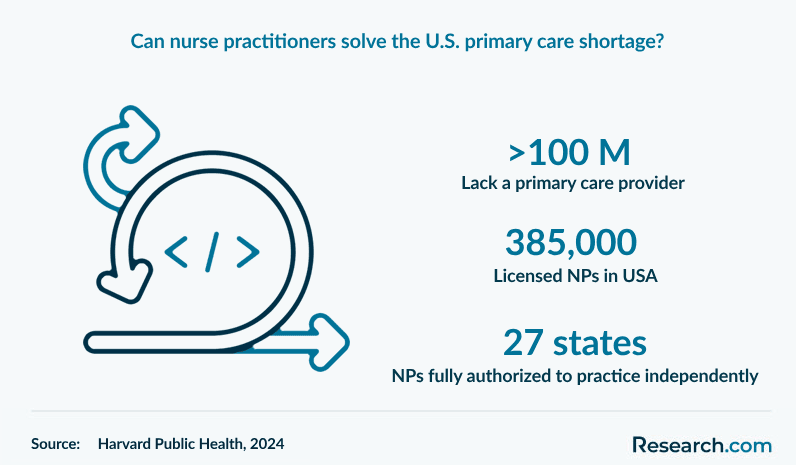
The need for primary care access is one reason FNP preparation receives significant attention. An estimated 100 million people in the United States—nearly a third of the population—lack a primary care provider. The nursing workforce includes 5.2 million registered nurses (RNs) in the U.S., and over 70% hold a bachelor of science degree. There are 385,000 licensed NPs, nearly 90% of whom have a master's or doctorate degree and full certification in various specialties. Becoming an NP typically requires at least seven years and an average of 7,840 hours of clinical training.
Research has found that NPs can deliver effective, often lower-cost primary care, with comparable quality and high patient satisfaction in many settings. One study of more than 47,000 medically complex diabetes patients reported savings of $1,300 for hospitalization, $500 for outpatient care, and $300 in pharmacy costs.
Another study involving 475,000 Medicare beneficiaries found lower costs for patients cared for by NPs across multiple services. NPs are fully authorized to practice independently in 27 states, the District of Columbia, and U.S. territories. Scope-of-practice policy remains important because it affects how FNPs can help address access gaps and cost pressures. Some of these figures are shown in the graphic below.
Coursework in an affordable online FNP graduate certificate
Affordable online FNP graduate certificates focus on advanced primary care, not general nursing review. Students usually move quickly into courses that support assessment, diagnosis, prescribing, prevention, chronic disease management, and care across the lifespan. Nurses considering faith-informed clinical or chaplaincy contexts may also compare advanced healthcare education with options such as affordable Master of Divinity programs online, but an FNP certificate itself is a clinical nursing credential.
- Introduction to Advanced Practice Nursing: Reviews the APRN role, patient safety, care delivery, ethics, and advanced nursing responsibilities.
- Advanced Medical Terminology: Strengthens mastery of clinical language, abbreviations, documentation terms, and terminology used in advanced practice settings.
- Advanced Anatomy and Physiology: Builds deeper understanding of human body systems used in assessment and clinical decision-making.
- Advanced Pathophysiology: Examines disease mechanisms and physiologic changes that inform diagnosis and treatment planning.
- Advanced Pharmacology: Covers medication selection, prescribing principles, monitoring, contraindications, and patient-specific considerations.
- Advanced Health Assessment: Trains students to complete comprehensive physical, psychosocial, and health history assessments.
- Primary Care of the Family: Focuses on prevention, health promotion, acute care, chronic condition management, and patient education across age groups.
- Diagnostic Reasoning and Clinical Decision-Making: Develops safe diagnostic processes, differential diagnosis skills, and treatment planning.
- Quality Assurance and Regulations in Advanced Practice: Covers compliance, quality improvement, documentation, professional standards, and regulatory issues relevant to FNP work.
| Course area | Why it matters in FNP practice | Red flag when reviewing a program |
| Advanced pharmacology | Supports safe prescribing and medication management. | The course does not meet state or certification expectations for APRN prescribing preparation. |
| Advanced health assessment | Builds the foundation for evaluating patients across the lifespan. | The program lacks lab, simulation, or supervised practice opportunities. |
| Primary care management | Prepares students for prevention, chronic disease care, and acute visits. | Coursework is not clearly aligned to FNP population competencies. |
| Clinical practicum | Turns theory into supervised patient care experience. | The school provides little guidance on preceptor approval or clinical site rules. |
A strong FNP certificate should connect classroom learning to clinical readiness. The goal is not simply to complete courses but to gain the knowledge and supervised experience needed to function safely in primary care. Other educational routes, including affordable online general studies degree programs, may emphasize broad transferable skills; an FNP certificate must be much more specific because it leads toward advanced clinical practice.
The Bureau of Labor Statistics (BLS) reports that the highest level of employment for nurse practitioners is in offices of physicians, with 137,030 professionals. General medical and surgical hospitals employ 61,740 nurse practitioners. Outpatient care centers account for 25,440 positions, offices of other health practitioners employ 11,400, and home health care services employ 7,410.
The graph below illustrates where nurse practitioners are most commonly employed. Physician offices remain the largest employment setting, which reflects the central role NPs play in primary and specialty care delivery.
This distribution shows that FNP graduates should think beyond hospitals. Many roles are outpatient, community-based, or tied to primary care networks.
Admission requirements for online FNP graduate certificates
Most online FNP graduate certificate programs are designed for nurses who already hold graduate nursing credentials. Admissions standards vary, but programs typically use prerequisites to confirm that applicants are ready for advanced practice coursework, clinical training, and future certification review.
- Master of Science in Nursing (MSN) Degree: Many post-master’s FNP certificates require an MSN from an accredited institution. Nurses who still need graduate preparation may want to compare cheapest RN to MSN online programs.
- Current unencumbered RN license: Applicants generally need an active RN license, often in the state where clinical hours will be completed.
- Minimum GPA: A 3.0 GPA or higher in previous nursing coursework is commonly expected.
- Graduate transcripts and gap analysis: Schools often review prior advanced pathophysiology, pharmacology, assessment, and clinical coursework before setting the final credit plan.
- Technology readiness: Online students need reliable internet, computer access, and the ability to use learning platforms, video conferencing, and digital clinical systems.
- English language proficiency: Applicants must be able to understand graduate-level materials and communicate clearly in clinical settings.
- Background check, drug screening, and immunizations: These are often required before clinical placement begins.
Do not assume that meeting general admission requirements means you can complete clinicals in your state. Ask the program to confirm state authorization, preceptor requirements, and whether graduates meet educational requirements for licensure or recognition in your intended practice state. Nurses planning a step-by-step educational route may also later compare RN-to-BSN options if they need additional undergraduate preparation before graduate study.
How to match an FNP curriculum to your career goals
The best affordable program is the one that leads to the role you actually want. A certificate that is inexpensive but weak on clinical placement, state authorization, or certification eligibility can create expensive problems later. Use the checklist below before you apply.
- Confirm nursing accreditation: Choose a program accredited by a recognized nursing accreditor such as CCNE or ACEN. Even shortest RN to FNP online program options should meet accreditation expectations.
- Match the curriculum to certification: Verify that the program prepares graduates for ANCC or AANPCB FNP certification.
- Review clinical support: Ask whether the school finds preceptors, assists with placement, or requires students to secure sites independently.
- Check state licensure alignment: A program may be excellent but still not approved for your state’s clinical or APRN requirements.
- Study the course map: Look for advanced assessment, advanced pharmacology, advanced pathophysiology, primary care across the lifespan, diagnostics, and clinical practicums.
- Ask about outcomes: Request certification pass rates, graduation rates, employment outcomes, and student support data when available.
- Talk with recent graduates: Alumni can often tell you whether clinical placement was realistic, faculty were responsive, and the workload was manageable.
| Your goal | Program feature to prioritize | Question to ask admissions |
| Work in family primary care | Strong lifespan primary care curriculum and FNP clinical placements | Where do students complete primary care clinical hours? |
| Take ANCC or AANPCB certification | Clear certification eligibility | Which national FNP exams are graduates eligible to sit for? |
| Keep working full time | Flexible course delivery and predictable clinical schedule | How many hours per week do students usually spend on coursework and clinicals? |
| Minimize debt | Low total cost after gap analysis | What is my estimated total tuition, fees, books, travel, and clinical cost? |
| Practice in a specific state | State authorization and licensure alignment | Does this program meet educational requirements in my state? |
Scholarships, grants, employer benefits, and financial aid
Financial aid for graduate certificate programs can be more limited than aid for full degree programs, but affordable options still exist. Students comparing an FNP certificate, an affordable doctorate in behavioral health leadership online, or another healthcare credential should look at total cost, not tuition alone.
- Program payment plans: Some schools allow monthly payments, which can reduce the need to borrow large amounts upfront.
- Institutional scholarships: Colleges may offer scholarships for graduate nursing, certificate students, or advanced practice specialties.
- Workforce development grants: State and local agencies may support training in high-demand healthcare occupations.
- Employer tuition reimbursement: Hospitals, clinics, and health systems may help pay for advanced nursing education if it supports workforce needs.
- Private nursing scholarships: Professional associations, foundations, and nursing organizations may offer awards based on need, merit, specialty, location, or background.
- Veterans benefits: Eligible veterans and dependents may be able to use GI Bill or related education benefits.
Ask each school’s financial aid office whether the certificate is eligible for federal aid, institutional aid, payment plans, or employer billing. Also ask whether scholarships require full-time enrollment, a minimum GPA, or service commitments.
Career prospects after an online FNP graduate certificate
Career prospects for FNP certificate graduates are generally strong because primary care demand remains high and nurse practitioners are increasingly used in outpatient, rural, and underserved care settings. Nurses comparing advanced practice options may also explore an affordable online nurse midwifery post master's certificate if their interests are centered on reproductive, prenatal, and women’s health rather than broad family primary care.
- Primary care demand: FNPs are prepared to evaluate patients, manage chronic illness, promote prevention, and support continuity of care.
- Multiple workplace options: Graduates may work in physician offices, hospitals, urgent care settings, ambulatory centers, community clinics, and telehealth organizations.
- Underserved-area impact: FNPs often help expand access in rural and low-income communities where provider shortages are more severe.
- Entry into advanced practice: For MSN-prepared nurses, the certificate can add a new population focus without another complete graduate degree.
- Advancement potential: Experience as an FNP can support movement into clinical leadership, education, quality improvement, or specialized care.
- Management alternatives: Nurses who want administrative roles rather than direct advanced practice may compare the cheapest online healthcare management degree programs as a different route.
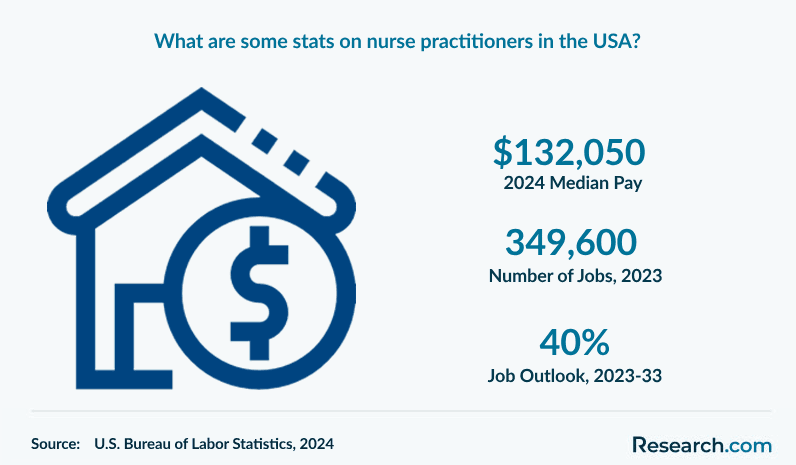
The U.S. Bureau of Labor Statistics projects a 40% growth rate for nurse practitioners from 2023 to 2033, placing the occupation among the fastest-growing healthcare careers. In 2023, there were 349,600 nurse practitioner jobs, with an employment change of 141,200 projected between 2023 and 2033.
Access challenges remain significant. More than 102 million people lived in primary care shortage areas as of 2023. FNPs are positioned to help address this shortage because nearly 90% are clinically trained to deliver primary care. The continued need for primary care providers supports long-term demand for qualified FNPs.
Salary expectations after completing an FNP certificate
Completing an affordable online FNP graduate certificate can support movement into higher-paying advanced practice roles, but salary depends on certification, licensure, setting, specialty, location, and experience. Use the figures below as estimates for planning your return on investment.
- Entry-Level Annual Salary: New graduates typically earn an average of $95,000 to $105,000 annually.
- Experienced Annual Salary: With 1-4 years of experience, FNPs can expect to earn around $105,000 to $115,000 annually.
- Mid-Career Annual Salary: FNPs with 5-9 years of experience may earn $115,000 to $125,000 annually.
- Experienced/Late Career Annual Salary: With 10-19 years of experience, salaries can reach $125,000 to $135,000 annually.
- Geographic Variation: Salaries may be higher in metropolitan areas and states with higher costs of living or stronger demand. For instance, in Los Angeles, California, an FNP can earn an average of $125,000, while in New York City, New York, the average is around $120,000. In Houston, Texas, the average may be around $108,000.
- Certification Impact: National certification, such as ANCC or AANP FNP certification, is essential for practice and can influence hiring and compensation.
As of PayScale 2025 data, a nurse practitioner (NP) in the United States earns a national average salary of $110,377. PayScale data also shows experience-based increases: entry-level NPs with less than one year of experience earn about $101,386, early-career NPs with 1-4 years earn $108,590, mid-career NPs with 5-9 years earn approximately $116,000, experienced NPs with 10-19 years earn about $118,000, and late-career NPs with more than 20 years earn an average of $120,000.
Location can also affect income. NPs in Seattle, WA, average $122,188. Specialization matters as well: a pediatric nurse practitioner earns approximately $110,000, while a women’s health nurse practitioner averages around $108,000.
Compared with other nursing and allied health roles, NP compensation is generally higher. A registered nurse (RN) earns $78,000, an emergency room RN earns $84,500, a critical care RN earns $88,000, and an operating room RN earns $93,000.
Non-nursing allied health roles show different salary levels: a certified nurse assistant (CNA) earns $37,000, a licensed practical nurse (LPN) earns $54,000, a medical assistant earns $42,500, a physical therapist (PT) earns $82,500, and a certified surgical technologist (CST) earns $61,000. These comparisons highlight the financial value of advanced practice preparation, though individual outcomes are not guaranteed.
The graph below summarizes how NP earnings vary by experience, location, and role. When evaluating programs, compare potential salary gains with total program cost, interest on borrowed funds, time away from work, and any relocation or clinical travel expenses.
State-level pay differences can be substantial. A Family Nurse Practitioner in California earns an average of $135,000, compared with $128,000 in New York and $122,000 in Massachusetts. Florida shows a lower average at $110,000. These figures reinforce why ROI calculations should use your target market rather than only national averages.
Job outlook and employment demand for FNP certificate holders
The employment outlook for nurse practitioners, including FNPs, remains very favorable. Graduates of cheapest online Nurse Practitioner programs and post-master’s certificates enter a field shaped by primary care shortages, chronic disease management needs, aging populations, and expanding use of APRNs.
- Fast projected growth: The U.S. Bureau of Labor Statistics projects nurse practitioner employment to grow 40% from 2023 to 2033, with about 141,200 new jobs over the decade. In 2023, there were 349,600 nurse practitioner jobs.
- Primary care need: Aging populations and chronic disease trends increase the need for clinicians who can deliver prevention, diagnosis, treatment, and long-term management.
- Provider shortages: FNPs help address access gaps in rural, underserved, and high-need communities.
- Replacement hiring: Some openings will result from retirements and workers transferring to other roles.
- Practice authority changes: State laws affect how independently NPs can practice and may influence job availability and role responsibilities.
- Telehealth growth: Virtual care expands opportunities for FNPs comfortable with digital health tools and remote patient management.
The outlook is strong, but graduates still need to compete for desirable clinical sites and positions. Certification, clinical quality, references, state licensure, and prior RN experience can all influence employability.
How accreditation and faculty qualifications affect program quality
Accreditation and faculty expertise are two of the most important quality signals in an online FNP certificate. A nursing-accredited program is more likely to meet recognized academic and professional standards, which matters for certification eligibility, employer acceptance, transferability, and licensure review. Faculty qualifications matter because FNP students need instructors who understand advanced practice, primary care workflows, clinical reasoning, documentation, and current standards of care.
Ask whether faculty hold advanced nursing credentials, whether they have FNP or APRN practice experience, and whether clinical instructors are actively involved in primary care. Also confirm whether the curriculum aligns with certification and state licensure expectations. This level of scrutiny is just as important as it is when reviewing specialized nursing pathways such as a nursing degree without clinicals, where students must understand how program structure affects future eligibility.
How to assess the ROI of an online FNP certificate
Return on investment is not the same as low tuition. A program with higher tuition may be a better investment if it requires fewer credits, has stronger clinical placement support, leads to faster certification, and reduces delays. A cheaper program can become expensive if you cannot find a preceptor, must repeat coursework, or later discover that the program does not meet state requirements.
| ROI factor | Why it matters | How to evaluate it |
| Total tuition and fees | Advertised tuition rarely reflects the full cost. | Request a complete cost estimate after gap analysis. |
| Clinical placement support | Placement delays can postpone graduation and income gains. | Ask what happens if you cannot secure a preceptor. |
| Certification outcomes | Certification is central to employability. | Ask for ANCC or AANPCB pass-rate data if available. |
| Time to completion | A shorter program may reduce opportunity cost. | Compare realistic timelines for working students. |
| Salary in your region | NP pay varies by state and city. | Use local salary ranges rather than national averages alone. |
| Debt and repayment | Interest costs affect long-term value. | Estimate monthly payments under realistic borrowing scenarios. |
A complete ROI review should include tuition, fees, textbooks, software, campus travel, background checks, immunizations, clinical onboarding, lost work hours, exam fees, and licensure costs. Nurses comparing broader advancement paths may also evaluate affordable online RN to BSN programs if their current credential level or career goals make a different educational sequence more practical.
Certificate vs. degree programs for nursing career advancement
A graduate certificate is usually narrower than a degree. For MSN-prepared nurses who need an additional population focus, a post-master’s FNP certificate can be efficient. For nurses who do not yet have graduate nursing preparation, a degree program is usually necessary before advanced practice certification becomes realistic.
| Pathway | Best for | Main advantage | Main limitation |
| Post-master’s FNP certificate | MSN-prepared nurses adding an FNP population focus | Targeted route with fewer courses than another full degree | Usually not suitable for applicants without graduate nursing preparation |
| MSN-FNP degree | RNs who need graduate preparation and FNP training | Comprehensive advanced practice pathway | Longer and often more expensive than a certificate |
| DNP-FNP pathway | Nurses seeking doctoral-level clinical practice preparation | Supports advanced leadership, systems thinking, and evidence-based practice | Requires more time, tuition, and scholarly work |
| Direct-entry NP route | Non-nurses or career changers who need foundational nursing preparation | Structured transition into nursing and advanced practice | Intensive, highly selective, and clinically demanding |
If you are deciding between a certificate and another degree, compare eligibility rules, clinical placement expectations, long-term role goals, and state licensure requirements. Nurses who need a more direct transition into advanced practice may want to review a direct entry MSN nurse practitioner pathway to see whether it better fits their starting point.
Quality factors to compare before enrolling
Affordability matters, but program quality determines whether your certificate will actually help you reach FNP practice. Use the criteria below to compare schools before paying an application deposit.
- Accreditation: Prioritize programs with recognized nursing accreditation, such as CCNE or ACEN.
- Certification alignment: Confirm that graduates are eligible for ANCC or AANPCB FNP certification.
- Curriculum depth: Look for advanced assessment, pharmacology, pathophysiology, diagnostics, and primary care management across diverse populations. If you want a broader or more intensive FNP route, compare 12-month FNP programs.
- Clinical practicum quality: Ask how many clinical hours are required, what settings qualify, and how preceptors are approved.
- Certification exam pass rates: Request recent pass-rate data for national FNP certification exams when available.
- Faculty credentials: Look for experienced FNPs, APRNs, and nurse educators with relevant clinical and academic expertise.
- Student services: Evaluate advising, technical support, library access, writing help, clinical coordination, and career services.
- Transparent pricing: Ask for all tuition, fees, technology charges, travel costs, books, background checks, and clinical expenses.
- State authorization: Confirm that the program can enroll students in your state and approve clinicals where you live.
- Workload flexibility: Determine whether the course sequence is manageable with your job, family responsibilities, and clinical schedule.
Common mistakes to avoid
| Mistake | Why it can hurt you | Better approach |
| Choosing only by per-credit tuition | A lower rate may still cost more if the program requires more credits. | Compare total cost after gap analysis. |
| Ignoring accreditation | Certification, licensure, and employer acceptance may be affected. | Verify nursing accreditation before applying. |
| Assuming clinical placement is guaranteed | Preceptor problems can delay graduation. | Ask for the school’s written clinical placement policy. |
| Overlooking state rules | An online program may not satisfy your state’s requirements. | Confirm state authorization and licensure alignment in writing. |
| Relying only on rankings | A highly ranked program may not fit your location, schedule, or budget. | Use rankings as a starting point, then verify fit. |
| Assuming salary outcomes are guaranteed | Pay depends on location, experience, employer, and certification. | Use local salary data and conservative ROI estimates. |
Technology requirements for online FNP students
Online FNP students need reliable technology for lectures, exams, simulations, clinical documentation, advising, and communication. Most online FNP schools expect students to meet baseline technology requirements before courses begin.
- Reliable computer or laptop: A current Windows or Mac device with updated operating system software is typically required.
- Stable high-speed internet: Students need dependable access for streaming, video meetings, discussion boards, exams, and learning management systems.
- Webcam and microphone: These are often required for live classes, advising, proctored exams, simulations, and presentations.
- Compatible web browser: Chrome, Firefox, Edge, Safari, or another approved browser may be required by the school’s platform.
- Office software: Word processing, spreadsheet, and presentation tools such as Microsoft Office Suite or Google Workspace are commonly needed.
- Email access: Students need a reliable email account for communication with faculty, clinical coordinators, and program offices.
- PDF reader: Software such as Adobe Acrobat Reader is useful for viewing syllabi, articles, forms, and clinical documents.
- Secure testing tools: Some programs require lockdown browsers, identity verification software, or remote proctoring systems.
Before enrolling, ask whether the program requires special simulation software, electronic health record training platforms, mobile apps, or hardware beyond a standard computer setup.
Current trends shaping FNP education and employment
Family nurse practitioner education is changing as healthcare systems adapt to workforce shortages, telehealth, digital records, value-based care, and expanded advanced practice roles. Students choosing a program now should look for training that reflects how FNPs actually practice.
- Rising primary care demand: Aging populations, chronic disease, and provider shortages continue to increase the need for primary care clinicians. One cited projection reported a 45% growth rate for nurse practitioners from 2022 to 2032, while the U.S. Bureau of Labor Statistics projects 40% growth from 2023 to 2033.
- Telehealth expansion: FNPs increasingly use virtual care for follow-up visits, triage, chronic disease support, medication management, and preventive counseling. Many accelerated FNP programs now include telehealth competencies.
- Value-based care: Healthcare organizations increasingly emphasize outcomes, prevention, patient satisfaction, and cost-effective care.
- Team-based practice: FNPs frequently collaborate with physicians, physician assistants, pharmacists, social workers, nurses, and behavioral health professionals.
- Digital health tools: Electronic health records, data dashboards, remote monitoring, and clinical decision-support tools are now part of many practice settings.
- Scope-of-practice policy: State laws continue to influence how independently NPs can evaluate, diagnose, prescribe, and manage patients.
- Mental health integration: Primary care settings increasingly screen for and address common mental health conditions, requiring FNPs to be comfortable with behavioral health collaboration.
A Columbia University School of Nursing report in JAMA Network Open found that primary care practices employing nurse practitioners are more likely to serve socioeconomically disadvantaged communities than practices without NPs. In a study of 79,743 U.S. primary care practices, 53.4% employed nurse practitioners (NPs) in 2023, up from 21% in 2012.
Practices employing NPs were more often located in low-income areas (23.3% vs. 17.2%) and rural areas (11.9% vs. 5.5%). Communities with NP-employing practices also had higher poverty rates (14.4% vs. 12.8%) and a larger share of residents without high school diplomas (19.8% vs. 18.5%), as shown in the graphic below.
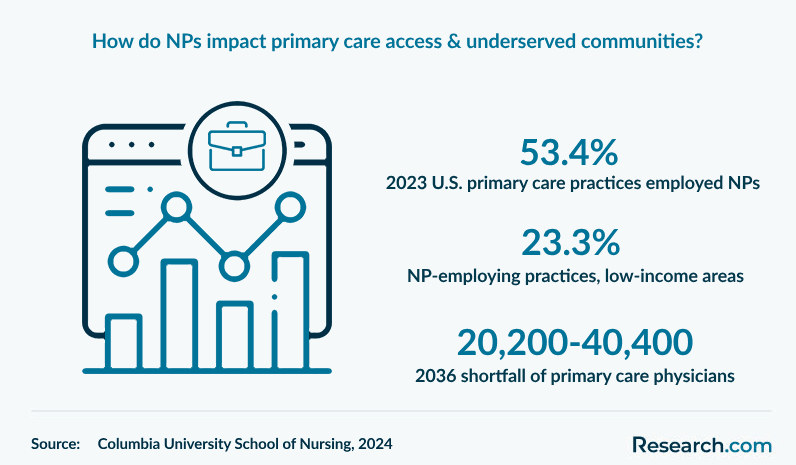
This trend matters because the projected primary care physician shortfall is 20,200-40,400 by 2036. Policies such as loan repayment programs and pay parity may help attract and retain NPs in underserved communities, improving access to primary care.
Can non-nurse applicants become FNPs through online programs?
Most online Family Nurse Practitioner graduate certificate programs are not designed for non-nurses. They usually require an RN license, an MSN, and prior graduate nursing coursework. Applicants without a nursing background typically need a different pathway before they can qualify for FNP preparation.
Non-nurse applicants should look at structured transition options such as direct entry NP online degrees for non nurses. These programs may include foundational nursing coursework, accelerated clinical preparation, RN licensure preparation, and eventual advanced practice coursework. Because these routes are intensive, applicants should carefully compare admissions requirements, clinical expectations, state authorization, and long-term licensure outcomes.
Questions to ask before choosing an online FNP certificate
- Is the program accredited by CCNE, ACEN, or another recognized nursing accreditor?
- Does the program meet educational requirements for FNP certification through ANCC or AANPCB?
- Will the school provide a written gap analysis showing exactly how many credits and clinical hours I need?
- Does the program accept students in my state, and can I complete clinicals where I live?
- Who is responsible for finding clinical preceptors?
- What happens if a clinical site or preceptor falls through?
- Are there campus visits, simulation intensives, or travel requirements?
- What are the total costs beyond tuition?
- What are the program’s certification pass rates and graduation rates?
- How many hours per week should working students expect to spend on coursework and clinicals?
Here's what graduates say about their Family Nurse Practitioner graduate certificates
-
: "
My online family nurse practitioner certificate made advanced practice education possible while I kept working. The flexible schedule helped, but the clinical hours still required careful planning. The biggest value was leaving the program ready to move toward certification. Liana
"
-
: "
The program gave me practical primary care preparation without taking on the cost of another full degree. Courses in assessment, pharmacology, and family care were demanding, but they helped me feel much more prepared for the next stage. Darius
"
-
: "
I appreciated the structure of the online courses and the ability to move through the program while balancing work. The most important part was the supervised clinical experience, because that is where the role started to feel real. Kelly
"
Key Insights
- The cheapest program is not always the best-value program: Compare total cost after gap analysis, not just per-credit tuition.
- Accreditation is non-negotiable: Choose a program that meets recognized nursing education standards and supports certification and licensure goals.
- Clinical placement can make or break your timeline: Ask early who finds preceptors, what sites qualify, and what support is available if placement becomes difficult.
- Certification alignment matters: FNP students typically pursue FNP-BC through ANCC or FNP-C through AANPCB; verify eligibility before enrolling.
- State rules matter for online students: Confirm that the program can enroll you, approve clinicals in your location, and support your intended practice state.
- Demand is strong but not automatic: The BLS projects 40% growth for nurse practitioners from 2023 to 2033, but hiring still depends on certification, clinical readiness, and local market conditions.
- Salary potential is significant: PayScale 2025 data lists a national average NP salary of $110,377, with higher averages in some locations and with more experience.
- FNPs are central to primary care access: About 100 million people in the U.S. lack a primary care provider, and NPs are increasingly employed in practices serving rural and disadvantaged communities.
- Non-nurses usually need a different route: Post-master’s FNP certificates are mainly for nurses with graduate preparation; career changers should compare direct-entry nursing and NP pathways.
References:
- American Association of Nurse Practitioners. (2025). AANP Certification. American Association of Nurse Practitioners.
- American Nurses Credentialing Center. (2025). ANCC Certification. American Nurses Credentialing Center.
- Columbia University School of Nursing. (2024, May 20). Primary care practices with NPs are key to increasing health care access in less advantaged areas, Columbia Nursing study shows. Columbia University.
- Columbia University School of Nursing. (2025, March 19). Primary Care Practices with NPs are Key to Increasing Health Care Access. Columbia University School of Nursing.
- Han, G. (2024, May 1). Can nurse practitioners solve the primary care shortage? Harvard Public Health.
- Nurse.org. (2024, November 12). Findings From Nurse.org's 2024 Nurse Practitioner Survey. Nurse.org.
- Payscale.com. (2025). Family Nurse Practitioner Salary. Payscale.com.
- Payscale. (2025). Nurse practitioner (NP) salary in United States. Payscale.
- U.S. Bureau of Labor Statistics. (2024, April 17). Occupational Employment and Wages, May 2023: Nurse Practitioners. U.S. Bureau of Labor Statistics.
- U.S. Bureau of Labor Statistics. (2024, April 3). Occupational employment and wages, May 2023: 29-1171 nurse practitioners. U.S. Bureau of Labor Statistics.
- U.S. Bureau of Labor Statistics. (2025, May 6). Nurse anesthetists, nurse midwives, and nurse practitioners. U.S. Bureau of Labor Statistics.
Other Things You Should Know About Online Family Nurse Practitioner Graduate Certificate Programs
Graduates should prepare for the AANPCB Family Nurse Practitioner certification exam or the ANCC Family Nurse Practitioner exam. Both require an accredited graduate nursing program and proof of clinical preparation before candidates can test, and state boards may require national certification for advanced practice licensure.
Programs typically require 500-600 clinical hours, which may vary slightly by institution. These practical hours are essential and must be completed in an approved healthcare setting to ensure hands-on experience, fulfilling certification standards by bodies like the American Nurses Credentialing Center.