
2027 Best Acute Care Nurse Practitioner Programs

Co-Founder and Chief Data Scientist
Choosing an acute care nurse practitioner program is a high-stakes decision for registered nurses who want to move into advanced practice, manage medically complex patients, and work in fast-moving clinical settings such as ICUs, emergency departments, surgical units, trauma services, and specialty inpatient teams. The right program should do more than fit your schedule. It should prepare you for national certification, meet state licensure expectations, provide strong clinical placement support, and offer a realistic return on the time and tuition you invest.
This guide is designed for RNs comparing acute care nurse practitioner programs, including MSN, BSN-to-DNP, MSN-to-DNP, post-master’s certificate, online, hybrid, and campus-based options. You will learn what ACNP programs include, how long they take, what they cost, which schools stand out, what admissions committees usually expect, how to compare clinical training quality, and how to decide whether acute care is the right nurse practitioner path for your goals.
Quick Answer: What Is an Acute Care Nurse Practitioner Program?
An acute care nurse practitioner program prepares licensed registered nurses for advanced practice roles focused on patients with acute, critical, chronic, or complex health conditions. Most programs lead to an MSN, DNP, or post-graduate certificate and include advanced pharmacology, advanced pathophysiology, advanced assessment, evidence-based practice, specialty acute care coursework, and supervised clinical hours. Graduates generally pursue national certification before applying for advanced practice licensure in their state.
Why nurses choose acute care nurse practitioner programs
- ACNP training can qualify RNs for advanced roles in hospitals, intensive care units, emergency departments, specialty clinics, trauma services, and urgent care environments.
- The specialty is built for nurses who want to manage unstable, acutely ill, critically ill, or medically complex patients rather than focus primarily on long-term primary care.
- Acute care nurse practitioners have strong earning potential, with an average annual salary of $122,552, though actual pay varies by employer, location, experience, specialty, and schedule.
What can I expect from acute care nurse practitioner programs?
Acute care nurse practitioner programs are designed for RNs who already have a clinical nursing foundation and want to move into provider-level assessment, diagnosis, treatment planning, and patient management in acute and complex care settings.
In a strong ACNP program, students learn how to:
- Use current clinical evidence to guide patient care decisions.
- Support patients and families during high-stress, high-acuity health events with clear communication and compassionate care.
- Apply ethical reasoning when treatment decisions involve uncertainty, risk, patient preferences, or family conflict.
- Manage acute, critical, and complex conditions across hospital-based and specialty care environments.
Most ACNP curricula include:
- Advanced pathophysiology
- Advanced pharmacology
- Advanced physical and diagnostic assessment
- Population-specific acute care courses
- Clinical practicums in approved healthcare settings
- Evidence-based practice, quality improvement, leadership, and healthcare systems content
After finishing an eligible program, graduates typically sit for a national certification exam in their acute care population focus, such as adult-gerontology acute care or pediatric acute care. Certification is often a key requirement for state advanced practice licensure and employer credentialing.
| Program pathway | Best for | Typical outcome | Key decision point |
| MSN ACNP | BSN-prepared RNs who want the fastest common graduate route into acute care advanced practice | Master of Science in Nursing with ACNP preparation | Compare clinical placement support, certification eligibility, and whether a DNP may be needed for your long-term goals. |
| BSN-to-DNP ACNP | BSN-prepared RNs who want doctoral-level preparation from the start | Doctor of Nursing Practice with ACNP specialization | Expect a longer and often more expensive pathway, but broader leadership, systems, and quality improvement training. |
| MSN-to-DNP ACNP | Master’s-prepared nurses who want a DNP and may need additional acute care preparation | DNP completion with ACNP-related coursework and clinical requirements | Ask whether prior graduate coursework reduces credits and how the school determines remaining requirements. |
| Post-graduate certificate | Licensed APRNs or master’s-prepared nurses adding an acute care population focus | Certificate preparation for additional certification eligibility | Confirm whether the certificate meets the certification and state licensure requirements you need. |
Where can I work with an acute care nurse practitioner degree?
Acute care nurse practitioners work wherever high-acuity assessment, rapid clinical judgment, and complex care coordination are needed. The exact setting depends on the nurse practitioner’s population focus, certification, state practice rules, hospital privileging requirements, and prior experience.
- Hospitals: ACNPs may work in emergency departments, intensive care units, step-down units, medical-surgical units, hospitalist services, and specialty inpatient teams.
- Trauma centers: ACNPs help manage patients with severe injuries, acute deterioration, or multisystem complications.
- Cardiac care units: These roles involve caring for patients with heart failure, arrhythmias, myocardial infarction, post-procedure needs, and other cardiovascular conditions.
- Surgical services: ACNPs may support preoperative, intraoperative, and postoperative patient management in collaboration with surgeons and other clinicians.
- Telehealth settings: Some ACNPs support remote monitoring, follow-up, triage, and specialty access for patients in rural or underserved areas.
- Private practices and specialty clinics: ACNPs may work in cardiology, oncology, pulmonology, nephrology, neurology, or other specialty practices that manage complex patients across inpatient and outpatient transitions.
Although ACNPs are often associated with hospitals, acute care expertise can also be valuable in specialty outpatient settings that treat medically complex patients after hospitalization or during active treatment.
How much can I make with an acute care nurse practitioner degree?
The average annual salary for an acute care nurse practitioner is $122,552. Pay can differ substantially based on the local labor market, years of experience, population focus, employer type, shift schedule, call requirements, and specialty area. ACNPs in large urban hospitals, high-demand specialty units, or complex procedural services may earn closer to or over $130,000 annually.
Compensation may also include more than base salary. Some ACNPs receive shift differentials, overtime, productivity incentives, bonuses, retirement contributions, health insurance, continuing education funds, or tuition reimbursement. Nurses comparing job offers should look at total compensation, not just the posted salary.
- Best acute care nurse practitioner programs for 2027
- Program length: how long ACNP training usually takes
- Average cost of acute care nurse practitioner programs
- Financial aid options for online ACNP students
- Common prerequisites for ACNP program admission
- Typical ACNP program courses
- Acute care nurse practitioner specializations
- How to choose the best ACNP program for your goals
- Benefits of online acute care nurse practitioner programs
- Other nursing specialties ACNPs may explore
- Accelerated online options for ACNP preparation
- Career paths for ACNP program graduates
- Trends shaping acute care nurse practitioner roles
- ACNP pathways for non-nursing majors
- Job market outlook for ACNP graduates
- Research and technology skills in ACNP programs
- Hidden costs of an ACNP degree
- ACNP programs vs. adult gerontology NP programs
- How online ACNP programs support clinical training quality
- How programs measure graduate success
- Advantages of online acute care nurse practitioner programs
- Training for psychiatric emergencies in acute care
- Admission requirements for ACNP programs
- Is becoming an acute care nurse practitioner worth it?
- Mentorship and clinical partnerships
- Common challenges ACNP students face
- Lifelong learning and professional development
- ACNP vs. FNP: which path fits you?
- Cultural competence and inclusive acute care
- Long-term advancement opportunities for ACNPs
- Using an LPN-to-RN pathway as a first step
- How to transition from RN to acute care nurse practitioner
Best Acute Care Nurse Practitioner Programs for 2027
Research.com rankings are built from institutional and program data reviewed by our team. Sources include the IPEDS database, Peterson’s database including distance learning data, the College Scorecard database, and the National Center for Education Statistics. Because graduate nursing education can be expensive, our methodology emphasizes transparent data that helps students compare affordability, academic quality, and student outcomes. For additional details, review our ranking methodology.
1. Duke University
Duke University offers acute care nurse practitioner options through its Master of Science in Nursing and BSN-to-DNP pathway. The curriculum blends online coursework, required intensive campus experiences, clinical practice, and faculty mentorship from practicing acute care nurse practitioners. Students prepare to care for acutely and critically ill patients in adult-gerontology or pediatric settings.
- Location: Durham, NC
- Program length: 2 years (MSN), 3 years (BSN-to-DNP)
- Tracks/concentrations: Adult-Gerontology, Pediatric
- Cost per credit: $1,825
- Required credits to graduate: 43–74
- Accreditation: Commission on Collegiate Nursing Education (CCNE)
2. University of Pennsylvania
The University of Pennsylvania offers both an Adult-Gerontology Acute Care Nurse Practitioner program and a Pediatric Acute Care Nurse Practitioner program within its MSN options. Students develop the ability to manage acutely ill, chronically complex, and traumatically injured patients across hospital and outpatient care environments.
- Location: Philadelphia, PA
- Program length: Adult: 15 months; Pediatric: 12-16 months
- Tracks/concentrations: Pediatric: Acute/Chronic Care Concentration, Critical Care Concentration, Oncology Concentration
- Cost per credit: $6,640
- Accreditation: CCNE
3. Vanderbilt University
Vanderbilt University provides ACNP pathways through its MSN program and BSN-to-DNP program. The programs are structured for full-time or part-time study and emphasize complex patient management, advanced therapies, small learning environments, and extensive clinical practice.
- Location: Nashville, TN
- Program length: 2 years (MSN), 3 years (BSN-to-DNP)
- Tracks/concentrations: Adult-Gerontology, Pediatric
- Cost per credit: $1,850
- Required credits to graduate: 40 (MSN), 65–68 (BSN-to-DNP)
- Accreditation: CCNE
4. Emory University
Emory University offers an Adult-Gerontology Acute Care track and a Pediatric Acute Care Nurse Practitioner track within its MSN program. The adult-gerontology track focuses on acutely ill and complex chronically ill patients in areas such as critical care, general surgery, trauma surgery, plastic surgery, and hospital medicine. The pediatric track prepares nurses to care for acutely, critically, and chronically ill children. Both tracks are also available as post-graduate certificates.
- Location: Atlanta, GA
- Program length: 2 years
- Tracks/concentrations: Adult-Gerontology, Pediatric
- Tuition: $24,986 per semester
- Required credits to graduate: 48
- Accreditation: CCNE
5. Ohio State University
Ohio State University offers pediatric acute care and adult-gerontology acute care specialties through its traditional MSN pathway, BSN-to-DNP option, Post-Master’s Study option, and BSN-to-PhD pathway. Students may study through distance learning or on campus while preparing to care for unstable acutely ill pediatric and adult patients.
- Location: Columbus, OH
- Program length: 2 years (MSN), 3 years (BSN-to-DNP)
- Tracks/concentrations: Adult-Gerontology, Pediatric
- Cost per credit: $973 per credit (in-state) and $2,636 per credit (out-of-state)
- Accreditation: CCNE
6. University of Alabama at Birmingham
The University of Alabama at Birmingham offers ACNP options at both the MSN level and through its BSN-to-DNP pathway. Students may specialize in adult-gerontology acute care or pediatric acute care, and one option includes preparation connected to the Registered Nurse First Assistant (RNFA) credential.
- Program length: 2 years (MSN), 3 years (BSN-to-DNP)
- Tracks/concentrations: Adult-Gerontology Acute Care Nurse Practitioner, Pediatric Acute Care Nurse Practitioner, Adult-Gerontology Acute Care Nurse Practitioner with RNFA
- Cost per credit: $1,000
- Required credits to graduate: 45 (MSN), 79 (BSN-to-DNP)
- Accreditation: CCNE
7. Columbia University
Columbia University includes adult-gerontology acute care nurse practitioner preparation within its DNP program. Students build advanced diagnostic, therapeutic, informatics, and clinical reasoning skills while studying the biophysical, psychosocial, behavioral, and clinical sciences relevant to complex patient care.
- Location: New York, NY
- Program length: 2.5 years
- Tracks/concentrations: Adult-Gerontology, Pediatric
- Total tuition: $74,962
- Required credits to graduate: 80-81
- Accreditation: CCNE
8. University of Pittsburgh
The University of Pittsburgh offers ACNP preparation for BSN- and MSN-prepared nurses through BSN-to-DNP and MSN-to-DNP options. Programs include at least 1,000 clinical hours. Students complete virtual coursework, and the university supports lab and clinical learning through partnerships with organizations such as the Center for Rural Health Practice at the University of Pittsburgh Bradford, Bradford Regional Medical Center, and UPMC Cole.
- Location: Pittsburgh, PA
- Program length: 2 years (MSN-to-DNP), 3 years (BSN-to-DNP)
- Tracks/concentrations: Adult-Gerontology
- Cost per credit: $1,800
- Required credits to graduate: 32–37 (MSN-to-DNP), 79 (BSN-to-DNP)
- Accreditation: CCNE
9. Johns Hopkins University
Johns Hopkins University offers Adult-Gerontology Acute Care and pediatric ACNP specialties through BSN-to-DNP and Entry-Level MSN-to-DNP pathways. For Entry-Level MSN-to-DNP students, credit requirements are determined through a GAP analysis of prior education. The programs include advanced coursework, substantial clinical practice, faculty engagement, and international study opportunities.
- Location: Baltimore, MD
- Program length: 2 years (Entry-Level MSN-to-DNP), 3 years (BSN-to-DNP)
- Tracks/concentrations: Adult-Gerontology, Pediatric
- Cost per credit: $1,930
- Required credits to graduate: 78–88 (depending on pathway)
- Accreditation: CCNE
10. University of Iowa
The University of Iowa offers ACNP preparation through BSN-to-DNP and MSN-to-DNP pathways. The programs combine advanced academic preparation with extensive clinical training and are designed to support certification readiness and employment in acute care practice.
- Location: Iowa City, IA
- Program length: 2 years (MSN-to-DNP), 3 years (BSN-to-DNP)
- Tracks/concentrations: Adult-Gerontology, Pediatric
- Cost per credit: $1,700
- Required credits to graduate: 44 (MSN), 75–78 (BSN-to-DNP)
- Accreditation: CCNE
Key Findings for Prospective ACNP Students
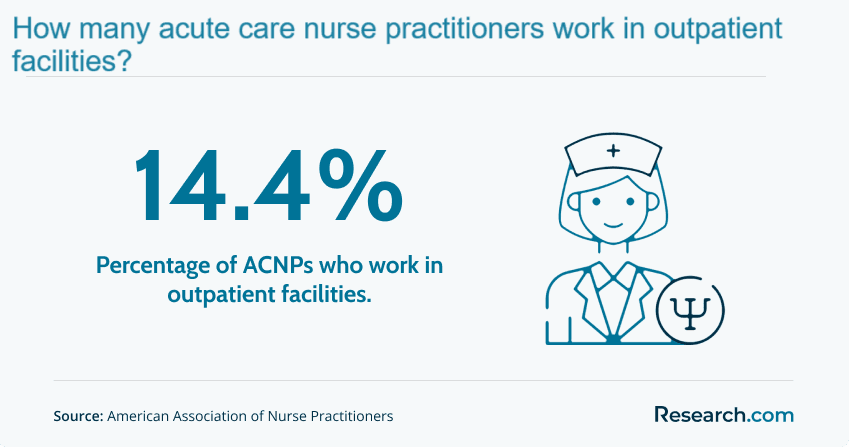
- ACNPs are not limited to hospitals. A notable 14.4% of acute care nurse practitioners work in outpatient facilities, showing that acute care skills also apply in non-hospital environments.
- Family nurse practitioners remain the largest NP group, representing 70.3% of all nurse practitioners and accounting for 147,260 employed FNPs.
- Adult-Gerontology Primary Care is the second largest certification area, making up 8.9% of NPs and employing 14,790 NPs.
- Psychiatric/mental health nurse practitioners represent 6.5% of the NP population, with 9,930 professionals employed in the specialty.
- Nurse practitioners earn an average annual wage of $124,680, according to the U.S. Bureau of Labor Statistics.
How long does it take to complete an acute care nurse practitioner program?
Most acute care nurse practitioner programs take about two to three years for full-time students, similar to many traditional and online nurse practitioner programs. Part-time study usually extends the timeline, often to around three to four years.
Your actual completion time depends on the degree level, enrollment pace, transfer credit policy, clinical scheduling, prior graduate coursework, and whether you choose an MSN, DNP, post-master’s certificate, or accelerated format. RNs looking for faster pathways should compare ACNP options carefully, just as nurses pursuing family practice might compare traditional routes with online BSN to FNP programs.
| Student starting point | Common ACNP route | Typical time consideration | What to verify before enrolling |
| BSN-prepared RN | MSN ACNP | Often the shortest common graduate route | Certification eligibility, clinical placement process, and whether the curriculum matches your population focus |
| BSN-prepared RN | BSN-to-DNP ACNP | Usually longer than an MSN route | Total credits, DNP project expectations, cost, and long-term leadership goals |
| MSN-prepared nurse | MSN-to-DNP or post-graduate certificate | May be shorter if prior credits apply | Gap analysis, required clinical hours, and certification eligibility |
| RN without a BSN | Bridge pathway before ACNP graduate study | Timeline varies by bridge structure | Whether the pathway leads to a BSN, MSN, or eligibility for graduate acute care specialization |
The chart below shows how nurse practitioners are distributed across primary certification areas, with family nurse practitioners representing the largest share.
What is the average cost of acute care nurse practitioner programs?
The cost of an ACNP program depends on school type, residency status, degree level, credit requirements, program length, online or campus format, and clinical-related fees. Public universities may cost less for in-state students, while private universities may have higher per-credit tuition but different scholarship or employer partnership options.
As a general reference, the cheapest online acute care nurse practitioner programs can cost an average of $25,000, while the most expensive ones can cost an average of $60,000.
Students comparing DNP pathways should also look beyond posted tuition. Some of the cheapest BSN to DNP programs may still include additional expenses for clinical placement, technology platforms, simulation, background checks, travel, course materials, and certification preparation.
| Cost category | Why it matters | Question to ask the school |
| Tuition per credit | This is usually the largest expense, especially in high-credit DNP programs. | How many total credits will I personally need after transfer or gap analysis? |
| Clinical placement expenses | Some programs require travel, onboarding fees, background checks, or site-specific documentation. | Does the school secure clinical sites, or am I responsible for finding preceptors? |
| Campus intensives | Online programs may still require in-person visits. | How many campus visits are required, and what travel costs should I budget for? |
| Certification and licensure | Graduates may need exams, state applications, and credentialing documents. | Which certification exams does the program prepare graduates to take? |
| Lost work hours | Clinical rotations may reduce your ability to work full time. | Can clinical hours be scheduled around shift work, or are weekday hours required? |
What are the financial aid options for students enrolling in online acute care nurse practitioner (ACNP) programs?
If you are comparing NP pathways, including the cheapest online MSN programs, financial aid can help reduce out-of-pocket costs. Options vary by school, eligibility, employer, and enrollment status.
- Federal student loans: Graduate students may use the Free Application for Federal Student Aid (FAFSA) to apply for federal loan options such as Direct Unsubsidized Loans and Grad PLUS Loans. Review interest rates, borrowing limits, and repayment terms before accepting the full amount offered.
- Scholarships: Nursing associations, healthcare systems, foundations, universities, and local organizations may offer awards for advanced practice nursing students.
- Grants: Some schools and private organizations offer need-based or merit-based grants that do not require repayment.
- Employer tuition assistance: Hospitals and healthcare systems may reimburse tuition or provide education benefits, especially for nurses preparing for hard-to-fill advanced practice roles.
- Payment plans: Monthly or term-based payment plans can spread costs across the semester instead of requiring one large payment.
- Assistantships and fellowships: These are more common in campus-based programs, but some graduate nursing students may find stipends, tuition support, or structured fellowship opportunities.
What are the prerequisites for enrolling in online acute care nurse practitioner programs?
Admission requirements vary, but most online and campus-based acute care nurse practitioner programs expect applicants to show academic readiness, active nursing licensure, and relevant clinical experience.
- Active RN license: Applicants generally need an unencumbered registered nurse license. Confirm whether you must be licensed in the program’s state, your state of residence, or the state where you will complete clinical hours.
- BSN or approved nursing degree: A Bachelor of Science in Nursing is commonly required for MSN and BSN-to-DNP admission. Some schools review applicants with different academic backgrounds if they meet RN and prerequisite expectations.
- Clinical experience: Many programs prefer or require 1 to 2 years of full-time RN experience, often in acute care, critical care, emergency, step-down, or specialty settings.
- Minimum GPA: A GPA around 3.0 on a 4.0 scale is common, though some programs set higher standards or review applicants holistically.
- Standardized tests: Some programs may request GRE scores, but this requirement has become less common. Always verify current admissions rules with the school.
- Recommendations: Schools often ask for letters from supervisors, faculty, or advanced practice clinicians who can speak to your clinical judgment, professionalism, and graduate-level readiness.
- Background and health documentation: Before clinical placement, students may need a background check, drug screening, immunization records, CPR certification, health insurance, or other site-specific clearance.
What courses are typically included in acute care nurse practitioner programs?
ACNP coursework builds advanced diagnostic reasoning, pharmacologic management, and population-specific acute care skills. While each curriculum differs, most programs include the following core areas:
- Advanced pharmacology: Students study pharmacokinetics, pharmacodynamics, prescribing principles, medication safety, and drug management for acute and complex patients.
- Advanced pathophysiology: This course examines disease processes, system dysfunction, and the physiologic basis of acute and chronic conditions.
- Advanced health assessment: Students learn comprehensive assessment, focused exams, diagnostic reasoning, interpretation of findings, and patient evaluation across complex presentations.
- Evidence-based practice: Coursework teaches students how to interpret research, apply guidelines, and improve clinical outcomes through evidence-informed care.
- Acute care management: Students learn assessment, diagnosis, treatment, stabilization, and ongoing management for acute and complex health conditions.
- Clinical decision-making: Courses and simulations emphasize rapid prioritization, interprofessional collaboration, risk assessment, and provider-level judgment in high-acuity environments.
What types of specializations are available in acute care nurse practitioner programs?
ACNP programs usually organize specialization by patient population and clinical focus. Your choice matters because certification eligibility, clinical rotations, job options, and state licensure expectations may depend on the population focus you complete.
- Pediatric acute care: Focuses on infants, children, and adolescents with acute, critical, or chronic complex conditions.
- Adult-gerontology acute care: Prepares practitioners to care for adults and older adults with acute illness, critical illness, and complex chronic disease.
- Cardiovascular acute care: Emphasizes acute cardiac conditions such as heart failure, myocardial infarction, arrhythmias, and post-procedure care.
- Critical care: Centers on patients with life-threatening or unstable conditions, often in intensive care units or similar settings.
- Oncology acute care: Focuses on acute complications related to cancer, chemotherapy, immunotherapy, infection risk, and symptom management.
- Emergency medicine: Covers urgent and emergent presentations, triage, stabilization, and care coordination in emergency department environments.
- Neonatal acute care: Specializes in premature infants and critically ill newborns with complex neonatal needs.
| Specialization | Best fit for nurses who enjoy | Common practice settings |
| Adult-Gerontology Acute Care | Managing complex adult and older adult patients with serious acute or chronic conditions | ICUs, hospitalist teams, cardiology, pulmonology, nephrology, trauma, surgical services |
| Pediatric Acute Care | Caring for acutely, critically, or chronically ill children and adolescents | Pediatric ICUs, children’s hospitals, pediatric specialty services, oncology, cardiac units |
| Critical Care | High-pressure decision-making and unstable patient management | ICUs, step-down units, trauma services, rapid response teams |
| Emergency Medicine | Rapid assessment, triage, stabilization, and varied patient presentations | Emergency departments, trauma centers, urgent care centers |
How can I choose the best acute care nurse practitioner programs?
The best ACNP program is not automatically the most famous, fastest, or cheapest option. It is the program that fits your licensure needs, certification goals, clinical placement realities, budget, schedule, and preferred patient population.
1. Verify accreditation first
Look for accreditation from a recognized nursing accreditor such as the Commission on Collegiate Nursing Education (CCNE) or the Accreditation Commission for Education in Nursing (ACEN). Accreditation affects certification eligibility, employer recognition, transfer options, and financial aid access. If you need flexibility, compare ACNP programs with other accredited online MSN nursing programs to understand format differences.
2. Match the curriculum to your certification goal
Review the population focus, required courses, clinical hours, and certification outcomes. An adult-gerontology acute care track and a pediatric acute care track can lead to very different roles.
3. Ask detailed questions about clinical placements
Clinical training is one of the biggest differences among online and hybrid programs. Confirm whether the school assigns clinical sites, helps identify preceptors, approves sites you find, or places most responsibility on the student.
4. Evaluate faculty expertise
Faculty with acute care, critical care, pediatric, emergency, specialty, or hospital-based advanced practice experience can provide more relevant mentoring than faculty whose background is mainly outside acute care.
5. Choose a format you can actually complete
Online, hybrid, and campus-based programs can all be strong, but the best format depends on your work schedule, family responsibilities, learning style, and proximity to approved clinical sites. Flexible online pathways are now common across advanced nursing fields, including RN to MSN mental health nurse practitioner online programs.
6. Compare total cost, not just tuition
Program length, credit requirements, travel, clinical fees, technology fees, and reduced work hours can change the true cost. If affordability is a primary concern, compare ACNP options with the cheapest online nurse practitioner programs and ask each school for a full cost estimate.
| Selection factor | Why it matters | Red flag |
| Accreditation | Supports certification, licensure, and employer recognition | The school cannot clearly confirm nursing program accreditation. |
| Certification eligibility | Determines whether the program prepares you for the exam required for your role | The program uses broad language but does not identify eligible certification exams. |
| Clinical placement support | Clinical delays can delay graduation and certification | Students are fully responsible for finding preceptors without meaningful school support. |
| State authorization | Online programs may not be approved for every state | The school cannot confirm whether students in your state can enroll and complete clinicals. |
| Graduate outcomes | Pass rates and placement information help you assess program effectiveness | The program will not share certification pass rates or completion information. |
What are the top benefits of online acute care nurse practitioner programs?
Online ACNP programs can be a practical option for working RNs, especially those who cannot relocate or attend weekday campus classes. The strongest online programs combine remote coursework with in-person clinical training and, when needed, campus intensives for assessment, simulation, or skills validation.
- Flexible coursework: Many programs use asynchronous or partly asynchronous classes, allowing nurses to study around shifts and family responsibilities.
- Broader school choice: Online delivery allows students to compare accredited programs outside their immediate region without moving.
- Lower indirect costs: Students may save on commuting, relocation, and campus housing, although travel for intensives or clinicals may still apply.
- Continued employment: Part-time online formats can help RNs keep earning while completing graduate coursework.
- Technology readiness: Online programs often use virtual simulation, telehealth platforms, digital case studies, and learning management systems that reflect healthcare’s growing use of digital tools.
Some nurses also consider accelerated formats. For example, 12-month accelerated nursing programs online may appeal to students seeking faster routes in nursing education, but ACNP students should be cautious: faster is only worthwhile if clinical quality, certification eligibility, and personal readiness remain strong.
What other nursing specialties can acute care nurse practitioners explore?
ACNPs may build careers in critical care, cardiology, oncology, trauma, pulmonary care, neurology, transplant services, surgical specialties, pediatric acute care, or gerontology-focused acute care. Nurses considering mental health specialization can also compare acute care work with psychiatric advanced practice roles and review the psychiatric nurse practitioner salary by state as part of a broader career decision.
Can accelerated online programs fast-track your ACNP career?
Accelerated ACNP pathways may reduce time in school through condensed coursework, year-round scheduling, or intensive clinical planning. They are usually best for experienced RNs with strong acute care backgrounds, reliable time management, and support from employers or family during demanding terms.
Before choosing a fast program, compare it with other accelerated NP options such as 1 year nurse practitioner programs online. Ask whether the pace allows enough time for clinical reasoning, specialty skill development, certification preparation, and safe transition into advanced practice.
What career paths are available for graduates of acute care nurse practitioner programs?
ACNP graduates can pursue roles that require advanced assessment, diagnostic reasoning, care coordination, and management of high-acuity or complex patients. Common career paths include:
- Hospital-based acute care: ACNPs manage inpatient care plans, monitor patient progress, order and interpret diagnostics within their scope, and coordinate with physicians, nurses, therapists, pharmacists, and specialists.
- Intensive care and emergency care: In ICUs and emergency departments, ACNPs help stabilize, assess, and manage patients with urgent or life-threatening conditions.
- Specialty clinics: ACNPs may work in cardiology, oncology, pulmonology, neurology, nephrology, transplant, or surgical follow-up clinics treating complex patients.
- Long-term acute care hospitals: These roles focus on patients who need extended treatment for serious conditions, complications, ventilator care, wound care, or complex recovery.
- Academic and clinical education: Experienced ACNPs may teach nursing students, precept new practitioners, or develop clinical education programs.
- Urgent care centers: Some ACNPs treat urgent but non-life-threatening concerns, especially when their training and state scope align with the setting.
What are emerging trends in acute care nurse practitioner roles?
ACNP roles are being shaped by telehealth, advanced diagnostics, clinical decision-support tools, simulation-based education, interprofessional care models, and leadership expectations in complex healthcare systems. Artificial intelligence may support documentation, triage, risk prediction, and decision support, but it does not replace the clinical judgment, ethical responsibility, and patient communication required of acute care providers.
Nurses who want doctoral-level preparation in systems improvement, leadership, and technology-enabled care may compare ACNP pathways with accredited online DNP programs.
Can non-nursing majors become acute care nurse practitioners?
Non-nursing majors do not move directly into ACNP practice without completing nursing education, licensure, graduate preparation, clinical requirements, certification, and state approval. However, some schools offer bridge or direct-entry pathways that help students with non-nursing bachelor’s degrees transition into nursing and eventually advanced practice.
Prospective students can begin by reviewing direct-entry MSN programs for non-nursing majors online. Anyone planning to become an ACNP should confirm that the pathway leads to RN licensure, provides enough clinical foundation, and supports later admission into an accredited acute care nurse practitioner program.
What is the job market for graduates of acute care nurse practitioner programs?
The labor market for ACNP graduates is supported by demand for advanced practice providers in hospitals, specialty services, critical care, and other settings that manage acute and complex conditions. However, job availability varies by state, employer, scope-of-practice rules, specialty, and clinical experience.
Job growth projections
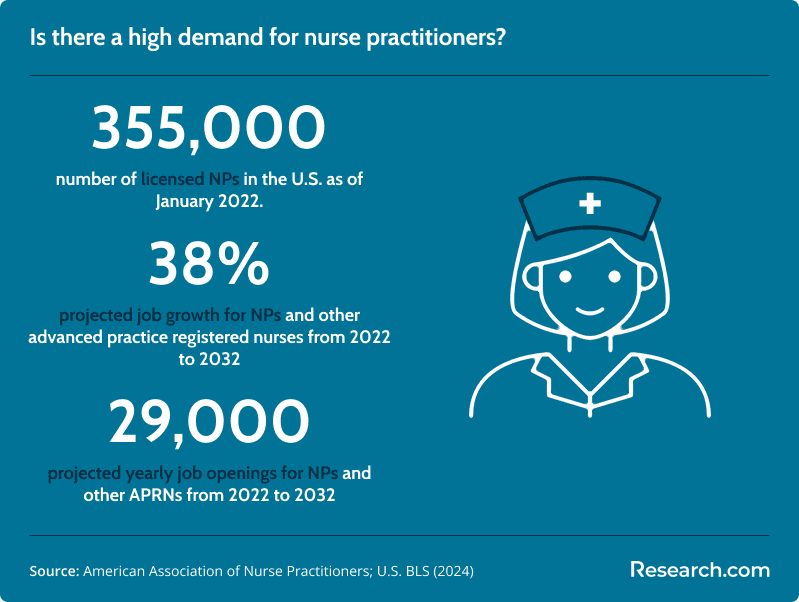
According to the U.S. Bureau of Labor Statistics, overall employment of advanced practice registered nurses, including nurse practitioners, nurse anesthetists, and nurse midwives, is projected to grow 38% from 2022 to 2032. The BLS also projects 29,200 openings for APRNs each year, on average, over the decade.
Demand for complex care management
An aging population, chronic disease burden, and medically complex patients continue to create demand for clinicians who can manage acute deterioration, coordinate specialty care, and support transitions across care settings.
Opportunities in acute care settings
ICUs, emergency departments, surgical services, hospitalist groups, trauma centers, specialty clinics, and long-term acute care hospitals are common employers for ACNPs. Nurses with prior acute care or critical care RN experience may be more competitive for these roles.
How do ACNP programs enhance research and technological competencies?
Modern ACNP programs increasingly incorporate simulation, telehealth, electronic health record documentation, clinical decision support, quality improvement, and evidence-based practice. These tools help students practice advanced judgment before and during clinical rotations while learning to apply research to high-pressure patient care.
Students who want to strengthen their broader nursing foundation through flexible study can also compare pathways such as RN to BSN online no clinicals programs, although ACNP preparation itself requires advanced clinical training.
What are the hidden costs of pursuing an ACNP degree?
Tuition is only part of the investment. ACNP students may also pay for clinical onboarding, immunizations, background checks, drug screening, malpractice insurance, equipment, textbooks, simulation fees, technology fees, exam preparation, certification exams, licensure applications, and travel to campus intensives or clinical sites.
Before committing, build a complete budget and compare program expenses the same way you would compare the RN to BSN online cost across schools. A low tuition rate can become less affordable if clinical travel, lost work hours, or extra fees are high.
How do ACNP programs differ from online adult gerontology nurse practitioner programs?
ACNP programs focus on acute, critical, and complex patient care, often in hospitals or specialty services. By contrast, online adult gerontology nurse practitioner programs may emphasize broader adult and older adult care, depending on whether the program is primary care or acute care focused. Students should pay close attention to the exact population focus listed by the school because “adult-gerontology” can refer to different practice preparation.
| Program type | Main clinical focus | Common settings | Best fit |
| Adult-Gerontology Acute Care NP | Acute illness, critical illness, complex chronic conditions, hospital-based management | ICUs, emergency departments, hospitalist teams, specialty services, trauma, surgery | RNs who want high-acuity adult and older adult care |
| Adult-Gerontology Primary Care NP | Prevention, chronic disease management, wellness, long-term outpatient care | Primary care clinics, outpatient practices, community health, long-term care | RNs who prefer ongoing patient relationships and non-acute management |
How do online ACNP programs ensure high-quality clinical training?
High-quality online ACNP programs do not replace clinical training with online coursework. Instead, they combine remote classes with supervised in-person clinical practicums, simulation, skills validation, and structured faculty oversight.
Look for programs that clearly explain preceptor qualifications, site approval, clinical hour requirements, faculty site visits or check-ins, simulation expectations, and how student competency is evaluated. Some advanced nursing pathways, such as the shortest post-master's FNP program options, may also emphasize concentrated clinical exposure, but ACNP students should make sure clinical experiences match acute care certification requirements.
How do ACNP programs measure graduate success?
Useful outcome measures include certification exam pass rates, graduation rates, employment rates, time to completion, clinical placement completion, employer feedback, and alumni career progression. Programs that openly share these indicators give applicants a better basis for comparison.
Students considering leadership, management, or business-oriented healthcare roles can also explore broader graduate options such as an MSN and MBA dual degree, but clinical certification preparation should remain the priority for aspiring ACNPs.
What are the advantages of online acute care nurse practitioner programs?
Online ACNP programs can make graduate education more accessible, especially for experienced RNs who live far from campus-based programs or need to keep working. The major advantages are flexibility, geographic reach, potential savings on relocation or commuting, and exposure to digital learning tools used in modern healthcare.
The trade-off is that online students must be proactive. You need to understand clinical placement responsibilities, state authorization, campus visit requirements, technology expectations, and how the program verifies hands-on competency. A good starting point for comparison is this guide to acute care nurse practitioner programs online.
Can ACNP programs equip you for managing psychiatric emergencies?
ACNPs may encounter psychiatric crises in emergency departments, ICUs, trauma settings, medical units, and specialty services. Some programs address psychiatric emergencies through crisis intervention content, behavioral assessment, differential diagnosis, substance-related emergencies, interprofessional collaboration, simulation, and case-based learning.
RNs who want mental health to be their primary advanced practice focus should compare acute care with psychiatric-mental health NP preparation, including options such as the cheapest psych NP programs online.
What are the admission requirements for ACNP programs?
Most ACNP programs require an active RN license, a BSN from an accredited institution, prerequisite coursework, a minimum GPA, recommendations, a resume, and a personal statement. Many schools also prefer applicants with recent acute care, ICU, emergency, step-down, or specialty RN experience.
Applicants who earned a nursing degree through an accelerated BSN online program should confirm that their coursework, clinical hours, and accreditation meet graduate admissions requirements.
Is being an acute care nurse practitioner worth it?
Becoming an ACNP can be worth it for RNs who want advanced responsibility, complex patient management, provider-level decision-making, and strong earning potential in acute or specialty care. It may not be the best fit for nurses who prefer predictable schedules, lower-acuity outpatient care, or primary care relationships across the lifespan.
- Advanced clinical responsibility: ACNPs assess, diagnose, treat, monitor, and coordinate care for complex patients within their scope and state rules.
- Higher earning potential: ACNPs often earn more than BSN-prepared registered nurses, and some advanced nursing roles are among the highest paid nurses.
- Meaningful patient impact: Acute care practice can be deeply rewarding for nurses who want to support patients and families during serious illness.
- Career growth: ACNPs may move into specialty practice, leadership, education, quality improvement, or advanced clinical roles.
- Varied settings: Hospitals, trauma centers, specialty clinics, urgent care, telehealth, and long-term acute care hospitals can all use acute care expertise.
The financial upside can be significant, but salary is not guaranteed. The table below shows top-paying states for nurse practitioners, with California leading at an annual mean wage of $161,540.
What role do mentorship and clinical partnerships play in shaping your ACNP success?
Mentorship and clinical partnerships can strongly influence how prepared students feel when they move from RN practice into advanced practice. A good mentor helps students connect classroom knowledge with real patient care, strengthen diagnostic reasoning, and build confidence in provider-level decisions.
Clinical partnerships matter because they affect the quality, variety, and reliability of hands-on training. Students who still need to strengthen earlier nursing credentials can explore foundational pathways such as RN to BSN online in 6 months, but ACNP preparation requires graduate-level mentorship and acute care clinical exposure.
What common challenges do ACNP students face?
ACNP programs are demanding. Students often balance graduate coursework, clinical hours, paid nursing shifts, family obligations, and certification preparation. Clinical placement logistics can also be stressful, especially in competitive regions or programs where students must identify preceptors.
- Heavy workload: Advanced pharmacology, pathophysiology, diagnostics, and clinical management require consistent study time.
- Clinical scheduling conflicts: Rotations may not align neatly with work shifts or family responsibilities.
- Transitioning from RN to provider role: Students must move from task execution and bedside coordination into diagnosis, prescribing, and management planning.
- Certification pressure: Students need to retain and apply complex material for national exams.
- Financial strain: Reduced work hours, tuition, travel, and fees can affect household income.
Accelerated options such as 1 year nurse practitioner programs online may shorten the calendar, but they can intensify these challenges. Choose speed only if the structure is realistic for your life and learning style.
How do ACNP programs support lifelong learning and continuous professional development?
Acute care changes quickly as new technologies, procedures, clinical guidelines, medications, and care models enter practice. Strong ACNP programs prepare students to keep learning through evidence appraisal, continuing education, professional conferences, specialty certification, quality improvement, and interprofessional collaboration.
Some nurses later add a second specialty or expand into adjacent fields. For example, an ACNP interested in behavioral health integration might compare continuing education with the fastest online MSN PMHNP pathways, depending on career goals and licensure requirements.
How do I choose between an acute care nurse practitioner and an FNP program?
The simplest distinction is setting and patient need. ACNP programs prepare nurses for acute, critical, and complex care. FNP programs prepare nurses for primary care, prevention, wellness, and common conditions across the family lifespan. Neither path is universally better; the right choice depends on the patients you want to treat and the settings where you want to work.
| Question | Choose ACNP if... | Choose FNP if... |
| What patient situations energize you? | You prefer unstable, complex, acute, or critically ill patients. | You prefer ongoing care, prevention, and broad primary care needs. |
| Where do you want to work? | Hospitals, ICUs, emergency departments, trauma, specialty inpatient services, or complex specialty clinics. | Primary care clinics, family practices, community health, retail clinics, or outpatient settings. |
| What pace fits you? | You are comfortable with rapid change and high-stakes decisions. | You prefer continuity, patient education, and long-term management. |
| What should you compare? | Acute care certification eligibility, clinical sites, and hospital privileging expectations. | Primary care certification eligibility, family lifespan training, and state scope rules. |
If you are comparing accelerated family practice routes, review FNP online programs alongside ACNP options to see how clinical focus, certification, and job settings differ.
How do ACNP programs enhance cultural competence and inclusive care?
ACNPs care for patients and families from different cultural, linguistic, socioeconomic, and health literacy backgrounds, often during frightening or time-sensitive medical events. Programs may address health disparities, communication across cultures, implicit bias, trauma-informed care, interpreter use, ethical decision-making, and equitable access to treatment.
Nurses interested in population-specific care can also compare other specialties, including the accelerated WHNP MSN degree online, to understand how inclusive care training differs by specialty.
What are the long-term career advancement opportunities for ACNPs?
Experienced ACNPs may advance into specialty leadership, service line management, quality improvement, clinical education, research coordination, informatics, policy, fellowship training, or academic roles. Some become lead APPs, clinical directors, preceptors, faculty members, or program developers.
Long-term success depends on clinical excellence, continuing education, professional relationships, and adaptability. Students still comparing entry points into nursing may find it useful to review easy nursing schools, but ACNP advancement ultimately requires rigorous graduate education and sustained professional development.
Could a progressive LPN-to-RN pathway accelerate your journey to becoming an ACNP?
For aspiring ACNPs who are not yet RNs, an LPN-to-RN pathway can be an affordable first step into registered nursing practice. It allows students to build bedside experience, confirm their interest in higher-acuity care, and progress toward the RN license required for advanced nursing education.
A flexible option such as a cheap LPN to RN online program may help reduce early education costs, but students should verify accreditation, clinical requirements, RN licensure eligibility, transfer policies, and whether future BSN or graduate admission will be possible.
How to transition from an RN to an acute care nurse practitioner
Moving from RN to ACNP requires planning across education, experience, certification, licensure, and professional development. The strongest candidates usually build acute care experience before or during graduate study and choose programs that align with their intended population focus.
1. Build the right clinical foundation
Experience in ICUs, emergency departments, step-down units, telemetry, trauma, surgical services, or specialty inpatient units can help prepare you for ACNP coursework and clinical rotations. If you are starting from an associate degree, bridge options such as ASN to NP programs may help you plan a longer route toward advanced practice.
2. Choose an accredited graduate program
Select an MSN, DNP, or post-graduate certificate program with the acute care population focus you need. Confirm accreditation, certification eligibility, clinical requirements, state authorization, and whether the school supports clinical placement.
3. Complete required coursework and clinical hours
Expect advanced coursework in pharmacology, pathophysiology, assessment, diagnostics, and acute care management, along with supervised clinical practice in approved settings.
4. Pass the appropriate certification exam
After graduation, ACNPs generally pursue national certification. Organizations such as the American Association of Critical-Care Nurses (AACN) and the American Nurses Credentialing Center (ANCC) offer certification options related to adult-gerontology acute care and pediatric acute care preparation.
5. Apply for state advanced practice licensure
Licensure requirements differ by state. Contact your state board of nursing early to confirm education, certification, prescriptive authority, collaborative agreement, and practice requirements.
6. Prepare for your first ACNP role
Use clinical rotations, preceptors, faculty mentors, professional associations, and hospital networks to identify roles that match your training. New ACNPs may benefit from structured onboarding, fellowship programs, or supportive specialty teams.
Common mistakes to avoid when choosing an ACNP program
| Mistake | Why it can hurt you | Better approach |
| Choosing a program before confirming accreditation | It may affect certification eligibility, licensure, financial aid, and employer recognition. | Verify nursing program accreditation directly with the school and accreditor. |
| Focusing only on tuition | Fees, travel, clinical costs, and lost work hours can change affordability. | Request a complete cost estimate and build a full budget. |
| Assuming online means fully remote | Clinicals and campus intensives may require in-person attendance. | Ask about every required in-person experience before enrolling. |
| Ignoring state authorization | You may not be able to enroll or complete clinicals from your state. | Confirm state eligibility with the program and your board of nursing. |
| Choosing the wrong population focus | Certification and job options may not match your goals. | Decide whether you want adult-gerontology acute care, pediatric acute care, or another specialty before applying. |
| Assuming salary outcomes are guaranteed | Pay depends on region, employer, specialty, experience, and schedule. | Compare local job postings and talk with ACNPs in your target setting. |
Questions to ask before applying to an ACNP program
- Is the nursing program accredited by CCNE, ACEN, or another recognized accreditor?
- Which national certification exam does the program prepare graduates to take?
- Can students in my state enroll and complete clinical requirements?
- Does the school find clinical placements, or must I secure my own preceptors?
- How many clinical hours are required, and what settings count toward them?
- Are campus visits, skills intensives, or simulation days required?
- What are the certification pass rates and graduation rates?
- What is the total estimated cost, including tuition, fees, travel, equipment, and certification expenses?
- Can I attend part time while working, and how flexible are clinical schedules?
- Do graduates commonly get hired in the settings where I want to work?
Key Insights
- ACNP programs are best for RNs who want advanced practice roles managing acute, critical, unstable, or medically complex patients.
- The most important program checks are accreditation, certification eligibility, state authorization, clinical placement support, and population focus.
- Full-time ACNP programs commonly take about two to three years, while part-time study may take around three to four years.
- Program cost varies widely; the cheapest online acute care nurse practitioner programs can cost an average of $25,000, while the most expensive ones can cost an average of $60,000.
- Online ACNP programs can be flexible, but they still require in-person clinical training and may require campus intensives or travel.
- ACNP and FNP programs lead to different career paths. Choose ACNP for acute and critical care; choose FNP for primary care and long-term family-focused practice.
- Salary and job outcomes are promising but not guaranteed. Compare local labor markets, specialty demand, employer expectations, and total compensation before deciding.
- A strong ACNP program should prepare you not only to pass certification, but also to transition safely and confidently from RN practice into provider-level responsibility.
References:
- U.S. Bureau of Labor Statistics. (2024, April 24). Nurse practitioners—Occupational Employment and Wages, May 2022. Bureau of Labor Statistics.
- U.S. Bureau of Labor Statistics. (2024, April 17). Occupational Outlook Handbook: Nurse Anesthetists, Nurse Midwives, and Nurse Practitioners. Bureau of Labor Statistics.
- American Association of Nurse Practitioners. (2024). Practice-related research reports. American Association of Nurse Practitioners.
- American Association of Nurse Practitioners. (2023). NP fact sheet. American Association of Nurse Practitioners.
- Nurse Practitioner Online. (2024, Feb. 2024). Pros and Cons of Becoming an Acute Care Nurse Practitioner (ACNP). Nurse Practitioner Online.
Other Things You Should Know About Acute Care Nurse Practitioner Programs
The best acute care nurse practitioner programs in 2027 are typically evaluated based on faculty expertise, program accreditation, clinical training opportunities, and alumni success rates. Factors like curriculum modernization and integration of technology in healthcare may also influence a program's ranking.
The top acute care nurse practitioner programs in 2027 often feature comprehensive clinical training, cutting-edge simulation labs, and specialized tracks in areas like cardiology or critical care. These programs also emphasize interprofessional education and offer robust support for research opportunities, equipping students with both theoretical knowledge and practical skills.


