2027 Easiest and Hardest Science Majors

Co-Founder and Chief Data Scientist
Science is at the core of innovation, shaping everything from healthcare breakthroughs to sustainable energy solutions. Today, the demand for science majors is stronger than ever, as industries seek skilled professionals who can tackle global challenges and drive technological progress. Pursuing a degree in science opens doors to rewarding career opportunities and equips you with problem-solving, research, and analytical skills that are valuable across countless fields.
However, not all science majors are created equal. Some are known for their rigorous coursework and heavy lab requirements, while others offer a more manageable academic path. In this article, we’ll explore the easiest and hardest science majors, breaking down the challenges and advantages of each. It will give you realistic expectations and valuable insights to make informed decisions about your academic and professional journey.
What are the benefits of pursuing a science major?
- High Career Demand: Science majors are in constant demand across industries such as healthcare, technology, engineering, and environmental research, leading to strong job prospects.
- Transferable Skills: Students gain analytical thinking, problem-solving, and research skills that are valuable in virtually any career path.
- Strong Earning Potential: Many science-related careers, particularly in healthcare and engineering, offer competitive salaries and long-term financial stability.
- Pathway to Advanced Studies: A science degree provides a solid foundation for graduate or professional programs, including medicine, pharmacy, and research-based fields.
What can you do with a science major?
A science major opens doors to a wide variety of career paths, ranging from traditional laboratory work to roles in business, education, and public policy. Depending on the specialization, graduates can pursue careers that directly apply scientific knowledge or leverage the critical thinking and analytical skills gained during their studies. Some common pathways include:
- Healthcare Professions: Many science majors, such as biology or chemistry, serve as stepping stones to careers in medicine, nursing, pharmacy, or allied health fields.
- Research and Development: Graduates can work in laboratories, universities, or private companies, contributing to advancements in areas like biotechnology, environmental science, or physics.
- Technology and Engineering: With science at the foundation of innovation, majors often transition into roles in software development, data analysis, or engineering disciplines.
- Education and Academia: Teaching at the secondary or postsecondary level is a popular option, allowing graduates to inspire and train future generations.
- Business and Industry: Science majors are valued in industries such as pharmaceuticals, energy, and manufacturing, where problem-solving and data-driven decision-making are essential.
- Government and Policy: Many find roles in regulatory agencies, environmental organizations, or public health institutions, shaping policies that impact society.
In short, a science degree provides a flexible foundation that can lead to specialized, high-impact careers or broader opportunities where analytical expertise is highly valued.
Where can you work with a science major?
A science degree equips graduates with versatile skills, making them employable in a wide range of industries and work environments. Depending on their field of study and career interests, science majors can find opportunities in:
- Hospitals and Healthcare Facilities: For majors like biology, chemistry, or neuroscience, careers in patient care, diagnostics, or medical research are common.
- Research Institutions and Laboratories: Universities, government agencies, and private organizations employ science graduates to conduct experiments, analyze data, and drive innovation.
- Technology and Engineering Companies: Physics, computer science, and engineering majors often work in software development, product design, or applied research for tech firms.
- Environmental and Conservation Organizations: Majors in environmental science, geology, or ecology can work in sustainability, wildlife management, and natural resource protection.
- Government Agencies and Public Sector: Agencies such as the FDA, EPA, or NASA hire science graduates to conduct research, ensure compliance, and guide policy decisions.
- Educational Institutions: Many science majors work as teachers, professors, or academic researchers, shaping the next generation of scientific minds.
- Private Industry and Corporate Sector: From pharmaceuticals to energy and manufacturing, companies value science graduates for their problem-solving and analytical expertise.
With such a broad spectrum of options, science majors are not limited to one career path—they can thrive in clinical, research, corporate, educational, or even entrepreneurial settings.
How much can you earn with a science major?
Earning potential with a science major can vary widely depending on the specific field, level of education, and career path. In general, science degrees are known for leading to strong salary prospects, especially in healthcare, engineering, and technology-related roles. According to the U.S. Bureau of Labor Statistics (BLS), many science-related occupations earn salaries well above the national median wage. Here are some examples:
- Biological Scientists: Median annual salary of around $84,600.
- Chemists and Materials Scientists: Median annual salary of about $90,100.
- Environmental Scientists: Median annual salary of roughly $78,000.
- Medical Scientists: Median annual salary of approximately $103,300.
- Physicists and Astronomers: Among the highest, with a median annual salary of about $139,200.
While entry-level salaries may start lower, science graduates often see steady increases with experience, advanced degrees, or specialization. This makes a science major a solid investment for students seeking both intellectual fulfillment and financial stability.
- List of Easiest Science Majors Easiest Science Majors
- List of Hardest Science Majors Hardest Science Majors
- Why should you pursue a science major? Why should you pursue a science major?
- How do I pick a science major? Selection Advice
- What common skills are necessary when pursuing a science major? Essential Skills
- What factors make some science majors easier than others? Evaluation Factors
- Are the easiest science majors still respected in academic and professional settings? Degree Prestige
- Do the hardest science majors usually require graduate school? Do the hardest science majors usually require graduate school?
- How does the difficulty of a science major compare to other fields like business or humanities? How does the difficulty of a science major compare to other fields like business or humanities?
- What are the challenges of pursuing a science major? Challenges
- Can supplementary certifications expand career opportunities? Can supplementary certifications expand career opportunities?
Choosing a Science Major: What “Easy” and “Hard” Really Mean
Students comparing science majors usually want more than a list. They want to know which programs fit their strengths, which ones lead to stable careers, and which degrees may require graduate school before they pay off professionally. A science major can open doors in healthcare, research, technology, education, environmental work, policy, and data-driven business roles, but the workload and career path can vary widely.
This guide compares commonly perceived easier and harder science majors, explains why some programs feel more manageable than others, and shows how to evaluate each major by coursework, math intensity, lab requirements, career flexibility, salary potential, and graduate school expectations. The goal is not to label one field as better than another. The goal is to help you choose a science path that matches how you learn, what kind of work you want to do, and how much academic intensity you are ready to handle.
Quick Answer: What Are the Easiest and Hardest Science Majors?
The easiest science majors are usually those with less advanced mathematics, fewer tightly sequenced technical courses, and more emphasis on applied concepts, writing, fieldwork, or social science research. Environmental science, psychology, anthropology, biology, and nursing are often discussed as more accessible options, although nursing is demanding because of clinical requirements and licensure preparation.
The hardest science majors are typically those that combine advanced math, abstract theory, intensive labs, computational modeling, and competitive research expectations. Astronomy, neuroscience, biomedical engineering, quantum physics, and astrophysics often fall into this category because students must master difficult technical material and, in many cases, prepare for graduate or professional study.
| Major Type | Usually Feels Easier When... | Usually Feels Harder When... | Best Fit For |
| Life and environmental sciences | The program emphasizes fieldwork, applied science, and broad systems thinking. | The curriculum requires advanced chemistry, statistics, or research design. | Students interested in health, ecology, sustainability, labs, or conservation. |
| Behavioral and social sciences | Courses focus on people, culture, research methods, and writing. | Graduate licensure, statistics, or clinical training becomes necessary. | Students who like human behavior, communication, research, and analysis. |
| Physical sciences and engineering | The student is strong in math, physics, coding, and abstract problem-solving. | The major requires high-level calculus, physics, lab design, and modeling. | Students aiming for research, aerospace, advanced technology, or engineering roles. |
| Healthcare sciences | The degree has a direct career pathway and structured training sequence. | Clinical rotations, licensure exams, and patient-care responsibilities increase pressure. | Students who want practical healthcare work and can handle high accountability. |
More Approachable Science Majors to Consider
No science degree is effortless. Even the most accessible science majors require discipline, evidence-based thinking, and steady study habits. However, some programs are commonly viewed as more manageable because they rely less on advanced theoretical math or highly technical laboratory work than fields such as physics, chemistry, or engineering.
These majors may be a good fit if you want a science foundation but prefer applied problem-solving, human-centered research, environmental issues, healthcare practice, or broader interdisciplinary coursework.
1. Environmental Science
Environmental science examines how natural systems work and how human activity affects air, water, land, ecosystems, and climate. Because it blends biology, geology, chemistry, ecology, policy, and sustainability, it can feel more varied and applied than a single-discipline science major. Students often complete lab assignments and fieldwork, but many programs balance technical science with real-world environmental problem-solving.
This major can lead to work in public agencies, consulting firms, conservation organizations, planning offices, research groups, and sustainability teams. If you are asking what an environmental science degree can do, the practical answer is that it can prepare you for roles that connect scientific evidence with environmental protection, regulation, land use, and resource management.
Estimated Annual Salaries:
- Environmental Scientist: $76,500
- Environmental Engineer: $90,000
- Ecologist: $66,000
- Climate Change Analyst: $77,000–$109,000
2. Psychology
Psychology studies behavior, thinking, emotion, development, mental health, social interaction, and the biological processes that influence human experience. At the undergraduate level, the major often includes research methods, statistics, cognitive psychology, developmental psychology, abnormal psychology, and counseling-related topics.
Psychology can feel more approachable for students who prefer reading, writing, research interpretation, and people-focused questions over advanced calculus or chemistry. However, students should understand the career trade-off: many licensed clinical and counseling roles require graduate education. There are several types of psychology degrees, and the right one depends on whether you want clinical practice, research, education, human resources, marketing, public service, or organizational work.
Estimated Annual Salaries:
- Behavioral Support Technician: $37,330
- Non-Clinical Social Worker: $55,350
- Clinical/Counseling Psychologist: $85,000
- Organizational Psychologist: $147,000
- Mental Health Counselor: $59,000
- Human Resources Manager: $146,000
- Market Research Analyst: $79,000
3. Anthropology
Anthropology explores human societies across time and place. Depending on the program, students may study culture, language, archaeology, biological evolution, migration, kinship, religion, identity, and social systems. The major builds skills in qualitative research, observation, interviewing, writing, comparative analysis, and cultural interpretation.
Anthropology is often considered more accessible than heavily quantitative science majors because it emphasizes people, societies, evidence, and interpretation. Its main challenge is career planning. Graduates may work in museums, nonprofits, government, education, market research, heritage management, advertising, human resources, international development, or policy-related roles, but many specialized anthropology careers require graduate training or targeted experience.
Estimated Annual Salaries:
- Anthropologist: $63,800
- Anthropology and Archeology Teachers (Postsecondary): $102,530
- Area, Ethnic, and Cultural Studies Teachers (Postsecondary): $97,350
4. Biology
Biology focuses on living systems, from cells and genes to organisms, populations, and ecosystems. Students usually take courses in genetics, ecology, physiology, microbiology, molecular biology, chemistry, and lab methods. Biology is not always easy, but it is often viewed as more familiar and flexible than physics-heavy or engineering-heavy majors.
Biology can support pathways into healthcare, public health, biotechnology, conservation, laboratory work, education, and graduate study. Students interested in medical, dental, veterinary, or research careers should plan early because prerequisites, lab experience, and admissions expectations can be strict. If you are comparing programs, review the best biological science degree programs and confirm whether the curriculum fits your career goal; biology and biological science are generally closely aligned terms.
Estimated Annual Salaries:
- Microbiologist: $82,000
- Wildlife Biologist: $62,000–$70,600
- High-School or Postsecondary Biology Teacher: $79,000
- Biochemist/Biophysicist: $93,400
- Medical/Biomedical Scientist: $95,000–$100,000
5. Nursing
Nursing should not be mistaken for a low-effort major. It can be academically and emotionally demanding because students study anatomy, physiology, pharmacology, ethics, health assessment, patient care, and clinical decision-making while completing supervised clinical experiences. It appears on many “manageable science major” lists because the pathway is structured and career-focused, not because the workload is light.
Graduates commonly prepare for registered nurse roles, where they monitor patients, administer medications, coordinate care, educate patients and families, and work with physicians and other healthcare professionals. Advanced roles often require graduate education and additional credentials. If your long-term goal is one of the highest paying nursing jobs, advanced practice routes such as nurse practitioner, nurse-midwife, clinical nurse specialist, or certified registered nurse anesthetist may be relevant.
Estimated Annual Salaries:
- Registered Nurse (RN): $71,000–$95,000
- Nurse Practitioner: $121,000–$128,000
- Nurse-Midwife: $131,000
- Certified Registered Nurse Anesthetist (CRNA): $212,000–$217,000
- Nurse Educator: $80,000K–$94,000
- Clinical Nurse Specialist: $114,000
Most Challenging Science Majors
The hardest science majors usually demand a combination of advanced mathematics, abstract theory, high-volume technical coursework, laboratory precision, computing skills, and long-term research preparation. Students in these programs often face strict prerequisite sequences, heavy study loads, and fewer opportunities to “catch up” if foundational concepts are weak.
These majors can be excellent choices for students who enjoy difficult problems, tolerate ambiguity, and are willing to build deep technical expertise. They can also be risky if chosen only for prestige or salary potential without understanding the graduate school expectations and competitive job market in specialized research fields.
1. Astronomy
Astronomy studies planets, stars, galaxies, black holes, and the structure of the universe. Unlike casual stargazing, an astronomy major typically requires physics, calculus, computational methods, observational techniques, astrophysics, planetary science, and cosmology. Students need strong quantitative reasoning and comfort working with models, data, and scientific uncertainty.
Career options may include academic research, observatory work, planetariums, aerospace-related roles, science communication, data science, and technical computing. Students who want a flexible academic route can explore an online space studies degree, especially if they are looking for a program connected to space science, policy, or aerospace applications rather than a traditional campus-based astronomy track.
Estimated Annual Salaries:
- Astronomer (Research/Academia): $128,000
- Astrophysicist: $95,000–$120,000
- Planetary Scientist: $95,000
- Aerospace Engineer: $126,880
- Observatory Technician/Research Associate: $45,000–$70,000
- Planetarium Director/Science Communicator: $60,000–$90,000
- Satellite / Space Mission Analyst: $80,000–$110,000
2. Neuroscience
Neuroscience combines biology, psychology, chemistry, physiology, and sometimes computer science to study the brain, nervous system, cognition, behavior, and neurological disorders. Students may take courses in neuroanatomy, neural signaling, cellular biology, statistics, cognitive science, research methods, and lab techniques.
This major can be challenging because it sits at the intersection of several demanding disciplines. Career options may include research, biotechnology, pharmaceuticals, healthcare support roles, and graduate study in medicine, psychology, neuroscience, or related fields. Students interested in clinical neuropsychology, neurology, or independent research should expect additional education beyond the bachelor’s degree.
Estimated Annual Salaries:
- Neuroscientist/Medical Scientist: $103,300
- Neurologist (with medical degree): $267,660
- Neuropsychologist: $106,420
- Pharmaceutical/Biotechnology Researcher: $90,000–$120,00
- College Professor (Neuroscience/Psychology/Biology): $84,380
3. Biomedical Engineering
Biomedical engineering merges engineering design with biology, medicine, materials science, biomechanics, imaging, and device development. Students often study calculus, physics, engineering mechanics, biomaterials, physiology, signal processing, medical imaging, and product design. The difficulty comes from needing to think like both an engineer and a life scientist.
Graduates may work in medical devices, biotechnology, pharmaceuticals, hospital technology management, quality assurance, research labs, or consulting. Some roles are available after a bachelor’s degree, but advanced research, leadership, and specialized design work may require graduate training or industry-specific experience.
Estimated Annual Salaries:
- Biomedical Engineer: $108,850
- Clinical Engineer (hospital technology management): $80,000–$100,000
- Medical Device Designer/Developer: $95,000–$120,000
- Biomaterials Engineer: $85,000–$105,000
- Biomedical Research Scientist: $90,000–$110,000
- Quality Assurance Engineer (medical devices/pharma): $82,000–$100,000
- Biotechnology Analyst/Consultant: $90,000–$115,000
- Academic/University Professor (Biomedical Engineering): $84,380
4. Quantum Physics
Quantum physics is often offered as a specialization or advanced track within physics rather than as a broad undergraduate major at every institution. It focuses on matter and energy at atomic and subatomic scales, including quantum mechanics, particle physics, quantum field theory, quantum information, and emerging applications such as quantum computing.
This is one of the most mathematically demanding science pathways. Students need advanced calculus, linear algebra, differential equations, probability, programming, and physical intuition. Career paths may include academia, national laboratories, quantum computing companies, photonics, data science, software engineering, and quantitative finance, but many research-focused roles require graduate study.
Estimated Annual Salaries:
- Quantum Physicist/Research Scientist: $110,000–$130,000
- Theoretical Physicist (Academia/Research): $99,960
- Quantum Computing Researcher (Tech Industry): $120,000–$150,000
- Data Scientist/Machine Learning Specialist (with physics background): $103,500
- Quantum Software Engineer: $115,000–$135,000
- Laboratory Scientist (Government or National Lab, e.g., DOE, NASA, NIST): $90,000–$120,000
- Optical Physicist (Photonics, Quantum Optics Applications): $100,000–$125,000 (Glassdoor)
- Financial Quantitative Analyst (using physics modeling in finance): $115,000–$130,000
5. Astrophysics
Astrophysics applies physics to the study of stars, galaxies, black holes, cosmic radiation, planetary systems, and the laws that shape the universe. Coursework often includes classical mechanics, electromagnetism, relativity, stellar evolution, cosmology, statistics, programming, and computational modeling.
Students should expect a research-heavy and math-intensive pathway. Some graduates move into aerospace, data science, software, finance, or technical analysis, while those seeking astrophysicist or academic research roles usually continue into a master’s or Ph.D. program. The major can be rewarding, but it is best suited for students who genuinely enjoy physics and long-term technical learning.
Estimated Annual Salaries:
- Astrophysicist/Research Scientist: $110,000–$130,000
- Astronomer (observatories, NASA, ESA, research institutions): $128,160
- Physics Professor (specializing in Astrophysics): $84,380
- Aerospace Scientist/Engineer: $126,880
- Satellite Research Scientist (space technology and communications): ~$95,000–$120,000 (industry estimate)
Easy vs. Hard Science Majors: Side-by-Side Comparison
| Major | Why Students May Find It Manageable or Difficult | Graduate School Often Needed? | Important Caution |
| Environmental Science | Applied and interdisciplinary, but may include chemistry, statistics, fieldwork, and policy analysis. | Sometimes, especially for research or senior policy roles. | Career outcomes can depend heavily on internships, field experience, and location. |
| Psychology | Less math-heavy than many physical sciences, but statistics and research methods still matter. | Yes for licensed clinical, counseling, or advanced psychology roles. | A bachelor’s degree alone may lead to broader human services or business roles rather than psychologist licensure. |
| Anthropology | Writing, culture, research, and analysis are central; technical math demands are usually lower. | Often for academic, museum, archaeology, or advanced research careers. | Students should build practical experience to avoid a vague career path. |
| Biology | Broad and familiar to many students, but lab science and chemistry can be challenging. | Often for healthcare, research, or specialized science careers. | Pre-health students must plan prerequisites and experience early. |
| Nursing | Career pathway is direct, but clinical training and patient-care responsibility make it intense. | Not always for RN roles; yes for advanced practice, education, or leadership tracks. | Licensure and clinical placement requirements are critical. |
| Astronomy and Astrophysics | High-level physics, math, programming, and modeling create a steep learning curve. | Usually for research and academic roles. | Students should consider backup options in data, software, or aerospace-related work. |
| Neuroscience | Combines multiple sciences and often includes lab research and statistics. | Often for clinical, research, or medical pathways. | The bachelor’s degree is broad; specialization often comes later. |
| Biomedical Engineering | Requires both engineering fundamentals and biological science knowledge. | Sometimes, depending on specialization and advancement goals. | Students should seek project portfolios, internships, and industry exposure. |
| Quantum Physics | Highly abstract and math-intensive, with strong computing expectations. | Usually for research roles. | It may be offered as a physics concentration rather than a standalone major. |
Why Pursue a Science Major?
A science major can be valuable even if you do not spend your entire career in a laboratory. Science programs train students to test ideas, interpret evidence, work with uncertainty, solve structured problems, and communicate technical information. Those abilities are useful in healthcare, research, education, environmental work, policy, data analysis, product development, and management.
Science can also support careers outside traditional lab roles. For example, students who combine scientific knowledge with business, systems thinking, and leadership may later explore careers with a technology management degree, especially in organizations that need people who understand both technical teams and strategic decision-making.
Reasons to consider a science major include:
- Career flexibility: Science graduates can work in healthcare, education, government, research, environmental services, technology, and business-adjacent roles.
- Transferable skills: Research design, data analysis, scientific writing, teamwork, and problem-solving can transfer into many non-lab careers.
- Preparation for advanced study: Many science majors provide the academic foundation needed for medicine, graduate research, engineering-related study, public health, or specialized clinical fields.
- Real-world impact: Science graduates can contribute to healthcare access, environmental protection, technological development, food systems, public policy, and education.
- Intellectual fit: Students who like asking evidence-based questions may find science more engaging than majors built primarily around theory, interpretation, or business cases.
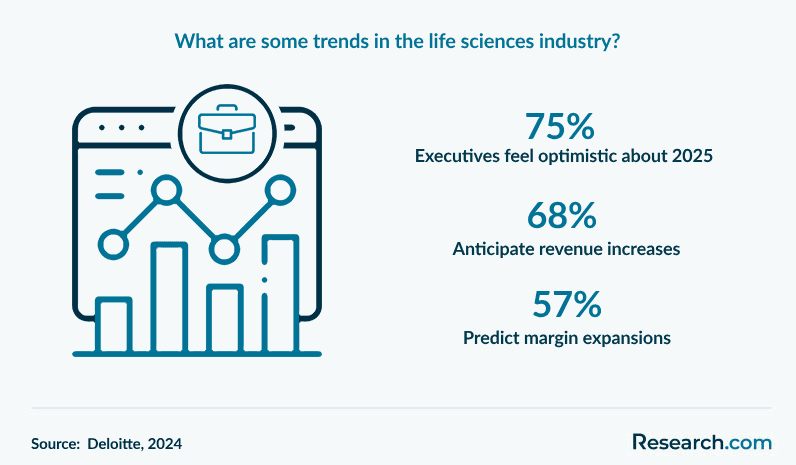
The image below highlights trends in the life sciences industry that may help you think about where science-related opportunities are developing.
How to Pick the Right Science Major
The best science major is not automatically the easiest, hardest, or highest-paying one. It is the major that fits your strengths, keeps you motivated through difficult courses, and leads toward a realistic career or graduate school plan. Start by identifying the kind of work you want to do: patient care, field research, lab experiments, data analysis, engineering design, teaching, policy, or human behavior research.
Then examine the curriculum, not just the major title. Two biology or psychology programs can feel very different depending on math requirements, lab intensity, electives, research opportunities, and internship access. Students considering nursing should also look beyond entry-level RN preparation. For example, reviewing nursing education graduate certificate salary information can help nurses understand how teaching-focused credentials may fit into later career planning.
| Question to Ask | Why It Matters | What to Look For |
| How much math is required? | Calculus, physics, and statistics can change the difficulty level dramatically. | Review required courses, not just electives. |
| How many labs, clinicals, or field hours are built in? | Hands-on requirements can increase weekly workload and scheduling pressure. | Check lab sequences, clinical placement rules, and fieldwork expectations. |
| Does the major lead directly to a job? | Some science majors are career-specific, while others are better as preparation for graduate school. | Compare entry-level job titles with long-term roles that require advanced degrees. |
| Are internships or research opportunities available? | Experience can matter as much as the degree title. | Look for faculty labs, employer partnerships, practicums, and undergraduate research. |
| Will licensing or certification be required? | Healthcare and teaching careers often have formal requirements beyond graduation. | Confirm state rules, exam requirements, and program approvals. |
| Can you switch paths if your plans change? | A flexible major can reduce risk if you decide not to attend graduate school. | Choose programs with practical electives, data skills, communication training, or applied concentrations. |
Skills You Need to Succeed in a Science Major
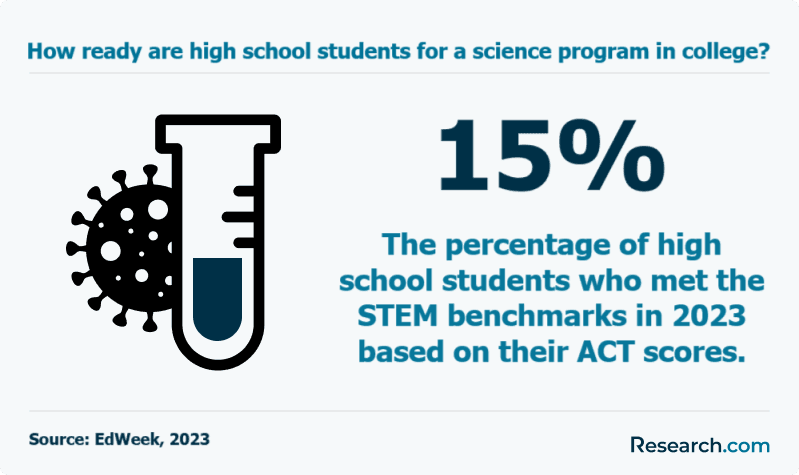
Around 15% of high school students met the STEM benchmarks in 2023 based on the ACT scores. That context matters because many students enter college with uneven preparation in math and science, even if they are interested in STEM fields. The good news is that science skills can be built deliberately with practice, tutoring, study groups, and early exposure to research or lab work.
- Critical thinking: You need to evaluate evidence, question assumptions, and draw conclusions from incomplete or complex information.
- Quantitative reasoning: Statistics, data interpretation, and mathematics appear in nearly every science field, though the depth varies by major.
- Research and lab habits: Students must learn procedures, documentation, safety rules, experimental design, and careful observation.
- Scientific communication: Lab reports, presentations, research summaries, and team discussions require clear writing and speaking.
- Organization and time management: Science schedules often include lectures, labs, problem sets, exams, and projects in the same week.
- Resilience: Difficult courses, failed experiments, and dense readings are normal. Persistence matters.
- Technology skills: Many science programs use data tools, lab software, statistical packages, coding, modeling platforms, or digital research databases.
Students can begin building these abilities long before college, which is why strong science teaching matters. If you are interested in helping younger students develop scientific curiosity and STEM confidence, review how to become a science teacher and compare the education and certification steps involved.
What Makes Some Science Majors Easier Than Others?
A science major usually feels easier when its required courses match your natural strengths. A student who enjoys writing and human behavior may find psychology more manageable than physics. A student who likes outdoor work may thrive in environmental science but struggle in molecular biology. Difficulty is partly about the curriculum and partly about fit.
The biggest factors are math intensity, lab load, course sequencing, grading standards, and whether the major requires professional practice under supervision. Nursing, for example, may have a clear career outcome, but students considering advanced nursing should also understand why some nurses pursue doctoral-level preparation. Exploring why get a DNP degree can clarify how far the nursing pathway can extend and what additional commitment may be involved.
- Math and technical depth: Majors with fewer advanced math, physics, or chemistry requirements often feel more accessible.
- Course sequencing: Rigid prerequisite chains can make it harder to recover from one failed or delayed course.
- Lab, field, or clinical hours: Hands-on components can add time and pressure beyond regular class meetings.
- Learning style: Conceptual, reading-heavy, or discussion-based science courses may feel easier for some students than calculation-heavy courses.
- Assessment style: Some programs rely heavily on exams and problem sets, while others include papers, projects, presentations, and applied work.
- Career requirements: A major may feel manageable academically but still require graduate school, licensure, or certification for the career you want.
Are “Easy” Science Majors Respected?
Yes, but respect depends on what you do with the major. Environmental science, psychology, anthropology, biology, and similar fields can be academically serious and professionally useful. They develop research, analysis, communication, and problem-solving skills. They also address important issues such as climate change, health behavior, culture, human development, biodiversity, and public policy.
However, academic respect does not automatically mean strong job demand or high earnings in every role. Students should compare employment outcomes, required credentials, and local labor markets before choosing a major. The Federal Reserve Bank of New York examined unemployment rates among recent college graduates, defined as adults 22- to 27-year-old holding a bachelor's degree or higher, by major. Using data from the Census Bureau's 2023 American Community Survey across 73 majors and subject groups, the analysis found that 28 majors had unemployment rates above the overall 3.6% rate for recent grads. Anthropology graduates had an unemployment rate of 9.4%, followed by physics at 7.8%.
The chart below shows majors with the highest unemployment rate.
Do the Hardest Science Majors Require Graduate School?
Many do, especially if your goal is research, academia, advanced clinical work, or highly specialized scientific roles. Physics, astrophysics, neuroscience, biomedical engineering, and quantum-focused pathways can provide strong undergraduate training, but the most specialized jobs often expect a master’s degree, Ph.D., medical degree, or other professional credential.
That said, graduate school is not the only option. Students with strong quantitative, programming, lab, or engineering skills may move into data science, technical consulting, software, quality assurance, aerospace support, medical device firms, biotechnology companies, or research assistant roles after the bachelor’s degree. The key is to build employable skills alongside the major, not assume the degree title alone will create opportunities.
The chart below shows majors with the lowest unemployment rate. Among these are nursing, animal and plant sciences, nursing, and aerospace engineering. Nutrition sciences holds the top spot with only a 0.4% unemployment rate.
How Science Major Difficulty Compares With Business and Humanities
Science majors often feel more technically demanding than many business or humanities programs because they typically require lab work, mathematics, data analysis, experimental methods, and precise problem-solving. Business and humanities courses may involve heavy reading, writing, presentations, case analysis, and interpretation, but science programs often add quantitative and applied performance requirements.
Still, difficulty is personal. A student who is comfortable with calculus and coding may find physics manageable but struggle with long analytical essays. Another student may excel in communication and theory but find chemistry labs or physics problem sets exhausting. The harder major is often the one that conflicts with how you think and study.
An analysis of scores from ACT college-admission tests among high school students found that science and math had the lowest college readiness benchmarks among the four tested areas. Only 15% of high school students met STEM benchmarks in 2023, down from 20% in 2018-19. Meeting the STEM benchmark means a student would have a 75% chance of earning at least a C and a 50% chance of earning a B or higher in introductory college math and science courses.
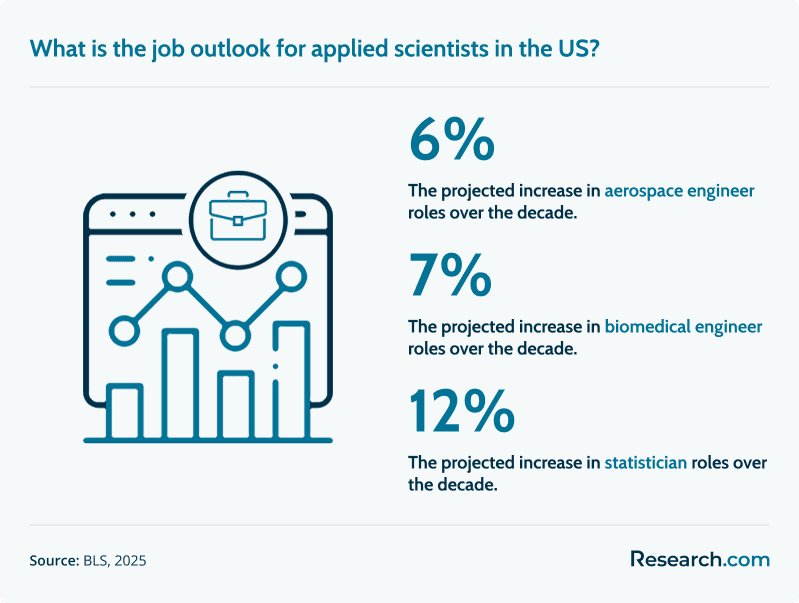
The infographic below provides additional context on the job outlook for applied scientists in the US.
Common Challenges of Science Majors
Science majors can be rewarding, but students should plan for the workload honestly. The challenge is not just memorizing facts. It is learning how to apply concepts, interpret data, work in labs or clinical settings, and solve problems when the answer is not obvious.
- Heavy weekly workload: Lectures, labs, readings, exams, problem sets, and group projects can quickly fill a schedule.
- Difficult concepts: Topics such as genetics, mechanics, neurobiology, thermodynamics, quantum mechanics, and statistics require more than surface-level memorization.
- Math and data pressure: Many science majors require comfort with formulas, graphs, statistical reasoning, and quantitative evidence.
- Lab and research time: Experiments may take hours, and results may not work the first time. Precision and patience are essential.
- Competitive academic standards: Some programs use rigorous grading, especially in prerequisite or pre-professional courses.
- Graduate school expectations: Specialized science careers may require additional education, which affects time, cost, and career planning.
- Burnout risk: Students who overload on difficult science courses without support can lose motivation or damage their GPA.
If you want a broader natural sciences pathway with online flexibility, compare accelerated bachelor’s in natural sciences online options and check whether the faster pace is realistic for your schedule, transfer credits, and career goals.
Can Certifications Improve Career Options for Science Majors?
Yes, targeted certifications can help science majors become more employable, especially when the bachelor’s degree is broad or when the student wants to move into a practical role quickly. Certifications can add skills in data analysis, clinical administration, coding, laboratory procedures, environmental compliance, project management, or healthcare operations.
The best certification depends on your career direction. A biology or health science graduate interested in healthcare administration, records, or revenue cycle work might compare the cheapest medical billing and coding certificate options. An environmental science major might prioritize GIS, safety, or sustainability-related training. A physics or astronomy student might build programming, data science, or machine learning credentials.
| Goal | Helpful Add-On Skill | Why It Can Help |
| Get an entry-level science job faster | Lab techniques, safety training, documentation, or quality assurance | Employers often want proof that graduates can follow procedures and handle technical work. |
| Move into healthcare support or administration | Medical coding, billing, health records, or healthcare compliance | These skills can broaden options for students with life science or health science backgrounds. |
| Strengthen research competitiveness | Statistics, programming, data visualization, or research methods | Graduate programs and research labs value applicants who can work with data. |
| Enter environmental or field-based work | GIS, environmental sampling, safety, or regulatory knowledge | Applied technical skills can make environmental graduates more job-ready. |
| Prepare for tech-adjacent roles | Python, SQL, machine learning, modeling, or cloud tools | Science majors with computing skills can compete for data and analytics roles. |
Common Mistakes to Avoid When Choosing a Science Major
- Choosing based only on what sounds impressive: A prestigious-sounding major can become a poor fit if you dislike the daily coursework.
- Assuming “easy” means low effort: More approachable science majors still require research, writing, exams, and consistent study.
- Ignoring graduate school requirements: Psychology, neuroscience, anthropology, astrophysics, and many research careers may require advanced degrees.
- Looking only at salaries: Salary ranges do not guarantee outcomes. Location, experience, credentials, industry, and graduate education matter.
- Not checking licensure rules: Nursing, teaching, counseling, and clinical careers may require approved programs, exams, and supervised experience.
- Overloading on hard science courses too early: Taking too many lab and math-heavy courses at once can hurt performance.
- Skipping internships or research experience: A science degree is stronger when paired with practical experience and faculty or employer references.
- Relying only on rankings: Rankings can be useful, but curriculum fit, cost, accreditation, support services, and outcomes matter more.
Questions to Ask Before You Declare a Science Major
- Which required courses have the highest failure or withdrawal rates, and what support is available?
- How many semesters of math, chemistry, physics, statistics, or programming are required?
- Are labs, fieldwork, practicums, or clinical rotations scheduled during evenings or weekends?
- What jobs do graduates get with only a bachelor’s degree?
- What percentage of students pursue graduate or professional school?
- Are internships, undergraduate research, or employer partnerships built into the program?
- Does the program meet licensing or certification requirements for the career you want?
- Can transfer credits apply to major requirements, or only to electives?
- What minors, certificates, or electives make the major more employable?
- What is your backup plan if you decide not to attend graduate school?
What Science Majors Say About Their Career Paths
- Kathy: "Studying biology gave me the scientific base I needed for lab work and research. The coursework pushed me to analyze evidence carefully, and the lab training became useful almost immediately in my research assistant role. I also liked that the degree did not lock me into one path; healthcare, biotechnology, education, and research all felt possible."
- Micah: "Nursing was demanding from the start, but the structure of the program helped me connect classroom learning with real patient care. Clinical rotations taught me resilience, communication, and responsibility. Now that I work as a registered nurse in a hospital, I can see how directly the degree prepared me for the realities of the job."
- Jesse: "Neuroscience gave me a challenging but exciting mix of biology, psychology, and research. Learning how the brain and nervous system shape behavior made me want to continue into graduate study. The major confirmed that I wanted to pursue clinical neuropsychology and research rather than stop at the bachelor’s level."
References
- Dickler, J. (2025, May 16). College majors with the best and worst job prospects — art history beats finance. CNBC.
- Hardy, A. (2025, May 30). Recent College Grads Are Discovering That a STEM Degree Doesn't Guarantee a Stable Job. Money.
- Hawrami, R. and Williams, A. (2025, April 3). Major changes: Gender shifts in undergraduate studies over time. American Institute for Boys and Men.
- Hoff, M. (2025, July 2). The 15 college majors with the highest unemployment. Business Insider.
- Levanon, G. and Stern, T. (2025, May 8). How Changing College Majors Are Reshaping the Future Workforce. LinkedIn | Labor Matters.
- Linder, J. (2025, April 29). Undergraduate Statistics. Gitnux.
- Nietzel, M. (2022, July 24). The Five Most Significant Ten-Year Trends In College Majors. Forbes.
- United States Bureau of Labor Statistics. (2025). Occupational Employment and Wage Statistics Query System. BLS.
Key Insights
- “Easy” is relative: Environmental science, psychology, anthropology, biology, and nursing may be more approachable for some students, but each still requires serious work and planning.
- The hardest majors are usually math- and research-intensive: Astronomy, neuroscience, biomedical engineering, quantum physics, and astrophysics demand technical depth and often lead toward graduate study.
- Nursing is structured, not easy: It offers a clearer career pathway than many science majors, but clinical training, licensure preparation, and patient-care responsibility make it rigorous.
- Career outcomes depend on credentials and experience: A science degree becomes more valuable when paired with internships, research, certifications, licensure, programming skills, or graduate education.
- Do not choose by salary alone: Salary figures vary by role, location, education level, and experience. Use them as planning information, not a guarantee.
- Check the curriculum before declaring: The number of math, lab, clinical, and prerequisite courses will tell you more about difficulty than the major name.
- Plan for the next step early: If your target career requires a license, certification, master’s degree, Ph.D., or medical degree, build that timeline into your decision before you commit.
Other Things You Should Know About the Easiest and Hardest Science Majors
Biology, chemistry, geology, and environmental science often require the most lab and field hours. Many programs assign 2 to 4 lab credits per course, plus supervised field studies or research projects. Heavy lab scheduling is a common reason students rank these majors among the hardest.
In 2027, the hardest science majors often exhibit higher dropout rates due to increased academic pressures, challenging coursework, and the need for strong analytical and problem-solving skills. Students may also face difficulties balancing academic demands with personal commitments, contributing to the attrition rate.
Students often need a strong foundation in mathematics and advanced sciences like physics or chemistry to enroll in the hardest science majors in 2027. AP coursework or equivalent college preparatory classes are commonly required, alongside specific GPA criteria set by universities.
Graduates of the easiest science majors in 2027 can pursue careers often requiring creative and analytical skills, such as science communication or environmental consultancy. These fields offer growing opportunities but typically don't require advanced mathematics or physics, making them accessible to these graduates.