
2027 Easiest Environmental Science Degree Programs

Co-Founder and Chief Data Scientist
Is an Environmental Science Degree Easy, Worth It, and Right for You?
An environmental science degree can be a practical choice if you want a science-based career connected to climate issues, conservation, pollution control, sustainability, public health, or environmental policy. It is often viewed as one of the more accessible science majors because many programs combine classroom science with fieldwork, labs, writing, and applied problem-solving rather than relying only on advanced mathematics. That does not mean the degree is effortless. Students still study biology, chemistry, geology, statistics, environmental systems, and research methods.
This guide is for students comparing environmental science programs, especially those searching for the easiest environmental science degree programs for 2027. You will learn what makes a program manageable, how online and campus formats compare, what the degree can cost, which careers it can lead to, what employers may expect, and how to choose a program without relying only on rankings or tuition.
Quick Answer: What Should You Know Before Choosing an Environmental Science Degree?
An environmental science degree is best for students who want an interdisciplinary science major with real-world applications in conservation, consulting, environmental compliance, sustainability, research, and public agencies. The “easiest” program is usually not the one with the fewest requirements. It is the program that fits your schedule, academic strengths, budget, transfer credits, fieldwork needs, and career goals.
- A bachelor’s degree typically takes four years of full-time study, while master’s programs generally take one to two years full-time and doctoral programs usually require four to seven years.
- Environmental scientists and specialists had a median annual wage of approximately $78,980 as of May 2023.
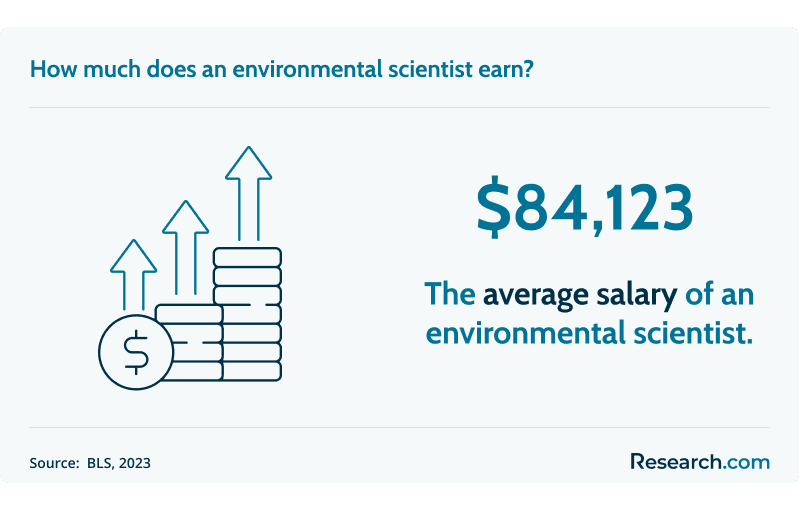
- The average salary for environmental scientists and specialists in the United States is approximately $84,123 per year or $40.44 per hour.
- Specialized roles can pay more. Environmental engineers earn around $96,820, and more experienced professionals in specialized fields can earn upwards of $100,000.
- Online programs can help working adults and remote learners, but students should check how labs, fieldwork, internships, and research experiences are handled.
What are the benefits of getting a degree in environmental science?
- Graduates can pursue roles such as environmental specialist, environmental engineer, sustainability consultant, environmental technician, conservation professional, policy analyst, or environmental educator.
- The field connects science with urgent practical issues, including pollution, land and water use, conservation, sustainability, and environmental health.
- Many programs offer online or hybrid study options, making it easier for students to balance college with employment, family responsibilities, or geographic limitations.
What can I expect from an environmental science degree program?
An environmental science program gives students a broad foundation in natural science while showing how scientific evidence is used to evaluate environmental problems. Coursework commonly blends biology, chemistry, geology, ecology, data analysis, environmental policy, and field methods. Many programs also include labs, field projects, internships, or research experiences so students can practice collecting samples, analyzing environmental conditions, interpreting data, and communicating findings.
The degree is interdisciplinary by design. You may study how contaminants move through soil and water, how ecosystems respond to human activity, how regulations shape environmental decisions, or how organizations measure sustainability goals. Because of this range, the program can suit students who enjoy science but want a major connected to public issues and practical work outside a traditional laboratory.
What makes an environmental science program feel easier or harder?
| Factor | Why it matters | What to check before enrolling |
| Math and chemistry requirements | Some programs are more quantitative than others, especially those tied to engineering, hydrology, toxicology, or data analysis. | Review required courses, not just the major title. Look for calculus, statistics, organic chemistry, physics, and advanced lab requirements. |
| Fieldwork expectations | Hands-on learning can make concepts easier to understand, but it may require travel, weekend work, physical activity, or specific equipment. | Ask how fieldwork is scheduled and whether online students must complete in-person components. |
| Online support | Flexible programs can be more manageable for working students, but weak advising can make course planning difficult. | Compare academic advising, tutoring, lab support, career services, and internship placement help. |
| Transfer credit policy | Accepted credits can shorten the timeline and lower total cost. | Request a transfer evaluation before committing to a program. |
| Career alignment | A program may be easier to finish when its courses connect clearly to your goals. | Look for concentrations, internships, research projects, and employer connections in your target area. |
Where can I work with an environmental science degree program?
Environmental science graduates work in public agencies, consulting firms, conservation organizations, laboratories, utilities, energy organizations, nonprofits, schools, and private companies with environmental compliance or sustainability needs. Early-career graduates often begin in technician, assistant, analyst, or specialist roles where they help monitor environmental conditions, prepare reports, collect field data, support regulatory compliance, or assist with remediation projects.
Government roles may focus on public health, permitting, land management, water quality, pollution prevention, or regulatory enforcement. Consulting roles often involve site assessments, environmental impact documentation, sampling, risk review, and client reporting. Nonprofit and conservation roles may center on habitat restoration, wildlife protection, public education, community engagement, or sustainability initiatives.
How much can I make with an environmental science degree program?
Pay depends on the role, employer, location, education level, certifications, and experience. The average salary for environmental scientists and specialists in the United States is approximately $84,123 per year or $40.44 per hour. The median annual wage for environmental scientists and specialists was approximately $78,980 as of May 2023. Specialized and advanced roles may pay more, with environmental engineers earning around $96,820 and more experienced professionals in specialized fields earning upwards of $100,000.
Students should treat salary figures as benchmarks rather than guarantees. Entry-level salaries can be lower, and some environmental careers require graduate study, licensing, engineering credentials, specialized technical skills, or several years of experience before reaching higher pay levels.
- Easiest Environmental Science Degree Programs for 2027
- How long does it take to complete an environmental science degree program?
- How does an environmental science degree program compare to an on-campus program?
- What is the average cost of an environmental science degree program?
- What are the financial aid options for students enrolling in an environmental science degree program?
- What are the prerequisites for enrolling in an environmental science degree program?
- What courses are typically in an environmental science degree program?
- What types of specializations are available in an environmental science degree program?
- What challenges might you encounter in an environmental science degree program?
- Can an accelerated environmental science degree program align with my career goals?
- Can an accelerated environmental science degree program work for me?
- How to choose the easiest environmental science degree program?
- What professional certifications or additional training can further my career in environmental science?
- Can further education accelerate my environmental science career?
- What factors should I consider when selecting an environmental science degree program?
- What additional skills and certifications can boost an environmental science career?
- What skills do environmental science employers value?
- What career paths are available for graduates of an environmental science degree program?
- What is the job market for graduates with an environmental science degree?
- What is the ROI of an environmental science degree?
Easiest Environmental Science Degree Programs for 2027
The programs below are presented for students looking for accessible environmental science pathways. “Easy” should not be understood as low-quality or academically weak. A better way to evaluate these degrees is to ask whether the program has flexible delivery, clear requirements, reasonable cost, strong advising, hands-on learning options, and accreditation.
How do we rank schools?
A useful ranking should help students compare programs on factors that affect completion, affordability, academic quality, and student support. Important considerations include accreditation, cost, faculty, flexibility, graduation requirements, and access to advising or career resources.
- Integrated Postsecondary Education Data System (IPEDS database)
- Peterson’s database, including their Distance Learning Licensed Data Set
- College Scorecard database
- National Center for Education Statistics and NCES college data resources
Program comparison at a glance
| School | Program | Program Length | Estimated Cost per Credit | Required Credits | Accreditation |
| Southern New Hampshire University | Bachelor of Science in Environmental Science | 3 years | $330 | 120 | New England Commission of Higher Education (NECHE) |
| Purdue Global | Bachelor of Science in Environmental Science | 4 years | $371 | 120 | The Higher Learning Commission |
| Liberty University | Bachelor of Science in Conservation and Environmental Biology | 4 years | $390 | 120 | Southern Association of Colleges and Schools Commission on Colleges |
| Florida Gateway College | Environmental Science Technology Program | 4 years | $450 | 64 | Southern Association of Colleges and Schools Commission on Colleges |
| Oregon State University | Bachelor of Science in Environmental Sciences | 4 years | $261 | 180 | Northwest Commission on Colleges and Universities (NWCCU) |
| University of Florida | B.A./B.S. in Environmental Science | 4 years | $129 | 120 | Southern Association of Colleges and Schools Commission on Colleges |
| University of North Carolina at Wilmington | Bachelor of Science in Environmental Science | 4 years | $292 | 72 | Southern Association of Colleges and Schools Commission on Colleges |
| California State University, Monterey Bay | Bachelor of Science in Environmental Science | 4 years | $294 | 120 | Western Association of Schools and Colleges (WASC) |
| University of Wisconsin-Milwaukee | B.A./B.S. Conservation and Environmental Science (CES) | 4 years | $712 | 120 | The Higher Learning Commission |
| Arizona State University | Bachelor of Science in Environmental Science | 4 years | $561 | 120 | The Higher Learning Commission |
1. Southern New Hampshire University (SNHU) Bachelor of Science in Environmental Science
Southern New Hampshire University (SNHU) offers a Bachelor of Science in Environmental Science built for students who need a flexible route into environmental study. The online format can be especially helpful for working adults, transfer students, and learners who need to complete coursework around other responsibilities. Students should review how the program handles labs, applied projects, and advising before enrolling.
- Program Length: 3 years
- Tracks/concentrations: Environmental Science
- Estimated Cost per Credit: $330
- Required Credits to Graduate: 120
- Accreditation: New England Commission of Higher Education (NECHE)
2. Purdue Global Bachelor of Science in Environmental Science
The Bachelor of Science in Environmental Science at Purdue Global combines natural and physical sciences with applied environmental topics. Students study areas such as natural resource conservation, wildlife ecology, and water quality management. The program’s use of custom lab kits shipped to students can be useful for online learners who need structured hands-on assignments outside a campus setting.
- Program Length: 4 years
- Tracks/concentrations: Environmental Science
- Estimated Cost per Credit: $371
- Required Credits to Graduate: 120
- Accreditation: The Higher Learning Commission
3. Liberty University Bachelor of Science in Conservation and Environmental Biology
Liberty University offers a Bachelor of Science in Conservation and Environmental Biology for students interested in ecosystems, human impacts on the environment, and conservation work. The program may appeal to learners who want a biology-centered environmental degree with opportunities to connect classroom learning to fieldwork and research projects.
- Program Length: 4 years
- Tracks/concentrations: Environmental Science
- Estimated Cost per Credit: $390
- Required Credits to Graduate: 120
- Accreditation: Southern Association of Colleges and Schools Commission on Colleges
4. Florida Gateway College Environmental Science Technology Program
The Environmental Science Technology Program at Florida Gateway College is designed for students who want applied training in environmental science and technology. The curriculum covers environmental regulations, ecology, sustainable practices, laboratory work, and field studies. Students considering this option should compare its 64-credit structure with their long-term transfer, employment, or bachelor’s degree goals.
- Program Length: 4 years
- Tracks/concentrations: Environmental Science
- Estimated Cost per Credit: $450
- Required Credits to Graduate: 64
- Accreditation: Southern Association of Colleges and Schools Commission on Colleges
5. Oregon State University Bachelor of Science in Environmental Sciences
Oregon State University offers an Environmental Sciences undergraduate program that draws from the natural and social sciences. Faculty expertise spans areas such as ecology, conservation, alternative energy, and aquatic biology. Students who want a broad program with multiple scientific perspectives may find this structure useful for graduate school preparation or a range of environmental careers.
- Program Length: 4 years
- Tracks/concentrations: Environmental Science
- Estimated Cost per Credit: $261
- Required Credits to Graduate: 180
- Accreditation: Northwest Commission on Colleges and Universities (NWCCU)
6. University of Florida B.A./B.S. in Environmental Science
The University of Florida offers Environmental Science through the School of Natural Resources and Environment. Students can choose either a Bachelor of Arts or Bachelor of Science path, allowing them to align coursework with interests in science, policy, management, or further study. Graduates may pursue work in environmental consulting, government agencies, land and water management, and nonprofit organizations. Approximately half of the students continue into graduate or professional programs.
- Program Length: 4 years
- Tracks/concentrations: Environmental Science
- Estimated Cost per Credit: $129
- Required Credits to Graduate: 120
- Accreditation: Southern Association of Colleges and Schools Commission on Colleges
7. University of North Carolina at Wilmington Bachelor of Science in Environmental Science
The University of North Carolina at Wilmington offers an Environmental Science program that blends academic coursework with practical learning. Students can access laboratories, faculty support, internships, and community-based projects. This may suit learners who want a science degree connected to coastal, community, and applied environmental work.
- Program Length: 4 years
- Tracks/concentrations: Environmental Science
- Estimated Cost per Credit: $292
- Required Credits to Graduate: 72
- Accreditation: Southern Association of Colleges and Schools Commission on Colleges
8. California State University, Monterey Bay Bachelor of Science in Environmental Science
California State University, Monterey Bay offers a Bachelor of Science in Environmental Science with a strong applied focus. Students can concentrate in Applied Ecology, Environmental Data Analysis, or Watershed Systems. This structure is useful for students who already know whether they prefer ecological work, data-heavy analysis, or water systems.
- Program Length: 4 years
- Tracks/concentrations: Environmental Science
- Estimated Cost per Credit: $294
- Required Credits to Graduate: 120
- Accreditation: Western Association of Schools and Colleges (WASC)
9. University of Wisconsin-Milwaukee B.A./B.S. Conservation and Environmental Science (CES)
The Conservation and Environmental Science program at the University of Wisconsin-Milwaukee combines social, natural, and physical sciences. Students study ecosystem management, natural resource conservation, and environmental education. This option may fit students who want to connect conservation science with community issues and environmental decision-making.
- Program Length: 4 years
- Tracks/concentrations: Environmental Science
- Estimated Cost per Credit: $712
- Required Credits to Graduate: 120
- Accreditation: The Higher Learning Commission
10. Arizona State University Bachelor of Science in Environmental Science
Arizona State University (ASU) offers a Bachelor of Science in Environmental Science for students who want to study the relationship between human activity and natural systems. The program can support careers in environmental work and may also serve as preparation for graduate study in environmental science or a related field.
- Program Length: 4 years
- Tracks/concentrations: Environmental Science
- Estimated Cost per Credit: $561
- Required Credits to Graduate: 120
- Accreditation: The Higher Learning Commission
How long does it take to complete an environmental science degree program?
The timeline depends on degree level, enrollment status, transfer credits, program design, and whether fieldwork or research requirements extend the schedule. A bachelor’s degree typically takes four years of full-time study. Students attending part-time may need longer, while those with transfer credits or accelerated coursework may finish sooner.
Graduate study requires a different commitment. Master’s degrees in Environmental Science, like other graduate pathways such as a low-cost master’s degree in communications, generally take one to two years of full-time study. Doctoral programs are longer and usually require four to seven years because they involve advanced research, dissertation work, and close faculty supervision.
Before choosing a program, ask whether credits transfer, whether courses are offered year-round, how often required classes are available, and whether internships or field experiences must be completed during specific terms.
| Degree level | Typical full-time timeline | Best for |
| Associate or technology-focused pathway | Varies by program structure | Students seeking entry-level technical preparation or a transfer pathway |
| Bachelor’s degree | Four years | Most environmental specialist, technician, consulting, policy, conservation, and sustainability pathways |
| Master’s degree | One to two years | Students seeking advanced technical, research, policy, management, or leadership roles |
| Doctoral degree | Four to seven years | Students interested in high-level research, university teaching, or specialized scientific work |
How does an environmental science degree program compare to an on-campus program?
An online environmental science degree can be a strong option for students who need flexibility. Like other online credentials, including online accounting certificate programs, an online environmental science program can allow students to complete lectures, readings, assignments, and discussions around work or family obligations. This format can be especially useful for students who live far from campus.
The trade-off is that environmental science often depends on labs, fieldwork, sampling, observation, and collaboration. Some online programs address this through lab kits, local field assignments, intensive campus sessions, or approved internship sites. Students should confirm these details before enrolling because not every online format offers the same level of hands-on preparation.
On-campus programs usually provide easier access to laboratories, field trips, faculty research, peer collaboration, and campus-based networking. They may be better for students who learn best through face-to-face instruction or want direct involvement in research teams. However, campus programs can require relocation, commuting, fixed class schedules, and higher living costs.
| Format | Advantages | Limitations | Best fit |
| Online | Flexible scheduling, broader geographic access, often better for working adults | May require extra planning for labs, fieldwork, internships, and networking | Self-directed students who need schedule flexibility |
| On campus | Direct access to labs, faculty, field trips, campus resources, and peer collaboration | Less flexible schedule and possible relocation or commuting costs | Students who want immersive science training and in-person support |
| Hybrid | Combines online convenience with selected in-person labs or field experiences | May still require travel at specific times | Students who want flexibility without giving up hands-on learning |
What is the average cost of an environmental science degree program?
Costs vary widely based on the school, delivery format, residency status, fees, and whether a student attends a public or private institution. Undergraduate tuition for environmental science programs can range from approximately $10,000 to $30,000 per year for in-state students at public universities. Out-of-state students may pay upwards of $30,000 to $50,000 annually. Private institutions often charge between $30,000 and $60,000 per year.
For online environmental science degree programs, per-credit costs usually range from $230 to $490, which can lead to total expenses between $28,000 and $59,000 for a full bachelor’s degree. Students should also budget for lab fees, field equipment, books, technology, transportation to field sites, internship costs, and living expenses.
| Cost category | Why students overlook it | What to ask |
| Tuition | Students may compare only sticker prices without checking residency rates or online pricing. | Is tuition charged per credit, per term, or by residency status? |
| Lab and field fees | Environmental science often includes hands-on requirements that may add costs. | Are lab kits, field trips, safety equipment, or sampling materials included? |
| Transfer credits | Accepted credits can reduce the total number of courses needed. | How many prior credits can be applied to the major and general education requirements? |
| Internship expenses | Some internships are unpaid or require travel. | Does the school help students find local or paid placements? |
| Time to completion | Extra semesters increase total cost even if tuition per credit looks affordable. | Are required courses offered every term, or only once per year? |
What are the financial aid options for students enrolling in an environmental science degree program?
Environmental science students may qualify for several forms of financial aid. The right mix depends on financial need, academic performance, school policies, enrollment status, and whether the student is pursuing undergraduate or graduate study.
- Scholarships: Some scholarships are designed for students pursuing environmental science, sustainability, environmental health, conservation, or related fields. Organizations such as the National Environmental Health Association and the Air Waste Management Association offer scholarship opportunities for students preparing for environmental careers. Platforms such as Bold.org also list scholarships that may fit environmental science majors.
- Grants: Grants are usually need-based and do not require repayment. Eligible students may apply for federal or state grants, including the Pell Grant for low-income students.
- Fellowships: Graduate students may find fellowships tied to research, environmental projects, or academic excellence. These awards are often competitive and may require a proposal or faculty support.
- Federal Student Aid: Completing the Free Application for Federal Student Aid (FAFSA) is an important step for students seeking federal grants, loans, and work-study options.
- Institutional Aid: Colleges and universities may offer their own scholarships, grants, tuition discounts, or departmental awards for environmental science students. Contact the financial aid office and the academic department for details.
How to reduce the cost of an environmental science degree
- Submit the FAFSA as early as possible and renew it each year.
- Ask schools for a written transfer credit evaluation before enrolling.
- Compare total program cost, not only cost per credit.
- Look for programs with local internship options to reduce travel expenses.
- Ask whether lab kits, field supplies, and software are included in tuition or billed separately.
- Apply for environmental science, sustainability, public health, conservation, and STEM-related scholarships.
What are the prerequisites for enrolling in an environmental science degree program?
Students asking about the educational requirements to become an environmental scientist should begin with admissions expectations. Requirements vary by institution, but most undergraduate programs look for evidence that applicants can handle science-based coursework.
- High school diploma or equivalent: This is the baseline requirement for most undergraduate environmental science programs.
- Science preparation: High school coursework in biology, chemistry, physics, earth science, and mathematics can help students enter the major with stronger foundations.
- Grades: Strong performance in science and math courses can support an application and prepare students for college-level labs and analysis.
- Standardized test scores: Some universities may require SAT or ACT scores, while others may use test-optional policies.
- Letters of recommendation: Recommendations from teachers, mentors, or supervisors can strengthen an application by showing academic readiness and commitment.
- Environmental engagement: Volunteering, science fairs, environmental clubs, conservation work, or community projects can demonstrate genuine interest in the field.
What courses are typically in an environmental science degree program?
Environmental science curricula usually include core science courses, environmental systems courses, methods courses, and electives or concentrations. Students should read degree plans carefully because one environmental science program may lean toward policy while another may require more chemistry, biology, hydrology, or data analysis.
- Biology: General biology helps students understand organisms, ecosystems, biodiversity, and ecological relationships.
- Chemistry: Chemistry is important for studying pollutants, water quality, soil conditions, and chemical processes in natural systems. Students with a deeper interest in chemical life processes may also compare campus-based or online biochemistry programs.
- Mathematics: Statistics and, in some programs, calculus help students analyze environmental data, interpret research, and evaluate trends.
- Physics: Some programs include physics because energy, water flow, atmospheric systems, and environmental processes often involve physical principles.
- Introductory environmental science: Foundational courses introduce major concepts such as sustainability, ecosystems, pollution, climate systems, conservation, and human-environment interactions.
Common course areas by career interest
| If your goal is... | Prioritize courses in... | Useful applied experiences |
| Environmental consulting | Environmental assessment, chemistry, statistics, regulations, field methods | Sampling projects, site assessments, report writing, internships |
| Conservation or wildlife work | Ecology, biology, habitat management, GIS, natural resources | Field surveys, restoration projects, conservation internships |
| Environmental policy | Policy analysis, environmental law, economics, communication, public administration | Policy briefs, agency internships, community projects |
| Water or hydrology work | Hydrology, chemistry, geology, statistics, watershed systems | Water sampling, watershed mapping, field monitoring |
| Sustainability roles | Sustainability management, data analysis, energy systems, communication | Carbon or resource audits, sustainability reporting, organizational projects |
What types of specializations are available in an environmental science degree program?
Environmental science specializations help students connect the degree to specific career goals. Students interested in environmental science roles in the energy sector or other applied settings should compare concentrations carefully because specialization choices can influence internships, technical skills, and job readiness.
- Environmental Policy and Law: Focuses on environmental regulation, policy analysis, legal frameworks, and decision-making processes.
- Environmental Toxicology: Examines how pollutants and harmful substances affect organisms, ecosystems, and human health.
- Environmental Chemistry: Studies chemical conditions and contamination in water, air, soil, and other environmental systems.
- Environmental Microbiology: Explores microorganisms involved in processes such as nutrient cycling, decomposition, and bioremediation.
- Marine Science: Covers marine ecosystems, oceanography, marine biology, fisheries science, and coastal environments.
What challenges might you encounter in an environmental science degree program?
Environmental science can be manageable, but students should expect academic and logistical challenges. The coursework often requires students to connect multiple disciplines, including biology, chemistry, geology, statistics, environmental policy, and field research. Students who are strong in one area but less comfortable in another may need tutoring, study groups, or additional preparation.
Fieldwork can also create scheduling challenges. Labs and field assignments may require long blocks of time, travel to specific sites, outdoor work in changing conditions, or coordination with research teams. Online students should pay special attention to how programs handle these requirements. If your immediate goal is to build college credit quickly before moving into a longer pathway, an option such as an online associate degree in 6 months can be worth comparing, but always confirm how credits transfer into environmental science programs.
Common mistakes students make
| Mistake | Why it can hurt you | Better approach |
| Choosing only by tuition | A low per-credit price may not include fees, lab costs, field expenses, or extra semesters. | Compare the full cost to graduate. |
| Assuming online means fully remote | Environmental science may still require labs, fieldwork, internships, or proctored activities. | Ask exactly which requirements must be completed in person. |
| Ignoring accreditation | Accreditation can affect credit transfer, graduate admissions, and financial aid eligibility. | Verify institutional accreditation before applying. |
| Skipping career research | Different roles require different technical skills and sometimes additional credentials. | Map courses and internships to target jobs before choosing electives. |
| Relying only on rankings | A highly ranked program may not fit your budget, schedule, location, or learning style. | Use rankings as one input, then compare curriculum, support, cost, and outcomes. |
Can an accelerated environmental science degree program align with my career goals?
An accelerated environmental science program can make sense if you are motivated, already have transfer credits, can manage intensive courses, and want to enter the workforce or graduate school sooner. These programs may use shorter terms, heavier course loads, credit-by-examination options, or year-round schedules. A faster format is most useful when it still includes the scientific depth, field experiences, and career preparation you need.
Before choosing an accelerated pathway, compare credit transfer policies, lab and field requirements, faculty access, academic support, and internship options. Students comparing faster college routes can review fast-track degree options to understand how accelerated formats differ across fields.
Can an accelerated environmental science degree program work for me?
An accelerated program can work if you have enough time each week for concentrated study, are comfortable with science coursework, and can complete field or lab requirements on the program’s schedule. It may not be ideal if you need a lighter course load, have unpredictable work hours, or want extensive time for undergraduate research.
Students who want to shorten the path to a bachelor’s degree can compare an accelerated online bachelor’s degree with traditional online and campus formats. The best choice is the one that balances speed with retention, hands-on learning, affordability, and career readiness.
How to choose the easiest environmental science degree program?
The easiest environmental science program for you is the one that reduces unnecessary barriers while still preparing you for your goals. Do not choose a program simply because it sounds less quantitative or because it is online. Instead, evaluate whether the structure, support, and curriculum match your strengths and constraints.
1. Review course structure and scientific intensity
Look at the full degree plan. Some environmental science programs begin with accessible introductory courses, while others move quickly into chemistry, statistics, geology, hydrology, or advanced labs. Comparing course patterns can be as important as comparing related online science or health programs, such as online nutrition programs.
2. Decide whether the interdisciplinary format fits you
Environmental science pulls from biology, chemistry, geography, earth science, public policy, and social science. This can make the major more engaging for students who enjoy connecting ideas across fields. It can also be challenging for students who prefer one narrow discipline.
3. Look for hands-on support, not just flexibility
Fieldwork, lab assignments, data projects, internships, and research opportunities can make environmental science more practical and easier to understand. Students who are also exploring applied career fields, including logistics career paths, should notice how much employer-facing experience each program provides.
4. Choose a program that matches your motivation
Students often persist more successfully when the coursework connects to personal interests such as wildlife, climate, sustainability, conservation, water quality, or public policy. Interest does not remove the academic work, but it can make challenging courses feel more purposeful.
Questions to ask before enrolling
- Is the institution accredited, and does that accreditation support financial aid and credit transfer?
- How are labs, fieldwork, and internships completed in online or hybrid programs?
- Which courses are most difficult, and what tutoring or academic support is available?
- How many transfer credits will the school accept toward the major?
- Does the curriculum prepare students for consulting, policy, conservation, research, sustainability, or graduate school?
- Are GIS, data analysis, regulatory compliance, and technical writing included?
- What career services are available for environmental science students?
What professional certifications or additional training can further my career in environmental science?
Certifications and focused training can help environmental science graduates show practical competence beyond the degree. Useful areas may include Geographic Information Systems (GIS), environmental management, sustainability reporting, regulatory compliance, occupational health and safety, data analysis, remote sensing, or field sampling methods. The right credential depends on the job target.
Students and working professionals who need affordable continuing education can compare affordable online colleges that accept FAFSA when planning additional coursework. Before paying for a credential, ask employers in your target role whether the certification is recognized and whether it improves hiring or promotion prospects.
Can further education accelerate my environmental science career?
Further education can help if your target roles require advanced research ability, technical specialization, leadership preparation, or graduate-level science. A master’s degree may support movement into higher-responsibility roles, while doctoral study is usually tied to advanced research or academic careers.
For professionals who want graduate training without stepping away from work for several years, one-year online master’s programs can be useful to compare. Students should still check whether a shorter program provides enough depth, research experience, and employer recognition for their goals.
What factors should I consider when selecting an environmental science degree program?
Program choice should begin with accreditation, curriculum quality, cost, flexibility, and career fit. A strong environmental science program should teach both scientific concepts and applied skills, including data analysis, field methods, technical writing, and environmental problem-solving. If you are balancing college with employment, compare flexible formats from affordable online colleges for working adults, but do not sacrifice lab or field preparation.
| Selection factor | Why it matters | Decision tip |
| Accreditation | Supports institutional quality, credit transfer, and financial aid eligibility. | Verify accreditation before applying. |
| Curriculum fit | Environmental science programs vary in emphasis. | Choose based on target careers, not only the degree title. |
| Hands-on learning | Fieldwork and labs build job-ready skills. | Ask for examples of recent field projects, internships, and research opportunities. |
| Faculty expertise | Faculty interests can shape research, electives, and mentorship. | Review faculty profiles for ecology, policy, toxicology, water, GIS, or sustainability expertise. |
| Career support | Environmental careers often depend on internships and networks. | Ask how the school helps students find placements and entry-level jobs. |
| Total cost | Tuition alone does not show the full price. | Estimate tuition, fees, books, lab costs, field expenses, and time to completion. |
What additional skills and certifications can boost an environmental science career?
Employers often value candidates who combine scientific knowledge with applied technical skills. GIS, remote sensing, data modeling, statistics, sampling methods, environmental reporting, regulatory compliance, and technical writing can make graduates more competitive. Communication and project management also matter because environmental professionals frequently explain scientific findings to clients, agencies, communities, or organizational leaders.
Targeted credentials can be useful when they match a specific role. Students exploring flexible credentials can compare online certifications that pay well, but they should confirm whether a certificate is relevant to environmental employers before enrolling.
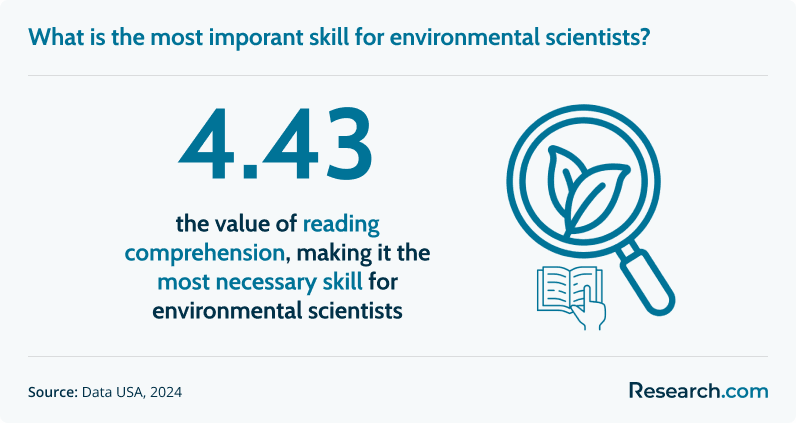
What skills do environmental science employers value?
Environmental employers commonly look for a combination of technical ability, scientific judgment, communication skills, and professionalism. Candidates should be able to collect reliable data, analyze results, follow safety protocols, understand regulations, and write clear reports. Teamwork also matters because environmental projects often involve scientists, engineers, policymakers, community members, and business stakeholders.
- Technical skills: GIS, data analysis, field sampling, lab methods, remote sensing, statistics, and environmental monitoring.
- Communication skills: Technical writing, public communication, report preparation, and presentation skills.
- Problem-solving skills: Ability to interpret environmental data and recommend practical solutions.
- Professional skills: Project coordination, regulatory awareness, attention to detail, safety practices, and ethical judgment.
- Supplemental credentials: Students who want job-focused training can compare entry-level certification programs that pay well and choose only those relevant to their environmental career path.
What career paths are available for graduates of an environmental science degree program?
The environmental science field includes roles across consulting, government, education, conservation, engineering-related work, research, and sustainability. Some positions are open to bachelor’s degree holders, while others may require graduate education, licensure, engineering credentials, or specialized training.
| Career path | Typical focus | Additional preparation that may help |
| Environmental Scientist or Consultant | Environmental impact assessments, pollution monitoring, remediation planning, compliance support | Field methods, technical writing, GIS, regulatory knowledge |
| Environmental Engineer | Systems and solutions for water treatment, waste management, pollution control, and infrastructure-related environmental problems | Engineering education and role-specific requirements |
| Wildlife Biologist | Wildlife populations, conservation projects, habitat management, ecological research | Biology, ecology, field research, conservation experience |
| Environmental Educator | Teaching environmental topics in schools, museums, nonprofits, parks, and community programs | Communication skills, curriculum design, public outreach |
| Environmental Policy Analyst | Policy research, environmental regulation, advocacy, agency work, public decision support | Policy analysis, law, economics, writing, government or nonprofit internships |
| Geologist | Earth materials, geological processes, resource management, environmental assessments | Geology coursework, field mapping, site assessment experience |
| Hydrologist | Water resources, water quality, distribution, availability, and watershed analysis | Hydrology, chemistry, statistics, GIS, water sampling |
Other environmental science and sustainability management degree career options include environmental technician, environmental engineering technologist, and environmental health and safety assistant.
What is the job market for graduates with an environmental science degree?
The job market for environmental science graduates is shaped by public concern about climate change, pollution, resource management, sustainability, land use, and environmental health. Graduates may find work in government agencies, nonprofit organizations, consulting firms, utilities, research organizations, and companies that must comply with environmental regulations. As with fields such as library science degree jobs, employment outcomes depend on location, experience, specialization, and the strength of a student’s internships and professional network.
Approximately 65.9% of environmental science graduates are employed shortly after completing their degrees, with many working in government agencies, nonprofit organizations, and consulting firms focused on environmental protection and sustainability efforts. Students can improve job readiness by gaining field experience, building GIS or data skills, completing internships, and learning how to write clear environmental reports.
What graduates say about studying environmental science
"Environmental Science helped me understand how ecosystems function and how human decisions affect those systems. The program strengthened my science background while also teaching me to evaluate problems carefully and think through solutions. I left with a stronger sense of how my work could contribute to environmental improvement." - Liam
"I started the major because I loved being outdoors, but the coursework showed me how connected natural systems, communities, and sustainability decisions really are. Fieldwork and lab assignments were especially useful because they turned abstract concepts into practical experience. That hands-on training gave me more confidence about entering the field." - Maya
"The degree was demanding, but it gave me a clearer purpose. I learned to approach environmental problems from several angles and to work with others on complex issues. The interdisciplinary structure made me a better problem-solver and helped me see why collaboration matters in environmental work." - Alex
What is the ROI of an environmental science degree?
The return on investment of an environmental science degree depends on total cost, time to completion, salary potential, job location, career path, and whether the student needs graduate education or certifications. A lower-cost program may produce a stronger ROI if it offers accredited coursework, transfer credit acceptance, internships, and job-relevant skills. A more expensive program may be worthwhile if it provides strong research opportunities, employer connections, specialized training, or a pathway to graduate study.
Students should compare environmental science outcomes with other programs and career routes, including online degrees that pay well, before making a final decision. The goal is not simply to choose the fastest or cheapest program. The goal is to choose a degree that fits your finances and prepares you for realistic career opportunities.
ROI checklist for environmental science students
- Estimate total program cost, including tuition, fees, books, lab costs, field expenses, and living expenses.
- Compare the degree timeline with expected entry-level and long-term career options.
- Check whether internships, research, GIS, data analysis, and regulatory coursework are built into the program.
- Ask whether graduates commonly enter consulting, government, nonprofit, sustainability, or graduate school pathways.
- Consider whether your target career requires additional credentials, graduate study, or licensure.
Key Insights
- An environmental science degree can be one of the more accessible science majors for students who prefer applied, interdisciplinary learning, but it still requires biology, chemistry, data analysis, labs, and fieldwork.
- The easiest program is the one that fits your schedule, budget, transfer credits, academic strengths, and career goals while maintaining accreditation and useful hands-on training.
- A bachelor’s degree typically takes four years of full-time study; master’s programs generally take one to two years full-time, and doctoral programs usually take four to seven years.
- Environmental scientists and specialists had a median annual wage of approximately $78,980 as of May 2023, while the average salary is approximately $84,123 per year or $40.44 per hour.
- Online programs can be practical for working adults, but students must verify how labs, fieldwork, internships, and research projects are completed.
- Before enrolling, compare total cost rather than tuition alone, confirm accreditation, review the curriculum, ask about career support, and choose electives or concentrations that match your target role.
- GIS, data analysis, technical writing, field sampling, regulatory knowledge, communication, and project management can strengthen environmental science career prospects.
References:
- Data USA (N.D.). Environmental Studies. Data USA
- U.S. Bureau of Labor Statistics. (2024). Environmental scientists and specialists. bls.gov
- U.S. Bureau of Labor Statistics. (2024). Hydrologists. bls.gov
- U.S. Department of Energy. (2024). Job creation & economic growth. energy.gov
- Salary.com. (2024). Environmental chemist salary in the United States. salary.com
- ZipRecruiter. (2024). Salary: Environmental health officer. ziprecruiter.com
Other Things You Should Know About the Easiest Environmental Science Degree Programs
Yes. Many bachelor’s programs still require a capstone, often 3 to 6 credits, even when the course load is lighter. Some schools let students complete it through a research paper, field project, or internship-style experience in the final year.
Common career paths include environmental consultant, wildlife biologist, and conservation scientist. Graduates often work for government agencies, non-profit organizations, and private companies, focusing on sustainability initiatives and ecological research. Opportunities for growth exist with additional certifications and experience.


