
2027 Most Affordable Online Bachelor's in Mathematics Degree Programs

Co-Founder and Chief Data Scientist
Choosing an affordable online bachelor's in mathematics is really a decision about cost, flexibility, and career direction. A math degree can lead to work in analytics, finance, actuarial science, education, technology, research, and other fields that depend on quantitative reasoning. At the same time, students need to look beyond tuition and ask whether a program offers the applied coursework, programming exposure, transfer policies, accreditation, and career support needed to turn mathematical ability into job-ready skills.
This guide is designed for students comparing low-cost online math degrees, working adults returning to college, transfer students trying to finish faster, and anyone weighing mathematics against other STEM or analytics-focused majors. You will learn what these programs cost, how long they take, what courses and specializations to expect, which careers may be available, and how to evaluate whether a specific online program is worth the investment.
The timing matters. The 2025 BLS data projects 10.4% job growth for STEM occupations, and math-related skills remain useful across industries. However, mathematics graduates may still face a gap between classroom theory and workplace application if they graduate without experience in data tools, programming, modeling, communication, or internships. That is why many schools and education partners are paying closer attention to tutoring, K–12 math support, curriculum improvement, and workforce-aligned math instruction.
Quick answer: Is an affordable online bachelor's in mathematics worth it?
An affordable online bachelor's in mathematics can be worth it if you want a flexible, quantitative degree that can support careers in data analysis, actuarial science, finance, operations research, software-related work, education, or graduate study. It is most valuable when the program is accredited, reasonably priced, transfer-friendly, and includes applied coursework such as statistics, programming, data analysis, modeling, or actuarial preparation.
It may not be the best fit if you dislike abstract problem-solving, need a highly structured in-person classroom, or want a direct licensure pathway without additional requirements. Students who want to become teachers, actuaries, or advanced statisticians should confirm any certification, exam, graduate school, or state-specific requirements before enrolling.
What are the main benefits of earning an online bachelor's in mathematics?
- Broad career flexibility: Mathematics graduates can move toward data analysis, actuarial work, finance, software development, education, research, and other fields where employers need people who can interpret information and solve complex problems.
- Strong graduate school foundation: A bachelor's in mathematics can prepare students for advanced study in mathematics, statistics, computer science, data science, finance, education, or related STEM disciplines.
- Competitive earning potential: Mathematicians and statisticians can earn as much as $100,000 per year, and related roles such as actuaries and data analysts may also offer strong salaries depending on experience, location, employer, and technical skills.
- Lower non-tuition costs: Online programs may reduce or eliminate expenses tied to campus housing, commuting, relocation, parking, and some campus-based fees.
- More scheduling control: Many online math programs are built for working adults, parents, military-affiliated students, and transfer students who need more flexibility than a traditional campus schedule allows.
What can I expect from an affordable online bachelor's in mathematics degree?
An affordable online bachelor's in mathematics usually follows the same academic foundation as a campus-based math degree. Students study core areas such as calculus, linear algebra, statistics, discrete mathematics, differential equations, proof writing, and advanced mathematical reasoning. Many programs also add computer science, data analysis, modeling, or applied mathematics courses so students can connect theory to workplace problems.
The online format typically works best for students who can manage their own time. Courses may be asynchronous, allowing students to watch lectures and complete assignments around work or family responsibilities. Some classes may still include deadlines, scheduled exams, group projects, virtual office hours, discussion boards, or live sessions. Because math can be difficult to learn in isolation, strong online tutoring, faculty access, and peer interaction are important program features.
Affordability should not mean weak academic quality. Students should look for accredited institutions, transparent tuition, clear transfer credit policies, and coursework that fits their goals. A low tuition rate is helpful, but the better value is a program that helps you graduate without unnecessary credits, prepares you for your next step, and provides enough support to complete demanding upper-level math courses.
| Program feature | Why it matters | What to check before enrolling |
| Accreditation | Supports degree credibility, financial aid eligibility, and transfer or graduate school options | Confirm the institution is properly accredited before applying |
| Applied coursework | Helps connect math theory to data, finance, science, operations, and technology work | Look for statistics, programming, data analysis, modeling, or actuarial courses |
| Transfer policy | Can reduce cost and shorten the time to graduation | Ask how many credits may transfer and which math courses must be completed at the institution |
| Student support | Math courses often require consistent help, feedback, and practice | Compare tutoring, advising, professor access, online library tools, and technical support |
| Career alignment | A math degree can lead to many paths, but each path may require different electives or credentials | Match the curriculum to careers such as data analyst, actuary, teacher, financial analyst, or statistician |
Where can I work with an affordable online bachelor's in mathematics degree?
A bachelor's in mathematics can lead to work in any setting that depends on measurement, forecasting, modeling, optimization, or data interpretation. Common employers include financial institutions, insurance companies, government agencies, healthcare organizations, technology firms, research organizations, logistics companies, schools, and consulting groups.
Many graduates begin in roles such as data analyst, financial analyst, actuarial assistant, operations research analyst, statistician assistant, research assistant, or technical support roles involving quantitative tools. Students who add programming, database, cloud, or data visualization skills may be better positioned for technology-adjacent jobs. Those who want to teach usually need to complete state-specific teacher preparation or credentialing requirements.
The degree is also a strong launch point for graduate study. Students interested in advanced research, higher-level statistics, data science, applied mathematics, or academic careers often continue into master's or doctoral programs. The key is to choose electives early based on the field you want to enter instead of treating the math major as one general pathway.
How much can I make with an affordable online bachelor's in mathematics degree?
The average yearly wage for the mathematics career group is $104,620. Entry-level jobs such as data analyst or financial analyst often begin around $60,000 to $70,000 per year, while experienced professionals in these areas may move into roles paying over $90,000. Actuaries are among the higher-paying math-related professionals, with a median annual salary of $120,000 and the top 10% earning more than $180,000.
Actual pay depends on the role, location, employer, industry, technical skills, credentials, and experience. A mathematics degree alone does not guarantee a specific salary. Students who build practical skills in data science, machine learning, programming, statistical software, actuarial exams, or financial modeling may be more competitive for higher-paying positions in technology, finance, insurance, healthcare, and government.
- Most Affordable Online Bachelor's in Mathematics Degree Programs for 2027
- How long does an online bachelor's in mathematics take?
- Online vs. on-campus bachelor's in mathematics: What changes?
- Average cost of a bachelor's in mathematics program
- Financial aid options for mathematics students
- Admissions requirements and prerequisites
- Common bachelor's in mathematics courses
- Mathematics specializations and how to choose one
- Advanced academic paths after a mathematics degree
- How to choose the best bachelor's in mathematics program
- Career paths for mathematics graduates
- Why accreditation matters for online mathematics degrees
- Certifications that can strengthen a mathematics career
- How mathematics compares with other online degree options certification planning accreditation review decision checklist
List of Most Affordable Online Bachelor's in Mathematics Degree Programs for 2027
How should you use this ranking?
This list is a starting point for comparing affordable online bachelor's in mathematics programs, not a final enrollment decision. Use it to identify programs that fit your budget, schedule, transfer situation, and career goals. Then confirm current tuition, fees, accreditation, course availability, transfer limits, and graduation requirements directly with each school.
How do we rank schools?
Because a bachelor's degree is a major financial commitment, this ranking focuses on helping students identify affordable online mathematics options using documented information and transparent criteria. Our ranking methodology draws from established sources, including the IPEDS database, Peterson’s database and its Distance Learning Licensed Data Set, the College Scorecard database, and the National Center for Education Statistics.
1. Southern New Hampshire University BA in Mathematics
Southern New Hampshire University offers a fully online BA in Mathematics for students who want a flexible route through core math coursework. The program uses 8-week terms, which may help motivated students maintain momentum. Transfer credit options can reduce the number of courses needed, and the university is known for providing student support services to online learners.
- Tuition: $39,600
- Cost Per Credit: $330
- Credits Required: 120 credits
- Program Length: 4 years
2. Bellevue University BS in Mathematics
Bellevue University offers an online BS in Mathematics with an applied focus and five concentration areas, including data analysis and predictive modeling. The program can fit students preparing for quantitative roles across multiple industries. Bellevue accepts up to 60 transfer credits, which may help eligible students complete the degree more efficiently.
- Tuition: Approximately $57,933
- Cost Per Credit: $459
- Credits Required: 127 credits
- Program Length: 4 years or less
3. Liberty University BS in Computational Mathematics
Liberty University provides a 100% online BS in Computational Mathematics designed for students interested in math, computing, science, business, finance, analytics, government, or technology applications. The program supports both full-time and part-time enrollment and offers multiple start dates throughout the year.
- Tuition: $46,800
- Cost Per Credit: $390
- Credits Required: 120 credits
- Program Length: 4 years
4. University of North Dakota BS in Mathematics
University of North Dakota offers an online BS in Mathematics that covers a wide range of mathematical areas. The program is available fully online and does not require campus visits. UND also uses the same tuition rates for students regardless of residency, which may make cost comparisons simpler for out-of-state learners.
- Tuition: Approximately $42,000
- Cost Per Credit: $350
- Credits Required: 120 credits
- Program Length: 4 years
5. American Public University BS in Mathematics
American Public University offers a BS in Mathematics built for flexibility, including working adults and military-affiliated students. The program allows up to 90 transfer credits, which can significantly shorten the path for students with previous college coursework. Monthly course starts provide frequent opportunities to begin or continue enrollment.
- Tuition: $37,200
- Cost Per Credit: $250-$350
- Credits Required: 120 credits
- Program Length: 2 years
6. University of Illinois Springfield BA in Mathematical Sciences
University of Illinois Springfield offers an online BA in Mathematical Sciences with emphasis areas connected to statistics, operations research, and applied mathematics. The program may appeal to students interested in research, teaching, industry, or future graduate study. Transfer-friendly policies can also help students who have already completed college credits.
- Tuition: Approximately $42,000
- Cost Per Credit: $350
- Credits Required: 120 credits
- Program Length: 4 years
7. Ottawa University BA in Mathematics
Ottawa University provides an online BA in Mathematics with concentration options in secondary education and actuarial science. The accelerated 8-week term structure may help students progress at a faster pace. Ottawa accepts up to 80 transfer credits and provides academic advising for degree planning.
- Tuition: Approximately $45,000
- Cost Per Credit: $375
- Credits Required: 120 credits
- Program Length: 3-4 years
8. Thomas Edison State University BA in Mathematics
Thomas Edison State University offers a BA in Mathematics for adult learners who need a flexible completion pathway. The program supports extensive transfer credit and prior learning assessment options. Multiple start dates and a self-directed learning model may appeal to students who already have college experience and clear academic goals.
- Tuition: Approximately $39,600
- Cost Per Credit: $330
- Credits Required: 120 credits
- Program Length: Varies based on transfer credits
9. Wilmington University BS in Applied Mathematics
Wilmington University offers a BS in Applied Mathematics that highlights practical skills such as programming and data visualization. With 8 start dates per year and the ability to accept up to 90 transfer credits, the program may work well for students who want a flexible applied math pathway.
- Tuition: $41,400
- Cost Per Credit: $345
- Credits Required: 120 credits
- Program Length: 3-4 years
10. Louisiana State University-Alexandria BS in Mathematics
Louisiana State University-Alexandria offers an online BS in Mathematics with a broad curriculum and opportunities for faculty-mentored research. The program is designed with flexibility for working professionals and is positioned as an affordable option with academic quality.
- Tuition: Approximately $45,000
- Cost Per Credit: $375
- Credits Required: 120 credits
- Program Length: 3-4 years
11. Indiana University BS in Mathematics
Indiana University offers an online BS in Mathematics in an accelerated format with 6- and 8-week courses. Students complete coursework in areas such as calculus, linear algebra, modern algebra, real analysis, and other advanced mathematical topics.
- Tuition: Approximately $42,000
- Cost Per Credit: $257.23-$378.10
- Credits Required: 124 credits
- Program Length: 3-4 years
12. Maryville University BS in Mathematics
Maryville University offers an online BS in Mathematics that combines theoretical study with applied skill development. Elective options include discrete mathematics, optimization, advanced calculus, financial mathematics, and statistical methods, and students may also pursue a data science minor. The program includes faculty engagement and student resources to support online learning.
- Tuition: Approximately $45,000
- Cost Per Credit: $375
- Credits Required: 120 credits
- Program Length: 4 years
13. Fayetteville State University BS in Mathematics
Fayetteville State University offers an online BS in Mathematics focused on analytical reasoning and problem-solving. Upper-division coursework covers areas such as calculus, linear algebra, geometry, and other advanced topics. With a 93% recommendation rate, FSU highlights student satisfaction and applied mathematical learning.
- Tuition: $7,906 per year
- Cost Per Credit: Approximately $263
- Credits Required: 120 credits
- Program Length: 4 years
14. Chadron State College BS in Mathematics
Chadron State College offers an online BS in Mathematics that includes both theoretical and applied math. The program is designed to prepare students for education, industry, or further academic study, while maintaining an affordability-focused approach.
- Tuition: Approximately $37,080
- Cost Per Credit: Approximately $309
- Credits Required: 120 credits
- Program Length: 4 years
How long does it take to complete an online bachelor's in mathematics program?
A full-time online bachelor's in mathematics usually takes four years and requires about 120 credit hours. Part-time learners often need five to six years, depending on how many courses they take each term. Students with transfer credits, prior college coursework, or accelerated schedules may finish in as little as two to three years. Some flexible programs can also be useful for older learners comparing online degree programs for seniors and other adult-friendly options.
A bachelor's degree is the most common level of education earned by workers in this field, making it a standard entry point for many math-related careers.
| Student situation | Typical completion time | Best strategy |
| First-time, full-time student | About 4 years | Take a steady course load and complete prerequisites in sequence |
| Part-time working student | Often 5 to 6 years | Choose a program with predictable course rotations and strong advising |
| Transfer student | Can be shorter | Request a transfer evaluation before committing to a school |
| Accelerated learner | As little as 2 to 3 years | Use prior credits, year-round enrollment, and shorter terms when available |
How does an online bachelor's in mathematics compare to an on-campus program?
Online and on-campus mathematics programs can cover similar academic material, but the learning experience is different. The right format depends on your schedule, learning style, access to support, and need for in-person interaction.
| Factor | Online bachelor's in mathematics | On-campus bachelor's in mathematics |
| Schedule | Often more flexible, especially when courses are asynchronous | Usually follows fixed class meeting times |
| Interaction | Uses discussion boards, email, video meetings, group platforms, and virtual office hours | Offers face-to-face classes, study groups, and in-person faculty access |
| Support services | May include virtual tutoring, remote advising, online libraries, and digital math tools | Provides physical libraries, tutoring centers, faculty offices, and campus organizations |
| Best for | Working adults, transfer students, parents, military-affiliated students, and self-directed learners | Students who want structure, campus life, and frequent in-person support |
| Main challenge | Requires strong time management and comfort learning difficult material online | Requires commuting or relocation and less schedule flexibility |
Neither format is automatically better. A strong online program can be rigorous and respected if it is accredited, well-supported, and academically aligned with your goals. A campus program may be the better choice if you learn best through live discussion, in-person tutoring, and structured weekly routines.
What is the average cost of a bachelor's in mathematics program?
According to the National Center for Education Statistics (NCES), the average net price of attendance for first-time, full-time undergraduate learners at four-year degree-granting public institutions is $15,200. At private institutions, the cost is around $24,000 to $29,000.
Online bachelor's in mathematics programs are often priced below many residential options, with total degree costs ranging from $27,000–$57,000. Students may also save money by avoiding campus housing, commuting, relocation, and some campus-related expenses. Financial aid, scholarships, employer support, military benefits, and transfer credits can further lower the final out-of-pocket cost.
| Cost factor | Why it affects affordability | Question to ask |
| Tuition per credit | This is the core price driver for a 120-credit or similar degree | Is the online tuition rate different for in-state and out-of-state students? |
| Fees | Technology, student service, course, or distance learning fees can add up | What mandatory fees apply to online students? |
| Transfer credits | Accepted credits can reduce both time and tuition | How many credits can I transfer, and which math courses must be taken here? |
| Course materials | Textbooks, software, calculators, and subscriptions may vary by course | Are open educational resources or included materials available? |
| Pace of study | Part-time enrollment may spread costs out, while accelerated study may reduce time-related expenses | Can I attend year-round or adjust my course load? |
If you are comparing affordable degrees across fields, it can help to review other low-cost online options, such as an affordable emergency management bachelor's degree online. Comparing different majors can clarify whether mathematics is the best academic and career fit for your budget.
What are the financial aid options for students enrolling in a bachelor's in mathematics program?
Students in online bachelor's in mathematics programs may be eligible for federal aid, state aid, institutional scholarships, private scholarships, loans, work-study, employer tuition assistance, military benefits, or STEM-focused awards. The best approach is to combine several funding sources and confirm whether online students qualify for the same aid as campus students.
- College Board STEM Scholarship: Some states provide grants or scholarships for residents pursuing STEM majors. For example, California offers a $10,000 grant to eligible residents enrolled in a STEM program.
- Mathematical Association of America (MAA) Scholarships: MAA provides five funding opportunities for mathematics students with strong academic records and leadership potential. Students from diverse backgrounds, including Black, Native American, Hispanic, and Pacific Islander communities, are encouraged to apply.
- Mutual of Omaha Actuarial Scholarship: This $5,000 award supports minority students—African American, Hispanic, Native American, or Asian—who are pursuing a math-related major and planning to become certified actuaries. Applicants must have completed at least 24 college credits, hold a minimum GPA of 3.4, and have passed at least one Society of Actuaries exam.
- Women in STEM Scholarship: Administered by the Institute for Broadening Participation, this $3,000 scholarship supports female undergraduate and graduate students in STEM fields, including students comparing options beyond mathematics such as a 1 year DBA program online.
How to reduce the cost of an online mathematics degree
- Complete general education courses at a lower-cost accredited institution when transfer is guaranteed.
- Ask for a preliminary transfer credit review before enrolling.
- Compare total program cost, not just cost per credit.
- Check whether the program charges online fees, proctoring fees, or software fees.
- Apply for STEM, math, actuarial, women in STEM, first-generation, military, and transfer scholarships.
- Use employer tuition benefits if your current job offers education support.
What are the prerequisites for enrolling in a bachelor's in mathematics program?
Admission requirements vary by school, but most bachelor's in mathematics programs expect applicants to show college readiness and a strong background in high school mathematics. Online students must also be prepared for technology-based learning and independent study.
- High school diploma or equivalent: Applicants generally need a high school diploma or GED. Some schools may set a minimum GPA, often around 2.5 to 3.0.
- Math preparation: Students should be comfortable with algebra, geometry, trigonometry, and pre-calculus. More selective programs may recommend calculus or AP math coursework.
- Standardized test scores: Many colleges are test-optional, but SAT or ACT scores may still matter for admission review or scholarship eligibility. Strong math scores can support an application.
- Official transcripts: Schools usually require high school transcripts and, for transfer applicants, transcripts from every college previously attended.
- Application materials: Some institutions now promote an online college no application fee approach, while others still require an application fee, essays, personal statements, or recommendation letters.
- Technology access: Online learners need reliable internet, a computer that meets program requirements, and access to any required software for computation, modeling, statistics, or exams.
Mathematics programs usually assume that applicants are ready for algebra, geometry, trigonometry, and pre-calculus. Students interested in technology-adjacent study may also compare math-heavy skills programs, such as an affordable CompTIA network training course online, because networking and IT training also rely on logical reasoning and structured problem-solving.
What courses are typically in a bachelor's in mathematics program?
A bachelor's in mathematics blends computational skill, abstract reasoning, proof-based thinking, and applied problem-solving. The exact curriculum depends on whether the degree is a BA, BS, applied mathematics program, mathematical sciences program, or computational mathematics program.
| Course area | What students study | Why it matters |
| Calculus I, II, and III | Limits, derivatives, integrals, series, and multivariable calculus | Forms the foundation for advanced mathematics, physics, engineering, modeling, and quantitative analysis |
| Linear Algebra | Matrices, vector spaces, determinants, transformations, and systems of equations | Supports data science, optimization, computer graphics, machine learning, and applied modeling |
| Discrete Mathematics | Logic, set theory, combinatorics, graph theory, algorithms, and proof techniques | Useful for computer science, cybersecurity, theoretical math, and algorithmic thinking |
| Abstract Algebra | Groups, rings, fields, and mathematical structures | Builds proof-writing ability and prepares students for graduate-level theory |
| Real Analysis | Sequences, limits, continuity, series, and rigorous foundations of calculus | Develops formal reasoning and deeper understanding of advanced mathematical concepts |
| Statistics and probability | Data analysis, uncertainty, distributions, inference, and statistical reasoning | Important for actuarial science, analytics, research, finance, and public-sector work |
| Programming or computational math | Coding, numerical methods, modeling, or mathematical software | Helps students apply math to workplace problems and technical roles |
What types of specializations are available in bachelor's in mathematics programs?
Specializations help students connect a broad mathematics degree to a more specific career plan. Not every program offers formal concentrations, but many provide electives or tracks that serve a similar purpose.
| Specialization | Best for students interested in | Typical focus |
| Pure Mathematics | Graduate school, research, theoretical work, or academic preparation | Algebra, analysis, topology, proofs, and abstract structures |
| Applied Mathematics | Industry, science, engineering, modeling, or technical problem-solving | Mathematical modeling, simulations, differential equations, and computational methods |
| Statistics | Data analysis, public health, research, business intelligence, or market research | Data collection, inference, regression, probability, and interpretation |
| Actuarial Science | Insurance, pensions, finance, and risk analysis | Probability, financial mathematics, risk modeling, and actuarial exam preparation |
| Mathematical Finance | Banking, investment analysis, risk management, or financial modeling | Finance, economics, probability, modeling, and quantitative analysis |
Common mathematics tracks include statistics, actuarial science, applied mathematics, and pure mathematics. Students who want a broader STEM degree with interdisciplinary applications can also compare the most affordable online applied sciences degree programs, which may combine quantitative study with areas such as biology, physics, engineering, or technology.
What advanced academic paths can further elevate your mathematics career?
A bachelor's in mathematics can be a foundation for several advanced academic routes. Students who want higher-level technical careers may pursue graduate study in applied mathematics, statistics, data science, computer science, finance, or operations research. Those interested in education, curriculum design, school leadership, or academic administration may consider education-focused graduate programs, including options such as 2 year EdD programs.
The right next degree depends on your goal. A statistics or data science master's may be more useful for analytics work, while actuarial science preparation may matter more for insurance and risk careers. Students who want to teach should confirm state licensure rules before assuming that a math degree alone is enough.
How to choose the best bachelor's in mathematics program?
The best online bachelor's in mathematics is not always the cheapest one. It is the program that offers the right combination of accreditation, cost, academic rigor, flexibility, transfer value, support, and career relevance.
| Selection factor | What to look for | Red flag |
| Accreditation | A properly accredited institution with transparent academic standards | The school is unclear about accreditation or aid eligibility |
| Curriculum fit | Courses that match your career goal, such as statistics, programming, actuarial math, or applied modeling | The program is mostly theoretical when you want an applied career |
| Transfer friendliness | Clear policies for prior credits and degree completion planning | You cannot get a transfer estimate before enrolling |
| Faculty and support | Accessible instructors, online tutoring, advising, and feedback on difficult coursework | Students are expected to work through advanced math with minimal support |
| Career preparation | Internship guidance, research options, career services, projects, or employer connections | The program lists career outcomes but offers little practical preparation |
| Total cost | Transparent tuition, fees, materials, and financial aid information | The advertised price excludes required fees or extra charges |
Questions to ask before enrolling
- Is the institution accredited, and will the degree be accepted by employers or graduate schools?
- How many transfer credits will apply to the mathematics major, not just general electives?
- Are upper-level math courses offered frequently enough for me to graduate on time?
- Does the program include programming, data analysis, statistics, or modeling courses?
- What tutoring or faculty support is available for online math students?
- Are exams proctored, and are there any proctoring or software fees?
- If I want to teach, does this program meet my state’s teacher preparation requirements?
- If I want to become an actuary, does the coursework support actuarial exam preparation?
What career paths are available for graduates of bachelor's in mathematics programs?
A bachelor's in mathematics can support careers in technology, finance, insurance, education, research, government, logistics, and data-focused business roles. It is often considered one of the strongest degrees for students who enjoy numbers, logic, and structured problem-solving.
- Data Analyst: Data analysts clean, organize, interpret, and present data so organizations can make better decisions. They often use spreadsheets, databases, visualization tools, and statistical methods.
- Actuary: Actuaries evaluate financial risk and uncertainty using mathematics, statistics, and finance. Many work in insurance, pensions, or financial services.
- Financial Analyst: Financial analysts study financial data, investments, markets, and business performance. Students who want deeper finance preparation may later consider an online master's in finance.
- Statistician: Statisticians design studies, analyze data, interpret results, and support evidence-based decisions in sectors such as healthcare, research, government, and business.
- Operations Research Analyst: Operations research analysts use modeling, optimization, and quantitative methods to improve systems, logistics, scheduling, production, and resource allocation.
- Education: A mathematics degree can be a strong academic base for teaching, but teacher preparation and licensure requirements vary. Students considering this route can also research how much does it cost to get a teaching degree online.
Math graduates often move into data analysis, actuarial work, finance, statistics, operations research, or education. Some also add technical credentials to pursue cloud, software, or data infrastructure roles. For example, students who want hands-on cloud training can compare most affordable online cloud engineering bootcamps as a supplement to their quantitative degree.
How do salaries compare across these paths? Review the latest BLS figures below.
What is the job market for graduates with a bachelor's in mathematics degree?
The job market for bachelor's in mathematics graduates can be competitive at the entry level, especially for students who graduate without internships, technical tools, or applied project experience. Still, long-term demand for mathematical thinking remains strong in fields that rely on analytics, forecasting, risk assessment, optimization, and data-driven decision-making.
Math occupations are projected to grow much faster than the average for all occupations. From 2023 to 2033, about 37,100 jobs are expected to be open each year, on average, in math-related occupations because of employment growth and workers leaving their roles permanently.
Roles such as actuary, data scientist, and operations research analyst are especially connected to in-demand quantitative skills. This is one reason mathematics is often discussed among degrees you can get online that pay well, though salary outcomes depend heavily on skills, employer, location, and experience.
How AI and technology affect mathematics graduates
AI tools can automate some routine calculations, reporting, and data preparation. That does not make mathematical training less useful. It changes what employers may expect. Graduates who can combine mathematical reasoning with programming, statistics, data interpretation, model evaluation, and clear communication may be better prepared than graduates who only know formulas without workplace application.
Students should look for programs that teach both rigorous theory and applied problem-solving. Courses or projects involving data analysis, computational mathematics, optimization, financial modeling, or statistical software can help show employers that you can use math outside of a textbook.
Is accreditation a key factor in online bachelor's in mathematics programs?
Yes. Accreditation is one of the first things to verify when comparing online bachelor's in mathematics programs. It helps confirm that the institution meets recognized academic standards and can affect federal financial aid eligibility, credit transfer, graduate school admission, and employer confidence.
Accreditation is especially important for students who may later pursue teaching, graduate study, or professional credentials. If you are considering education-related advancement after a math degree, programs such as the cheapest masters in education online may have their own admission, accreditation, and licensure considerations. Always confirm requirements before assuming one credential will lead directly to the next.
What additional certifications can enhance your mathematics career?
Certifications can help mathematics graduates demonstrate practical skill in areas where employers want job-ready evidence. Useful add-ons may include credentials in programming, data analytics, actuarial exams, cybersecurity, cloud computing, statistical software, or business intelligence. The best certification depends on the job target.
A student pursuing actuarial work should prioritize actuarial exam preparation. A student targeting analytics should focus on data tools, statistics, visualization, and programming. A student moving toward school leadership or academic administration may eventually compare graduate leadership options such as a cheap Ed.D online program. Certifications should support a clear career plan, not simply add more credentials without direction.
| Career goal | Helpful add-on preparation | Why it helps |
| Data analyst | Data visualization, databases, statistics, and programming | Shows that you can turn quantitative knowledge into business insight |
| Actuary | Actuarial exam preparation and financial mathematics | Aligns academic work with actuarial career requirements |
| Financial analyst | Finance, modeling, spreadsheet analysis, and market analysis | Connects math skills to investment and business decisions |
| Technology roles | Programming, cloud tools, cybersecurity, or data systems | Adds hands-on technical skills to a quantitative degree |
| Education leadership | Teaching credentials, graduate education study, or leadership training | Supports movement into instructional or administrative roles |
How do affordable online bachelor's in mathematics degrees differ from other online degree options?
Affordable online bachelor's in mathematics programs focus on quantitative reasoning, formal logic, abstraction, modeling, and problem-solving. They are usually more math-intensive than many social science, humanities, business, or general studies degrees. That makes them a strong fit for students who want analytical careers, but not always the easiest route for students who prefer reading, writing, policy, management, or communication-heavy coursework.
For example, students comparing mathematics with the cheapest online bachelors degree political science options should think carefully about career direction. Mathematics builds technical quantitative skills for data-heavy fields, while political science focuses more on government, policy, institutions, public affairs, law-adjacent study, and social analysis. Both can involve analytical thinking, but they prepare students for different kinds of problems.
| Choose mathematics if... | Consider another online degree if... |
| You enjoy abstract problems, numbers, formulas, proofs, and models | You prefer writing, discussion, management, policy, or people-focused work |
| You want options in analytics, actuarial science, finance, operations, or graduate STEM study | You want a direct path into a regulated profession that requires a specific degree or license |
| You are willing to build technical skills beyond the required math curriculum | You do not want to take advanced calculus, proof-based courses, or statistics |
| You need a flexible degree that can apply across industries | You want a program with highly structured in-person labs, clinicals, or fieldwork |
Common mistakes to avoid when choosing an online bachelor's in mathematics
- Choosing only by tuition: A low per-credit price can become expensive if few transfer credits apply, required courses are unavailable, or fees are high.
- Ignoring accreditation: Accreditation affects financial aid, transferability, graduate school options, and employer confidence.
- Assuming online means easier: Advanced math is demanding in any format. Online students need discipline, tutoring access, and consistent study time.
- Overlooking applied skills: Graduating without programming, statistics, data tools, projects, or internships can make the entry-level job search harder.
- Not checking licensure rules: Students who want to teach must verify state requirements before enrolling.
- Picking a specialization too late: Actuarial science, statistics, applied math, and teaching tracks may require specific course sequences.
- Assuming salary outcomes are guaranteed: Pay depends on location, employer, experience, credentials, and technical ability.
Here’s what graduates have to say about their online bachelor's in mathematics degrees
-
: "
“Completing my math degree online let me keep my full-time job while working toward a subject I genuinely enjoyed. The classes were demanding, but they strengthened my analytical thinking and helped me move into a data analyst role after graduation.” — Jordan
"
-
: "
“I worried that advanced math would be hard to learn outside a classroom, but the online structure gave me regular access to instructors, classmates, and course materials. I never felt like I was studying alone.” — Mei
"
-
: "
“Studying mathematics online made it possible to balance school and parenting. The program pushed my problem-solving skills, and now I feel ready to continue into graduate study in statistics.” — Carlos
"
Key Insights
- Affordable online bachelor's in mathematics programs can be a strong choice for students who want flexible preparation for analytics, finance, actuarial science, operations research, education, technology, or graduate study.
- Cost varies widely. NCES reports that first-time, full-time undergraduate learners at public four-year institutions have an average net price of $15,200, while online mathematics programs in this guide range from $27,000–$57,000 for the full degree.
- At least 40% of math professionals have bachelor's degrees, making the bachelor's degree a common entry point for the field.
- Mathematics students should enter with strong preparation in algebra, geometry, trigonometry, and pre-calculus.
- The strongest programs combine mathematical theory with applied skills such as statistics, programming, modeling, data analysis, or actuarial preparation.
- Accreditation, transfer credit policies, student support, course availability, and total cost matter as much as the advertised tuition rate.
- Math occupations are expected to have about 37,100 openings per year, on average, from 2023 to 2033, but graduates still need practical experience and technical skills to compete for strong entry-level roles.
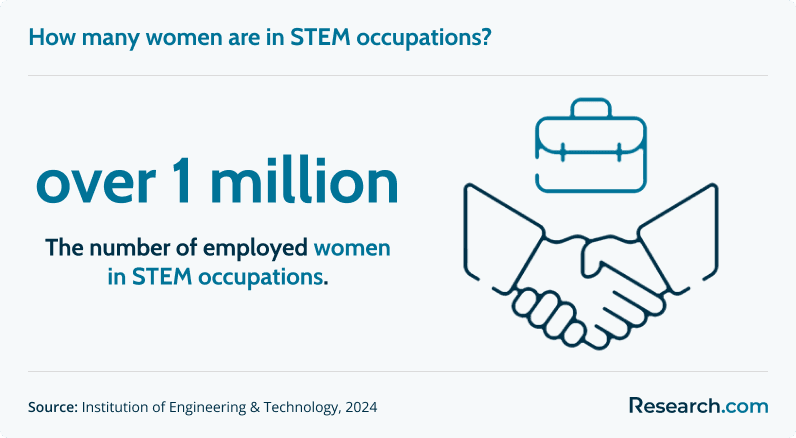
- Over 1 million women are now working in STEM occupations, and scholarships aimed at women and underrepresented groups can help broaden access to math and STEM pathways.
References:
- BLS. (2025, April 18). Employment in STEM Occupations. Retrieved May 22, 2025, from BLS.
- BLS. (2025, April 18). Math Occupations. Retrieved May 22, 2025, from BLS.
- Bright, M. (2024, August 27). Investment in Math Education is Needed to Fuel the STEM Workforce. Retrieved May 21, 2025, from Diverse: Issues in Higher Education.
- Maryville University. (n.d.). What Is a Degree in Math & Why Is It Important? Retrieved May 21, 2025, from Maryville University.
- Think Academy. (2025, April 18). Are Online Math Classes Worth It? Benefits & How to Choose. Retrieved May 21, 2025, from Think Academy.
Other Things You Should Know About Online Bachelor's in Mathematics Degrees
Many affordable online Bachelor's in Mathematics programs in 2027 accept credit transfers. Typically, regionally accredited institutions allow up to 60 transfer credits from previous studies to fulfill degree requirements, reducing both cost and time needed to graduate.
Most online bachelor’s degrees in mathematics require about 36 to 48 semester credits in the major, plus general education and elective courses for a total of 120 credits. Many programs also require calculus, linear algebra, differential equations, and a capstone or senior seminar.
The admission requirements typically include a high school diploma or equivalent, transcripts, and standardized test scores like the SAT or ACT. Some programs may also require a personal statement or letters of recommendation by 2027.


