2027 Geography Degree Jobs: Requirements, Career & Salary

Co-Founder and Chief Data Scientist
The biggest mistake geography students make is typing one word into a job board: "geographer." That single search hides the real opportunity. Geography graduates build careers in GIS, urban planning, environmental consulting, surveying, logistics, market research, public policy, real estate, education, and data analysis. The skills are valuable. They are simply scattered across dozens of job titles and industries.
This guide is for prospective geography majors, current students mapping out their next move, and graduates trying to turn spatial, environmental, and analytical training into paid work. You will learn what geography covers, what employers actually want, how related careers pay, which degree paths fit which goals, how to choose and verify a program, and how to avoid the planning mistakes that leave graduates underemployed.
Geography Jobs Table of Contents
- What Is Geography?
- Key Geography Statistics
- What Are the Requirements to Study Geography?
- The Role of Fieldwork in a Geography Degree
- How to Choose a Geography Program or Specialization
- How Much Does It Cost to Study Geography?
- How Long Does It Take to Become an Accredited Geographer?
- The Best Universities to Study Geography for 2027
- Which Academic Path Boosts Salary Potential in Geography Careers?
- Possible Careers for Geography Majors
- How Much Do Geographers Earn?
- What Are the Emerging Technology Trends in Geography Careers?
- What Essential Skills Should I Develop for a Competitive Geography Career?
- Is an Associate Degree a Viable Launchpad for a Geography Career?
- Can Professional Associations and Mentorship Accelerate My Geography Career?
- How Can I Verify the Accreditation and Quality Standards of Geography Programs?
- What Certifications Can Enhance My Geography Career?
- Famous People Who Studied Geography
- Alternative Career Paths for Geography Graduates
- How Can an Accredited Online Bachelor's Degree Boost My Geography Career?
- Is Pursuing a Doctorate Worth It for a Geography Career?
Quick Answer: What Can You Do With a Geography Degree?
A geography degree opens careers in geospatial analysis, cartography, urban and regional planning, environmental science, surveying, teaching, public policy, transportation, logistics, real estate, market research, sustainability, and government research. Most entry-level roles require a bachelor's degree. Advanced research, university teaching, and senior technical positions usually require a master's degree or doctorate.
Success comes from pairing your geography coursework with marketable skills. Employers look for GIS, spatial data analysis, remote sensing, statistics, technical writing, field research, public speaking, and the ability to explain location-based patterns to people who are not technical. The data backs this up: 85.5% of geography graduates working in the government report needing teamwork "always or very often," 75% use writing skills, 83% use public speaking, and 60% use creative thinking (ElectroIQ, 2025).
Stop searching for the single word "geographer." Better job titles to try include GIS analyst, planning technician, environmental consultant, mapping specialist, cartographer, survey technician, location intelligence analyst, transportation planner, sustainability analyst, research associate, and data visualization specialist.
| Search goal | Job titles to try instead of only "geographer" | Skills to highlight |
| Work with maps and spatial data | GIS analyst, GIS technician, cartographer, mapping specialist, photogrammetrist | GIS, remote sensing, spatial databases, data visualization |
| Work on cities and communities | Urban planner, regional planner, planning assistant, transportation planner | Land use, demographics, policy analysis, public engagement |
| Work on environmental issues | Environmental scientist, environmental consultant, sustainability analyst | Fieldwork, environmental assessment, regulation, data collection |
| Work in business or operations | Market research analyst, logistics analyst, location intelligence analyst | Spatial analysis, consumer geography, route optimization, reporting |
| Work in education or research | High school teacher, research assistant, lecturer, academic researcher | Teaching, writing, research design, communication |
Geographers connect place, people, environment, technology, and data. That mix has value across government, education, architecture and engineering, energy, transportation, consulting, finance, real estate, and nonprofits. Some employers want deep geographic expertise; others simply want the analytical and communication skills geography builds.
Most geographers work full time on standard business hours, though the day varies by role. Field-based jobs can involve travel, outdoor data collection, site visits, and remote locations. Office-based GIS, planning, research, and consulting roles center on software, stakeholder meetings, technical reports, and presentations.
What Is Geography?
Geography studies places, environments, spatial patterns, and the relationships between people and the Earth. It tackles practical questions. Why do cities form where they do? How do climate and landforms shape where people live and work? How do migration, transportation, and resource use change over time? How can maps and spatial data help organizations decide where to act?
Because geography bridges the physical and social sciences, majors pull courses from several disciplines. A student might study climate systems, landforms, population patterns, political boundaries, economic development, migration, public policy, environmental change, mapping, statistics, and computer-based spatial analysis.
Most programs split the field into two branches. Physical geography focuses on Earth systems: climate, water, landforms, ecosystems, seasons, and environmental processes. Human geography examines how people, economies, cultures, governments, and transportation networks are distributed across space.
Modern programs increasingly add applied, technical subjects. Courses in GIS, cartography, real estate, economics, business, data analysis, and environmental management help students tie geography to a specific career.
Key Geography Statistics
The number of jobs held by geographers in the U.S. in 2025 was 1,500. The Bureau of Labor Statistics projects employment for geographers to decline 3% through 2034. Federal, state, and local government employed the largest share of geographers at 64%, followed by state government and architectural, engineering, and related services.
Maryland had the highest employment level for geographers, with 280 jobs. Texas followed with 160, California with 110, Virginia with 80, and Colorado with 70 (BLS, 2020a).
Geography education is far more widely available than the narrow job count suggests. U.S. colleges and universities host roughly 60 geography Ph.D. programs, 90 master's programs, and over 200 undergraduate programs (National Geographic, n.d.).
-
: "
The career lesson is simple: do not judge a geography degree by the small number of jobs formally labeled "geographer." Most graduates compete for adjacent roles in GIS, planning, environmental work, education, surveying, consulting, and analytics.
"
What Are the Requirements to Study Geography?
Requirements vary by school. Undergraduate applicants are typically asked for high school transcripts, ACT or SAT scores when required, recommendation letters, and a personal statement. Transfer students may also need college transcripts and course descriptions so credits can be evaluated.
The first two years of a geography bachelor's degree introduce physical geography, human geography, cultural geography, maps, spatial thinking, and basic lab or field methods. Students learn to read landscapes, use maps and compasses, collect observations, and understand how people and environments interact.
Upper-division coursework gets more technical and specialized: geographic methods, quantitative geography, cartography, GIS software, remote sensing, regional geography, environmental change, urban geography, political geography, and the history of geographic thought. Many programs require a capstone, seminar, internship, independent research project, or fieldwork.
| Degree stage | Typical coursework | Career value |
| First year | Introduction to physical, human, and cultural geography | Builds the foundation for understanding spatial patterns and place-based problems |
| Second year | Mapping, lab work, regional geography, environmental topics | Develops early technical and observational skills |
| Third year | GIS, geographic methods, quantitative geography, cartography | Creates stronger preparation for applied roles and internships |
| Fourth year | Specialized electives, capstone, research, internship, fieldwork | Helps convert coursework into a portfolio, project experience, and job evidence |
The Role of Fieldwork in a Geography Degree
Anyone comparing good degrees to get should look closely at whether a geography program includes fieldwork, applied projects, or GIS labs. Geography is not a lecture-only subject. The strongest programs send students out to observe places directly, collect data, interpret landscapes, and see how environmental and human systems behave in the real world.
Fieldwork might mean mapping a neighborhood, surveying land use, studying erosion, measuring environmental conditions, interviewing residents, analyzing traffic, or documenting urban growth. These projects connect theory to live problems: climate change, housing pressure, resource management, disaster planning, and sustainability.
Fieldwork no longer requires only outdoor travel. Many programs now run digital fieldwork through GIS, satellite imagery, remote sensing, drones, online mapping platforms, and spatial databases. That flexibility matters for online students, working adults, and anyone who cannot relocate for extended field courses.
Employers value fieldwork because it teaches habits lectures cannot: planning a study, working safely, collecting reliable data, collaborating under pressure, adapting when conditions shift, and presenting findings clearly. A graduate who can show field reports, maps, dashboards, or a capstone portfolio carries far stronger evidence of job readiness.
How to Choose a Geography Program or Specialization
The best program is not automatically the most famous one. The right fit depends on your goals, budget, schedule, learning format, and the work you want afterward. A future GIS analyst should weigh software training and lab access very differently from a future teacher, environmental consultant, or urban planner.
| If your goal is... | Prioritize programs with... | Watch out for... |
| GIS or geospatial analysis | GIS labs, remote sensing, spatial statistics, database work, portfolio projects | Programs that discuss mapping but offer little hands-on software training |
| Environmental work | Physical geography, ecology, field methods, environmental regulation, sustainability courses | Programs with limited fieldwork or no environmental assessment experience |
| Urban or regional planning | Human geography, land use, transportation, demographics, public policy, internships | Curricula that lack planning, policy, or community-based projects |
| Teaching | Education coursework, classroom experience, subject-area preparation, licensure guidance | Assuming a geography major alone meets teaching requirements |
| Graduate research | Faculty research fit, methods training, thesis options, undergraduate research opportunities | Choosing only by brand name without checking faculty expertise |
- Start with your branch of geography. Choose physical geography if you are drawn to climate, landforms, ecosystems, water, hazards, or environmental change. Choose human geography if cities, migration, culture, inequality, transportation, economics, or political boundaries interest you more.
- Check for career-relevant concentrations. GIS, remote sensing, environmental management, urban planning, cartography, and spatial data science make a degree far easier to translate into job applications.
- Look for internships and applied projects. Programs tied to government agencies, planning departments, environmental organizations, engineering firms, or geospatial technology companies help students gain experience before graduation.
- Read the actual course list. Do not trust the major description alone. Confirm the school offers the specific courses you need, often enough to let you graduate on time.
- Compare online and campus carefully. Online geography programs work well for working adults, but ask how GIS software access, fieldwork, labs, advising, and internships are handled.
- Confirm accreditation and transfer policies. For a faster or cheaper start, an associate degree can help. Students comparing shorter pathways can review the easiest associate degree to get while verifying that credits transfer into a bachelor's program.
A good program should send you out with more than a transcript. Aim to leave with maps, technical projects, field reports, research samples, internship experience, and references who can speak to your work.
How Much Does It Cost to Study Geography?
Cost depends on school type, residency, program length, format, fees, housing, books, software, and fieldwork travel. An in-state, four-year public university requires an annual budget of $26,590, while an out-of-state, four-year public institution requires $42,970.
Online study can cut commuting and relocation costs, but online tuition is not always low. Private online colleges tend to be most expensive, followed by out-of-state tuition at public institutions. In-state tuition at public schools is usually the cheapest. "The average price for in-state tuition at a public institution for an online bachelor's degree is $337 per credit. Tuition prices go up significantly at private online colleges, an average of $516 per credit" (EducationData.org, 2025).
Compare net price, not sticker price. Ask each school about scholarships, grants, transfer credits, work-study, field course fees, GIS software costs, and paid internships. The College Affordability and Transparency Center can help you review tuition and net cost data for U.S. colleges.
| Cost factor | Why it matters | Question to ask |
| Residency status | Public universities often charge different rates for in-state and out-of-state students | Can I qualify for in-state tuition or a tuition exchange? |
| Transfer credit | Accepted credits can shorten time to graduation | How many credits will apply to the geography major, not just electives? |
| Fieldwork and lab fees | Some programs charge extra for field courses, equipment, or travel | Are field trips, software, lab materials, or mapping tools included? |
| Online fees | Online programs may add technology or distance-learning fees | What is the full per-credit cost after fees? |
| Internship access | Paid or credit-bearing internships can improve ROI | Does the department help students secure placements? |
How Long Does It Take to Become an Accredited Geographer?
There is no required "accredited geographer" license for most geography careers. Instead, focus on completing an accredited degree, building applied skills, and earning optional credentials that match your target role.
GIS certification is one of the most relevant add-ons. GIS is a framework for collecting, organizing, analyzing, managing, and visualizing spatial data. It powers maps, 3D scenes, location-based analysis, and decision-making across transportation, public health, emergency management, land use, business, environmental science, and government.
Many job postings expect GIS knowledge even when the title leaves out "geographer." Certification helps document that skill. In the U.S., two organizations connected to GIS and related geospatial credentials are the GIS Certification Institute and the American Society for Photogrammetry and Remote Sensing.
The Best Universities to Study Geography for 2027
Your university can shape research opportunities, faculty mentorship, international exposure, internship access, and your peer network. But rankings should be only one input. Also weigh curriculum fit, affordability, department strength, field opportunities, graduate outcomes, and whether the program supports your specialization.
The institutions below are presented as leading geography options by region. Each meets a minimum threshold of research publications.
North America
University of British Columbia
The University of British Columbia in Canada was founded in 1915. It enrolls roughly 60,000 students and is widely recognized for advanced research. Beyond geography, it is known for mineral and mining engineering and sports-related subjects.
University of California, Berkeley
UC Berkeley was established in 1868 and serves as the flagship of the 10-campus UC system. It regularly ranks among the top five U.S. institutions, and its faculty, alumni, and researchers include 99 Nobel laureates, 23 Turing Award recipients, and 14 Pulitzer Prize winners.
Latin America
Pontificia Universidad Católica de Chile (UC)
Founded on June 21, 1888, this is one of Latin America's most respected universities. Beyond geography, it is recognized for education and law.
Universidad Nacional Autónoma de México (UNAM)
Founded in 1551, UNAM is the largest university in Latin America and the world, with over 269,000 students. It counts three Nobel laureates among former students, the only Mexican university to do so.
Europe
University of Oxford
Dating to around the 11th century, Oxford is the oldest university in the English-speaking world. Its research spans the origins of the Universe, early civilizations, climate change, disease prevention, migration, and aging populations.
London School of Economics and Political Science
Founded in 1895, LSE is known for research grounded in social science. Alongside geography, it has strong programs in law, economics, anthropology, psychology, literature, history, philosophy, media, business, and politics.
Africa
University of Cape Town (UCT)
Founded in 1829, UCT is South Africa's oldest higher education institution and the region's highest-ranked university. It is recognized for geography as well as commerce, law, and medicine, all ranked among the global top hundred.
University of the Witwatersrand (Wits University)
Established in 1922 in Johannesburg, Wits regularly produces leading research in humanities, social science, natural science, medical and health science, and engineering.
Asia
National University of Singapore (NUS)
Founded in 1905 as King Edward VII College of Medicine, NUS is now a leading global university known for multidisciplinary research and partnerships with academia, industry, and government on issues affecting Asia and the world.
University of Tokyo
Established in 1877, the University of Tokyo is among Japan's most prestigious universities. It has produced 17 Japanese prime ministers, 16 Nobel laureates, three Pritzker Prize laureates, and five astronauts, and offers some undergraduate programs taught entirely in English.
Oceania
The Australian National University (ANU)
Founded in 1946 in Canberra, ANU is regarded as a leading research and education institution known for selectivity. It has produced six Nobel laureates and maintains a strong record for graduate employability.
The University of Melbourne
Founded in 1853 with 16 students and four professors, Melbourne now has around 65,000 students and roughly 8,000 staff. Its degree model lets students explore broadly before choosing a major.
Possible Careers for Geography Majors
Geography graduates move in many directions, especially when they pair the major with GIS, data analysis, planning, environmental science, teaching preparation, or industry experience. To explore further, review additional geography careers and search by skill, not only by major. Salary figures below come from the Bureau of Labor Statistics unless noted otherwise.
| Career | Median salary stated | Best fit for students who like... | Typical preparation |
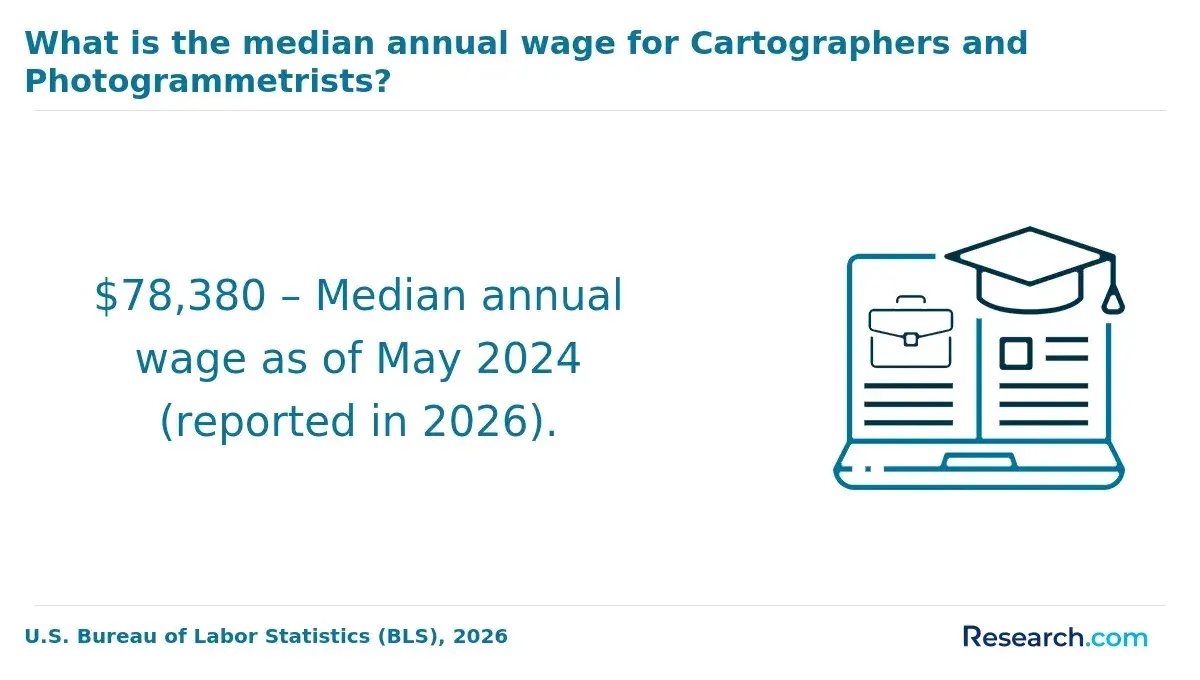
| Cartographers and photogrammetrists | $68,900 per year | Maps, imagery, design, spatial data, technology | Bachelor's degree, GIS, cartography, remote sensing |
| Surveyor | $61,600 per year | Land, property boundaries, construction sites, fieldwork | Surveying knowledge, field methods, state requirements where applicable |
| Geography high school teacher | $88,150 per year | Teaching, curriculum, mentoring students, communication | Geography degree plus teacher preparation and licensure requirements |
| GIS officer | Not stated | Spatial databases, maps, dashboards, location analytics | GIS software, spatial analysis, data management |
| Geoscientists | $83,680 per year | Earth systems, natural resources, environmental protection | Geoscience, physical geography, field and lab methods |
| Urban and regional planners | $78,500 per year | Cities, land use, transportation, public policy | Planning, human geography, policy analysis, community engagement |
| Environmental scientist | $76,530 per year | Environmental regulation, field research, sustainability | Environmental science, data collection, reporting, compliance knowledge |
Cartographers and Photogrammetrists
Median Salary: $68,900 per year
This work blends geography, design, measurement, imagery, and technology. Cartographers create maps and visual representations of spatial information, while photogrammetrists use photography and imagery to measure and model the Earth's surface.
The job can involve conventional maps, digital mapping products, charts, spatial datasets, and visual presentations for agencies, businesses, researchers, or the public. It suits students who enjoy both technical tools and visual communication.
The outlook for this occupation is projected to grow 15% by 2028, much faster than the average for all occupations.
Surveyor
Median Salary: $61,600 per year
Surveyors measure land, define property boundaries, and support residential, commercial, construction, infrastructure, and resource projects. They work for public agencies, private firms, engineering companies, real estate organizations, and development teams.
The role mixes office work with outdoor fieldwork. Site visits can mean walking long distances, standing for hours, and working in varied weather. Students drawn to property markets can connect surveying knowledge to real estate, brokerage, leasing, valuation, or negotiation roles.
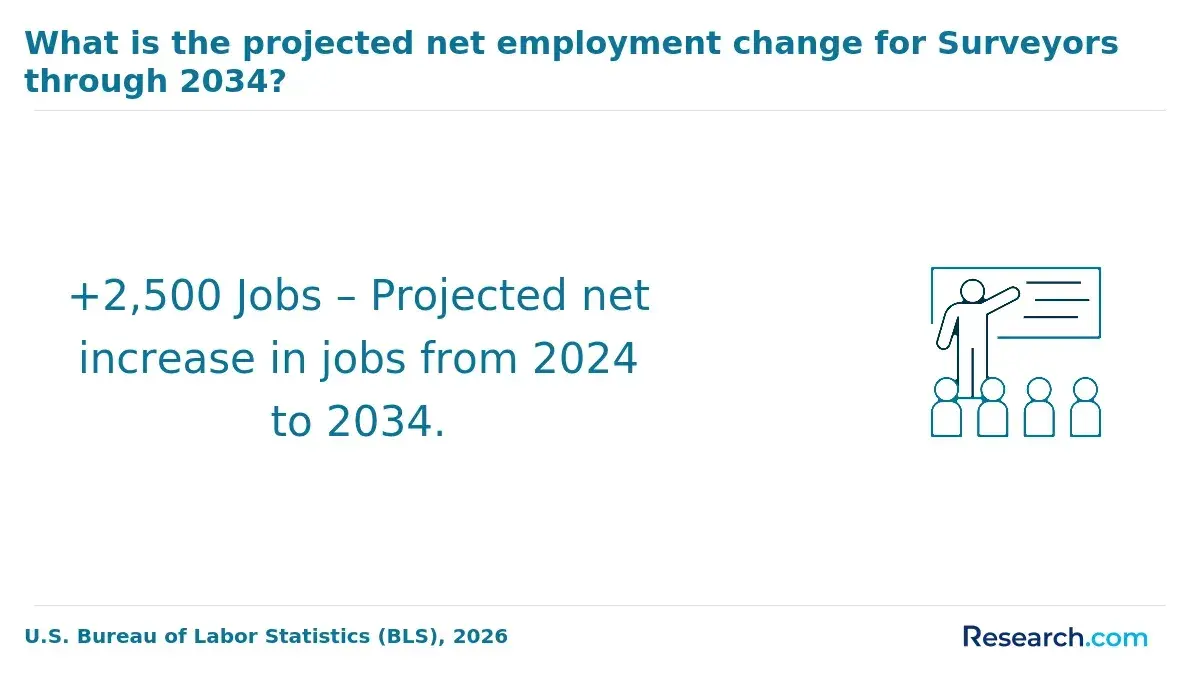
The outlook for surveyors is projected to grow 6% by 2028, tied to demand for professionals who certify boundaries, review construction sites, and support resource extraction.
Geography High School Teacher
Median Salary: $88,150 per year
Teaching geography goes beyond delivering lessons. High school teachers plan instruction, assess work, collaborate with colleagues, communicate with families, and adapt materials for different learners while helping students view current issues through a geographic lens.
Teachers must keep up with curriculum changes, learning technology, and new resources. The field faces ongoing challenges: geography's smaller footprint compared with related subjects, K-12 teaching reform, the role of geographic information technologies, underrepresentation of ethnic minorities in the academic workforce, and debates among scholars with different specialties.
The outlook for high school teachers overall is projected to grow 4% by 2028 as enrollment and teacher demand shift.
Geographical Information Systems Officer (GIS Officer)
GIS has supported geographic decision-making in business, government, and research for decades. Organizations use geospatial datasets to understand risk, supply chains, transportation, infrastructure, markets, emergency response, and environmental conditions.
A GIS officer captures, cleans, analyzes, manages, and presents geographic and spatial data. Sources include maps, photos, satellites, tables, spreadsheets, sensors, surveys, and administrative records. On a GIS platform, professionals layer roads, buildings, rivers, population distribution, income, education, land use, and other location-based information.
Job growth for GIS officers is projected to reach 15% by 2028, driven by the rising availability of geospatial data, widespread mapping apps such as Google Maps, and the growth of Internet of Things devices.
Geoscientists
Median Salary: $83,680 per year
Geoscientists study the physical Earth. Their work may involve natural resources such as petroleum and groundwater, environmental protection, land management, hazards, or technical consulting.
Oil and gas extraction companies are the largest employers, followed by engineering firms. Students aiming here should build a strong foundation in physical geography, geology, field methods, and scientific analysis.
Employment growth for geoscientists is projected at about 6% by 2028, supported by energy demand, responsible land and resource management, and environmental conservation.
Urban and Regional Planners
Median Salary: $78,500 per year
Urban and regional planners shape how communities grow and function. They develop land use plans and programs for cities, towns, rural areas, transportation systems, housing, public spaces, and economic development.
The role balances competing needs: industry, housing, agriculture, recreation, environmental protection, climate resilience, and public budgets. Students interested in planning often benefit from added training in policy, public administration, community engagement, or project management.
The outlook for urban and regional planners is projected to grow 11% by 2028, driven by demographic change, environmental issues, and transportation needs.
Environmental Scientist
Median Salary: $76,530 per year
Environmental scientists study environmental problems, advise clients or agencies, and help organizations comply with regulations. They work for consulting firms, government agencies, nonprofits, and private companies. This path connects to broader sustainability careers.
Work may include field surveys, sampling, pollution assessment, site evaluation, contamination studies, report writing, and presentations to regulators, contractors, scientists, or community members. Strong research, writing, data, and field methods skills matter here.
The outlook for environmental scientists is projected to grow 8% through 2028, supported by public concern about environmental issues and human health.
Which Academic Path Boosts Salary Potential in Geography Careers?
The path most likely to raise salary potential is the one that combines geographic knowledge with technical, analytical, or regulated professional skills. For many students, that means adding GIS, remote sensing, spatial statistics, data visualization, environmental science, urban studies, or policy analysis to the core major.
If you are researching the highest paying majors, remember that salary depends on role, employer, location, experience, degree level, and technical depth. A geography major with a strong GIS portfolio, an internship, and real data skills will often out-compete a graduate with only general coursework.
| Academic route | When it makes sense | Potential limitation |
| Bachelor's in geography | You want entry-level roles in GIS, planning support, environmental work, education preparation, or research assistance | May not be enough for senior research, university teaching, or specialized leadership roles |
| Bachelor's plus GIS certificate | You want to compete for mapping, spatial analysis, or location intelligence jobs | Certification is strongest when paired with projects and software experience |
| Master's degree | You want advanced planning, research, policy, environmental, or geospatial analysis roles | Higher cost and time commitment require careful ROI evaluation |
| Doctorate | You want academic research, university teaching, or high-level specialized research | Not necessary for many applied geography jobs |
How Much Do Geographers Earn?
The median annual salary of geographers was $85,220. The median is the midpoint of the salary distribution: half of workers earn more, half earn less. For geographers, the bottom 10% earned less than $52,280, while the top 10% earned over $113,140.
Do not read salary as a guaranteed outcome for every graduate. Earnings vary by employer, location, graduate degree, experience, technical skills, industry, and whether the job is classified as "geographer" or as a related occupation such as planner, environmental scientist, GIS analyst, teacher, or surveyor.
What Are the Emerging Technology Trends in Geography Careers?
Technology is reshaping geography careers by raising demand for people who can interpret large spatial datasets, automate analysis, and communicate findings visually. Treat technology as part of the discipline, not an optional extra.
- GIS and big data: Organizations pair GIS with large datasets for urban planning, environmental monitoring, transportation management, logistics, disaster response, and location-based decisions.
- Remote sensing and drones: Satellite imagery, aerial photography, and drones support land surveying, environmental science, agriculture, natural resource assessment, wildlife monitoring, and mapping in hard-to-reach places.
- Artificial intelligence and machine learning: AI and ML automate spatial analysis, surface patterns, detect anomalies, and support prediction in climate modeling, infrastructure planning, and resource management.
- 3D mapping and virtual reality: 3D models and immersive simulations help planners, architects, educators, and researchers visualize environments and test design decisions.
- Internet of Things and geospatial data: Connected devices generate location data on traffic, air quality, utilities, public safety, and emergencies. Combined with GIS, that data supports real-time monitoring and response.
What Essential Skills Should I Develop for a Competitive Geography Career?
Competitive candidates pair technical ability with clear communication. Employers want someone who can build a map, clean a dataset, interpret patterns, write a report, explain uncertainty, and present to decision-makers.
| Skill area | Examples | How to prove it |
| GIS and mapping | GIS software, cartography, spatial databases, map design | Portfolio maps, class projects, internships, GIS certificate |
| Data analysis | Statistics, spatial analysis, data cleaning, visualization | Dashboards, research papers, code samples, capstone projects |
| Field and research methods | Surveys, site observations, sampling, interviews, remote sensing | Field reports, methodology sections, supervisor references |
| Communication | Writing, public speaking, stakeholder presentations | Reports, presentations, teaching experience, conference posters |
| Problem-solving | Interpreting complex environmental, urban, or social patterns | Case studies, applied projects, policy briefs |
Students who need a faster route to career-ready skills can compare a fast track online bachelor's degree with traditional programs, but the faster option should still offer credible coursework, applied projects, and support for internships or portfolios.
Is an Associate Degree a Viable Launchpad for a Geography Career?
An associate degree can be a practical first step if you want a lower-cost introduction to geography, GIS, environmental studies, or spatial thinking before committing to a bachelor's program. It may also qualify you for some support roles or build transfer credits.
That said, most geography-related professional roles require a bachelor's degree or higher. Students considering accelerated associate degree programs online should confirm whether the program includes transferable credits, GIS exposure, advising, and a clear path into a bachelor's degree.
Can Professional Associations and Mentorship Accelerate My Geography Career?
Professional associations, mentors, faculty advisors, alumni, and internship supervisors can shift the trajectory of a geography job search. They help you decode job titles, learn which skills employers expect, find conferences and workshops, and get honest feedback on maps, resumes, and portfolios.
Networking also surfaces roles that never appear under "geographer." If cost is a concern, pair networking with careful program selection, including options such as a cheap online bachelor's degree, while still checking quality, accreditation, and career support.
How Can I Verify the Accreditation and Quality Standards of Geography Programs?
Start by confirming the institution is accredited by a recognized accrediting agency. Then evaluate the geography department itself: course offerings, faculty expertise, GIS labs, fieldwork, internship support, graduate outcomes, student work samples, and whether current students can actually reach advising and technical tools.
Online students should be extra careful. Ask whether the program provides software access, remote lab support, fieldwork alternatives, career services, and transparent tuition. An accelerated online bachelor's program can be useful, but speed should never come at the cost of academic quality or employer-recognized preparation.
What Certifications Can Enhance My Geography Career?
Certifications strengthen a resume when they match the role you want. GIS, remote sensing, spatial data analysis, environmental compliance, project management, and data visualization credentials can demonstrate specific skills beyond the degree title.
Before paying for a certification, compare employer demand, prerequisites, exam requirements, renewal rules, cost, and whether the credential is recognized in your target industry. To explore broader options, review what certifications make the most money, but the best credential is the one that supports your intended geography path.
Famous People Who Studied Geography
Geography graduates have entered public service, business, writing, exploration, sports, politics, and environmental advocacy. NBA legend Michael Jordan studied geography at the University of North Carolina at Chapel Hill.
Former UK prime minister Theresa May and Prince William, the Duke of Cambridge, also studied geography. Prince William later applied spatial and environmental awareness while serving as a helicopter pilot in the Royal Air Force.
Other notable figures connected to geography include philosopher Immanuel Kant, naturalist and explorer Alexander von Humboldt, author and geographer Harm de Blij, "father of American geography" William Morris Davis, and The Body Shop founder, environmental campaigner, and human rights activist Anita Roddick.
Alternative Career Paths for Geography Graduates
Many geography graduates build careers well outside the obvious geography titles. The degree develops spatial reasoning, research ability, data interpretation, communication, and systems thinking, all useful across business, technology, policy, and operations.
- Real estate and property development: Use knowledge of land use, demographics, zoning, topography, transportation, and neighborhood change to support property analysis and development decisions.
- Marketing and market research: Spatial data shows where customers live, how demand varies by region, and where to expand services or campaigns.
- Logistics and supply chain management: Geography skills support route planning, distribution analysis, facility location, transportation efficiency, and supply network decisions.
- Technology and data science: Graduates with GIS, data visualization, and spatial analysis skills can move into geospatial data, location intelligence, or spatial data science roles.
- Public policy and nonprofit work: Geography helps teams analyze environmental impacts, community needs, resource distribution, climate risk, housing, transportation, and urban renewal.
- Business intelligence and consulting: Companies use geographic data to compare markets, forecast growth, evaluate risk, and improve operations.
Extra credentials can ease a pivot into these adjacent fields. For example, easy certifications to get online that pay well can complement a geography degree when they build relevant skills in analytics, technology, business, or management.
How Can an Accredited Online Bachelor's Degree Boost My Geography Career?
An accredited online bachelor's degree helps students who need flexibility because of work, family, military service, location, or cost. For geography, the strongest online programs offer far more than recorded lectures. They include GIS practice, spatial analysis projects, software access, academic advising, career support, and the chance to build a portfolio.
Online study fits self-directed students who are comfortable learning technical tools remotely. It fits poorly when the program lacks fieldwork alternatives, hands-on GIS assignments, or meaningful instructor feedback.
Is Pursuing a Doctorate Worth It for a Geography Career?
A doctorate can be worth it for students who want to conduct advanced research, teach at the university level, lead specialized research teams, or build deep expertise in spatial analytics, environmental modeling, climate research, urban studies, or human-environment systems.
It is not necessary for many applied careers. GIS analysts, planners, environmental consultants, surveyors, teachers, and business-focused spatial analysts rarely need a Ph.D. Before committing, compare funding, time commitment, research fit, faculty mentorship, job market goals, and opportunity cost. Those exploring faster options can review the quickest PhD programs while confirming academic quality and career relevance.
Common Mistakes Geography Students Should Avoid
- Searching only for "geographer" jobs. Many relevant roles use titles such as GIS analyst, planner, environmental scientist, research analyst, or location intelligence specialist.
- Choosing a program without checking accreditation. Accreditation affects transfer credit, graduate school eligibility, financial aid, and employer confidence.
- Focusing only on tuition. Net price, fees, software, fieldwork costs, transfer credits, and time to completion all shape the real cost.
- Graduating without a portfolio. Maps, dashboards, reports, field projects, and capstones show employers what you can actually do.
- Ignoring GIS and data skills. Even human geography, planning, policy, and environmental roles increasingly reward spatial data fluency.
- Assuming an online program automatically fits every goal. Ask how the school handles labs, fieldwork, internships, and software access.
- Expecting guaranteed salary outcomes. Pay depends on role, location, industry, experience, degree level, and technical specialization.
Planning Your Career in Geography
Your best path depends on your specialization, strengths, preferred work setting, budget, and willingness to pursue further education or certification. Physical geography points toward environmental science, geoscience, hazards, and field research. Human geography leads toward planning, policy, demographics, transportation, real estate, and community development. GIS and spatial data skills support both sides.
Plan effectively by choosing a target career cluster early, then building evidence for it. Take the right electives, complete fieldwork, learn GIS, pursue internships, attend events, ask faculty for project opportunities, and save work samples for a portfolio. Do not lean on job boards alone. A 2025 LinkedIn study found that roughly 80% of jobs are found through networking (LinkedIn, 2025), so maintain relationships with classmates, professors, internship supervisors, alumni, and professional contacts.
Key Insights
- Geography careers are far broader than the title "geographer." Search for GIS, planning, environmental, surveying, policy, logistics, education, and data roles.
- Technical skills drive employability. GIS, remote sensing, spatial analysis, data visualization, and field methods make the degree easier to market.
- The formal geographer job market is small. The number of jobs held by geographers in the U.S. in 2025 was 1,500, and employment is projected to decline 3% through 2034.
- Related fields offer stronger growth. Cartographers and photogrammetrists are projected to grow 15% by 2028, and urban and regional planners 11% by 2028.
- Salary varies by role and preparation. The median annual salary for geographers was $85,220, with the bottom 10% earning less than $52,280 and the top 10% earning over $113,140.
- A bachelor's degree is usually the starting point. Advanced roles may require a master's, doctorate, GIS certification, teaching preparation, or specialized technical training.
- Choose a program for practicality, not prestige. Prioritize accreditation, curriculum fit, GIS access, fieldwork, internships, transfer credit, cost, and portfolio-building opportunities.
References:
- American Association of Geographers. (2025). What is geography? https://www.aag.org/what-is-geography/
- EducationData.org. (2025). Average cost of online college. https://educationdata.org/average-cost-of-online-college
- Environmental Protection Agency. (2025). Careers at EPA. https://www.epa.gov/careers
- LinkedIn. (2025). Networking and the Modern Job Market: 2025 Trends Report. https://economicgraph.linkedin.com/resources/maintaining-professional-networks-2025
- National Aeronautics and Space Administration. (2025). NASA careers. https://www.nasa.gov/careers/
- National Center for Education Statistics. (2025). CIP code 45.0701: Geography. U.S. Department of Education. https://nces.ed.gov/ipeds/cipcode/cipdetail.aspx?y=55&cip=45.0701
- National Center for Education Statistics. (2025). College Navigator. U.S. Department of Education. https://nces.ed.gov/collegenavigator/
- O*NET OnLine. (2025). Cartographers and photogrammetrists (17-1021.00). U.S. Department of Labor. https://www.onetonline.org/link/summary/17-1021.00
- O*NET OnLine. (2025). GIS technicians (15-1299.02). U.S. Department of Labor. https://www.onetonline.org/link/summary/15-1299.02
- U.S. Bureau of Labor Statistics. (2025). Cartographers and photogrammetrists. U.S. Department of Labor. https://www.bls.gov/ooh/architecture-and-engineering/cartographers-and-photogrammetrists.htm
- U.S. Bureau of Labor Statistics. (2025). Geographers. U.S. Department of Labor. https://www.bls.gov/ooh/life-physical-and-social-science/geographers.htm
- U.S. Bureau of Labor Statistics. (2025). Geoscientists. U.S. Department of Labor. https://www.bls.gov/ooh/life-physical-and-social-science/geoscientists.htm
- U.S. Census Bureau. (2025). Geographic information systems overview. https://www.census.gov/programs-surveys/geography.html
- U.S. Department of Education. (2025). Accreditation in the United States. https://www.ed.gov/accreditation
- U.S. Geological Survey. (2025). Careers at USGS. https://www.usgs.gov/about/organization/science-support/human-capital/careers-usgs
- U.S. Office of Personnel Management. (2025). Geographer series 0150. https://www.opm.gov/policy-data-oversight/classification-qualifications/general-schedule-qualification-standards/0100/geography-series-0150/
Other Things You Should Know About Geography Degree Jobs
In 2027, geography majors have diverse career opportunities, including positions as urban planners, cartographers, environmental consultants, and GIS analysts. These roles often require specialized skills in data analysis, spatial reasoning, and environmental awareness. Graduates find employment in governmental agencies, private firms, and non-profit organizations.
Requirements typically include a personal statement, high school transcripts, standardized test scores (SAT or ACT), and letters of recommendation. Coursework may involve physical, human, or cultural geography, lab work, and advanced topics like geographic techniques and methods.
Accreditation is not typically required for geographers, but GIS certification can enhance career prospects. A bachelor's degree takes about four years, a master's two to four years, and a doctorate three to seven years.
The median annual salary for geographers is $85,220. The bottom 10% earn less than $52,280, while the top 10% make over $113,140. Salaries vary based on specialization and experience.
Yes, geography offers diverse career opportunities, competitive salaries, and the ability to work on significant issues like climate change, urban development, and environmental conservation. The skills gained from a geography degree are highly valued across various industries.
Geographers use a range of skills including GIS proficiency, data analysis, critical thinking, problem-solving, teamwork, and communication. These skills are applicable in government roles, private sector jobs, and research positions.