2027 Easiest Mathematics Degree Programs

Co-Founder and Chief Data Scientist
Choosing an “easy” mathematics degree does not mean choosing a degree with no rigor. It usually means selecting a math program that is more flexible, applied, transfer-friendly, or student-supportive than highly theoretical programs built around advanced proof-based coursework. For students who like problem-solving but are concerned about abstract math intensity, the right program structure can make a major difference.
This guide explains what easier mathematics degree programs typically look like, how online and campus formats compare, what they cost, which careers they can support, and how to evaluate whether a program is a smart investment. It is designed for first-time college students, transfer students, working adults, and career changers who want a practical path into data, education, finance, technology, research, or analytical roles.
Quick Answer: What Makes a Mathematics Degree Easier?
The easiest mathematics degrees are usually associate degrees, Bachelor of Arts programs, applied mathematics tracks, mathematics education programs, or online programs with flexible scheduling and strong academic support. These options may still include calculus, algebra, statistics, and discrete mathematics, but they often reduce emphasis on the most abstract topics or allow students to choose electives that match career goals.
| Option | Best for | Why it may feel more manageable |
| Associate degree in mathematics | Students planning to transfer or enter support-level analytical roles | Focuses on the first two years of college math and general education |
| BA in Mathematics | Students who want broad career flexibility | Often includes more liberal arts electives and fewer science-heavy requirements |
| Applied mathematics track | Students who prefer real-world problem-solving | Emphasizes statistics, modeling, data, and practical applications |
| Mathematics education degree | Future middle school or high school teachers | Combines math content with teaching methods and classroom practice |
| Online mathematics degree | Working adults and students needing schedule flexibility | May offer asynchronous coursework, shorter terms, and remote support |
Key Benefits of Earning a Mathematics Degree
- Mathematics graduates can pursue career paths with salaries ranging from $70,000 to $150,000 or more, depending on the role, employer, location, education level, and experience.
- The degree builds transferable strengths in logic, quantitative reasoning, problem-solving, and structured thinking, which employers value across technical and non-technical fields.
- Math training supports work involving data analysis, statistical modeling, forecasting, programming, risk assessment, and decision-making in a technology-driven labor market.
What can I expect from an easy mathematics degree?
An easier mathematics degree is usually designed around accessibility, flexibility, and applied learning rather than the most theoretical side of the discipline. Students should still expect serious quantitative coursework, but the program may provide more elective choice, stronger tutoring support, and a curriculum that connects math to practical fields such as business analytics, education, finance, computing, or data analysis.
Common options include Associate of Arts or Associate of Science degrees, Bachelor of Arts degrees, and some Bachelor of Science programs with applied or interdisciplinary tracks. The main difference is not that the math disappears; it is that the program structure may make the subject easier to manage.
- Applied course design: Many programs emphasize statistics, calculus, modeling, data analytics, and computational tools instead of concentrating heavily on abstract algebra, real analysis, or proof-intensive theory.
- Elective flexibility: Students may be able to choose courses in financial mathematics, mathematics education, data analytics, computer science, or business applications.
- Academic support: Tutoring centers, faculty office hours, peer study groups, adaptive software, and smaller classes can make challenging math topics more approachable.
Associate programs are often used as transfer pathways into bachelor’s degrees, though they may also support entry-level roles in education support, data entry, technical support, or administrative analysis. BA programs usually provide broader elective space, while BS programs tend to be more technical. However, a BS can still feel manageable when it emphasizes applied mathematics, computational work, or career-focused problem-solving.
Where can I work with a mathematics degree?
A mathematics degree can lead to opportunities in organizations that need people who can analyze information, identify patterns, build models, evaluate risk, or explain complex findings. Graduates work in both technical and non-technical environments, and the strongest career outcomes often come when math skills are paired with programming, statistics, communication, or domain knowledge.
| Industry | How mathematics is used | Examples of related work |
| Government | Data analysis, policy modeling, national security, census analysis, and forecasting | Analyst roles, research support, defense-related quantitative work |
| Technology and data science | Algorithms, statistical modeling, coding, machine learning, and data interpretation | Data analyst, data scientist, software-related analytical roles |
| Education and research | Teaching, curriculum development, academic research, and applied problem-solving | Teacher, professor, research assistant, instructional specialist |
| Finance and banking | Risk analysis, investment modeling, pricing, forecasting, and financial planning | Actuary, financial analyst, quantitative analyst, risk analyst |
| Healthcare and biostatistics | Medical data analysis, public health modeling, outcomes research, and statistical reporting | Biostatistics assistant, healthcare analyst, research analyst |
Mathematics graduates may also find roles in marketing, logistics, consulting, manufacturing, operations, and supply chain analysis. The degree is most marketable when students graduate with evidence of applied skills, such as projects, internships, research experience, programming ability, or experience with data tools.
How much can I make with a mathematics degree?
According to the U.S. Bureau of Labor Statistics (BLS, 2024a), math occupations have an average annual wage of $101,460. Graduates who become mathematicians or statisticians earn around $109,000 annually.
BLS data also show wide salary ranges. Statisticians and mathematicians in the 10th percentile earn around $58,690 and $62,260 respectively. At the 25th percentile, earnings are $78,140 and $81,910. At the 50th percentile, or median level, earnings are $104,110 and $116,440. Professionals in the 75th percentile earn $134,950 and $148,240, while those in the 90th percentile earn $163,360 to $183,500.
These figures show strong earning potential, but salary is never guaranteed by the degree alone. Outcomes depend on the occupation, location, industry, work experience, graduate education, technical skills, and whether the student has built a portfolio of applied work.
- Easiest Mathematics Degree Programs for 2027
- How long does it take to complete a mathematics program?
- How does an online mathematics program compare to an on-campus program?
- What is the average cost of a mathematics program?
- What are the financial aid options for students enrolling in a mathematics program?
- What are the prerequisites for enrolling in a mathematics program?
- Can a mathematics degree be integrated with cybersecurity skills?
- What courses are typically in a mathematics program?
- Is a short-term online associate degree a viable pathway to build a robust mathematics career?
- How can hands-on experiences boost your mathematics career?
- How are emerging technologies shaping modern mathematics programs?
- What is the return on investment (ROI) of a mathematics degree?
- How important is accreditation in mathematics programs? Review ROI factors
- What research opportunities do mathematics programs offer?
- How can mathematics programs support working professionals?
- Can complementary certifications enhance your mathematics career?
- What types of specializations are available in mathematics programs?
- How to choose the best mathematics program?
- What career paths are available for graduates of mathematics programs?
- Can accelerated online programs fast-track your mathematics career?
- How can networking and soft skills boost your mathematics career?
- What is the job market for graduates with a mathematics degree? View job market considerations
Easiest Mathematics Degree Programs for 2027
How do we rank schools?
Research.com evaluates mathematics programs with the understanding that a degree is both an academic commitment and a financial decision. Our ranking of easier mathematics degree options is based on a careful methodology and draws from data sources such as the Integrated Postsecondary Education Data System, Peterson’s database and its Distance Learning Licensed Data Set, College Scorecard, and the National Center for Education Statistics (NCES). The goal is to help students compare programs using transparent information rather than relying only on marketing claims.
| Rank | School | Degree | Best fit | Cost |
| 1 | Southern New Hampshire University | Online BA in Mathematics | Students wanting an applied online math degree with elective flexibility | $330 per credit |
| 2 | Grand Canyon University | BS in Math for Secondary Education | Students pursuing initial teaching licensure | $485 per credit |
| 3 | Northern Illinois University | BS in Mathematical Sciences | Students who want multiple emphasis options on campus | 599.05 per credit |
| 4 | National University | Online BS in Mathematics | Students interested in data analytics or subject matter competency | $370 per credit |
| 5 | Western Governors University | BS in Secondary Mathematics Education | Busy students preparing to teach middle or high school math | $4,025 per six-month term |
| 6 | Monroe Community College | AS in Mathematics | Transfer-focused students seeking an online associate pathway | $196 per credit |
| 7 | Thomas Edison State University | BA in Mathematics | Students seeking a flexible bachelor’s degree with applied and theoretical content | $427 in-state, $556 out-of-state per credit |
| 8 | South Texas College | AS in Mathematics | Students planning to transfer into a bachelor’s program | $164 per credit |
| 9 | Phoenix College | AA with an Emphasis on Mathematics | Arizona transfer students interested in math, actuarial science, or statistics | $97–$145.50 in-county, $372–$579.50 out-of-county/state per credit |
| 10 | Drexel University | BA in Mathematics | Students who want math plus electives in areas such as economics, finance, computer science, or engineering | $1,350 per credit |
1. Southern New Hampshire University
Southern New Hampshire University offers an online BA in Mathematics built around 40 courses delivered in eight-week terms. The curriculum covers core areas such as calculus, algebra, and statistics while also introducing programming tools including Python, MATLAB, and R. Students can use four electives to shape the degree around their interests, making this option practical for learners who want a broad online math program with applied components.
- Program Length: Four years
- Tracks/Concentrations: Applied Mathematics
- Cost per Credit: $330
- Required Credits to Graduate: 120
- Accreditation: New England Commission of Higher Education (NECHE)
2. Grand Canyon University
Grand Canyon University offers a BS in Math for Secondary Education for students who want a direct route toward initial teaching licensure. Coursework includes mathematical modeling, geometry, algebra, and calculus, along with education courses focused on teaching practice and classroom management. The program also includes an 85-hour practicum field experience and a 16-week student teaching component.
- Program Length: Four years
- Tracks/Concentrations: Mathematics for Secondary Education
- Cost per Credit: $485
- Required Credits to Graduate: 120
- Accreditation: Higher Learning Commission (HLC)
3. Northern Illinois University
Northern Illinois University provides an on-campus BS in Mathematical Sciences with four emphasis areas. Students can use campus resources such as the Math Assistance Center and Math Club while studying topics that may include elementary real analysis, probability, methods of instruction, data structures, and algorithm analysis. The program can prepare graduates for work in education, engineering, technology, research, business, or finance.
- Program Length: Four years
- Tracks/Concentrations:
- General Mathematics
- Applied Mathematics
- Computational Mathematics
- Mathematics Education
- Cost per Credit: 599.05
- Required Credits to Graduate: 120
- Accreditation: HLC
4. National University
National University offers a fully online BS in Mathematics with four- or eight-week courses. The program includes subjects such as data visualization, data analytics, discrete mathematics, and number theory. It is designed for students who want to strengthen reasoning, problem-solving, and critical thinking skills for fields such as education, research, computer science, and analytics.
- Program Length: Four years
- Tracks/Concentrations: Data Analytics, Subject Matter Competency
- Cost per Credit: $370
- Required Credits to Graduate: 120
- Accreditation: WASC Senior College and University Commission (WSCUC)
5. Western Governors University
Western Governors University offers a BS in Secondary Mathematics Education for students preparing to teach middle school or high school mathematics. The online format is built for flexibility and includes coursework in trigonometry, calculus, content knowledge, student learning, and educational technology. Students also complete preclinical experiences and teacher demonstration assessments in mathematics.
- Program Length: Three to four years
- Tracks/Concentrations: Secondary Mathematics Education
- Cost per Six-Month Term: $4,025
- Required Credits to Graduate: 120
- Accreditation: Council for the Accreditation of Educator Preparation (CAEP)
6. Monroe Community College
Monroe Community College offers a fully online AS in Mathematics intended for students who plan to transfer into a four-year program in mathematics, applied mathematics, education, or statistics. The curriculum is comparable to the first two years of a bachelor’s degree and uses semester-based online classes. High school applicants must have completed precalculus with a grade of B or higher to qualify for admission.
- Program Length: Two years
- Tracks/Concentrations: Mathematics
- Cost per Credit: $196
- Required Credits to Graduate: 63
- Accreditation: Middle States Commission on Higher Education (MSCHE)
7. Thomas Edison State University
Thomas Edison State University offers a BA in Mathematics that develops knowledge in algebra, analysis, applied mathematics, mathematical proof, and advanced problem-solving. The degree can support career preparation in data, research, finance, and government. Course options include linear algebra, geometry, mathematical logic, calculus, and statistics.
- Program Length: Four years
- Tracks/Concentrations: Mathematics
- Cost per Credit: $427 (in-state), $556 (out-of-state)
- Required Credits to Graduate: 120
- Accreditation: MSCHE
8. South Texas College
South Texas College offers an AS in Mathematics that provides general education and foundational math coursework for students planning to transfer to a four-year institution. The program can support further study in mathematics or a mathematics minor and may be useful for students interested in actuarial science, engineering, business, education, or computer science.
- Program Length: Two years
- Tracks/Concentrations: Mathematics
- Cost per Credit: $164
- Required Credits to Graduate: 60
- Accreditation: Southern Association of Colleges and Schools Commission on Colleges (SACSCOC)
9. Phoenix College
Phoenix College offers an AA with an Emphasis on Mathematics for students who plan to transfer to a four-year institution in Arizona for mathematics, actuarial science, or statistics. Coursework covers algebra, geometry, calculus, technology use, mathematical communication, collaboration, and problem-solving. Graduates may pursue roles such as actuaries, statistical assistants, or business intelligence analysts, while advanced degrees can lead to work as mathematicians, statisticians, or university professors.
- Program Length: Two years
- Tracks/Concentrations: Mathematics
- Cost per Credit: $97–$145.50 (in-county), $372–$579.50 (out-of-county/state)
- Required Credits to Graduate: 60
- Accreditation: HLC
10. Drexel University
Drexel University offers a BA in Mathematics with room to tailor coursework through electives in areas such as economics, finance, computer science, and engineering. Because the BA has fewer required science courses than the BS option, it may work well for students considering teaching, actuarial work, or a second major while still building a strong mathematical foundation.
- Program Length: Four years
- Tracks/Concentrations: BA or BS option
- Cost per Credit: $1,350
- Required Credits to Graduate: 120
- Accreditation: MSCHE
Key Findings
- In the academic year 2021-2022, colleges conferred 4,248 associate degrees and 26,212 bachelor’s in mathematics and statistics.
- A GPA of at least 2.75 and higher is ideal for many institutions, but some easier math programs consider applicants with a GPA of 2.0 to 2.5.
- In 2023, nearly half of mathematicians (49%) and a smaller share of statisticians (16%) worked in the federal government.
- Actuaries, one of the strong career options for math graduates, earn $132,500 each year.
- BLS data indicate around 37,100 annual openings in math occupations from 2023 to 2033.
How long does it take to complete a mathematics program?
The timeline depends on the degree level, enrollment status, transfer credits, and whether the program is offered in standard, accelerated, or part-time formats. An associate degree usually takes two years, while a bachelor’s degree generally takes four years. Some students who want a shorter or more career-focused alternative compare math programs with options such as the fastest accounting degree programs.
Students pursuing graduate study may find accelerated pathways that combine bachelor’s and master’s work in five years. Traditional master’s programs commonly take two to three years, and doctorate programs may take three to six years depending on specialization, research expectations, and dissertation progress. Students interested in business-focused advancement sometimes compare math graduate pathways with the easiest MBA programs to get into.
| Degree level | Typical completion time | Common purpose |
| Associate degree | Two years | Transfer preparation or entry-level analytical support work |
| Bachelor’s degree | Four years | Preparation for careers in data, education, finance, technology, or graduate study |
| Accelerated bachelor’s/master’s pathway | Five years | Faster route to advanced study |
| Master’s degree | Two to three years | Specialized preparation for advanced analytical, teaching, or research roles |
| Doctorate | Three to six years | Research, university teaching, or high-level quantitative specialization |
NCES data show that in the academic year 2021-2022, institutions awarded 4,248 associate degrees in mathematics and statistics, 26,212 bachelor’s degrees, 11,761 master’s degrees, and 2,209 doctoral degrees. These figures show continued student interest in mathematics at both undergraduate and graduate levels.
The chart below shows the number of mathematics degrees awarded in 2022.
How does an online mathematics program compare to an on-campus program?
Online and on-campus mathematics programs can both provide quality academic preparation, but they serve different learning styles. Online programs are often stronger for flexibility, while campus-based programs may provide more structure, immediate access to faculty, and in-person peer support. The better choice depends on how you learn, your schedule, and whether the program offers the support services you need.
| Factor | Online mathematics program | On-campus mathematics program |
| Schedule | Often includes asynchronous or flexible course delivery | Usually follows fixed class meeting times |
| Learning resources | Uses video lectures, digital textbooks, virtual tools, and online discussion platforms | Provides physical libraries, campus tutoring, labs, and face-to-face workshops |
| Faculty interaction | Occurs through email, discussion boards, video meetings, and online office hours | Happens in class, office hours, study groups, and campus events |
| Networking | Can connect students across different locations through virtual groups and alumni networks | Offers easier access to local peers, faculty, clubs, and campus events |
| Best fit | Working adults, caregivers, remote learners, and students needing flexibility | Students who prefer structure, in-person accountability, and campus resources |
Students comparing mathematics with health-related analytical pathways may also explore the easiest MPH online programs, especially if they are interested in biostatistics, public health data, or healthcare policy analysis.
Mathematics can be challenging, but many students still recognize its practical value. A New York Times report found that many students see basic math as useful for everyday tasks, even while some question the need for advanced math. Others point out that higher-level mathematics matters in areas such as audio engineering and design.
Students who are drawn to teaching but unsure about the math major itself may ask, Is education degree easy? Education degrees still require significant work, but their emphasis is usually on pedagogy, classroom management, assessment, and instructional strategy rather than advanced mathematical theory.
Students comparing mathematics with healthcare entry pathways may also review the easiest medical programs to get into to understand how admissions expectations and career routes differ across fields.
What is the average cost of a mathematics program?
Mathematics degree costs vary by school type, residency status, delivery format, and degree level. For the 2024-25 academic year, average tuition and fees at two-year public institutions are $4,050, making community colleges a lower-cost starting point for many students (Ma et al., 2024).
For four-year public universities, average tuition and fees are $11,610 for in-state students and $30,780 for out-of-state students. Private nonprofit universities average $43,350 per year.
Graduate tuition can vary widely. Master’s programs range from $9,000 to $30,000, while doctoral programs can cost between $12,000 and $51,000 or more.
| Program type | Reported cost range or average | Cost considerations |
| Two-year public institution | $4,050 for the 2024-25 academic year | Often the lowest-cost transfer pathway |
| Four-year public, in-state | $11,610 | Usually lower than out-of-state or private options |
| Four-year public, out-of-state | $30,780 | Residency status can significantly affect total cost |
| Private nonprofit university | $43,350 per year | Institutional aid may reduce net cost for some students |
| Master’s program | $9,000 to $30,000 | Costs vary by program structure and institution |
| Doctoral program | $12,000 to $51,000 or more | Funding, assistantships, and research support can affect affordability |
Online students may save on commuting, housing, and relocation, but they should still review technology fees, online course fees, software access, and digital materials. Students comparing math with related technical fields may also examine the cheapest online data science masters to see how graduate costs differ in data-focused programs.
Before enrolling, request the full cost of attendance from each school. Tuition alone does not show the full financial picture. Include fees, books, software, transportation, housing, transfer credit policies, and expected time to graduation.
What are the financial aid options for students enrolling in a mathematics program?
Financial aid can reduce the out-of-pocket cost of a mathematics degree, but students need to apply early and compare net cost rather than sticker price. Common options include institutional aid, scholarships, grants, work-study, and federal loans.
- University financial aid: Colleges may provide need-based grants, merit scholarships, departmental awards, or work-study options based on institutional criteria.
- Private scholarships: Nonprofit groups, professional organizations, companies, and foundations may offer awards for students studying mathematics, STEM, education, or data-related fields.
- State grants and scholarships: Many states fund programs based on residency, financial need, academic merit, or workforce priorities.
- Work-study programs: Eligible students may work part-time through campus-based programs, sometimes in academic departments, tutoring centers, or research support roles.
- Federal student loans: Subsidized and unsubsidized loans can help cover costs, but students should borrow carefully and understand repayment obligations before accepting debt.
To improve affordability, submit required aid applications as early as possible, ask whether scholarships renew each year, confirm satisfactory academic progress requirements, and compare total debt at graduation across schools.
What are the prerequisites for enrolling in a mathematics program?
Admission requirements differ by school and degree level, but most mathematics programs expect evidence that applicants are ready for college-level quantitative work. Easier or more accessible programs may offer placement support, developmental coursework, or lower minimum GPA thresholds, but students still benefit from a strong high school math foundation.
- High school math preparation: Applicants are usually expected to have completed algebra, geometry, and sometimes calculus or precalculus. A grade of C or higher is commonly accepted.
- Standardized test scores: Some schools may request SAT or ACT scores, especially to assess math readiness or determine placement.
- Grade point average: A GPA of at least 2.75 and higher is ideal for many institutions, though some programs consider applicants with a GPA of 2.0 to 2.5 if they show acceptable math grades or test performance.
- High school transcripts or GED: Schools typically require official academic records to confirm completed coursework and academic standing.
- Letters of recommendation: Some programs ask teachers, counselors, or mentors to comment on the applicant’s academic habits and potential.
- Personal statement: An essay may help explain why the student wants to study mathematics and how the degree supports future goals.
- Additional requirements: International students may need English proficiency scores, and aspiring teachers may need placement assessments or educator-preparation requirements.
Do not assume every program uses the same admissions standard. Check the catalog, ask about placement exams, and confirm whether admitted students can begin directly in calculus or need preparatory courses first.
Can a mathematics degree be integrated with cybersecurity skills?
Yes. Mathematics pairs well with cybersecurity because both fields rely on logic, pattern recognition, probability, algorithms, and structured problem-solving. Students who combine math with cybersecurity coursework can build skills related to encryption, risk analysis, secure systems, and computational methods. One way to explore this combination is to compare a math pathway with an associate of science in cybersecurity online, especially if your goal is to work at the intersection of data, security, and technology.
What courses are typically in a mathematics program?
Most mathematics programs begin with core courses that build computational fluency, proof awareness, statistical reasoning, and problem-solving ability. The exact curriculum depends on whether the program is an associate, BA, BS, applied math, computational math, or education-focused degree.
| Course | What students learn | Why it matters |
| Calculus | Limits, derivatives, integrals, and change over time | Used in engineering, physics, economics, data science, and modeling |
| Algebra | Equations, functions, expressions, and symbolic reasoning | Forms the base for more advanced mathematical work |
| Number Theory | Properties of integers, prime numbers, divisibility, and modular arithmetic | Relevant to cryptography, theory, and advanced mathematical reasoning |
| Discrete Mathematics | Logic, sets, combinatorics, graph theory, and structures used in computing | Important for algorithms, computer science, and data structures |
| Probability and Statistics | Data analysis, probability models, inference, and prediction | Essential for analytics, research, business intelligence, and public policy |
| Differential Equations | Equations involving derivatives and dynamic systems | Useful in physics, engineering, biology, and applied modeling |
| Geometry | Shapes, spatial relationships, measurement, and properties of space | Supports work in design, engineering, architecture, and education |
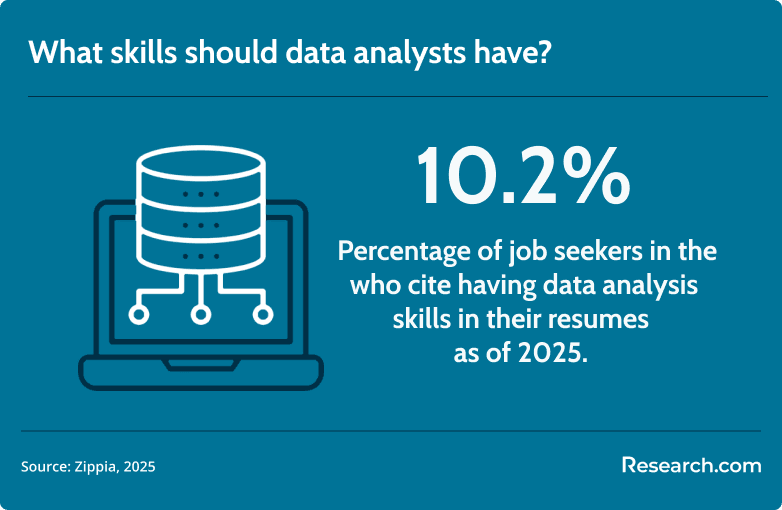
Data-focused electives can be especially valuable. Zippia (2025) reports that data analysis makes up 10% of the most common skills required for careers in this field. Students who add coursework in programming, statistics, machine learning, or visualization may improve their preparation for analytics and technology roles.
Mathematics programs also include general education courses in areas such as writing, humanities, social sciences, and natural sciences. Students comparing the difficulty of different academic options may review the easiest course in college discussion to understand how general education workload differs from math-intensive coursework.
Is a short-term online associate degree a viable pathway to build a robust mathematics career?
A short-term online associate pathway can be useful if it is accredited, transfer-friendly, and aligned with your long-term goal. The main advantage is speed and cost control, but students should verify whether credits will transfer into a bachelor’s program and whether the curriculum includes the math sequence required for future study. An associate degree in 6 months online accredited may be worth comparing if you need a fast starting point, but it should be evaluated carefully for accreditation, transferability, advising, and academic depth.
How can hands-on experiences boost your mathematics career?
Projects, internships, research assistantships, tutoring roles, and employer-sponsored assignments help mathematics students turn abstract coursework into evidence of job-ready skills. Employers often want to see that candidates can use math to solve practical problems, communicate findings, and work with data or software tools. Some students also compare traditional programs with a fast-track degree if they want a quicker route that still includes applied learning opportunities.
How are emerging technologies shaping modern mathematics programs?
Modern mathematics programs increasingly use computational tools, simulations, statistical software, programming languages, and interactive learning platforms. These changes reflect employer demand for graduates who can move between mathematical reasoning and technical implementation. Students interested in speed and flexibility may compare standard bachelor’s pathways with online accelerated degree programs, but they should confirm that a faster calendar still provides enough time to master difficult quantitative material.
What is the return on investment (ROI) of a mathematics degree?
The ROI of a mathematics degree depends on the total cost of attendance, time to completion, debt, transfer credits, career target, salary potential, and whether the student builds marketable skills beyond coursework. A low-cost associate-to-bachelor’s pathway may produce a stronger financial outcome than a higher-cost program if it leads to the same career objective. However, a more expensive program may be worth considering if it offers stronger internships, employer connections, research access, or licensure preparation.
| ROI factor | Why it matters | Question to ask |
| Total program cost | Tuition, fees, housing, software, and time in school affect net value | What will I pay after grants, scholarships, and transfer credits? |
| Career alignment | Different math careers require different skills and credentials | Does this curriculum match the roles I want? |
| Skill stack | Programming, statistics, communication, and domain knowledge can improve employability | Will I graduate with projects, tools, or certifications employers recognize? |
| Support services | Tutoring and advising can reduce course failure and delay | What help is available for calculus, proofs, statistics, and coding? |
| Career outcomes | Placement support and internships can affect early career opportunities | Where do recent graduates work, and what roles do they obtain? |
Students who are mainly focused on earnings may also compare mathematics with other practical degree options listed among the easiest online degrees that pay well.
How important is accreditation in mathematics programs?
Accreditation is one of the most important checks before enrolling. It indicates that the institution or program has been reviewed against recognized academic standards. Accreditation can affect credit transfer, graduate school admission, employer recognition, and access to financial aid.
Students seeking low-cost online options should be especially careful. A school may advertise affordability, but the program still needs appropriate accreditation and aid eligibility. Comparing options such as cheap online colleges that accept FAFSA can help students focus on institutions that may support federal aid access.
What research opportunities do mathematics programs offer?
Research opportunities can include faculty-led projects, independent studies, undergraduate research programs, data analysis assignments, conference presentations, and participation in academic publications. Research is especially valuable for students considering graduate school, quantitative research careers, or technical roles that require evidence of advanced problem-solving.
Students who already hold a bachelor’s degree and want a faster graduate option may compare mathematics-related programs with one year graduate programs, but they should confirm whether the accelerated format includes meaningful research, capstone, or applied project work.
How can mathematics programs support working professionals?
Working adults often need programs with asynchronous classes, part-time enrollment, predictable course rotations, online tutoring, responsive advising, and flexible deadlines. A strong program for working professionals should make it possible to progress without sacrificing academic quality or career responsibilities.
Cost is also a major concern for adult learners. Comparing the cheapest online colleges for working adults can help students identify schools with flexible formats, lower tuition, and services designed for learners balancing employment and school.
Can complementary certifications enhance your mathematics career?
Certifications can strengthen a mathematics degree when they add job-specific proof of skill. Useful areas may include data analytics, business intelligence, programming, cybersecurity, project management, or industry software. Certifications should not replace a degree when a degree is required, but they can help graduates show employers that they can apply math in practical settings.
Students considering credential stacking may compare options such as high paying certification programs to decide whether a short credential could complement their math coursework and improve their readiness for technical roles.
What types of specializations are available in mathematics programs?
Specializations help students connect mathematics to specific careers. The right concentration depends on whether you want to teach, analyze data, work in technology, prepare for graduate school, or apply math in business, finance, government, or science.
- General Mathematics: This track provides broad preparation in subjects such as algebra, calculus, and linear algebra. It may fit students who want flexibility, graduate school preparation, or analytical roles across several industries.
- Applied Mathematics: Applied math focuses on using mathematical tools to solve practical problems in fields such as physics, engineering, economics, biology, logistics, or finance. Topics may include optimization, modeling, differential equations, and real-world data work.
- Computational Mathematics: This specialization emphasizes algorithms, numerical methods, scientific computing, and programming. It can support preparation for data science, machine learning, software-related analysis, and technical computing roles.
- Mathematics Education: Students preparing to teach mathematics study both math content and pedagogy. Coursework may include curriculum design, classroom assessment, educational theory, and teaching methods. Those pursuing advanced teaching or leadership roles may later consider a masters in education online.
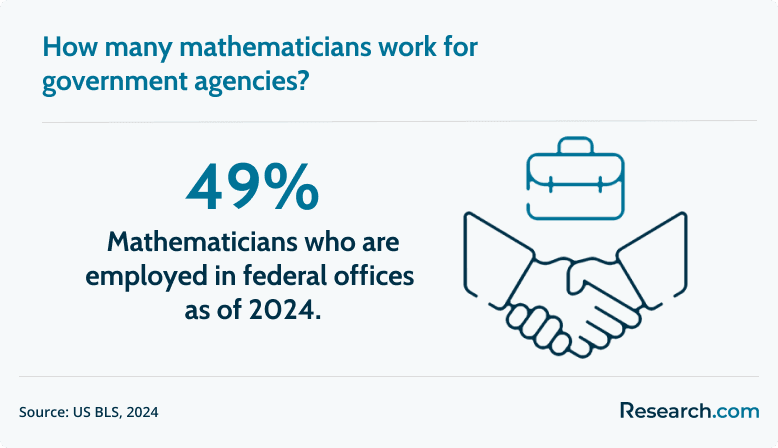
BLS (2024b) data show that nearly half of mathematicians (49%) and a smaller portion of statisticians (16%) worked in the federal government in 2023. Others work in professional, scientific, and technical services, higher education, research and development, healthcare and social assistance, computer systems design, and manufacturing. Choosing a specialization can help students align coursework with these employment settings.
How to choose the best mathematics program?
The best mathematics program is not always the easiest or cheapest one. It is the program that fits your academic readiness, schedule, budget, career target, and need for support. Use the questions below before applying or enrolling.
| Selection factor | Why it matters | What to verify |
| Accreditation | Affects transfer, employer recognition, graduate admission, and financial aid | Confirm institutional accreditation through official sources |
| Curriculum fit | Different careers require different math, statistics, education, or computing courses | Compare required courses, electives, and prerequisites |
| Flexibility | Working adults and caregivers may need online, part-time, or accelerated formats | Ask whether courses are synchronous, asynchronous, or cohort-based |
| Academic support | Math courses can become barriers without tutoring and advising | Look for tutoring, office hours, placement support, and study groups |
| Faculty expertise | Faculty mentorship can shape research, internships, and graduate school preparation | Review faculty areas, publications, and industry connections |
| Career services | Applied projects, internships, and placement support can improve outcomes | Ask about resume help, interview preparation, employer partnerships, and alumni roles |
| Future study options | Some students may want advanced teaching, research, or leadership credentials | Check transfer agreements and graduate pathways, including options such as the fastest EdD online program if education leadership is a long-term goal |
Common mistakes to avoid when choosing a mathematics program
- Choosing a program because it sounds easy without checking whether it matches your career goal.
- Looking only at tuition instead of total cost, fees, books, software, and time to graduation.
- Ignoring accreditation or assuming all credits will transfer automatically.
- Choosing an online program without confirming tutoring, faculty access, and exam requirements.
- Assuming a mathematics degree alone guarantees a specific salary or job title.
- Overlooking programming, statistics, communication, and project experience, which can be critical for analytics and technology roles.
What career paths are available for graduates of mathematics programs?
Mathematics graduates can pursue careers that require quantitative reasoning, analytical thinking, statistical interpretation, modeling, or technical problem-solving. Some roles may require graduate education, licensure, exams, or additional technical training.
| Career | Reported salary | What the role does |
| Mathematicians and Statisticians | $119,770 and $109,190 | Use advanced mathematical or statistical methods to model problems, analyze data, and interpret patterns |
| Data Scientists/Analysts | $119,040 | Use statistical and computational methods to study large datasets and support decisions |
| Actuaries | $132,500 | Evaluate financial risk, especially in insurance, pensions, health insurance, and risk management |
| Mathematics Professors | $95,320 | Teach college-level mathematics and may conduct research |
| Operations Research Analysts | $95,600 | Use models and algorithms to improve logistics, resource allocation, scheduling, and efficiency |
| Software Developers | $138,110 | Design applications, build systems, and use algorithms to solve technical problems |
| Economists | $132,650 | Analyze economic data, trends, markets, and policy questions |
| Financial Managers | $174,820 | Oversee budgeting, forecasting, investments, capital management, and financial strategy |
Students who want to move into advanced analytics, data science, or specialized technical roles may compare bachelor’s-level outcomes with graduate options such as the easiest online masters programs to get into. However, graduate school should be evaluated based on career necessity, cost, and expected return.
The chart below summarizes average incomes for selected careers related to mathematics graduates.
Can accelerated online programs fast-track your mathematics career?
Accelerated online programs can help students finish faster, but they are not automatically easier. Shorter terms require strong time management, comfort with independent learning, and the ability to absorb technical material quickly. They may be a good fit for motivated students who already have transfer credits, relevant work experience, or strong math preparation.
Students seeking a compressed associate pathway may compare options such as 1 year associate degree programs online. Before enrolling, confirm accreditation, transferability, tutoring access, course pacing, and whether the accelerated calendar leaves enough time to master calculus, statistics, and other core topics.
How can networking and soft skills boost your mathematics career?
Technical ability matters, but mathematics graduates also need communication, teamwork, and business context. Many math-related roles require explaining models, translating data into recommendations, collaborating with nontechnical teams, and presenting uncertainty clearly.
Networking can also uncover internships, research roles, mentor relationships, and job leads that are not always visible through public postings. Professional associations, faculty connections, alumni networks, hackathons, tutoring work, and conferences can all help. Students who want to add job-specific credentials may compare high paying certificates that support analytics, technology, finance, or business intelligence goals.
What is the job market for graduates with a mathematics degree?
The job market for mathematics graduates is strong in fields that depend on data, modeling, software, forecasting, optimization, and risk analysis. According to the BLS (2024c), math occupations are projected to have around 37,100 annual openings from 2023 to 2033. This outlook reflects broad demand for quantitative skills across technology, finance, government, research, healthcare, and operations.
BLS data report the following job outlook figures for selected related occupations:
- Data Scientists: 36% (20,800 annual job openings)
- Operations Research Analysts: 23% (11,300)
- Actuaries: 22% (2,200)
- Software Developers: 18% (125,100)
- Statisticians: 12% (2,300)
Technology employers often seek mathematics graduates for roles involving software development, artificial intelligence, machine learning, algorithms, cybersecurity, and data analysis. Federal government opportunities may also be significant, including work connected to agencies such as the Department of Defense or the National Security Agency.
Finance, fintech, digital banking, insurance, and risk management continue to create roles for professionals who can analyze complex data and support decisions. Research roles in academic institutions and private-sector R&D can also be strong options for graduates interested in scientific or technical problem-solving.
Education remains another important pathway. A RAND discussion of math teachers in STEM fields emphasizes the importance of math educators in preparing students for technology, engineering, and science careers.
The chart below illustrates employment growth across selected math-related careers.
References:
- Ma, J., Pender, M., & Oster, M. (2024). Trends in College Pricing and Student Aid 2024. https://research.collegeboard.org/trends/college-pricing
- U.S. Bureau of Labor Statistics. (2024a, August 29). Math Occupations. Occupational Outlook Handbook. https://www.bls.gov/ooh/math
- U.S. Bureau of Labor Statistics. (2024b, August 29). Mathematicians and Statisticians. Occupational Outlook Handbook. https://www.bls.gov/ooh/math/mathematicians-and-statisticians.htm
- U.S. Bureau of Labor Statistics. (2024c, August 29). Occupational projections, 2023–33, and worker characteristics, 2023. Employment Projections. https://www.bls.gov/emp/tables/occupational-projections-and-characteristics.htm
- Zippia. (2025, January 8). Data Analyst Skills for Your Resume and Career. Retrieved January 14, 2025 from https://www.zippia.com/data-analyst-jobs/skills
Key Insights
- An “easy” mathematics degree is usually easier because of format, curriculum design, support, or flexibility—not because mathematics requires no effort.
- Associate degrees, BA programs, applied mathematics tracks, and mathematics education programs are often more accessible than highly theoretical BS pathways.
- Accreditation, transferability, tutoring, and curriculum fit should matter more than advertising claims about speed or simplicity.
- Career outcomes improve when students combine mathematics with practical skills such as statistics, programming, data visualization, communication, cybersecurity, or teaching practice.
- Costs vary widely, so compare net price, not just tuition. Community college transfer routes and online formats may reduce expenses, but fees and transfer rules still matter.
- Mathematics can lead to strong career options in data, finance, government, technology, education, and research, but salary depends on role, location, experience, and additional credentials.
- The best program is the one that matches your target career, learning style, budget, and readiness for college-level math.
Other Things You Should Know About Mathematics Programs
Many mathematics programs require an algebra or calculus placement score before registration. At some public universities, students must place into College Algebra or higher, or complete a remedial course sequence first. Schools also commonly ask for a high school GPA of about 2.0 to 2.5 for admission.
The easiest mathematics degree programs in 2027 typically require about three to four years to complete. Programs may vary depending on the institution, with some offering accelerated tracks that can be completed in three years with intensive study.