
2027 How to Become a Radiology Technician in Hawaii

Co-Founder and Chief Data Scientist
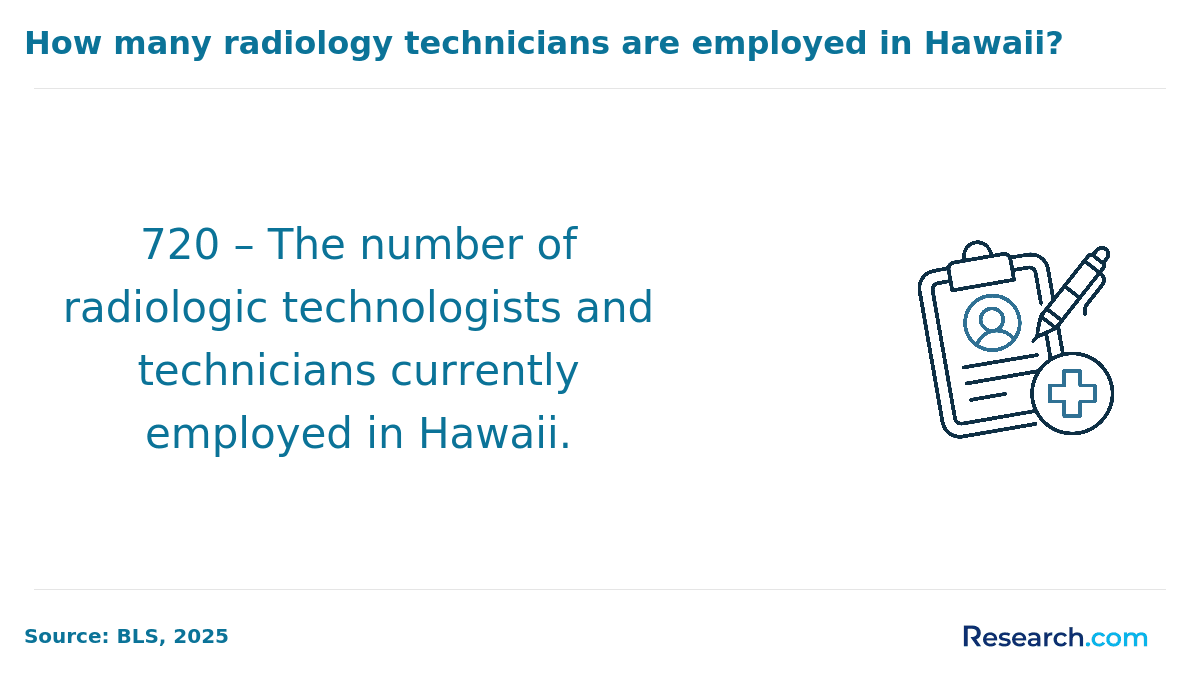
Becoming a radiology technician in Hawaii is a practical healthcare career path for people who want patient-facing work, technical training, and a shorter education route than medical school or advanced clinical degrees. The field is small in the state, with just more than 700 professionals, but demand is projected to grow because hospitals, outpatient centers, and imaging providers need qualified technologists to help address statewide staffing shortages and diagnostic imaging backlogs.
This guide explains how to become a radiology technician in Hawaii in 2026: what education you need, how licensure works, what skills matter most, how salaries compare, where jobs are concentrated, and how to decide whether this career fits your goals. It also covers common mistakes, emerging radiology technology, financial aid considerations, and ways to advance into CT, MRI, mammography, ultrasound, leadership, or related healthcare roles.
Quick Answer: Becoming a Radiology Technician in Hawaii
- Most candidates need to complete an accredited radiologic technology program, usually an associate degree, before applying for certification and state licensure.
- Hawaii’s radiology technician employment is projected to grow by approximately 8% through 2032, with steady demand across hospitals, outpatient clinics, and imaging centers.
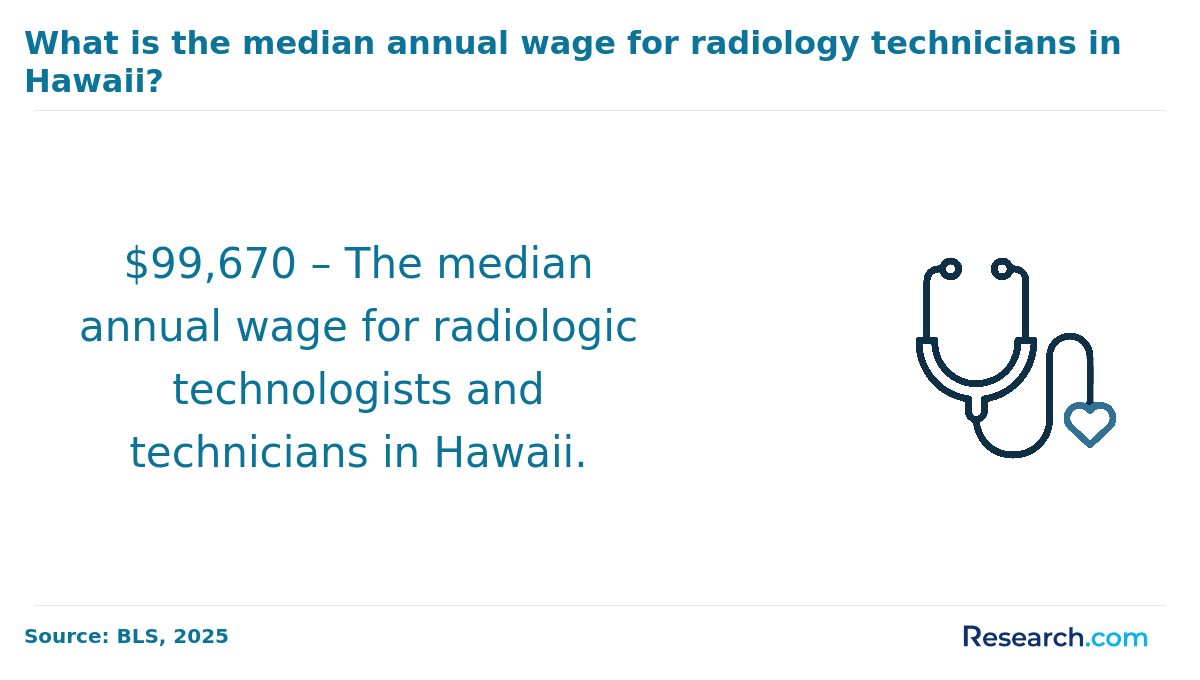
- The average annual salary for radiology technicians in Hawaii is about $99,670, but pay varies by employer, experience, island, specialty, and shift requirements.
- Hawai‘i Community College offers an accredited Radiologic Technology program, preparing students for certification and local workforce entry.
- Other notable institutions include Kapi‘olani Community College, which provides radiologic technology training with clinical experience and healthcare industry connections in Honolulu.
- Education requirements for radiology technicians in Hawaii
- Skills needed for radiology technician work
- Hawaii licensing and certification requirements
- Radiology technician salary in Hawaii
- Job outlook for radiology technicians in Hawaii
- Best industries and workplaces for radiology technicians
- Radiology technology trends affecting the field
- Teamwork with nurses, physicians, and radiologists
- Whether nursing cross-training is useful
- How to add ultrasound skills
- Financial aid and scholarship options
- Challenges of working in radiology in Hawaii
- Legal and ethical standards for radiology technicians
- Career growth and professional development options
- Complementary certifications that can strengthen your career
What level of education is required to become a radiology technician in Hawaii?
In Hawaii, the standard education route for radiology technicians is completion of an accredited radiologic technology program, most often an associate degree. The University of Hawai'i – Kapiʻolani Community College is identified as offering this type of program in the state and awarded degrees to 14 graduates in 2023.
A radiologic technology associate degree is built around two kinds of learning: classroom instruction and supervised clinical practice. Students typically study human anatomy, physiology, radiographic positioning, imaging procedures, radiation safety, patient care, image analysis, and the technical principles behind diagnostic imaging equipment. Clinical rotations are especially important because students learn how to work with real patients, follow safety protocols, position the body correctly, and produce diagnostic-quality images under supervision.
Program accreditation matters because it signals that the curriculum meets recognized educational standards and prepares students for certification and licensure steps. Accreditation from organizations such as the Joint Review Committee on Education in Radiologic Technology (JRCERT) can also affect eligibility for credentialing, financial aid, and employer acceptance. Students comparing imaging careers should also understand how radiologic technology differs from physician-level radiology; this related guide on becoming a radiologist can help clarify the longer medical training pathway.
| Education option | Best fit | What to check before enrolling |
| Associate degree in radiologic technology | Students seeking the standard entry route into radiography positions | Accreditation, clinical placement sites, certification eligibility, graduation outcomes, and state licensure alignment |
| Certificate or postsecondary imaging training | Students who already have healthcare education or are pursuing a limited-scope pathway where available | Whether the credential qualifies for Hawaii licensure and national certification |
| Advanced modality training after radiography | Working technologists who want CT, MRI, mammography, or related specialization | ARRT eligibility rules, clinical experience requirements, and employer support for training |
What essential skills do you need to be a radiology technician in Hawaii?
Radiology technicians need more than the ability to operate imaging equipment. The role combines technical precision, patient care, safety judgment, communication, and physical stamina. In Hawaii, cultural awareness and clear communication are also important because technologists may work with patients from many linguistic, cultural, and community backgrounds.
The most important skills include:
- Imaging equipment competency: Technologists must know how to operate radiographic equipment, follow imaging protocols, use digital imaging systems, and apply radiation protection practices correctly.
- Accuracy and attention to detail: Small positioning errors can lead to unclear images, repeat exams, unnecessary radiation exposure, or delayed diagnosis. Careful documentation is also essential for compliance with ARRT expectations and state licensing standards.
- Patient communication: Many patients are anxious, in pain, elderly, or unfamiliar with imaging exams. A strong technologist explains the procedure clearly, answers basic process questions, and helps patients remain still and comfortable.
- Clinical judgment and problem-solving: Equipment issues, mobility limitations, trauma cases, and unusual physician orders require calm thinking and fast adjustment without compromising safety.
- Physical endurance: Radiology work often involves long periods of standing, moving equipment, assisting patients, and maintaining awkward positions while helping patients stay properly aligned.
- Team coordination: Technologists regularly communicate with radiologists, physicians, nurses, schedulers, and other allied health professionals to make sure the correct exam is performed at the right time.
Students should look for programs that assess both technical ability and patient-care readiness. Strong clinical training is often the difference between knowing radiography concepts and being prepared for the pace of a hospital or busy outpatient imaging department.
What are the licensing or certification requirements for radiology technicians in Hawaii?
Radiology technicians must meet Hawaii’s licensing rules before practicing. The Hawaii Department of Health sets requirements intended to protect patients and ensure that imaging professionals are properly trained to perform diagnostic procedures safely.
Core requirements
| Requirement | What it means for candidates | Why it matters |
| Accredited education | Complete an approved radiologic technology program, such as the Associate of Science degree in Radiologic Technology offered by the University of Hawai'i – Kapiʻolani Community College. | Education provides the classroom and clinical foundation needed for safe imaging practice. |
| National certification | Radiographers and radiation therapists must be currently registered and in good standing with the American Registry of Radiologic Technologists (ARRT). | National certification demonstrates that candidates meet recognized professional standards. |
| Nuclear medicine credentialing | Nuclear medicine technologists must be certified by the Nuclear Medicine Technology Certification Board (NMTCB) or registered with the ARRT in nuclear medicine. | Different imaging specialties may require different credentialing bodies. |
| State licensure application | Applicants submit documentation to the Hawaii Department of Health after meeting education and certification requirements. | State licensure gives legal permission to practice in Hawaii. |
| Good moral character | Applicants must meet character requirements; individuals with prior convictions must have civil rights restored to be eligible. | Licensing boards evaluate professional responsibility and public safety. |
| Continuing education | The ARRT requires 24 units of accredited continuing education every two years, a standard accepted by most states, including Hawaii. | Continuing education keeps technologists current with safety rules, equipment changes, and clinical standards. |
How to approach licensure step by step
- Confirm that the program you plan to attend is accredited and meets Hawaii licensing expectations.
- Complete required classroom courses and clinical rotations.
- Prepare for and pass the appropriate national certification exam.
- Collect official transcripts, certification verification, and any required application materials.
- Apply through the Hawaii Department of Health and wait for approval before practicing.
- Track continuing education deadlines so your certification and license remain active.
If you are comparing imaging careers and credential options, this overview of radiology careers can help you understand where ARRT credentials may lead over time.
How much can radiology technicians earn in Hawaii?
Radiology technician pay in Hawaii is comparatively strong, but salary should be evaluated alongside the state’s high cost of living. Entry-level radiology technicians may earn as low as $37,740 annually, while experienced technologists with advanced credentials, specialized imaging skills, or supervisory duties may earn from $80,000 to more than $110,000 per year. The average annual salary for radiology technicians in Hawaii is about $99,670.
Pay varies by workplace. Hospitals, large health systems, private imaging centers, government agencies, and military healthcare facilities may offer different wage scales, benefits, shift differentials, and advancement opportunities. Nonprofit hospitals and smaller clinics may pay less in some cases, but they may offer schedule stability, mission-driven work, or benefits that improve overall compensation.
Advanced credentials can influence earning potential. Technologists who add CT, MRI, mammography, or other specialized training may qualify for positions that require more technical expertise. However, higher pay is not automatic; it depends on employer demand, available positions, experience, scheduling needs, and certification status.
| Career stage | Typical salary context in Hawaii | Common factors that affect pay |
| Entry-level radiology technician | May earn as low as $37,740 annually | First job, limited experience, employer type, island location, and shift schedule |
| Experienced radiologic technologist | Often earns more as clinical judgment and speed improve | Years of experience, hospital setting, specialty experience, and reliability in high-volume departments |
| Advanced or supervisory technologist | Advanced roles may range from $80,000 to more than $110,000 per year | CT, MRI, mammography, leadership duties, union structure, and employer size |
Students comparing radiology technology with other practical healthcare and technical careers may also find this guide to trade and skilled career options useful when weighing time in school, salary potential, and job stability.
What is the job outlook for radiology technicians in Hawaii?
The job outlook for radiology technicians in Hawaii is positive but should be interpreted realistically. According to 2023 data from the U.S. Bureau of Labor Statistics, employment for radiologic technologists and technicians in Hawaii is projected to grow by approximately 8%, with about 40 job openings each year.
Several forces support demand. Hawaii’s aging population increases the need for diagnostic imaging because older adults generally require more frequent evaluation for injuries, chronic conditions, and disease monitoring. Hospitals and clinics also continue to modernize imaging services, which can create demand for technologists who are comfortable with digital imaging systems and updated workflows.
At the same time, the labor market is small. With just more than 700 professionals in the field statewide, openings may be limited in number compared with larger states. Location matters: job availability can differ between Honolulu, neighbor islands, hospitals, outpatient centers, and specialized imaging providers. Students should be prepared to monitor openings, build clinical connections, and consider whether relocation between islands is realistic.
The median annual wage for radiologic technologists in Hawaii is around $99,600, significantly higher than the national median of approximately $78,980. Still, salary comparisons should account for housing, transportation, commuting, and other cost-of-living differences. If your goal is to begin training quickly, a guide to accessible radiology programs can help you compare admissions options and program expectations.
Which industries provide the best opportunities for radiology technicians?
Radiology technicians in Hawaii can work in several healthcare environments. The best option depends on whether you value higher pay, predictable hours, specialized training, job security, patient variety, or advancement opportunities.
| Work setting | Why it may be a good fit | Trade-offs to consider |
| Hospitals, including state, local, and private hospitals | Hospitals usually offer broad case variety, emergency imaging exposure, shift differentials, benefits, and paths into CT, MRI, or leadership. | Schedules may include nights, weekends, holidays, and higher-stress cases. |
| Outpatient care centers | These settings often provide scheduled imaging, more predictable workflows, and opportunities in private or specialized centers. | Technologists may have less exposure to complex trauma or inpatient cases. |
| Physicians’ offices and clinics | Clinic roles may offer consistent daytime schedules and repeated patient interaction. | Pay and equipment variety may be more limited than in larger hospital systems. |
| Government and public health institutions | These employers may offer job stability, structured pay, pensions, tuition support, or loan repayment options. | Hiring processes can be slower and may involve additional documentation. |
| Diagnostic laboratories and imaging centers | Imaging-focused facilities can provide exposure to modern equipment and specialty procedures. | Productivity expectations may be high, especially in busy centers. |
| Telehealth and mobile imaging services | Mobile imaging and teleradiology support can expand access for rural or underserved communities. | Travel, equipment logistics, and variable schedules may be part of the role. |
Hospitals often provide the broadest entry point for new technologists because they perform a wide range of exams and may have structured training for new hires. Outpatient centers can be attractive for technologists who prefer more predictable schedules after gaining core experience.
What are the latest trends and emerging technologies in radiology?
Radiology is changing quickly, and Hawaii’s geography makes some trends especially important. Imaging providers need faster workflows, better access across islands, and efficient use of a limited specialist workforce. New technologies can help, but they also require training, infrastructure, and careful oversight.
Artificial intelligence in imaging workflows
Artificial intelligence is being used to support image review, flag urgent findings, reduce workflow delays, and help radiology teams manage high volumes of studies. AI applications have enhanced breast cancer detection rates by 20% when combined with radiologist assessments. For technologists, AI does not remove the need for strong positioning, safety, and patient care skills. Poor image quality still limits what any system can interpret.
Enterprise imaging and cloud-connected systems
Organizations such as Hawaii Pacific Health have implemented enterprise imaging systems that connect Picture Archiving and Communication Systems (PACS) with Electronic Medical Records (EMRs). For technologists, this means imaging data, reports, and patient information can be shared more efficiently across departments and locations. It also raises the importance of accurate documentation and privacy compliance.
Photon-counting computed tomography
Photon-counting CT is an advanced imaging technology that can produce higher-resolution images with lower radiation doses. It can support more precise tissue characterization and may improve detection of subtle abnormalities. Technologists working with advanced CT systems need strong protocol knowledge and careful dose-management habits.
3D printing, virtual reality, and augmented reality
Advanced visualization tools, including 3D printing, virtual reality, and augmented reality, are increasingly used for surgical planning, anatomical modeling, and patient education. These tools depend on high-quality imaging data, so technologists play an indirect but important role in producing images that can be used for advanced planning.
Teleradiology and remote image interpretation
Teleradiology is especially relevant in Hawaii because patients and facilities are spread across islands. Electronic image transmission allows radiologists to interpret studies from another location, which can help facilities without on-site radiology coverage. Technologists must be especially careful with image quality, exam labeling, and communication because the interpreting physician may not be physically present.
How do radiology technicians collaborate with other healthcare professionals in Hawaii?
Radiology technicians rarely work in isolation. They coordinate with radiologists, ordering providers, nurses, medical assistants, transport staff, and administrative teams to make sure imaging exams are safe, accurate, and completed at the right time. In hospitals, a technologist may confirm an order with a physician, work with a nurse to prepare a patient, complete the exam, and ensure images are available for radiologist interpretation.
Teamwork is especially important when patients are medically fragile, in pain, unable to stand, sedated, or anxious. Nurses may help with vital signs, IV access, medication timing, or patient monitoring, while radiology technicians focus on positioning, equipment use, radiation safety, and image capture. Understanding related roles can improve collaboration; students interested in broader clinical teamwork may want to review how to become a nurse in Hawaii.
Can radiology technicians benefit from cross-training in nursing?
Cross-training in nursing is not required for radiology technicians, but nursing knowledge can improve patient-care judgment and communication. Technologists who understand basic clinical assessment, infection control, patient mobility, and emergency response may feel more confident in high-pressure imaging environments.
That said, radiologic technology and nursing are separate licensed professions. A radiology technician cannot perform nursing duties simply by learning nursing concepts informally. Anyone who wants to move into nursing must follow the proper education, examination, and state licensing process. This guide to Hawaii nursing license requirements explains the licensing route for students considering that transition.
How can radiology technicians expand their expertise to include ultrasound in Hawaii?
Ultrasound can be a valuable complementary imaging skill because it uses non-ionizing sound waves rather than ionizing radiation. Adding ultrasound knowledge may help a radiology professional broaden career options in diagnostic imaging, especially in facilities that value flexible imaging staff.
However, ultrasound is its own discipline with specific training, scanning technique, anatomy knowledge, and credentialing expectations. Radiologic technologists interested in this path should compare formal sonography programs, clinical hour requirements, and certification expectations before assuming their radiography credential is enough. For a focused overview, see this guide on how to become an ultrasound technician in Hawaii.
What financial aid opportunities and scholarship programs can benefit radiology technician students in Hawaii?
Radiology technician students should investigate financial aid early because program costs may include more than tuition. Books, uniforms, background checks, immunizations, transportation to clinical sites, exam fees, licensing fees, and lost work hours can all affect affordability.
Possible funding sources include state-sponsored scholarships, grants, institutional aid, federal student aid for eligible programs, employer tuition support, and healthcare workforce funding opportunities. Students should ask each school’s financial aid office which aid applies to radiologic technology students specifically, because eligibility can vary by program structure and enrollment status.
| Cost or aid question | Why it matters |
| Is the program eligible for federal financial aid? | Eligibility can affect access to grants, loans, and work-study options. |
| Are clinical placements on the same island? | Travel costs can be significant if clinical sites are far from home. |
| Are certification and licensing fees included? | Some students budget tuition but forget exam and application expenses. |
| Does the school offer healthcare scholarships? | Institutional awards may reduce borrowing if you apply early. |
| Do local employers offer tuition support? | Some healthcare employers may support training for workers entering high-need roles. |
Students exploring allied health training more broadly may also find it useful to compare the steps to become a medical assistant in Hawaii, especially if they want a shorter or different entry point into healthcare.
What challenges should you expect as a radiology technician in Hawaii?
Radiology technology can be rewarding, but students should understand the challenges before committing to the path. Hawaii’s healthcare needs, island geography, staffing constraints, and technology demands can make the work both meaningful and demanding.
Common challenges
- Workforce shortages: Hawaii has experienced shortages of qualified radiology personnel, contributing to imaging backlogs and pressure on existing staff. Technologists may face overtime, rotating shifts, or wider responsibilities during staffing gaps.
- Limited infrastructure in some settings: Advanced imaging systems, AI tools, and enterprise platforms require major equipment and IT investment. Smaller or rural facilities may not have the same resources as larger hospitals.
- Ongoing training demands: Radiology equipment, safety standards, and digital workflows continue to evolve. Specialized training may require online education, employer-sponsored instruction, or travel outside the state.
- Geographic and logistical barriers: Hawaii’s island structure can complicate staffing, equipment repair, supply chains, and inter-island coverage. Technologists may need flexibility depending on employer needs.
- Cultural and language considerations: Hawaii’s diverse population requires respectful, clear communication. Technologists may need to work with interpreters and adapt explanations for patients with different backgrounds or levels of health literacy.
- Physical and emotional strain: Imaging patients who are injured, seriously ill, or frightened can be physically and emotionally demanding, especially in emergency and inpatient settings.
Common mistakes students should avoid
| Mistake | Better approach |
| Choosing a program without checking accreditation | Confirm accreditation and eligibility for certification before applying. |
| Looking only at tuition | Calculate total cost, including transportation, clinical requirements, books, fees, and lost work time. |
| Assuming every online or hybrid program meets Hawaii requirements | Ask whether the program satisfies Hawaii licensure and clinical training expectations. |
| Ignoring clinical placement logistics | Find out where clinical rotations occur and whether travel is realistic. |
| Assuming salary outcomes are guaranteed | Compare local job postings, employer requirements, shift schedules, and specialty preferences. |
| Confusing radiographer and radiologist roles | Understand that radiographers perform imaging exams, while radiologists are physicians who interpret images and complete medical training. |
Career planning is easier when you understand the difference between imaging roles. This comparison of radiographer and radiologist degree programs can help students avoid choosing the wrong educational path.
What legal and ethical best practices should radiology technicians follow in Hawaii?
Radiology technicians must follow legal, ethical, and professional standards that protect patients and support accurate diagnosis. In Hawaii, these expectations are shaped by state licensing rules, employer policies, federal privacy law, and national credentialing organizations such as the ARRT.
Maintain active licensure and certification
Technologists should never practice without the proper state license and required credential status. Continuing education is not just a renewal requirement; it helps technologists stay current with radiation safety, equipment updates, and evolving clinical standards.
Use radiation safely and responsibly
Radiation safety is central to ethical imaging practice. Technologists should use shielding when appropriate, monitor exposure, follow physician orders and facility protocols, and apply ALARA, or As Low As Reasonably Achievable, principles to reduce unnecessary radiation.
Protect patient privacy
Technologists handle sensitive health information, images, and identifying details. HIPAA compliance requires them to safeguard records, share information only with authorized personnel, avoid public discussion of cases, and use secure systems when accessing or transmitting imaging data.
Support informed patient participation
Before an exam, technologists should explain what the patient can expect, confirm identity, verify the exam, answer process-related questions, and escalate clinical concerns to the appropriate provider. Patients should be treated with respect if they are anxious, confused, or hesitant.
Provide respectful, culturally aware care
Hawaii’s patient population includes people from many cultural, linguistic, and community backgrounds. Ethical care requires patience, dignity, interpreter use when needed, and avoidance of assumptions about a patient’s beliefs, language, or health knowledge.
Document honestly and accurately
Images, labels, exposure information, and procedural notes must be accurate. Technologists should never alter documentation, mislabel exams, omit important details, or attempt to interpret findings beyond their professional scope.
Know the limits of the role
Radiology technicians acquire images; radiologists and other authorized clinicians interpret them. Staying within scope protects patients, the employer, and the technologist’s license.
What career and professional development opportunities exist for radiology technicians in Hawaii?
Radiology technicians in Hawaii can grow their careers by specializing, teaching, leading departments, or moving into adjacent healthcare roles. The best path depends on whether you want more technical expertise, more responsibility, a higher salary ceiling, or a different type of patient-care role.
Common advancement paths
- Advanced imaging specialization: Technologists may pursue additional credentials in Computed Tomography (CT), Magnetic Resonance Imaging (MRI), Mammography, or other modalities through the American Registry of Radiologic Technologists (ARRT).
- Lead technologist or supervisor: Experienced professionals may manage schedules, train staff, oversee quality control, and help maintain compliance with safety and licensing standards.
- Clinical instructor or educator: Technologists with strong clinical experience may help train students in community college, vocational, or hospital-based settings, including clinical instruction connected to programs such as the University of Hawaiʻi – Kapiʻolani Community College.
- Healthcare administration: Technologists who complete further education in healthcare management may move into operations, quality improvement, department leadership, or policy-focused roles.
- Transition into another medical profession: Some radiology technicians use their clinical background as a foundation for further education toward radiologist, physician assistant, biomedical engineering, nursing, or other healthcare careers.
| Goal | Possible next step | Good fit for |
| Earn more through specialization | Add CT, MRI, mammography, or another modality credential | Technologists who enjoy equipment-focused clinical work |
| Move into leadership | Seek lead technologist, supervisor, or department manager roles | Professionals who like training staff and improving workflows |
| Teach future technologists | Become a clinical instructor or program educator | Experienced technologists with strong communication skills |
| Shift into management | Pursue healthcare administration education | Technologists interested in systems, budgets, staffing, and compliance |
| Change healthcare professions | Complete the required degree and licensure for the target field | Workers who want a broader or different clinical scope |
What complementary certifications can enhance a radiology technician’s career in Hawaii?
Complementary certifications can make a radiology technician more adaptable, especially in smaller facilities where cross-functional healthcare experience is valued. Certifications in areas such as phlebotomy, basic life support, emergency medical services, or medical assisting may improve patient-care confidence and interdisciplinary teamwork, although they do not replace radiologic technology licensure or modality-specific credentials.
The most useful complementary credential depends on your workplace. A hospital technologist may benefit from emergency response training, while a clinic-based technologist may gain value from medical assisting, patient intake, or phlebotomy skills. Students exploring allied health options can compare related programs through this guide to the best medical assistant programs in Hawaii.
What do radiology technicians say about their careers in Hawaii?
- My radiology technician training through the University of Hawaii gave me the clinical practice and instructor support I needed before starting work in a local hospital. I value being able to serve patients in a place where community ties are strong and healthcare work feels personal. The combination of technical growth, patient care, and Hawaii’s cultural environment keeps the career meaningful. Malia
- After graduation, radiologic technology gave me a stable way to enter healthcare and continue building my skills. Working with patients from many cultural backgrounds has made me a better communicator and a more compassionate provider. The field has also given me room to think about advancement while supporting families across the islands. Rhett
- My degree prepared me for both the technical and human sides of imaging work. Hawaii’s healthcare system has unique challenges, so you need to be accurate, flexible, and culturally respectful. I find the work fulfilling because each exam supports a patient’s diagnosis and helps meet a real need in the community. Jared
Related Articles for Nearby States
- 2027 How to Become a Radiology Technician in Alaska
- 2027 How to Become a Radiology Technician in California
- 2027 How to Become a Radiology Technician in Oregon
- 2027 How to Become a Radiology Technician in Washington
- 2027 How to Become a Radiology Technician in Nevada
- 2027 How to Become a Radiology Technician in Arizona
- 2027 How to Become a Radiology Technician in Idaho
- 2027 How to Become a Radiology Technician in Utah
- 2027 How to Become a Radiology Technician in Montana
- 2027 How to Become a Radiology Technician in Wyoming
Key Insights
- Radiology technology in Hawaii is a regulated healthcare career that typically starts with an accredited associate degree, national certification, and state licensure.
- Hawaii’s field is small, with just more than 700 professionals, but projected employment growth of approximately 8% through 2032 and about 40 job openings each year point to steady demand.
- Salary potential is strong compared with national figures, with an average annual salary of about $99,670 and advanced roles ranging from $80,000 to more than $110,000 per year, but cost of living must be part of any ROI calculation.
- Program choice matters. Students should verify accreditation, certification eligibility, clinical placement logistics, licensure alignment, and total cost before enrolling.
- Hospitals offer broad experience and advancement potential, while outpatient centers, clinics, government facilities, imaging centers, and mobile services may offer different advantages in schedule, specialization, or stability.
- AI, enterprise imaging, teleradiology, photon-counting CT, and advanced visualization tools are changing radiology workflows, but they increase—not reduce—the need for well-trained technologists who can produce safe, high-quality images.
- The best long-term career strategy is to build a strong radiography foundation first, then consider CT, MRI, mammography, ultrasound, education, leadership, or healthcare administration based on your goals.
References:
- Kapiʻolani Community College. (n.d.). Radiologic technology program. Kapi'olani Community College | Kūlia I Ka Nu‘u. Retrieved May 19, 2025.
- Kawano, L. (2025, April 18). Radiology workforce shortage hits Hawaii hospitals with thousands of patient scans in the queue. Hawaii News Now. Retrieved May 19, 2025.
- O*NET OnLine. (2025, May 13). Hawaii employment trends: 29-2034.00 - Radiologic technologists and technicians. O*NETOnLine.org. Retrieved May 19, 2025.
- O*NET OnLine. (2025, May 13). Hawaii wages: 29-2034.00 - Radiologic technologists and technicians. O*NETOnLine.org. Retrieved May 19, 2025.
- O*NET OnLine. (2025, May 13). 29-2034.00 - Radiologic technologists and technicians. O*NETOnLine.org. Retrieved May 19, 2025.
- U.S. BLS. (2025, April 18). Occupational outlook handbook: Radiologic and MRI technologists. U.S. Bureau of Labor Statistics. Retrieved May 19, 2025.
Other Things You Should Know About Becoming a Radiology Technician in Hawaii
In Hawaii, radiology technicians must complete 24 hours of continuing education every two years to maintain their licensure. This includes coursework in advanced imaging techniques and safety protocols, as mandated by the Hawaii Department of Health in 2027.
The Hawaii State Department of Commerce and Consumer Affairs, through its Professional and Vocational Licensing Division, oversees radiologic technologist licensing. Applicants must meet state education requirements and follow the licensing rules set by the Hawaii Radiologic Technology Board before practicing in the state.
To become a radiology technician in Hawaii in 2027, you must complete an accredited radiologic technology program, typically an associate degree, which lasts about two years. Afterward, obtaining certification from the American Registry of Radiologic Technologists (ARRT) is essential, followed by state licensure.


