
2027 How to Become an X-ray Technician

Co-Founder and Chief Data Scientist
How to Become an X-ray Technician in 2026: A Practical Guide
If you want a healthcare career that combines patient care, medical imaging, and a shorter training timeline than many other clinical roles, X-ray technician training is worth a close look. But the path is more structured than many students expect. You need an accredited radiologic technology program, supervised clinical experience, certification, and, in many states, licensure before you can practice independently.
This guide explains the full route into radiologic technology in 2026, including what to study, how certification and licensure work, how long training takes, what programs cost, how online and campus options compare, which specializations can lead to growth, and how to judge whether a program is actually worth the investment. It is designed for first-time college students, career changers, and healthcare workers who want a realistic plan—not a sales pitch.
Quick Answer: What Do You Need to Become an X-ray Technician?
In most cases, you become an X-ray technician by completing an accredited radiologic technology program, earning an associate degree or approved certificate, finishing supervised clinical rotations, passing the American Registry of Radiologic Technologists (ARRT) certification exam, and applying for state licensure if your state requires it. For many students, the full process takes about two to three years.
- Most students enter the field through an accredited radiologic technology program that leads to an associate degree.
- Certification and state licensure are separate steps, but they are often linked in practice.
- ARRT-certified radiologic technologists must complete 24 continuing education credits every two years.
- Employment for radiologic technologists and technicians is projected to grow by 5% until 2032, and another projection shows 6% growth from 2024 to 2034 with approximately 13,400 new jobs by 2034.
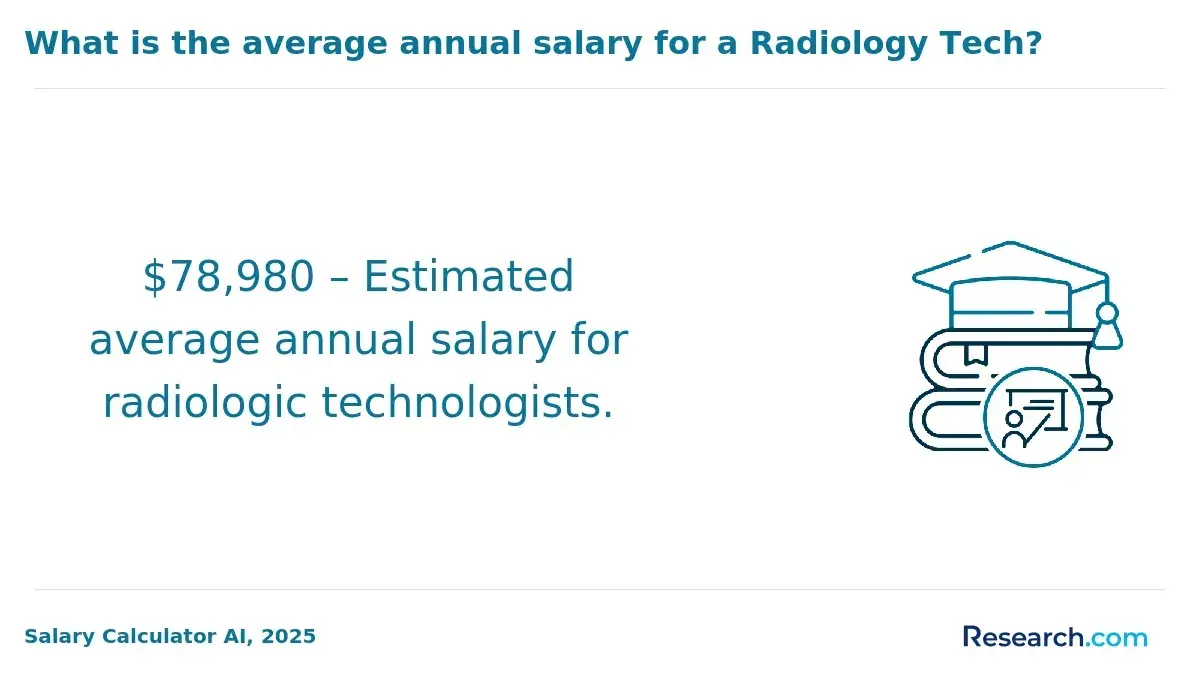
- The average annual salary for X-ray technicians in 2024 is $84,260, while technicians with more than ten years of experience earn an average of $100,614 annually.
- General medical and surgical hospitals employ many radiologic technologists, while outpatient care centers are among the highest-paying settings.
What You’ll Learn in This Guide
- Which education path fits the X-ray technician role
- How certification, licensure, and renewal work
- Whether online programs can qualify you for practice
- How to compare program cost, format, and outcomes
- What specializations and work settings can shape your career
- How to avoid common mistakes before enrolling
- What education do X-ray technicians need?
- How do certification, licensure, and renewal work?
- How long does it take to become an X-ray technician?
- Can an online X-ray technician program lead to licensure?
- Online vs. on-campus X-ray technician programs: which is better?
- How much do X-ray technician programs cost?
- How should you choose the right program?
- Which specializations can X-ray technicians pursue?
- Where do X-ray technicians work?
- What are alternative routes into radiography?
- What is the job market like for X-ray technicians?
- How do programs support job placement and advancement?
- Is X-ray technician training worth the cost?
- What is work-life balance like in this career?
- How can you pay for X-ray technician training?
- Which professional associations matter?
- What legal and ethical rules shape the job?
- What continuing education is required?
- Are there faster certification-related options?
- What similar healthcare careers should you compare?
- What trends are changing X-ray technology?
- Can you become an X-ray technician with an associate degree?
What Graduates Say About Radiologic Technology Training
-
: "
“Radiologic technology training felt like the point where science, anatomy, and patient care finally came together. The classroom material introduced radiation physics and body systems, but the lab work made the job feel real. Practicing positioning and imaging techniques showed me how much the profession contributes to diagnosis every day.” - Ariel
"
-
: "
“I knew the program would be technical, but I did not realize how much communication would matter. During clinical rotations, I saw that patients are often nervous, uncomfortable, or in pain. Training helped me explain procedures clearly while still producing accurate images in a busy emergency department.” - Holly
"
-
: "
“The best part of my program was the balance between theory and practice. We studied how imaging works, then applied that knowledge to equipment operation, safety, and image acquisition with instructor support. Those skills still guide me as I work in different communities.” - Jack
"
What education do X-ray technicians need?
The most common entry route into X-ray technology is an accredited radiologic technology program. These programs are usually offered by community colleges, technical schools, hospitals, and some universities. For most beginners, the standard credential is an associate degree, which generally takes about two years and combines classroom learning with clinical training.
Core coursework usually includes anatomy, patient positioning, radiation physics, radiation protection, radiographic procedures, image evaluation, and patient care. That academic work is necessary, but it is not enough on its own. Students also need clinical rotations, where they practice under supervision and learn how to work safely with patients, equipment, and department protocols.
Some students choose certificate or diploma pathways when they already have healthcare experience or need a more focused route. Students exploring accelerated study formats may also look at online accelerated programs, but radiography still requires in-person clinical training and cannot be completed through lectures alone.
Bachelor’s degrees in radiologic technology or radiologic sciences are less common for immediate entry-level work, but they may support long-term goals such as advanced imaging, teaching, leadership, or department management. Accreditation is the key quality check. A program accredited by the Joint Review Committee on Education in Radiologic Technology (JRCERT) is designed to meet recognized standards for curriculum, clinical learning, and student outcomes.
| Education option | Primary purpose | Best for |
| Certificate or diploma in radiography | Focused preparation for radiography training and certification eligibility | Students who need a shorter route and may already have related healthcare or college experience |
| Associate degree in radiologic technology | Main entry-level pathway into X-ray technician work | First-time college students and career changers who want a direct clinical pathway |
| Bachelor’s degree in radiologic technology or radiologic sciences | Broader academic preparation with potential for specialization or leadership | Students planning for advancement, education, management, or advanced imaging roles |
How do certification, licensure, and renewal work?
Certification and licensure are related, but they are not the same thing. Certification usually means you have met ARRT standards and passed the certification exam. Licensure means a state has legally authorized you to practice. Many states require licensure or registration for radiologic technologists, and several use ARRT certification as part of that process.
The usual sequence is simple: finish an accredited radiologic technology program, apply for the ARRT exam, pass it, and then submit a state licensure application if your state requires one. The ARRT exam covers patient care, radiation safety, image production, radiographic procedures, and professional practice.
Renewal is ongoing, not optional. ARRT-certified technologists must complete 24 continuing education credits every two years. State licensing boards may also require renewals, fees, and additional documentation. Before enrolling, students should check whether a program meets the licensing rules in the state where they plan to work.
Keeping certification active can support long-term progress in a radiology career because employers often prefer professionals who stay current with safety practices, equipment updates, and patient care expectations.
How long does it take to become an X-ray technician?
Most students should plan on about two to three years from starting training to being ready for entry-level work. The timeline depends on the program length, prerequisite courses, clinical scheduling, exam preparation, and state licensing processing times.
An associate degree in radiologic technology usually takes about two years. Because this route can lead to a stable healthcare job in a relatively short period, it is often listed among quick degrees that pay well. That said, “quick” does not mean simple. The coursework is science-heavy, and success depends on clinical skill, accuracy, communication, and strict attention to radiation safety.
Certificate programs can sometimes shorten the path for eligible applicants, but they still include supervised clinical work. After graduation, most candidates must pass the ARRT exam and complete any required state licensure steps before practicing independently.
| Stage | What happens | Planning note |
| Prerequisites and admission | Students complete required courses, applications, background checks, or health records | Competitive programs may have waitlists or selective entry |
| Radiologic technology coursework | Students study imaging, anatomy, patient care, and radiation safety | Most associate programs take about two years |
| Clinical rotations | Students practice imaging under supervision in healthcare settings | Schedules may include daytime, evening, or rotating hours |
| Certification and licensure | Graduates take the ARRT exam and apply for state licensure if required | Processing time depends on the state and the applicant’s readiness |
Can an online X-ray technician program lead to licensure?
Yes, an online or hybrid program can lead to licensure if it is properly accredited and includes the required in-person clinical training. A fully online program with no supervised clinical component is not a realistic path to becoming an X-ray technician.
The real question is not whether the lectures are online. It is whether the program is accredited, prepares you for the ARRT exam, and matches the licensing rules in your state. Accredited online and hybrid programs may deliver lectures, assignments, and some simulations remotely while arranging clinical rotations at approved healthcare sites.
Before enrolling, confirm where clinical placements take place, whether the school assigns those placements or expects you to arrange them, and whether graduates are eligible for ARRT certification. If you plan to study in one state and work in another, check both states’ requirements before committing.
Online vs. on-campus X-ray technician programs: which is better?
Both formats can work, but they fit different students. Hybrid programs often appeal to people who need flexibility for work, caregiving, or commuting. On-campus programs may suit students who want a more structured schedule, regular face-to-face instruction, and easier access to labs and equipment.
Online classes can make academic coursework more convenient, but hands-on practice and clinical rotations still happen in person. Campus programs may provide quicker access to faculty, peers, and imaging labs, though they usually require commuting and fixed attendance times.
| Factor | Online or hybrid program | On-campus program |
| Flexibility | Often better for students balancing work, caregiving, or long commutes | Usually follows a more fixed schedule |
| Clinical training | Still required in person at approved sites | Usually built around local clinical partnerships |
| Lab practice | May require campus visits or scheduled skills sessions | Often available through campus labs |
| Student support | Depends on online advising, communication, and placement coordination | May offer more immediate access to instructors and classmates |
| Best for | Independent students who can manage deadlines and remote learning well | Students who want routine, in-person feedback, and structure |
The better choice is the one that is accredited, fits your schedule, provides dependable clinical placements, and prepares you for certification and licensure.
How much do X-ray technician programs cost?
Program costs vary by credential, school type, location, and whether the school is public, private, hospital-based, or university-based. Tuition is only part of the real price. Students also need to budget for books, uniforms, immunizations, background checks, transportation to clinical sites, technology fees, and exam or licensing costs.
| Program type | Typical tuition and fees | Other likely expenses |
| Certificate program | $2,000 to $5,000 | Books, uniforms, and lab fees may add $1,000 to $2,500 |
| Associate degree program | $8,000 to $15,000 | General education courses and clinical-related costs may raise the total |
| Bachelor’s degree program | $30,000 to $50,000 | Longer enrollment, advanced coursework, and university fees can increase the investment |
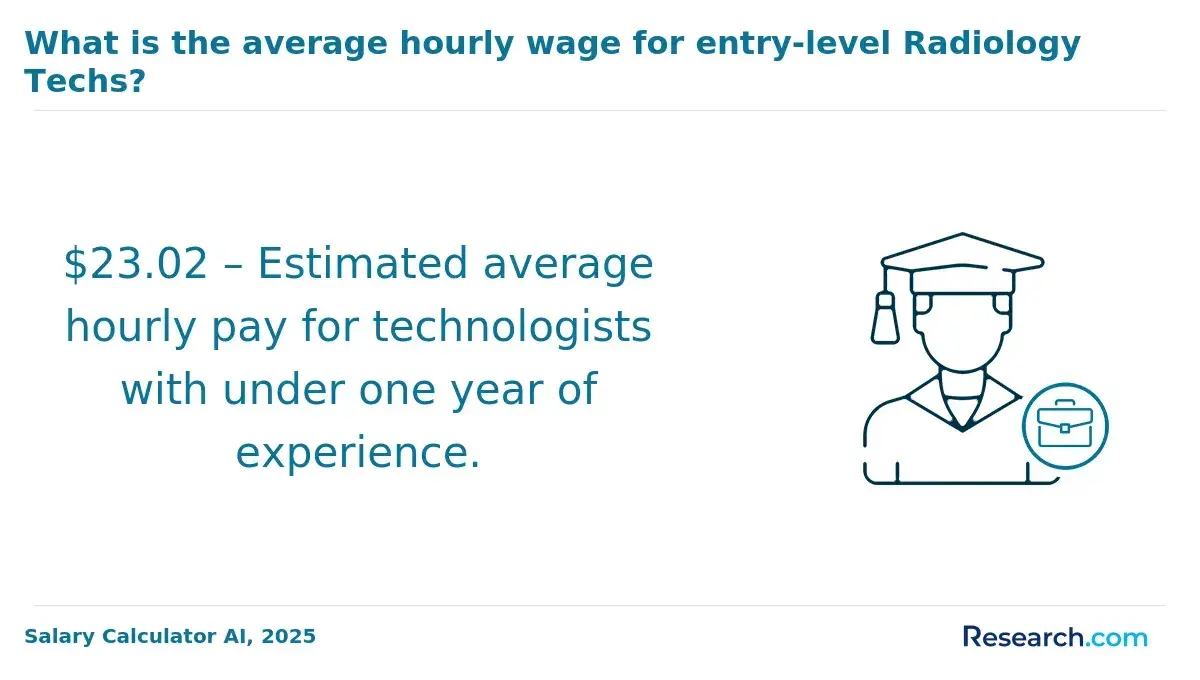
Return on investment can be strong when students choose an accredited, reasonably priced program and enter the workforce without major delays. In 2024, X-ray technicians in the US with only one to two years of experience earn an average of $77,574, while those with around six to nine years of experience earn around $90,000. The average annual salary for X-ray technicians in 2024 is $84,260.
How should you choose the right program?
The best X-ray technician program is not always the cheapest or the nearest. It is the one that prepares you for certification, aligns with state licensure rules, gives you solid clinical experience, and fits your budget and schedule.
- Accreditation: Confirm that the program is recognized by a respected accreditor such as JRCERT and that it supports ARRT eligibility.
- State licensure fit: Make sure the curriculum matches the requirements in the state where you want to work.
- Clinical placements: Ask where rotations happen, who arranges them, and whether travel is expected.
- Exam outcomes: Review certification pass rates, completion rates, and job placement data whenever the school provides them.
- Curriculum depth: Look for complete coverage of anatomy, patient care, radiation physics, positioning, image evaluation, and safety procedures.
- Faculty background: Instructors should bring real clinical experience and be available to support your academic progress.
- Total cost: Compare tuition, fees, supplies, transportation, and lost work time—not tuition alone.
- Format and pace: Choose a schedule that matches your learning style. Students comparing accelerated study options may also review guidance on getting a bachelor’s degree in two years, but radiologic technology still requires clinical hours that cannot be skipped.
In 2024, most radiologic technologists and technicians worked in general medical and surgical hospitals, where the average annual salary was around $77,950. When comparing programs, ask whether clinical affiliates include hospitals, outpatient imaging centers, urgent care clinics, or specialty practices, since those settings can shape your future opportunities.
Which specializations can X-ray technicians pursue?
Most entry-level students start with radiography, then add new credentials or experience later. Specializing can widen job options, support schedule preferences, and open doors to advancement, although requirements vary by modality and employer.
| Specialization | What it focuses on | Who may prefer it |
| Mammography | Breast imaging used to screen for and diagnose breast conditions | Technologists interested in preventive care and women’s health imaging |
| Computed Tomography (CT) | Cross-sectional imaging using CT scanners | Professionals who want advanced imaging work in hospitals or outpatient centers |
| Magnetic Resonance Imaging (MRI) | Detailed imaging of organs, tissues, and body structures using MRI equipment | Technologists interested in highly detailed imaging and specialized equipment operation |
| Fluoroscopy | Real-time imaging during procedures such as angiography and gastrointestinal exams | Technologists comfortable assisting with procedure-based imaging |
| Bone Densitometry | Bone density measurement to assess osteoporosis and fracture risk | Professionals interested in screening, aging-related care, and outpatient imaging |
| Pediatric Radiography | Imaging techniques adapted for children’s anatomy, comfort, and developmental needs | Technologists with strong communication and child-centered patient care skills |
| Emergency Radiography | Fast imaging for acute injuries and urgent conditions | Technologists who work well under pressure in emergency or trauma settings |
You do not need to choose a specialization immediately. A smarter approach is to build a strong radiography foundation, gain real clinical experience, and then pursue credentials that match your interests and the needs of employers in your area.
Where do X-ray technicians work?
X-ray technicians work wherever diagnostic imaging is needed. The setting affects your pace, schedule, patient population, and future growth options.
- Hospitals: Hospital departments often expose technologists to emergency imaging, inpatient care, surgery support, and a wide range of cases.
- Physician offices and clinics: Smaller settings often provide more predictable routines and closer coordination with providers.
- Diagnostic centers and laboratories: Imaging centers may provide X-ray services alongside CT, MRI, mammography, or ultrasound. Students comparing related fields may also explore sonography programs online.
- Urgent care centers: These sites rely on fast imaging for injuries, fractures, and acute symptoms.
- Radiology departments: Dedicated radiology units allow technologists to work closely with radiologists, nurses, and other imaging staff.
- Mobile imaging services: Mobile teams serve nursing homes, assisted living facilities, and home-based care environments.
- Educational institutions: Experienced technologists may later train students or supervise clinical education.
With experience, added credentials, or further education, X-ray technicians may move into lead technologist roles, advanced modalities, clinical instruction, department coordination, or administration. Students interested in operations and leadership may eventually compare this path with a healthcare administration career.
What are alternative routes into radiography?
Not every student enters radiography the same way. Alternative routes can make sense if you already have healthcare experience, need a more focused program, or want to test the field before committing to a longer path.
- Diploma and certificate programs: These can provide concentrated radiography training and may help qualified students reach certification eligibility sooner than a degree program.
- Online or hybrid radiologic technology programs: These may let students complete coursework remotely while still completing required clinical rotations in person.
- Healthcare-adjacent degrees: Students who begin in medical assisting, healthcare administration, or another clinical support area may later apply to radiologic technology programs with more context about healthcare settings.
Students exploring flexible study options more broadly can review easy degrees to get online that pay well, but they should not assume that a general healthcare credential will qualify them for X-ray technician licensure. Radiography requires specific clinical preparation and certification eligibility.
What is the job market like for X-ray technicians?
The job market for X-ray technicians remains supported by steady demand for diagnostic imaging in hospitals, outpatient centers, urgent care clinics, and specialty practices. From 2024 to 2034, projected job growth for radiologic technologists and technicians is expected to reach 6%, creating approximately 13,400 new jobs by 2034.
Demand is influenced by medical imaging needs, technology adoption, and an aging population that may require more diagnostic services. Competition still varies by location. Areas with many training programs may have more entry-level applicants, while regions with workforce shortages may be easier to enter.
Students can improve their job prospects by performing well in clinical rotations, preparing carefully for the ARRT exam, maintaining professionalism, and building strong references. Adding credentials in CT, mammography, or MRI can also improve mobility after gaining initial radiography experience.
How do programs support job placement and advancement?
Strong radiologic technology programs do more than teach positioning and radiation safety. They help students move into the workforce through clinical partnerships, advising, interview preparation, resume support, and local employer connections.
When comparing schools, ask about job placement support, clinical affiliates, graduate outcomes, and employer relationships. Clinical rotations matter because they let students show reliability, communication skills, and technical growth in real healthcare settings. In some cases, a clinical site can become a future employer.
Advancement usually depends on experience, extra credentials, and willingness to move into related imaging specialties. Students comparing allied imaging paths may also look at an ultrasound tech school online to better understand how sonography differs from radiography.
Is X-ray technician training worth the cost?
The value of the investment depends on total cost, time to completion, certification success, and realistic earnings in your local market. A lower-cost accredited associate program can offer strong value if it leads to certification eligibility and steady employment soon after graduation.
That said, salary averages are not guarantees. Earnings vary by region, employer type, shift, specialization, and years of experience. The average annual salary for X-ray technicians in 2024 is $84,260, while technicians with more than ten years of experience earn an average of $100,614 annually.
Students comparing healthcare credentials should also think about job scope. For example, the cost of medical billing and coding certification may be lower in some cases, but the work and earnings potential are different from diagnostic imaging.
What is work-life balance like in this career?
Work-life balance depends heavily on the setting. Hospital technologists may work evenings, weekends, holidays, on-call shifts, or fast-paced emergency cases. Outpatient clinics and physician offices often provide more predictable schedules, though the work can still be busy and physically demanding.
Many technologists find the career rewarding because it combines technology, problem-solving, and direct patient care. At the same time, the job can be physically and emotionally demanding. You may work with injured patients, anxious patients, or people who cannot move easily, and you still need to maintain accuracy, speed, and professionalism.
If you are still comparing healthcare paths, think about whether you want imaging, laboratory work, patient education, or administrative responsibilities. Students with a science background may also explore jobs you can get with a biology degree as another point of comparison.
How can you pay for X-ray technician training?
Start by calculating the full cost of attendance, not just tuition. Include fees, books, uniforms, background checks, immunizations, transportation to clinical sites, exam fees, and any reduced work hours during clinical training.
- Federal student aid: Eligible students can complete the FAFSA to see whether they qualify for grants, loans, or work-study.
- State grants: Some states offer aid for healthcare workforce training or community college students.
- Institutional scholarships: Colleges, hospitals, and foundations may provide scholarships for allied health students.
- Employer tuition support: Some healthcare employers offer tuition reimbursement for current workers moving into in-demand clinical roles.
- Payment plans: Some schools let students spread payments across the term.
- Lower-cost program selection: Public community colleges may be more affordable than private schools, especially for in-district students.
Students comparing affordability across healthcare paths may also review a cheap online public health bachelor's degree, while remembering that radiologic technology still requires hands-on clinical training.
Which professional associations matter?
Professional associations can help technologists stay current, build professional contacts, access continuing education, and track changes in standards or regulation. The American Society of Radiologic Technologists (ASRT) is one of the best-known national organizations in the field. State radiologic technology societies may also offer conferences, networking, advocacy, and local job connections.
Membership is not a substitute for certification or licensure, but it can support long-term growth. Technologists who want to move into supervision, operations, or administration may also compare educational options such as the cheapest healthcare administration degrees online.
What legal and ethical rules shape the job?
X-ray technicians work with patients, medical records, physician orders, and radiation exposure, so legal and ethical standards are central to the role. Technologists must protect confidentiality, follow HIPAA rules, verify patient identity, obtain appropriate consent, and stay within their scope of practice.
Radiation safety is also a professional responsibility. That means using shielding when appropriate, following ALARA principles, avoiding unnecessary exposure, documenting accurately, and raising concerns if an order seems unclear or unsafe. Respectful patient care matters too, especially when patients are in pain, anxious, mobility-limited, or facing language barriers.
Healthcare professionals interested in broader compliance and ethics discussions may find related context in Pharm D online programs, although pharmacy and radiologic technology have different practice requirements.
What continuing education is required?
Continuing education helps X-ray technicians stay current with changing equipment, safety standards, and patient care expectations. It is also part of ARRT certification renewal.
ARRT certification renewal
- Renewal cycle: ARRT-certified radiologic technologists renew every two years.
- Professional standards: Renewal includes continued compliance with ARRT ethical and practice requirements.
- Fees: A renewal fee is generally required to keep certification active.
Continuing education credits
- Required credits: ARRT requires 24 continuing education credits every two years.
- Approved formats: Credits may come from workshops, seminars, online courses, academic classes, or other approved learning experiences related to radiologic technology.
- Career value: Continuing education can help technologists prepare for new equipment, changing workflows, and specialization.
State-specific renewal rules
- Licensure differences: Some states require their own renewal steps, fees, or continuing education.
- Verification: Technologists should always check the state licensing board before assuming ARRT renewal alone is enough.
Are there faster certification-related options?
Students who want a faster way into healthcare may look at medical certificate programs. Some short programs can lead to support roles faster than radiologic technology training, but not every quick certificate qualifies someone to become an X-ray technician.
For radiography, the program still has to include the correct academic preparation, clinical training, and certification eligibility. Be cautious with programs that promise fast entry without accredited clinical education. Before enrolling, verify ARRT eligibility, state licensing alignment, and the quality of the clinical sites.
Shorter healthcare certificates can still be useful if you want to start working sooner, gain patient care experience, or decide whether clinical work is right for you before committing to radiologic technology.
What similar healthcare careers should you compare?
X-ray technician is one of several allied health paths that combine hands-on patient care with technical skills. If you want a focused program and direct contact with patients, you may also want to compare respiratory care, surgical technology, sonography, medical laboratory technology, and dialysis technology.
For instance, students interested in equipment-based patient care can research how to become a dialysis technician. Dialysis technicians help operate equipment used in kidney failure treatment, while X-ray technicians create diagnostic images. Comparing daily tasks, stress level, licensure, and advancement opportunities can help you decide which role fits you better.
What trends are changing X-ray technology?
X-ray technology is shifting as imaging systems become faster, more digital, and more connected to broader healthcare data systems. These changes do not replace technologists. They increase the value of workers who can position patients correctly, operate equipment safely, and produce accurate images.
- Digital Radiography (DR): Digital detectors are replacing film in many settings, which can speed up processing and improve image workflow.
- Artificial Intelligence (AI) Integration: AI tools are being used to support image analysis, workflow prioritization, and abnormality detection, but technologists and radiologists still make the clinical decisions.
- Portable X-ray Systems: Improved portable equipment supports bedside imaging in hospitals, emergency departments, and care settings for patients with limited mobility.
- 3D X-ray Imaging: Techniques such as cone-beam computed tomography (CBCT) are being used for more detailed views in selected clinical settings.
- Low-Dose X-ray Techniques: Dose modulation and software tools help lower radiation exposure while protecting diagnostic quality.
- Hybrid Imaging Systems: Combining X-ray with other imaging methods can provide more complete diagnostic information in complex cases.
Can you become an X-ray technician with an associate degree?
Yes. An associate degree in radiologic technology is the most common route into entry-level X-ray technician work. Students searching for the easiest associate degree to get should know that radiologic technology is not usually considered easy because it combines science coursework, patient care, clinical rotations, and safety responsibilities. Still, it is a direct and efficient path into healthcare.
- Associate Degree in Radiologic Technology: This is the most common route and usually combines classroom learning with supervised clinical practice.
- Online or hybrid radiologic technology programs: These offer flexibility for academic courses, but in-person clinical training is still required.
- General healthcare associate degrees: These can build healthcare exposure, but they usually do not replace a radiologic technology program for licensure.
- Post-degree certifications: After radiography training, technologists may pursue additional credentials in CT, MRI, mammography, or other areas.
Common Mistakes to Avoid Before Enrolling
- Skipping accreditation checks: Accreditation affects certification eligibility, licensure, and employer trust.
- Assuming online means fully remote: Radiography still requires in-person labs and clinical rotations.
- Looking only at tuition: Fees, transportation, uniforms, clinical costs, and lost income can change the real price.
- Ignoring state licensing rules: A program may work in one state and fall short in another.
- Trusting marketing more than outcomes: Ask for exam pass rates, job placement data, and clinical site details.
- Expecting salary averages to happen immediately: Pay depends on location, employer, experience, schedule, and specialization.
- Underestimating patient care: Communication and empathy are just as important as technical skill.
Questions to Ask X-ray Technician Programs
- Is the program accredited, and by whom?
- Will graduates be eligible to take the ARRT certification exam?
- Does the curriculum meet licensure requirements in the state where I want to work?
- Where are clinical rotations located, and who arranges them?
- What are the completion, certification pass, and job placement outcomes?
- What is the total cost, including fees, supplies, uniforms, background checks, and clinical expenses?
- Can I keep working while enrolled, or are clinical hours during standard workdays?
- What support is available if I struggle with anatomy, physics, or positioning?
- Do graduates find jobs in hospitals, outpatient centers, urgent care clinics, or specialty settings?
- Are there pathways into CT, MRI, mammography, education, or leadership after graduation?
References
- Salary Calculator AI. (2025). Radiology Tech Salary Guide. https://salary-calculator.ai/blog/radiology-tech-salary-guide
- U.S. Bureau of Labor Statistics. (2025). Occupational Outlook Handbook: Healthcare. https://www.bls.gov/ooh/healthcare/
- U.S. Bureau of Labor Statistics. (2025). Radiologic and MRI Technologists. Occupational Outlook Handbook. https://www.bls.gov/ooh/healthcare/radiologic-technologists.htm
Key Insights
- The most common path into X-ray technology is an accredited associate degree in radiologic technology, followed by ARRT certification and any required state licensure.
- Online and hybrid programs can work, but only when they include approved in-person clinical training and meet certification and licensing requirements.
- Most students should expect about two to three years from starting school to being ready for entry-level practice.
- Program prices range widely, from $2,000 to $5,000 for some certificate options to $30,000 to $50,000 for some bachelor’s programs, before added expenses.
- Job and salary outcomes can be attractive, but they depend on location, employer type, experience, specialization, and certification status.
- Hospitals employ many radiologic technologists, while outpatient care centers are among the higher-paying settings in the salary data cited here.
- The safest school choice is one with recognized accreditation, strong clinical placements, transparent outcomes, and clear ARRT eligibility.
- Specializations such as CT, MRI, mammography, and bone densitometry can help expand career options after a solid radiography foundation.
Other Things You Should Know About How to Become an X-ray Technician
In 2027, aspiring X-ray technicians typically need to complete an accredited radiologic technology program and pass the American Registry of Radiologic Technologists (ARRT) certification exam. Additionally, state licensure may be required, as requirements can vary. Continuing education is often necessary to maintain certification.
In many states, yes. Licensing rules are set by each state’s health department or radiologic technology board, and some states require passing the ARRT certification exam before issuing a license. States such as California and Florida have separate licensing rules and renewal requirements.


