2027 How To Get a Bachelor’s Degree in 2 Years: Pros & Cons You Should Know

Co-Founder and Chief Data Scientist
A bachelor’s degree usually takes four years of full-time study, but some students can finish much faster. The real question is not only “Can you get a bachelor’s degree in two years?” but “Can you do it without choosing the wrong program, overloading yourself, or weakening your career preparation?”
For working adults, transfer students, military learners, and students with prior college credit, a two-year bachelor’s degree can be a realistic route. For first-time college students with no credits, it is much harder. The timeline depends on how many credits you already have, whether the school accepts transfer or prior learning credit, how many courses you can take each term, and whether the program is properly accredited.
Cost is a major reason students look for faster options. According to the latest data from the National Center for Education Statistics (2024), graduation rates increased by nearly 3% yearly leading into the decade, yet the degree completion rate of this year’s freshmen might only be 1-in-3 four years from now. The average cost of college in the U.S. remains a major concern, so reducing time in school can be attractive. Still, a shorter timeline only helps if the program is affordable, legitimate, manageable, and aligned with your career goals.
This guide explains how a two-year bachelor’s degree can work, who it is best for, what options to compare, how to check accreditation, which trade-offs matter, and how to avoid costly mistakes before enrolling.
How to Complete a Bachelor’s Degree in Two Years Table of Contents
- Can you get a Bachelor’s Degree in 2 years?
- How to Complete a Bachelor’s Degree in Two Years
- How Can You Verify the Quality and Accreditation of an Accelerated Program?
- What factors should you consider when choosing an accelerated bachelor's degree program?
- Popular Business Degrees That Can Be Completed in Two Years
- Can supplementary certifications boost career outcomes alongside an accelerated degree?
- Are Accelerated Bachelor’s Degrees Recognized by Employers?
- What is the Long-Term ROI of an Accelerated Bachelor's Degree?
- What are the admission requirements for an accelerated bachelor’s degree program?
- Real-Life Success Stories of Students Graduating in Two Years
- The Pros and Cons of Finishing a Bachelor’s Degree in Two Years
- What are the challenges of maintaining work-life balance during an accelerated degree program?
- What effective strategies can boost success in an accelerated program?
Quick Answer: Can you get a Bachelor’s Degree in 2 years?
Yes, you can complete a bachelor’s degree in two years, but it is usually possible only when you bring in substantial credits or enroll in a highly structured accelerated program. Students with an associate degree, previous college coursework, AP or IB credits, military training, professional certifications, or eligible work experience have the strongest chance of finishing within two years.
A first-time student starting with zero college credits may find a true two-year bachelor’s degree difficult because most bachelor’s programs require a large number of credits across general education, major courses, electives, and residency requirements. Before committing, review how many credits the school will accept, how many credits must be completed at that institution, and whether the academic pace is sustainable.
If you need a primer on the credential itself, Research.com’s guide to what a Bachelor’s degree means explains the standard structure and purpose of undergraduate education.
| Student situation | Two-year bachelor’s degree likelihood | Why it may or may not work |
| Associate degree holder | High, if credits transfer cleanly | Many lower-division requirements may already be complete. |
| Adult learner with previous college credits | Moderate to high | The outcome depends on transfer credit limits, course equivalencies, and program fit. |
| Military or professional learner | Moderate | Training and experience may qualify for credit through approved evaluation processes. |
| High school graduate with AP or IB credit | Possible but demanding | Advanced credits help, but the student may still need heavy course loads and summer terms. |
| First-time college student with no credits | Low | Completing all requirements in two years often requires an unusually intense schedule. |
Why students try to finish a bachelor’s degree faster
Students pursue accelerated bachelor’s degrees for different reasons. The best reason is not simply speed; it is reaching a clear academic or career goal with fewer unnecessary delays.
- Lower total cost: In 2024, a survey by BestColleges found that students were most concerned about cost when choosing a college. Spending fewer years enrolled may reduce housing, transportation, campus fees, and other indirect expenses, although tuition policies still vary by school.
- Earlier entry into the workforce: Finishing sooner may help students start full-time work earlier. Bachelor’s degree holders make a median of $1,173 weekly. (Torpey, 2018b)
- Faster path to graduate school: Students who plan to earn a master’s degree may want to complete their undergraduate credential quickly. Master’s degree holders earn roughly $300 more weekly than bachelor’s degree holders. (Torpey, 2018b)
- Career mobility for adult learners: Some learners return to school because a promotion, career change, or employer requirement depends on completing a bachelor’s degree. Those aged 25-44 increasingly report that achieving financial stability and providing long-term security for their families are the primary drivers for pursuing postsecondary credentials. (National Student Clearinghouse, 2024)
The important caution is that faster is not always better. A two-year timeline can be valuable when it reduces wasted credits and unnecessary costs, but risky when it forces students into poor academic planning, unmanageable workloads, or programs that lack proper recognition.
Before You Choose a Two-Year Bachelor’s Degree, Check These Factors
Adult learners are a major audience for accelerated and degree-completion programs. Demographic shifts are encouraging colleges and universities to create more adult-friendly policies, and adult learners aged 25 and older now account for approximately 32% of total undergraduate enrollment in the United States. (National Center for Education Statistics, 2024)
Before assuming you can graduate in two years, review the academic and personal conditions that affect your timeline.
- Existing credits: Students with previous college credits, AP units, IB credits, or an associate degree are better positioned to shorten the path.
- Transfer rules: Two schools may evaluate the same transcript differently. Some credits may apply directly to the major, while others may count only as electives.
- Military, workforce, or professional training: Some colleges award credit for evaluated military training, licenses, employer training, or professional experience.
- Testing options: Certain institutions let students demonstrate knowledge through approved exams and skip selected lower-level courses.
- Residency requirements: Many schools require students to complete a minimum number of credits through that institution, even if they transfer in many credits.
- Personal capacity: Accelerated terms, year-round study, and heavy course loads require consistent time, energy, and support.
How to Complete a Bachelor’s Degree in Two Years
There is no single way to earn a bachelor’s degree in two years. Most successful students combine several strategies: transfer credits, online or evening courses, summer enrollment, prior learning assessment, and a carefully selected accelerated program.
Distance learning can make the schedule more workable for adults who are employed or caring for family members. In the past 7 years, approximately 3.45 million college students were enrolled exclusively in distance education courses, and 3.86 million students took at least one distance education course. Online study is now one of the most common ways students try to compress their completion timeline, especially when courses are offered in multiple start dates throughout the year.
Bachelor Degree Completion Programs
A bachelor’s degree completion program is designed for students who have already finished a significant portion of undergraduate coursework and want to complete the remaining requirements. The North Central Association’s Higher Learning Commission Task Force on Adult Degree-Completion Programs defines an adult degree completion program as one designed for working adults who have earned 60 or more college credit hours and are returning to finish a baccalaureate degree.
These programs may use shorter terms, evening classes, weekend formats, online delivery, cohort models, and credit for prior learning. Some institutions also credit prior learning experiences equal to approximately 25% of the bachelor’s degree credit total.
This route usually makes the most sense for students who already completed part of a degree, stopped out, and now want to finish. To evaluate your likely timeline, send official transcripts to the school and request a formal transfer credit evaluation before enrolling.
Transfer Credits
Transfer credit is often the deciding factor in whether a two-year bachelor’s degree is realistic. Students who completed an associate degree at a community college may be able to transfer credits from their associate’s degree into a bachelor’s program, especially when the schools have articulation agreements.
However, transfer is not automatic. Credits can be rejected, applied as electives, or fail to satisfy major prerequisites. Students should ask for a written degree plan showing exactly which courses remain.
College coursework is not the only possible source of credit. Prior Learning Assessment evaluates college-level learning gained outside a traditional classroom. Eligible learning may come from employment, military training, independent study, non-credit training, volunteer work, community service, professional development, or non-college seminars.
The Council for Adult and Experiential Learning (CAEL) identifies several common ways colleges evaluate prior learning for credit:
- Work experience
- Professional training
- Military training
- Open-source learning from the web and other independent studies
- ACE and National College Credit Recommendation Services
- Standardized exams, including CLEP exams through the College Board, DSST military exams through Prometric, and UExcel exams through Excelsior College
- Challenge or departmental exams
- Institutional review of external training, licenses, or certifications
- Advanced Placement and International Baccalaureate exams
Some colleges require a portfolio to document learning. Others use exams, faculty review, or approved third-party credit recommendations. Always ask whether prior learning credit will count toward general education, electives, major requirements, or only total credit hours.
College Courses During High School
High school students can shorten a future bachelor’s timeline by earning college-level credit before enrolling in college full time. AP courses are one option. The College Board created AP classes to give high school students access to college-level work, and students must pass an AP exam at the end of the year to be considered for college credit.
Students who earn qualifying AP exam scores may enter college with credits already completed. This can allow them to bypass some introductory courses, begin advanced coursework earlier, or reduce the total number of terms needed to graduate.
Accelerated Degrees
Accelerated degree programs compress the academic calendar so students can finish more quickly than in a traditional four-year format. These programs may use shorter sessions, year-round enrollment, more frequent start dates, and intensive coursework.
In a strong accelerated program, students should still complete the required learning outcomes. The difference is the pace. Assignments, exams, readings, and projects arrive faster, and students have less recovery time between courses.
Some accelerated options focus only on the bachelor’s degree. Others combine undergraduate and graduate coursework so students can move more quickly into advanced study. Students can also choose between campus-based, hybrid, and online formats.
Approximately 26% of online students select their programs to expedite their degree completion, while 21% prioritize the availability of accelerated courses that allow for faster graduation. (Statista, 2024)
Session length matters. Some accelerated courses run five to eight weeks, and the number of sessions available each year affects total completion time.
Maximizing Credits Each Year
Another way to graduate sooner is to take more credits per year. Students may do this through summer classes, winter sessions, evening courses, or heavier fall and spring loads.
This approach requires caution. Summer courses compress the same academic expectations into a shorter period. As Omelicheva notes in a study that appeared in the Journal of Political Science Education, “Since summer sessions are much shorter than regular semesters, both instructors and students are required to teach and learn more in a short period of time and, therefore, need to cope with the intensity of summer modules."
The same study, “Fab! or Drab?: Increasing the Effectiveness of Teaching and Learning in Summer Classes," also noted that “for many students, summers are the time for earning income to pay for the school and living expenses during the academic year." Students who rely on summer income may find year-round enrollment financially and personally difficult.
Night classes can help students add credits, but they can also create fatigue for students who work during the day. Most colleges cap students at 15, 18, or 20 credits per term, depending on whether the institution uses a quarter or semester system. Some schools approve overloads, but extra credits may come with extra charges.
| Acceleration method | Best for | Main risk to check |
| Degree completion program | Adults with many prior credits | Credits may not apply to the chosen major. |
| Transfer from community college | Associate degree holders | Not all credits may transfer as expected. |
| Prior Learning Assessment | Students with military, career, or professional training | Credit may be limited or may count only as electives. |
| AP or IB credit | High school students planning early | Schools set their own score and credit policies. |
| Accelerated online program | Self-directed learners who need flexibility | The workload can be intense and isolating. |
| Credit overload and summer terms | Students with strong academic habits and open schedules | Burnout, higher fees, and less time for internships. |
How Can You Verify the Quality and Accreditation of an Accelerated Program?
Accreditation is one of the first things to confirm before enrolling in any accelerated bachelor’s program. An accelerated timeline is useful only if the degree is recognized by employers, graduate schools, licensing boards when relevant, and financial aid systems.
Start by confirming institutional accreditation through official sources rather than relying only on marketing language. Then check whether the specific program has programmatic accreditation if the field commonly requires it. This is especially important in career areas tied to licensure, certification, or regulated professional practice.
Quality checks should also include faculty qualifications, course sequencing, student support, graduation expectations, transfer policies, and career outcomes. A program that seems easy may not be the right program if it lacks rigor or recognition. Students comparing workload levels may also find Research.com’s discussion of what is the easiest degree to get useful, but ease should never replace accreditation and academic fit.
Questions to ask before enrolling
- Is the institution accredited by a recognized accrediting body?
- Does my intended major require programmatic accreditation?
- How many of my credits will transfer, and how will they apply?
- How many credits must I complete at this school?
- Are courses offered often enough to finish in two years?
- What happens if I need to slow down or stop out temporarily?
- Will this program meet admission requirements for graduate school or licensure, if I need either later?
What factors should you consider when choosing an accelerated bachelor's degree program?
The right accelerated program is not always the shortest one. It is the program that accepts the most applicable credits, offers the courses you need on a reliable schedule, fits your weekly availability, and leads to a credential that supports your next step.
| Selection factor | What to look for | Why it matters |
| Accreditation | Recognized institutional accreditation and relevant programmatic accreditation | Supports employer recognition, transferability, financial aid access, and graduate school options. |
| Transfer evaluation | A written credit review before enrollment | Prevents surprises after you commit tuition money. |
| Course schedule | Frequent starts and predictable course rotations | A missing required course can delay graduation. |
| Format | Online, hybrid, evening, weekend, or campus options | The delivery model must match your work and family responsibilities. |
| Total cost | Tuition, fees, books, technology costs, overload charges, and living expenses | The cheapest tuition rate may not equal the lowest total cost. |
| Academic support | Advising, tutoring, library access, writing support, and career services | Accelerated students need fast help when problems arise. |
| Future education | Graduate school prerequisites and admissions compatibility | Students planning advanced study, including an online PhD, should avoid programs that limit future options. |
Popular Business Degrees That Can Be Completed in Two Years
Business-related majors are common in accelerated and degree-completion formats because many requirements can be delivered online, and adult learners often bring relevant workplace experience. A two-year timeline is most realistic for students with transfer credits or prior learning credit.
Business Administration Degree
A business administration degree gives students a broad foundation in how organizations operate. Coursework often covers finance, marketing, human resources, operations, leadership, and strategic decision-making. In an accelerated format, students may complete the same general subject areas through shorter terms, intensive courses, or year-round enrollment.
This major can be a practical choice for students who want flexibility because it applies to many industries. It may be especially useful for learners who already have work experience and want a bachelor’s credential to qualify for management, operations, sales, or administrative roles.
Entrepreneurship Degree
An entrepreneurship degree focuses on starting, evaluating, and managing new ventures. Students commonly study business fundamentals, marketing, accounting, opportunity analysis, business planning, and venture strategy.
Students with substantial transfer credits may be able to finish this degree on an accelerated schedule. It can fit learners who want to launch a business, support a family business, work in startup environments, or build practical business planning skills.
Nonprofit Management Degree
A nonprofit management degree prepares students to work with organizations focused on social, charitable, community, or advocacy missions rather than profit generation. Coursework may include fundraising, grant writing, program evaluation, volunteer coordination, governance, and nonprofit leadership.
Finishing in two years may be possible in an intensive or accelerated program, particularly for students who already hold transferable credits. This path may suit learners interested in community organizations, foundations, advocacy groups, and service-focused administration.
Organizational Leadership Degree
An organizational leadership degree emphasizes leading people, managing teams, communicating effectively, and understanding workplace behavior. Programs often draw from business, psychology, communication, and organizational studies.
This degree can be completed faster when students transfer credits, enroll full time, or take accelerated courses. It may be a strong fit for working adults who already supervise teams or want to move into leadership roles without choosing a highly technical major.
Healthcare Administration Degree
A healthcare administration degree prepares students for nonclinical leadership and management roles in healthcare settings. Students may study healthcare policy, finance, human resources, health information systems, ethics, and organizational operations.
A two-year completion plan is more likely when the program offers shorter terms, online or hybrid courses, and year-round scheduling. Students should pay close attention to field expectations, because some healthcare roles may require specific experience, graduate education, or additional credentials.
Can supplementary certifications boost career outcomes alongside an accelerated degree?
Certifications can strengthen an accelerated bachelor’s degree when they add job-specific skills that the degree does not fully cover. This is especially useful in fields where employers look for software proficiency, project management ability, data skills, healthcare administration knowledge, human resources training, or industry-specific compliance knowledge.
A certification should not be used to compensate for a weak or unaccredited degree. Instead, it should complement a legitimate academic program. The best certifications are relevant to the target role, recognized by employers in the field, and timed so they do not overload the student’s schedule. Research.com’s guide to the best certifications for jobs can help students compare credential options that may pair well with an undergraduate degree.
Are Accelerated Bachelor’s Degrees Recognized by Employers?
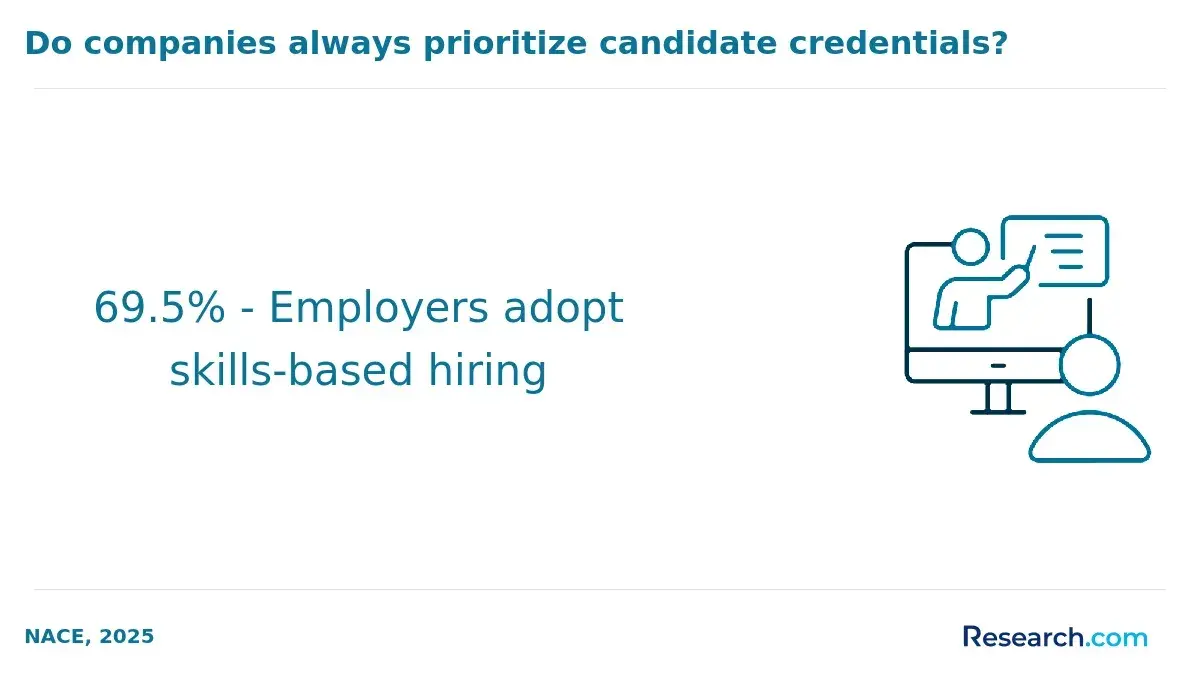
Employers generally care more about whether the institution is accredited, whether the degree matches the role, and whether the candidate can demonstrate relevant skills than whether the degree was completed through an accelerated calendar. A legitimate accelerated bachelor’s degree from an accredited school is still a bachelor’s degree.
That said, recognition can vary by employer, industry, and role. A well-known accredited university, a clear major, strong internships or projects, and relevant work experience can make an accelerated graduate more competitive. A vague program from a poorly understood institution may raise questions, even if it was fast.
Students comparing lower-pressure options can review Research.com’s guide to the easiest BS degree, but the better question is whether the program is credible, transferable, and useful for the career you want.
What is the Long-Term ROI of an Accelerated Bachelor's Degree?
The return on investment of an accelerated bachelor’s degree depends on total cost, debt, time to completion, career outcomes, and the value of entering the workforce earlier. A faster program may reduce living expenses and opportunity costs, but it can also create financial strain if it requires heavy course loads, limits paid work, or includes overload fees.
When evaluating ROI, compare the full cost of the accelerated path with a slower path. Include tuition, mandatory fees, books, technology, commuting, childcare, housing, lost income, and loan repayment timing. Also consider whether the degree supports a realistic job target. A faster degree that does not improve employability may not provide a strong return.
Students who need to reduce upfront costs should compare affordable options carefully. Research.com’s resource on the cheapest online college can help working adults start that comparison, but affordability should be weighed alongside accreditation, transfer credit, and student support.
What are the admission requirements for an accelerated bachelor’s degree program?
Admission requirements vary by institution and program type. Degree-completion programs often expect applicants to bring previous college credit, while accelerated first-time bachelor’s programs may focus on academic readiness and schedule capacity.
Common requirements include official transcripts, proof of completed college-level coursework, transfer credit evaluation, application materials, and sometimes standardized test results when available. Programs that award credit for prior learning may request documentation of professional training, military experience, licenses, certifications, or work-based learning.
Students applying to multiple schools can reduce application costs by comparing schools with no application fee. However, no application fee should never be the main reason to choose a school. The more important questions are whether your credits apply, whether the program is accredited, and whether the course schedule supports your timeline.
Examples of Students Who May Finish in Two Years
Two-year bachelor’s degree paths vary widely. The following examples show common scenarios rather than guaranteed outcomes. Students in accelerated undergraduate programs, transfer pathways, or even later graduate options such as the top online msw programs should always verify credit policies, workload, and professional requirements before enrolling.
- Working parent with prior credits: A student who previously completed about half of a bachelor’s degree may return through an online degree-completion program, use evening or weekend study time, and finish remaining requirements in an accelerated sequence.
- Recent high school graduate with AP credits: A student who enters college with AP credit may combine full-time enrollment, summer terms, and careful advising to shorten the degree timeline.
- Community college transfer student: A student who completes an associate degree and transfers into a well-aligned bachelor’s program may need only upper-division major courses and remaining institutional requirements.
- Healthcare or business professional: A working adult may use transfer credit, prior learning assessment, and job-related experience to move quickly through a healthcare administration, business, or organizational leadership program.
The common pattern is planning. Students who finish quickly usually know exactly which credits count, which courses remain, when those courses are offered, and how much time they can realistically commit each week.
The Pros and Cons of Finishing a Bachelor’s Degree in Two Years
A two-year bachelor’s degree can be a smart decision for some students and a poor fit for others. The benefits are strongest when the student already has credits, can manage the pace, and chooses a credible program. The risks increase when students overload credits without support, ignore internship opportunities, or choose a program based only on speed.
| Potential benefit | Why it matters | What to verify first |
| Lower total attendance time | Fewer terms may reduce living and indirect education costs. | Check whether accelerated tuition, fees, or overload charges reduce the savings. |
| Earlier workforce entry | Graduates may begin full-time work sooner. | Confirm that the degree aligns with available roles and employer expectations. |
| Faster graduate school path | Students can move toward advanced credentials sooner. | Make sure the undergraduate program satisfies graduate prerequisites. |
| Less time away from career goals | Working adults may qualify for promotion or career change faster. | Ask whether the school offers flexible scheduling and career support. |
Pro: You may reduce education costs
The average cost of college in the U.S. continues to pressure students and families. The average publicized (sticker) tuition and fees for full-time undergraduate students for the 2024-25 academic year were $11,260 in-state, $29,150 out-of-state, and $3,990 in-district, representing 1.0%-2.5% increases from the previous year before inflation. The average publicized (sticker) tuition for private nonprofit four-year was $41,540, a 3.9% increase. (Ma & Pender, 2024)
Borrowers owe a record $1.75 trillion in student loan debt in 2024. The typical class of 2024 borrower owes $38,290. (U.S. Department of Education, 2024)
Graduating earlier may reduce housing, transportation, and fee-related costs. It may also allow students to begin earning sooner. But the savings are not automatic. Students should calculate the full program cost, including accelerated-course fees and credit overload charges.
Pro: You can move into your career sooner
Students who finish earlier may apply for full-time roles sooner than classmates on a four-year schedule. Working adults may also become eligible for internal promotions if their employer requires a completed bachelor’s degree for certain management or professional positions.
Students planning graduate school may also benefit from an earlier start. Education requirements can change by profession. For example, in 201516, approximately 39% of all occupational therapists aged 25 and older had a bachelor’s degree. Occupational therapists today typically require a master’s degree from an accredited program. As a result, the BLS states that occupational therapists typically require a master’s degree. (Torpey, 2018a)
Pro: You may start saving earlier
Graduates who enter stable employment sooner may have more time to build savings. Students considering the best online bachelor degree programs often weigh this benefit because online and accelerated formats can reduce time away from work.
A recent Charles Schwab survey of 1,000 401(k) plan participants found that Americans believe they need $1.8 million to retire. (Schwab, 2024) But many miss this mark.
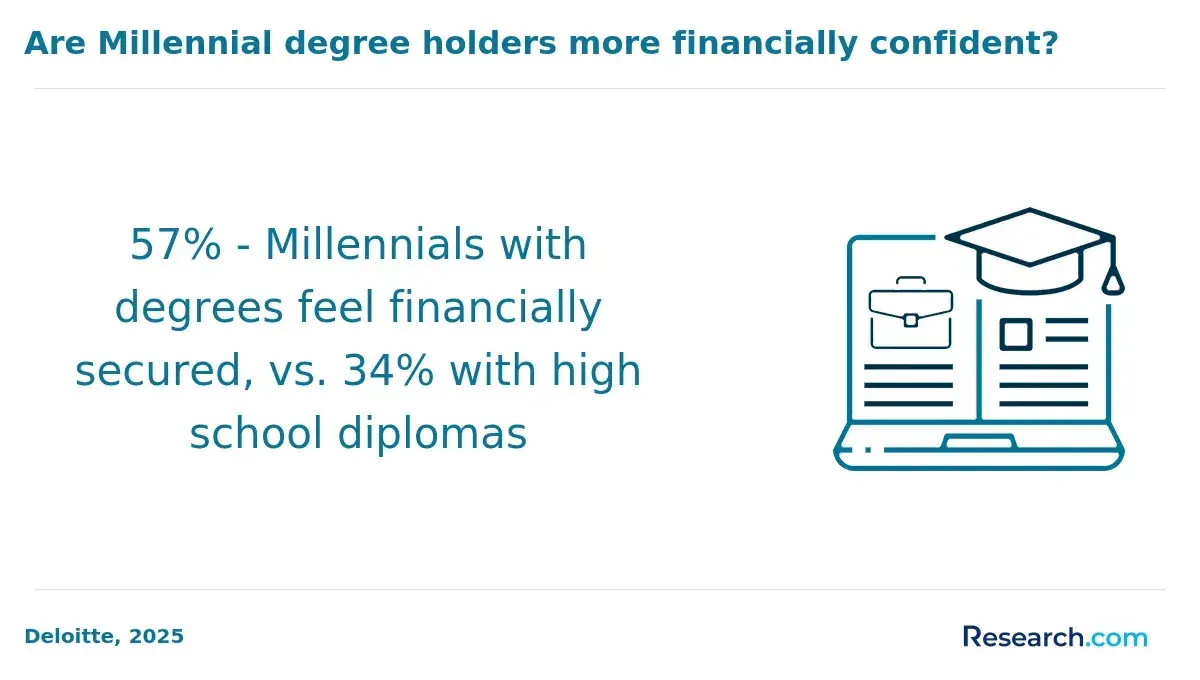
Bachelor’s degree holders tend to earn $300 more than associate degree holders and $400 more than high school graduates with no college or some college. (Torpey, 2018b) People in their 20s who save 10% to 15% of their annual salary could retire comfortably. Those starting at 45 or older would need to save up to 40% of their annual salary. (Fidelity Investments, 2024)
Con: You may miss parts of the traditional college experience
Accelerated students often have less time for clubs, campus leadership, study abroad, peer relationships, and informal networking. These experiences can help students build confidence, communication skills, leadership habits, and professional contacts.
This trade-off may matter less for working adults who already have networks and job experience. It may matter more for younger students who are still exploring career interests and building professional identity.
Con: You may have fewer internship opportunities
Internships can help students test career paths, build work samples, meet mentors, and connect with employers. They are especially important in fields where employers hire from internship pipelines. Resources such as Indeed’s overview of the benefits of internships explain why practical experience can matter for employment.
A compressed schedule may leave little room for internships, research, part-time fieldwork, or portfolio development. Students should ask whether the accelerated program includes practical projects, internship options, or career services that fit the shorter timeline.
Con: The financial pressure may arrive sooner
Finishing early can reduce costs, but it can also move repayment and job-search pressure forward. Some students graduate quickly and then face loan repayment before they have secured stable income. Research.com’s guide to the student loan repayment timeline can help borrowers understand how repayment may affect post-graduation planning.
Students should also confirm whether taking extra credits triggers additional tuition charges. A plan that looks cheaper on paper may become expensive if overload fees, repeated courses, or lost work income are not included.
What are the challenges of maintaining work-life balance during an accelerated degree program?
The biggest challenge in a two-year bachelor’s plan is not intelligence; it is capacity. Accelerated programs require sustained attention across months of compressed deadlines, frequent exams, and overlapping responsibilities.
- Heavy academic pace: Students may take more courses per term or complete courses in shorter sessions, leaving less time to absorb material.
- Reduced personal time: Family commitments, friendships, exercise, rest, and hobbies may shrink during the program.
- Work conflicts: Students with part-time or full-time jobs may struggle when exams, group projects, and work deadlines collide.
- Mental and physical strain: Sleep loss, stress, anxiety, and burnout become more likely when students do not build recovery time into the schedule.
- Limited career exploration: A packed academic calendar can crowd out internships, extracurricular activities, volunteering, and networking.
What effective strategies can boost success in an accelerated program?
Students succeed in accelerated programs when they treat the degree as a structured project, not just a set of classes. Planning must happen before enrollment and continue each term.
- Get a written degree map: Ask the school to show every remaining requirement, including course numbers, prerequisites, and expected term availability.
- Protect weekly study blocks: Accelerated courses move quickly, so waiting until weekends or deadline nights can create avoidable stress.
- Use advising early: Meet with an advisor before registration each term to prevent sequencing mistakes.
- Limit unnecessary course overloads: More credits can speed completion, but failed or withdrawn courses can erase the time savings.
- Use tutoring and writing support: In shorter sessions, getting help early can prevent one difficult assignment from damaging the whole course.
- Plan finances by term: Confirm tuition, fees, books, aid disbursement, and loan repayment expectations before each enrollment period.
- Build career evidence while studying: Save projects, complete certifications when useful, and seek practical assignments that can support a resume.
Students who expect to continue beyond the bachelor’s degree can also compare graduate pathways such as a 6-month master's degree online accredited, but they should avoid rushing into graduate study without evaluating cost, accreditation, and career value.
Common Mistakes to Avoid
| Mistake | Why it can hurt you | Better approach |
| Choosing the fastest program without checking accreditation | The degree may not be recognized by employers, graduate schools, or licensing bodies. | Verify accreditation before applying. |
| Assuming all credits will transfer | Credits may be rejected or counted only as electives. | Request a formal transfer evaluation in writing. |
| Looking only at tuition | Fees, books, technology costs, overload charges, and lost income can change the real cost. | Calculate total cost of attendance and cash flow by term. |
| Ignoring course availability | A required course offered once a year can delay graduation. | Ask for the full course rotation and graduation plan. |
| Taking too many credits at once | Burnout, low grades, and withdrawals can slow progress. | Increase course load gradually if you are unsure. |
| Skipping internships or projects completely | A degree alone may not demonstrate job readiness. | Build experience through projects, certifications, internships, or relevant work. |
| Assuming salary outcomes are guaranteed | Earnings vary by field, location, experience, employer, and economy. | Research target roles and compare outcomes carefully. |
Is finishing a bachelor’s degree in 2 years a wise choice?
A two-year bachelor’s degree can be wise when the student already has applicable credits, the school is accredited, the total cost is reasonable, and the schedule is realistic. It is less wise when the student is starting from zero credits, needs extensive career exploration, cannot reduce work hours, or is considering a program mainly because it promises speed.
Students who want a faster route should compare online accelerated degree programs, degree-completion programs, transfer-friendly schools, and prior learning assessment options. They should also take time to explore careers before choosing a major, because graduating quickly in the wrong field can be an expensive detour.
The safest approach is to build a plan before enrolling: confirm credits, calculate cost, map courses, check accreditation, and decide how much intensity you can handle. If the two-year pace becomes unsustainable, slowing down is not failure. A completed, credible bachelor’s degree is more valuable than a rushed plan that leads to burnout or unnecessary debt.
Key Insights
- A two-year bachelor’s degree is possible, but not automatic. It usually depends on transfer credits, prior learning credit, AP or IB credit, military training, or an accelerated degree-completion format.
- Accreditation matters more than speed. A fast degree from a weak or unrecognized program can limit employment, transfer, graduate school, or licensure options.
- Transfer credit is the main shortcut. Students should request a written evaluation showing exactly how previous credits apply to the degree.
- The lowest tuition is not always the lowest cost. Compare fees, overload charges, books, technology, living expenses, and lost income.
- Accelerated programs require strong time management. Shorter terms and heavier course loads can work, but they leave less room for employment, family obligations, internships, and recovery time.
- Career preparation should not disappear. Students should still build experience through projects, internships, certifications, or relevant work while completing the degree.
- The best choice depends on your starting point. A working adult with 60 credits may be an excellent candidate for a two-year completion plan; a first-time student with no credits may be better served by a longer but more balanced route.
References:
- Deloitte. (2025). 2025 Gen Z and Millennial Survey: Growth and the pursuit of money, meaning, and well-being. https://www.deloitte.com/content/dam/assets-shared/docs/campaigns/2025/2025-genz-millennial-survey.pdf
- Education Dynamics. (2025). Engaging the Modern Learner: Preferences & Behaviors Shaping Higher Ed. https://insights.educationdynamics.com/modern-learner-report-2025.html
- Gatta, M., Kahn, J., Koncz, A. J., Galbraith, A., Patil, S., & Longenberger, A. (2025, November). 2026 Job Outlook. National Association of Colleges and Employers. https://www.naceweb.org/research/reports/job-outlook/2026
- Gulish, A., Morris, C., Cheah, B., & Strohl, J. (2024). Graduate Degrees: Risky and Unequal Paths to the Top. Georgetown University Center on Education and the Workforce. https://cew.georgetown.edu/cew-reports/graduatedegrees
- U.S. Bureau of Labor Statistics. (2025, August 28). Fastest Growing Occupations. Occupational Outlook Handbook. https://www.bls.gov/ooh/fastest-growing.htm
Other Things You Should Know About How To Get a Bachelor’s Degree in 2 Years
Yes, it is possible to complete a bachelor’s degree in two years through accelerated programs, transferring existing credits, and other methods.
Benefits include saving money on tuition and living expenses, entering the job market sooner, and advancing to higher education or career opportunities earlier.
Students should consider their existing credits, ability to handle an intense workload, availability of accelerated programs, financial implications, and potential impact on personal and professional development.
You can complete a degree in two years by taking online courses, enrolling in accelerated programs, transferring credits from previous education or work experience, and maximizing course loads per term.
Degrees in business administration, entrepreneurship, nonprofit management, organizational leadership, and healthcare administration are often available in accelerated formats and can be completed in two years.
Downsides include missing out on extracurricular activities, internships, social networking opportunities, and the potential financial burden from overload fees and immediate loan repayment.
Prior Learning Assessment (PLA) is a process that allows students to earn college credits for learning gained outside traditional academic settings, such as work experience or military training. This can accelerate degree completion by validating and crediting students' prior knowledge and skills, potentially reducing both time and cost required to earn a degree.
Not all colleges offer accelerated programs, so it is important to research and find institutions that provide these options and fit your needs.
Some colleges may charge extra for overload credits, so it is essential to check the institution’s policies on credit limits and additional fees.
The average tuition for full-time undergraduate students in 2024-25 was $11,610 in-state, $29,150 out-of-state, and $43,350 for private nonprofit institutions.