2027 Best Master's Degree Programs for Career Change

Co-Founder and Chief Data Scientist
Changing careers with a master’s degree can be a smart move, but it is not automatically the fastest, cheapest, or highest-return path. The right choice depends on your target role, prior experience, licensing requirements, program cost, and how quickly you need to enter the new field. Some career changers need a full graduate degree to qualify for advanced roles. Others may get better results from a certificate, bridge program, boot camp, licensure pathway, or employer-sponsored training.
This guide is for professionals who are considering graduate school as a way to move into a new occupation or industry. It explains which master’s degrees are commonly used for career changes, how to compare online and campus-based options, how to evaluate cost and financial aid, what employers think of online degrees, and how to turn graduate school into a practical career transition plan.
Quick Answer: What master’s degrees are best for changing careers?
The best master’s degree for a career change is the one that directly matches the job you want and gives you access to required skills, credentials, internships, projects, licensure, or employer networks. Strong options for career changers often include business administration, project management, finance, human resources, computer science, communication, education, nursing, and health administration. STEM and healthcare degrees can lead to high-paying roles, but they may require prerequisites, clinical hours, technical preparation, or licensure. Before enrolling, compare total cost, accreditation, completion time, career services, and realistic job outcomes.
- Best master’s degree programs for career changers in 2027
- How to choose the right master’s degree for a career transition
- Can you finish an online career-change master’s degree in one year?
- Are online master’s degrees less expensive than campus programs?
- How to pay for a master’s degree when changing careers
- Do employers respect online master’s degrees?
- High-paying careers that typically require a master’s degree
- Are STEM master’s degrees the strongest option for higher pay?
- Do master’s graduates still need a teaching license?
- Common challenges career changers face in graduate school
- Steps to change careers with a master’s degree
- Career support services in master’s programs
- Networking strategies for graduate students changing careers
- Is a master’s degree worth it for a career change?
- How to keep your career-change education cost-effective
- How to verify accreditation and program quality
- How master’s programs affect post-graduation success
- Can short-term courses strengthen your transition plan?
- Can professional certifications improve career-change results?
- How internships and real-world projects help career changers
- References
Best Master’s Degree Programs for Career Changers in 2027
Career change became a major labor market theme after 2021, when many workers reconsidered pay, advancement, workplace culture, and career direction. The US quit rate reached 2.5% in March 2021, equal to 3.7 million resignations, surpassing the January 2001 seasonally adjusted quit rate of 2.4% for the first time in 20 years, according to the US Bureau of Labor Statistics’ Job Openings and Labor Turnover Survey program (Gittleman, 2022).
The labor market has since cooled from the most intense period of the Great Resignation. The quit rate rose again to 3.0% in December 2021 (Gittleman, 2022), translating to 11.4 million Americans, before declining to 1.9%, or 3.1 million quits, in November 2024 (US BLS, 2025). Still, job switching has helped some workers. Between April 2021 and March 2022, 60% of workers who changed jobs reported higher real earnings compared with the same month in the previous year (Kochhar, Parker, & Igielnik, 2022).
A master’s degree can help career changers when the new field requires advanced training, formal credentials, supervised practice, or access to a professional network. It is less useful when the role can be reached through experience, a portfolio, a short certificate, or employer training. The programs below are common options for professionals who want a structured path into a new field.
| Master’s field | Best fit for career changers who want to move into | Key caution before enrolling |
| Business Administration | Management, consulting, operations, entrepreneurship, general leadership | An MBA is most valuable when paired with experience, networking, and a clear target industry. |
| Project Management | Project leadership, operations, technology delivery, construction, healthcare coordination | Some employers may value certifications and project experience as much as, or more than, the degree. |
| Finance | Corporate finance, investment analysis, risk management, financial technology | Quantitative skills and internship access can be critical for switching from an unrelated background. |
| Human Resources | Recruiting, employee relations, compensation, organizational development | Look for programs aligned with employment law, analytics, and strategic HR work. |
| English | Writing, editing, publishing, teaching, content strategy, communications | Career outcomes often depend heavily on portfolio quality and transferable professional experience. |
| Computer Science | Software development, cybersecurity, data science, AI, research computing | Many programs expect prerequisite coursework in programming, math, or computing foundations. |
| Communication | Public relations, media strategy, corporate communication, marketing communication | Choose programs with applied projects, analytics, and employer-connected coursework. |
| Education | Teaching, instructional design, school leadership, curriculum development | Public school teaching usually requires state licensure beyond the degree. |
| Nursing | Advanced practice nursing, nurse education, healthcare leadership | Clinical requirements, RN licensure, and state rules can affect eligibility and timeline. |
| Health Administration | Hospital administration, healthcare operations, policy, practice management | Healthcare experience, internships, and alumni networks can strongly influence outcomes. |
1. Business Administration
A master of business administration is often used by career changers who want to move into management, consulting, entrepreneurship, operations, finance-adjacent roles, or leadership tracks. MBA coursework commonly includes finance, marketing, organizational leadership, operations management, business analytics, and strategy. The degree can be useful across industries because it teaches decision-making, team leadership, financial reasoning, and cross-functional problem solving. For career changers, the strongest MBA programs are usually those with career coaching, employer recruiting relationships, alumni access, and concentrations that match the target field.
2. Project Management
A master’s in project management prepares students to plan, coordinate, and deliver complex work across teams. Typical topics include budgeting, scheduling, risk management, stakeholder communication, quality control, agile methods, procurement, and organizational leadership. Graduates may pursue roles such as project manager, program coordinator, operations manager, product delivery lead, or Scrum master in fields such as IT, construction, finance, healthcare, and professional services. This path makes the most sense for people who enjoy deadlines, coordination, process improvement, and accountability for measurable outcomes.
3. Finance
A master’s degree in finance can support a transition into financial analysis, investment management, risk assessment, corporate finance, banking, financial technology, or executive finance roles. Courses often cover financial modeling, portfolio management, derivatives, capital markets, valuation, economic policy, and risk management. Career changers should look closely at quantitative prerequisites, internship access, career placement support, and whether the program prepares students for the specific finance role they want, since investment banking, corporate finance, wealth management, and risk roles can have different expectations.
4. Human Resources
A master’s in human resources is designed for professionals who want to work in recruiting, employee relations, benefits, compensation, workforce planning, learning and development, diversity initiatives, or organizational consulting. Common coursework includes employment law, talent acquisition, compensation design, organizational behavior, HR analytics, and workplace diversity. This degree may be especially useful for career changers who already have experience managing people, training employees, resolving workplace issues, or improving business processes.
5. English
A master’s degree in English can help career changers build advanced writing, editing, research, interpretation, and communication skills. Programs may focus on literary studies, rhetoric, composition, creative writing, linguistics, cultural analysis, or professional writing. Graduates may pursue work as editors, technical writers, content strategists, communications specialists, writing instructors, or publishing professionals. Because many writing-related roles are portfolio-driven, students should use the program to produce work samples, publish, teach, intern, or complete client-based projects.
6. Computer Science
A master’s in computer science can be a powerful career-change degree for students aiming for software engineering, AI, data science, cybersecurity, cloud computing, research computing, or advanced technical roles. Coursework may include algorithms, data structures, database systems, artificial intelligence, machine learning, cybersecurity, software engineering, and cloud systems. Career changers from nontechnical fields should verify prerequisite requirements before applying and may need bridge courses, foundational programming classes, or certificate preparation before starting graduate-level work.
7. Communication
A master’s degree in communication helps students understand how organizations shape messages, manage audiences, respond to crises, and build trust. Courses may include strategic communication, public relations, digital media, crisis communication, corporate communication, social media analytics, research methods, and multimedia storytelling. Graduates may work in public relations, marketing communication, corporate affairs, media relations, nonprofit communication, or brand strategy. For career changers, applied campaign work and analytics experience can make the degree more marketable.
8. Education
A master’s degree in education can support career changes into teaching, curriculum design, instructional coaching, school leadership, education technology, special education, or training and development. Coursework often includes educational psychology, instructional design, curriculum planning, assessment, school leadership, and special education methods. Students who want to teach in public schools should confirm state licensure requirements before enrolling, because a master’s degree alone does not always qualify a graduate for classroom certification.
9. Nursing
A master of science in nursing can prepare licensed nurses for advanced clinical, administrative, educational, or policy-focused roles. Programs may cover advanced pharmacology, health assessment, evidence-based practice, nursing leadership, healthcare policy, and specialty practice. Graduates may become nurse practitioners, nurse educators, clinical specialists, healthcare administrators, or other advanced nursing professionals. This degree is not usually an entry point for someone with no nursing background; applicants typically need to review RN licensure, clinical requirements, state authorization, and program prerequisites carefully.
10. Health Administration
A master’s in health administration is built for students who want to manage healthcare organizations, departments, clinics, hospital operations, or policy-related functions. Coursework often includes healthcare finance, health law, quality improvement, informatics, strategic planning, operations, ethics, and policy. Graduates may pursue roles such as healthcare consultant, medical practice manager, hospital administrator, operations leader, or policy analyst. Career changers should prioritize programs with healthcare internships, field projects, employer partnerships, and alumni working in the types of organizations they want to join.
How to Choose the Right Master’s Degree for a Career Transition
The best graduate program for a career change is not necessarily the most famous, fastest, or cheapest option. It is the program that closes the gap between your current background and the requirements of your target role. Start with the job, then work backward to the credential.
- Define the exact role you want. Do not begin with “I want a master’s degree.” Begin with “I want to become a data analyst, teacher, HR manager, healthcare administrator, nurse practitioner, or project manager.” Then review job postings, licensing rules, required skills, and preferred credentials. In some fields, you may not need graduate school. If cybersecurity is your goal, for example, the best online cyber security certificate programs may be a faster and more affordable starting point than a full master’s degree.
- Compare program fit, not just program reputation. Review the curriculum, concentrations, faculty background, internship options, capstone projects, employer connections, alumni outcomes, and delivery format. A well-matched regional or online program may produce better results than a prestigious program that lacks support for your target career.
- Check the full cost and available aid. Tuition is only one part of the decision. Include fees, books, software, travel, residencies, lost work time, childcare, and loan interest. Then compare scholarships, assistantships, employer tuition benefits, grants, and federal loan options.
- Verify accreditation and licensure alignment. This is especially important in education, nursing, counseling, healthcare, and other regulated fields. If a program does not meet your state’s requirements, the degree may not lead to the job you want.
| Question to ask before enrolling | Why it matters |
| What job title am I targeting after graduation? | A vague goal makes it harder to judge whether the degree is necessary or worth the cost. |
| Do employers in this field require, prefer, or merely accept a master’s degree? | Some roles can be reached through experience, certifications, or a portfolio instead. |
| Will this program meet licensure or certification requirements in my state? | Regulated careers may require specific coursework, supervised hours, exams, or state approval. |
| What career-change support does the school provide? | Resume reviews, internships, alumni mentoring, and employer introductions can affect outcomes. |
| What is the total cost after aid, not just published tuition? | A lower tuition rate may not be the lowest total cost if fees and required expenses are high. |
Can You Finish an Online Career-Change Master’s Degree in One Year?
Some accelerated online master’s programs can be completed in 12 months, especially in fields such as business, healthcare administration, information technology, education, and management. These programs often use condensed terms, year-round schedules, and intensive coursework designed for working adults. For business-focused career changers, the best online MBA options may offer a flexible path into leadership, operations, consulting, or management roles.
A one-year program is not the right choice for everyone. Accelerated study can be demanding, and students may have less time for internships, networking, career exploration, or portfolio building. Fields with clinical, practicum, licensure, or supervised experience requirements, such as nursing, counseling, and some education pathways, may take longer even when coursework is available online.
Before choosing a one-year format, ask whether the schedule leaves enough time to build job-ready experience. A fast degree that lacks career support may be less effective than a longer program with strong employer connections, applied projects, and internship access.
Are Online Master’s Degrees Less Expensive Than Campus Programs?
Online master’s programs can cost less than campus-based programs, but online study is not automatically cheaper. The final price depends on the institution, residency rules, tuition structure, fees, program length, field of study, and whether the school charges separate online technology or distance-learning fees.
- Type of academic institution
- Institution location
- Program field
- Online, hybrid, or campus delivery format
- Resident or nonresident tuition policy
- Full-time or part-time enrollment
Campus programs may charge different rates for in-state and out-of-state students. Some online programs use a flat tuition rate regardless of residency, which can help nonresident students. Online students may also avoid costs tied to commuting, relocation, housing, parking, and some campus-based services.
However, online programs can still be expensive. Some universities charge similar tuition for online and in-person degrees, and students may need to budget for reliable internet, software, equipment, exam proctoring, travel for residencies, or short campus visits. The most accurate comparison is total cost of completion, not per-credit tuition alone.
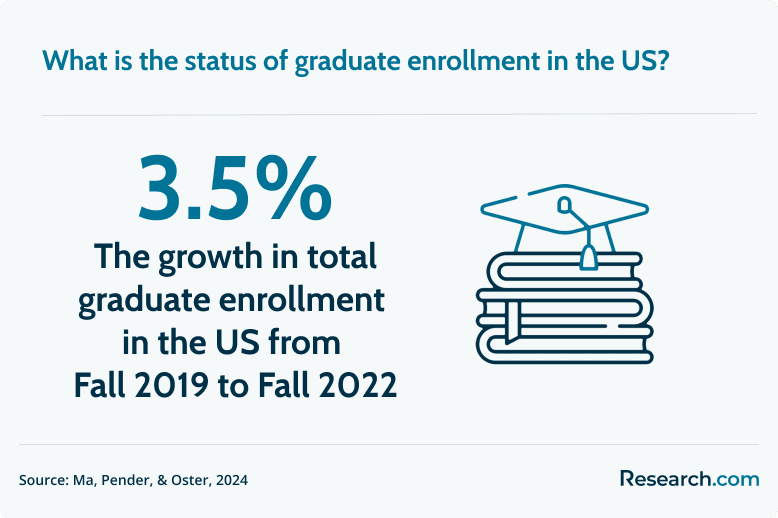
Graduate enrollment trends show that many students continue to pursue advanced education. From fall 2019 to fall 2022, total graduate enrollment across the US increased by 3.5%, rising from 3.066 million to 3.174 million (Ma, Pender, & Oster, 2024). For career changers, that growth makes careful program comparison even more important because not every graduate degree produces the same return.
| Cost factor | Online master’s program | Campus master’s program |
| Tuition | May be flat-rate or residency-neutral, depending on the school | May vary by in-state or out-of-state residency |
| Housing and relocation | Often avoidable | May be required if the student must move near campus |
| Transportation | Usually lower, except for residencies or required visits | Commuting, parking, and campus travel can add costs |
| Networking | Depends on virtual events, cohorts, alumni access, and employer connections | May offer more frequent in-person networking and recruiting events |
| Flexibility | Often stronger for working adults | May offer more structure but less schedule flexibility |
How to Pay for a Master’s Degree When Changing Careers
Graduate school can be a major financial commitment, especially for students who are also changing fields. The goal is not simply to find aid; it is to reduce borrowing while choosing a program that can realistically support your target career.
- Scholarships and fellowships: Universities, nonprofits, employers, foundations, and professional associations may offer awards for graduate students in specific fields. Some schools also provide assistantships that include tuition support or stipends in exchange for teaching, research, or administrative work. For example, the Massachusetts Institute of Technology, through the Office of Graduate Education, has received donor funds for stipend awards to eligible students.
- Grants: Grants usually do not need to be repaid, but they often come with eligibility rules. The federal Teacher Education Assistance for College and Higher Education Grant provides aspiring teachers with up to $4,000 each year of an eligible undergraduate or graduate program in approved subject areas. TEACH Grant recipients must teach at a qualified low-income school or educational agency for at least 4 years after finishing the program.
- Federal Direct Graduate PLUS Loan Program: Graduate students may apply for this fixed-interest supplemental loan program through the US Department of Education. It offers repayment options and may allow students enrolled at least half time to defer payments while in school. Students must complete the FAFSA, or Free Application for Federal Student Aid, to determine eligibility.
- Employer tuition assistance: If your current employer offers tuition reimbursement, confirm whether the benefit applies to career-change programs, online degrees, part-time enrollment, or schools outside a preferred network.
- Part-time enrollment: Studying part time may extend your timeline, but it can reduce the need to leave work or borrow heavily.
The chart below shows the average financial aid awarded to full-time equivalent graduate students in the US during the academic year 2023–2024, based on Trends in College Pricing and Student Aid 2024 from College Board (Ma, Pender, & Oster, 2024).
Do Employers Respect Online Master’s Degrees?
Employers are more likely to respect an online master’s degree when it comes from an accredited institution, uses a rigorous curriculum, and prepares students with relevant skills. In many cases, universities offer online versions of established campus programs, and the diploma may not distinguish between online and in-person study. Harvard University’s Graduate School of Education, for example, offers a 2-year, part-time online master’s in education with higher education and preK-12 pathways.
Employer perception also depends on the field. Business, technology, healthcare, and education employers often evaluate candidates based on skills, experience, certifications, licensure, internships, portfolios, and the reputation of the institution. Online learning is widely used in these areas, but program quality still varies. For example, online master's degree programs in healthcare administration can be useful for students seeking leadership and management training for hospitals, clinics, and healthcare organizations, provided the program has relevant coursework and strong career support.
High-Paying Careers That Typically Require a Master’s Degree
Some high-paying careers require graduate education because the work is specialized, regulated, research-intensive, or clinically advanced. Salaries vary by location, employer, experience, licensure, and industry, so students should treat wage data as a benchmark rather than a guarantee.
| Career | Relevant master’s path | 2023 median annual wage |
| Nurse Anesthetist | Master of science in nursing and advanced practice preparation | $212,650 |
| Industrial-Organizational Psychologist | Master’s degree in psychology with industrial-organizational focus | $147,420 |
| Computer and Information Research Scientist | Master’s degree in computer science or information technology | $145,080 |
| Physician Assistant | Master of science in physician assistant studies | $130,020 |
| Economist | Master’s degree in economics | $115,730 |
- Nurse Anesthetist: A master of science in nursing can help prepare advanced practice registered nurses for nurse anesthetist roles, which involve anesthesia care and critical patient support. Nurse anesthetists in the US had a 2023 median annual wage of $212,650 (US BLS, 2024). Students comparing costs may want to review the cheapest online nursing master's programs before committing to a high-cost option.
- Industrial-Organizational Psychologist: These professionals apply psychology to workplace productivity, employee well-being, selection, training, and organizational performance. Industrial-organizational psychologists in the US had a 2023 median annual wage of $147,420 (US BLS, 2024). A business psychology major can introduce related concepts for students interested in workplace behavior and leadership.
- Computer and Information Research Scientist: These specialists develop advanced computing methods, cybersecurity solutions, AI systems, and new technologies. Computer and information research scientists in the US had a 2023 median annual wage of $145,080 (US BLS, 2024).
- Physician Assistant: Physician assistants diagnose illness, treat patients, and prescribe medication under applicable rules. Physician assistants across the US had a 2023 median annual wage of $130,020 (US BLS, 2024).
- Economist: Economists work in government, research, consulting, finance, and policy analysis. Economists in the US had a 2023 median annual wage of $115,730 (US BLS, 2024).
The chart below compares 2023 median annual wages for selected professions that typically require master’s-level preparation, using 2024 data from the US Bureau of Labor Statistics.
Are STEM Master’s Degrees the Strongest Option for Higher Pay?
STEM master’s degrees can be strong options for career changers seeking higher pay, especially in computing, data, engineering-related fields, and healthcare. For example, computer and information research scientists in the US had a 2023 median annual wage of $145,080 (US BLS, 2024).
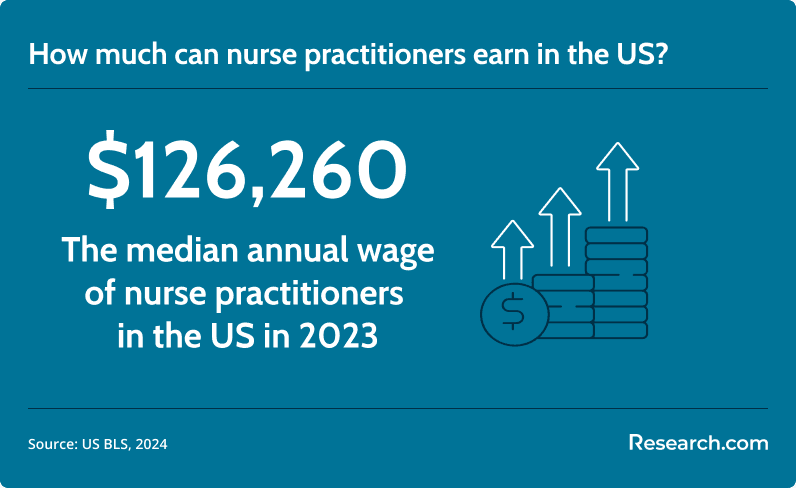
Healthcare STEM roles can also offer high wages. Nurse anesthetists had a 2023 median annual wage of $212,650, while nurse midwives had $129,650 and nurse practitioners had $126,260 (US BLS, 2024). These pathways, however, often involve clinical training, licensure, state rules, and prior healthcare credentials.
The main trade-off is preparation. A STEM graduate program may require programming, statistics, calculus, lab science, clinical background, or other prerequisites. Career changers without that foundation may need bridge coursework, certificates, or targeted preparation before applying. Students interested in cybersecurity may compare affordable cyber security degree online options to find flexible programs that build technical skills for security-related roles.
STEM can be a high-value route when your interests, abilities, and preparation match the field. It is not the best choice if you are choosing it only for salary and have little interest in the work.
Do Master’s Graduates Still Need a Teaching License?
In most public school settings, a teaching license is required even if you hold a master of education. Licensing rules are set by each state and may include approved teacher preparation coursework, student teaching, background checks, and state exams.
Some states offer alternative certification routes for people who already have a bachelor’s or master’s degree. These pathways may allow candidates to teach while completing certification requirements. Private schools and some higher education roles may not require the same state teaching license, but public K-12 schools generally do.
If teaching is your goal, do not assume that an education master’s program automatically leads to licensure. Confirm requirements with your state Department of Education and ask each program whether it is approved for your intended grade level, subject area, and state.
Common Challenges Career Changers Face in Graduate School
A master’s degree can create a structured pathway into a new field, but the transition can still be difficult. Career changers often need to explain how past experience transfers to a new industry, compete with candidates who already have direct experience, and adjust to different workplace norms. Some may also face a temporary salary reset while moving into an entry-level or bridge role in the new field.
The academic workload can also be demanding, especially for students balancing employment, family obligations, networking, internships, and job searching. For some goals, shorter credentials such as fast degrees online may help students build targeted skills before or instead of committing to a full graduate program.
| Common mistake | Better approach |
| Choosing a degree before choosing a target job | Start with job postings and required qualifications, then select the credential that closes the gap. |
| Focusing only on tuition | Compare full cost, fees, lost income, travel, loan interest, and time to completion. |
| Assuming online means lower quality or lower cost | Evaluate accreditation, curriculum, faculty, career support, and total price. |
| Ignoring licensure requirements | Confirm state rules before enrolling in education, nursing, counseling, or healthcare programs. |
| Waiting until graduation to network | Start informational interviews, alumni outreach, internships, and portfolio projects early. |
Steps to Change Careers With a Master’s Degree
Once you have selected a target field and confirmed that graduate school is the right route, use the degree as a career transition platform rather than a credential you complete in isolation.
- Map the skill gap. Compare your current resume with job descriptions in your target field. Identify missing technical skills, licenses, tools, terminology, and experience.
- Select programs that solve that gap. Prioritize curricula with relevant coursework, applied projects, internships, fieldwork, and employer-connected faculty.
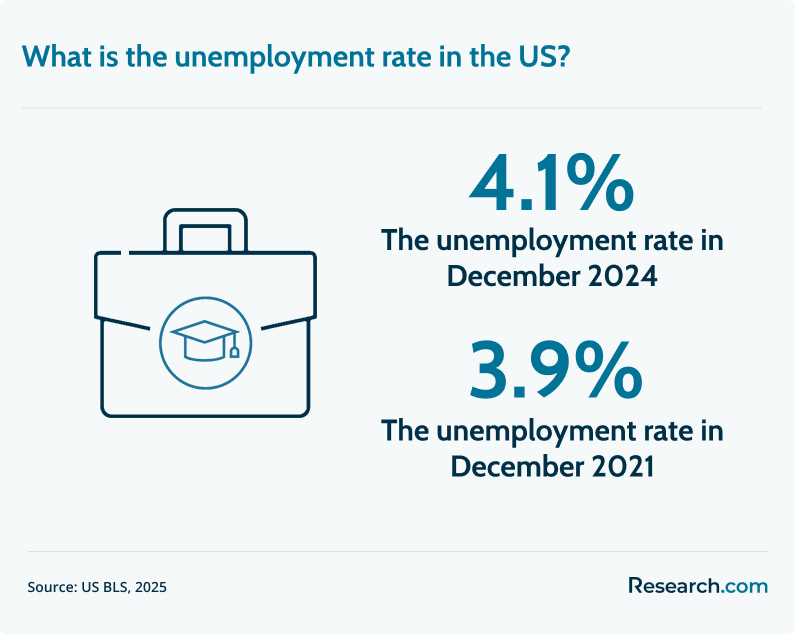
- Build experience while enrolled. Use internships, volunteer work, freelance projects, practicum placements, research, or capstones to prove you can perform the work. With the US unemployment rate rising from 3.9% in December 2021 to 4.1% in December 2024 (US BLS, 2025), evidence of job-ready skills can help you compete.
- Network before you need a job. Attend industry events, connect with alumni, join professional associations, and conduct informational interviews.
- Reposition your resume and LinkedIn profile. Translate prior experience into the language of your new field. Highlight graduate coursework, tools, certifications, projects, and measurable achievements.
- Start the job search early. Use career fairs, university job boards, faculty referrals, alumni groups, and employer events before graduation.
Career Support Services in Master’s Programs
Career support can be especially important for students who are changing fields because they may not already have industry contacts or direct experience. Strong programs may offer career coaching, resume reviews, interview preparation, internship coordination, employer panels, alumni mentoring, portfolio support, and job search workshops.
Before enrolling, ask whether career services are designed for graduate students or mainly for undergraduates. Also ask whether online students receive the same support as campus students. Students who need flexible learning and financial aid options may also compare online college courses with financial aid as part of a broader skill-building plan.
Networking Strategies for Graduate Students Changing Careers
Networking helps career changers overcome one of their biggest disadvantages: limited experience in the new field. The goal is not simply to collect contacts. It is to learn how the field works, understand hiring expectations, and find people who can refer, mentor, or advise you.
- Build relationships with faculty and alumni. Attend department events, guest lectures, alumni panels, and virtual sessions. Faculty and graduates often know which employers hire career changers and what experiences matter most.
- Join professional associations. Industry groups may offer conferences, workshops, job boards, certification guidance, and student membership rates. These communities can help you learn the language and expectations of the field.
- Use LinkedIn strategically. Update your profile to reflect your target career, comment thoughtfully on industry content, and request short informational interviews with professionals who made similar transitions.
- Turn class projects into networking opportunities. Whenever possible, choose projects connected to real employers, community organizations, or industry problems.
Is a Master’s Degree Worth It for a Career Change?
A master’s degree is worth it for a career change when it is necessary for entry, required for licensure, strongly preferred by employers, or likely to create access to roles that your current background cannot reach. It is less likely to be worth it when the program is expensive, weakly connected to employers, unrelated to your target role, or replaceable by a shorter credential.
To evaluate return on investment, compare tuition, fees, opportunity costs, financing costs, expected time to graduation, likely salary range, placement support, and the strength of alumni outcomes. If you still need undergraduate preparation or want a faster academic reset, accelerated bachelor programs online may be worth reviewing before committing to graduate study.
How to Keep Your Career-Change Education Cost-Effective
Cost-effective education is not always the cheapest program. It is the option that gives you the strongest path to your target role at a manageable total cost. Compare net price after aid, not just advertised tuition. Also consider whether the program helps you avoid relocation, maintain income, transfer credits, or finish faster.
If your new field requires foundational undergraduate preparation, a cheap bachelor's degree online may be a practical route before graduate school. For students who already qualify for master’s admission, cost control may involve part-time study, employer tuition assistance, scholarships, public institutions, assistantships, or programs with transparent fees.
How to Verify Accreditation and Program Quality
Accreditation should be checked before you apply, especially if your target career involves licensure, certification, federal financial aid, or employer credential screening. Confirm that the institution is accredited by a recognized accrediting body and check whether the program has specialized accreditation when the field expects it.
Quality also depends on more than accreditation. Review faculty qualifications, curriculum currency, student support, graduation data, employer partnerships, internship access, licensure pass information where applicable, and alumni career paths. Students comparing flexible formats may also look at a 1 year online masters option, but speed should never replace accreditation, rigor, or career fit.
How Master’s Programs Affect Post-Graduation Success
A master’s degree can improve post-graduation career success when the program helps students convert academic learning into employer-valued experience. For career changers, the most useful indicators include job placement information, alumni roles, employer partnerships, internships, capstone projects, licensure outcomes, and access to graduate-level career services.
Be cautious with broad salary claims. Instead, ask for program-specific outcomes and compare them with independent labor market data. If you are still deciding whether a master’s degree is the right level of study, reviewing options such as easy degrees to get online that pay well may help you compare alternative routes with different levels of time, cost, and academic intensity.
Can Short-Term Courses Strengthen Your Transition Plan?
Short-term courses can make a master’s degree more practical by filling specific skill gaps quickly. For example, a career changer entering analytics may need software training, statistics review, or portfolio projects before advanced coursework. A future healthcare administrator may benefit from targeted courses in compliance, finance, or data systems.
Options such as 6 months degree courses can be useful when they build a clearly marketable skill. The key is alignment. Do not collect random credentials. Choose short courses that support your target job, strengthen your graduate application, or help you perform better in internships and interviews.
Can Professional Certifications Improve Career-Change Results?
Professional certifications can complement a master’s degree by showing practical ability in a specific tool, method, regulation, or technical area. They may be especially helpful in project management, cybersecurity, cloud computing, HR, finance, analytics, healthcare administration, and education technology.
Certifications are most effective when employers in your target field actually recognize them. Before paying for an exam or training program, review job postings and talk with professionals in the field. Lists of the highest paying certifications can help generate ideas, but the best certification for you is the one that matches your intended role and experience level.
How Internships and Real-World Projects Help Career Changers
Internships, practicums, consulting projects, simulations, clinical placements, and capstones can help career changers prove that their new skills work in real settings. This is especially important when your previous job title does not obviously match your target field.
Real-world projects also create portfolio evidence, supervisor references, and networking opportunities. Pairing applied experience with a targeted credential, such as the highest paying certification relevant to your field, can strengthen your resume and make your career-change story more convincing to employers.
Key Insights
- A master’s degree can support a career change, but only when it aligns with a specific target role, employer expectations, and any licensure or certification rules.
- The Great Resignation showed that many workers reassessed career direction; in March 2021, the US quit rate reached 2.5%, equal to 3.7 million resignations (Gittleman, 2022).
- Job switching can improve earnings for some workers. Between April 2021 and March 2022, 60% of workers who changed jobs reported real wage gains compared with the same month in the prior year (Kochhar, Parker, & Igielnik, 2022).
- Online master’s degrees can be respected by employers when they come from accredited institutions and include rigorous coursework, applied experience, and credible career support.
- Do not evaluate programs by tuition alone. Compare total cost, financial aid, completion time, work flexibility, accreditation, employer connections, and outcomes.
- High-paying master’s-level roles include nurse anesthetist, industrial-organizational psychologist, computer and information research scientist, physician assistant, and economist, but each path has different prerequisites and professional requirements.
- STEM and healthcare master’s degrees may offer strong salary potential, but they can require technical preparation, clinical training, licensure, or prior coursework.
- The strongest career-change strategy combines graduate coursework with networking, internships, real-world projects, certifications when relevant, and an early job search.
References:
- Gittleman, M. (2022, July). The “Great Resignation” in perspective. Monthly Labor Review, US Bureau of Labor Statistics. https://www.bls.gov/opub/mlr/2022/article/the-great-resignation-in-perspective.htm
- Kochhar, R., Parker, K., & Igielnik, R. (2022, July 28). Majority of U.S. Workers Changing Jobs Are Seeing Real Wage Gains. Pew Research Center. https://www.pewresearch.org/social-trends/2022/07/28/majority-of-u-s-workers-changing-jobs-are-seeing-real-wage-gains
- Ma, J., Pender, M., & Oster, M. (2024). Trends in College Pricing and Student Aid 2024. College Board. https://research.collegeboard.org/media/pdf/Trends-in-College-Pricing-and-Student-Aid-2024-ADA.pdf
- Parker, K. & Horowitz, J. M. (2022, March 09). Majority of workers who quit a job in 2021 cite low pay, no opportunities for advancement, feeling disrespected. https://www.pewresearch.org/short-reads/2022/03/09/majority-of-workers-who-quit-a-job-in-2021-cite-low-pay-no-opportunities-for-advancement-feeling-disrespected
- US Bureau of Labor Statistics. (2025). Civilian unemployment rate. Graphics for Economic News Releases. https://www.bls.gov/charts/employment-situation/civilian-unemployment-rate.htm
- US Bureau of Labor Statistics. (2024, August 29). Computer and Information Research Scientists. Occupational Outlook Handbook. https://www.bls.gov/ooh/computer-and-information-technology/computer-and-information-research-scientists.htm
- US Bureau of Labor Statistics. (2024, August 29). Data Scientists. Occupational Outlook Handbook. https://www.bls.gov/ooh/math/data-scientists.htm
- US Bureau of Labor Statistics. (2024, August 29). Economists. Occupational Outlook Handbook. https://www.bls.gov/ooh/life-physical-and-social-science/economists.htm
- US Bureau of Labor Statistics. (2025, February 04). Job Openings and Labor Turnover Summary. Economics News Release. https://www.bls.gov/news.release/jolts.nr0.htm
- US Bureau of Labor Statistics. (2022, June). Job openings and quits reach record highs in 2021, layoffs and discharges fall to record lows. Monthly Labor Review. https://www.bls.gov/opub/mlr/2022/article/job-openings-and-quits-reach-record-highs-in-2021.htm
- US Bureau of Labor Statistics. (2024, August 29). Nurse Anesthetists, Nurse Midwives, and Nurse Practitioners. Occupational Outlook Handbook. https://www.bls.gov/ooh/healthcare/nurse-anesthetists-nurse-midwives-and-nurse-practitioners.htm
- US Bureau of Labor Statistics. (2024, April 03). Occupational Employment and Wages, May 2023, 19-3032 Industrial-Organizational Psychologists. Occupational Employment and Wage Statistics. https://www.bls.gov/oes/2023/may/oes193032.htm
- US Bureau of Labor Statistics. (2025, January 13). Quits rate decreased to 1.9 percent in November 2024. TED: The Economics Daily. https://www.bls.gov/opub/ted/2025/quits-rate-decreased-to-1-9-percent-in-november-2024.htm
Other Things You Need to Know about Degree Programs for Career Change
Most career-change master's programs require 30 to 60 semester credits, with many professional degrees clustering around 36 credits. Full-time students often finish in 12 to 24 months, while part-time formats usually take 2 to 4 years.
Admission requirements for 2027's leading career-change master's programs typically include a bachelor's degree, a minimum GPA of 3.0, letters of recommendation, a personal statement, and sometimes GRE scores. Specific requirements may vary by school and program.