
2027 Is an Online Degree Respected & Taken Seriously?

Co-Founder and Chief Data Scientist
Many students considering an online degree are asking the same practical question: will employers, graduate schools, and licensing bodies treat this credential the same way they would treat an on-campus degree? The answer is no longer a simple yes or no. The value of an online degree depends on accreditation, the school’s reputation, the field of study, the amount of hands-on training required, and how well the program connects learning to career outcomes.
Online education is now a mainstream part of higher education. A 2023 survey by the Online Learning Consortium reported that 83% of employers consider online degrees as credible as degrees completed through traditional campus-based programs. At the same time, employer acceptance still varies by industry, especially in fields where supervised clinical, laboratory, or in-person practice is required.
This guide explains when an online degree is respected, when it may raise concerns, how to evaluate program quality, and how to choose an online program that supports your career goals without overpaying or risking an unrecognized credential.
Quick Answer: Are Online Degrees Taken Seriously?
Yes, online degrees are increasingly taken seriously when they come from accredited institutions, include rigorous coursework, and align with the expectations of the student’s field. Employers are especially open to online degrees in business, technology, education, healthcare administration, accounting, and other roles where outcomes can be demonstrated through skills, portfolios, certifications, internships, or work experience.
Online degrees may face more scrutiny in fields that require extensive hands-on training, clinical supervision, licensure, or lab-based work. In those cases, students should confirm that the online program includes approved in-person requirements and meets the rules for employment or licensure in the state where they plan to work.
Key Things You Should Know About Online Degrees
- Employer acceptance has improved, but the school’s accreditation and reputation still matter more than the delivery format.
- Online learning can help students build self-management, digital communication, time management, and independent problem-solving skills that many employers value.
- Some bias remains in fields that depend heavily on in-person practice, including parts of healthcare, law, and engineering.
- Online programs can reduce indirect costs by limiting relocation, commuting, and campus housing expenses.
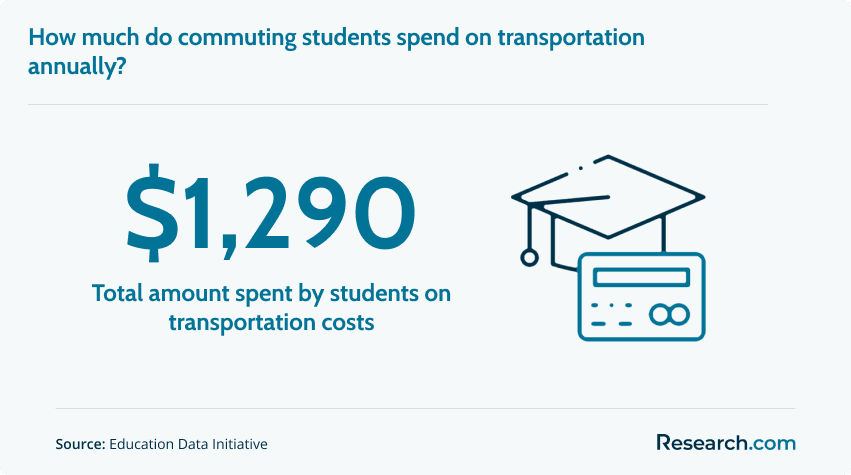
- Students who commute to college spend an average of $1,290 annually on transportation costs.
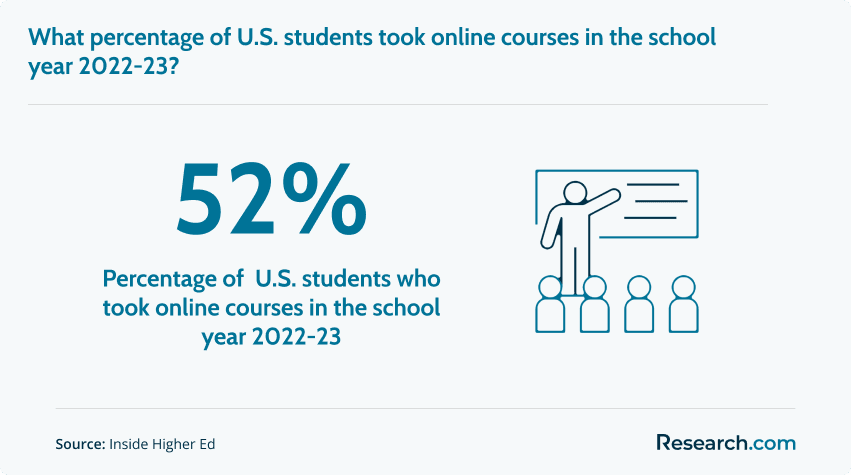
- 52% of U.S. students were enrolled in at least one online course during the 2022-23 school year.
Online Degrees vs. Traditional Degrees: What Usually Matters Most
| Decision Factor | Why It Matters | What to Check Before Enrolling |
| Accreditation | Accreditation affects credit transfer, financial aid eligibility, employer trust, and graduate school admission. | Confirm institutional accreditation and, when relevant, specialized program accreditation. |
| Field of study | Some industries are comfortable with online learning, while others require supervised practice or in-person training. | Review employer expectations, licensure rules, clinical requirements, and internship options. |
| School reputation | A degree from a recognized institution is often easier to explain to employers. | Look at faculty credentials, alumni outcomes, partnerships, and employer recognition. |
| Program design | A strong online program should not be a set of recorded lectures only. | Look for projects, discussions, assessments, feedback, labs, simulations, or field experiences. |
| Career support | Online students still need advising, networking, job-search help, and access to employers. | Ask about virtual career services, alumni networks, internships, mentorship, and job placement support. |
Affordable Quick Online Degree Programs with High Acceptance Rates for 2027
The following online degree areas are commonly considered by students who want accessible admissions, flexible scheduling, and practical career pathways. Acceptance rates, costs, and completion timelines vary by school, so use these examples as starting points rather than guarantees.
1. Nursing
Online nursing pathways usually combine digital coursework with required in-person clinical experiences. Students study patient care, health promotion, disease prevention, anatomy, physiology, pharmacology, and nursing ethics while developing assessment, communication, and clinical judgment skills. Graduates may prepare for roles such as registered nurse (RN), nurse practitioner (NP), or nurse educator, depending on degree level and licensure requirements. These programs generally take 2-4 years to complete, and tuition ranges from $10,000 to $30,000 annually, depending on the institution.
2. Computer Science
A computer science degree teaches students how software, systems, and data-driven technologies work. Core topics often include algorithms, data structures, programming languages, software engineering, networks, cybersecurity, and artificial intelligence. Graduates can pursue software development, cybersecurity, systems administration, research, and related technical roles. Programs typically require 3-4 years of study, with annual tuition ranging from $15,000 to $40,000 per year, depending on the school.
3. Healthcare Administration
Healthcare administration programs focus on the business, policy, finance, and operational side of healthcare organizations. Students learn how hospitals, clinics, insurance systems, and public health organizations function. Common courses include healthcare policy, management, finance, ethics, compliance, and organizational leadership. Graduates may pursue roles such as healthcare administrator, hospital manager, or health services manager, particularly in non-clinical settings.
4. Accounting
An accounting degree prepares students to interpret, organize, and report financial information. Coursework typically includes bookkeeping, taxation, auditing, financial accounting, managerial accounting, financial reporting, and accounting software. Graduates may work in accounting firms, corporate finance departments, government agencies, auditing, tax consulting, or financial analysis. These programs usually take 3-4 years to complete, and annual tuition ranges from $12,000 to $28,000, depending on the institution.
5. Economics
An economics degree helps students understand markets, public policy, global trade, consumer behavior, and economic decision-making. Students commonly study microeconomics, macroeconomics, statistics, data analysis, and economic forecasting. Graduates may apply their analytical skills in banking, policy research, consulting, financial analysis, government agencies, and international organizations. Programs typically last 3-4 years, with tuition ranging from $15,000 to $35,000 per year.
6. Management
Management programs are designed for students who want to lead teams, coordinate operations, and solve organizational problems. Coursework often includes leadership, organizational behavior, strategic management, operations, project coordination, and business communication. Graduates may pursue roles such as operations manager, project manager, business consultant, or team leader across multiple industries. These programs can be a practical option for students seeking broad business training with accessible admissions options.
7. Management Information Systems
Management Information Systems (MIS) sits between business and technology. Students learn how organizations use databases, information systems, analytics, cybersecurity practices, and business strategy to improve decisions and operations. Graduates may pursue roles such as IT manager, systems analyst, business intelligence analyst, or technology project coordinator. This degree can be especially useful for students who want technical fluency without pursuing a purely programming-focused major.
8. Social Work
Social work programs prepare students to support individuals, families, and communities facing social, emotional, financial, or health-related challenges. Courses may cover social welfare policy, human behavior, community practice, case management, ethics, and clinical social work. Graduates may become social workers, case managers, counselors, or community service professionals, depending on degree level and state requirements. Students should verify whether an online program meets fieldwork and licensure expectations before enrolling.
9. Special Education
Special education programs train future educators to support students with disabilities and diverse learning needs. Students study special education law, assessment, behavioral interventions, inclusive teaching methods, individualized education plans, and classroom support strategies. Graduates may pursue roles such as special education teacher, educational consultant, or school administrator, depending on their credentials. Because teacher licensure rules vary, students should confirm state approval before choosing an online program.
10. Business Administration
Business administration is a broad degree for students who want a foundation in accounting, finance, marketing, management, operations, leadership, entrepreneurship, and business ethics. Graduates may pursue roles such as business manager, marketing professional, financial analyst, operations coordinator, or entrepreneur. The degree is often flexible because it can apply to many industries, but students should choose concentrations, internships, or certificates that match a specific career goal.
- What makes an online degree credible?
- Do employers respect online degrees?
- What advantages do online degrees offer?
- How can online learning support career advancement?
- How can an online degree save money?
- How do tech and healthcare employers view online degrees differently?
- How should I calculate online degree ROI?
- How can I reduce the cost of an online degree?
- What career outcomes can online graduates expect?
- What trends are shaping online degree value?
- How can I present my online degree to employers?
- How do I confirm that an online program is legitimate?
- What student support should online programs provide?
- What evidence supports online learning?
- How can I identify a strong online curriculum?
- How do I choose an online degree for my goals?
- Are accelerated online programs academically demanding?
- How do MOOCs fit into online education?
- Are online certificates as useful as degrees?
- Can certifications strengthen an online degree?
What factors influence the credibility of an online degree compared to a traditional degree?
The credibility of an online degree depends less on whether courses are online and more on whether the program meets recognized academic, professional, and employer standards. Accreditation, school reputation, program rigor, faculty quality, field requirements, and career outcomes all shape how the degree is judged.
Accreditation
Accreditation is the first issue to verify. A degree from an accredited institution is more likely to be accepted by employers, graduate schools, and financial aid systems. A degree from an unaccredited provider may create serious problems, including limited credit transfer, weaker employer recognition, and reduced eligibility for certain forms of aid.
Institution Reputation
Employers often respond more favorably to online degrees from established colleges and universities than to credentials from unknown or poorly reviewed institutions. Reputation is not only about prestige; it also reflects faculty strength, alumni networks, employer familiarity, program history, and academic accountability.
Students pursuing public-sector leadership should also weigh cost against credibility. Reviewing the most affordable MPA programs can help applicants identify options that may offer both recognized training and manageable tuition.
Program Quality and Rigor
A credible online program should require meaningful reading, writing, discussion, exams, projects, applied assignments, and instructor feedback. The strongest programs are not easier versions of campus degrees; they use different delivery methods to achieve comparable learning outcomes.
Technology and Delivery Mode
Effective online learning depends on more than recorded lectures. Strong programs use learning platforms, discussion tools, simulations, virtual labs, video meetings, collaborative projects, and timely feedback to create structured engagement. In fields where face-to-face interaction is central, students should look for hybrid, residency, practicum, or clinical components.
Employer Perception
Employer opinions are changing, but they are not identical across industries. Some employers still view traditional degrees as more valuable, especially in fields where in-person practice is central. However, online credentials from respected schools are increasingly accepted in business, technology, education, administration, and other knowledge-based fields.
For students considering business programs, degree choice should also connect to realistic career and salary planning. Comparing the highest paying business degrees can help applicants think more clearly about specialization, opportunity, and return on investment.
Are online degrees recognized by employers as much as on-campus degrees?
Many employers now recognize online degrees, especially when the credential is awarded by an accredited college or university with a strong reputation. In many cases, diplomas and transcripts do not emphasize whether coursework was completed online or on campus, so employers focus on the institution, major, experience, and demonstrated skills.
Recognition is strongest in fields where work products can be evaluated directly. Technology employers may review coding projects, portfolios, certifications, and technical interviews. Business employers may focus on analytics, leadership experience, communication, and prior work history. Education employers may examine licensure eligibility and field placements.
Some fields remain more cautious. Healthcare, law careers, engineering, and other regulated professions may require clinical hours, supervised practice, bar eligibility, lab work, or state-approved preparation. Students in these areas should confirm requirements before enrolling.
For law-adjacent roles that do not require becoming an attorney, the best online master’s of legal studies programs may be worth comparing, especially for careers in compliance, contracts, government, risk management, and corporate legal operations.
What unique advantages do online degrees offer that traditional degrees do not?
Online degrees can offer flexibility, wider access, and cost advantages that campus programs may not provide. These benefits are most valuable for working adults, parents, military students, rural learners, career changers, and students who cannot relocate.
Schedule Flexibility
Many online programs use asynchronous courses, allowing students to complete lectures, readings, discussions, and assignments around work and family responsibilities. Students who need live interaction should also look for programs with synchronous sessions, office hours, or structured cohort meetings.
Geographic Access
Online education allows students to consider programs outside their local area without moving. This can be especially important for students in rural areas, working professionals tied to a specific location, or applicants seeking specialized programs unavailable nearby.
Broader Program Selection
Online learning can expand access to specialized majors, concentrations, and graduate programs. A student who cannot find a local program in cybersecurity, healthcare administration, special education, analytics, or public administration may find several accredited online options.
Potential Cost Savings
Online students may save on commuting, housing, relocation, and some campus-based expenses. Tuition policies vary, so the lowest-cost option is not always online; students should compare total cost rather than tuition alone.
Business students should also compare program cost with likely outcomes. Reviewing MBA degree salary expectations can help applicants decide whether an online, hybrid, or campus MBA makes financial sense.
Independent Learning Skills
Online programs require planning, persistence, written communication, and time management. Those skills can become an advantage in remote, hybrid, and project-based workplaces when students can show how they managed deadlines and produced results.
How can online learning enhance my professional flexibility and advancement?
Online learning can help students advance without stepping away from work. This is one of its strongest advantages: students may continue earning income, apply new skills immediately, and avoid pausing their careers while completing a degree.
Learning Without Leaving Your Job
Many online programs are designed for students who work full time. When courses are asynchronous, students can complete assignments during evenings, weekends, or other available times. This format can be especially useful for adults who need career mobility but cannot attend daytime classes.
Applying Coursework at Work
Working students can often use class projects to solve real workplace problems. A management student might analyze team operations, a computer science student might build a portfolio project, and a healthcare administration student might examine workflow or compliance issues.
Building Skills for Promotion or Career Change
Online degrees can help students update technical, leadership, analytical, or communication skills. They may also support transitions into high-demand areas such as cybersecurity, data science, digital marketing, education leadership, business analytics, or healthcare degrees.
Expanding Professional Networks
Online programs can connect students with classmates, faculty, alumni, and employers across regions. However, networking is not automatic. Students should participate in virtual events, group projects, alumni communities, and industry webinars to turn the online format into a career advantage.
What are the financial benefits of choosing an online degree over a traditional degree?
An online degree can be financially attractive, but students should evaluate the full cost of attendance rather than assuming every online program is cheaper. Tuition, fees, books, technology costs, lost work time, transfer credits, and completion speed all affect affordability.
- Lower possible tuition. Some online programs charge lower tuition than campus programs, though pricing varies widely by institution and residency status.
- No daily commute. Online students can avoid routine travel costs such as fuel, transit, parking, and vehicle wear. This matters because students who commute to college spend an average of $1,290 annually on transportation costs.
- No required relocation. Students who study online can often remain in their current home, which may reduce housing, moving, and campus living expenses.
- Ability to keep working. Many students choose online programs because they can maintain employment while studying, reducing the opportunity cost of earning a degree.
- Fewer campus-based expenses. Some online students may avoid costs tied to campus activities, housing, or facilities, although technology and online service fees may still apply.
How are online degrees perceived in the tech industry versus the healthcare industry?
Technology employers are often more open to online degrees because hiring decisions frequently emphasize skills, projects, technical tests, certifications, and work samples. A computer science, MIS, cybersecurity, or data-focused online degree can be competitive when students graduate with a strong portfolio and current technical competencies.
Healthcare is more mixed. Online degrees can be well accepted for non-clinical roles such as healthcare administration, health informatics, public health, compliance, and medical coding. Clinical roles, however, usually require approved in-person training, supervised practice, and licensure preparation.
The safest approach is to evaluate the specific role, not just the industry. A fully online format may be appropriate for a healthcare management role but insufficient for a clinical credential unless the program includes approved hands-on requirements.
How can I evaluate the return on investment (ROI) of an online degree?
To evaluate ROI, compare the total cost of the degree with the career benefits it is likely to produce. Tuition is only one part of the calculation. Include fees, books, technology, time to completion, lost income if you reduce work hours, loan interest, and whether the degree improves access to higher-paying or more stable roles.
| ROI Question | Why It Matters | What to Look For |
| Will this degree qualify me for the role I want? | A degree has weak ROI if it does not meet employer, licensure, or advancement requirements. | Job postings, licensure boards, alumni outcomes, and employer partnerships. |
| How much will I pay in total? | Sticker tuition can hide fees, books, technology costs, and extra terms caused by poor transfer policies. | Total cost of attendance, transfer credit review, financial aid, and completion timeline. |
| Can I keep working while enrolled? | Maintaining income can improve affordability and reduce borrowing. | Asynchronous classes, part-time options, flexible deadlines, and employer tuition benefits. |
| Does the program have career support? | Career services can affect internship access, networking, resume quality, and job search strategy. | Virtual career advising, alumni networking, employer events, and portfolio support. |
Students comparing graduate options may want to review the cheapest online graduate programs while also checking accreditation, outcomes, and fit with their career goals.
How can I maximize financial aid for my online degree?
Students can reduce the cost of an online degree by combining federal aid, institutional scholarships, employer tuition assistance, transfer credits, military benefits, payment plans, and private scholarships when appropriate. The first step is confirming that the school participates in recognized financial aid programs and that the student’s enrollment status qualifies for aid.
Applicants should compare schools that support federal aid access, including cheap online colleges that accept FAFSA. They should also submit required forms early, watch scholarship deadlines, and ask financial aid offices how part-time enrollment, accelerated terms, or transfer credits affect eligibility.
What are the post-graduation career outcomes for online degree holders?
Career outcomes for online graduates depend on field, school reputation, experience, location, networking, and whether the program aligns with employer expectations. Strong online programs support students through career advising, resume preparation, interview coaching, mentorship, internships, and alumni networks.
Some students choose faster pathways to enter or re-enter the workforce sooner. Options such as accelerated degree programs online may be useful for motivated learners, but applicants should verify that speed does not come at the expense of quality, support, or licensure readiness.
What emerging trends are influencing the long-term value of online degrees?
Several trends are shaping how online degrees are judged. Employers increasingly expect graduates to have practical skills, digital collaboration experience, and evidence of applied learning. Many schools are responding with project-based courses, virtual simulations, stackable credentials, micro-credentials, and industry-aligned certificates.
Students are also paying closer attention to completion speed and cost. Programs such as the fastest online bachelor degree can appeal to learners who want a shorter path, but the best choice is still the program that balances affordability, accreditation, rigor, and career relevance.
What steps can I take to make my online degree more appealing to potential employers?
Students can strengthen how employers view an online degree by proving that the program produced real, job-relevant skills. The credential matters, but evidence matters too.
- Choose an accredited program with a recognizable reputation. Employers are more likely to trust degrees from institutions with clear quality standards and established academic oversight.
- Build a portfolio. Include writing samples, code repositories, data projects, business plans, lesson plans, case studies, presentations, or other proof of applied learning.
- Earn relevant certifications. Industry credentials can show current competency, especially in technology, accounting, project management, healthcare administration, and digital marketing.
- Use internships or practicums when possible. Practical experience can reduce concerns about online-only learning.
- Explain the format confidently. In interviews, describe how online learning required discipline, communication, independent planning, and digital collaboration.
- Maintain a professional online presence. Update LinkedIn, connect with alumni, engage with industry groups, and highlight measurable accomplishments.
How can I verify the legitimacy of an online degree program?
Verifying legitimacy should happen before applying, paying a deposit, or submitting financial aid documents. Start by confirming institutional accreditation through recognized sources, then check whether the specific program has specialized accreditation if your field requires it.
- Confirm the school’s accreditation status through official accreditor or government-recognized databases.
- Check whether credits transfer to other accredited colleges.
- Ask whether the program qualifies for federal financial aid, if relevant.
- Review licensure disclosures for your state if the degree leads to a regulated occupation.
- Look for transparent tuition, fees, graduation requirements, faculty information, and student support services.
- Be cautious of programs promising extremely fast degrees, guaranteed jobs, or academic credit for little work.
Students who want accredited online options tied to aid eligibility may also review FAFSA accredited online schools as part of their research.
What additional support services do online degree programs provide?
High-quality online programs should provide more than course access. Students should expect academic advising, tutoring, library services, writing help, technology support, disability services, career counseling, and access to faculty. These services are especially important for working adults and first-generation students who need structured guidance.
Students comparing flexible programs may also review options described as easy bachelor degrees, but they should not confuse accessibility with low standards. A good online degree should be manageable, not academically empty.
What research supports the effectiveness of online learning?
Research on online education generally shows that well-designed online learning can produce outcomes comparable to traditional instruction when courses include clear objectives, strong instructor presence, interaction, feedback, and meaningful assessments. The quality of design matters more than the delivery format alone.
Cost-conscious students may compare options such as the cheapest bachelor degree online, but affordability should be evaluated alongside academic quality, student support, transfer policies, and career relevance.
What are the indicators of a rigorous and engaging online curriculum?
A strong online curriculum should be structured, interactive, current, and assessment-driven. It should challenge students to apply knowledge rather than passively watch lectures.
Recognized Accreditation and Field Reputation
The program should be offered by an accredited institution and, when appropriate, hold specialized accreditation. Reputation within the field can also matter, especially for graduate programs and professional degrees.
Current and Complete Course Content
The curriculum should cover foundational concepts and advanced topics relevant to current employer expectations. Students should look for evidence that courses are updated as industries change.
Interactive Learning Design
Strong online courses include discussions, group work, projects, quizzes, case studies, simulations, labs, or other activities that require participation. A program that relies only on recorded lectures may not provide enough engagement.
Clear Outcomes and Meaningful Assessments
Every course should identify what students are expected to learn and how that learning will be measured. Capstones, portfolios, exams, applied projects, and written assignments can all signal rigor.
Qualified and Accessible Faculty
Students should be able to review faculty credentials and understand how instructors interact with online learners. Timely feedback, office hours, and active discussion facilitation are important signs of quality.
What criteria should I use to select an online degree that suits my career goals?
The best online degree is the one that fits your career target, schedule, budget, learning style, and credential requirements. Rankings can help, but they should not replace a program-by-program evaluation.
Career Alignment
Start with the job you want, then work backward. Review job postings and required qualifications. If leadership, consulting, or management is your goal, an MBA degree may be appropriate, but only if the curriculum and network match your career plan.
Accreditation and Licensure Fit
Check institutional accreditation and any required specialized accreditation. If the degree leads to teaching, nursing, counseling, social work, or another licensed field, confirm that it meets requirements in your state.
Curriculum and Faculty
Review required courses, electives, concentrations, capstones, and faculty backgrounds. A strong program should teach both theory and practical application.
Format and Flexibility
Decide whether you need asynchronous courses, live classes, part-time enrollment, accelerated terms, or a cohort model. The right format depends on your work schedule, family responsibilities, and learning preferences.
Total Cost and Aid
Compare tuition, fees, books, technology costs, transfer credit policies, and financial aid. Ask whether employer tuition reimbursement, military benefits, scholarships, or payment plans are available.
Is an accelerated online program as rigorous as traditional ones?
An accelerated online program can be rigorous if it uses the same learning outcomes, qualified faculty, assessments, and accreditation standards as a longer program. The difference is usually pacing, not necessarily quality. However, accelerated formats demand strong time management and may be difficult for students with heavy work or family responsibilities.
Before enrolling in a fast program, review weekly workload, course sequencing, transfer credit policies, faculty access, and student support. Programs such as an online masters degree in one year can be valuable for focused students, but applicants should confirm that the pace is realistic and professionally recognized.
What role do MOOCs (Massive Open Online Courses) play in the landscape of online education?
MOOCs are an important part of online learning, but they serve a different purpose than accredited degrees. They are often best for exploring a subject, building a specific skill, preparing for a career change, or supplementing formal education.
Access and Exploration
MOOCs allow learners to study many subjects without formal admission. This makes them useful for testing interest in a field before committing to a degree.
Flexible Skill Building
Many MOOCs are self-paced, which helps working adults and busy learners develop skills on their own schedule. Topics can range from programming and analytics to leadership, project management, and a digital marketing degree pathway.
Career Supplement, Not Always a Degree Substitute
MOOC certificates and microcredentials can strengthen a resume, but they usually do not carry the same weight as an accredited degree. They are most useful when paired with work experience, a portfolio, or formal education.
Low-Cost Learning
Many MOOCs are free to audit or relatively inexpensive if a certificate is required. This makes them a practical option for skill refreshers, professional development, and career exploration.
Are online certificate programs as valuable as online degrees?
Online certificate programs can be valuable when they teach specific skills that employers need. They are usually shorter and more focused than degrees, which makes them useful for professionals who need a targeted credential in areas such as technology, business, healthcare administration, analytics, or project management.
Certificates are not always substitutes for degrees. Some jobs require a bachelor’s or graduate degree, while others care more about skill proof and industry-recognized credentials. Students who want targeted, practical options can compare online certificate programs that pay well without a degree to see where certificates may support career mobility.
Can Supplementary Certifications Enhance the Credibility of My Online Degree?
Yes. Certifications can strengthen an online degree by showing current, job-specific expertise. This is especially useful in fields where tools, regulations, platforms, and technical standards change quickly. A degree can show broad academic preparation, while a certification can validate a particular skill set.
Students should choose certifications recognized by employers in their target field rather than collecting credentials at random. Reviewing a list of certifications that pay well can help identify options that may complement an online degree and improve resume strength.
Common Mistakes to Avoid When Choosing an Online Degree
| Mistake | Why It Can Hurt You | Better Approach |
| Choosing a program before checking accreditation | An unrecognized degree may not transfer, qualify for aid, or satisfy employers. | Verify institutional and program accreditation before applying. |
| Focusing only on tuition | Fees, transfer policies, books, technology, and extra terms can change the true cost. | Compare total cost of attendance and expected completion time. |
| Assuming every online degree meets licensure rules | Regulated careers may require approved clinical, fieldwork, or exam preparation. | Confirm state-specific requirements with the program and licensing board. |
| Ignoring career services | Online students need networking and job-search support just as much as campus students. | Ask about virtual advising, employer connections, internships, and alumni access. |
| Selecting the easiest option without checking outcomes | A low-effort program may not improve employability or skill level. | Choose a manageable program that still provides rigor, feedback, and applied work. |
Questions to Ask Before Enrolling in an Online Degree Program
- Is the institution accredited by a recognized accrediting agency?
- Does this program meet licensure or certification requirements in my state?
- Will my credits transfer if I change schools later?
- What is the total cost, including fees, books, and technology expenses?
- Are classes asynchronous, synchronous, or a mix of both?
- How much time should I expect to spend on coursework each week?
- What career services are available to online students?
- Does the program include internships, practicums, capstones, labs, or portfolio projects?
- What support is available if I struggle academically or technically?
- What outcomes do graduates report, and how does the school measure them?
Graduate Perspectives on Online Degrees
Lauren described online computer science study as a way to continue working and caring for family while completing a long-term academic goal. She emphasized that the format helped her build technical knowledge along with stronger discipline and time management.
Amy valued the ability to organize coursework around her schedule and learn with classmates from different locations. She noted that interactive assignments and faculty communication helped her feel connected despite studying online.
Jennica initially questioned whether online learning would feel rigorous, but she found that virtual labs and collaborative projects helped her prepare for software development work while allowing her to study from abroad.
References
- Education Data Initiative. (2024). Cost of online education vs. traditional education. Education Data Initiative.
- Education Dynamics. (2024). Online college students 2024. Education Dynamics.
- Inside Higher Ed. (2024, August 13). Report: Most institutions see tension over online education initiatives. Inside Higher Ed.
- McKinsey & Company. (2024). Demand for online education is growing—Are providers ready? McKinsey & Company.
Key Insights
- Online degrees are widely accepted when they come from accredited, reputable institutions and include rigorous coursework.
- Employer acceptance depends heavily on the field. Technology, business, education, and administration are generally more flexible; clinical and licensure-based fields require closer review.
- Accreditation is non-negotiable. It affects employer trust, financial aid, credit transfer, graduate admission, and professional eligibility.
- Online programs can reduce costs, especially commuting and relocation expenses, but students should compare total cost rather than tuition alone.
- The best online degrees include applied projects, accessible faculty, career services, advising, and strong student support.
- Students can improve employer perception by building a portfolio, earning relevant certifications, completing internships, and explaining their online learning experience confidently.
- A fast or flexible program is only worthwhile if it still meets academic, professional, and licensing standards.
Other Things You Should Know About Online Degrees
Yes, if the program is approved by the correct licensing body. Many fields require graduation from an accredited program plus passing an exam, such as the NCLEX-RN for nursing or the bar exam for law. State boards set the exact eligibility rules and supervised practice hours.
Employer perception significantly affects how online degrees are respected in 2027. Many companies recognize accredited online programs, valuing skills and knowledge over the mode of education. However, some industries still prioritize traditional degrees, influencing respectability based on sector-specific expectations.





