2027 States Where Data Science Careers Have the Strongest Growth

Co-Founder and Chief Data Scientist
Choosing where to study or work in data science now affects salary potential, job access, and long-term mobility. The U. S. Bureau of Labor Statistics projects data scientist employment to grow much faster than average, with a May 2024 median wage of $112,590.
This guide is for students, career changers, and working professionals comparing states, degrees, online programs, and credentials. You will learn which markets show the strongest demand signals, what employers expect, and how to choose an education path that matches your goals and budget.
Key Things You Should Know
- The strongest data science career markets combine large employer demand, expanding AI investment, and industry diversity; California, Texas, Washington, New York, Virginia, North Carolina, Florida, Georgia, Arizona, and Utah are among the most practical states to watch.
- National demand remains strong: BLS data shows data scientists earned a May 2024 median wage of $112,590, while employment is projected to grow far faster than the average for all occupations.
- A bachelor's degree can support entry-level analytics roles, but advanced data science, machine learning, and AI roles often favor candidates with graduate study, strong portfolios, or employer-recognized cloud and analytics certifications.
What states have the strongest data science job growth?
The states with the strongest data science job growth are not always the states with the highest percentage growth on paper. For career planning, the better question is where job openings, industry concentration, compensation, AI adoption, and advancement pathways overlap.
BLS May 2024 occupational data places states such as California, New York, Texas, Virginia, and Washington among the largest employment markets for data scientists, which matters because large markets usually offer more entry points, more specialized roles, and better mobility between employers.
Use the table below as a decision-support view of states with especially strong growth signals for data science careers. It emphasizes practical opportunity rather than promising that any state will produce a specific salary or job outcome.
| State | Why growth is strong | Best fit for | Important trade-off |
| California | Large technology, AI, entertainment, biotech, clean tech, and venture-backed startup ecosystem | Machine learning, AI product analytics, data engineering, research science | High competition and high cost of living can reduce the value of salary gains |
| Texas | Expanding technology, energy, finance, logistics, health care, and corporate headquarters markets | Analytics engineering, business intelligence, energy analytics, cloud data roles | Opportunities vary by metro area, with Austin, Dallas-Fort Worth, and Houston offering different industry mixes |
| Washington | Major cloud computing, software, e-commerce, and AI infrastructure employers | Cloud analytics, machine learning operations, product data science | Many roles expect strong software engineering and cloud skills, not just statistics |
| New York | Finance, media, advertising technology, health care, insurance, and enterprise analytics demand | Financial analytics, risk modeling, marketing science, data strategy | Hiring can be highly credential-conscious for quantitative finance and senior analytics roles |
| Virginia | Federal contracting, cybersecurity, defense analytics, cloud infrastructure, and government technology demand | Cyber analytics, public sector data science, security-focused analytics | Some jobs may require U.S. citizenship, background checks, or security clearance eligibility |
| North Carolina | Growth in banking, health care, research, life sciences, and technology corridors | Health analytics, banking analytics, applied machine learning | Some roles are concentrated around the Research Triangle, Charlotte, and major health systems |
| Florida | Population growth, health care, finance, insurance, logistics, and hospitality analytics demand | Business intelligence, health data analytics, operations analytics | Advanced AI research roles may be less concentrated than in older tech hubs |
| Georgia | Fintech, logistics, film and media technology, health care, and Atlanta's corporate presence | Fintech analytics, supply chain analytics, marketing analytics | Competition is rising as more professionals relocate to Atlanta and nearby tech corridors |
| Arizona | Semiconductor investment, advanced manufacturing, health care, logistics, and population growth | Manufacturing analytics, operations data science, IoT analytics | Some growth is tied to specific industry investments and may be metro-specific |
| Utah | Fast-growing software, SaaS, fintech, and startup markets along the Wasatch Front | SaaS analytics, growth analytics, data engineering, product analytics | Smaller total market than California or Texas, so specialized openings may be fewer |
A useful way to compare states is to separate market size from growth rate. A smaller state can show fast percentage growth but still have fewer openings than a larger state. If you are early in your career, prioritize states and metro areas where you can realistically find internships, junior analyst jobs, alumni networks, and multiple employers in the same industry.
Which data science jobs are growing fastest by state?
The fastest-growing data science jobs vary by state because employers use data differently. In a cloud-heavy state, demand may cluster around data engineering and machine learning operations. In finance-heavy markets, risk modeling and analytics roles may be more valuable. In health care and life sciences hubs, employers often need people who can work with clinical, claims, imaging, or research datasets while understanding privacy and compliance.
The table below summarizes job families that tend to grow fastest in major state markets and why they matter. Use it to match your degree concentration, electives, and portfolio projects to the state where you want to work.
| Role family | States where demand is especially visible | Typical responsibilities | Skills employers usually expect |
| Data scientist | California, New York, Texas, Washington, North Carolina | Build models, analyze patterns, design experiments, and translate findings into business decisions | Python or R, statistics, machine learning, SQL, communication |
| Machine learning engineer | California, Washington, Texas, New York, Virginia | Deploy models, improve prediction systems, and support AI applications in production | Python, software engineering, cloud platforms, model monitoring, MLOps |
| Data engineer | Texas, Washington, Virginia, Georgia, Arizona | Build pipelines, manage databases, support analytics infrastructure | SQL, Python, Spark, data warehousing, cloud data tools |
| Business intelligence analyst | Florida, Georgia, Texas, North Carolina, Arizona | Create dashboards, analyze performance metrics, and support operations and leadership decisions | SQL, Tableau or Power BI, Excel, data visualization, business communication |
| Health data analyst | North Carolina, Florida, California, Texas, New York | Analyze claims, outcomes, patient trends, quality metrics, and operational data | SQL, statistics, health data privacy awareness, dashboarding, domain knowledge |
| Cybersecurity data analyst | Virginia, Texas, Washington, Georgia, Maryland-adjacent D.C. market | Detect threats, analyze logs, identify anomalies, and support security operations | Python, SIEM tools, anomaly detection, networking basics, security concepts |
For entry-level applicants, the safest strategy is to start with roles that create measurable proof of skill. Business intelligence analyst, data analyst, operations analyst, and junior data engineer roles often provide a more realistic first step than applying only to machine learning scientist jobs. After one to two years of experience, you can move toward more specialized modeling, AI, or platform roles.
Why are data science careers expanding in certain states?
Data science careers are expanding in certain states because the demand is tied to industry structure, not just technology hype. States with large finance, health care, software, defense, logistics, manufacturing, or energy sectors generate huge amounts of operational data. Employers need professionals who can convert that data into forecasts, automation, risk controls, customer insights, and cost reductions.
Current hiring is also shaped by generative AI. AI tools can automate basic coding, charting, and summarization, but they also increase the need for workers who can verify data quality, evaluate models, protect privacy, and explain analytical results. The strongest candidates are not simply tool users; they understand statistics, data pipelines, business context, and model limitations.
When comparing states, look for the following growth drivers because they usually indicate more resilient career opportunities:
- Industry diversity: A state with technology, health care, finance, logistics, and public sector employers gives you more ways to pivot if one sector slows.
- Cloud and AI infrastructure: Markets with major software, cloud, and data platform employers often support higher-level machine learning and engineering roles.
- University and research ecosystems: Research universities, medical centers, and innovation districts can create internships, startup activity, and applied research roles.
- Government and defense demand: States with federal contracting and cybersecurity employers may offer stable analytics demand, although eligibility requirements can be stricter.
- Population and business migration: Fast-growing states often need more analytics for health systems, transportation, real estate, insurance, utilities, and public planning.
A common mistake is choosing a state based only on average salary. A high salary can be offset by housing costs, commuting time, local taxes, and competition. A better approach is to compare the total opportunity picture: number of employers, role variety, internship access, salary range, cost of living, and whether the state's industries match your interests.
What degree do you need for a data science career?
Most data science careers require at least a bachelor's degree in a quantitative or computing-related field. Common majors include data science, computer science, statistics, applied mathematics, information systems, engineering, economics, and sometimes domain-specific degrees with strong analytics coursework.
If you are deciding between majors, a computer science online degree can be a flexible route for building programming, algorithms, databases, and systems knowledge that transfers well into data science.
The right degree depends on the level of work you want. A bachelor's degree can be enough for data analyst, business intelligence, junior data engineer, and some entry-level data scientist roles. A master's degree may be more useful for machine learning, research-heavy roles, quantitative finance, senior analytics, or career changers who need a structured bridge into the field.
The table below compares common education paths. It is meant to help you avoid overpaying for a credential that does not match your target role.
| Education path | Best for | Strengths | Limitations |
| Bachelor's in data science | Students who know they want analytics or AI-related work early | Balanced training in statistics, programming, databases, and machine learning | Program quality varies widely, so curriculum depth matters |
| Bachelor's in computer science | Students who want strong technical flexibility | Strong preparation for data engineering, machine learning engineering, and software-adjacent roles | May require extra statistics, analytics, or machine learning electives |
| Bachelor's in statistics or applied math | Students interested in modeling, inference, experimentation, or research | Strong quantitative foundation valued in advanced analytics | May require extra programming, databases, and cloud practice |
| Master's in data science or analytics | Career changers and professionals seeking advanced roles | Can provide structured projects, graduate-level modeling, and employer-recognized specialization | Can be expensive; ROI depends on cost, employer market, and prior experience |
| Graduate certificate | Working professionals who already have a degree | Shorter and less expensive than a full master's program | May not carry the same weight for research-heavy or senior roles |
| Bootcamp or short course | Learners who need a focused skills refresh or portfolio support | Fast and practical when paired with prior education or experience | Usually not a substitute for a degree in competitive technical roles |
If you are starting from scratch, choose the path that gives you the strongest foundation in both computing and statistics. If you already work in finance, health care, marketing, logistics, or government, you may not need to restart with another bachelor's degree; a graduate certificate or master's program may build on your domain knowledge more efficiently.
Are online data science programs better than campus programs?
Online data science programs are not automatically better than campus programs, but they can be the better choice for working adults, military students, parents, and learners who do not live near a strong analytics program. Campus programs can be better for students who want direct access to labs, research assistantships, career fairs, and in-person recruiting. The format matters less than curriculum quality, faculty support, project depth, and employer connections.
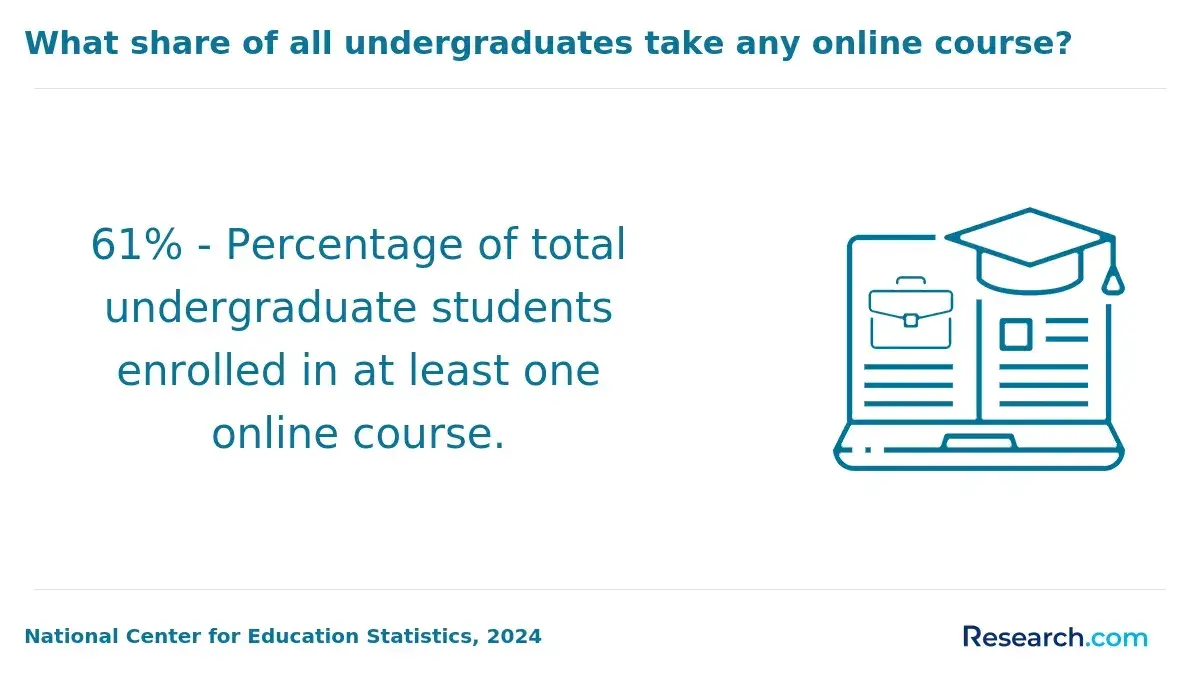
According to federal postsecondary enrollment data released by NCES, distance education remains a major part of U.S. higher education after the pandemic-era shift. For data science students, this matters because many online programs now offer serious technical coursework, virtual labs, cloud-based projects, and asynchronous options that were less common years ago.
The table below shows when each format tends to make the most sense:
| Program format | When it makes sense | Best advantages | Watch-outs |
| Fully online | You need schedule flexibility or live far from campus | Flexible pacing, broader school options, and easier to continue working | Requires self-discipline; networking may take more intentional effort |
| Hybrid | You want flexibility but still value some in-person contact | Blends online coursework with campus labs, residencies, or networking | Travel requirements can add cost and scheduling complexity |
| Campus-based | You want in-person research, internships, clubs, and recruiting | Stronger face-to-face networking and easier access to faculty | May require relocation or leaving full-time work |
| Part-time online | You are employed and want to reduce debt risk | Allows income continuity and immediate application at work | Takes longer and can be harder to maintain momentum |
| Accelerated online | You already have prerequisites and can handle a heavy workload | Faster completion and potentially lower opportunity cost | Less time for internships, portfolio building, and deeper mastery |
Before enrolling online, ask whether students complete real projects with messy datasets, whether instructors provide code review, whether career services support remote students, and whether the school is institutionally accredited. Avoid programs that advertise job outcomes without explaining methodology, sample size, or whether outcomes include only graduates who responded to surveys.
What should a strong data science curriculum include?
A strong data science curriculum should teach you to move from raw data to reliable decisions. That means more than learning a few tools. Employers want candidates who can frame a problem, collect and clean data, choose appropriate methods, test assumptions, explain limitations, and communicate results to nontechnical teams.
If you are comparing graduate options, a masters in data analytics may be a better fit than a research-heavy data science program if your goal is business intelligence, operations analytics, product analytics, or management-facing decision support.
Look for a curriculum that includes the following components because they map closely to real data science work:
- Programming: Python and SQL should be central, with R, Java, or Scala as useful additions depending on the program.
- Statistics and probability: Courses should cover inference, regression, uncertainty, sampling, experimental design, and model evaluation.
- Machine learning: A solid program should teach supervised learning, unsupervised learning, feature engineering, validation, bias, and interpretability.
- Data management: You should learn relational databases, data warehousing, data pipelines, cloud storage, and data governance.
- Data visualization and communication: Employers value candidates who can turn analysis into clear dashboards, reports, and recommendations.
- Ethics, privacy, and responsible AI: Programs should address bias, fairness, security, privacy law awareness, and responsible model use.
- Capstone or applied project: A portfolio-quality project should require messy data, technical documentation, and a presentation of business or research impact.
One red flag is a curriculum that is mostly tool training without mathematical or statistical depth. Another is a program with advanced AI course titles but no prerequisites in programming, data structures, linear algebra, or probability. Trendy topics matter, but foundations are what help you adapt when tools change.
What admissions requirements do data science programs usually ask for?
Admissions requirements vary by school and degree level, but data science programs usually look for evidence that you can handle quantitative and technical coursework. Selective master's programs may expect prior programming, calculus, linear algebra, statistics, or professional analytics experience. More flexible programs may admit students from nontechnical backgrounds but require bridge courses before advanced classes.
Typical requirements include several of the following items. Review them early so you have time to fill gaps before application deadlines.
- Completed application: Most schools require an online application, fee, and program-specific questions.
- Official transcripts: Programs check your prior GPA, quantitative coursework, and degree completion status.
- Prerequisite coursework: Common prerequisites include statistics, calculus, programming, databases, or linear algebra.
- Resume or CV: Work experience, internships, research, and technical projects can strengthen your application.
- Statement of purpose: Explain your career goal, why the program fits, and how your background prepares you.
- Letters of recommendation: Academic or professional recommenders should speak to analytical ability, persistence, and communication.
- Test scores: Some programs are test-optional, while others may request GRE scores, especially for quantitative graduate programs.
- Portfolio or coding evidence: Some schools value GitHub projects, notebooks, dashboards, or prior technical work.
A practical admissions strategy is to apply only after comparing prerequisite expectations, not just rankings. Students who are missing math or programming foundations may benefit from taking accredited prerequisite courses before enrolling.
If your interests are closer to information organization, digital archives, data curation, or knowledge management than predictive modeling, you may also want to compare adjacent options such as library science degrees online.
How long do data science degrees take and what do they cost?
Data science degree timelines and costs vary widely by credential, school type, residency status, and whether you study full time or part time. College Board's 2024 pricing data lists average published tuition and fees for public four-year in-state undergraduates at $11,610 for the academic year, while private nonprofit four-year institutions average much higher. That difference matters because ROI depends not only on future earnings, but also on how much debt you take on to reach the job market.
The table below gives a practical cost-and-time comparison. These are typical ranges and decision factors, not guaranteed prices for every school.
| Credential | Typical time to complete | Main cost drivers | Best way to control cost |
| Bachelor's degree | About 4 years full-time; longer part-time | Residency status, public vs. private pricing, housing, transfer credits | Use community college transfer pathways, in-state tuition, scholarships, and credit for prior learning where available |
| Master's degree | About 1 to 2 years full-time; 2 to 4 years part-time | Per-credit tuition, program length, technology fees, lost work time | Choose a program with the fewest required credits that still covers your target skills |
| Graduate certificate | About 6 to 18 months | Credit count, whether credits transfer into a master's program | Select stackable certificates if you may later continue into a degree |
| Bootcamp or nondegree certificate | About 3 to 9 months | Provider type, career services, financing terms | Avoid high-cost programs unless outcomes are transparent and the curriculum fits your background |
| Self-paced coursework | Variable | Subscriptions, exams, software, cloud usage | Use it to supplement a degree or portfolio rather than as your only credential in competitive markets |
To evaluate cost realistically, estimate tuition, fees, books, software, equipment, commuting or relocation, lost wages, and loan interest. Then compare that total with the roles you are targeting in your preferred state. If your real goal is a faster, lower-cost path into a stable occupation rather than analytics work specifically, it may be worth comparing other credential-based options such as online medical assistant programs that accept financial aid before committing to a data science degree.
Before you enroll, take these practical steps to reduce financial risk:
- Confirm institutional accreditation through the school and recognized accreditation databases.
- Ask whether credits transfer in and whether graduate certificate credits can stack into a master's degree.
- Compare total program cost, not just per-credit tuition.
- Review whether online students receive the same career services as campus students.
- Ask for job outcome data by program, graduation year, and response rate.
- Avoid private loans or income-share agreements until you understand the repayment terms.
What jobs can you get with a data science degree?
A data science degree can lead to several job paths, and the best choice depends on how technical, mathematical, or business-facing you want your work to be. BLS May 2024 wage data shows a strong national median for data scientists, but actual pay varies by state, industry, employer size, degree level, experience, and whether the role is closer to analytics, engineering, or research.
The table below compares common roles so you can connect your education plan to a realistic job target:
| Job title | What you do | Good entry path | Advancement options |
| Data analyst | Clean data, create reports, identify trends, answer business questions | Bachelor's degree, SQL, Excel, Python or R, dashboard portfolio | Senior analyst, analytics manager, data scientist |
| Business intelligence analyst | Build dashboards, track performance metrics, support leadership decisions | Business, information systems, analytics, or data science degree | BI developer, analytics engineer, data product manager |
| Data scientist | Build predictive models, run experiments, communicate findings | Quantitative bachelor's plus portfolio; master's for some roles | Senior data scientist, lead scientist, applied AI specialist |
| Machine learning engineer | Deploy and maintain machine learning systems in production | Computer science, data engineering, or advanced data science background | MLOps engineer, AI engineer, machine learning architect |
| Data engineer | Create pipelines, manage data platforms, support analytics infrastructure | Computer science, information systems, or analytics with strong SQL and cloud skills | Senior data engineer, data architect, platform engineer |
| Quantitative analyst | Model financial risk, pricing, trading, or portfolio behavior | Statistics, mathematics, finance, economics, or a graduate quantitative degree | Quant researcher, risk manager, portfolio analytics lead |
| Health data analyst | Analyze clinical, claims, quality, or operational health data | Analytics degree plus health care domain knowledge | Clinical data scientist, population health analyst, health informatics manager |
The smartest early-career move is to build a portfolio around the industry you want. For example, a candidate targeting Texas energy analytics should not rely only on generic sales datasets. A candidate targeting North Carolina health analytics should understand privacy-aware health data workflows. A candidate targeting Washington cloud analytics should show comfort with scalable data tools.
Common career mistakes include applying only to "data scientist" titles, ignoring analyst roles that build experience, using polished tutorial projects without original analysis, and overstating AI skills. Employers are increasingly alert to candidates who can prompt tools but cannot explain assumptions, validate results, or troubleshoot bad data.
Which data science certifications matter most to employers?
Certifications can help data science candidates, but they work best as evidence of specific skills rather than replacements for degrees, projects, or experience. Employers tend to value certifications most when they match the tools used in the job description, especially cloud platforms, databases, visualization tools, and security-related analytics environments.
The table below highlights certifications that often matter because they map to real workplace platforms. Requirements, exam versions, and employer preferences change, so verify current details before paying for an exam.
| Certification area | Examples employers may recognize | Best for | What it proves |
| Cloud data and machine learning | AWS, Microsoft Azure, Google Cloud data or machine learning certifications | Data engineers, ML engineers, cloud analytics professionals | Ability to work with cloud data services, deployment tools, and scalable workflows |
| Data visualization and BI | Tableau and Microsoft Power BI certifications | Data analysts and business intelligence analysts | Dashboarding, reporting, and business communication skills |
| Database and SQL | Vendor database certifications from major cloud or database providers | Analysts, data engineers, analytics engineers | SQL, data modeling, querying, and data platform knowledge |
| Analytics and statistical tools | SAS or other analytics platform credentials where relevant | Health care, government, finance, and legacy enterprise environments | Platform-specific analytics capability |
| Security and privacy-adjacent analytics | Cybersecurity or security analytics credentials for relevant roles | Cyber data analysts and public sector analytics candidates | Understanding of threat data, controls, monitoring, and security context |
Choose certifications strategically. If you want data engineering roles in Texas or Washington, cloud data certifications may be more useful than a general analytics badge. If you want BI roles in Florida or Georgia, Power BI or Tableau proof may help more. If you want federal contracting roles in Virginia, security-related knowledge and clearance eligibility may matter as much as analytics tooling.
A good certification plan is simple: first build core skills, then complete one platform credential that matches your target job postings, and finally create a project that uses the certified tool in a realistic way. Do not collect certificates without projects; employers need evidence that you can apply the skill.
Other Things You Should Know About Data Science
Yes, but you will need to build technical foundations before competing for data science roles. Start with statistics, Python, SQL, and basic machine learning, then create projects tied to your previous field. A nontechnical background can become an advantage if it gives you strong domain knowledge in health care, finance, marketing, logistics, or policy.
Python is the best first choice for most learners because it is widely used in analytics, machine learning, automation, and AI workflows. SQL should come next because nearly every data role requires querying databases. R is also useful, especially in statistics-heavy, academic, health, and research settings.
A portfolio is very important for entry-level and career-changing candidates because it shows evidence beyond coursework. Strong projects use messy data, explain the business or research question, document methods, and discuss limitations. A few original, well-explained projects are more valuable than many copied tutorials.
The strongest hiring comes from technology, finance, healthcare, and professional services. In 2027, states with expanding tech hubs and large health systems usually post the most openings, because these employers need machine learning, analytics, and forecasting talent for product development, risk modeling, and patient data work.
References
- Masters in Data Science Admission Requirements 2026 https://admit-lab.com/blog/masters-in-data-science-requirements/
- Data Science Course vs. University – Which path is better in 2026? https://www.wbscodingschool.com/blog/data-science-course-vs-university/
- Data Science Course Duration 2026: How Long Does It Take? https://amityonline.com/blog/data-science-course-duration
- Data Scientist https://www.mastersindatascience.org/careers/data-scientist/
- Data Scientist Employment Outlook: BLS 2024-2034 Projections, UK Market & Salaries (2026) | Qualify Nation https://qualifynation.com/en-gb/insights/data-science-job-market/
- Choosing the right certifications for data analytics and data science - Spiceworks https://www.spiceworks.com/it-careers/choosing-the-right-certifications-for-data-analytics/
- What are the highest-paying states for data scientists? | edX https://www.edx.org/become/data-scientist/data-science-salary-by-state
- Top 6 Universities Offering a Fully Online MSc in Data Science - Toolshero https://www.toolshero.com/featured-posts/top-6-universities-data-science/
- Data Science Careers: Opportunities & Growth | Eastern CT State https://www.easternct.edu/graduate-division/online/articles/career-opportunities-data-science/
- Client Challenge https://www.slideshare.net/slideshow/new-report-reveals-which-data-science-certifications-employers-want-most-pdf-pdf/288201251