2027 Online Data Science Degrees With Strong Technical and Business Training

Co-Founder and Chief Data Scientist
Choosing an online data science degree is really a career investment decision, you need technical depth, business relevance, and a program employers will respect. The U.S. Bureau of Labor Statistics projects data scientist employment to grow 36% from 2023 to 2033, far faster than average, making program quality and skill alignment especially important.
This guide is for prospective bachelor's and master's students comparing online options. You will learn what these degrees include, how online programs compare with campus study, what they cost, and how to choose a program that fits your career goals.
Key Things You Should Know
- Strong online data science degrees usually combine Python or R, SQL, statistics, machine learning, cloud tools, visualization, and business decision-making rather than teaching analytics as isolated software training.
- According to BLS 2024 wage data, the median annual wage for data scientists was $112,590, but actual pay varies by role, industry, location, experience, and whether the job is technical, managerial, or business-facing.
- Online programs can be a good fit for working adults, but students should verify institutional accreditation, total tuition and fees, employer recognition, live support, portfolio requirements, and whether the curriculum includes both applied projects and business communication.
What is an online data science degree that combines technical and business training?
An online data science degree that combines technical and business training is a bachelor's or master's program delivered primarily online that teaches students how to collect, clean, analyze, model, and communicate data for organizational decisions. The "technical" side usually covers programming, databases, statistics, machine learning, data engineering, and visualization. The "business" side focuses on strategy, operations, finance, marketing analytics, product decisions, ethics, project management, and communicating insights to nontechnical stakeholders.
This combination matters because many data science jobs are not just about building models. Employers often need professionals who can translate ambiguous business problems into analytical questions, choose appropriate methods, explain limitations, and recommend actions. A technically strong graduate who cannot connect results to business value may struggle in client-facing, product, consulting, or leadership roles.
These programs commonly appear under several names. The title is less important than the curriculum, faculty expertise, accreditation, and career fit.
| Program label | Typical emphasis | Best fit |
| Data Science | Programming, statistics, machine learning, data mining, and applied modeling | Students targeting data scientist, machine learning, or analytics engineering roles |
| Business Analytics | Data analysis, visualization, forecasting, operations, marketing, finance, and management decisions | Students who want business-facing analytics, consulting, or management roles |
| Data Analytics | SQL, dashboards, reporting, data management, applied statistics, and communication | Career changers and professionals pursuing analyst roles before deeper data science work |
| Analytics or Applied Analytics | Interdisciplinary modeling, optimization, decision science, and applied projects | Students who want broad technical and organizational training |
A student who wants advanced research, faculty-supervised dissertation work, or senior technical specialization may eventually compare a PhD data science online with professional master's programs. For most career changers and working analysts, however, a bachelor's or master's degree with a portfolio of applied projects is usually the more direct path.
How do online data science programs compare to on-campus options for flexibility and outcomes?
Online and on-campus data science degrees can lead to similar learning outcomes when the online program has the same academic standards, faculty oversight, assessment methods, and institutional accreditation as the campus program. The main difference is not whether one format is automatically better; it is how each format fits your schedule, learning style, networking needs, and access to projects or career services.
The table below summarizes the decision factors that matter most when comparing online and campus formats. Use it to identify where you may need extra support before enrolling.
| Factor | Online data science degree | On-campus data science degree | Decision point |
| Schedule | Often asynchronous or evening-friendly, with part-time options for working adults | Usually more fixed, with scheduled classes, labs, and campus activities | Online is usually stronger if you need to keep working full time |
| Networking | Depends heavily on virtual cohorts, live sessions, group projects, alumni platforms, and career events | Often easier to build relationships through labs, clubs, faculty office hours, and campus recruiting | Campus may be better if you rely on in-person recruiting and peer interaction |
| Technical practice | Can be strong if the program uses cloud labs, GitHub, capstones, and real datasets | May offer physical labs, research groups, and direct faculty interaction | Ask whether online students complete the same projects and receive the same feedback |
| Career services | Quality varies widely; some programs offer virtual coaching, resume reviews, and employer events | Campus recruiting may be more visible, especially for local employers | Do not assume online students receive identical career access unless the school confirms it |
| Cost structure | May reduce relocation, commuting, and opportunity costs, but technology and program fees still matter | May include housing, transportation, and higher indirect costs | Compare total cost, not tuition alone |
Online learning can be especially effective for students who are self-directed and comfortable troubleshooting software. Data science requires repeated practice, so a good online program should provide structured deadlines, interactive coding environments, instructor feedback, discussion spaces, and portfolio-ready assignments.
On-campus study may make more sense if you want a highly immersive experience, access to university research labs, in-person hackathons, or a traditional recruiting pipeline. Students who are new to programming may also prefer campus-based tutoring and face-to-face support, although many strong online programs now offer live office hours and peer communities.
Which U.S. schools offer accredited online data science degrees with strong business focus?
Many accredited U.S. institutions offer online data science, analytics, or business analytics degrees that combine technical and business training. Accreditation should be checked at the institutional level through recognized accrediting agencies, and some business programs may also hold programmatic business accreditation such as AACSB, ACBSP, or IACBE. Program availability, tuition, and curriculum can change, so verify details directly with the school before applying.
The following examples show the kinds of U.S. programs worth comparing if you want both analytics depth and business relevance. This is not a ranking; it is a practical starting point for further research.
| School | Online program example | Business-focused strengths to examine | Best-fit student profile |
| Georgia Institute of Technology | Online Master of Science in Analytics | Interdisciplinary analytics with computing, engineering, and business perspectives | Technically inclined students who want applied analytics at scale |
| Penn State World Campus | Online data analytics and business analytics pathways | Applied analytics, organizational decision-making, and professional graduate structure | Working professionals seeking a recognized public university option |
| Arizona State University Online | Online business data analytics and data science-related degrees | Business school connection, analytics for operations, systems, and decision support | Bachelor's students who want business analytics with technical tools |
| University of California, Berkeley | Online Master of Information and Data Science | Applied data science, ethics, communication, and organizational problem-solving | Students seeking a selective professional master's with strong project work |
| University of Wisconsin Extended Campus | Online Master of Science in Data Science | Multi-campus public university collaboration with applied data science coursework | Students who want a broad online master's from a public university system |
| University of Maryland Global Campus | Online data analytics and information technology-related degrees | Career-oriented analytics, database, and business problem-solving coursework | Adult learners and military-affiliated students seeking flexible study |
| Bellevue University | Online data science or analytics-related degrees | Applied analytics, business operations, and career-focused project work | Students who prefer practitioner-oriented online learning |
When comparing schools, do not rely on the program name alone. A "data science" degree may be more theoretical than business-focused, while a "business analytics" degree may be strong for dashboards and decisions but lighter on machine learning or data engineering. The best choice depends on the roles you want after graduation.
What core technical and business courses are included in online data science curricula?
A strong curriculum should help students move from raw data to business action. That means learning how to acquire data, evaluate data quality, select methods, build models, interpret results, and present recommendations clearly. The best programs connect technical coursework to realistic business problems rather than treating coding, statistics, and strategy as separate subjects.
Most online data science programs with business training include courses from the following clusters. The balance among these areas can tell you whether the degree is more technical, managerial, or analyst-oriented.
| Curriculum area | Common courses | Why it matters for business-focused data science |
| Programming and computing | Python, R, SQL, software tools, reproducible workflows | Builds the ability to manipulate data and automate analysis instead of relying only on spreadsheets |
| Statistics and modeling | Probability, regression, experimental design, forecasting, statistical learning | Helps students judge uncertainty, avoid misleading conclusions, and support evidence-based decisions |
| Machine learning and AI | Supervised learning, unsupervised learning, model evaluation, responsible AI | Prepares students to use predictive tools while understanding bias, overfitting, and business risk |
| Data management | Databases, data warehousing, cloud platforms, data pipelines, data governance | Supports scalable analytics and reliable reporting across business systems |
| Visualization and communication | Dashboard design, storytelling with data, executive communication | Turns analysis into decisions that managers, clients, and stakeholders can understand |
| Business applications | Marketing analytics, finance analytics, operations analytics, product analytics, strategy | Connects analytical methods to revenue, cost, customer, risk, and efficiency questions |
| Ethics and policy | Privacy, fairness, explainability, compliance, data security | Reduces legal, reputational, and operational risks when organizations use data |
AI is now reshaping what students should expect from data science coursework. A program does not need to chase every new tool, but it should address generative AI, model governance, automation, responsible AI, and the difference between using AI tools and validating AI outputs. Students especially interested in artificial intelligence may also compare data science degrees with a masters in AI online if their goal is deeper specialization in machine learning systems.
Before enrolling, review sample syllabi if available. Look for graded coding assignments, team projects, a capstone, real or realistic datasets, version control, cloud exposure, and business presentations. A curriculum that is mostly theory or mostly dashboards may still be useful, but it may not prepare students equally well for every data science role.
What are typical admission requirements for online bachelor's and master's data science degrees?
Admission requirements depend on degree level and institutional selectivity. Online bachelor's programs often focus on high school preparation, transfer credits, and readiness for college math. Online master's programs usually evaluate prior coursework, quantitative ability, professional experience, and evidence that the applicant can handle programming and statistics.
The table below compares typical requirements by degree level. Exact standards vary by school, so use this as a planning checklist rather than a universal rule.
| Requirement | Online bachelor's degree | Online master's degree |
| Prior education | High school diploma or equivalent; transfer credits may be accepted | Bachelor's degree from an accredited institution |
| Math preparation | College algebra, precalculus, or calculus placement may be required | Statistics, calculus, linear algebra, or quantitative coursework may be expected |
| Programming background | Often not required at entry, though prior coding helps | Some programs expect Python, R, Java, or similar experience; others offer bridge courses |
| GPA | Minimum GPA standards vary, especially for transfer students | Many programs publish a minimum undergraduate GPA, but review may be holistic |
| Testing | Standardized tests are often optional or not required for online adult learners | GRE or GMAT requirements vary and are increasingly waived by many professional programs |
| Professional materials | May require transcripts, application essay, and proof of English proficiency if applicable | Commonly includes resume, statement of purpose, recommendations, transcripts, and sometimes an interview |
Students who lack prerequisites should not assume they are disqualified. Many schools offer foundation courses in statistics, programming, databases, or mathematics. The key question is whether those courses are included in tuition, add time to completion, or delay access to core graduate courses.
Applicants can strengthen their profile by completing a small portfolio before applying. A simple but credible portfolio might include a Python notebook, a SQL analysis, a visualization dashboard, and a short written explanation of business implications. Admissions teams may not require this, but it can show readiness and help career changers clarify their goals.
How long do online data science programs take, and what do they cost overall?
Program length and cost vary widely by degree level, transfer credits, enrollment pace, public or private tuition structure, and whether the program charges flat-rate, per-credit, or cohort tuition. Online study can reduce commuting and relocation costs, but students should still budget for technology fees, books, software, exam proctoring, and possible in-person residencies.
College Board's 2024 Trends in College Pricing reported average published tuition and fees of $11,610 for in-state students at public four-year institutions and $43,350 at private nonprofit four-year institutions for 2024-25. Those figures are not online-program prices, but they give students a useful national benchmark when judging whether a quoted online tuition is unusually low, moderate, or high.
The table below summarizes typical time and cost factors. Instead of comparing only the advertised tuition, estimate the full price from enrollment through graduation.
| Program type | Typical time to complete | Main cost drivers | Best-fit scenario |
| Online bachelor's in data science or business analytics | About four years for first-time students; often shorter with transfer credits | Credit count, transfer policy, residency requirements, fees, and whether tuition differs by state | Students without a bachelor's degree who want entry-level analyst or data roles |
| Online master's in data science, analytics, or business analytics | Often one to three years depending on full-time or part-time pace | Total credits, per-credit tuition, prerequisites, technology fees, and employer reimbursement | Working professionals seeking advancement, specialization, or a career change |
| Graduate certificate before a master's | Often several months to one year | Number of courses, stackability into a degree, and whether credits transfer later | Students testing the field or filling skill gaps before committing to a full degree |
| Accelerated online pathway | Shorter calendar time but heavier weekly workload | Flat-rate tuition, compressed terms, reduced ability to work overtime, and fewer breaks | Students with strong preparation and available study time |
To estimate total cost, ask the school for a written breakdown before applying. The breakdown should include tuition, mandatory fees, course materials, residency or travel costs, software requirements, graduation fees, and any additional prerequisite courses.
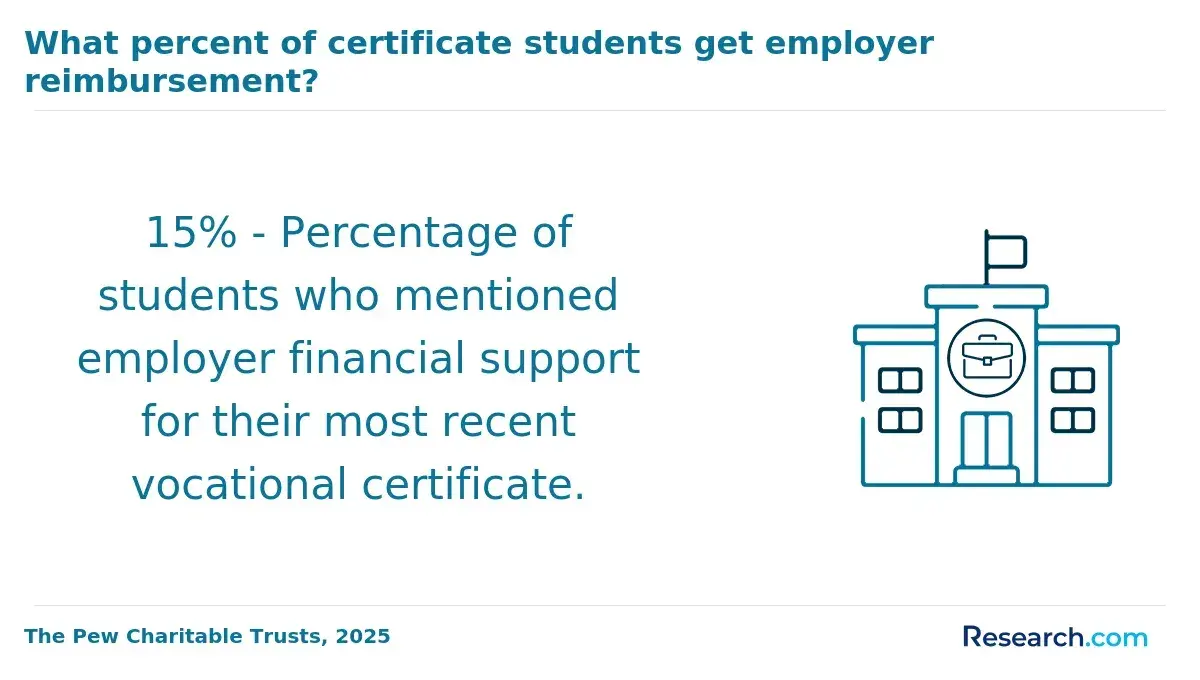
Students can reduce costs by maximizing transfer credits, using employer tuition assistance, applying for institutional scholarships, comparing public university options, and avoiding programs that require unnecessary prerequisite sequences. Federal aid eligibility also depends on the school's participation, the student's enrollment status, and degree or certificate classification.
What data science career paths are available with this mix of technical and business skills?
Graduates with both technical data science skills and business training can pursue roles that sit between analytics, technology, and decision-making. The right path depends on depth of programming, statistical training, domain knowledge, communication skills, and whether the student wants to build models, manage analytics projects, or advise business leaders.
The table below connects common roles with practical responsibilities. It can help students choose electives and projects that match their target career.
| Career path | Typical responsibilities | Skills that matter most |
| Data analyst | Prepare reports, query databases, build dashboards, explain trends, and support team decisions | SQL, spreadsheets, visualization, statistics, business communication |
| Business analyst or business intelligence analyst | Translate business needs into data requirements, monitor performance, and recommend process improvements | Stakeholder management, dashboards, requirements gathering, data interpretation |
| Data scientist | Build predictive models, test hypotheses, analyze complex datasets, and communicate model limitations | Python or R, machine learning, statistics, experimentation, communication |
| Machine learning analyst or applied AI specialist | Develop, evaluate, and monitor AI-enabled models for business use cases | Machine learning, model evaluation, cloud tools, data pipelines, responsible AI |
| Analytics consultant | Advise internal or external clients, define analytical projects, and present recommendations | Problem framing, storytelling, business strategy, technical credibility |
| Product analyst | Analyze user behavior, evaluate experiments, and guide product decisions | Experimentation, metrics design, SQL, visualization, product thinking |
| Analytics manager | Lead analytics teams, prioritize projects, communicate with executives, and manage data strategy | Leadership, project management, analytics judgment, business alignment |
AI is also creating adjacent work for professionals who can evaluate model outputs, improve prompts, review data quality, and provide human feedback. People exploring nontraditional paths may want to understand how AI trainers fit into the broader AI labor market, although that path does not always require a full data science degree.
This degree mix is most valuable for students who want to solve business problems with data, not just learn tools. It may be less suitable for students who want pure software engineering, academic statistics, or theoretical machine learning research unless the program offers enough advanced technical electives.
What salaries can graduates of online data science degrees realistically expect in the U.S.?
Salary expectations should be realistic and role-specific. A degree can improve access to technical and analytical roles, but compensation depends on experience, location, industry, portfolio quality, security clearance, management responsibility, and employer size. Entry-level graduates should not assume they will immediately earn the median wage for experienced professionals.
The U.S. Bureau of Labor Statistics reported a May 2024 median annual wage of $112,590 for data scientists. This figure is useful because it reflects the national labor market for the occupation, but it does not distinguish between new graduates, senior data scientists, or specialized AI and machine learning roles.
The table below places several related occupations in context. Use it to compare directionally, not as a guaranteed salary forecast.
| Occupation | Recent U.S. salary context | How business training can help |
| Data scientist | BLS May 2024 median annual wage: $112,590 | Helps translate models into decisions, prioritize business value, and communicate uncertainty |
| Operations research analyst | Commonly aligned with optimization, forecasting, and decision science roles | Supports logistics, staffing, pricing, and process improvement decisions |
| Market research analyst | Often connected to customer behavior, surveys, campaigns, and product demand | Combines analytics with marketing, strategy, and consumer insight |
| Management analyst | Often focused on improving organizational performance and advising leaders | Pairs data interpretation with consulting, operations, and executive communication |
| Computer and information research scientist | Usually requires deeper research or graduate-level technical preparation | Business knowledge is useful for applied AI and research commercialization |
Students can improve salary potential by building evidence of applied ability. Employers often look for GitHub projects, dashboards, case studies, internships, capstones, domain knowledge, and the ability to explain trade-offs in plain language. For many career changers, the first move may be into data analyst or business intelligence work before advancing into data scientist roles.
What is the job outlook and industry demand for data science and analytics roles?
Demand for data science and analytics talent remains strong because organizations continue to collect large volumes of operational, customer, financial, healthcare, and product data. The growth of AI has increased the need for people who can prepare reliable datasets, evaluate models, monitor performance, and explain results responsibly.
BLS projects data scientist employment to grow 36% from 2023 to 2033, which is far above the average for all occupations. For students, the key takeaway is not that every graduate will land a data scientist title immediately; it is that the labor market is expanding for people who can combine quantitative analysis, computing, and business judgment.
Current hiring trends favor candidates who can do more than run tools. Employers increasingly value:
- Practical AI literacy, including the ability to use generative AI carefully while checking accuracy, bias, privacy, and security risks.
- Data engineering awareness, because many analytics projects fail when data pipelines, documentation, or governance are weak.
- Business communication, especially the ability to explain why a model matters, what its limitations are, and how a decision should change.
- Domain knowledge in areas such as finance, healthcare, logistics, marketing, cybersecurity, education, energy, and retail.
- Portfolio evidence, including reproducible code, clear visualizations, and written case studies that show business impact.
Students should also watch for industry-specific opportunities. For example, someone interested in health, food systems, or wellness analytics might compare a data science degree with a domain-focused option such as an online nutritionist degree, depending on whether they want to become a practitioner, analyst, researcher, or product specialist.
How can students evaluate and choose a reputable online data science program?
Choosing a reputable online data science program requires more than scanning rankings or picking the lowest tuition. The best program for you should match your target role, current skill level, budget, learning style, and need for career support. It should also provide transparent information before you enroll.
Use the following steps to evaluate programs systematically. This process helps you avoid common mistakes and compare schools on factors that affect outcomes.
- Verify institutional accreditation through a recognized accrediting agency and confirm that the online program is offered by the accredited institution, not an unrelated third-party provider.
- Map the curriculum to your target role by checking whether it includes programming, SQL, statistics, machine learning, visualization, cloud or data systems, business applications, ethics, and a capstone.
- Ask whether online students receive the same faculty access, tutoring, library resources, career coaching, alumni access, and employer events as campus students.
- Request a total cost estimate that includes tuition, mandatory fees, prerequisite courses, technology charges, course materials, and any required travel.
- Review admissions prerequisites carefully so you know whether you must complete calculus, statistics, or programming before starting core coursework.
- Examine sample student projects or capstone descriptions to see whether graduates produce portfolio-ready work that can be discussed in interviews.
- Check transfer credit, prior learning, and stackable certificate policies if you already have college credits or professional training.
- Ask about recent graduate outcomes, but interpret them carefully because self-reported employment and salary data may not represent every student.
Several red flags should make students slow down before committing. Be cautious if a school is vague about accreditation, refuses to provide a full cost estimate, promises specific salaries, offers little faculty information, has no substantial coding or statistics work, or presents a short certificate as equivalent to a rigorous degree without evidence.
The smartest choice is usually the program that offers the strongest match between curriculum and career goal at a cost you can justify. A low-cost program with weak support may be frustrating, while an expensive program without clear career alignment can create unnecessary financial pressure. Compare value, not prestige alone.
Other Things You Should Know About Data Science
Yes, many 2027 online data science programs are designed for working professionals, offering flexible scheduling and part-time options. This allows you to balance coursework with full-time employment, making it feasible to advance your education while maintaining your current job commitments.
A certificate can be useful for testing the field or adding a focused skill, especially if you already have a degree. A full degree is usually better if you need broader preparation, career switching credibility, access to internships or career services, or eligibility for roles that prefer a bachelor's or master's degree.
Yes, many 2027 online data science degrees require a capstone in the final term, usually worth 3 to 6 credits. Students use business data, coding, and analytics tools to solve a real-world problem and present findings in a written report or recorded presentation.
References
- What are the requirements for international students in the online Data Science bachelor's programmes? https://www.privathochschulen.net/en/questions/what-are-the-entry-requirements-for-online-data-science-bachelors-programmes
- What is a Good Master’s in Data Science Salary? | Elmhurst University Blog https://www.elmhurst.edu/blog/masters-in-data-science-salary/
- Data Science Course Syllabus & Subjects [Updated 2025] - GeeksforGeeks https://www.geeksforgeeks.org/data-science/data-science-course-syllabus-subjects/
- Data Scientist Employment Outlook: BLS 2024-2034 Projections, UK Market & Salaries (2026) | Qualify Nation https://qualifynation.com/en-gb/insights/data-science-job-market
- How to Choose the Right Data Science Course for You in 3 Easy Steps? – 365 Data Science https://365datascience.com/trending/how-to-choose-the-right-data-science-course/
- Top 6 Universities Offering a Fully Online MSc in Data Science - Toolshero https://www.toolshero.com/featured-posts/top-6-universities-data-science/
- How an Online Data Science Degree Can Propel Your Career Forward https://www.ucumberlands.edu/blog/how-an-online-data-science-degree-can-propel-your-career
- What Does it Take to Earn a Master's in Data Science? https://datascienceprograms.com/grad-school/ms-in-data-science-requirements/
- Top 10 Data Science Career Paths are in Trends 2026 https://brollyacademy.com/data-science-career-paths/
- Data Analyst Job Outlook 2026: Growth, Salaries & Career Guide https://skillifysolutions.com/blogs/data-science/data-analyst-job-outlook/