2027 What Can You Do With a Data Science Degree

Co-Founder and Chief Data Scientist
A data science degree can lead to work in analytics, AI, product strategy, healthcare, finance, cybersecurity, and research, but the best path depends on your goals and experience. The U. S. Bureau of Labor Statistics reports that data scientist employment is projected to grow 36% from 2023 to 2033, far faster than average. This guide is for students, career changers, and working professionals who want to understand degree options, likely roles, salary context, employer expectations, and how to choose a program that fits their budget and career plan.
Key Things You Should Know
- A data science degree can prepare you for roles such as data analyst, data scientist, machine learning engineer, business intelligence analyst, analytics engineer, and research-focused quantitative roles.
- The BLS lists the May 2024 median annual wage for data scientists at $112,590, but pay varies by role, industry, location, experience, and technical depth.
- A bachelor's degree can support entry-level analytics work, while a master's degree or strong portfolio is often more competitive for advanced machine learning, AI, and research-heavy positions.
What can you do with a data science degree in today's job market?
With a data science degree, you can turn raw data into decisions, predictions, products, and operational improvements. In practical terms, that means collecting data, cleaning it, analyzing patterns, building models, explaining results to nontechnical teams, and helping organizations use evidence instead of guesswork.
The degree is especially useful because data work now sits between business strategy and technology. Employers need people who can write code, understand statistics, communicate uncertainty, and apply machine learning responsibly. A data science graduate may work on customer churn, fraud detection, clinical risk prediction, supply chain forecasting, recommendation systems, pricing models, or dashboard systems that guide executives.
Common responsibilities include several connected tasks that move from problem definition to business impact:
- Translating a business, research, or operational question into a measurable data problem.
- Using Python, R, SQL, or cloud tools to acquire, clean, transform, and validate data.
- Applying statistics, visualization, machine learning, or experimental design to identify patterns and test assumptions.
- Communicating findings through dashboards, reports, presentations, model documentation, or stakeholder briefings.
- Monitoring models for accuracy, bias, drift, privacy risk, and usefulness after deployment.
A data science degree is a strong fit if you like both technical problem-solving and real-world decision-making. It may not be the right first choice if you dislike math, prefer work with little ambiguity, or want a career that avoids continuous learning. Tools change quickly, especially with generative AI, so long-term success depends less on memorizing one platform and more on building durable skills in statistics, programming, data ethics, and communication.
What data science jobs, industries, and employers hire data science graduates?
Data science graduates are hired across technology companies, banks, hospitals, insurers, retailers, manufacturers, government agencies, research organizations, and consulting firms. The job title matters less than the actual duties, because "data scientist" at one employer may look like product analytics, while another employer may use the same title for machine learning research.
The table below compares common data science-related roles by what they usually focus on. Use it to match your degree plan and portfolio projects to the kind of work you actually want to do.
| Role | Typical focus | Common employers | Best fit for |
| Data analyst | Reports, dashboards, SQL analysis, business metrics | Retailers, banks, healthcare systems, SaaS companies, public agencies | Entry-level graduates who enjoy business questions and communication |
| Data scientist | Statistical modeling, prediction, experimentation, advanced analysis | Technology firms, insurers, finance companies, logistics firms, research teams | Graduates with strong statistics, programming, and project experience |
| Machine learning engineer | Model development, deployment, automation, production systems | AI companies, cloud firms, cybersecurity companies, large enterprises | Students with stronger software engineering and model operations skills |
| Business intelligence analyst | Dashboards, performance measurement, data storytelling | Corporate strategy teams, operations teams, marketing departments | Graduates who want a business-facing analytics career |
| Analytics engineer | Data pipelines, modeling layers, data quality, warehouse workflows | Data-driven startups, enterprise analytics teams, consulting firms | Students who like SQL, data architecture, and collaboration with analysts |
| Quantitative analyst | Risk models, forecasting, pricing, statistical research | Banks, investment firms, insurance companies, economic research teams | Graduates with deeper math, statistics, or finance preparation |
Industry choice can shape your coursework and portfolio. For example, a student interested in hospitals or genomics may benefit from bioinformatics, health informatics, or epidemiology electives; readers comparing life-science data careers may also find it useful to explore what to do with a bioinformatics degree. A student targeting fintech, by contrast, may need more coursework in risk modeling, time series, privacy, and regulatory constraints.
Employers increasingly look for evidence that you can work with messy data and explain trade-offs. A polished portfolio with two or three applied projects is often more persuasive than a long list of tools, especially for entry-level roles where hiring managers want proof that you can frame a problem, document your choices, and communicate limitations.
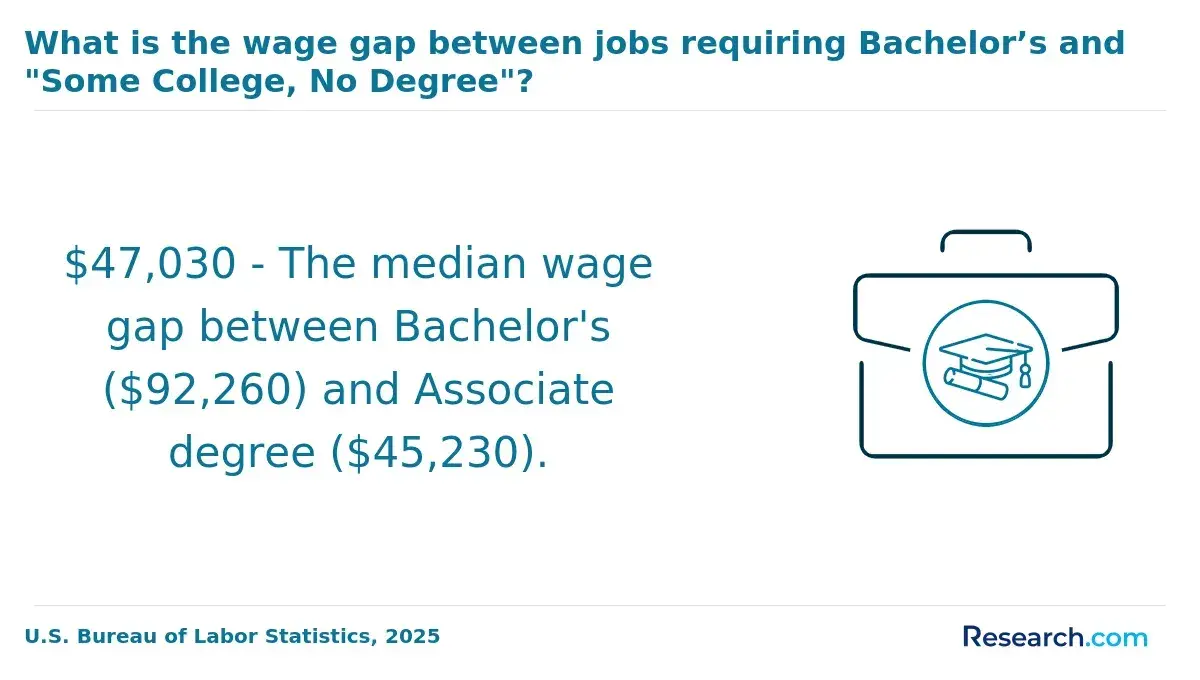
How much can you make with a data science degree at different career stages?
Salary depends on title, sector, location, degree level, experience, and whether the role involves production machine learning, leadership, or specialized domain knowledge. The BLS reported a May 2024 median annual wage of $112,590 for data scientists, which is a useful national benchmark but not a guarantee for any graduate.
The table below uses national role-level wage data and typical career positioning to help you interpret earnings potential without assuming that every graduate follows the same path.
| Career stage | Common roles | Salary context | What usually raises earning potential |
| Entry level | Data analyst, junior data scientist, business intelligence analyst | Often below the national data scientist median, especially in smaller organizations or lower-cost regions | SQL fluency, internships, dashboard projects, statistics foundations, business communication |
| Mid-career | Data scientist, analytics engineer, machine learning specialist, product analyst | Can approach or exceed the BLS median for data scientists when responsibilities include modeling, experimentation, or technical ownership | Cloud experience, model evaluation, stakeholder management, measurable project impact |
| Advanced | Senior data scientist, machine learning engineer, data science manager, applied scientist | Higher compensation is more common in tech, finance, AI product teams, and leadership tracks, but varies widely | Production ML, leadership, research depth, domain expertise, architecture decisions, mentoring |
When judging return on investment, compare total program cost against the roles the program realistically supports. College Board's 2024 data shows average published tuition and fees for 2024-2025 at $11,610 for in-state students at public four-year institutions and $43,350 at private nonprofit four-year institutions. That gap matters because two programs can lead to similar entry-level roles while producing very different debt burdens.
A good salary strategy is to focus on employability milestones rather than headline pay. Before graduating, aim to complete an internship or capstone, publish a portfolio, build comfort with SQL and Python, and practice explaining projects in plain language. Those signals make it easier for employers to evaluate your readiness.
What types of data science degrees are available, from bachelor's to master's?
Data science education is offered at several levels, and each level serves a different purpose. The right choice depends on your academic background, target role, budget, timeline, and whether you need a broad undergraduate foundation or advanced technical specialization.
The table below compares common credential levels so you can decide whether a full degree, certificate, or graduate program makes the most sense.
| Credential | Typical length | Best for | Common outcome |
| Associate degree or transfer pathway | About 2 years | Students starting affordably or preparing to transfer into a bachelor's program | Foundational analytics, programming, math, and general education coursework |
| Bachelor's degree in data science | About 4 years | First-time college students and career starters who want broad preparation | Entry-level analytics, junior data science, business intelligence, or technical support roles |
| Undergraduate certificate | Often less than 1 year | Students in related majors such as business, economics, biology, psychology, or computer science | Added data skills that complement another field |
| Graduate certificate | Often 6 to 18 months | Working professionals who need targeted upskilling without committing to a full master's degree | Career pivot support or specialization in analytics, AI, or applied statistics |
| Master's degree in data science | Often 1 to 2 years full time | Career changers, analysts seeking advancement, and students targeting advanced roles | Stronger preparation for data scientist, machine learning, analytics engineering, or research-adjacent roles |
| Doctoral study | Varies widely | Students aiming for research, academia, advanced AI methods, or specialized scientific computing | Research scientist, faculty, advanced applied scientist, or highly specialized R&D work |
If you are comparing schools by price and outcomes, start with accredited data science programs and then narrow the list by curriculum, internship access, faculty expertise, career services, and whether the program matches your intended role. The lowest tuition is not always the best value if the program lacks advising, project work, or employer connections.
A bachelor's degree usually makes sense if you are early in your education and need a complete foundation. A master's degree can make sense if you already have a quantitative or technical background and want to move into higher-level data science work. A certificate is often better if you already have a degree and need a specific skill upgrade, such as SQL, Python, data visualization, or machine learning.
What courses and skills do you learn in a typical data science program?
A strong data science program combines math, computing, statistics, domain application, and communication. The goal is not just to use tools but to understand when an analysis is valid, when a model is misleading, and how to explain uncertainty to people making decisions.
Most programs include a mix of technical and applied courses. The following areas matter because they map directly to how data teams work in real organizations:
- Programming in Python, R, or both, with emphasis on data manipulation, scripting, reproducibility, and basic software practices.
- SQL and database concepts, including joins, queries, data modeling, data warehouses, and data quality checks.
- Statistics and probability, including inference, regression, sampling, hypothesis testing, uncertainty, and experimental design.
- Machine learning, including supervised and unsupervised learning, model evaluation, feature engineering, overfitting, and interpretability.
- Data visualization and communication, including dashboards, charts, storytelling, and stakeholder presentations.
- Data ethics, privacy, and governance, including bias, consent, security, responsible AI, and documentation.
- Capstone or applied project work that requires students to solve a real or realistic problem from start to finish.
Current programs are also adapting to generative AI. That does not mean students can skip fundamentals. AI tools can help write code, summarize data dictionaries, or draft documentation, but employers still need graduates who can check outputs, detect flawed assumptions, protect sensitive data, and decide whether a model should be used at all.
For career readiness, prioritize projects that show judgment rather than just tool use. A strong project explains the question, the data source, cleaning steps, modeling choices, evaluation method, limitations, and recommended action. A weak project only displays a chart or model score without explaining why it matters.
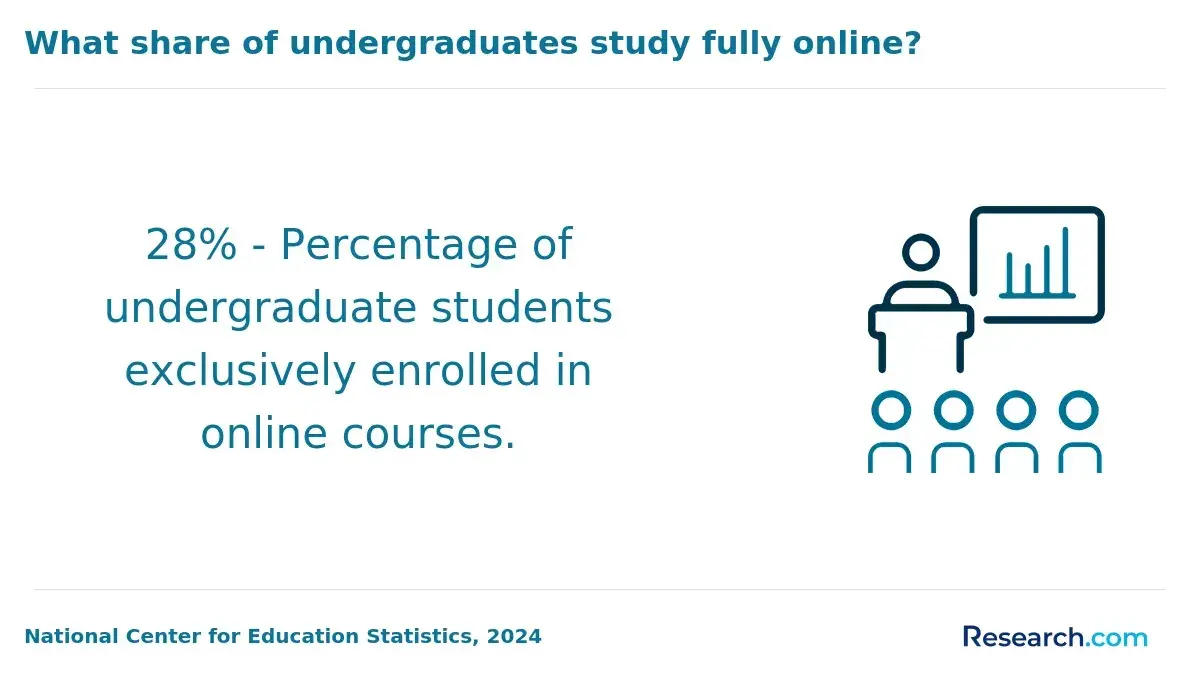
How do online data science degrees compare with traditional on-campus programs?
Online and on-campus data science degrees can cover similar academic content, but the student experience is different. The best format depends on your schedule, learning style, need for in-person networking, and whether you can stay motivated in a technical program without frequent face-to-face structure.
The table below compares the trade-offs that most affect learning, cost, and career preparation.
| Factor | Online data science degree | On-campus data science degree | Decision point |
| Flexibility | Usually better for working adults, parents, military students, and career changers | Usually better for students who want a structured weekly schedule | Choose online if schedule control is essential |
| Networking | Can be strong if the program offers live sessions, cohorts, career events, and active faculty access | Often easier through clubs, labs, campus events, and informal peer contact | Choose campus if spontaneous networking matters to you |
| Cost | May reduce relocation and commuting costs, though tuition varies widely | May include housing, transportation, and campus fees | Compare total cost, not tuition alone |
| Hands-on learning | Works well for coding, cloud labs, analytics projects, and virtual collaboration | May offer easier access to research labs, in-person advising, and campus recruiting | Check how capstones, internships, and group projects are delivered |
| Employer perception | Generally strongest when the school is accredited and the transcript does not suggest a lower academic standard | Often familiar to traditional campus recruiters | Accreditation, reputation, and portfolio quality matter more than format alone |
Online study is often attractive for students comparing data science with adjacent tech pathways such as AI degrees. The key difference is emphasis: data science programs usually center on data analysis, statistics, and decision support, while AI programs may place more weight on intelligent systems, machine learning architecture, robotics, or advanced automation.
Before enrolling online, ask whether classes are asynchronous, synchronous, or hybrid; how quickly instructors respond; whether students get access to cloud computing tools; and how the program supports internships or employer projects. An online program can be excellent, but it should not leave you isolated while learning difficult technical material.
How do you choose an accredited, reputable data science program in the U.S.?
Choosing a data science program should start with accreditation, but it should not end there. Institutional accreditation helps confirm that a college or university meets recognized academic and administrative standards, which can affect federal financial aid eligibility, transfer credit, graduate admissions, and employer confidence.
After confirming accreditation, evaluate whether the program's curriculum and support systems match your intended outcome. Use the following steps to avoid paying for a credential that does not fit your career goal:
- Verify institutional accreditation through the school's website and the U.S. Department of Education's recognized accreditor resources.
- Review the curriculum for statistics, SQL, Python or R, machine learning, data ethics, databases, and a capstone or applied project.
- Check whether faculty have relevant academic, industry, or applied research experience in data science, statistics, computer science, AI, or a domain field.
- Ask for career outcome information, internship support, employer partnerships, and examples of recent capstone projects.
- Compare total cost, including fees, software, books, residency requirements, technology charges, travel, and lost work time.
- Confirm transfer credit, prior learning, and prerequisite policies before assuming previous coursework will count.
- Look for red flags such as vague course descriptions, no faculty transparency, unclear accreditation language, aggressive enrollment pressure, or promises of guaranteed salaries.
Program format also deserves careful review. Data science can be delivered online effectively because much of the work involves code, cloud tools, and virtual collaboration, but students should still check whether any in-person requirements exist. For comparison, programs with field, lab, or animal-care components, such as an online animal science bachelor degree, show why hands-on requirements must be verified before assuming a program is fully remote.
A common mistake is relying only on rankings or brand name. A reputable program for one student may be a poor fit for another if it lacks the right prerequisites, pace, specialization, financial aid structure, or career support. The better question is not "Is this school famous?" but "Does this program prepare me for the specific data role I want at a cost I can justify?"
What are the admission requirements for data science degrees and certificates?
Admission requirements vary by school, level, and selectivity, but data science programs usually look for evidence that you can handle quantitative and technical coursework. Applicants do not always need to be expert programmers, but they should be ready to learn math, statistics, and computing in a rigorous sequence.
Requirements differ by credential level. The table below summarizes what applicants commonly encounter so you can prepare before applying.
| Program type | Common admission requirements | Preparation that helps |
| Bachelor's degree | High school diploma or equivalent, transcripts, math preparation, application essays, possible standardized test scores depending on policy | Algebra, precalculus or calculus, introductory programming, statistics, strong grades in quantitative courses |
| Undergraduate certificate | Current enrollment or prior college credit, minimum GPA, prerequisites that may include statistics or programming | Basic spreadsheet, SQL, statistics, or coding exposure |
| Graduate certificate | Bachelor's degree, transcripts, resume, statement of purpose, prerequisite coursework | Introductory Python or R, statistics, linear algebra, professional analytics experience |
| Master's degree | Bachelor's degree, transcripts, resume, recommendations, statement of purpose, prerequisites, and sometimes GRE scores | Calculus, linear algebra, probability, statistics, programming, data structures, or professional technical experience |
Career changers should pay close attention to prerequisites. A master's program may admit students from business, social science, engineering, natural science, or humanities backgrounds, but those students may need bridge courses in programming, statistics, or calculus before starting core graduate work.
To strengthen an application, take a practical sequence before applying: learn basic Python, complete an introductory statistics course, build one small data project, and write a clear statement explaining why data science fits your goals. Admissions committees often value focus and readiness more than a vague interest in "working with data."
What is the job outlook and demand for data scientists and related roles?
The U.S. labor market outlook for data scientists remains strong. The BLS projects 36% employment growth for data scientists from 2023 to 2033, which reflects demand for workers who can help organizations use large datasets, automation, AI systems, and statistical models responsibly.
That demand does not mean every applicant will find a data scientist job immediately after graduation. Entry-level openings can be competitive because many applicants now have bootcamps, certificates, graduate degrees, or self-taught portfolios. Employers often distinguish candidates by project quality, internship experience, domain knowledge, and ability to communicate with business or research teams.
Several trends are shaping demand. AI adoption is increasing the need for workers who can evaluate model performance and risk, not just build models. Privacy and governance expectations are making documentation and ethical judgment more valuable. At the same time, many organizations are hiring analytics engineers and business intelligence professionals because they first need reliable data infrastructure before advanced AI projects can succeed.
The smartest approach is to prepare for a family of roles rather than one title. If you can qualify for data analyst, analytics engineer, BI analyst, junior data scientist, and machine learning-adjacent roles, you have more entry points. From there, you can specialize as your experience grows.
Which certifications and professional credentials can boost a data science career?
Certifications can help demonstrate tool knowledge, but they work best as supplements to a degree, portfolio, or work experience. They are most useful when they match the platforms used in your target jobs, such as cloud services, databases, visualization tools, or machine learning workflows.
The table below shows common certification categories and when they may be worth considering.
| Credential category | Examples of focus areas | Best for | Limitations |
| Cloud data certifications | Data engineering, cloud databases, machine learning services, analytics platforms | Students targeting companies that use major cloud ecosystems | May expire or require updates as platforms change |
| Visualization and BI certifications | Dashboard design, reporting, business intelligence, data storytelling | Data analysts, BI analysts, product analysts, operations analysts | Tool skill alone does not replace statistics or business judgment |
| Database and SQL credentials | Relational databases, querying, administration, data modeling | Analysts, analytics engineers, data operations roles | Useful only if paired with applied projects and problem-solving |
| Machine learning credentials | Model training, evaluation, deployment, AI services, responsible ML | Data scientists and ML-focused career changers | Can be too narrow if the candidate lacks programming and math foundations |
| Project management or agile credentials | Team workflows, product delivery, stakeholder coordination | Senior analysts, managers, consultants, cross-functional data professionals | Less valuable for entry-level technical screening than project evidence |
Choose certifications strategically. If job postings in your target market repeatedly mention a specific cloud platform, BI tool, or database, a certification may help you pass screening and structure your learning. If postings emphasize statistics, experimentation, or machine learning theory, a certificate alone may not be enough.
A practical sequence is to build core skills first, complete portfolio projects second, and add certifications third. This order prevents a common mistake: collecting badges without being able to solve a real data problem from beginning to end.
Other Things You Should Know About Data Science
In 2027, both data science and computer science have unique challenges. Data science often requires a deeper understanding of statistical analysis and domain-specific knowledge, while computer science focuses more on algorithm development and software engineering. The difficulty largely depends on your skills and interests.
Yes, some professionals enter through computer science, statistics, engineering, economics, business analytics, physics, or domain-specific backgrounds. However, you still need proof of relevant skills, usually through projects, work experience, graduate coursework, or a strong portfolio.
Internships in data analytics, business intelligence, machine learning, or statistical research help data science students qualify for entry-level roles. Many employers look for 10 to 12 weeks of experience, plus projects using Python, SQL, Tableau, and basic model-building.
Python is usually the safer first choice because it is widely used in data science, machine learning, automation, and production workflows. R is still valuable, especially in statistics-heavy, academic, public health, and research environments. Learning one well is better than learning both superficially.
References
- Best universities for Data Science in USA: Rankings & Courses India https://ieltsidpindia.com/blog/universities-for-data-science-in-usa
- Data Science Course vs. University – Which path is better in 2026? https://www.wbscodingschool.com/blog/data-science-course-vs-university/
- Data Scientist Job Outlook 2025: Trends, Salaries, and Skills – 365 Data Science https://365datascience.com/career-advice/career-guides/data-scientist-job-outlook-2025/
- Data Science Courses & Tutorials | Codecademy https://www.codecademy.com/catalog/subject/data-science
- 10 data science certifications that will pay off https://www.cio.com/article/230640/15-data-science-certifications-that-will-pay-off.html
- Find the Best Data Science Degree for you https://www.datascienceprograms.org/
- What Companies Hire Data Scientists? | DiscoverDataScience.org https://www.discoverdatascience.org/articles/what-companies-hire-data-scientists/
- Jobs in Data Science: A Guide for Future Graduates https://vinuni.edu.vn/jobs-in-data-science/