
2027 Best Online Energy Policy Degree Programs

Co-Founder and Chief Data Scientist
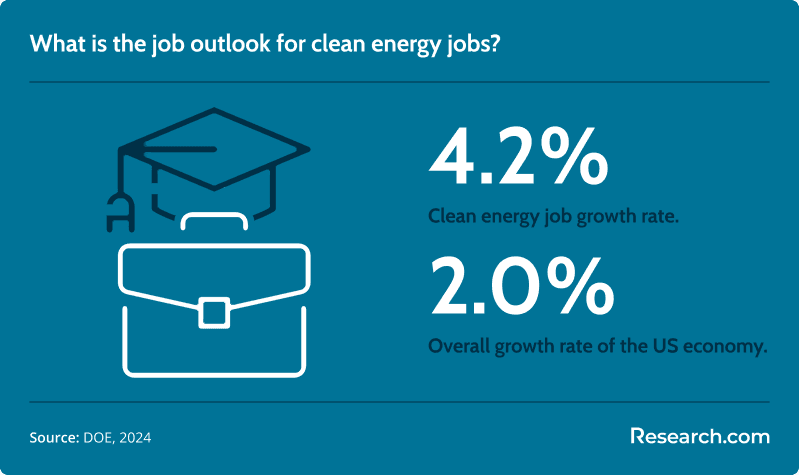
It’s deeply frustrating to watch a good energy project fail—not because of its merits, but because of flawed policies you’re powerless to influence. This isn’t just a personal feeling; it’s a systemic problem created by an industry growing at 4.2%, more than double the rate of the overall economy, without the right leadership to guide it.
This guide, created by career planning experts with over a decade of experience, is designed for professionals who want to address and improve those broken systems. We’ll show you how an online energy policy degree provides the specific economic and analytical toolkit needed to become an architect of the energy transition, not just a participant in it.
What are the benefits of getting an online energy policy degree?
- You gain the qualifications to secure a senior position in a durable, high-growth economic sector.
- You can achieve a significant earning potential, with median salaries for key roles, such as policy analyst and energy manager, ranging from nearly $79,000 to over $88,000.
- You gain the flexibility of an online format while building a global professional network that is essential for tackling a worldwide issue, such as the energy transition.
What can I expect from an online energy policy degree program?
You can expect a curriculum that focuses less on abstract theory and more on developing a practical toolkit for leadership. Top programs are designed to be interdisciplinary, giving you the skills to analyze and influence the energy sector from every angle.
It helps to see how this differs from related fields. While an environmental engineering degree teaches you how to build a solar farm, and a sustainability management degree helps a company operate it, an energy policy degree teaches you how to design the market and regulatory systems that make the project viable in the first place.
This is why you'll learn to merge quantitative analysis with energy economics, environmental law, and project finance. A strong online energy policy degree is designed to equip you with this exact set of applied skills, enabling you to shape policy and lead complex projects.
Where can I work with an online energy policy degree?
You can work across the private, public, and non-profit sectors. It's a common mistake to think this degree only leads to a government job in Washington, D.C. While those federal and state agency roles are excellent options, some of the most dynamic growth is happening elsewhere.
The private sector is aggressively hiring for these skills. Think of roles in corporate strategy, sustainability, and finance, where companies need experts to help them navigate the energy transition.
You'll also find high-value career paths in specialized energy consulting, investment firms focused on green infrastructure, and at major utility companies leading their own modernization efforts. This degree opens doors in all of them.
How much can I make with an online energy policy degree?
You can expect a strong salary, with median pay for key roles, such as climate change policy analyst and energy manager, ranging from nearly $79,000 to over $88,000. Many experienced professionals in these positions earn well into six figures.
This shows that the field is financially rewarding and that the degree is a sound investment. It positions you for roles with significant responsibility, and the compensation reflects the level of expertise required. This career path offers both a high-impact and well-compensated position.
- List of the Best Online Energy Policy Degree Programs for 2027 List of Programs
- How long does it take to complete an online energy policy degree program? Completion Time
- How does an online energy policy degree program compare to an on-campus program? How does an online energy policy degree program compare to an on-campus program?
- What is the average cost of an online energy policy degree program? Program Cost
- What are the financial aid options for students enrolling in an online energy policy degree program? Financial Aid
- What are the prerequisites for enrolling in an online energy policy degree program? What are the prerequisites for enrolling in an online energy policy degree program?
- What courses are typically in an online energy policy degree program? What courses are typically in an online energy policy degree program?
- What types of specializations are available in an online energy policy degree program? What types of specializations are available in an online energy policy degree program?
- How to choose the best online energy policy degree program? How to choose the best online energy policy degree program?
- What career paths are available for graduates of an online energy policy degree program? Career Paths
- How Do Interdisciplinary Studies Enhance an Online Energy Policy Degree Program? How Do Interdisciplinary Studies Enhance an Online Energy Policy Degree Program?
- What Are the Emerging Trends in Energy Policy Education? What Are the Emerging Trends in Energy Policy Education?
- What is the job market for graduates of an online energy policy degree program? Job Market
Best Online Energy Policy Degree Programs for 2027
Energy policy sits at the intersection of climate strategy, infrastructure, economics, law, technology, and public decision-making. If you are considering an online energy policy degree, you are probably trying to answer a practical question: which program will help you move into a more influential role without pausing your career?
This guide is designed for working professionals, career changers, policy analysts, engineers, sustainability specialists, attorneys, consultants, and business leaders comparing graduate-level online programs in energy policy and related fields. You will learn how top programs differ, how long they take, what they cost, what admissions committees usually expect, which specializations are available, and how to judge whether a degree fits your career goals.
The goal is not simply to list schools. It is to help you choose the right type of program: policy-focused, technical, legal, sustainability-centered, or executive leadership-oriented.
Quick Answer: What Is the Best Online Energy Policy Degree?
The best online energy policy degree is the one that matches your career stage and target role. Policy analysts may benefit most from public policy or environmental policy programs, engineers may prefer energy systems programs, attorneys should consider energy and environmental law degrees, and senior professionals may be better served by executive energy leadership programs. Most programs in this guide take 12–24 months, require 25 to 48 credits, and vary substantially in cost per credit.
How to Use This Ranking
Use this list as a starting point, not as an automatic decision. A highly ranked program can still be the wrong fit if its curriculum, schedule, price, or professional focus does not support your goals. Before applying, compare each program across five factors: accreditation, curriculum focus, total cost, online format, and career alignment.
How We Rank Schools
Our ranking process is built around verifiable education data rather than promotional claims. To evaluate online energy policy degree options, we review information from national education sources, school disclosures, and program-level details.
Key data sources include the U.S. Department of Education’s IPEDS database, College Scorecard, Peterson’s, and the National Center for Education Statistics. You can also review Research.com’s full ranking methodology for more detail on how programs are evaluated.
Online Energy Policy Program Comparison
| Rank | School and Program | Program Length | Credits | Cost per Credit | Best Fit |
| 1 | Johns Hopkins University — Master of Science in Energy Policy and Climate | 12–24 months | 30 | $1,590 | Professionals seeking a climate, policy, and technology-focused degree |
| 2 | University of Delaware — Master of Science in Environmental Policy and Management | 18 months | 48 | $859 | Students interested in sustainability management and environmental policy |
| 3 | Oregon State University — Master of Public Policy | 12–24 months | 36 quarter credits | $582 | Policy-focused students who want public service and applied research experience |
| 4 | Vermont Law and Graduate School — Executive Master of Environmental Policy | 16 months | 25 | $1,508 | Mid-level professionals seeking an executive environmental policy credential |
| 5 | Lewis & Clark Law School — LLM in Environmental, Natural Resources, and Energy Law | 12–24 months | 26 | $1,696 | Attorneys specializing in environmental, natural resources, or energy law |
| 6 | Texas A&M Energy Institute — Master of Science in Energy | 10 months | 36.5 | $822 | Students seeking an intensive systems-based energy program |
| 7 | University of Connecticut — Master of Energy and Environmental Management | 12–24 months | 30 | $925 | Students who want flexibility across law, planning, management, and data |
| 8 | University of Oklahoma — Executive MBA in Energy | 15+ months | 36 | $2,445 | Experienced professionals preparing for senior energy leadership roles |
| 9 | Iowa State University — Master of Engineering in Energy Systems Engineering | 2.5 years | 30 | $900 | Engineers working with complex energy systems and infrastructure |
| 10 | Pennsylvania State University — Master of Professional Studies in Renewable Energy and Sustainability Systems | 12–24 months | 33 | $1,037 | Students focused on renewable energy implementation and sustainability systems |
1. Johns Hopkins University — Master of Science in Energy Policy and Climate
Johns Hopkins University offers an interdisciplinary online master’s program for students who want to connect climate science, energy systems, policy design, and technology-driven solutions. The program is well suited for professionals who need both technical literacy and policy fluency to work on climate and energy challenges.
- Program Length: 12–24 months
- Required Credits to Graduate: 30
- Cost per Credit: $1,590
- Accreditation: Middle States Commission on Higher Education (MSCHE)
2. University of Delaware — Master of Science in Environmental Policy and Management
The University of Delaware provides an online pathway for students interested in environmental policy, sustainable business practices, climate standards, water issues, and the built environment. Its Energy and Sustainability concentration is a strong option for learners who want to apply policy and management tools inside organizations.
- Program Length: 18 months
- Required Credits to Graduate: 48
- Cost per Credit: $859
- Accreditation: Higher Learning Commission (HLC)
3. Oregon State University — Master of Public Policy
Oregon State University emphasizes applied public policy, community-based projects, collaborative problem-solving, and original research. Students can shape their studies around interests such as energy policy while building a broader public service foundation. The program is recognized by NASPAA for its commitment to inclusivity.
- Program Length: 12–24 months
- Required Quarter Credits to Graduate: 36
- Cost per Credit: $582
- Accreditation: Network of Schools of Public Policy, Affairs, and Administration (NASPAA)
4. Vermont Law and Graduate School — Executive Master of Environmental Policy
Vermont Law and Graduate School offers an executive online environmental policy degree for mid-level professionals who want a focused credential without a GRE or capstone requirement. The curriculum includes policy development, quantitative analysis, and environmental justice, including racial and economic justice considerations.
- Program Length: 16 months
- Required Credits to Graduate: 25
- Cost per Credit: $1,508
- Accreditation: New England Commission of Higher Education (NECHE)
5. Lewis & Clark Law School — LLM in Environmental, Natural Resources, and Energy Law
Lewis & Clark Law School provides an online LLM for attorneys who want advanced legal training in environmental, natural resources, and energy law. This program is designed for legal professionals, not general policy students, and may be especially useful for lawyers working in advocacy, regulation, compliance, or public-interest environmental law.
- Program Length: 12–24 months
- Required Credits to Graduate: 26
- Cost per Credit: $1,696
- Accreditation: American Bar Association (ABA)
6. Texas A&M Energy Institute — Master of Science in Energy
Texas A&M's Energy Institute uses a 10-month module-based structure to train professionals across the full energy landscape. The program emphasizes quantitative analysis, systems thinking, technology, and policy, making it a strong choice for students who want an intensive and broad energy education.
- Program Length: 10 months
- Required Credits to Graduate: 36.5
- Cost per Credit: $822
- Accreditation: Southern Association of Colleges and Schools Commission on Colleges (SACSCOC)
7. University of Connecticut — Master of Energy and Environmental Management
The University of Connecticut offers a flexible online degree that lets students customize their studies across environmental law, geospatial data analysis, planning, and management. With only nine required credits, the program may appeal to students who already know which energy or environmental area they want to specialize in.
- Program Length: 12–24 months
- Required Credits to Graduate: 30
- Cost per Credit: $925
- Accreditation: New England Commission of Higher Education (NECHE)
8. University of Oklahoma — Executive MBA in Energy
The University of Oklahoma offers an Executive MBA in Energy for experienced professionals who want business leadership training in the energy sector. The program combines online coursework with in-person residencies, including one in Europe, and lets students specialize in hydrocarbons or renewables.
- Program Length: 15+ months
- Required Credits to Graduate: 36
- Cost per Credit: $2,445
- Accreditation: Association to Advance Collegiate Schools of Business (AACSB)
9. Iowa State University — Master of Engineering in Energy Systems Engineering
Iowa State University offers a coursework-only master’s degree for practicing engineers who work with modern energy systems. The program focuses on energy system design, evaluation, construction, and specialized areas such as wind or biorenewables.
- Program Length: 2.5 years
- Required Credits to Graduate: 30
- Cost per Credit: $900
- Accreditation: Higher Learning Commission (HLC)
10. Pennsylvania State University — Master of Professional Studies in Renewable Energy and Sustainability Systems
Pennsylvania State University's online program blends renewable energy knowledge, sustainability systems, and project development. Students can choose tracks in Sustainability Management and Policy or Renewable Energy Systems, making it useful for professionals who want to help implement renewable energy projects rather than only analyze policy.
- Program Length: 12–24 months
- Required Credits to Graduate: 33
- Cost per Credit: $1,037
- Accreditation: Middle States Commission on Higher Education (MSCHE)
How Long Does It Take to Complete an Online Energy Policy Degree?
Most online energy policy degrees take 12–24 months to finish, although the exact timeline depends on the program format, credit load, course sequencing, and whether you study full time or part time. Executive and accelerated programs may move faster, while engineering or highly flexible programs may take longer for working students.
Online graduate education has become more flexible across many professional fields. Similar pacing options exist in areas such as an accelerated online master's degree public relations, where students often compare speed, workload, and career timing before enrolling.
Typical Completion Timelines
| Program Type | Typical Timeline | Best For | Trade-Off |
| Accelerated or executive program | 10 to 16 months | Professionals who can handle an intensive schedule | Less flexibility and a heavier short-term workload |
| Standard online master’s program | 12–24 months | Working professionals seeking balance | Requires sustained time management over several terms |
| Part-time or engineering-focused program | 2.5 years | Students with demanding jobs or technical coursework | Longer time before completing the credential |
How to Choose the Right Pace
Choose an accelerated program only if you can protect time for reading, group work, analytics assignments, and major projects. A part-time schedule may be better if you have a demanding job, family responsibilities, frequent travel, or limited employer support. The fastest option is not always the best option if it limits your ability to learn deeply or build a professional network.
Online vs. On-Campus Energy Policy Degrees: Which Is Better?
A strong online energy policy degree can offer the same academic credibility as an on-campus program when it is properly accredited, taught by qualified faculty, and backed by the same institution. The main difference is not necessarily academic quality; it is the learning experience.
Online programs are often better for professionals who want to keep working while studying. Campus programs may be better for students who want face-to-face networking, access to local internships, or a more immersive full-time graduate school experience.
Online vs. Campus Comparison
| Factor | Online Energy Policy Degree | On-Campus Energy Policy Degree |
| Schedule | Usually easier to combine with full-time work | May require relocation or daytime availability |
| Networking | Can include classmates from multiple regions, industries, and regulatory environments | Often stronger for local networking and campus-based events |
| Learning format | Requires self-discipline and comfort with digital collaboration | Provides more in-person discussion and spontaneous interaction |
| Career fit | Strong for working professionals and mid-career advancement | Strong for students seeking internships, research assistantships, or campus immersion |
The Global Network Advantage
Energy transition work crosses borders. Online programs can bring together utility professionals, policy staff, engineers, consultants, regulators, nonprofit leaders, and corporate sustainability teams from different regions. That mix can be valuable because energy policy is shaped by local markets, national rules, international finance, and technology adoption.
Students comparing online and campus credentials in other fields face similar questions about flexibility and professional access. For example, dental assistant to hygienist online pathways also require students to weigh convenience, credential recognition, and hands-on requirements before choosing a format.
What Is the Average Cost of an Online Energy Policy Degree?
Based on the programs reviewed in this guide, the average total tuition for an online energy policy degree is approximately $41,000. That figure is useful as a planning benchmark, but your actual cost may be lower or higher depending on the school, program type, residency rules, fees, and course load.
The full tuition range in this list spans from approximately $27,000 to over $88,000. Lower-cost options are often offered by public universities, while higher-cost programs may be executive, MBA-style, private-university, or law-focused degrees.
Cost differences are common across graduate and professional programs. Students comparing specialized healthcare programs, such as online DNP AGPCNP programs, often face similar questions about tuition, fees, clinical or residency requirements, and return on investment.
What Affects the Total Cost?
- Cost per credit: A program with fewer credits may still be expensive if the per-credit rate is high.
- Required credits: Programs in this list range from 25 credits to 48 credits, with one requiring 36.5 credits and another using 36 quarter credits.
- Residencies: Executive programs may include in-person components that add travel costs.
- Fees: Technology fees, distance learning fees, graduation fees, and course materials can increase the total price.
- Employer support: Tuition reimbursement or sponsorship can change the real out-of-pocket cost dramatically.
The chart below illustrates the cost range across programs in this guide.
What Financial Aid Options Are Available for Online Energy Policy Students?
Online graduate students may be able to use several forms of financial support, including federal loans, private loans, scholarships, employer tuition benefits, and professional development funding. The right funding mix depends on your income, employer policy, program cost, and long-term career plan.
Common Funding Options
| Funding Source | How It Works | What to Check Before Relying on It |
| Federal graduate loans | Eligible graduate students may use federal loan options, including Grad PLUS loan information. | Confirm eligibility, borrowing limits, interest terms, and repayment obligations. |
| Private loans | Private lenders may finance part or all of graduate tuition. | Compare interest rates, repayment protections, and cosigner requirements. |
| Scholarships | Schools may offer awards based on merit, financial need, professional background, or program fit. | Ask whether awards are renewable and whether online students qualify. |
| Employer tuition reimbursement | Your employer may repay part of your tuition if the degree supports your job. | Review grade requirements, annual caps, and post-completion service commitments. |
| Corporate sponsorship | An employer may fund more of the degree when it aligns with strategic workforce needs. | Prepare a business case showing how the program supports energy strategy, compliance, ESG, or operations. |
How to Make a Case for Employer Support
If you already work in energy, utilities, consulting, sustainability, infrastructure, finance, law, or government affairs, frame the degree as a direct business investment. Explain how the coursework could help your organization understand regulation, reduce risk, evaluate energy markets, manage climate-related expectations, or build internal expertise.
You can also review federal loan basics through Federal Student Aid, but borrowing should be part of a larger affordability plan rather than the default choice.
What Are the Admissions Requirements for an Online Energy Policy Degree?
Most online energy policy graduate programs require a bachelor’s degree and evidence that you can succeed in graduate-level coursework. Many programs also value professional experience, especially when the curriculum is designed for working adults or executive learners.
You do not always need an undergraduate major in environmental science, law, engineering, or public policy. Admissions committees may welcome applicants from business, finance, communications, government, nonprofit work, consulting, engineering, science, or traditional energy industries if they can explain their goals clearly.
This kind of career-change flexibility is seen in other professional graduate pathways as well. For example, direct entry MSN programs for non-nurses online are designed for students moving into a specialized field from a different academic background.
Typical Application Materials
- Bachelor’s degree from an accredited institution
- Official transcripts
- Resume or CV
- Statement of purpose or personal essay
- Letters of recommendation
- Professional experience, depending on the program
- GRE or GMAT scores only if required by the specific school
How to Strengthen Your Application
Your application should connect your background to a specific energy policy problem. If you work in finance, discuss capital markets, risk, or renewable project investment. If you come from engineering, explain how policy affects deployment, grid design, or technology adoption. If you work in advocacy or public service, show how graduate training would help you evaluate evidence and design better interventions.
What Courses Are in an Online Energy Policy Degree?
Online energy policy programs usually combine policy analysis, energy economics, environmental law, sustainability, quantitative methods, and energy systems. Some programs lean more technical, while others focus on law, public administration, business leadership, or environmental management.
Common Course Topics
- Energy policy analysis
- Energy economics and markets
- Environmental law and regulation
- Climate policy
- Renewable energy finance and development
- Geographic Information Systems (GIS) for energy planning
- Corporate social responsibility and ESG strategy
- Grid modernization and utility regulation
- Quantitative methods and data analysis
- Environmental justice and energy justice
Students who want a stronger data foundation may also compare energy policy programs with broader analytics-focused degrees, including the fastest online master's degree programs in analytics.
Why Energy Justice Is Becoming More Central
Energy policy is not only about lowering emissions or expanding infrastructure. It also affects utility costs, pollution exposure, land use, transportation access, community health, and economic opportunity. That is why many programs now include environmental justice or energy justice content.
The field still has representation gaps. The sustainability profession is currently 81% white, which means many communities most affected by energy decisions remain underrepresented in professional decision-making. Programs that teach equity-centered policy analysis can help graduates evaluate who benefits, who pays, and who has a voice in energy decisions.
What Specializations Are Available in Online Energy Policy Programs?
Online energy policy degrees may offer concentrations in renewable energy systems, sustainability management, energy finance, environmental law, public policy, energy systems engineering, and executive energy leadership. The best specialization depends on the role you want after graduation.
Common Specializations and Career Fit
| Specialization | Best For | Possible Career Direction |
| Renewable Energy Systems and Technology | Students interested in deployment, infrastructure, and project implementation | Renewable energy project work, energy systems planning, technical consulting |
| Sustainability Management and Policy | Professionals working inside corporations, nonprofits, or public agencies | Sustainability strategy, ESG programs, environmental management |
| Energy Finance and Investment | Students with business, finance, economics, or project development backgrounds | Renewable project finance, market analysis, investment evaluation |
| Environmental, Natural Resources, and Energy Law | Attorneys and legally trained professionals | Environmental law, regulatory compliance, advocacy, public-interest law |
| Executive Leadership in Energy | Senior professionals moving into strategic leadership | Energy management, executive leadership, business strategy |
Using a Specialization to Compete for Leadership Roles
A specialization can help you signal expertise to employers, especially if you are targeting management roles. About 65% of current energy managers hold only a bachelor’s degree, so a focused graduate credential may help distinguish candidates pursuing senior positions.
When comparing leadership-oriented graduate degrees, consider not only tuition but also the career path the degree is designed to support. Research.com’s comparison of MBA vs MHA salary questions can be a useful example of how different professional degrees may lead to different leadership outcomes.
The chart below shows the educational attainment profile of energy managers.
How to Choose the Best Online Energy Policy Degree Program
The best program is not automatically the most expensive, the fastest, or the most recognizable. The best program is the one that prepares you for your intended role at a cost and pace you can manage.
Choosing an energy policy degree is similar to choosing a skills-focused credential such as an online cyber security bootcamp: the right option depends on your current skills, your target job, employer expectations, and how quickly you need to apply what you learn.
Decision Checklist
| Question to Ask | Why It Matters |
| Is the institution properly accredited? | Accreditation affects credibility, transferability, and access to certain forms of aid. |
| Is the curriculum policy-focused, technical, legal, or business-oriented? | The program’s academic center should match your intended career path. |
| Who is the program built for? | Executive programs, law programs, engineering programs, and public policy programs serve different students. |
| Can I complete the required credits while working? | A shorter program can still be difficult if the weekly workload is too high. |
| What is the full cost, not just tuition? | Fees, travel, books, and lost time can change affordability. |
| Does the program offer electives or concentrations aligned with my goals? | Specialization matters if you are targeting renewables, policy analysis, ESG, finance, or law. |
| What support does the school provide online students? | Career services, faculty access, advising, and alumni networks can affect value. |
Who Should Choose an Online Energy Policy Degree?
- Working professionals who cannot relocate or attend full-time campus classes
- Policy, sustainability, engineering, finance, legal, or consulting professionals moving into energy-related roles
- Career changers who can clearly explain how their background connects to energy challenges
- Students who want graduate-level training without leaving the workforce
Who Should Consider a Different Path?
- Students who need a heavily technical engineering credential but choose a policy-only program
- Applicants seeking attorney roles without understanding law degree and licensure requirements
- Professionals who need quick tactical skills rather than a full graduate degree
- Students who cannot justify the cost based on their career goals or employer support
What Career Paths Are Available With an Online Energy Policy Degree?
Graduates of online energy policy programs can work in government, utilities, consulting firms, renewable energy companies, corporations, advocacy organizations, foundations, law firms, and research groups. The degree can support roles that involve policy analysis, market strategy, compliance, sustainability planning, project development, and energy transition work.
Common roles include sustainability director, energy policy analyst, energy market consultant, renewable project finance manager, environmental compliance specialist, regulatory affairs specialist, climate strategy analyst, and energy program manager. Students interested in corporate sustainability leadership may also want to review Research.com’s guide on how to become a sustainability manager.
Career Paths by Background
| Your Background | Likely Energy Policy Direction | Roles to Explore |
| Public policy or government | Regulation, planning, public programs | Policy analyst, energy program manager, regulatory affairs specialist |
| Engineering or technical operations | Energy systems, grid planning, technology deployment | Energy systems analyst, project manager, technical policy advisor |
| Business or finance | Markets, investments, project finance | Energy market consultant, renewable project finance manager, strategy analyst |
| Law | Environmental law, compliance, natural resources, energy regulation | Energy attorney, compliance counsel, environmental legal specialist |
| Nonprofit or advocacy | Climate justice, community programs, policy campaigns | Advocacy director, program officer, environmental justice analyst |
Energy Careers Are Not Limited to Traditional Policy Hubs
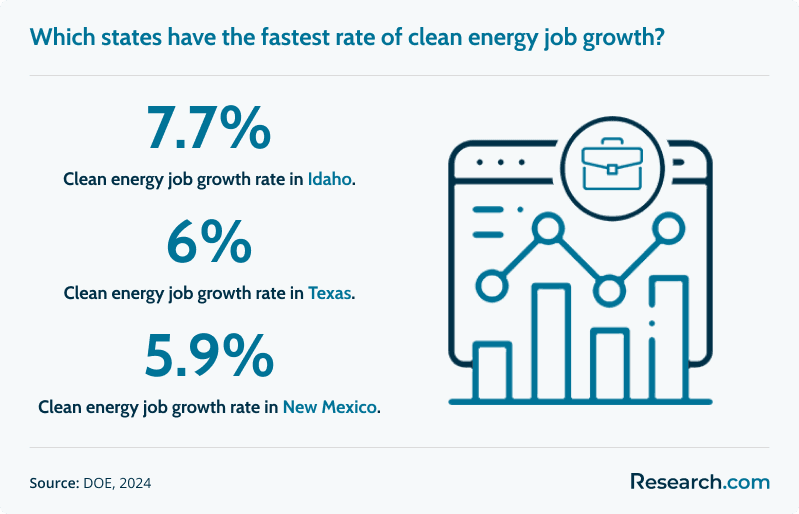
Energy policy careers are available beyond Washington, D.C., California, and major coastal cities. Clean energy activity, infrastructure investment, utility planning, and regulatory work occur across the country. States such as Idaho, Texas, and New Mexico are experiencing some of the fastest growth in the country, creating opportunities for professionals who want to work regionally rather than relocate to a traditional policy center.
How Do Interdisciplinary Studies Strengthen an Online Energy Policy Degree?
Energy policy professionals need to communicate across technical, legal, financial, and community-facing teams. An interdisciplinary program can help students understand both the policy process and the practical realities of energy systems. That combination is valuable when evaluating grid modernization, renewable development, utility regulation, environmental justice, or corporate sustainability strategy.
Students with limited technical experience may benefit from additional exposure to engineering concepts, especially if they plan to work closely with energy infrastructure teams. Research.com’s guide to affordable engineering schools may be useful for readers comparing policy-focused and engineering-focused pathways.
Current Trends in Energy Policy Education
Online energy policy programs are evolving as employers expect graduates to understand regulation, data, markets, technology, and sustainability reporting. Many programs now emphasize quantitative analysis, simulation tools, applied research, energy justice, and collaboration with practitioners.
Several trends are shaping the field:
- More data-driven policy work: Graduates increasingly need to interpret datasets, evaluate market trends, and communicate evidence clearly.
- Greater focus on equity: Programs are paying more attention to how energy decisions affect different communities.
- Blended business and policy training: Corporate energy strategy, ESG, and sustainability management are expanding the audience for these degrees.
- Flexible online formats: Working professionals are seeking programs that allow career advancement without relocation.
- Technology-policy overlap: Renewable integration, grid modernization, storage, and emissions reduction require professionals who can bridge technical and policy language.
Similar accelerated and applied online education models appear in other fields, including accelerated health informatics masters online programs, where data, regulation, and professional practice also overlap.
What Is the Job Market for Online Energy Policy Graduates?
The labor market for energy policy graduates is supported by clean energy growth, corporate sustainability commitments, infrastructure modernization, climate regulation, and demand for professionals who can connect strategy with implementation. Clean energy jobs are growing at a rate of 4.2%, which is more than double the growth rate of the overall U.S. economy.
Related environmental science roles are projected to grow by 7% over the next decade, creating approximately 8,500 new openings each year. While a degree does not guarantee a specific job or salary, graduate training in energy policy can strengthen a candidate’s ability to compete for roles that require policy analysis, energy literacy, regulatory awareness, and strategic communication.
Long-Term Advancement Potential
For experienced professionals, an online energy policy degree can be part of a longer leadership trajectory toward roles such as energy director, sustainability director, regulatory affairs leader, or Chief Sustainability Officer. Some professionals may later pursue doctoral or executive-level credentials; Research.com’s guide to DBA degree salary can help readers think about how advanced business credentials may relate to long-term leadership paths.
Common Mistakes to Avoid When Choosing an Online Energy Policy Degree
- Choosing based only on ranking: A top-ranked program may not match your career goal, schedule, or budget.
- Ignoring accreditation: Always verify institutional and, where relevant, programmatic accreditation before applying.
- Comparing only cost per credit: Total cost depends on required credits, fees, residencies, and time to completion.
- Assuming all energy degrees are the same: A law-focused LLM, public policy degree, engineering degree, and executive MBA prepare students for different roles.
- Underestimating workload: Online does not mean easy. Graduate policy, economics, law, and analytics courses require consistent time.
- Skipping employer conversations: Many working professionals miss potential tuition support because they never ask.
- Overlooking career services: Online students should confirm they have access to advising, alumni networks, job boards, and employer connections.
Questions to Ask Before Applying
- What specific role do I want after completing this degree?
- Does the curriculum emphasize policy, law, engineering, sustainability, business, or finance?
- How many hours per week should I expect to study?
- Are courses asynchronous, synchronous, or a mix of both?
- Are there required residencies, internships, capstones, or field projects?
- What is the full estimated cost after tuition, fees, books, and travel?
- Do online students receive the same career support as campus students?
- What kinds of employers hire graduates from this program?
- Can I use transfer credits or prior graduate coursework?
- Will my employer reimburse, sponsor, or partially fund the degree?
What Graduates Say About Online Energy Policy Programs
-
: "I had managed energy projects for years, but I kept running into regulatory and economic barriers I did not fully understand. The program helped me translate project experience into policy language. Because I studied online, I could apply a concept from class almost immediately at work. I now contribute to solution design instead of only pointing out obstacles.
—Annelise"
-
: "I entered the field because I saw how energy choices affected some communities more than others. The energy justice coursework gave me a stronger framework for connecting policy analysis to real community outcomes. It changed how I evaluate every project and every funding decision.
—Sunita"
-
: "With a full-time job and a young family, moving for graduate school was impossible. The online format made the degree realistic. I studied at night, joined discussions on weekends, and kept moving forward professionally while earning the credential.
—Dorian"
Key Insights
- Program fit matters more than prestige. Choose based on your target role: policy, law, engineering, finance, sustainability, or executive leadership.
- Most programs take 12–24 months. Accelerated options can be faster, but they require more short-term capacity and stronger time management.
- Costs vary widely. The average total tuition in this guide is approximately $41,000, while the range spans from approximately $27,000 to over $88,000.
- Online programs can be a strong fit for working professionals. They allow students to keep building experience while gaining graduate-level policy and energy expertise.
- Specialization is strategic. Renewable energy systems, sustainability management, energy finance, environmental law, and executive leadership lead to different career paths.
- The job market is supported by clean energy growth. Clean energy jobs are growing at a rate of 4.2%, and related environmental science roles are projected to grow by 7% over the next decade.
- Do not skip due diligence. Verify accreditation, total cost, workload, employer support, and career services before applying.
References:
- Greenbiz. (2024). State of the sustainability profession 2024. Retrieved August 11, 2025, from Trellis.
- myFuture. (2025). Climate change policy analysts. Retrieved August 11, 2025, from myFuture.
- U.S. Bureau of Labor Statistics. (2025). Environmental scientists and specialists. Occupational Outlook Handbook. Retrieved August 11, 2025, from BLS.
- U.S. Department of Energy. (2024). DOE report shows clean energy jobs grew more than twice the rate of overall U.S. employment. Energy.gov. Retrieved August 11, 2025, from DOE.
- Zippia. (2025a). Energy manager jobs. Retrieved August 11, 2025, from Zippia.
- Zippia. (2025b). Energy manager salaries. Retrieved August 11, 2025, from Zippia.
Other Things You Should Know About Online Energy Policy Degree Programs
Many 2027 online energy policy master’s programs require either a capstone project or a thesis to graduate. Capstones usually count for 3 to 6 credits and focus on policy analysis, while thesis tracks often require faculty approval and an oral defense before the degree is awarded.
A 2027 online Energy Policy degree program typically requires completing between 30 to 36 credit hours. This may include core courses in energy policy analysis, electives, and a capstone project or thesis, depending on the specific program structure.


