2027 Doctor of Business Administration (DBA) Salary

Co-Founder and Chief Data Scientist
A Doctor of Business Administration (DBA) is a practical research doctorate for experienced business professionals who want to solve complex organizational problems, move into senior leadership, consult at a higher level, or teach applied business subjects. The main question for many prospective students is not simply “What is a DBA?” but whether the degree can justify the time, cost, and opportunity cost.
This guide explains DBA salary expectations, job-market conditions, career paths, admissions requirements, program-selection criteria, and the factors that affect return on investment. It is designed for MBA graduates, executives, consultants, entrepreneurs, and senior managers who are deciding whether a DBA is the right next credential for their career goals.
Quick answer: Is a DBA worth it for salary and career growth?
A DBA can be worthwhile for professionals who already have substantial business experience and want to qualify for executive leadership, consulting, applied research, or academic-adjacent roles. The degree is less useful for someone seeking an entry-level business job, because most DBA programs are built for mid-career and senior professionals.
Salary outcomes vary widely by role, industry, employer size, location, specialization, and prior experience. Based on Payscale.com data from 2025, business administrators earn an average salary of $62,059, business consultants earn an average of $82,633, and business executives earn an average of $81,708. Top earning potential is much higher in senior roles, with the highest pay listed at $100,000 for business administrators, $125,000 for business consultants, and $345,000 for business executives.
| DBA decision factor | What to know before enrolling |
| Degree type | A DBA is a terminal business doctorate focused on applying advanced research to real organizational problems. |
| Typical student profile | Most candidates already hold a master’s degree, often an MBA or related graduate credential, and have several years of professional experience. |
| Program cost | DBA programs in the U.S. generally cost $30,000 to $75,000 at public universities and can exceed $100,000 at top private institutions. |
| Best fit | Experienced managers, executives, consultants, entrepreneurs, and professionals who want applied doctoral-level business expertise. |
| Less ideal fit | Students looking for a first business credential, a quick salary increase without experience, or a purely theoretical academic research path. |
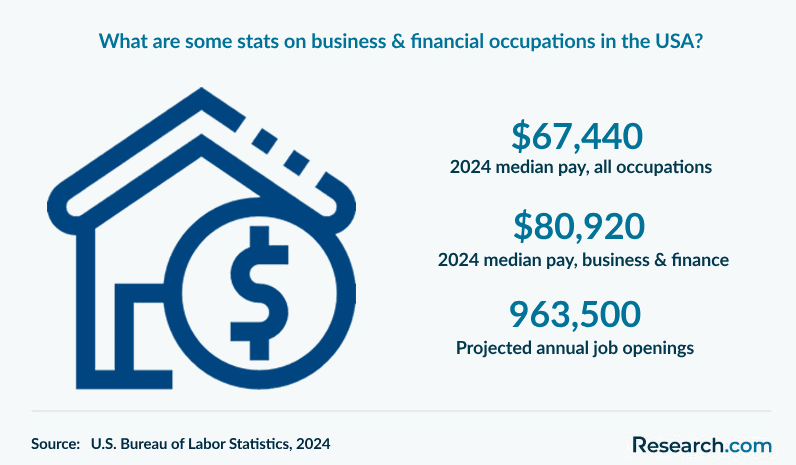
| Labor-market context | Business and financial occupations had a median annual wage of $80,920 in May 2024, and about 963,500 openings are projected annually due to growth and worker replacement. |
- DBA salary: How much can graduates earn?
- DBA job market: Where are the opportunities?
- How to become a Doctor of Business Administration
- Skills DBA graduates need in 2026
- How experience changes DBA salary outcomes
- Ethical and legal responsibilities for DBA professionals
- DBA specialties and career paths
- Do accelerated doctoral programs help? Career path comparison
- Can interdisciplinary study strengthen a DBA career?
- Can a DBA support a move into academic roles?
- Can certifications improve DBA career options?
- Challenges DBA graduates should expect
- Economic and technology trends affecting DBA pay
- Financial benefits beyond base salary
- How to choose the right DBA program Total compensation factors
DBA salary: How much can graduates earn?
DBA salary potential depends less on the letters after a person’s name and more on how the degree is used. The highest returns usually come when the doctorate builds on an existing record of leadership, consulting, entrepreneurship, or specialized business expertise.
A DBA may improve earning potential by helping graduates compete for senior management, executive, consulting, strategy, operations, finance, analytics, healthcare management, or organizational leadership roles. Professionals comparing doctoral leadership paths may also want to review affordable doctoral programs in leadership if their goals are centered more on people, culture, and organizational change than on applied business research.
| Role | Entry-level pay | Early-career pay | Average pay | Highest pay listed |
| Business administrator | $49,747 | $53,355 | $62,059 | $100,000 |
| Business consultant | $69,354 | $78,878 | $82,633 | $125,000 |
| Business executive | Not stated | Not stated | $81,708 | $345,000 |
These figures show why DBA salary discussions can be difficult. DBA graduates do not all enter one standardized occupation. Some remain in corporate administration, some become consultants, some advance into executive posts, and others move into teaching, entrepreneurship, or specialized advisory work.
The biggest salary drivers are usually experience, industry, geographic market, employer size, specialization, measurable business impact, and negotiation skill. A DBA in itself does not guarantee executive pay, but it can strengthen the profile of a professional who already has the credibility and experience employers expect for high-responsibility roles.
Business consultants generally show stronger pay than business administrators in the listed data, while business executives have the widest upside at the top end. The practical takeaway is that DBA candidates should evaluate the degree against a target role, not against a broad average.
DBA job market: Where are the opportunities?
The job market for DBA graduates is broad because the credential can apply to multiple business functions rather than a single licensed occupation. Graduates may work in consulting, corporate strategy, operations, finance, information systems, healthcare administration, entrepreneurship, higher education, or executive leadership.
According to the Bureau of Labor Statistics data cited in this article, business and financial occupations are expected to grow faster than the average for all occupations from 2023 to 2033. Growth and replacement needs are projected to create about 963,500 openings each year. In May 2024, the median annual wage for these occupations was $80,920, compared with $49,500 for all occupations.
| DBA career direction | Best suited for | What employers usually look for |
| Executive leadership | Senior managers aiming for C-suite or enterprise-level responsibility | Leadership history, financial judgment, strategic planning, and evidence of organizational results |
| Management consulting | Professionals who can advise organizations on strategy, operations, transformation, or performance | Industry credibility, client-management ability, analytical skill, and a portfolio of solved business problems |
| Corporate strategy and operations | Managers who want to lead planning, process improvement, or business transformation | Data-informed decision-making, change management, cross-functional leadership, and execution discipline |
| Applied business teaching | Professionals interested in teaching business practice or mentoring adult learners | Subject expertise, communication skill, professional experience, and ability to connect theory with practice |
| Entrepreneurship | Founders, owners, and executives building or scaling ventures | Market insight, financial discipline, strategy, risk management, and operational leadership |
DBA graduates may also compare adjacent doctoral leadership credentials. For example, a professional focused on education, organizational systems, and leadership development may compare DBA outcomes with a Doctor of Education in Organizational Leadership salary pathway before choosing a program.
How to become a Doctor of Business Administration
Most DBA candidates follow a sequence of undergraduate study, graduate business education, professional experience, doctoral coursework, applied research, and dissertation or doctoral project completion. The path is demanding, so the best candidates enter with a clear research interest and a career reason for earning the degree.
- Earn a bachelor’s degree. Business, economics, management, finance, accounting, information systems, healthcare administration, and related fields can all provide useful preparation.
- Complete a master’s degree. Many DBA programs expect applicants to hold an MBA or another relevant graduate degree.
- Build professional experience. DBA programs are designed for applied business professionals, so work history is often central to admissions and classroom discussion.
- Choose a program aligned with your goals. Compare format, accreditation, faculty expertise, dissertation model, research support, specialization options, residency requirements, and total cost.
- Finish doctoral coursework. Courses typically emphasize advanced strategy, research methods, analytics, leadership, organizational theory, finance, marketing, operations, or specialization-based topics.
- Complete applied research. DBA students usually investigate a practical business problem and defend their work before a committee.
- Use the degree strategically. Update your professional brand, publish or present research when appropriate, and connect the dissertation topic to leadership, consulting, or teaching opportunities.
Cost should be evaluated early. Students comparing doctoral expenses can review how much a doctorate degree costs and then compare that information with the total tuition, fees, travel, residency, technology, books, and time costs of specific DBA programs.
| Step | Key question to ask | Why it matters |
| Before applying | What career outcome do I want the DBA to support? | A DBA is most valuable when it is tied to a defined leadership, consulting, academic, or entrepreneurial goal. |
| During admissions | Does my experience match the program’s expectations? | Programs often depend on peer learning among experienced professionals. |
| During coursework | Can I balance work, study, research, and family obligations? | Doctoral study requires sustained time and attention over several years. |
| During research | Can my dissertation topic solve a real business problem? | A practical research focus can strengthen career relevance and professional credibility. |
| Before graduation | How will I translate the DBA into a promotion, consulting niche, teaching role, or new venture? | The degree alone is not the strategy; the career plan is. |
Skills DBA graduates need in 2026
DBA graduates need more than general management knowledge. They must be able to turn evidence into decisions, lead through uncertainty, and communicate complex findings to executives, employees, clients, investors, and academic audiences.
- Applied research skill: Ability to design, evaluate, and use research that addresses practical business problems.
- Data analysis: Comfort with quantitative and qualitative evidence, performance metrics, dashboards, and decision models.
- Strategic thinking: Capacity to connect market conditions, internal capabilities, financial realities, and long-term goals.
- Executive communication: Skill in translating complex analysis into clear recommendations for different audiences.
- Leadership and influence: Ability to guide teams, shape culture, manage conflict, and build alignment across functions.
- Change management: Understanding how to move organizations from current practices to better systems. MIT’s overview of change management is a useful foundation for professionals leading transformation work.
- Ethical judgment: Ability to weigh stakeholder interests, compliance obligations, data privacy, conflicts of interest, and long-term consequences.
- Technology fluency: Awareness of AI, automation, analytics, digital operations, cybersecurity considerations, and platform-based business models.
- Financial reasoning: Ability to evaluate budgets, investments, risk, pricing, operating performance, and return on strategic initiatives.
- Organizational leadership: Professionals who want deeper preparation in this area may compare DBA programs with a Doctorate of Strategic Leadership degree pathway.
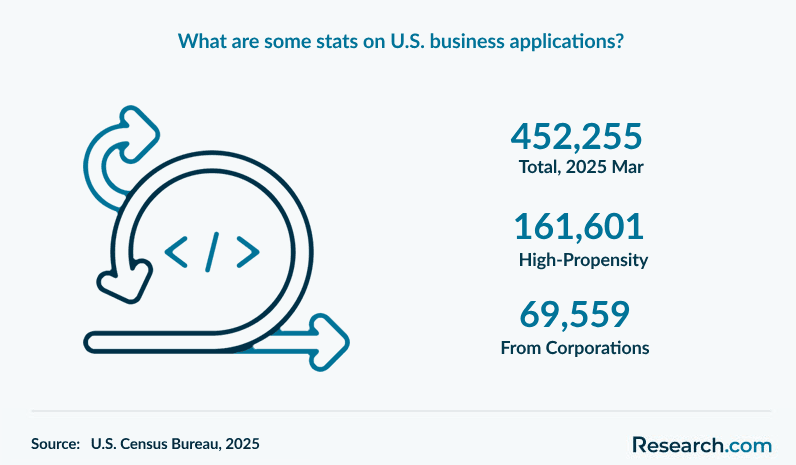
U.S. business formation activity also shows why applied business expertise remains relevant. In March 2025, there were 452,255 total U.S. business applications, including 161,601 high-propensity applications, 44,274 applications with planned wages, and 69,559 applications from corporations.
How experience changes DBA salary outcomes
Experience is one of the strongest factors separating a modest DBA salary outcome from a high-value one. Employers rarely hire someone into a senior role because of the degree alone. They look for evidence that the candidate has already managed people, budgets, clients, systems, revenue, risk, or transformation.
- Early career: A DBA may add credibility, but limited management history can restrict access to senior compensation.
- Mid-career: Professionals can use the degree to move from functional management into strategy, consulting, operations leadership, or higher-level administration.
- Senior career: Executives and consultants may use the DBA to strengthen authority, deepen specialization, publish applied research, or transition into teaching and advisory roles.
- Specialized experience: Expertise in finance, analytics, healthcare, supply chain, AI adoption, sustainability, or organizational transformation can raise market value when paired with doctoral-level research skills.
- Demonstrated impact: Promotions and consulting fees are easier to justify when a professional can point to measurable improvements in revenue, cost control, productivity, retention, customer outcomes, or risk reduction.
Many DBA candidates begin with an MBA. Cost-conscious students who still need that graduate foundation may compare MBA programs under 10k before committing to a doctoral path.
Ethical and legal responsibilities for DBA professionals
DBA graduates often work with sensitive business data, strategic decisions, employee information, financial plans, research participants, or client organizations. Their ethical obligations therefore extend beyond classroom research standards.
- Research integrity: Avoid plagiarism, misrepresentation, selective reporting, and unsupported conclusions.
- Confidentiality: Protect proprietary information, employee records, client data, and unpublished research materials.
- Legal compliance: Follow laws and regulations that apply to the relevant industry, jurisdiction, and role.
- Data privacy: Handle personal and organizational data responsibly, especially when using analytics, AI tools, or third-party platforms.
- Conflicts of interest: Disclose financial, personal, or professional relationships that could bias judgment.
- Fair competition: Avoid deceptive, anti-competitive, or manipulative business practices.
- Stakeholder accountability: Consider the effects of strategic decisions on employees, customers, investors, communities, and the environment.
- Corporate responsibility: Harvard Business School’s discussion of Corporate Social Responsibility (CSR) can help frame how ethical, social, and sustainability concerns affect business strategy.
Ethical judgment is not optional in advanced business roles. A DBA graduate may be expected to set the standard for evidence-based, transparent, and responsible decision-making.
DBA specialties and career paths
DBA programs often allow students to focus their research or coursework around a business function, industry, or leadership problem. The right specialization should connect directly to the career path the student wants after graduation.
| DBA focus area | Possible roles | When this path makes sense |
| Strategy and executive leadership | CEO, COO, general manager, strategy director, executive advisor | You already have leadership experience and want enterprise-level responsibility. |
| Consulting | Management consultant, transformation consultant, independent advisor, practice leader | You want to diagnose complex business problems and advise clients using evidence-based methods. |
| Finance | Senior finance leader, financial strategist, investment-related executive, risk advisor | You have strong quantitative skills and want to work with capital, performance, risk, or investment decisions. |
| Healthcare management | Healthcare executive, operations leader, policy or systems consultant | You want to apply business strategy inside hospitals, health systems, insurers, or healthcare service organizations. |
| Information systems and analytics | Technology strategy leader, analytics director, digital transformation executive | You want to lead data, automation, AI adoption, or information systems initiatives. |
| Marketing and sales leadership | Chief marketing officer, sales executive, customer strategy consultant | You want to connect consumer insight, revenue strategy, digital channels, and market growth. |
| Operations and supply chain | Operations executive, supply chain strategist, process improvement leader | You want to improve efficiency, resilience, quality, logistics, and organizational performance. |
| Human resources and organizational development | Chief human resources officer, talent strategist, organizational effectiveness consultant | You want to lead workforce strategy, culture, leadership development, and change initiatives. |
| Applied business education | Business instructor, professor of practice, executive education facilitator | You want to teach from professional experience and applied research rather than pursue a purely theoretical research career. |
Professionals aiming for executive roles may also compare DBA preparation with affordable online executive MBA programs, especially if they need a senior-level master’s credential before doctoral study.
Industry selection matters. Based on the listed Compound Annual Growth Rate projections from 2024 to 2030, technology-driven sectors dominate many of the fastest-growing areas. 5G services lead at 59.4%, followed by space tourism at 49.9%, robotic process automation at 39.9%, augmented reality at 39.8%, and artificial intelligence at 37.3%.
Other expanding areas include data science at 29.0%, digital education at 25.8%, virtualization software at 25.4%, healthcare predictive analytics at 24.4%, cannabis edibles at 22.1%, video streaming at 21.5%, digital marketing software at 19.4%, e-commerce logistics at 18.2%, and both telemedicine and renewable energy at 17.2%.
For DBA graduates, these trends suggest that technology fluency, analytics capability, and industry specialization can be major differentiators. The strongest opportunities often go to professionals who can connect business strategy with digital transformation, automation, data, and operational execution.
Do accelerated doctoral programs help?
Accelerated doctoral programs can be attractive to working professionals who want to reduce time in school, but speed should not be the only selection factor. A shorter program is only valuable if it still offers credible accreditation, rigorous research training, strong faculty support, and enough time to complete meaningful applied research.
Fast-track formats may work well for disciplined students with a clear research topic, stable work schedules, and prior graduate-level preparation. They may be risky for students who need more time to develop research skills, balance heavy job responsibilities, or clarify their dissertation focus. To understand how accelerated doctoral models are structured in another professional field, compare examples such as the fastest online EdD programs.
Can interdisciplinary study strengthen a DBA career?
Interdisciplinary study can make a DBA more useful when it adds practical expertise rather than unrelated credentials. For example, a DBA student focused on knowledge management, information governance, archives, data organization, or research infrastructure may benefit from understanding library and information science. In that case, exploring an option such as a cheapest MLS degree online resource may help clarify whether additional study supports the student’s business goals.
The key is fit. A second credential should deepen the DBA candidate’s target niche, not distract from it. Good interdisciplinary combinations usually connect business leadership with fields such as analytics, healthcare, education, sustainability, cybersecurity, public policy, information systems, or organizational psychology.
Can a DBA support a move into academic roles?
A DBA can support teaching-oriented academic roles, executive education, professional instruction, curriculum development, and professor-of-practice opportunities. It may be especially useful for professionals who want to teach applied business concepts drawn from leadership experience and research-based problem solving.
However, a DBA is not identical to a Ph.D. in Business. A Ph.D. is usually more research-theory focused and is often the preferred path for tenure-track research faculty positions at many universities. Prospective students who want to teach should check hiring expectations at the types of institutions where they hope to work.
Professionals considering education-related credentials may also review the shortest path to getting a teaching license, especially if their goals include teaching outside the business-school or executive-education environment.
Can certifications improve DBA career options?
Certifications can strengthen a DBA graduate’s profile when they validate a concrete skill employers or clients already value. Useful options often relate to project management, analytics, cybersecurity, finance, change management, human resources, supply chain, healthcare quality, or information governance.
The best certifications are role-specific. A consultant working in digital transformation may need different credentials than a healthcare executive, finance leader, or organizational development specialist. Professionals interested in information-centered careers can compare business leadership goals with jobs with an MLIS to see whether information management expertise would complement their DBA path.
| Complementary credential area | How it can support a DBA | Best for |
| Data analytics | Shows ability to work with evidence, metrics, and performance models | Strategy, consulting, operations, marketing, finance, and technology leadership |
| Project or program management | Supports execution of complex initiatives and organizational change | Operations leaders, transformation consultants, and executives |
| Finance or accounting | Strengthens credibility in budgeting, investment, risk, and performance analysis | Executives, consultants, entrepreneurs, and finance-focused leaders |
| Healthcare administration or quality | Adds industry-specific knowledge for regulated healthcare environments | Healthcare executives and health systems consultants |
| Information governance | Supports work involving data organization, records, compliance, and knowledge systems | Information managers, research leaders, and digital operations professionals |
Challenges DBA graduates should expect
A DBA can open doors, but it also creates expectations. Employers, clients, students, and stakeholders may expect doctorate-level judgment, stronger evidence, and clearer strategic thinking.
- High opportunity cost: Tuition, time, and lost personal bandwidth can be substantial.
- Heavy workload: Working professionals must manage coursework, research, employment, and family responsibilities.
- Research difficulty: Many students underestimate the time required to design, revise, and defend a doctoral research project.
- Uncertain salary payoff: Salary gains depend on role, industry, experience, and how the graduate uses the degree.
- Competitive senior roles: Executive and consulting positions usually require proven results, not just education.
- Keeping skills current: AI, automation, analytics, regulation, and digital business models keep changing employer expectations.
- Stakeholder pressure: Senior leaders must make decisions with incomplete information and visible consequences.
- Credential confusion: DBA graduates may need to explain how their applied doctorate differs from a Ph.D., MBA, CPA, or other professional credential. For finance-related discussions, understanding what's the difference between an accountant and a CPA can help when advising stakeholders.
Economic and technology trends affecting DBA pay
DBA earning potential is shaped by the economy. When organizations are expanding, investing, restructuring, adopting new technologies, or entering new markets, they often need leaders who can evaluate risk and make evidence-based decisions. During downturns, hiring freezes, consulting budget cuts, or lower executive incentives can reduce opportunities.
Professionals should watch several forces: inflation, interest rates, investment activity, global competition, supply-chain shifts, regulation, AI adoption, automation, sustainability concerns, and sector-specific growth. DBA graduates who can help organizations navigate these forces may be better positioned than those whose expertise is too general.
Some professionals combine business leadership with domain expertise in other fields. For example, those interested in research, policy, community development, or nonprofit leadership may compare business roles with the highest paying sociology jobs to understand how social science expertise and business strategy might intersect. In healthcare, candidates may compare a DBA with why get an MHA to decide whether they need broad business leadership or a health-system-specific graduate pathway.
Technology is especially important. In 2025, 86% of companies identified AI and information processing technologies as their top innovation priority. Robots and autonomous systems were prioritized by 58% of businesses, while energy generation, storage, and distribution was prioritized by 41%.
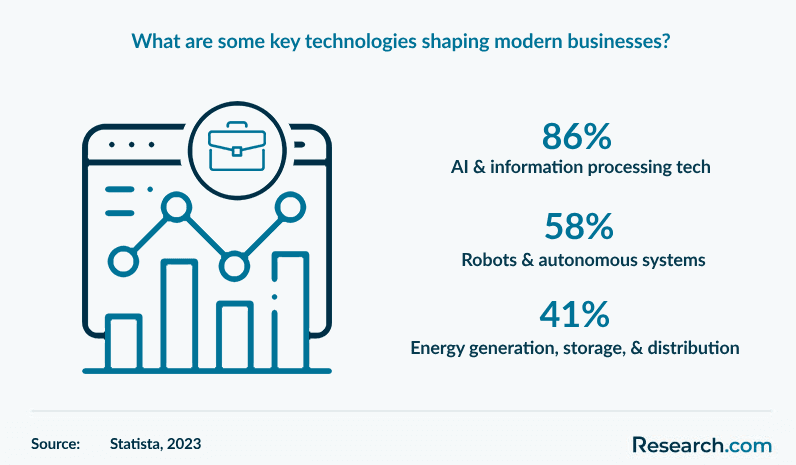
For DBA candidates, these figures point to a practical lesson: programs that ignore AI, analytics, automation, and digital operating models may leave graduates underprepared for current leadership expectations.
Financial benefits beyond base salary
Base salary is only one part of the financial equation. DBA graduates in senior corporate, consulting, or executive roles may also evaluate bonuses, equity, retirement contributions, paid professional development, health benefits, relocation support, and long-term incentive plans.
- Performance bonuses: Senior roles may include annual or project-based incentives tied to organizational outcomes.
- Equity or stock options: High-growth companies may use equity-based compensation to attract experienced leaders.
- Retirement contributions: Employer matching or executive retirement benefits can increase total compensation value.
- Professional development funds: Conferences, certifications, memberships, and executive education may be covered by employers.
- Consulting revenue: DBA graduates who build advisory practices may earn through retainers, project fees, workshops, or speaking engagements.
- Relocation support: Senior hires may receive assistance for moving to a new location.
- Executive benefits: Some roles may include additional perks, though these vary widely by employer and seniority.
When comparing offers, DBA graduates should evaluate total compensation rather than salary alone. Similar advantages may appear in other leadership-oriented pathways, including the benefits of organizational leadership degree programs for professionals focused on management advancement.
How to choose the right DBA program
The right DBA program should match your career goal, research interest, budget, schedule, and preferred learning format. A highly ranked or expensive program is not automatically the best choice if it lacks faculty expertise in your area, requires residencies you cannot attend, or does not fit your professional timeline.
| Program criterion | What to check | Why it matters |
| Accreditation | Confirm institutional accreditation and any relevant business-school accreditation. | Accreditation affects credibility, transferability, employer recognition, and financial aid eligibility. |
| Total cost | Look beyond tuition to fees, travel, residencies, books, technology, and lost work time. | A lower tuition rate may not mean a lower total cost. |
| Faculty fit | Review faculty research, industry experience, publications, and availability for dissertation supervision. | Your research progress depends heavily on qualified guidance. |
| Research model | Ask whether the program uses a dissertation, doctoral project, consulting-style research, or another model. | The final project should support your career goals and be feasible with your schedule. |
| Format | Compare online, hybrid, residency, evening, weekend, full-time, and part-time options. | Working professionals need a structure they can sustain. |
| Specializations | Check whether the curriculum supports your field, such as finance, strategy, analytics, healthcare, marketing, or operations. | A focused DBA can be easier to translate into consulting, leadership, or teaching opportunities. |
| Student support | Ask about research coaching, writing support, library access, career services, and dissertation completion support. | Doctoral students often struggle most during the independent research phase. |
| Career relevance | Review alumni roles, employer connections, executive networks, and applied project opportunities. | The program should help you move toward a specific professional outcome. |
Interdisciplinary interests can be useful, but they should be intentional. For example, a business leader who wants to strengthen historical analysis, policy interpretation, or institutional research may explore an affordable online master in history, but only if that study directly supports a defined leadership or research agenda.
Common mistakes to avoid when choosing a DBA
| Mistake | Why it can hurt you | Better approach |
| Choosing based only on tuition | Cheap programs may still have high fees, weak support, or poor fit. | Compare total cost, accreditation, faculty, support, and career relevance. |
| Ignoring accreditation | An unrecognized credential can limit employer trust and academic options. | Verify accreditation before applying or paying deposits. |
| Assuming a DBA guarantees executive pay | Senior compensation depends on experience, results, industry, and leadership scope. | Build a career plan that connects the degree to measurable opportunities. |
| Starting without a research interest | Unclear topics can delay the dissertation stage. | Enter with several practical business problems you want to investigate. |
| Overlooking format requirements | Residencies, synchronous classes, or travel can become barriers. | Confirm schedule, location, attendance, and technology expectations. |
| Relying only on rankings | A ranked program may still be wrong for your field, budget, or schedule. | Use rankings as one input, not the full decision. |
| Choosing a specialization with no market plan | A niche focus may not improve employability if employers do not value it. | Match specialization to target roles, industries, and consulting opportunities. |
Questions to ask before applying to a DBA program
- What specific role, promotion, consulting niche, teaching opportunity, or business goal do I want the DBA to support?
- Does the program require the type and amount of professional experience I already have?
- Is the institution properly accredited?
- What is the full cost, including tuition, fees, residencies, travel, and materials?
- Who will supervise my research, and do they understand my field?
- What percentage of the program is coursework versus independent research?
- Can I complete the program while working full time?
- What support is available during the dissertation or doctoral project stage?
- How do graduates use the degree after completion?
- Will this DBA help me earn, lead, consult, teach, or build in ways I could not achieve with my current credentials?
Key Insights
- A DBA is best for experienced professionals. It is designed for applied business leaders, not for students seeking an entry-level business credential.
- Salary outcomes vary by role. Payscale.com data from 2025 lists average salaries of $62,059 for business administrators, $82,633 for business consultants, and $81,708 for business executives, with the highest listed executive pay reaching $345,000.
- The business labor market remains broad. Business and financial occupations had a median annual wage of $80,920 in May 2024, with about 963,500 projected openings annually due to growth and replacement needs.
- Experience drives ROI. A DBA is most powerful when combined with leadership history, measurable business results, and a clear target career path.
- Technology fluency matters. AI and information processing technologies were prioritized by 86% of businesses in 2025, making analytics, automation, and digital strategy important for DBA graduates.
- Cost should be weighed carefully. U.S. DBA programs generally cost $30,000 to $75,000 at public universities and can exceed $100,000 at top private institutions.
- Program fit is more important than prestige alone. Accreditation, faculty expertise, research support, specialization, format, and total cost should guide your decision.
- A DBA is not the same as a Ph.D. Choose a DBA for applied business research and professional leadership; consider a Ph.D. if your main goal is theory-driven academic research.
References:
- Bureau of Labor Statistics, U.S. Department of Labor. Occupational Outlook Handbook: Business and Financial Occupations. Bureau of Labor Statistics.
- Statista. Leading technologies transforming businesses worldwide in 2023. Statista.
- U.S. Census Bureau. Business Formation Statistics, March 2025. U.S. Census Bureau.
- World Economic Forum. The Global Risks Report 2025. World Economic Forum.
- Yahoo Finance. Top 20 fastest growing industries in the next 5 years: Predictions. Yahoo Finance.
Other Things You Should Know About Doctor of Business Administration Careers
Finance, consulting, technology, and healthcare typically offer the highest DBA salaries in 2027. Senior roles such as operations director, strategy manager, and executive-level analyst often pay more than academic positions, with compensation shaped by company size, revenue, and leadership responsibility.
In 2027, the average salary for individuals with a Doctor of Business Administration (DBA) degree varies widely, typically ranging from $100,000 to $150,000 annually. Factors such as industry, location, and experience can significantly influence these figures.