2027 How to Become a Project Manager

Co-Founder and Chief Data Scientist
Becoming a project manager is not just about keeping a team on schedule. It is about turning business goals into finished work while managing scope, cost, people, risk, and stakeholder expectations. That matters because weak project execution is expensive: organizations that prioritize power skills waste an average of 4.8% of their investment, while organizations that neglect them lose nearly twice as much at 8.8%.
This guide is for students, career changers, early-career professionals, and experienced workers who want a practical route into project management. You will learn what project managers do, how long the path can take, which degrees and certifications are most useful, what entry-level jobs to target, how salaries differ by industry, and how to decide whether a degree, certification, or online program is the right next step.
Quick answer: how do you become a project manager?
Most people become project managers by combining education, hands-on project experience, and recognized credentials. A bachelor’s degree is common, but not always required. Many professionals start as project coordinators, business analysts, team leads, or assistant project managers, then build experience managing schedules, budgets, risks, and stakeholders. Certifications such as CAPM, PMP, Scrum, Agile, or PRINCE2 can strengthen your profile, especially when paired with real project results.
What to know before choosing this career path
- A college degree is not always a strict requirement, but many project managers hold at least a bachelor’s degree in business, management, engineering, information technology, or a related field. A project management degree or MBA may help with advancement.
- Employers often value credentials such as Project Management Professional (PMP), Certified Associate in Project Management (CAPM), Agile, Scrum, and PRINCE2 because they signal familiarity with established project frameworks.
- The strongest project managers combine technical planning skills with leadership, communication, negotiation, time management, risk analysis, and problem-solving.
- Project management is used in many fields, including technology, healthcare, construction, finance, marketing, engineering, and public-sector work. Demand and compensation vary by industry and project complexity.
- Entry-level roles such as project coordinator, project administrator, assistant project manager, business analyst, or team lead can help you build the experience needed for full project manager roles.
- What does a project manager do?
- How many years does it take to become a project manager?
- Which degrees are best for future project managers?
- What courses help prepare you for project management?
- Should you choose a degree, certification, or both?
- Which project management certifications are most recognized?
- What career tracks can project managers pursue?
- Can advanced education help you move up faster?
- Which trends are changing project management?
- What problems do project managers commonly face?
- How can online programs support project management careers?
- Is an online degree a good starting point for project management?
- How can you grow faster in project management?
- Can accelerated degrees shorten the path?
- What advancement moves should newer project managers consider?
- Does a doctoral degree make sense for project management?
- Which entry-level jobs lead to project manager roles?
- How much do project managers earn by industry?
- How competitive is the project management job market?
What is a project manager?
A project manager is the person responsible for guiding a project from initial planning through final delivery. The role usually includes defining the project goal, building the schedule, coordinating team members, managing risks, tracking progress, communicating with stakeholders, and making adjustments when the project changes.
Project managers are used in construction, software development, healthcare operations, finance, engineering, marketing, government, and many other settings. The tools and terminology may differ by industry, but the core purpose is similar: deliver a defined outcome within the approved timeline, budget, and scope.
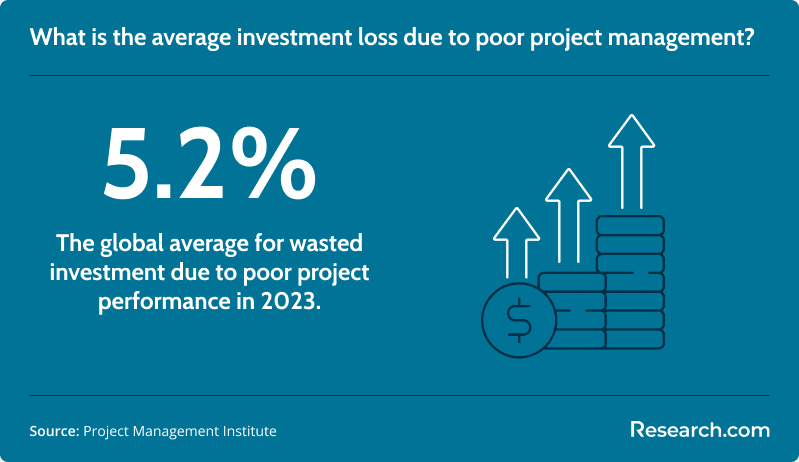
Project performance has a measurable financial impact. The global average for wasted investment caused by poor project performance is 5.2%. Strong project managers reduce that waste by clarifying priorities, resolving bottlenecks, controlling risks, and keeping teams aligned.
Core responsibilities of a project manager
| Responsibility | What it means in practice |
| Scope definition | Clarifying what the project will deliver, what is excluded, and how success will be measured. |
| Planning and scheduling | Creating timelines, milestones, dependencies, budgets, and work breakdowns. |
| Resource coordination | Assigning people, tools, materials, and funding where they are needed most. |
| Risk management | Identifying likely problems early and preparing response plans before they disrupt delivery. |
| Team leadership | Keeping contributors focused, informed, accountable, and able to collaborate effectively. |
| Stakeholder communication | Updating executives, clients, vendors, users, and team members with the right level of detail. |
| Performance monitoring | Comparing actual progress against the plan and correcting course when needed. |
| Project closure | Confirming deliverables, documenting lessons learned, closing contracts, and transferring ownership. |
How long does it take to become a project manager?
The timeline depends on your education, industry, experience, and whether you already manage people or projects in your current job. A realistic range is three to seven years for someone starting from little or no project experience, although career changers with leadership or technical backgrounds may move faster.
| Stage | Typical time | What you are building |
| Education | 2-4 years | A foundation in business, technology, engineering, operations, construction, healthcare, or another field where projects are managed. |
| Entry-level experience | 1-3 years | Practical exposure to schedules, budgets, reporting, project tools, team coordination, and stakeholder communication. |
| Certification preparation | 3-6 months | Knowledge of project management terminology, methods, ethics, and exam content for credentials such as CAPM or PMP. |
| Specialized industry experience | 1-2 years | Domain knowledge in areas such as IT, construction, healthcare, engineering, compliance, or product delivery. |
Education: 2-4 years
Many project managers begin with a bachelor’s degree in business, management, engineering, information technology, or a related field. Others start with an associate degree, professional diploma, or a graduate business program such as an accelerated MBA program, then pair that education with relevant project experience.
Entry-level experience: 1-3 years
Most professionals do not begin as full project managers. They first work as project coordinators, assistant project managers, analysts, supervisors, or team leads. These roles help you learn how to track deliverables, communicate status, document decisions, and keep work moving.
Certification preparation: 3-6 months
Preparing for a credential such as PMP or CAPM can take several months. The right certification depends on your experience level. CAPM is often more appropriate for beginners, while PMP is generally aimed at professionals who already have project management experience.
Specialized experience: 1-2 years
Some industries require deeper technical knowledge. An IT project manager, for example, may need to understand software development cycles, cloud migrations, cybersecurity workflows, or Agile delivery. A construction project manager may need experience with contracts, safety requirements, permits, and site coordination.
What are the best degree programs for aspiring project managers?
The best degree depends on the kind of projects you want to manage. A general business degree can prepare you for a wide range of roles, while a technical degree may be better if you want to manage engineering, construction, software, or healthcare projects. Students trying to control tuition can compare affordable online bachelor’s degree options before committing to a program.
| Degree path | Best fit | Why it can help |
| Business Administration | Students who want broad management, operations, finance, or leadership roles. | Covers budgeting, strategy, organizational behavior, communication, and decision-making. |
| Project Management | Students who want a direct project management curriculum. | Focuses on planning, risk, stakeholder management, project tools, and common delivery methods. A graduate option such as an MS in Project Management can support more advanced roles. |
| Engineering Management | Future project managers in manufacturing, infrastructure, product development, or technical operations. | Combines technical problem-solving with leadership, planning, and resource management. |
| Information Technology or Computer Science | Students aiming for software, cybersecurity, systems, or infrastructure projects. | Builds technical fluency that can help you communicate with developers, engineers, security teams, and IT stakeholders. |
| Construction Management | Students interested in commercial, residential, civil, or industrial construction projects. | Emphasizes estimating, scheduling, contracts, safety, site operations, and cost control. An online option such as a construction management degree online may work for students balancing work and school. |
What subjects should you study to prepare for a career in project management?
Project management requires both hard and soft skills. Students in a project management major usually study planning methods, budgets, leadership, risk, data, and communication. If you choose a broader degree, look for electives or certificates that cover these topics.
- Project planning and scheduling: Learn how to break work into tasks, map dependencies, set milestones, and build realistic timelines.
- Risk management: Study how to identify threats, estimate their impact, and design mitigation plans.
- Budgeting and cost management: Build skills in estimating, forecasting, cost tracking, and financial reporting.
- Stakeholder management: Learn how to understand expectations, communicate decisions, and manage competing priorities.
- Project management methodologies: Compare Agile, Scrum, Waterfall, Lean, and hybrid approaches.
- Leadership and team dynamics: Practice motivating teams, delegating work, giving feedback, and handling accountability.
- Conflict resolution: Prepare to manage disagreements over scope, resources, deadlines, quality, or priorities.
- Data analysis: Learn to interpret project metrics, dashboards, forecasts, and performance reports.
- Process improvement: Study Lean, Six Sigma, and workflow optimization methods that can reduce waste and improve delivery.
How does formal education compare to certifications in project management?
Degrees and certifications serve different purposes. A degree builds broad academic and professional knowledge, while a certification validates a specific body of project management knowledge or methodology. For many professionals, the strongest path is not choosing one over the other but sequencing them wisely. For example, a student may complete a low-cost online project management degree, gain experience, and later pursue PMP or an Agile credential.
| Option | Strengths | Limitations | Best for |
| Formal education | Provides broader knowledge in business, leadership, finance, communication, and industry context. | Usually takes longer and may cost more than a short certification program. | Students building a long-term career foundation or professionals who need a degree for advancement. |
| Professional certification | Signals knowledge of recognized frameworks, tools, terminology, and project practices. | May be narrower in scope and can require renewal or continuing education. | Professionals who already have experience or want to prove project management knowledge to employers. |
| Degree plus certification | Combines academic preparation with industry-recognized validation. | Requires more planning, time, and cost management. | Career changers, ambitious early-career professionals, and candidates targeting competitive roles. |
When a degree may matter more
- You are applying to employers that require a bachelor’s degree for management roles.
- You want broader career flexibility beyond project management.
- You are entering a technical field where subject-matter knowledge is important.
- You plan to pursue graduate study, executive leadership, or specialized management roles.
When certification may matter more
- You already have a degree and need a project-specific credential.
- You have project experience but no formal project management title.
- You want to show knowledge of Agile, Scrum, PRINCE2, or PMP practices.
- You need a faster, more targeted credential than a full degree.
Specialized academic backgrounds can also be useful when project work is tied to a specific mission. For example, professionals managing emergency preparedness, public safety, or security-related initiatives may find that homeland security degree programs build relevant knowledge in planning, risk, and crisis response.
What are the most recognized project management certifications?
The most recognized project management certifications vary by region, industry, and methodology. Employers may prefer PMP for experienced project managers, CAPM for entry-level candidates, Scrum credentials for Agile teams, or PRINCE2 in organizations that use a process-based framework. A survey of high-performing project teams found that 64% believe project management maturity is indispensable.
| Certification | Main focus | Best suited for |
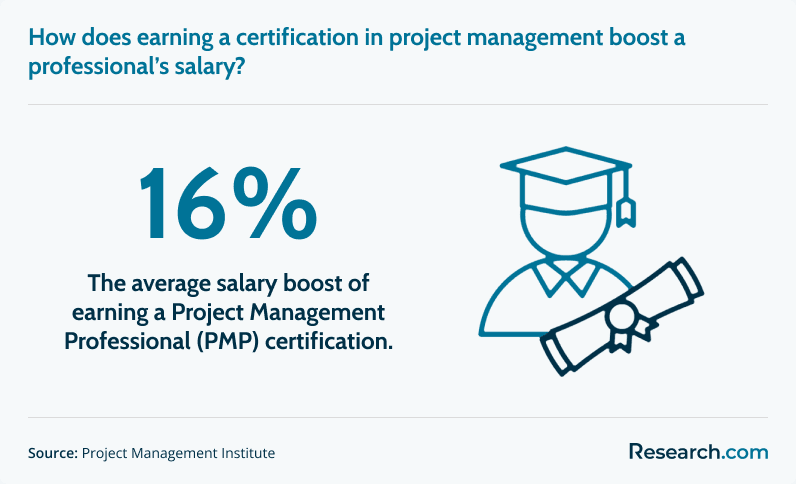
| Project Management Professional | Broad project management knowledge, leadership, process, and delivery practices. | Experienced project managers who want a widely recognized credential. PMP holders see an average 16% salary increase. |
| Certified Associate in Project Management | Foundational project management concepts and terminology. | Students, career changers, and early-career professionals who are not yet ready for PMP. |
| PRINCE2 | Structured, process-based project governance and control. | Professionals working in organizations or regions where PRINCE2 is commonly used, including Europe and Australia. |
| Certified ScrumMaster | Scrum roles, ceremonies, team facilitation, and iterative delivery. | Professionals supporting Agile software, product, or cross-functional teams. |
| Agile Certified Practitioner | Agile methods such as Scrum, Kanban, Lean, and XP. | Project professionals working in adaptive environments where requirements change frequently. |
How to choose the right certification
- Choose CAPM if you are new to project management and need a beginner-friendly credential.
- Choose PMP if you already have substantial project experience and want a credential that is recognized across many industries.
- Choose Scrum or Agile credentials if you work with software, product development, digital operations, or iterative delivery teams.
- Choose PRINCE2 if your employer, region, or target industry uses that framework.
- Before paying for any credential, confirm eligibility rules, exam costs, renewal requirements, and whether employers in your target field actually request it.
What are the different career paths for project managers?
Project management can lead to several career directions. Some professionals specialize by industry, while others move into program management, portfolio management, operations leadership, consulting, or executive roles. Your best path depends on what you like managing: technology systems, physical construction, healthcare initiatives, marketing campaigns, product launches, business change, or enterprise strategy.
| Career path | Typical work | Who it fits |
| IT Project Manager | Software releases, system migrations, cybersecurity initiatives, cloud projects, infrastructure upgrades, or vendor implementations. | Professionals with technical fluency and strong coordination skills. |
| Construction Project Manager | Budgets, schedules, contractors, safety coordination, permits, procurement, and site progress. | People interested in built environments, field operations, and complex logistics. A construction management degree can be useful in this track. |
| Healthcare Project Manager | Process improvements, facility upgrades, compliance projects, technology rollouts, and patient-care operations initiatives. | Professionals who can balance regulations, stakeholders, budgets, and service quality. |
| Marketing Project Manager | Campaign timelines, creative workflows, product launches, content calendars, vendor coordination, and brand initiatives. | People who enjoy fast-moving creative and commercial work. |
| Generalist Project Manager | Cross-functional business projects across operations, finance, HR, administration, or client delivery. | Professionals who want transferable skills across departments or industries. |
| Program Manager | Groups of related projects that support a larger business objective. | Experienced project managers who can manage interdependencies and strategic alignment. |
| Portfolio Manager | Selection, prioritization, and oversight of multiple programs and projects across an organization. | Senior professionals who can allocate resources and evaluate business value. |
| PMO Director or Manager | Project standards, governance, reporting, methodology, coaching, and organizational project maturity. | Experienced leaders who want to improve how an organization manages projects at scale. |
Analytical skills are becoming more valuable in many project environments. Professionals who want to combine project leadership with data-heavy decision-making may also explore data science education paths to strengthen their ability to work with metrics, dashboards, forecasting, and business intelligence teams.
How can advanced education accelerate your project management career?
Advanced education can help when you are moving from task coordination into strategic leadership. Graduate-level study may strengthen your understanding of finance, organizational change, decision analysis, leadership, and complex operations. For working adults, an accelerated online degree may provide a faster way to complete missing academic requirements while continuing to work.
Advanced education is most useful when it connects directly to your target role. A master’s in project management may help with program leadership, an MBA may help with broader business management, and a technical graduate degree may help if you manage complex engineering, IT, or healthcare projects.
What emerging trends are shaping the future of project management?
Project management is changing as organizations rely more on digital collaboration, remote and hybrid teams, data dashboards, automation, Agile delivery, and faster business cycles. Project managers are expected to be comfortable with project management software, virtual communication, analytics, and changing stakeholder expectations.
AI and automation are also affecting the role. Routine tasks such as status summaries, schedule updates, documentation, and risk flagging may become more automated, but human judgment remains essential for prioritization, stakeholder alignment, negotiation, leadership, and ethical decision-making. Professionals comparing broader education choices can review online degree options that may lead to strong career outcomes while considering how technology is changing employer expectations.
What challenges do project managers face and how can they overcome them?
Project managers often deal with unclear requirements, scope creep, budget pressure, missed deadlines, limited resources, vendor delays, conflict between stakeholders, and teams that are spread across locations or time zones. These problems are common, but they are easier to manage when the project has clear governance, documented decisions, visible risks, and a realistic change-control process.
| Challenge | Better response |
| Scope creep | Define what is included, document requested changes, and require approval before adding work. |
| Unclear ownership | Create a responsibility matrix so each task has an accountable owner. |
| Conflicting stakeholder priorities | Escalate trade-offs clearly and tie decisions to business goals. |
| Resource constraints | Prioritize critical tasks, adjust timelines, and communicate capacity limits early. |
| Poor communication | Use consistent status updates, meeting notes, dashboards, and decision logs. |
Professionals who want deeper training in leadership, risk, and complex decision-making may consider an online one-year master’s program if the curriculum, accreditation, cost, and workload fit their goals.
How can online education programs enhance your project management career?
Online education can be useful for project management because many learners are already working and need flexibility. A good online program can help you develop planning, leadership, budgeting, communication, and technology skills without relocating or pausing your career. However, quality varies, so you should compare accreditation, faculty experience, student support, course format, transfer credit policies, total cost, and career services.
If you plan to use federal financial aid, verify whether the school participates in eligible aid programs. Researching online colleges that accept FAFSA can help you identify institutions where financial aid may be available.
Should I consider an online degree to kickstart my project management career?
An online degree can be a strong starting point if you need a flexible schedule, already work full time, or live far from a campus. It can also help if you want a credential that supports entry-level project roles such as coordinator, administrator, analyst, or assistant project manager.
Before choosing the easiest or fastest route, make sure the program is credible and aligned with your career target. A broad option such as an online bachelor’s degree path may work for students who need flexibility, but you should still evaluate accreditation, curriculum depth, employer recognition, and total cost.
What strategies can accelerate my project management career growth?
Career growth in project management usually comes from visible results, not credentials alone. To move faster, volunteer for cross-functional work, document project outcomes, learn the tools used in your industry, ask for responsibility over small initiatives, and seek feedback from experienced project leaders.
- Build a portfolio of completed projects, even if your title is not yet project manager.
- Learn the project management software used in your target industry.
- Practice writing concise status reports and executive updates.
- Find a mentor who can review your project plans, risk logs, and stakeholder communication.
- Study one delivery method deeply instead of collecting unrelated credentials.
- For a shorter academic foundation, compare options such as an accelerated associate degree online before choosing a program.
Can accelerated degrees fast-track my project management career?
Accelerated degrees may shorten the time needed to complete a credential, especially for adults with transfer credits, prior college coursework, or a clear career plan. Programs such as accelerated associate degrees can help some students build foundational business, communication, and technical skills sooner than a traditional schedule.
The trade-off is workload. Condensed programs can be intense, and faster is not always better if the format leaves little time for internships, networking, portfolio projects, or certification preparation. Compare completion time with total cost, credit transfer, academic support, and how well the curriculum maps to project management roles.
Which career advancement strategies should emerging project managers consider?
Newer project managers should focus on credibility, communication, and measurable outcomes. Instead of trying to manage the largest project immediately, build a record of delivering smaller projects reliably. Over time, take on projects with larger budgets, more stakeholders, higher risk, or greater strategic importance.
- Ask to lead a pilot project or process improvement initiative.
- Track results such as cost savings, cycle time improvements, risk reductions, or successful launches.
- Develop industry knowledge so you can make better trade-off decisions.
- Strengthen negotiation and stakeholder communication, not just scheduling skills.
- Consider an accelerated master’s program online if graduate education is expected for your target leadership role.
Is pursuing an advanced doctoral degree beneficial for project management careers?
A doctoral degree is not necessary for most project manager jobs. It may be worth considering if you want to teach at the college level, conduct research, consult at a high strategic level, or move into senior organizational leadership where advanced research and decision analysis are valued.
For most professionals, a master’s degree, targeted certification, and strong project outcomes will be more practical than a doctorate. If your goals include executive research, consulting, or academic work, you can compare options such as the shortest DBA program online while carefully weighing cost, time, dissertation or capstone requirements, and career return.
What are the best entry-level jobs to start a project management career?
Entry-level project roles help you learn the daily mechanics of project work before you are responsible for full delivery. Projects that implement project management best practices are 2.5 times more successful, which is why employers often look for candidates who can show organized, disciplined work habits. Graduates of an online business management degree may be especially well positioned for coordinator, analyst, or operations-focused roles.
| Entry-level role | What you do | How it prepares you |
| Project Coordinator | Track tasks, update schedules, prepare reports, organize meetings, and maintain project documentation. | Builds familiarity with project tools, timelines, communication routines, and team coordination. |
| Junior Project Manager | Support a senior project manager or lead smaller projects with limited scope. | Provides early practice in decision-making, follow-up, delegation, and issue resolution. |
| Project Administrator | Handle documentation, purchase orders, meeting records, budget tracking, and logistical support. | Develops attention to detail and knowledge of the administrative side of project delivery. |
| Business Analyst | Gather requirements, document workflows, analyze problems, and help define project scope. | Strengthens stakeholder communication, problem definition, and solution planning. |
| Team Lead or Supervisor | Coordinate daily work, assign tasks, support team members, and report progress. | Builds leadership experience that can transfer into formal project management. |
What is the average salary of a project manager in various industries?
Project manager pay varies by industry, location, employer size, years of experience, project budget, certification, and technical specialization. In the United States, seasoned project management professionals typically earn an annual salary of approximately $100,000. The ranges below show how compensation can differ across common project management tracks.
| Project manager role | Average salary range |
| Information Technology (IT) Project Manager | $90,000 - $120,000 |
| Construction Project Manager | $80,000 - $110,000 |
| Healthcare Project Manager | $85,000 - $115,000 |
| Marketing Project Manager | $65,000 - $95,000 |
| Engineering Project Manager | $90,000 - $120,000 |
How to evaluate salary realistically
- Compare salaries by industry, not just job title.
- Look at the size and complexity of projects the role manages.
- Check whether the job requires technical knowledge, travel, vendor management, or regulatory experience.
- Do not assume a certification automatically guarantees a raise; employer demand and your experience still matter.
- Evaluate total compensation, including bonuses, benefits, remote-work flexibility, training budgets, and career progression.
How competitive is the job market for project managers?
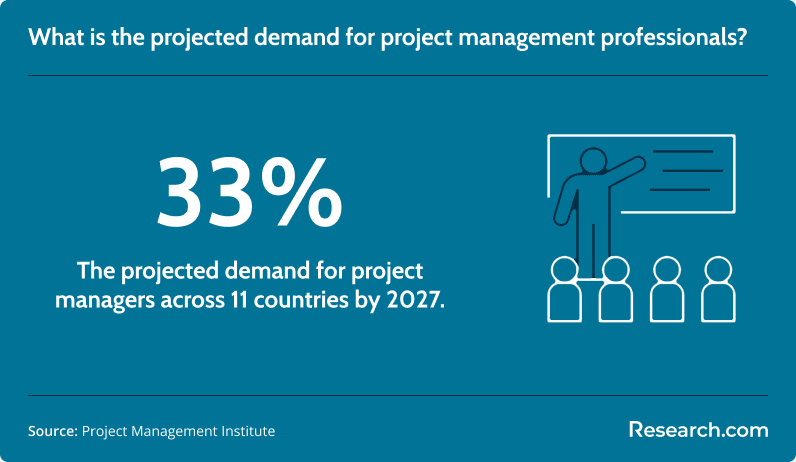
The project management job market is competitive because many professionals from business, technology, operations, construction, healthcare, finance, and engineering can move into project roles. At the same time, opportunities remain broad because nearly every organization runs projects. Demand for project managers is set to grow, with a projected 33% workforce expansion across 11 countries by 2027.
Why competition can be strong
- Many candidates have transferable experience from operations, administration, team leadership, business analysis, or technical roles.
- Employers often prefer candidates who know the specific industry, not only general project management methods.
- Certifications are common in some applicant pools, so experience and results can matter more than credentials alone.
- Remote and hybrid work may expand opportunities but can also increase the number of applicants for each opening.
How to stand out
- Show completed projects with measurable outcomes rather than listing responsibilities only.
- Tailor your resume to the industry and project type you are targeting.
- Use project language clearly: scope, schedule, budget, risk, stakeholders, milestones, deliverables, and change control.
- Build tool proficiency in the platforms commonly used by your target employers.
- Pair a credential with practical examples of how you managed constraints, solved problems, or improved delivery.
Common mistakes to avoid when pursuing project management
| Mistake | Why it can hurt you | Better approach |
| Choosing a program without checking accreditation | An unrecognized school can weaken the value of your degree and limit financial aid options. | Verify institutional accreditation before enrolling. |
| Focusing only on tuition | Fees, books, software, exam costs, travel, and lost work time can change the real cost. | Compare total cost of attendance and expected career value. |
| Assuming all online programs are equal | Course quality, support, faculty experience, and employer recognition vary widely. | Review curriculum, student services, outcomes, flexibility, and transfer policies. |
| Collecting certifications without experience | Credentials alone may not convince employers that you can manage real projects. | Use work projects, internships, volunteer roles, or process improvements to build proof. |
| Ignoring industry specialization | A general project management resume may be less competitive in technical fields. | Learn the vocabulary, tools, regulations, and workflows of your target industry. |
| Relying only on rankings | A highly ranked program may still be the wrong fit for your budget, schedule, or goals. | Use rankings as one factor, then evaluate fit, cost, support, and outcomes. |
Questions to ask before choosing a project management program or certification
- Is the school or provider recognized by employers in my target industry?
- Does the curriculum cover planning, scheduling, risk, budgeting, leadership, Agile, and stakeholder communication?
- Will I complete projects, case studies, simulations, or a capstone that can support my portfolio?
- Does the program prepare students for CAPM, PMP, Scrum, Agile, or another relevant credential?
- Can I transfer credits or receive credit for prior learning?
- What is the full cost, including fees, books, software, and exam preparation?
- Are courses asynchronous, live online, hybrid, or campus-based?
- What career services, networking opportunities, internships, or employer partnerships are available?
- Will the schedule work with my job and family responsibilities?
- How will this credential help me qualify for the next specific role I want?
What do project managers say about their careers?
What keeps me in project management is the mix of structure and variety. No two projects are exactly alike, so I am always learning, adjusting, and solving new problems. It is rewarding to watch an idea become a finished result and know I helped make that happen. Maria
This career pushed me to become a stronger leader. I had to learn how to guide teams, make decisions under pressure, and communicate clearly when priorities changed. The work can be demanding, but it has created opportunities I would not have had otherwise. David
I chose project management because I wanted work that produced visible impact. I enjoy bringing people together, removing obstacles, and helping an organization deliver something useful. Seeing the final outcome makes the pressure worthwhile. Alex
References:
- Project (2024). Project Management Statistics: Everything You Need to Know (2024).
- Project Management Institute. (2023). Pulse of the Profession 2023: Power Skills, Redefining Project Success | 14th Edition.
- Project Management Institute. (2023). Essential 2024 Insights for Project Professionals.
- The Digital Project Manager (2024, ). 21 Project Management Statistics To Inform How You Work: 2024.
- Wellingtone (2024). The State of Project Management.
Key Insights
- Project management is a practical career path for people who can organize work, lead teams, manage risk, and communicate clearly with stakeholders.
- A bachelor’s degree is common but not always mandatory; the best academic path depends on whether you want to manage business, IT, construction, healthcare, engineering, or marketing projects.
- Most aspiring project managers need three to seven years to build education, entry-level experience, certifications, and industry-specific knowledge.
- Certifications such as PMP, CAPM, PRINCE2, Certified ScrumMaster, and Agile Certified Practitioner can strengthen your profile, but they are most valuable when supported by real project experience.
- Entry-level jobs such as project coordinator, junior project manager, project administrator, business analyst, and team lead are strong starting points.
- Industry matters for salary. Seasoned project management professionals in the United States typically earn approximately $100,000 annually, while listed industry ranges vary from $65,000 - $95,000 for marketing project managers to $90,000 - $120,000 for IT and engineering project managers.
- Do not choose a degree or certification based on speed, price, or rankings alone. Check accreditation, curriculum, employer relevance, total cost, support services, and whether the credential helps you reach a specific role.
- The strongest candidates can show measurable project results: completed deliverables, improved timelines, controlled budgets, reduced risks, successful launches, or better team coordination.
Other Things You Should Know About Becoming a Project Manager
In 2027, aspiring project managers can stay updated by attending workshops, enrolling in online courses, and participating in webinars focused on the latest project management tools and methodologies. Networking through professional groups such as PMI and following industry influencers on platforms like LinkedIn can also provide insights into emerging trends.
In 2027, the technology, healthcare, and construction industries are expected to have the highest demand for project managers. These sectors continue to innovate and expand, requiring skilled project managers to oversee complex projects and ensure timely, successful completion.
To get certified as a project manager in 2027, consider earning certifications like PMP (Project Management Professional) or CAPM (Certified Associate in Project Management). These require passing the relevant exams, with PMI continuing education for maintaining your credential.