2027 Most Affordable Online Aerospace Engineering Degree Programs

Co-Founder and Chief Data Scientist
Choosing an online aerospace engineering degree is not just a question of convenience. It is a decision about accreditation, lab access, tuition, career goals, and whether a remote format can give you enough technical preparation for aircraft, spacecraft, propulsion, defense, or space systems work. The stakes are high because aerospace engineering is mathematically demanding, project-based, and often tied to employers that expect strong design, simulation, testing, and systems-thinking skills.
This guide is for prospective students comparing affordable online aerospace engineering programs, working engineers considering graduate study, military-affiliated learners, and STEM students who want a realistic path into aviation, defense, commercial space, or research. You will learn what online programs include, how they compare with campus programs, what they cost, which schools offer affordable options, what admissions requirements to expect, and how to evaluate career return on investment without relying only on rankings.
Quick answer: Is an online aerospace engineering degree worth it?
An online aerospace engineering degree can be worth it when the program is properly accredited, includes enough hands-on or simulation-based engineering work, fits your schedule, and supports your target career path. For bachelor’s students, ABET accreditation is especially important because it can affect employer recognition and engineering licensure eligibility. For graduate students, the best online programs are often designed for working engineers who already have a technical foundation and want deeper expertise in propulsion, fluid dynamics, structures, controls, orbital mechanics, or space systems.
The value is strongest for students who need flexibility, cannot relocate, or want to reduce costs while preparing for roles in aerospace, defense, commercial aviation, satellites, unmanned systems, or related engineering fields. However, online study is not the best fit for every learner. Students who need daily in-person lab access, extensive campus research participation, or highly structured face-to-face support may prefer a campus-based program.
What are the main benefits of earning an online aerospace engineering degree?
- Graduates may qualify for roles such as aerospace engineer, systems engineer, propulsion engineer, flight test engineer, or spacecraft designer in defense, commercial aviation, space exploration, and related technical sectors.
- 2025 data suggests that the median annual wage for aerospace engineers was $128,540, which is substantially higher than the national average for all occupations.
- Online delivery can remove location barriers, allowing students to pursue respected programs without relocating or leaving a current job.
- Many online graduate programs are built for working professionals, making it easier to continue earning income while studying part time.
- Affordable online options may reduce total education costs, particularly when schools offer the same tuition rate regardless of state residency.
What should I expect from an affordable online aerospace engineering degree?
An affordable online aerospace engineering degree should still be academically rigorous. The lower price should not mean a watered-down curriculum. Students typically study aerodynamics, propulsion, fluid mechanics, structural analysis, control systems, flight dynamics, orbital mechanics, and aerospace materials. Many programs also use industry-relevant tools such as CAD platforms, MATLAB, simulation software, numerical modeling, and computer-based design environments.
The online format usually combines asynchronous coursework with scheduled exams, virtual collaboration, recorded lectures, discussion boards, remote design projects, and sometimes live sessions. Some programs include virtual labs, remote access to engineering software, locally arranged internships, or required campus visits for laboratory work. Before enrolling, confirm whether the degree is fully online or only mostly online. A program that requires summer labs, in-person proctoring, or short residencies can still be a strong option, but you need to budget for travel and time away from work.
Career preparation is also important. Strong programs connect coursework to real aerospace problems, such as aircraft performance, spacecraft subsystems, propulsion efficiency, autonomous systems, and structural reliability. Some institutions work with aerospace employers, defense contractors, research labs, or government agencies to keep projects and electives aligned with workforce needs. This matters because the Bureau of Labor Statistics projects that the field will add over 3,800 aerospace engineering jobs by 2033.
| What to evaluate | Why it matters | What to ask before applying |
| Accreditation | Accreditation signals that the curriculum meets recognized engineering education standards. | Is the aerospace engineering program ABET-accredited or offered through an ABET-accredited engineering school? |
| Lab and project requirements | Aerospace engineering requires applied design, analysis, and testing skills. | Are labs virtual, campus-based, locally arranged, or completed through projects? |
| Software access | Simulation and modeling tools are central to aerospace work. | Does tuition include access to CAD, MATLAB, modeling, or analysis software? |
| Schedule format | Working students need to know whether courses are flexible or time-bound. | Are classes asynchronous, live, hybrid, or tied to fixed meeting times? |
| Career support | Internships, alumni networks, and employer connections can affect job readiness. | Does the program help online students find internships, co-ops, research projects, or employer contacts? |
Where can I work with an affordable online aerospace engineering degree?
An aerospace engineering degree can lead to work in organizations that design, test, build, regulate, or operate high-performance systems. Many graduates seek employment with aerospace and defense companies such as Boeing, Lockheed Martin, Northrop Grumman, and SpaceX. These employers hire engineers for aircraft, spacecraft, satellites, launch systems, missiles, defense platforms, unmanned systems, and advanced manufacturing projects.
Government agencies are another major pathway. NASA and the U.S. Department of Defense employ aerospace engineers for space missions, national defense programs, research, testing, and technical oversight. Regulatory and investigative organizations, including the Federal Aviation Administration and the National Transportation Safety Board, may also need engineering expertise for safety analysis, system evaluation, failure investigation, and aviation policy support.
Aerospace engineering skills also transfer into adjacent industries. Graduates may work in automotive engineering, energy, robotics, telecommunications, consulting, research laboratories, or private contracting because the degree develops advanced knowledge of thermodynamics, fluids, controls, materials, modeling, and systems integration. With experience, engineers may move into project leadership, technical management, research and development, product safety, or advanced design roles.
How much can I make with an affordable online aerospace engineering degree?
Aerospace engineering can offer strong earning potential, but salary depends on degree level, employer, location, specialization, security clearance requirements, prior experience, and the strength of your technical portfolio. Based on 2025 figures from the U.S. Bureau of Labor Statistics, aerospace engineers earned a median annual salary of $128,540 in 2023, while the top 10% made over $170,000. Entry-level roles often start around $75,000–$85,000, depending on the job market and candidate background.
Compensation may be higher in federal government roles, defense manufacturing, advanced research, and specialized technical positions. Engineers who build expertise in propulsion, controls, systems engineering, avionics, simulation, autonomous flight, or space systems may improve their long-term prospects. Choosing an affordable online program can also improve return on investment because borrowing less for the same credential leaves more of your future earnings available for savings, relocation, professional certification, or graduate study.
- Most affordable online aerospace engineering degree programs for 2027
- Program length: How long online aerospace engineering degrees take
- Online versus campus aerospace engineering programs
- Average cost of aerospace engineering programs
- Financial aid for aerospace engineering students
- Admissions requirements and prerequisites
- Common aerospace engineering courses
- Aerospace engineering specialization options
- How to choose the right aerospace engineering program
- Career paths after an aerospace engineering degree
- Interdisciplinary learning in online aerospace engineering
- Management coursework and aerospace career growth
- Accreditation and industry validation for online programsProgram questions to ask before enrolling
- Emerging technologies in online aerospace engineering programs
- Computer science skills and aerospace innovation
Most affordable online aerospace engineering degree programs for 2027
How this ranking was developed
This ranking focuses on affordable online aerospace engineering options using transparent education data and program information. Because a degree in engineering can be a major financial commitment, affordability was considered alongside degree level, delivery format, credit requirements, and program structure. Research.com’s ranking methodology uses trusted sources such as the IPEDS database, Peterson’s database, including its Distance Learning Licensed Data Set, the College Scorecard database, and the National Center for Education Statistics.
| Rank | School and program | Listed cost | Credits | Typical length |
| 1 | University of North Dakota Online Bachelor of Science in Aerospace Engineering | $480 per credit | 128 | 4–5 years, including on-campus summer labs |
| 2 | University of Alabama Online MS in Aerospace Engineering | $440 per credit | 30 credits | 2-3 years |
| 3 | Mississippi State University Online MS in Aerospace Engineering | $558.50 per credit + $25 support fee | 30 credits | 2 years |
| 4 | Missouri University of Science & Technology Online MS in Aerospace Engineering | No information available | 30 credits | -3 years |
| 5 | University of Missouri Online MS in Mechanical Aerospace Engineering | $682.50 (for 30 credits) | 30 credits | 3 years |
| 6 | Embry-Riddle Aeronautical University – Worldwide Campus Online MS in Aerospace Engineering | $1,400 per credit | 30 credits | 2 years |
| 7 | University of Florida Online MS in Aerospace Engineering | approximately $1,000 per credit | 30 credits | 2 years |
| 8 | American Public University System Bachelor of Science in Space Studies | $265 per quarter-credit, approximately $795 per semester-credit | 120 credits | 4 years |
| 9 | Capitol Technology University Bachelor’s in Astronautical and Space Engineering | $13,175 per semester | 120 credits | 4 years |
| 10 | Old Dominion University Master of Science/Master of Engineering in Aerospace Engineering | $620 per credit in-state; $642 per credit out-of-state | 30 credits | 2-3 years |
| 11 | University of Kansas MS in Aerospace Engineering | $795 per credit | 30 credits | 2 years |
| 12 | Auburn University MS in Aerospace Engineering | $949 per credit | 30 credits | 2 years |
| 13 | Colorado State University MS in Aerospace Engineering | $650 per credit est. | 30 credits | 2-3 years |
| 14 | University of Central Florida MS in Aerospace Engineering | $369.65 per credit in-state; $1,194.05 per credit out-of-state | 30 credits | 2 years |
| 15 | University of Washington – Seattle Master of Aerospace Engineering | $337.93 per credit for 45 credits | 45 credits | 3 years part-time |
1. University of North Dakota Online Bachelor of Science in Aerospace Engineering
The University of North Dakota offers an online Bachelor of Science in Aerospace Engineering that stands out for combining an affordable tuition model with an accredited-track engineering curriculum. Online students pay the in-state tuition rate regardless of residency, and the program does not add an out-of-state surcharge. Coursework is delivered through the John D. Odegard School of Aerospace Sciences and covers propulsion, orbital mechanics, rocketry, satellite development, and flight dynamics. Students should note that the program includes on-campus summer labs, which make travel planning part of the total cost calculation.
- Cost per credit: $480
- Credits required to graduate: 128
- Program length: 4–5 years, including on-campus summer labs
2. University of Alabama Online MS in Aerospace Engineering
The University of Alabama offers a fully online MS in Aerospace Engineering for engineers who want graduate-level training without relocating. The program includes thesis and non-thesis options and has been available for over 20 years. Students earn a degree that mirrors the on-campus version, though they should plan for live, in-person proctoring for exams.
- Cost per credit: $440 per credit
- Credits required to graduate: 30 credits
- Program length: 2-3 years
3. Mississippi State University Online MS in Aerospace Engineering
Mississippi State University offers an online MS in Aerospace Engineering with thesis and non-thesis routes. The curriculum emphasizes fluid dynamics, structural mechanics, controls, propulsion, and autonomous systems. Instruction is delivered fully online, while graduate students may still benefit from the university’s aerospace faculty, academic support, and access to campus-based resources when relevant.
- Cost per credit: $558.50 per credit + $25 support fee
- Credits required to graduate: 30 credits
- Program length: 2 years
4. Missouri University of Science & Technology Online MS in Aerospace Engineering
Missouri University of Science & Technology provides a fully online MS in Aerospace Engineering with thesis and non-thesis options. Students study topics such as aerodynamics, propulsion, controls, dynamics, and materials, and at least 24 credit hours come from the MAE department. The asynchronous format can work well for students taking about one to two courses per semester.
- Cost per credit: No information available
- Credits required to graduate: 30 credits
- Program length: -3 years
5. University of Missouri Online MS in Mechanical Aerospace Engineering
Mizzou offers a 100% online MS that combines mechanical and aerospace engineering content for professionals seeking a broader technical graduate degree. The ABET-accredited program includes work in dynamics and control, thermal/fluids, materials and solids, and design/manufacturing. Faculty research activity and applied technical coursework make this option especially relevant for students targeting advanced engineering or technical leadership roles.
- Cost per credit: $682.50 (for 30 credits)
- Credits required to graduate: 30 credits
- Program length: 3 years
6. Embry-Riddle Aeronautical University – Worldwide Campus Online MS in Aerospace Engineering
Embry-Riddle Aeronautical University – Worldwide Campus offers online aerospace engineering options at both the MS and BS levels with full ABET accreditation. ERAU is widely recognized in aviation and aerospace education, and its online programs include support designed for distance learners. The MS curriculum follows Daytona Beach campus standards, and coursework is organized in self-paced weekly modules to support students balancing school with professional obligations.
- Cost per credit: $1,400
- Online aerospace engineering programs: 30 credits
- Program length: 2 years
7. University of Florida Online MS in Aerospace Engineering
The University of Florida offers an online MS in Aerospace Engineering that can serve engineers coming from non-aerospace backgrounds. Students complete graduate coursework in areas such as dynamics, fluids, and control systems. The program is structured to balance technical depth with the flexibility working professionals often need.
- Cost per credit: approximately $1,000
- Online aerospace engineering programs: 30 credits
- Program length: 2 years
8. American Public University System Bachelor of Science in Space Studies
American Public University System offers a fully online Bachelor of Science in Space Studies rather than a traditional aerospace engineering degree. The curriculum includes astronomy, planetary science, and spacecraft operations. Students may use virtual labs, telescope-based research, and analog astronaut mission opportunities to build space-related knowledge applicable to aerospace, research, and defense environments.
- Cost per credit: $265 per quarter-credit, approximately $795 per semester-credit
- Credits required to graduate: 120 credits
- Program length: 4 years
9. Capitol Technology University Bachelor’s in Astronautical and Space Engineering
Capitol Technology University offers an ABET-accredited Bachelor’s in Astronautical and Space Engineering focused on spacecraft design, orbital dynamics, and mission operations. Students can participate in projects involving virtual satellite control, high-altitude balloon systems, suborbital payloads, 3D printing, and hands-on labs. The university’s proximity to NASA Goddard can be an advantage for students interested in mission-oriented space careers.
- Tuition: $13,175 per semester, full-time undergraduate
- Credits required to graduate: 120 credits
- Program length: 4 years
10. Old Dominion University Master of Science/Master of Engineering in Aerospace Engineering
Old Dominion University offers online Master of Science and Master of Engineering options in Aerospace Engineering. Students can choose a thesis-based MS or an ME pathway with a comprehensive exam. ODU’s relationships with NASA Langley, the Air Force Research Lab, and industry partners support applied research opportunities and may benefit students interested in aircraft, spacecraft, UAV systems, or future doctoral study.
- Cost per credit: $620 per credit in-state; $642 per credit out-of-state
- Credits required to graduate: 30 credits
- Program length: 2-3 years
11. University of Kansas MS in Aerospace Engineering
The University of Kansas offers fully online MS and ME pathways in Aerospace Engineering through Jayhawk Global. The MS includes thesis or project options, while the ME is non-thesis. Students study aircraft and spacecraft systems, structures, propulsion, and management, and the total cost applies equally to in-state and out-of-state students.
- Cost per credit: $795
- Credits required to graduate: 30 credits
- Program length: 2 years
12. Auburn University MS in Aerospace Engineering
Auburn University offers a fully online MS in Aerospace Engineering for distance learners through a non-thesis format. Courses cover orbital mechanics, propulsion, structural dynamics, supersonic aerodynamics, and legal aspects of engineering. The program uses ten-week terms, streaming video, and self-paced study, and online students earn the same degree as campus students.
- Cost per credit: $949
- Credits required to graduate: 30 credits
- Program length: 2 years
13. Colorado State University MS in Aerospace Engineering
Colorado State University offers an asynchronous online MS in Aerospace Engineering taught by faculty who also teach on campus. Students may focus on propulsion, fluid mechanics, laser diagnostics, or orbital mechanics. CSU also offers a 9-credit Aerospace Graduate Certificate that can later be applied toward the MS degree.
- Cost per credit: $650 per credit, est.
- Credits required to graduate: 30 credits
- Program length: 2-3 years
14. University of Central Florida MS in Aerospace Engineering
The University of Central Florida offers a fully online MSAE with thesis and non-thesis options. Students can choose from Space Systems Design, Thermofluid Aerodynamics, and Guidance & Control. The program is designed to meet engineering licensure requirements and can prepare students for defense, commercial space, or research-focused careers. UCF graduates often work for organizations such as NASA, Boeing, Lockheed Martin, and SpaceX.
- Cost per credit: $369.65 per credit in-state; $1,194.05 per credit out-of-state
- Credits required to graduate: 30 credits
- Program length: 2 years
15. University of Washington – Seattle Master of Aerospace Engineering
The University of Washington – Seattle offers a professional Master of Aerospace Engineering with live evening classes once per week. Students can participate through live webcast or recorded sessions, making the program more accessible for working professionals. The non-thesis, coursework-only degree allows specialization in areas such as Controls, Fluids, Structures, and Composites.
- Cost per credit: $337.93 per credit for 45 credits
- Credits required to graduate: 45 credits
- Program length: 3 years part-time
How long does it take to complete an online aerospace engineering program?
A full-time online bachelor’s degree in aerospace engineering usually takes about four years and commonly requires around 120–130 credit hours. Students who attend part time may need five to six years, while those with transfer credits can sometimes shorten the timeline. Graduate aerospace engineering programs are often 30 credits and commonly take about two to three years, depending on course load, thesis requirements, and whether the student is working full time.
Be careful when comparing timelines across degree types. Accelerated graduate models in other fields, such as 2 year Ed.D. programs online, do not necessarily reflect the pacing of engineering programs, where prerequisites, sequencing, projects, and technical workload can limit how fast students can progress.
| Program type | Common credit range | Typical completion time | Best fit |
| Bachelor’s in aerospace engineering | 120–130 credit hours | About four years full time; five to six years part time | Students seeking entry into aerospace engineering roles or future graduate study |
| Master’s in aerospace engineering | 30 credits | About 2-3 years | Working engineers or STEM graduates seeking specialization |
| Space studies or related bachelor’s degree | 120 credits | About four years | Students interested in space operations, research, or adjacent aerospace roles |
How does an online aerospace engineering program compare with an on-campus program?
Online and campus aerospace engineering programs can provide comparable academic training when the curriculum, faculty standards, assessment methods, and accreditation are equivalent. The most important differences usually involve labs, schedule flexibility, networking, research access, and how students complete design work. Programs accredited by ABET are especially important to evaluate because accreditation can affect employer confidence and licensure planning.
| Factor | Online aerospace engineering | On-campus aerospace engineering | Decision tip |
| Schedule | Often asynchronous or built for working adults | Usually follows fixed class, lab, and project schedules | Choose online if flexibility is essential; choose campus if structure helps you stay on track. |
| Labs | May use virtual labs, simulations, local arrangements, or short residencies | Direct access to wind tunnels, labs, equipment, and research spaces | Ask exactly how hands-on requirements are completed before enrolling online. |
| Networking | Relies more on virtual teams, online office hours, alumni groups, and remote projects | Provides easier access to clubs, labs, faculty offices, and campus recruiting | Online students should be proactive about internships and professional associations. |
| Cost | May reduce relocation, commuting, and residency-related costs | Can include housing, transportation, and campus fees | Compare total cost, not tuition alone. |
| Student profile | Often suited to working adults, military-affiliated learners, and students who cannot relocate | Often preferred by traditional full-time students seeking immersive campus life | Match the format to your learning style and career timeline. |
Online learning can be attractive to nontraditional students, including adults returning to school and learners comparing flexible options such as online degree programs for seniors. However, aerospace engineering is more technically demanding than many general online degrees, so students should confirm that they can handle calculus, physics, coding, design software, and independent problem-solving in a remote environment.
What is the average cost of an aerospace engineering program?
The cost of an aerospace engineering degree varies widely by school type, residency status, degree level, and whether the student studies online or on campus. Tuition is only part of the price. Fees, books, software, lab requirements, travel for residencies, housing, and lost income can change the real cost of attendance.
Undergraduate program costs
- In-state public universities: Average annual tuition and fees for in-state students at public universities offering aerospace engineering programs are approximately $13,713. When living expenses are included, the total cost of attendance averages around $46,210 per year.
- Out-of-state public universities: Out-of-state students pay about $46,210 in average annual tuition and fees, with total annual costs reaching approximately $66,207 after living expenses are included.
- Private universities: Private institutions tend to charge more, with average annual tuition and fees around $50,664 and total annual costs averaging $70,153 per year.
Graduate program costs
- In-state public universities: Graduate tuition and fees at in-state public universities offering aerospace engineering programs average $16,292 annually. Including living expenses, the total annual cost is approximately $39,875.
- Out-of-state public universities: Out-of-state graduate students pay average tuition and fees of $39,875, with total annual costs reaching around $59,750 when living expenses are included.
- Private universities: Private graduate programs can be more expensive, with annual tuition and fees around $44,364 and total costs averaging $64,000 per year.
How to reduce the total cost
- Prioritize programs that charge online students the same rate regardless of residency.
- Ask whether transfer credits can apply to general education or prerequisite courses.
- Compare fees, software costs, proctoring costs, and required campus travel before committing.
- Consider part-time enrollment if your employer offers tuition support.
- Choose a program that aligns with your career goals instead of paying more for a brand name that does not fit your specialization.
What financial aid options are available for aerospace engineering students?
Aerospace engineering students may use a combination of institutional aid, federal aid, scholarships, fellowships, employer tuition assistance, military education benefits, loans, and work-study options. Engineering students should also look for awards tied to aerospace, mechanical engineering, aviation, defense, space science, and STEM diversity initiatives.
- AIAA Foundation Undergraduate Scholarship: This scholarship helps undergraduate students pursuing aerospace engineering or related degrees pay education-related expenses. Applicants must be AIAA members and are typically evaluated on academic achievement and leadership.
- Brooke Owens Fellowship: This fellowship supports women in aerospace through paid internships, mentorship, and networking. It is designed to strengthen representation and inclusion in the field.
- National Space Club Scholars Program: This award recognizes students who show strong performance in aerospace-related study and interest in the space industry. Recipients may also gain networking access to industry leaders.
- The American Society of Mechanical Engineers Aerospace Scholarship: ASME offers scholarships for students in aerospace engineering disciplines, with applicants evaluated on academics and extracurricular engagement.
| Aid source | Best for | Important caution |
| Scholarships | Students with strong grades, leadership, STEM involvement, or aerospace interest | Deadlines may fall months before the academic year begins. |
| Employer tuition assistance | Working professionals in engineering, defense, aviation, or technical roles | Some employers require you to stay with the company after using benefits. |
| Federal aid | Eligible U.S. students enrolled in qualifying programs | Only accredited institutions typically qualify for federal aid access. |
| Military benefits | Veterans, active-duty service members, and eligible family members | Confirm how benefits apply to online tuition, fees, and required residencies. |
| Graduate assistantships | Research-oriented graduate students | Fully online students may have fewer assistantship options than campus students. |
What are the prerequisites for enrolling in an aerospace engineering program?
Aerospace engineering admissions requirements vary by degree level, but students should expect a strong emphasis on math, science, and technical readiness. The field builds on calculus, physics, mechanics, computing, and design, so weak preparation in these areas can make the first year especially difficult.
- High school coursework: Bachelor’s applicants should have a strong background in mathematics, including calculus and algebra, along with physics and chemistry. Students who previously completed affordable physics degree online programs may already have useful preparation for advanced engineering study.
- Standardized tests and GPA: Many programs look for competitive SAT or ACT scores and a minimum GPA, often around 3.0 or higher. Some schools may review AP exam scores in calculus, physics, or chemistry for placement or credit.
- Computer and software skills: Familiarity with MATLAB, CAD, Python, or basic programming can help students handle simulations and design assignments. Learners who developed technical foundations through options such as the cheapest online IT training bootcamps may still need additional engineering math, but computing experience can be useful.
- Letters of recommendation: Some schools request recommendations from teachers, professors, supervisors, or mentors who can speak to academic ability, technical discipline, and interest in engineering.
Students from technical trades may bring useful hands-on problem-solving experience, especially if they have worked with electrical systems, safety procedures, diagnostics, or equipment. For example, graduates of the cheapest electrician certification courses online may have practical technical exposure, but they should still expect to complete the full math, physics, and engineering sequence required by aerospace programs.
Students comparing technical career routes outside engineering may also review resources such as the cheapest CDL training classes online, though commercial driving and aerospace engineering lead to very different education requirements and career outcomes.
What courses are typically included in an aerospace engineering program?
Aerospace engineering programs combine general engineering fundamentals with specialized study in aircraft, spacecraft, propulsion, controls, and high-performance structures. The exact course list depends on the degree level and specialization, but most programs require significant work in mathematics, physics, mechanics, computer modeling, and design.
- Aerodynamics: Students study airflow around bodies and surfaces, including lift, drag, airfoils, pressure distributions, and flight performance.
- Propulsion systems: This course examines jet engines, rocket propulsion, thermodynamics, combustion, thrust, and propulsion design trade-offs.
- Flight dynamics and control: Students learn how aircraft and spacecraft move, how stability is modeled, and how guidance and control systems are designed.
- Structures and materials: This area focuses on stress, fatigue, failure, lightweight materials, composites, and structural integrity under aerospace operating conditions.
- Spacecraft systems design: Students explore satellite subsystems, orbital mechanics, power, communications, mission planning, and spacecraft architecture.
Some students who discover an interest in healthcare after engineering compare other accelerated education pathways, including affordable online ABSN programs. These programs serve a very different purpose, but they can be relevant for readers deciding between a technical engineering path and a healthcare career change.
Recent space activity also shows why aerospace education is changing: record from 2024 shows that there were 2,940 satellites launched.
What specializations are available in aerospace engineering programs?
Specializations help students focus their degree on a specific part of the aerospace sector. At the undergraduate level, specialization may come through electives, design projects, or minors. At the graduate level, students often choose a defined technical area. Students comparing broader STEM options may also look at the best value online applied sciences programs, but aerospace specializations are usually more mathematically and mechanically intensive.
| Specialization | What it focuses on | Common career direction |
| Aerodynamics | Airflow, fluid mechanics, wind tunnel testing, lift, drag, and high-speed flow | Aircraft design, performance analysis, testing, simulation |
| Propulsion | Jet engines, rocket engines, combustion, thrust, fuels, and efficiency | Engine design, launch systems, defense propulsion, research |
| Structures and materials | Lightweight materials, composites, fatigue, stress, and structural durability | Structural analysis, materials engineering, aircraft and spacecraft integrity |
| Avionics and control systems | Navigation, communication, sensors, embedded systems, diagnostics, and automation | Flight control, avionics systems, autonomous aircraft, testing |
| Space systems engineering | Spacecraft, satellites, orbital mechanics, mission design, and subsystem integration | Satellite engineering, spacecraft design, mission operations, space industry roles |
Engineering graduates who later decide to teach science, mathematics, technology, or career education may compare affordable alteRNative teacher certification programs online. That route can be useful for professionals who want to move from technical practice into education.
How should I choose the best aerospace engineering program?
The best aerospace engineering program is not always the cheapest or the highest-ranked. It is the program that fits your degree level, career goal, budget, learning style, and technical interests while meeting accreditation and quality expectations. Use rankings as a starting point, then verify details directly with the school.
Key factors to compare
- Accreditation: For bachelor’s programs, ABET accreditation is one of the most important signals of engineering program quality. Graduate students should also evaluate institutional accreditation, departmental reputation, and whether the degree supports their employer or licensure goals.
- Curriculum fit: Review required courses and electives. A student interested in spacecraft design should not choose a program with limited space systems coursework, even if tuition is low.
- Hands-on learning: Ask how online students complete labs, simulations, team design work, capstones, and testing assignments.
- Faculty and research: Look for faculty expertise in your area of interest, such as propulsion, controls, thermofluids, orbital mechanics, materials, or autonomous systems.
- Career connections: Strong programs help students connect with internships, co-ops, employer networks, alumni, research projects, and professional organizations.
- Total cost: Compare tuition, fees, software, books, equipment, travel, residency costs, and the effect of part-time study on your timeline.
Questions to ask admissions or program advisors
- Is the program fully online, or are campus labs, residencies, or in-person exams required?
- Is the degree name identical to the campus program?
- Does the program meet ABET or relevant engineering accreditation expectations?
- How do online students access engineering software and technical support?
- What percentage of students complete the program part time?
- Can I transfer previous credits into the program?
- Are internships, capstones, or industry projects available to online students?
- What aerospace employers have hired recent graduates?
- Does the curriculum support licensure, graduate study, or security-clearance-related career paths?
- What happens if I need to pause enrollment because of work, deployment, or family obligations?
Common mistakes to avoid
| Mistake | Why it can hurt you | Better approach |
| Choosing only by lowest tuition | A cheap program may cost more if it lacks needed courses, support, or accreditation. | Compare total value: accreditation, curriculum, outcomes, format, and total cost. |
| Ignoring lab requirements | Unexpected campus visits can create travel costs and scheduling conflicts. | Ask for a written explanation of all in-person requirements. |
| Assuming every online program supports licensure | Licensure eligibility can depend on accreditation and state requirements. | Confirm requirements with the school and relevant licensing board. |
| Overlooking transfer policies | Lost credits can add semesters and increase costs. | Request a transfer evaluation before enrolling. |
| Relying only on rankings | A highly ranked program may not match your specialization or schedule. | Use rankings as a filter, then evaluate program fit. |
| Assuming salary outcomes are guaranteed | Pay varies by employer, location, experience, and specialization. | Use salary data as a benchmark, not a promise. |
What career paths are available for aerospace engineering graduates?
Aerospace engineering graduates can work in aviation, defense, commercial space, satellites, research, advanced manufacturing, autonomous systems, and related engineering fields. Career options depend on degree level, technical specialization, internship experience, software skills, and whether the role requires security clearance or advanced research training.
- Aerospace engineer: Designs, analyzes, tests, and improves aircraft, spacecraft, missiles, or related systems for employers such as Boeing, Lockheed Martin, or NASA.
- Systems engineer: Coordinates complex technical systems so that mechanical, electrical, software, controls, and mission components work together effectively.
- Flight test engineer: Plans and evaluates test flights, reviews performance data, and helps verify whether aircraft or spacecraft systems meet safety and design goals.
- Propulsion engineer: Works on engines, rockets, thrust systems, fuels, and power systems for aircraft, launch vehicles, satellites, or defense platforms.
- Avionics engineer: Develops and troubleshoots electronic systems used in navigation, communication, flight control, sensing, and onboard diagnostics.
Aerospace engineers can pursue roles with major aerospace and defense employers, including well-known companies and agencies in aviation, defense, satellites, and space systems.
Readers exploring mission-driven leadership outside engineering may also compare programs such as the cheapest online Christian leadership degree, though that pathway serves a different professional goal than aerospace engineering.
What is the job market for aerospace engineering graduates?
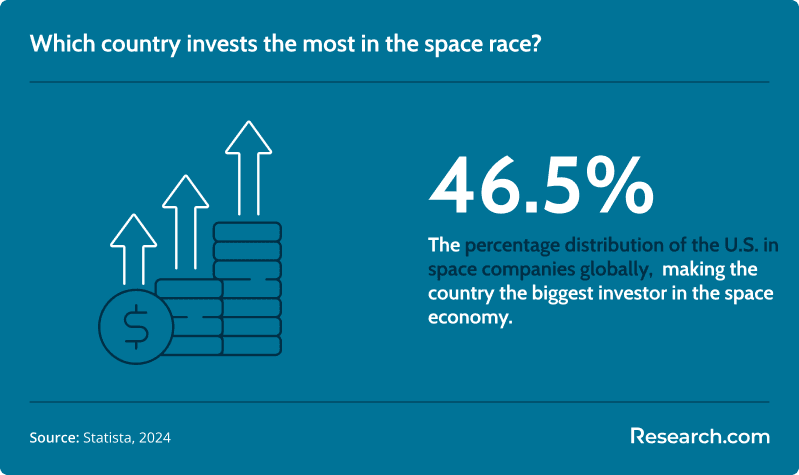
Recent employment data points to 6% growth in aerospace engineering employment from 2023 to 2033, which is faster than the average growth rate for all occupations. Demand is supported by activity in commercial aviation, defense, satellites, autonomous systems, and the expanding space economy. According to Statista, the U.S. is the biggest space economy investor.
The job market is promising but competitive. Prestigious employers often look for candidates with strong academic performance, internships, co-ops, research projects, design team experience, coding ability, and familiarity with simulation tools. Students with a master’s degree, online dual master degree programs, or focused preparation in propulsion, avionics, unmanned systems, controls, or space systems may have an advantage for specialized roles.
Diversity also remains an important workforce issue. Current gender disparity data shows that only 18% of aerospace engineers are women. Fellowships, mentorship programs, employer initiatives, and inclusive STEM pipelines are part of the broader effort to strengthen representation in aerospace and space-related careers.
Can interdisciplinary learning improve online aerospace engineering education?
Yes. Modern aerospace work increasingly depends on more than traditional mechanics and flight theory. Engineers use data analytics, remote sensing, digital modeling, automation, advanced materials, and simulation to solve complex problems. Online programs that integrate these tools can help students build a broader technical toolkit, especially when coursework connects aerospace fundamentals to real-world design, mission, and reliability challenges.
Interdisciplinary learning should still be relevant. For example, data-driven problem-solving methods similar to those used in fast online masters in health informatics can help students understand how large datasets, predictive models, and system optimization apply across technical fields. The key is not to replace aerospace depth, but to strengthen engineering judgment with computational and analytical tools.
How can management coursework support aerospace engineering careers?
Aerospace projects are technically complex, expensive, highly regulated, and often team-based. Engineers who understand project management, budgeting, systems integration, risk analysis, quality control, and communication may be better prepared for leadership roles. Management coursework can be especially useful for graduate students who already have technical experience and want to move into program management or technical team leadership.
Cross-disciplinary management exposure, including concepts found in fields such as healthcare administration degree online accredited pathways, can help students understand operations, compliance, resource allocation, and organizational decision-making. In aerospace, these skills matter when coordinating engineers, suppliers, safety teams, clients, and regulators.
Are online aerospace engineering programs accredited and industry-validated?
Some online aerospace engineering programs are accredited and industry-recognized, but students should verify this rather than assume it. Accreditation, especially ABET accreditation for engineering programs, helps show that a curriculum meets recognized standards for faculty quality, student outcomes, continuous improvement, and technical preparation. Industry validation may also come through advisory boards, employer partnerships, research collaborations, capstone sponsors, or alignment with professional standards.
Accreditation is not just a label. It can affect eligibility for financial aid, graduate study, employer screening, and engineering licensure pathways. Online students should ask whether the online degree has the same accreditation status as the campus version and whether transcripts or diplomas distinguish the delivery format. Similar quality questions apply across technical fields, including a cheap online software engineering degree, where accreditation, curriculum quality, and employer recognition also matter.
What do graduates say about online aerospace engineering programs?
“Online aerospace engineering let me keep working full time while earning a degree that employers respected. The virtual labs were more interactive than I expected, and I could connect assignments directly to projects I was already seeing at work. The flexibility made the workload possible.” — James
“I was worried that such a technical subject would be difficult to learn remotely, but organized course modules and responsive professors helped a lot. I built the same core engineering skills as campus students and secured a remote internship with a satellite startup before finishing.” — Ahmed
“The online format allowed me to study from different locations while managing Air Force duties. It was demanding, but I did not have to step away from my career to specialize in space systems.” — Milton
How do online aerospace engineering programs use emerging technologies?
Online aerospace engineering programs are increasingly shaped by computational modeling, simulation, data analytics, digital design, and machine learning applications. These tools allow students to analyze performance, model systems, test design assumptions, and evaluate complex aerospace problems without relying only on physical lab access. Strong programs use technology to support engineering judgment, not merely to replace hands-on learning.
Some programs also connect aerospace coursework with data-heavy methods used in other scientific fields. For example, principles similar to those emphasized in a bioinformatics degree online can help students understand predictive modeling, large-scale data interpretation, and algorithmic decision-making. These skills are increasingly useful in areas such as autonomous flight, satellite operations, predictive maintenance, and system optimization.
Can computer science skills strengthen aerospace engineering innovation?
Advanced computer science skills can strengthen aerospace work because aircraft, spacecraft, and defense systems increasingly depend on software, automation, artificial intelligence, machine learning, and data analysis. Engineers who understand coding, simulation, numerical methods, and computational optimization can contribute more effectively to design efficiency, system performance, fault prediction, and autonomous operations.
Students who combine aerospace engineering with computer science preparation may be better positioned for multidisciplinary work. For example, skills developed through an accelerated computer science degree online can support aerospace tasks involving modeling, embedded systems, machine learning, and technical software development.
References
- Amtec. (2024, December 4). Is Aerospace Engineering a Stable Career in 2025? Retrieved June 6, 2025, from Amtec
- Amtec employment overview
- BLS. (2025, April 18). Aerospace Engineering and Operations Technologists and Technicians. Retrieved June 6, 2025, from BLS.
- BLS. (2025, April 18). Aerospace Engineers. Retrieved June 6, 2025, from BLS.
- CareerExplorer. (2025). Aerospace engineer demographics in the United States. Retrieved June 6, 2025, from CareerExplorer.
Key insights
- An affordable online aerospace engineering degree can be a strong investment when it is accredited, technically rigorous, and aligned with your target specialization.
- ABET accreditation is especially important for bachelor’s-level engineering students and anyone considering licensure-sensitive career paths.
- Online programs offer flexibility, but students must verify lab requirements, software access, proctoring rules, and any required campus visits before enrolling.
- Cost comparisons should include tuition, fees, software, travel, residency requirements, books, and the impact of part-time versus full-time study.
- In-state students at public universities enrolled in aerospace engineering programs pay approximately $13,713 in average annual tuition and fees.
- Computer proficiency or familiarity with tools such as MATLAB, CAD, Python, modeling, or simulation software is often recommended or required.
- Aerospace engineers earned a median annual salary of $128,540 in 2023, according to 2025 BLS figures, but individual earnings vary by role, employer, location, specialization, and experience.
- The BLS sees 6% job growth for aerospace engineering over the next 10 years, with opportunities tied to aviation, defense, satellites, autonomous systems, and space activity.
- Record from 2024 shows that there were 2,940 satellites launched, underscoring why space systems, data, and mission operations are increasingly important in aerospace education.
- The best program is not automatically the cheapest one; it is the one that gives you the right accreditation, coursework, projects, faculty expertise, and career support for your goals.
Other Things You Should Know About Online Aerospace Engineering Degrees
Look for regional institutional accreditation and, when the program is a full engineering degree, programmatic accreditation from ABET’s Engineering Accreditation Commission. ABET is the main accreditor employers and licensing boards recognize for engineering quality and curriculum standards.
Many of 2027's most affordable online aerospace engineering programs require standardized entrance exams like the SAT or ACT. Some programs might also ask for GRE scores, so it's important to check specific program admissions criteria before applying.
Students can access various financial aid options, such as federal grants, scholarships, and student loans. Some programs may also offer tuition discounts or payment plans. Eligibility typically requires meeting academic and financial criteria, with applications available through program websites and federal aid portals.