
2027 Best CNA to LPN Bridge Programs Online

Co-Founder and Chief Data Scientist
Moving from CNA to LPN is one of the most practical next steps for nursing assistants who want a broader scope of practice, stronger earning potential, and a clearer route into long-term nursing careers. The challenge is that most “online” CNA to LPN bridge programs are not fully online. They usually combine online theory courses with required labs, simulations, and supervised clinical hours that must be completed in person.
This guide explains how CNA to LPN bridge programs work, what to compare before enrolling, which program features matter for licensure, and how to judge whether the cost and time commitment make sense for your career. It is designed for working CNAs who need flexibility but cannot afford to choose a program that fails to meet state nursing board requirements.
Quick answer: Is an online CNA to LPN bridge program worth it?
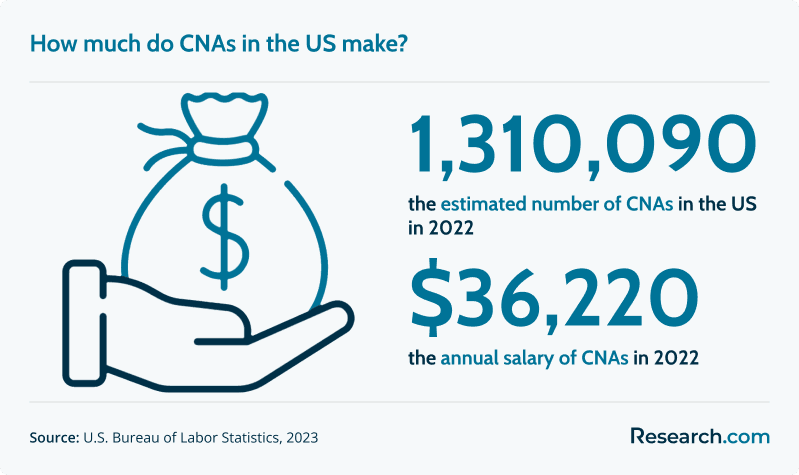
An online CNA to LPN bridge program can be worth it if the program is properly accredited, approved for LPN licensure in your state, offers reliable clinical placement support, and fits your work schedule. The pathway can help CNAs qualify for practical nursing roles in hospitals, long-term care, clinics, rehabilitation centers, and home health settings. The median annual salary for LPNs is approximately $60,790, compared with around $39,000 for CNAs, though actual pay depends on location, employer, experience, and shift differentials.
- Best fit: CNAs who want a faster nursing credential, can complete in-person clinical hours, and plan to sit for the NCLEX-PN.
- Use caution if: the program cannot confirm state approval, has weak NCLEX-PN outcomes, or expects students to find their own clinical placements without support.
- Important reality: online coursework does not eliminate hands-on training. Nursing licensure requires supervised clinical preparation.
What can I expect from an online CNA to LPN bridge program?
An online CNA to LPN bridge program usually builds on your CNA experience while preparing you for the responsibilities of a Licensed Practical Nurse. Expect a hybrid format: lectures, readings, quizzes, care-plan assignments, and discussion activities may be online, while skills labs, simulations, and clinical rotations happen in person.
Coursework commonly covers anatomy and physiology, pharmacology, nursing fundamentals, medical-surgical nursing, maternal and newborn care, pediatric concepts, mental health basics, nutrition, and clinical decision-making. Because LPNs work under a broader scope of practice than CNAs, students must also learn medication administration, documentation standards, patient assessment basics, communication with RNs and providers, and state-specific legal responsibilities.
| Program component | What it usually involves | Why it matters |
| Online nursing theory | Recorded or live lectures, readings, assignments, exams, discussion boards, and case studies | Provides the academic foundation needed for practical nursing practice and NCLEX-PN preparation |
| Skills labs | In-person practice of nursing procedures in a supervised lab or simulation setting | Helps students demonstrate safe technique before working with patients |
| Clinical rotations | Supervised patient-care experience in approved healthcare settings | Required for licensure eligibility and practical readiness |
| NCLEX-PN preparation | Practice exams, review modules, test-taking strategies, and faculty feedback | Supports readiness for the licensure exam required to become an LPN |
Where can I work with an online CNA to LPN bridge program?
After completing an approved bridge program and earning LPN licensure, graduates may pursue practical nursing roles in several healthcare environments. Common employers include hospitals, skilled nursing facilities, assisted living communities, rehabilitation centers, outpatient clinics, physician offices, correctional health programs, and home health agencies.
The setting matters because LPN duties vary by state law and employer policy. In long-term care, LPNs may spend more time administering medications, monitoring chronic conditions, documenting changes, and coordinating with RNs. In clinics, they may assist with patient intake, injections, patient education, and follow-up care. In home health, they often work more independently within a defined care plan.
How much can I make with an online CNA to LPN bridge program?
The salary benefit is one of the main reasons CNAs consider this pathway. The median annual salary for LPNs is approximately $60,790 in the United States, equivalent to about $29.23 per hour, according to the Bureau of Labor Statistics. Some LPNs earn over $77,000 annually in high-paying areas or roles. Another wage figure cited for May 2023 lists LPNs at about $59,730 and CNAs at approximately $38,200, showing that salary estimates can differ by source, year, and occupational definition.
To evaluate your likely return, compare local LPN job postings rather than relying only on national medians. Pay can shift based on state, rural versus urban location, facility type, union status, overtime, night shifts, weekend differentials, and prior healthcare experience.
- Best CNA to LPN bridge programs online for 2027
- How long does an online CNA to LPN bridge program take?
- Online vs. on-campus CNA to LPN bridge programs
- Average cost of an online CNA to LPN bridge program
- Financial aid options for CNA to LPN students
- Common admissions requirements
- Typical CNA to LPN bridge courses
- Specializations and focus areas
- How to choose the right online CNA to LPN bridge program
- Common challenges in online bridge programs
- Career paths after becoming an LPN
- Job market for CNA to LPN graduates
- Can this pathway eventually lead to AGNP roles?
- State-specific LPN licensure requirements
- Certifications that may strengthen your nursing career
- Technology trends in online clinical training
- Is further nursing education a good investment?
- Can a CNA to LPN bridge lead to advanced practice?
- Career support services after graduation
- How to evaluate long-term program success
List of Best CNA to LPN Bridge Programs Online for 2027
The best CNA to LPN bridge program is not simply the cheapest or fastest option. It should meet your state’s licensure rules, prepare you for the NCLEX-PN, provide supervised clinical training, and fit your schedule as a working CNA. Before comparing schools, review the average tuition for LPN programs so you can separate reasonable costs from overpriced options.
Important note: Some programs listed below are practical nursing, ASN, RN-to-MSN, or accelerated nursing pathways rather than direct CNA-to-LPN bridge programs. They may still be relevant for nursing career planning, but applicants should verify whether the program specifically accepts CNAs into a bridge route and whether it leads to LPN eligibility in their state.
How do we rank schools?
Program comparisons should consider accreditation, licensure alignment, curriculum depth, clinical training, student support, affordability, and available outcomes data. Reliable institutional and government data sources can help students evaluate programs more carefully.
- Integrated Postsecondary Education Data System, also known as the IPEDS database
- Peterson’s database, including its Distance Learning Licensed Data Set
- College Scorecard database
- National Center for Education Statistics
| School or program | Program length | Credits or courses | Estimated cost | Accreditation listed |
| Herzing University Online CNA to LPN bridge program | 1 year | 27 credits | $430 per credit | Accreditation Commission for Education in Nursing (ACEN) |
| Midlands Technical College Practical Nursing (LPN) program | 1 year | 44 credits | $204 per credit | Accreditation Commission for Education in Nursing (ACEN) |
| Montana State University, Billings Practical Nurse (PN) program | 1 year | 40 credits | $285 per credit | Northwest Commission of Colleges and Universities (NWCCU) |
| Rasmussen University Practical Nursing Diploma program | 1 year | 56 credits | $359 per credit | Accreditation Commission for Education in Nursing (ACEN) |
| Nightingale College Practical Nurse (PN) Diploma Program | 1 year | 42 credits | $485 per credit | Commission on Collegiate Nursing Education |
| Emily Griffith Technical College Practical Nursing program | 1 year | 44 credits | $14,250 | Accreditation Commission for Education in Nursing (ACEN) |
| Southern New Hampshire University Accelerated RN to MSN Online Pathway Option | 1.5 year | 40 credits | $330 | Commission on Collegiate Nursing Education |
| Purdue University Global Associate of Science in Nursing (ASN) program | 1.5 year | 20 courses | $315 | Commission on Collegiate Nursing Education |
| Gateway Community College Fast Track Practical Nursing Program | 1.5 year | 22 credits | $250 | The Higher Learning Commission |
| Drexel University Accelerated Career Entry (ACE) Bachelor of Science in Nursing (BSN) program | 1 year | 181 credits | $985 | Accreditation Commission for Education in Nursing (ACEN) |
1. Herzing University Online CNA to LPN bridge program
Herzing University offers an online CNA to LPN bridge option for nursing assistants who want to move into practical nursing. The program builds on CNA experience while expanding students’ knowledge of patient care, medication-related responsibilities, documentation, vital signs, dressing changes, and practical nursing duties as allowed by state regulations. General coursework may be available online, while core nursing requirements can involve campus-based components. Students comparing nursing roles may also benefit from reviewing this LPN and RN comparison.
- Program Length: 1 year
- Tracks/concentrations: Nursing
- Estimated Cost per Credit: $430
- Required Credits to Graduate: 27
- Accreditation: Accreditation Commission for Education in Nursing (ACEN)
2. Midlands Technical College Practical Nursing (LPN) program
Midlands Technical College in South Carolina provides an accredited Practical Nursing program focused on preparing students for entry-level LPN practice. The curriculum combines classroom learning with clinical experience across areas such as medical, surgical, obstetrical, and pediatric nursing. Students learn foundational nursing interventions for patients with common health conditions.
- Program Length: 1 year
- Tracks/concentrations: Nursing
- Estimated Cost per Credit: $204
- Required Credits to Graduate: 44
- Accreditation: Accreditation Commission for Education in Nursing (ACEN)
3. Montana State University, Billings Practical Nurse (PN) program
The Practical Nurse program at Montana State University Billings City College prepares students to monitor patient health, collect clinical data, provide direct care, and communicate patient concerns to registered nurses and physicians. Admission is competitive and uses a selective points system. After acceptance, students complete clinical and lab work through a mix of online instruction, on-campus learning at City College, and local Montana-based clinical experiences.
- Program Length: 1 year
- Tracks/concentrations: Nursing
- Estimated Cost per Credit: $285
- Required Credits to Graduate: 40
- Accreditation: Northwest Commission of Colleges and Universities (NWCCU)
4. Rasmussen University Practical Nursing Diploma program
Rasmussen University offers a Practical Nursing Diploma that can prepare students for LPN licensure in as few as 12 months. The program includes topics such as practical nursing skills, gerontological nursing, mental health nursing, human anatomy, and physiology. Students complete online and on-campus coursework along with clinical experiences in settings such as assisted living facilities, rehabilitation centers, clinics, and hospitals.
- Program Length: 1 year
- Tracks/concentrations: Nursing
- Estimated Cost per Credit: $359
- Required Credits to Graduate: 56
- Accreditation: Accreditation Commission for Education in Nursing (ACEN)
5. Nightingale College Practical Nurse (PN) Diploma Program
Nightingale College offers a Practical Nurse Diploma Program designed to prepare learners for PN licensure and the NCLEX-PN® exam. The curriculum emphasizes competent, client-centered care that accounts for physical, spiritual, emotional, cultural, and environmental needs. Students must earn a passing grade of “C” or higher in all courses, and the concept-based curriculum is designed to support mobility within nursing education and practice.
- Program Length: 1 year
- Tracks/concentrations: Nursing
- Estimated Cost per Credit: $485
- Required Credits to Graduate: 42
- Accreditation: Commission on Collegiate Nursing Education
6. Emily Griffith Technical College Practical Nursing program
Emily Griffith Technical College offers a Practical Nursing program for students pursuing LPN careers. This option is not online; it is an in-person program. Students receive hands-on preparation for direct patient care, beginning in a nursing skills lab and continuing through four clinical placement internships totaling 400 hours at local healthcare facilities.
- Program Length: 1 year
- Tracks/concentrations: Nursing
- Estimated Cost: $14,250
- Required Credits to Graduate: 44
- Accreditation: Accreditation Commission for Education in Nursing (ACEN)
7. Southern New Hampshire University Accelerated RN to MSN Online Pathway Option
Southern New Hampshire University (SNHU) offers an Accelerated RN to MSN Online Pathway Option for registered nurses who want to progress into graduate-level nursing education. This is not a CNA-to-LPN program, but it may be relevant for long-term planning if your goal is to move beyond practical nursing into RN and graduate nursing roles. The pathway covers safe nursing practice, patient care analysis, disease prevention, and leadership concepts.
- Program Length: 1.5 year
- Tracks/concentrations: Nursing
- Estimated Cost: $330
- Required Credits to Graduate: 40
- Accreditation: Commission on Collegiate Nursing Education
8. Purdue University Global Associate of Science in Nursing (ASN) program
Purdue University Global offers an Associate of Science in Nursing program for students preparing to become registered nurses. The program uses a hybrid structure with online coursework, on-site labs, simulations, and clinical experiences. It prepares students for the NCLEX-RN® exam and may include bachelor’s-level credits that support movement into an online RN-to-BSN pathway.
- Program Length: 1.5 year
- Tracks/concentrations: Nursing
- Estimated Cost: $315
- Required Credits to Graduate: 20 courses
- Accreditation: Commission on Collegiate Nursing Education
9. Gateway Community College Fast Track Practical Nursing Program
The Fast Track Practical Nursing Program at Gateway Community College prepares students for LPN practice through a condensed curriculum. Students complete nursing theory and hands-on patient care experiences in healthcare settings such as hospitals and nursing homes. Instruction may include lectures, role-playing, online case studies, simulations, and direct clinical practice.
- Program Length: 1.5 year
- Tracks/concentrations: Nursing
- Estimated Cost: $250
- Required Credits to Graduate: 22
- Accreditation: The Higher Learning Commission
10. Drexel University Accelerated Career Entry (ACE) Bachelor of Science in Nursing (BSN) program
Drexel University offers the Accelerated Career Entry Bachelor of Science in Nursing program for students who already hold a bachelor’s degree and want to enter nursing quickly. This is a BSN pathway rather than a CNA-to-LPN bridge. The curriculum runs across four consecutive 10-week terms and combines classroom instruction with clinical practice. Most courses are on campus, with limited online components.
- Program Length: 1 year
- Tracks/concentrations: Nursing
- Estimated Cost: $985
- Required Credits to Graduate: 181
- Accreditation: Accreditation Commission for Education in Nursing (ACEN)
How long does it take to complete an online CNA to LPN bridge program?
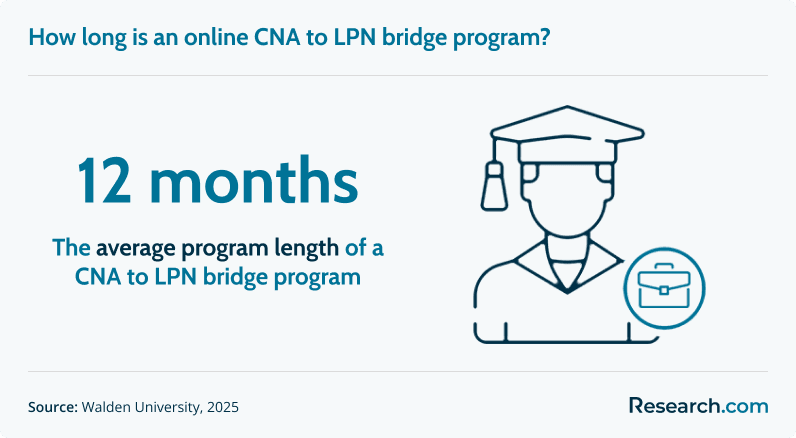
Completing an online CNA to LPN bridge program typically takes between 6 to 12 months, although some practical nursing options may take longer depending on enrollment status, prerequisites, clinical scheduling, and credit transfer. Most programs require students to complete between 40 to 80 credit hours, including nursing theory, labs, and clinical experiences.
CNAs should ask whether prior CNA education or experience can reduce course requirements. Some schools may grant credit or advanced standing, while others require all practical nursing coursework regardless of prior healthcare background. Students comparing faster healthcare credentials can also review how program length varies in options such as the shortest PMHNP certificate program, though that pathway applies to a different level of nursing education.
| Timeline factor | How it can affect completion |
| Full-time vs. part-time study | Full-time students may finish sooner, while part-time students may need additional terms to manage work and family responsibilities. |
| Clinical placement availability | Limited clinical slots can delay progress, especially in areas with high nursing student demand. |
| Transfer credit policy | Some schools may accept prior coursework or CNA-related credits, while others may not. |
| Prerequisite completion | Students who still need anatomy, physiology, or other prerequisites may spend more time before entering nursing courses. |
How does an online CNA to LPN bridge program compare to an on-campus program?
The main difference is scheduling flexibility. Online and hybrid CNA to LPN programs may let students complete lectures and assignments around work shifts, while on-campus programs usually require more fixed class attendance. However, both formats must include in-person clinical training and must meet the requirements of the state where the student plans to become licensed.
Do not assume that “online” means easier or less hands-on. Practical nursing is a clinical profession, and programs must verify that students can perform nursing skills safely. Students considering future RN education should understand that clinical expectations differ across pathways, including options such as online RN to BSN programs with no clinicals, which serve already licensed RNs rather than CNA-to-LPN students.
| Format | Advantages | Trade-offs | Best for |
| Online or hybrid CNA to LPN | More flexible coursework, helpful for working CNAs, may reduce commuting for lectures | Still requires labs and clinicals; students may need strong time management and technology access | CNAs who need scheduling flexibility but can attend in-person clinical requirements |
| On-campus CNA to LPN | More face-to-face interaction, structured schedule, easier access to labs and faculty | Less flexible for shift workers; commuting may add cost and time | Students who prefer in-person instruction and a set routine |
What is the average cost of an online CNA to LPN bridge program?
The average cost of an online CNA to LPN bridge program typically ranges from $10,000 to $15,000. Some programs may cost as little as $5,000, while others can exceed $30,000 depending on school type, location, program length, included fees, and required supplies. Community colleges often cost less than private institutions, but total expenses should be evaluated carefully.
Tuition is only one part of the price. Students should also budget for application fees, textbooks, uniforms, background checks, drug screening, immunizations, physical exams, CPR certification, lab fees, testing fees, NCLEX-PN preparation materials, transportation to clinical sites, and possible lost income if clinical schedules conflict with work. If affordability is your top priority, compare nursing options with broader affordability guides such as affordable accelerated nursing programs.
What are the financial aid options for students enrolling in an online CNA to LPN bridge program?
Financial aid availability depends on the school, program length, accreditation status, and whether the program qualifies for federal aid. Before enrolling, ask the financial aid office for a full cost-of-attendance estimate and a written explanation of aid options.
- Federal financial aid: Completing the FAFSA can help determine eligibility for federal grants, including Pell Grants, and federal student loans.
- State and local grants: Some workforce development agencies, state governments, and local organizations support students entering high-demand healthcare roles.
- Scholarships: Nursing associations, hospitals, community foundations, and schools may offer scholarships for practical nursing students.
- Employer tuition assistance: Healthcare employers may reimburse tuition or provide education benefits for CNAs who commit to continued employment.
- Loans: Federal or private loans can cover remaining costs, but students should compare interest rates, repayment terms, and total debt carefully.
- Payment plans: Some schools allow tuition to be paid in installments during the term rather than all at once.
When comparing low-cost options, focus on licensure eligibility first. A cheap program is not a good value if it does not meet state requirements. Students researching affordability across different fields may also compare how costs are structured in programs such as the most affordable MPH programs with no GRE requirement, but nursing programs have unique clinical and licensure costs.
What are the prerequisites for enrolling in an online CNA to LPN bridge program?
Admissions requirements vary by school, but most CNA to LPN bridge programs expect applicants to show readiness for nursing coursework and clinical practice. Common prerequisites include the following:
- Active CNA certification: Applicants are typically expected to hold current Certified Nursing Assistant certification, and some programs prefer or require work experience.
- High school diploma or GED: Most programs require proof of secondary education or an equivalent credential.
- Minimum age: Many programs require students to be at least 18 years old.
- Entrance exam: Some schools use an admissions test to assess reading, math, science, and academic readiness.
- Background check and drug screening: These are commonly required before clinical placement.
- Health documentation: Students may need immunization records, a physical exam, CPR certification, and proof of ability to meet clinical requirements.
- Prior coursework: Some programs require anatomy, physiology, biology, or math before admission or before the nursing sequence begins.
If you are still deciding whether LPN is the right next step, compare the scope of practice and responsibilities in this guide to LPN vs. CNA roles.
What courses are typically in an online CNA to LPN bridge program?
CNA to LPN bridge coursework is designed to move students from task-based assistance into practical nursing judgment, medication knowledge, patient monitoring, and care planning. Common courses include:
- Nursing fundamentals: Introduces the nursing process, safety, infection control, patient communication, documentation, and core bedside skills.
- Anatomy and physiology: Covers body systems, normal function, and the biological basis of illness and treatment.
- Pharmacology: Teaches medication classifications, dosage considerations, side effects, safety checks, and administration principles.
- Medical-surgical nursing: Focuses on common adult health conditions, clinical monitoring, nursing interventions, and patient education.
- Maternal and newborn nursing: Introduces care of pregnant patients, postpartum patients, and newborns.
- Pediatric nursing: Covers growth, development, and nursing care for children and adolescents.
- Mental health nursing: Explores communication, behavioral health conditions, crisis response, and therapeutic support.
- Nutrition: Connects diet, disease management, healing, and patient education.
- Clinical skills: Provides supervised practice in labs, simulations, and healthcare facilities.
Students comparing allied health roles may also find it useful to review the differences between a licensed practical nurse and a medical assistant.
What types of specializations are available in an online CNA to LPN bridge program?
Most CNA to LPN bridge programs do not offer formal specializations in the same way that graduate nursing programs do. Instead, students may encounter focus areas through clinical rotations, electives, employer training, or post-licensure certificates. Common areas of interest include:
- Pediatric nursing: Care for infants, children, and adolescents in clinics, hospitals, or specialty settings.
- Geriatric nursing: Care for older adults, including chronic disease management, mobility support, cognitive changes, and long-term care needs.
- Mental health nursing: Support for patients with behavioral health conditions, crisis needs, or psychiatric care plans. Students interested in the psychology side of care may later compare options such as the most affordable online master’s degrees in psychology, although those programs are separate from LPN licensure.
- Maternal and newborn nursing: Support for prenatal, postpartum, and newborn care under the appropriate supervision and scope of practice.
- Wound care management: Assessment support, dressing changes, documentation, and prevention strategies for patients at risk of skin breakdown.
Choose a program with clinical exposure that matches your likely job market. For example, students aiming for long-term care should look closely at geriatric and medication administration training, while students interested in clinics may benefit from strong patient education and ambulatory care experiences.
How to choose the best online CNA to LPN bridge program?
The right program is the one that leads to licensure, fits your life, and gives you enough clinical preparation to practice safely. Use the checklist below before applying.
| Question to ask | Why it matters | Red flag |
| Is the program approved by my state board of nursing? | State approval is essential for NCLEX-PN eligibility and licensure. | The school gives vague answers or tells you to “check later.” |
| Is the program accredited by a recognized nursing or institutional accreditor? | Accreditation can affect financial aid, transfer options, employer trust, and future education. | The school promotes speed but does not clearly disclose accreditation. |
| Who arranges clinical placements? | Clinical access can determine whether you graduate on time. | Students are expected to secure placements entirely on their own. |
| What are the NCLEX-PN pass rates and completion rates? | Outcomes help show whether students are being prepared effectively. | The school refuses to share outcomes or only provides marketing claims. |
| Can I continue working as a CNA? | Many students need income while studying. | Clinical or lab schedules are unpredictable and conflict with work shifts. |
| What is the total cost, including fees? | Total cost affects ROI and borrowing decisions. | The school discusses only tuition and omits required supplies or testing fees. |
- Verify accreditation and approval first: Accreditation from a recognized body such as the Accreditation Commission for Education in Nursing (ACEN) can matter for licensure and future education, but state board approval is the key requirement for LPN eligibility.
- Match format to your schedule: Hybrid programs can help working CNAs, but labs and clinicals still require attendance at specific times.
- Review the curriculum: Look for pharmacology, nursing fundamentals, anatomy, patient care, ethics, clinical reasoning, and NCLEX-PN preparation.
- Compare financial aid and employer support: Even when you find low-cost programs, evaluate total expenses. Students comparing affordable credentials in other fields may see different cost structures in resources such as the most affordable ABA-approved online paralegal programs, but nursing students must also plan for clinical costs.
- Confirm local clinical partnerships: Programs with established healthcare partners may reduce placement delays and improve hands-on learning.
What common challenges should I expect in an online CNA to LPN bridge program?
Online CNA to LPN bridge programs are flexible, but they are not effortless. Students must manage demanding coursework, clinical schedules, work responsibilities, and family obligations at the same time. The hardest part for many working CNAs is not the online content itself; it is coordinating mandatory in-person requirements around shift work.
| Common mistake | Why it causes problems | Better approach |
| Choosing a program before checking state approval | You may complete courses but still be ineligible for LPN licensure. | Confirm approval directly with the state board of nursing before enrolling. |
| Focusing only on tuition | Fees, supplies, transportation, and lost work hours can change the real cost. | Request a full cost estimate and compare total cost of attendance. |
| Assuming online means no clinicals | LPN licensure requires hands-on training. | Ask when and where labs and clinical rotations occur. |
| Ignoring NCLEX-PN outcomes | Poor exam preparation can delay licensure and employment. | Ask for pass rates, remediation support, and exam preparation resources. |
| Underestimating time demands | Accelerated programs can be difficult while working full time. | Create a weekly study and clinical schedule before classes begin. |
If your long-term plan is to move beyond LPN into graduate nursing, understand that future pathways may require RN licensure, a BSN, and additional clinical preparation. Career changers sometimes compare alternative nursing routes such as an online direct-entry MSN program, but those programs serve a different audience and do not replace LPN licensure requirements.
What career paths are available for graduates of an online CNA to LPN bridge program?
Graduates of an approved CNA to LPN bridge program who pass the NCLEX-PN and meet state licensure requirements can pursue practical nursing roles across healthcare settings. Compared with CNA roles, LPN positions generally involve more clinical responsibility, broader documentation duties, medication-related tasks where allowed, and closer collaboration with RNs and providers.
- Hospitals: LPNs may provide bedside care, monitor patients, assist with procedures, document changes, and support care teams under RN or physician supervision.
- Long-term care and assisted living: LPNs often administer medications, monitor chronic conditions, supervise care routines, and communicate with families and providers.
- Clinics and physician offices: LPNs may assist with patient intake, injections, education, follow-up calls, and routine procedures.
- Home health: LPNs may provide care in patients’ homes according to care plans and state scope-of-practice rules.
- Mental health facilities: LPNs may support patient monitoring, medication routines, therapeutic communication, and team-based behavioral health care.
- Supervisory roles: Experienced LPNs may supervise nursing assistants or coordinate practical care tasks in some settings.
- LPN to RN pathways: Many graduates later enroll in LPN-to-RN programs to become a Registered Nurse, which can expand responsibilities and career options.
Students comparing career changes outside nursing may ask questions similar to those explored in guides such as what can you do with an MFA, but nursing career planning requires special attention to licensure, clinical hours, and state scope-of-practice rules.
What is the job market for graduates with an online CNA to LPN bridge program?
The job market for LPN graduates is shaped by aging populations, chronic care needs, staffing patterns, and employer demand across long-term care, outpatient services, home health, and other clinical settings. According to the Bureau of Labor Statistics, as of May 2023, the median annual wage for CNAs was approximately $38,200, while LPNs earned about $59,730. This wage difference is one reason many CNAs consider moving into practical nursing.
The demand for LPNs is projected to grow by 6% from 2023 to 2033, which is faster than the average for all occupations. Another summary figure cites projected growth of 3% from 2023 to 2033, so students should check the most current labor data for their state and region before making enrollment decisions. Local job postings, employer conversations, and state workforce data can provide a more accurate picture than national averages alone.
Is this bridge program a viable pathway to AGNP roles?
A CNA to LPN bridge program does not directly qualify graduates for Adult-Gerontology Nurse Practitioner or other advanced practice roles. It can, however, be an early step in a longer nursing ladder. A typical progression would involve LPN licensure, further education to become an RN, completion of a BSN if required, and then graduate-level nursing education with the appropriate advanced practice concentration.
If adult-gerontology advanced practice is your long-term goal, review the academic and licensure steps carefully before choosing your first program. You can compare future options through guides to online AGNP programs.
How should I use student reviews and testimonials?
Student reviews can help you understand workload, faculty responsiveness, clinical placement quality, and scheduling realities, but they should not replace verifiable outcomes. Give more weight to documented NCLEX-PN pass rates, state board approval, accreditation status, completion data, and employer relationships than to isolated positive or negative comments.
When reading testimonials, look for specifics: Did the student receive clinical placement support? Were labs available when needed? Did faculty respond quickly? Was the program transparent about costs? Reviews that only say a program was “flexible” or “affordable” are less useful unless they explain how the program supported licensure and employment.
What are the state-specific licensure requirements I should consider?
Every LPN candidate must meet the rules of the state where they plan to practice. State boards of nursing determine approved programs, clinical expectations, exam eligibility, background requirements, and scope-of-practice rules. Before enrolling in any online or hybrid program, confirm that it qualifies you for LPN licensure in your state.
- Check whether the program is approved by your state board of nursing.
- Ask whether out-of-state online students are accepted and supported for clinical placement.
- Confirm that the curriculum and clinical hours satisfy your state’s requirements.
- Ask whether graduates are eligible to sit for the NCLEX-PN.
- Review any background, fingerprinting, drug screening, or health documentation requirements.
Licensure planning also matters if you later pursue advanced nursing pathways, such as affordable FNP programs, because each stage of nursing education builds on prior credentials and state eligibility.
What specialized certifications can boost my nursing career after the bridge program?
After becoming an LPN, specialized training or certifications may help you qualify for specific clinical environments or demonstrate focused competence. Availability and recognition vary by employer and state, so ask local healthcare organizations which credentials they value.
- IV therapy or infusion-related training: Useful in states and facilities where LPN scope permits these duties.
- Wound care training: Helpful for long-term care, rehabilitation, home health, and chronic disease management.
- Gerontology-focused training: Valuable for LPNs working with older adults in skilled nursing or assisted living.
- Basic life support and emergency response credentials: Often required or preferred in clinical settings.
- Specialty employer training: Some facilities provide internal training in dialysis, behavioral health, hospice, or medication administration protocols.
For nurses who eventually want advanced specialization, graduate pathways such as a fast-track online MSN women’s health nurse practitioner program may become relevant after completing the required RN and graduate admissions steps.
How is technology transforming clinical training in online CNA to LPN bridge programs?
Technology is changing how nursing students practice decision-making before they enter direct patient care. Online CNA to LPN bridge programs may use virtual simulations, digital case studies, telehealth scenarios, remote proctoring, learning management systems, and electronic health record practice modules. These tools can strengthen preparation, but they do not replace in-person clinical training.
The best programs use technology to reinforce clinical judgment, medication safety, prioritization, documentation, and communication. Students should ask whether simulations are integrated into graded courses, how faculty provide feedback, and how online practice connects to in-person labs. Similar technology-supported learning trends are also visible in higher-level nursing options such as accelerated online DNP programs.
Is further nursing education a valuable investment after an online CNA to LPN bridge program?
Further nursing education can be valuable if it aligns with your career goals, financial situation, and desired scope of practice. Many LPNs later pursue RN licensure, an associate degree in nursing, a BSN, or graduate study. Each step can expand responsibilities, but each also requires additional time, tuition, clinical training, and licensure planning.
Before continuing, compare the cost of the next credential with your likely local salary increase, employer tuition benefits, schedule flexibility, and long-term goals. If leadership, advanced clinical practice, or systems-level roles interest you, eventually reviewing options such as an online DNP degree may be useful, but that is several steps beyond the CNA-to-LPN transition.
Can pursuing an online CNA to LPN bridge program lead to advanced practice roles?
Yes, but only indirectly. A CNA to LPN bridge program can be the first rung on a nursing career ladder, not the final credential for advanced practice. Advanced practice roles usually require RN licensure, graduate nursing education, national certification, and state advanced practice licensure.
Students with long-term goals such as family nurse practitioner practice should map the full sequence early: CNA to LPN, LPN to RN, BSN if required, MSN or DNP, certification, and state licensure. Accelerated graduate options such as a 12 month FNP program online may appeal later, but they are not a substitute for the required nursing credentials that come first.
What career support services are available after completing an online CNA to LPN bridge program?
Strong career support can make the transition from student to licensed practical nurse smoother. Look for programs that help with NCLEX-PN preparation, resume development, interview practice, employer networking, clinical-to-employment pipelines, and alumni support.
- NCLEX-PN review: Practice tests, remediation plans, and faculty coaching can support licensure exam readiness.
- Career advising: Advisors can help students identify suitable LPN roles based on schedule, location, and specialty interests.
- Resume and interview help: Career offices may help CNAs translate prior patient-care experience into LPN job applications.
- Employer partnerships: Schools connected to local healthcare facilities may provide stronger clinical placement and hiring pathways.
- Education planning: Advisors may help graduates compare LPN-to-RN or RN-to-BSN options, including affordable routes such as the cheapest RN to BSN programs.
How can I evaluate the long-term success of my online CNA to LPN bridge program?
Long-term program quality should be measured by outcomes, not marketing language. Ask for evidence that students complete the program, pass the NCLEX-PN, obtain licensure, and find relevant nursing employment. If a school cannot provide clear outcome data, proceed carefully.
| Outcome to review | What to ask the school |
| NCLEX-PN pass rate | What percentage of graduates pass, and how does that compare with state expectations? |
| Completion rate | How many admitted students finish the program on time? |
| Clinical placement record | Are clinical sites secured by the school, and are placements available near students? |
| Graduate employment | Where do graduates work after licensure? |
| Student support | What tutoring, advising, technology help, and remediation resources are available? |
| Transfer and advancement options | Can credits support later LPN-to-RN or RN-to-BSN education? |
Rankings and reputation can provide context, but they should not be your only decision tool. If admission competitiveness is a concern, compare broader nursing access issues through resources such as easy nursing programs to get into.
Key Insights
- An online CNA to LPN bridge program is usually hybrid, not fully online; clinical rotations and skills labs are still required.
- State board approval is the first thing to verify. Without it, you may not qualify for LPN licensure even if you complete the coursework.
- Completing an online CNA to LPN bridge program typically takes between 6 to 12 months, but prerequisites, clinical scheduling, and enrollment status can change the timeline.
- The average cost typically ranges from $10,000 to $15,000, but total cost should include fees, supplies, screenings, transportation, and exam preparation.
- The median annual salary for LPNs is approximately $60,790, while one May 2023 wage comparison lists CNAs at about $38,200 and LPNs at about $59,730.
- The demand for LPNs is projected to grow by 6% from 2023 to 2033, while another cited figure lists 3% from 2023 to 2033; check current local labor data before enrolling.
- Many programs require students to be at least 18 years old and to pass background checks and drug screenings before clinical placement.
- The best program is the one that combines licensure eligibility, strong clinical support, transparent costs, NCLEX-PN preparation, and a schedule you can realistically complete.
References:
- Achieve. (2024). Are LPNs Being Phased Out? Achieve Test Prep.
- Bureau of Labor Statistics. (2023, April 25). Licensed Practical and Licensed Vocational Nurses
- Gross, L. (2022). Online versus Face-to-Face Nursing Degrees: A Study of Recruiters’ Perceptions - OJDLA. Online Journal of Distance Learning Administration.
- ZipRecruiter. (2024). LPN Nurse. ZipRecruiter
Other Things You Should Know About CNA to LPN Bridge Programs Online
To enroll in a 2027 online CNA to LPN bridge program, you typically need an active CNA license, a high school diploma or GED, and may require CPR certification. Some programs also require a minimum amount of clinical work experience as a CNA.
Yes. Most CNA to LPN bridge programs require current Basic Life Support (BLS) or CPR certification before enrollment or before the first clinical course. Many schools also require a recent physical exam, immunization records, and a background check before clinical placement.





