2027 Online Sociology Degrees With Strong Research and Human Services Training

Co-Founder and Chief Data Scientist
Choosing an online sociology degree is really a question about career fit, cost, and credibility. Human services employers often want graduates who can understand communities, analyze data, and work ethically with vulnerable populations. The need is timely: BLS employment projections released for 2024 to 2034 show faster-than-average growth for several community and counseling-related roles. This guide is for students comparing online sociology programs, transfer options, and graduate pathways. You will learn how to assess accreditation, coursework, cost, timelines, career outcomes, and red flags before enrolling.
Key Things You Should Know
- An online sociology degree can support human services careers when it combines social theory, research methods, statistics, inequality studies, policy analysis, and applied field or capstone work.
- Cost varies widely. College Board's 2024 pricing data lists average 2024-25 tuition and fees at $11,610 for in-state public four-year students and $43,350 for private nonprofit four-year students, before aid.
- BLS May 2024 wage data shows broad outcomes. Social and human service assistants had a median wage of $44,240, while sociologists had a median wage of $101,770, usually with graduate education.
What is an online sociology degree with a focus on research and human services training?
An online sociology degree with research and human services training is a bachelor's or master's program that studies how people, groups, institutions, and social systems shape behavior and opportunity. The "research" side teaches students to collect, interpret, and present evidence through statistics, survey design, qualitative interviewing, program evaluation, and data ethics.
The "human services" side applies that evidence to problems such as poverty, family instability, addiction, aging, housing insecurity, community health, juvenile justice, and access to public benefits.
This kind of program is different from a pure theory-focused sociology degree. It still includes core sociological concepts, but it is usually more practical for students who want to work in nonprofits, public agencies, advocacy organizations, case management environments, community programs, or research support roles.
It can also be a strong foundation for graduate study in social work, counseling, public administration, public health, criminology, education policy, or sociology.
The table below shows how common sociology degree levels differ. This matters because the right level depends on whether the student wants entry-level service work, research support, management, or a licensed clinical pathway.
| Degree level | Typical purpose | Best fit | Important limitation |
| Associate degree or transfer pathway | Builds general education and introductory social science credits | Students planning to transfer into a bachelor's program at lower cost | Usually not enough for professional research or management roles |
| Bachelor's in sociology | Prepares students for entry-level human services, policy, nonprofit, and research assistant roles | Students seeking a flexible social science credential with applied skills | Does not by itself qualify someone for most licensed counseling or clinical social work roles |
| Master's in sociology or applied sociology | Deepens research, evaluation, policy, and organizational analysis skills | Students interested in program evaluation, community research, teaching at some institutions, or doctoral preparation | May be less direct than an MSW or counseling degree for clinical practice |
| Graduate certificate | Adds targeted skills in areas such as nonprofit management, data analysis, gerontology, or addiction studies | Working adults who already have a degree and need a shorter credential | May not replace a full degree for advancement or graduate admission |
A good program should help students connect social problems to real evidence. For example, instead of only asking why poverty exists, students should learn how to evaluate a food assistance program, interpret client outcome data, identify service gaps, and communicate findings to decision-makers.
How do online sociology programs compare with campus-based options for human services careers?
Online sociology programs can be just as academically credible as campus programs when they are offered by properly accredited institutions and include strong faculty support, research assignments, and applied learning. The main difference is not necessarily quality; it is how students access courses, build relationships, complete projects, and gain practical experience.
Online learning is now a mainstream option rather than a niche format. NCES distance education data released in 2024 shows that more than half of U.S. postsecondary students took at least one distance education course in the most recently reported fall term, which means employers and graduate schools are increasingly familiar with online transcripts from accredited colleges.
For students balancing work, caregiving, military service, or rural access barriers, that flexibility can be the difference between starting and postponing a degree.
The comparison below can help students decide which format better matches their learning style and career goals.
| Factor | Online sociology program | Campus-based sociology program | Decision takeaway |
| Schedule flexibility | Often asynchronous or evening-friendly | Usually tied to fixed class times | Online is often better for working adults |
| Human services experience | May require students to arrange local fieldwork, service learning, or internships | May have established relationships with nearby agencies | Campus can be easier if the school has strong local placement partners |
| Research training | Can be strong if courses include data software, survey projects, and faculty feedback | May provide more lab-style collaboration and in-person faculty mentorship | Compare actual assignments, not just course titles |
| Peer networking | Often built through discussion boards, group projects, virtual events, and online clubs | Often built through campus organizations, seminars, and informal contact | Students who need structured networking should ask how the online program creates community |
| Cost control | May reduce relocation, commuting, and lost-work costs | May provide more campus employment and in-person resources | Total cost matters more than tuition alone |
Online study makes the most sense for self-directed students who can manage deadlines, communicate proactively, and seek out local volunteer or internship opportunities. Campus study may be better for students who want frequent face-to-face mentoring, a residential college experience, or easy access to nearby agencies that already partner with the school.
What accreditation should online sociology degrees have to support credible human services work?
Accreditation is one of the most important credibility checks for an online sociology degree. At minimum, the college or university should hold institutional accreditation from an accreditor recognized by the U.S. Department of Education or the Council for Higher Education Accreditation. This affects credit transfer, graduate school eligibility, employer trust, and access to federal financial aid.
Sociology itself usually does not have the same kind of required programmatic accreditation that nursing, social work, or counseling programs often have. That means students should focus on institutional accreditation, curriculum quality, faculty qualifications, and whether the program supports their intended career path.
If a student is aiming for licensed counseling, clinical social work, substance use counseling, or school-based practice, sociology may be useful preparation, but it may not meet the specific degree requirements for licensure.
Students comparing human services pathways should understand the difference between sociology and licensure-oriented helping professions. A sociology degree examines social systems and can support applied service work, while different counseling degrees may be designed around supervised clinical training and state licensure requirements.
Before applying, students should verify the following accreditation and credibility details directly with the school and relevant state agencies:
- Confirm the institution's accreditor using the U.S. Department of Education's accreditation database or the accreditor's own directory.
- Ask whether online students receive the same transcript notation, faculty instruction, and academic policies as campus students.
- Check whether credits are commonly accepted by public universities or graduate programs in the student's state.
- Review whether any internship, practicum, or fieldwork requirements can be completed near the student's location.
- For regulated careers, contact the state licensing board before assuming the sociology degree will satisfy educational requirements.
A major red flag is vague language such as "nationally recognized" without naming a recognized institutional accreditor. Another warning sign is a school that promises licensure, employment, or unusually high salaries without explaining state-specific requirements and labor market variation.
What concentrations and coursework emphasize research and human services in online sociology programs?
The strongest online sociology programs for human services do more than require a few general social science courses. They build a sequence: theory helps students understand social structures, research methods teach them how to evaluate evidence, and applied courses show how institutions respond to social problems.
Common concentration names vary by school, but students should look for options that clearly connect sociology to service delivery, policy, or community research. The table below summarizes concentrations that often fit this goal.
| Concentration or emphasis | What it usually studies | Human services value |
| Social services or human services | Client systems, community resources, social welfare, and case management concepts | Useful for entry-level roles in agencies, shelters, community programs, and nonprofits |
| Criminology or deviance | Crime, policing, corrections, juvenile justice, and social control | Relevant for victim advocacy, reentry programs, youth services, and justice-related nonprofits |
| Medical sociology or community health | Health disparities, healthcare systems, illness, disability, and public health contexts | Helpful for outreach, patient navigation, community health education, and health equity work |
| Social inequality | Race, class, gender, immigration, family, education, and structural disadvantage | Supports advocacy, policy analysis, equity work, and culturally responsive service delivery |
| Research methods or applied sociology | Statistics, survey research, qualitative methods, data visualization, and program evaluation | Best for research assistant, evaluation, grant reporting, and analyst-oriented roles |
Course titles alone are not enough. Students should look at assignments and outcomes to see whether the program teaches practical skills employers can recognize. Particularly useful courses include:
- Social statistics with software-based assignments using tools such as SPSS, R, Excel, Stata, or qualitative coding platforms.
- Research methods that require survey design, interviews, data collection, ethics review, or analysis of public datasets.
- Program evaluation courses that teach students to measure whether a community program is reaching its intended goals.
- Social policy courses that connect laws, public benefits, housing, healthcare, education, and labor systems to service delivery.
- Applied capstone, internship, service learning, or community-based research projects that produce a portfolio-quality final product.
Students interested in substance use services should be especially careful, because addiction counseling is regulated differently across states. Sociology coursework can be relevant background, but those seeking a counseling-specific route may also want to compare accredited online colleges for drug and alcohol counseling to understand clinical training expectations.
What admission requirements and prerequisites do online sociology bachelor's and master's programs have?
Admission requirements depend on degree level, school selectivity, transfer status, and whether the program is designed for first-time college students or working adults. Online programs are often flexible, but "online" does not automatically mean easier admission or lower academic expectations.
For bachelor's programs, applicants typically need a high school diploma or equivalent, transcripts, and sometimes a minimum GPA. Transfer students may need college transcripts from every previous institution, and schools may limit how many credits can be applied toward the major. For master's programs, applicants usually need a bachelor's degree, statement of purpose, transcripts, letters of recommendation, and sometimes prior coursework in social science or statistics.
The table below outlines common requirements by program level so students can identify what they may need before applying.
| Program type | Common admission requirements | Preparation tip |
| Online bachelor's, first-year entry | High school diploma or GED, official transcripts, application form, possible essay | Take math, writing, psychology, government, and social science courses seriously because they support later research work |
| Online bachelor's completion program | Prior college credits, minimum transferable GPA, completed general education or associate degree in some cases | Request a preliminary transfer credit evaluation before enrolling |
| Online master's in sociology or applied sociology | Bachelor's degree, transcripts, statement of purpose, recommendations, possible writing sample | Show clear interest in research, social problems, policy, or community-based work |
| Graduate certificate | Bachelor's degree or current graduate enrollment, depending on the school | Choose a certificate that fills a specific skills gap rather than duplicating past coursework |
Students who are not yet sure whether sociology is the right major can compare adjacent fields before committing. For example, someone more interested in behavior, mental health, and individual development may also evaluate an accelerated bachelor's degree in psychology, while someone drawn to systems, inequality, and community research may find sociology a better fit.
Before submitting applications, students should complete a focused readiness check. These steps reduce the risk of losing credits, choosing the wrong program level, or discovering late that the degree does not match their goals:
- Ask each school for a written transfer credit estimate before paying enrollment deposits.
- Confirm whether statistics, research methods, or writing prerequisites are required for upper-division sociology courses.
- Review technology requirements for online courses, including webcam, proctoring, software, and internet speed expectations.
- Ask whether the program offers academic advising from someone familiar with sociology and human services careers.
- Check whether graduate programs of interest require specific undergraduate courses beyond the sociology major.
How long do online sociology degrees take and what do they typically cost?
Most online bachelor's degrees require about 120 credits, while master's programs often require roughly 30 to 36 credits. Completion time depends on transfer credits, course load, academic calendar, and whether the program uses accelerated terms. A full-time bachelor's student entering with no credits commonly takes about four years, while a transfer student with an associate degree may finish in about two years. A part-time master's student may need two to three years.
Cost should be evaluated as total price, not just tuition per credit. College Board's 2024 pricing data for 2024-25 lists average tuition and fees at $11,610 for in-state students at public four-year institutions and $43,350 at private nonprofit four-year institutions. These averages are not online-specific, but they give students a useful benchmark when deciding whether an advertised online rate is truly affordable.
The table below summarizes major cost and timeline variables that affect online sociology students.
| Factor | How it affects cost or time | What to ask the school |
| Transfer credits | Accepted credits can shorten completion time and reduce tuition | How many credits will apply to the degree and the major? |
| Per-credit tuition | Online rates may differ from campus, in-state, or out-of-state rates | Is tuition charged by residency, program, or online status? |
| Fees | Technology, proctoring, graduation, textbook, and course fees can raise the bill | What is the full estimated cost of attendance for online students? |
| Course availability | Limited course rotations can delay graduation even if the program is online | Are required sociology courses available every term? |
| Fieldwork or internship | Travel, background checks, supervision, and unpaid hours may affect working students | Can fieldwork be completed locally or through a current employer? |
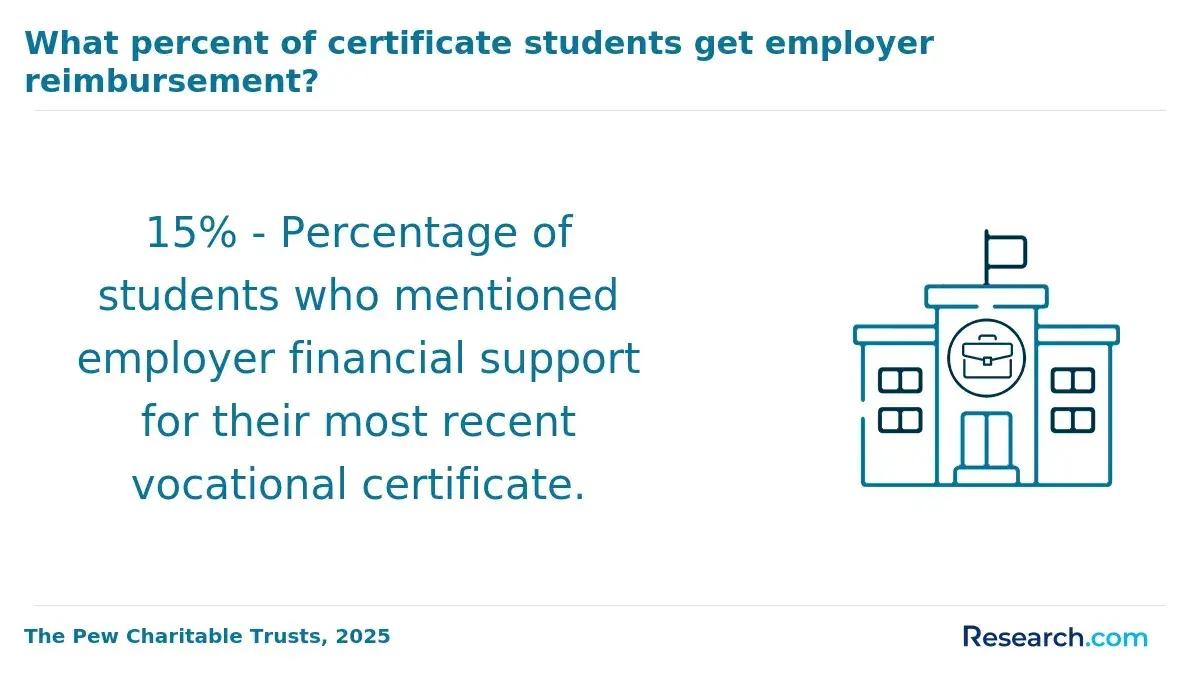
Students trying to reduce cost should focus on controllable expenses. The most effective strategies usually involve transfer planning, financial aid, employer tuition benefits, and avoiding unnecessary excess credits.
- Start at a regionally accredited community college only if the target bachelor's program has a clear transfer pathway.
- File the FAFSA and compare net price after grants, scholarships, and employer assistance rather than relying on sticker price.
- Ask whether the school accepts prior learning, military training, CLEP exams, or portfolio credit, but verify how those credits apply to the major.
- Avoid switching majors late unless the new program clearly improves career fit enough to justify the added time.
- Choose part-time study if it prevents debt overload, but confirm that courses are offered often enough to maintain progress.
An accelerated program can be valuable for motivated students with transfer credits and stable schedules, but it is not always the cheapest option if compressed terms lead to dropped courses or lower grades. A slower, well-planned path may produce better long-term value for students balancing work and caregiving.
Which careers can an online sociology degree with human services training prepare you for?
An online sociology degree with human services training can prepare students for roles that involve understanding social problems, coordinating services, supporting clients, analyzing community data, or improving programs. It is especially useful when paired with internships, volunteer experience, bilingual ability, data skills, or specialized coursework in areas such as aging, addiction, public health, housing, or criminal justice.
The career table below focuses on roles where sociology knowledge can be relevant. Actual qualifications vary by employer, state rules, and whether the role involves clinical services.
| Career path | Typical responsibilities | Common education expectation |
| Social and human service assistant | Help clients access benefits, services, transportation, housing referrals, and community resources | High school diploma to bachelor's degree, depending on employer |
| Case management support specialist | Track client needs, maintain records, coordinate referrals, and support care plans under supervision | Often associate or bachelor's degree in a social science or human services field |
| Community outreach coordinator | Build relationships with residents, agencies, schools, clinics, or advocacy groups | Bachelor's degree often preferred |
| Program assistant or nonprofit coordinator | Support service delivery, volunteer coordination, grant reporting, and community events | Bachelor's degree can be helpful for advancement |
| Research assistant | Collect data, code interviews, manage surveys, summarize findings, and support evaluation reports | Bachelor's degree with strong methods and statistics coursework |
| Social and community service manager | Manage programs, staff, budgets, partnerships, and service outcomes | Bachelor's degree may be sufficient for some roles; master's degree may help for advancement |
| Sociologist | Design research, analyze social systems, publish findings, or advise organizations | Usually master's or doctoral education |
Sociology is not the most direct route for every helping profession. Students who want to become licensed clinical social workers usually need a CSWE-accredited MSW, while students who want clinical counseling licensure typically need a counseling or related graduate degree that meets state requirements. Sociology can be a strong undergraduate foundation, but regulated clinical roles require careful planning.
Students who later decide they want advanced social work leadership, policy, or teaching roles may compare doctoral options, including fully funded DSW programs and other doctoral pathways. Funding, accreditation, and career purpose should drive that decision more than prestige alone.
To make the degree more career-ready, students should graduate with evidence of applied skills. Useful portfolio items include:
- A research paper using real data to analyze a social problem or service gap.
- A program evaluation plan for a nonprofit, school, agency, or community initiative.
- A policy brief that explains a human services issue clearly for nonacademic readers.
- A resume showing internship, volunteer, outreach, advocacy, or direct service experience.
- Software experience in spreadsheets, survey tools, data visualization platforms, or statistical packages.
What salary ranges and earning potential exist for sociology and human services-related roles?
Salary potential varies widely because sociology graduates enter many different roles. Location, employer type, union status, funding source, graduate education, licensure, supervision responsibilities, and data skills can all affect pay. Students should use salary data as a planning benchmark, not a promise.
BLS May 2024 wage data provides a helpful national snapshot for several sociology and human services-related occupations. The table below highlights median annual wages and how students should interpret them.
| Occupation | Median annual wage, May 2024 | How to interpret the number |
| Social and human service assistants | $44,240 | Represents a common entry-level or support pathway; advancement often depends on experience and additional credentials |
| Community and social service specialists, all other | $54,640 | Can include varied roles, so local job descriptions matter more than the title alone |
| Substance abuse, behavioral disorder, and mental health counselors | $59,190 | Often requires role-specific education, supervision, certification, or licensure depending on state and employer |
| Social and community service managers | $78,240 | More aligned with experienced professionals managing programs, staff, budgets, or service outcomes |
| Survey researchers | $63,380 | Research methods, statistics, and data software skills are especially important |
| Sociologists | $101,770 | Typically reflects roles requiring graduate-level research training rather than entry-level bachelor's outcomes |
The wage spread shows why students should choose coursework strategically. A student who takes only broad sociology electives may be prepared for general service roles, while a student who adds statistics, program evaluation, grant writing, and internships may be more competitive for analyst, coordinator, or advancement-track positions.
Return on investment depends on the relationship between total debt and realistic career entry points. A lower-cost public online program may be a smart choice for students entering modest-paying human services roles, while a more expensive program may be harder to justify unless it offers strong transfer credit, employer reimbursement, scholarships, or a clear path into graduate study or management.
What is the job outlook for sociology-related human services careers in the United States?
The job outlook for sociology-related human services careers is mixed but generally stronger for roles tied to community need, mental health, aging populations, substance use services, and program administration. Research-only roles can be more competitive, especially when they require graduate education or advanced data skills.
BLS 2024 to 2034 projections show that several relevant roles are expected to grow, but at different rates. The table below summarizes selected outlooks and what they mean for students considering an online sociology degree.
| Occupation | Projected employment change, 2024 to 2034 | Meaning for students |
| Social and human service assistants | 6% | Demand is supported by ongoing need for client support and community resources |
| Social and community service managers | 8% | Program leadership skills may offer stronger advancement potential than entry-level service work alone |
| Substance abuse, behavioral disorder, and mental health counselors | 17% | Growth is strong, but students must verify counseling education and licensure requirements |
| Sociologists | 5% | Opportunities exist, but many research roles require graduate education and strong methods training |
| Survey researchers | -4% | Students interested in research should build broader data, evaluation, and policy skills rather than relying only on survey roles |
Technology is also changing the field. Human services agencies increasingly use case management platforms, electronic records, dashboards, predictive analytics, and digital outreach tools. AI may help summarize records or identify service trends, but it does not replace ethical judgment, cultural awareness, crisis communication, or relationship-building.
Students who combine sociology with data literacy and human-centered communication will be better positioned than students who avoid technology altogether.
The outlook is strongest for students who treat sociology as a skill-building major rather than only a subject of interest. Employers value graduates who can write clearly, interpret data, understand diverse communities, follow confidentiality rules, and explain complex social conditions without blaming clients for structural barriers.
How can students evaluate and choose a reputable online sociology program for human services?
A reputable online sociology program should be academically credible, financially realistic, and aligned with the student's intended career path. The best choice is not automatically the highest-ranked, cheapest, fastest, or most advertised program. It is the program that gives the student the right mix of accreditation, transfer value, applied training, faculty support, and manageable cost.
Use the following process to compare programs before enrolling. These steps are practical because they focus on evidence the school should be able to provide.
- Verify institutional accreditation through an official accreditation database, not only the school's marketing page.
- Request a degree plan showing every required course, transfer credit application, remaining credits, and expected graduation term.
- Review the sociology curriculum for statistics, research methods, applied sociology, policy, inequality, and human services-related electives.
- Ask how online students complete internships, service learning, capstones, or community-based research projects.
- Compare net price after grants, scholarships, employer reimbursement, military benefits, and transfer credits.
- Ask for career support details, including resume help, internship advising, graduate school advising, alumni outcomes, and employer connections.
- Check whether faculty have expertise in human services, community research, inequality, criminology, health, policy, or applied sociology.
- Confirm whether the program supports graduate admission goals, especially if the student may later pursue social work, counseling, public health, or public administration.
Students should also watch for common mistakes that can make an otherwise reasonable degree less valuable. The most frequent problems are preventable with early questions and documentation.
- Choosing a school without recognized institutional accreditation.
- Assuming a sociology degree automatically leads to counseling, therapy, or clinical social work licensure.
- Comparing tuition only and ignoring fees, lost transfer credits, textbooks, software, and unpaid fieldwork time.
- Enrolling in an accelerated format without enough weekly study time for reading, writing, and statistics assignments.
- Skipping internships or applied projects and graduating with no practical examples to show employers.
- Relying only on rankings instead of checking curriculum, cost, advising, and local employer expectations.
The smartest final step is to contact three to five programs and ask the same questions in writing. Clear, consistent answers are a good sign. Vague responses, pressure to enroll immediately, or reluctance to discuss accreditation and total cost should make students pause.
Other Things You Should Know About Sociology
Choosing sociology as a major or minor depends on your career goals. A major provides a comprehensive understanding and opportunities in research and human services, whereas a minor complements other fields like psychology or business, adding valuable insights into social dynamics and interactions.
Yes, many online programs allow internships or service learning near the student's home. Students should ask who approves sites, whether virtual placements are allowed, and whether work hours can count if the job is relevant.
Useful skills include professional writing, spreadsheet analysis, survey tools, interviewing, public speaking, cultural humility, documentation, and basic knowledge of community resources. These skills make the degree more practical for human services employers.
References
- 2025 Most Affordable Online Sociology Degrees https://www.onlineu.com/most-affordable-colleges/sociology-degrees
- FAQ https://www.cshse.org/faq
- Human Services (Online Program) https://www.simpson.edu/academics-programs/all-programs/human-services-online-program/
- Online MA Sociology (Master of Arts in Sociology) https://www.lpuonline.com/ma-sociology-course-online
- Health and Human Services: Campus & Online Degrees and Careers https://www.publichealthonline.org/human-services/online-degree-programs/
- Choosing a bachelor's in human services | edX https://www.edx.org/resources/how-to-choose-a-bachelors-in-human-services
- Social Work vs. Sociology https://socialworklicensemap.com/social-work-careers/social-work-vs-sociology/
- Careers & Income Opportunities https://www.frc.edu/sociology/careers-income-opportunities
- Online Sociology Major - Crucial Skills for a Diverse Global Society https://www.msudenver.edu/online/sociology-ba/