
2027 Best Online Addiction Counseling Degree Programs

Co-Founder and Chief Data Scientist
Choosing an online addiction counseling degree is not just a question of convenience. It affects whether your coursework can support certification, supervised practice, graduate admission, and eventual licensure in the state where you plan to work. Short courses and certificates can be useful for limited roles, but addiction counseling is a regulated, clinically complex field that often requires formal education, documented field experience, and a clear understanding of ethics, assessment, treatment planning, relapse prevention, and co-occurring mental health conditions.
This guide is for students, working adults, recovery professionals, and career changers comparing online addiction counseling programs. You will learn what these degrees cover, how online programs compare with campus-based study, what they cost, how long they take, which schools stand out, what careers may be available, and how to avoid common mistakes that can delay certification or licensure.
Quick answer: Is an online addiction counseling degree worth it?
An online addiction counseling degree can be worth it if the program is accredited, matches your state’s credentialing requirements, includes appropriate supervised practice, and fits your budget. The field has strong labor demand: employment for substance abuse, behavioral disorder, and mental health counselors is projected to grow 19% from 2023 to 2033. The median annual wage for these counselors was $53,710 in May 2023, though earnings vary by state, employer, degree level, licensure, and experience.
The best online addiction counseling programs are not simply the fastest or cheapest. They are the programs that give you a credible academic foundation, prepare you for certification or licensure where you intend to work, and provide enough academic advising, field placement support, and career guidance to help you move from enrollment to professional practice.
What are the main benefits of earning an online addiction counseling degree?
- More direct career preparation: Graduates may qualify for roles such as Addiction Therapist ($57,000–$75,500 per year), Drug Abuse Treatment Specialist ($60,500–$74,500 per year), or Program Director for Substance Abuse ($55,000–$119,000 per year), depending on education, experience, employer, and licensing rules.
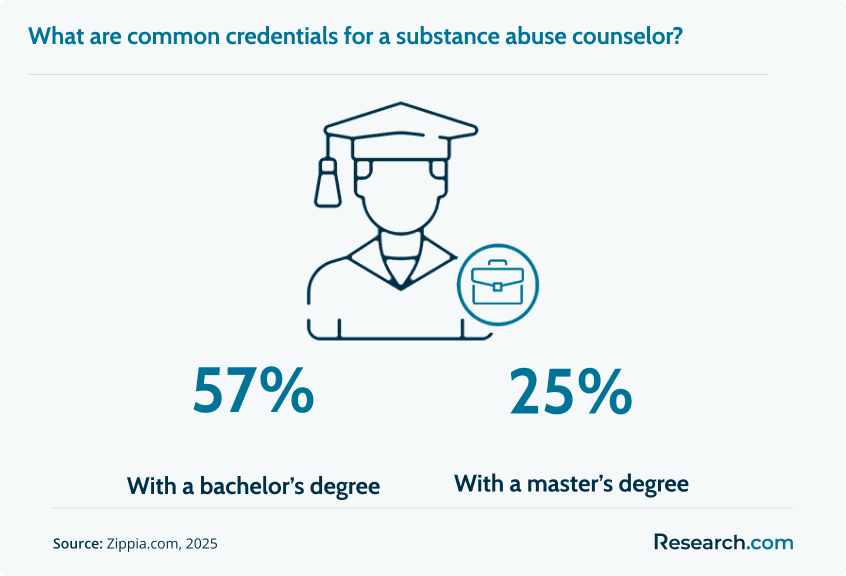
- A pathway to higher credentials: A bachelor’s degree can support entry-level or credential-based roles, while a master’s degree is often needed for advanced clinical practice, independent counseling, or leadership positions.
- Flexible study for working adults: Online learning can make it easier to keep a job while completing coursework. A majority of online learners are employed full time: 64% of undergraduate online students and 74% of graduate online students work full time.
- Preparation for a high-need field: Addiction treatment providers work across healthcare, corrections, nonprofit, community, and government settings. A structured degree helps students learn evidence-informed care rather than relying only on personal experience or short-term training.
What can I expect from an online addiction counseling degree?
An online addiction counseling degree teaches students how substance use disorders develop, how they are assessed, and how counselors support clients through treatment and recovery. Programs usually combine psychology, human services, ethics, counseling methods, pharmacology, crisis intervention, case management, and culturally responsive care. Many programs also require a capstone, practicum, internship, or supervised field experience, especially at advanced levels.
Online courses are commonly delivered through learning platforms that include recorded lectures, live sessions, readings, discussion boards, assignments, quizzes, and case-based exercises. Some programs are mostly asynchronous, while others require scheduled online meetings. Students should check whether any fieldwork must be completed in person near their location.
Costs differ widely. For online addiction counseling degree programs, public universities typically range from $36,000 to $72,000, while private institutions may exceed $120,000. Accreditation is one of the most important factors to verify. Depending on the degree level and career goal, students may need to look for recognized institutional accreditation as well as programmatic recognition from organizations such as CACREP or the APA.
Online addiction counseling degree levels compared
| Degree level | Best for | Typical use | Key caution |
| Certificate | People adding addiction-focused training to an existing degree or role | Professional development, state credential preparation, or specialization | May not be enough for licensure by itself |
| Associate degree | Students starting college or preparing for support roles | Entry-level human services and transfer preparation | Career options may be limited without further education |
| Bachelor’s degree | Students seeking broad preparation for addiction counseling or human services roles | Common foundation for certification, case management, prevention, and graduate study | Some states and employers require a master’s degree for clinical counseling |
| Master’s degree | Students pursuing advanced counseling roles or licensure | Clinical practice preparation, supervised counseling, leadership, and private practice pathways | Must match state licensure standards closely |
| Doctorate | Professionals interested in advanced clinical, academic, research, or leadership work | Research, teaching, policy, advanced practice, or administration | Requires a longer time commitment and may not be necessary for many counseling roles |
Where can I work with an online addiction counseling degree?
Graduates may work in treatment centers, hospitals, outpatient clinics, community health organizations, schools, correctional facilities, drug court programs, nonprofit agencies, government programs, or private practices. Some roles focus on direct counseling, while others involve prevention, case management, program coordination, recovery coaching, or community outreach.
Work settings matter because they affect pay, supervision, licensure expectations, caseloads, and client populations. A hospital-based counselor may work with clients who have co-occurring medical or psychiatric needs. A correctional treatment specialist may focus on rehabilitation planning and court compliance. A nonprofit counselor may spend more time on case management, resource navigation, and community-based recovery support.
In industry distribution, 48% of addiction counselors work in healthcare settings, followed by 13% in nonprofits and 12% in government positions. Substance abuse counselors are more likely to work for private companies, at 70%, than for government entities. Employment growth has also been strong in prior projections, with a projected 22% employment growth rate from 2021 to 2031.
How much can I make with an online addiction counseling degree?
Income depends on degree level, license or certification, state, employer, job title, experience, and whether the role is clinical, administrative, or support-focused. The median annual wage for substance abuse, behavioral disorder, and mental health counselors was $53,710 in 2023. Entry-level roles start around $36,700, while the top 10% earn more than $89,920.
A master’s degree may increase access to clinical roles, supervisory positions, and private practice, but it does not guarantee a specific salary. Students should compare tuition, fieldwork requirements, local licensing rules, and local wage data before assuming a program will pay off quickly. Employment is projected to rise 22% from 2021 to 2031, creating 77,500 new jobs. Alaska, Utah, and New Jersey offer some of the highest salaries, exceeding $60,000 annually.
- Best Online Addiction Counseling Degree Programs for 2027
- How long does an online addiction counseling degree take?
- Online vs. campus addiction counseling degrees
- Average cost of an online addiction counseling degree
- Financial aid for online addiction counseling students
- Admission requirements and prerequisites
- Common online addiction counseling courses
- Networking and professional development in online programs
- Research opportunities and advanced study
- Return on investment for an online addiction counseling degree
- Student success support in online programs
- Treatment technology and telehealth training
- Addiction counseling specializations
- Ethical and legal training
- Credibility for graduate school and academic advancement
- Accelerated online addiction counseling programs
- How to choose the best online addiction counseling degree
- Career paths for addiction counseling graduates
- Self-care and resilience for counselors
- Steps toward professional licensure
- Job market outlook for addiction counseling graduates
Best Online Addiction Counseling Degree Programs for 2027
How do we rank the programs?
Research.com evaluates online addiction counseling programs using transparent data sources that help students compare affordability, institutional quality, and career-relevant outcomes. Our review draws from the IPEDS database, Peterson's database, the College Scorecard database, and The National Center for Education Statistics. These sources help create a consistent basis for comparing online programs, but students should still confirm state licensure alignment before enrolling. For a fuller explanation of our ranking process, see Research.com’s methodology page.
1. Springfield College-Regional, Online, and Continuing Education
Springfield College offers an online bachelor’s degree in human services with a concentration in addiction studies. The program is built around counseling, prevention, mental health, and community-focused human services practice. Students can choose synchronous or asynchronous coursework, which can help working adults manage schedules more effectively. Applicants need a high school diploma or GED, a personal essay, and at least one recommendation letter. Transfer students must complete at least 45 credits through Springfield College.
- Required Credits to Graduate: 120
- Cost: $532 per credit hour
- Accreditation: New England Commission on Higher Education
2. University of Cincinnati-Main Campus
The University of Cincinnati offers a fully online substance counseling degree that combines research-informed coursework with applied counseling skills. Students may enroll full time or part time, making the program accessible to both traditional students and employed adults. The program is transfer-friendly and uses rolling admissions for spring, summer, and fall entry. Graduates meet academic requirements for addictions counseling licensure in multiple states, including Ohio’s LCDC III certification.
- Required Credits to Graduate: 120
- Cost: $6,785 per semester (in-state), $6,965 (out-of-state)
- Accreditation: Higher Learning Commission
3. Alvernia University
Alvernia University provides a fully online bachelor’s in addictions and mental health treatment and is one of the oldest programs of its kind in the U.S.. The curriculum includes addiction-focused coursework along with a liberal arts core, giving students both professional preparation and broader academic grounding. Rolling admissions allow students to apply throughout the year, with several start dates available. Graduates may qualify for certification and recertification through the Pennsylvania Certification Board (PCB).
- Required Credits to Graduate: 123
- Cost: $640 per credit hour
- Accreditation: Middle States Commission on Higher Education
4. University of South Dakota
USD offers an online addiction counseling and prevention degree with treatment and prevention specialization options. Students choose from nine electives, including Native American Substance Use and Addiction, Gambling and Process Addiction, and Rural Telehealth. The degree is designed to meet licensure requirements through the South Dakota Board of Addiction and Prevention Professionals.
- Required Credits to Graduate: 120
- Cost: $355 per credit hour
- Accreditation: Higher Learning Commission
5. Crown College
Crown College offers an online bachelor’s degree in alcohol and drug counseling that blends Christian faith with professional counseling preparation. Coursework examines addiction through emotional, cognitive, cultural, and financial lenses. The fully online format uses Canvas and provides 24/7 course access. Classes are organized into eight-week modules, allowing students to take one or two courses per module.
- Required Credits to Graduate: 125
- Cost: $530 per credit hour
- Accreditation: Higher Learning Commission
6. Purdue University Global-Indianapolis
Purdue University Global offers an online addiction counseling degree designed with working adults in mind. Students may add an optional business foundations concentration. The curriculum prepares students for National Certified Addiction Counselor Level I and II certification exams. Learners with transfer credit or prior experience may finish the program in just over two years.
- Required Credits to Graduate: 180
- Cost: $371 per credit hour
- Accreditation: National Addiction Studies Accreditation Commission
7. Eastern Washington University
EWU provides an addiction studies degree approved by NAADAC, the association for addiction professionals. Graduates become eligible to sit for the NAADAC national certification addiction counselor exam. The program includes a senior capstone focused on licensure preparation, and students may complete an optional practicum in a substance use disorder treatment agency.
- Required Credits to Graduate: 180
- Cost: $243 per credit hour (in-state), $828 (out-of-state)
- Accreditation: National Addiction Studies Accreditation Commission
8. Clarks Summit University
Clarks Summit University frames addiction counseling as both a professional field and a ministry-oriented calling. The program combines a biblical studies major, a professional major, general studies courses, and ministry coursework. Students study theoretical foundations as well as practical approaches used in biblical counseling.
- Required Credits to Graduate: 121
- Cost: $460 per credit hour
- Accreditation: Middle States Commission on Higher Education; Association for Biblical Higher Education
9. Ottawa University-Kansas City
Ottawa University offers an accelerated bachelor’s in addictions counseling with eight-week terms. Students may take one or several courses per term and can combine online learning with face-to-face classes. The 39-credit major includes 300 hours of supervised practicum experience under a licensed counselor.
- Required Credits to Graduate: 120
- Cost: $419 per credit hour
- Accreditation: National Addiction Studies Accreditation Commission
10. Indiana Wesleyan University-National & Global
Indiana Wesleyan University offers an online addiction counseling degree that combines a Christian worldview with evidence-based counseling practice. The curriculum includes liberal arts requirements, six credits in biblical studies, and 350 hours of supervised onsite practicum experience. Courses are delivered synchronously and sequentially, with students taking one course at a time.
- Required Credits to Graduate: 120
- Cost: $398 per credit hour
- Accreditation: National Addiction Studies Accreditation Commission
How long does it take to complete an online addiction counseling degree program?
Completion time depends on degree level, transfer credits, course load, practicum requirements, and whether the program uses traditional semesters or accelerated terms.
- Bachelor’s Degree: A bachelor’s program typically takes four years of full-time study and often requires around 120–125 credits. Students with transfer credits, military credit, prior college coursework, or relevant experience may be able to finish in as little as two to three years in some online programs.
- Master’s Degree: A master’s program usually takes two to three years and may require 60–75 credits. Many states require graduate-level education for advanced counseling licensure, and master’s programs often include internship or practicum hours.
- Doctorate (Ph.D. or Psy.D.): Doctoral study can take four to seven years, depending on dissertation, clinical, research, and residency requirements. This path is usually most relevant for advanced clinical, academic, research, or leadership goals.
Online study can shorten or lengthen the timeline depending on how many courses you take each term. Working professionals often choose part-time enrollment, which may extend graduation but reduce the risk of burnout. Students interested in advanced clinical preparation can compare options for a masters degree in addiction counseling.
How does an online addiction counseling degree program compare to an on-campus program?
Online and on-campus addiction counseling degrees can both be credible when they are properly accredited and meet state requirements. The better choice depends on your schedule, learning style, budget, location, and need for in-person support.
| Factor | Online program | On-campus program |
| Schedule | Often better for students balancing work, caregiving, or irregular hours | Better for students who want a fixed class schedule and campus routine |
| Cost considerations | May reduce commuting, housing, and meal plan expenses | May involve more campus-based expenses but can provide direct access to facilities |
| Interaction | Uses discussion boards, video meetings, virtual advising, and online groups | Offers face-to-face conversations, campus events, and informal networking |
| Fieldwork | Usually completed locally, but students must confirm placement support | May be easier to coordinate through nearby agency partnerships |
| Best fit | Self-directed learners who need flexibility | Students who prefer structured in-person learning |
Benefits of online learning
- Flexible scheduling: Many programs let students complete coursework around job and family responsibilities. In 2020, 11.8 million undergraduates enrolled in online classes, nearly doubling from 2019.
- Lower indirect costs: Online students may avoid campus housing, commuting, and meal plan expenses.
- Broader access: Students who live far from campus, have disabilities, are parents, or work full time may find online learning more practical.
- Wider peer networks: Online classes can connect students with classmates and instructors across different regions and treatment settings.
Benefits of on-campus learning
- More built-in structure: Campus classes can help students who need a consistent environment and direct accountability.
- Immediate in-person practice: Some students benefit from role plays, labs, and counseling skill development in a physical classroom.
- Campus community: Face-to-face networking, student organizations, and faculty access may feel more natural in person.
If you are still comparing counseling-related online pathways, reviewing online school counseling programs can help you understand how different counseling specializations vary in curriculum, licensure, and work settings.
What is the average cost of an online addiction counseling degree program?
The price of an online addiction counseling degree depends on whether the school is public or private, whether you qualify for in-state tuition, how many credits you transfer, and whether the program charges online fees. Public universities charge around $40,926 on average for an online degree, which is comparable to the $39,000 cost of in-person programs for in-state students. Online students may also avoid at least $1,290 per year in commuting costs and $2,670 annually on meals compared with on-campus students.
At public institutions, average in-state tuition for online programs is $341.05 per credit, compared with $325 per credit for in-person learning. Private schools are often more expensive overall, but online formats may still cost less than campus formats. Private institutions charge $62,756 for an online degree versus $198,616 for an in-person degree. The cost per credit for online programs at private universities is $516, compared with $1,175 per credit for in-person instruction.
| Cost factor | Why it matters | Question to ask |
| Tuition per credit | Determines the core academic cost | Is the listed rate the same for all online students? |
| Transfer credits | Can reduce both cost and time to degree | How many previous credits will the program accept? |
| Practicum or internship costs | May involve background checks, travel, insurance, or site fees | What costs are connected to field placement? |
| Technology fees | Online programs may charge platform or distance learning fees | Are fees included in the advertised tuition? |
| Licensure preparation | Exam prep, applications, and supervision can add expenses after graduation | Does the program clearly explain post-graduation licensing costs? |
Students focused on minimizing debt should compare total program cost, not only tuition. An affordable online substance abuse counseling degree can be a practical option if it is accredited and aligned with your career goals.
What are the financial aid options for students enrolling in an online addiction counseling degree program?
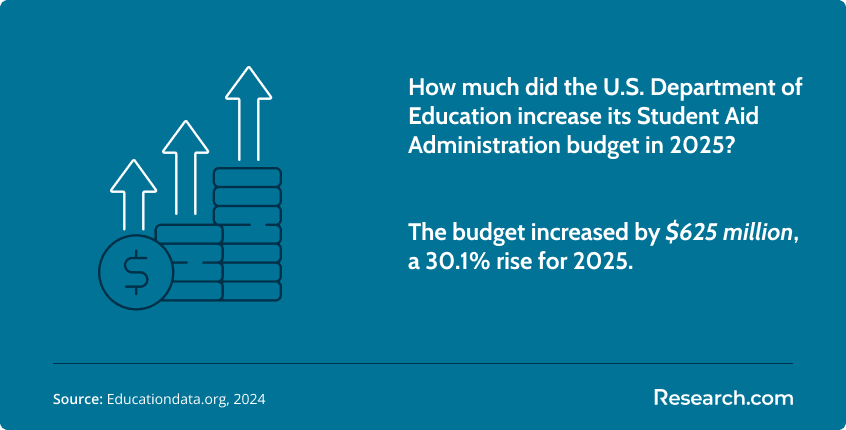
Online students may qualify for many of the same financial aid options as campus students, provided they attend an eligible accredited institution. In 2021, nearly 40% of first-time, full-time undergraduates took out student loans even after receiving grant aid. The average undergraduate loan amount that year was $7,700.
Common financial aid options
- Grants: Need-based aid, including Pell Grants and Federal Supplemental Educational Opportunity Grants (FSEOGs), generally does not have to be repaid.
- Scholarships: Scholarships may be awarded for academic performance, financial need, service, recovery advocacy, counseling interest, or commitment to behavioral health work.
- Loans: Federal and private loans can help cover costs after grants and scholarships, but students should borrow cautiously and compare repayment terms.
- Employer tuition assistance: Some healthcare, social service, and nonprofit employers help employees pay for job-related education.
- Loan forgiveness possibilities: Some graduates may become eligible for forgiveness programs if they work in high-need areas or qualifying public service roles.
The FAFSA is usually the starting point for federal aid. Students pursuing a bachelor's degree in substance abuse counseling online should also ask schools about program-specific scholarships, transfer scholarships, military benefits, payment plans, and aid for adult learners.
What are the prerequisites for enrolling in an online addiction counseling degree program?
Admission requirements vary by school and degree level. Undergraduate programs usually require proof of high school completion, while graduate certificates and master’s programs may require a bachelor’s degree in psychology, counseling, social work, human services, or a related field. Some programs also consider professional experience in behavioral health, recovery support, or community services.
Common admission requirements
- High school diploma or equivalent: Required for most associate and bachelor’s programs.
- Official transcripts: Schools typically request records from high school and any colleges previously attended.
- Minimum 2.0 GPA: Some programs set higher standards, especially for transfer or graduate applicants.
- SAT or ACT scores: Some undergraduate programs still request scores, though many institutions use test-optional policies.
- Letters of recommendation: Academic or professional references may be used to evaluate readiness for counseling-related study.
- Resume or statement of purpose: Graduate and certificate programs may ask applicants to explain career goals and relevant experience.
If you are considering graduate-level counseling or clinical work, an online masters in psychology may be another pathway to compare. Before enrolling, confirm whether the degree supports the credential or license you want, since psychology, counseling, social work, and addiction studies programs can lead to different outcomes.
What courses are typically in an online addiction counseling degree program?
Online addiction counseling programs usually include general education, psychology, human services, counseling theory, ethics, addiction-specific coursework, and supervised practice. The exact curriculum depends on degree level and state credentialing alignment.
Common addiction counseling courses
- Introduction to Substance Use Counseling: Covers helping relationships, communication, treatment models, and the counselor’s ethical responsibilities.
- Basic Pharmacology: Explores how addictive substances affect the body and how medications may be used in treatment.
- Alcoholism: Examines alcohol dependence, treatment approaches, relapse risk, and recovery support.
- Assessment and Diagnosis: Teaches screening, biopsychosocial assessment, documentation, and treatment planning.
- Crisis Management Skills: Prepares students to respond to urgent situations, de-escalate conflict, and connect clients with emergency resources.
- Case Management and Treatment Planning: Builds skills in motivational interviewing, cognitive behavioral therapy, referral coordination, and client-centered goal setting.
Students may also study addiction physiology, drug abuse counseling, family systems, prevention, trauma-informed care, group counseling, and addiction pharmacology. Internships or practicums are especially important because they connect classroom learning to real client needs and professional supervision.
Students should also understand the difference between addiction counseling vs psychology degree programs. Addiction counseling degrees focus more directly on substance use disorders, recovery support, relapse prevention, assessment, and applied treatment planning. Psychology degrees cover human behavior and mental processes more broadly and may lead to clinical, research, or general counseling routes that often require advanced education and additional licensure.
How can online addiction counseling programs support networking and professional development?
Strong online programs do more than upload lectures. They help students build professional identity and connect with the addiction treatment field. Useful supports may include virtual career fairs, alumni panels, mentorship programs, faculty advising, professional association guidance, webinars with treatment providers, resume reviews, and practicum placement support. These services can help students understand licensure pathways, employer expectations, and related careers in counseling.
How can advanced research opportunities complement your addiction counseling degree?
Research experience can strengthen clinical judgment, improve a counselor’s ability to evaluate interventions, and prepare students for policy, teaching, doctoral study, or leadership. Students interested in research may look for programs with faculty-led projects, capstone options, data analysis coursework, or opportunities to study prevention, treatment outcomes, co-occurring disorders, and community recovery systems. Professionals who want a deeper academic research pathway may later consider an online PhD psychology.
What is the return on investment for an online addiction counseling degree program?
ROI depends on total program cost, financial aid, transfer credits, time to completion, local wages, licensure outcomes, and the type of role you pursue after graduation. A lower-cost program may have poor ROI if it does not meet state credentialing rules. A higher-cost program may be reasonable if it offers strong transfer credit policies, field placement support, licensure alignment, and career services.
Before enrolling, compare tuition, required fees, estimated time to graduation, supervised practice requirements, and realistic local salary ranges. Students should also consider whether they may need a master’s degree later. For a broader look at degree pathways and career outcomes, review Research.com’s guide to a substance abuse counselor degree.
How do online addiction counseling degree programs support student success?
Student support can make the difference between simply enrolling and actually graduating. Quality online programs typically offer academic advising, tutoring, technical support, digital library access, writing help, career services, and guidance on field experience requirements. Students planning to continue into graduate school should ask whether advisors can help them compare affordable counseling pathways, including the cheapest master's in counseling online.
How do online addiction counseling programs adapt to evolving treatment technologies?
Addiction treatment increasingly uses telehealth, electronic records, digital screening tools, online support systems, and remote case management. Online programs can prepare students for this environment by teaching secure communication, privacy expectations, telebehavioral health etiquette, documentation, crisis response in remote settings, and ethical limits of virtual counseling. Students comparing advanced counseling pathways may also want to examine CACREP-accredited programs online.
What types of specializations are available in an online addiction counseling degree program?
Specializations help students prepare for specific client populations, treatment settings, or career goals. Not every program offers formal concentrations, but many allow students to choose electives or field placements that support a focused area of practice.
Common specializations in addiction counseling
- Substance Abuse Counseling: Focuses on alcohol and drug addiction, treatment planning, recovery support, relapse prevention, and intervention.
- Dual Diagnosis Counseling: Prepares students to work with clients who have substance use disorders and co-occurring mental health concerns such as anxiety or depression.
- Youth and Adolescent Counseling: Emphasizes prevention, family involvement, adolescent development, and age-appropriate interventions.
- Faith-Based Addiction Counseling: Integrates religious or spiritual frameworks with recovery support, often for faith-based treatment settings.
- Behavioral Addiction Counseling: Addresses non-substance addictions such as gambling, internet use, and compulsive behaviors.
- Community and Prevention Counseling: Focuses on outreach, education, public health strategies, and prevention programs for at-risk populations.
How addiction counseling overlaps with therapy careers
Addiction often affects families, couples, workplaces, and communities, so some students explore broader therapy credentials. Understanding MFT vs LMFT degree programs can help clarify this route. An MFT program teaches family and relationship-based therapy, while LMFT status refers to the licensed professional credential earned after meeting state requirements such as supervised experience and exams. Students who want to treat substance use within family systems should compare addiction counseling and marriage and family therapy requirements carefully.
How do online addiction counseling programs address ethical and legal challenges?
Ethics and law are central to addiction counseling because counselors handle sensitive health information, crisis situations, mandatory reporting, client rights, boundaries, informed consent, and dual relationships. Online programs often use case studies, role plays, and scenario-based assignments to help students apply standards in realistic situations. Students should also learn how state and federal rules affect confidentiality, telehealth, documentation, and referrals. Professionals exploring related behavioral credentials may also compare cheap BCBA online degree programs.
Are online addiction counseling degrees considered credible for academic advancement?
An online addiction counseling degree can be credible for graduate school or academic advancement when it comes from an accredited institution and includes the prerequisite coursework required by the next program. Graduate admissions committees usually care more about accreditation, grades, relevant coursework, recommendations, experience, and fit than whether the coursework was completed online or on campus. Students planning further study should confirm prerequisites early and review whether are online psychology degrees respected by graduate schools?
Are accelerated online programs a viable option for addiction counseling education?
Accelerated online addiction counseling programs can work well for disciplined students who already have transfer credits, relevant work experience, or a clear career plan. They are less ideal for students who need more time to practice counseling skills, arrange field placements, or manage work and family responsibilities. Speed should never come at the expense of accreditation, licensure alignment, or supervised practice quality. Students considering fast formats can also compare adjacent options such as the fastest online psychology degree.
How to choose the best online addiction counseling degree program
The best program is the one that fits your state requirements, budget, learning style, and career goal. A high-ranking program may not be the right choice if it does not prepare you for the credential used in your state. Likewise, the cheapest program may cost more in the long run if you need extra coursework later.
Key factors to compare before enrolling
- Accreditation: Confirm institutional accreditation and any relevant programmatic recognition. A non-accredited program may not qualify for financial aid, transfer, graduate admission, or licensure preparation.
- State certification and licensure alignment: Ask whether the curriculum meets requirements in the state where you plan to work, not just the state where the school is located.
- Curriculum depth: Look for coursework in assessment, treatment planning, prevention, relapse prevention, ethics, multicultural counseling, trauma, co-occurring disorders, and crisis response.
- Supervised field experience: Determine whether practicum or internship hours are required and whether the school helps students find approved sites.
- Faculty experience: Review whether instructors have addiction counseling, clinical supervision, treatment program, research, or policy experience.
- Flexibility: Compare asynchronous courses, live class requirements, part-time options, accelerated terms, and deadlines.
- Total cost: Review tuition, fees, textbooks, technology costs, travel for fieldwork, and licensure-related expenses.
- Student support: Prioritize programs with advising, tutoring, technical support, career services, and licensure guidance.
- Graduate school pathway: If you may need a master’s degree later, ask whether credits transfer and whether the curriculum supports graduate admission.
Questions to ask admissions advisors
- Is this program accepted for addiction counseling certification or licensure in my state?
- How many supervised hours are included, and where can I complete them?
- What percentage of students use transfer credits?
- Are online students eligible for the same scholarships as campus students?
- Are courses asynchronous, synchronous, or a mix of both?
- What support is available if I struggle academically or need help finding a practicum site?
- Does the program prepare students for a specific certification exam?
- What roles do recent graduates commonly pursue?
If you are still deciding between counseling fields, learning how to choose a therapy specialization can help you compare addiction counseling with marriage and family therapy, school counseling, clinical mental health counseling, psychology, and social work.
Common mistakes to avoid
| Mistake | Why it can hurt you | Better approach |
| Choosing a program only because it is fast | Accelerated coursework may not meet fieldwork or licensure needs | Verify accreditation, practicum requirements, and state alignment first |
| Looking only at tuition per credit | Fees, transfer policies, and fieldwork costs can change the real price | Compare total cost to graduation |
| Assuming all online degrees are accepted for licensure | Licensure rules vary by state and credential | Contact your state board before enrolling |
| Ignoring supervised experience | Many counseling credentials require documented practice hours | Ask how placements are approved and supported |
| Relying only on rankings | A ranked school may not fit your schedule, budget, or state requirements | Use rankings as one tool, not the entire decision |
What career paths are available for graduates of an online addiction counseling degree program?
Graduates may work in clinical, community, criminal justice, nonprofit, school, healthcare, or recovery support roles. The exact job title depends on degree level, certification, licensure, experience, and employer requirements.
Clinical and counseling careers
- Substance Abuse Counselor: Helps clients with recovery goals, treatment plans, coping skills, relapse prevention, and referrals. A bachelor’s or master’s degree is commonly required, and private practice usually requires licensure.
- Addiction Therapist: Provides clinical counseling approaches such as cognitive behavioral therapy (CBT) for individuals with substance use disorders. This role requires a master’s degree, 2,000–4,000 hours of supervised experience, and state licensure.
- Addiction Specialist: May refer to a physician or psychiatrist with addiction medicine expertise who diagnoses and treats substance use disorders. This path requires medical training and specialized certification. Students comparing graduate clinical pathways often review MSW vs MFT degree programs to decide whether social work or family therapy better fits their goals.
Criminal justice and social services roles
- Probation Officer: Works with people involved in drug court or probation programs and monitors compliance with treatment-related requirements. A bachelor’s degree in criminal justice, psychology, or social work is often required.
- Correctional Treatment Specialist: Develops rehabilitation plans for incarcerated or justice-involved individuals with substance use disorders. A bachelor’s degree and certified training are commonly required.
- Social Worker: Helps individuals and families access recovery support, treatment, housing, benefits, and other services. Clinical social workers need a master’s degree and licensure.
Community and recovery support roles
- Peer Support Specialist: Uses lived recovery experience to mentor and support clients. Specialized state or national certification is required.
- Recovery Coach: Helps clients set goals, navigate recovery systems, and maintain accountability. Training through the CCAR Recovery Coach Academy is common.
- Interventionist: Works with families and support systems to encourage treatment entry using structured intervention approaches. Training in ARISE or Johnson Model is common.
Some roles are counseling-intensive, while others focus more on coaching, case management, advocacy, prevention, or supervision. Students should match their degree level to the role they actually want, especially if independent clinical practice is the goal.
How do online addiction counseling programs promote self-care and resilience in practitioners?
Addiction counseling can be emotionally demanding. Strong programs prepare students to manage stress, maintain boundaries, use supervision effectively, and recognize burnout risk. Coursework or seminars may cover reflective practice, vicarious trauma, professional wellness, ethical workload management, and self-awareness. Students comparing lower-cost behavioral health pathways may also review the cheapest online psychology degree psychology.
What are the steps to achieve professional licensure after earning an online addiction counseling degree?
Licensure and certification rules vary by state, so students should not assume one program works everywhere. In general, candidates complete an approved degree or coursework sequence, document supervised clinical hours, pass a required exam, submit an application, complete background checks if required, and maintain continuing education after approval.
- Identify your target credential: Determine the addiction counseling license or certification used in your state.
- Confirm program alignment: Ask the school and state board whether the curriculum meets academic requirements.
- Complete required fieldwork: Track practicum, internship, or supervised experience hours carefully.
- Apply for exams or certification: Follow state board or credentialing body instructions.
- Submit documentation: Provide transcripts, supervision forms, fees, and any background materials.
- Maintain the credential: Complete continuing education and renewal requirements on schedule.
Some professionals broaden their counseling skill set with related graduate study, including online marriage and family therapy degree programs, especially when they want to work with couples, families, and relational dynamics affected by substance use.
What is the job market for graduates with an online addiction counseling degree?
The job market is favorable for trained addiction counseling professionals. Employment for substance abuse, behavioral disorder, and mental health counselors is projected to grow 19% from 2023 to 2033, much faster than the average for all occupations. This demand is connected to broader recognition of mental health needs, insurance coverage for counseling services, and rehabilitation-focused approaches within parts of the criminal justice system. Each year, an estimated 48,900 job openings are expected, largely because of retirements and workforce turnover.
The field also includes many professionals with personal recovery experience. Studies suggest that 37% to 57% of addiction counselors are in recovery themselves. Lived experience can provide empathy and insight, but employers and licensing boards still expect formal training, ethical practice, supervision, and professional boundaries.
Key Insights
- An online addiction counseling degree is most valuable when it is accredited, affordable, and aligned with the credentialing rules in the state where you plan to work.
- The field has strong projected demand, with 19% job growth expected from 2023 to 2033 for substance abuse, behavioral disorder, and mental health counselors.
- Cost varies widely, so compare total program price, not just tuition per credit. Transfer credits, fees, fieldwork expenses, and licensure costs all affect ROI.
- Bachelor’s degrees can support many entry-level and credential-based roles, but master’s degrees are often needed for advanced clinical counseling, independent practice, or leadership.
- Online learning can be a strong option for working adults, but students must confirm field placement support and state licensure alignment before enrolling.
- The best program is not automatically the fastest, cheapest, or highest-ranked. It is the one that prepares you for your intended role without creating avoidable licensing or financial barriers.
References:
- Bureau of Labor Statistics. (n.d.). Substance abuse, behavioral disorder, and mental health counselors. U.S. Department of Labor.
- ZipRecruiter. (n.d.). Highest-paying addiction counselor jobs.
- Counseling Psychology. (n.d.). Addiction counseling degrees.
- All Psychology Schools. (n.d.). Substance abuse counseling salary.
- Education Data Initiative. (n.d.). Cost of online education vs. traditional education.
- Substance Abuse Counselor. (n.d.). Scholarships and grants for substance abuse counseling students.
- Galanter, M., Keller, D. S., Dermatis, H., & Egelko, S. (2000). The impact of managed care on professionals working in substance abuse treatment programs. Psychiatric Services, 51(10), 1299-1304.
Other Things You Should Know About Online Addiction Counseling Degree Programs
Most licensure paths require 600 to 700 supervised fieldwork hours, split between practicum and internship. CACREP-accredited counseling programs must also include supervised clinical practice, and state licensing boards set the final hour requirements for addiction counseling or substance use disorder credentials.
Before enrolling in an online addiction counseling program in 2027, students typically need a high school diploma or GED. Additionally, some programs may require prior coursework in psychology or related fields and a minimum GPA for admission.
The main accreditation bodies for online addiction counseling degrees in 2027 are the Council for Accreditation of Counseling and Related Educational Programs (CACREP) and the National Addiction Studies Accreditation Commission (NASAC). These ensure the program meets professional and educational standards.


