
2027 How to Choose a Therapy Specialization: In-Demand Careers to Explore

Co-Founder and Chief Data Scientist
Choosing a therapy specialization is one of the most important career decisions a counselor, psychologist, social worker, or therapist-in-training will make. Your specialty affects the clients you serve, the methods you use, the license or credentials you may need, the work settings available to you, and the kind of emotional demands you will face each week.
This guide is for students comparing counseling and psychology paths, early-career clinicians planning supervised hours, and practicing therapists who want to sharpen their niche. It explains in-demand therapy specializations, education and licensure timelines, salary and job outlook information, continuing education options, marketing strategies, legal and ethical issues, and practical ways to choose a specialization that fits your strengths and long-term goals.
Quick Answer: How should you choose a therapy specialization?
The best therapy specialization is the one that matches four things: the client population you want to serve, the clinical problems you are prepared to handle, the credentials required in your state, and the work environment you want. A good choice should also be realistic financially, supported by accredited training, and flexible enough to evolve as your clinical interests mature.
| Decision factor | What to ask yourself | Why it matters |
| Client population | Do I want to work with children, couples, families, trauma survivors, LGBTQ+ clients, professionals, or another group? | Your population determines your communication style, assessment tools, interventions, and work setting. |
| Clinical fit | Am I prepared for crisis work, long-term therapy, family conflict, identity issues, addiction, or workplace stress? | Some specialties require high emotional stamina, specialized supervision, or additional certifications. |
| Licensure and training | Does this specialty require a specific degree, license, supervised hours, exam, or certification? | Requirements vary by state, profession, and scope of practice. |
| Career market | Where are therapists with this specialty employed, and what are the likely salary ranges? | Demand, pay, and advancement differ by role, location, and work setting. |
| Personal sustainability | Can I do this work for years without chronic burnout? | A meaningful specialty still needs healthy boundaries, supervision, and realistic caseload expectations. |
Key Things You Should Know About Becoming a Therapist
- Most therapists need graduate-level education, usually at least a master's degree, along with supervised clinical experience that can include thousands of direct practice hours.
- Licensure rules are not universal. State, country, degree type, and specialty area can all affect the credentials you need before you can practice independently.
- Therapy work involves close contact with people experiencing mental health concerns, trauma, grief, family conflict, addiction, or major life disruption, so emotional resilience and professional boundaries are essential.
- Specialties such as trauma counseling, child and adolescent therapy, family counseling, addiction treatment, LGBTQ+ affirmative therapy, and teletherapy shape the clients you see, the interventions you use, and the jobs you can pursue.
- Mental health practice changes as new research, ethical guidance, technology, and treatment models emerge, which makes continuing education part of a therapist’s long-term professional responsibility.
- Therapists build their careers over time. Reputation, supervision, networking, niche training, clinical experience, and ethical practice all influence career stability.
- In-Demand Therapy Specializations for 2027
- How do you become a therapist?
- How long does it take to become a therapist?
- Why should you pick a therapy specialization?
- How do you pick the best therapy specialization for you?
- How do you stay current with therapy and mental health industry trends?
- How do you pursue continuing education as a therapist?
- How do you choose an accredited training program to complement your specialization?
- How can you effectively market your therapy specialization?
- Can you have more than one therapy specialization?
- What is the salary and job outlook for therapists?
- What are the common challenges you will experience in pursuing a career as a therapist?
- How Do Legal and Ethical Considerations Impact Your Therapy Specialization?
- How do advanced certifications and credentials enhance your therapy specialization?
- Should I pursue an advanced degree to accelerate my therapy specialization?
- What are the cost considerations for advancing your therapy specialization?
- What Role Does Evidence-Based Practice Play in Enhancing Your Therapy Specialization?
- Are online training platforms effective for advancing your therapy specialization?
In-Demand Therapy Specializations for 2027
Therapy specialties grow in importance when client needs, employer demand, research, technology, and social conditions change. The areas below are especially relevant for students and clinicians who want a specialization with clear client populations, practical training pathways, and multiple work settings.
| Specialization | Best fit for therapists who want to | Common work settings |
| Trauma and crisis counseling | Support people after abuse, violence, grief, disasters, PTSD, or acute distress | Hospitals, clinics, crisis teams, veteran services, nonprofits, private practice |
| Child and adolescent therapy | Work with children, teens, young adults, and families facing developmental, behavioral, or emotional concerns | Schools, pediatric clinics, community programs, child welfare agencies, private practice |
| LGBTQ+ affirmative therapy | Provide identity-affirming care for LGBTQ+ clients, partners, and families | Private practice, community centers, universities, clinics, teletherapy platforms |
| Teletherapy and digital counseling | Deliver ethical, secure, accessible care through virtual formats | Private practice, telehealth companies, EAPs, school counseling centers, nonprofits |
| Workplace mental health and burnout prevention | Help professionals, teams, managers, and organizations address stress and burnout | EAPs, corporate wellness programs, occupational health clinics, private practice |
| Eco-therapy | Use nature-based interventions to support mental health, stress recovery, and reconnection | Parks, therapeutic farms, wilderness programs, private practice, online mindfulness-based work |
1. Trauma and Crisis Counseling
Trauma and crisis counseling focuses on helping people recover from experiences that overwhelm their sense of safety, control, or stability. Clients may be processing abuse, violence, natural disasters, serious accidents, grief, war-related experiences, domestic violence, or sudden life disruption. Therapists in this specialty help clients stabilize, understand trauma responses, build coping skills, and work through painful memories at a safe pace.
If you are considering trauma work, comparing the clinical psychologist vs clinical mental health counselor career path can help you understand how assessment authority, education level, and scope of practice may differ.
Who trauma and crisis therapists work with
- Survivors of abuse, assault, domestic violence, or interpersonal harm
- People affected by war, displacement, natural disasters, or community violence
- Veterans, first responders, and others experiencing PTSD symptoms
- Children, adolescents, and adults coping with grief or traumatic loss
- Clients facing acute crises such as divorce, severe illness, job loss, or suicidal thoughts
Why this specialization matters now
Trauma-informed care has become central to mental health practice because clinicians increasingly recognize how traumatic experiences can affect mood, behavior, relationships, physical health, and treatment engagement. COVID-19, armed conflicts, economic instability, and increased public awareness of domestic violence have all kept trauma care at the center of mental health conversations.
Common work settings
- Hospitals and behavioral health clinics
- Crisis hotlines and mobile response teams
- Community agencies and nonprofit organizations
- Schools, colleges, and universities
- Private therapy practices
- Military, veteran, and first responder support programs
Core skills and approaches
- Active listening and empathy: Helping clients feel heard without pressuring them to disclose too quickly.
- Trauma-informed care: Understanding how trauma affects the brain, body, attachment, behavior, and sense of safety.
- Cognitive Behavioral Therapy (CBT): Helping clients identify unhelpful thought patterns and build healthier coping strategies.
- Eye Movement Desensitization and Reprocessing (EMDR): A trauma-focused intervention used to help clients process distressing memories.
- Crisis intervention: Assessing immediate risk, supporting stabilization, and connecting clients to emergency resources when necessary.
- Grounding and mindfulness strategies: Teaching clients practical tools for managing anxiety, dissociation, and emotional flooding.
2. Child and Adolescent Therapy
Child and adolescent therapy helps young people manage emotional, behavioral, developmental, family, and social challenges. Therapists use age-appropriate methods such as play-based techniques, family work, skills coaching, behavioral interventions, and developmentally informed talk therapy. The goal is not only symptom relief; it is also helping children and teens build communication skills, emotional regulation, confidence, and healthier relationships.
Who child and adolescent therapists work with
- Children with behavioral, emotional, or developmental concerns
- Adolescents experiencing anxiety, depression, bullying, peer pressure, or academic stress
- Young clients affected by trauma, abuse, neglect, or unstable caregiving
- Youth with autism spectrum-related needs or learning differences
- Families navigating divorce, bereavement, relocation, or other transitions
- Teenagers dealing with identity, self-esteem, substance use, or social difficulties
Why this specialization matters now
Children and teens are growing up with intense academic pressure, social media exposure, bullying risks, family stressors, and ongoing mental health effects connected to the COVID-19 pandemic. Early mental health intervention can reduce long-term impairment and help families respond before problems become more severe.
Common work settings
- Private counseling practices
- Elementary schools, high schools, colleges, and educational programs
- Hospitals and pediatric health clinics
- Community mental health agencies
- Child welfare, foster care, and family services organizations
- Juvenile justice, rehabilitation, and residential treatment programs
Essential skills for child and adolescent therapy
- Clear communication with both young clients and caregivers
- Patience, warmth, and emotional steadiness
- Creativity, playfulness, and comfort using nonverbal techniques
- Trauma-informed assessment and treatment planning
- Behavior management and parent coaching skills
- Flexibility when children communicate indirectly or resist treatment
- Conflict resolution and family mediation skills
- Strong knowledge of child and adolescent development
- Cultural humility and inclusive practice
- Firm ethical boundaries, especially around consent, confidentiality, and mandated reporting
3. LGBTQ+ Affirmative Therapy
LGBTQ+ affirmative therapy provides mental health care that respects, validates, and supports clients across diverse sexual orientations, gender identities, and relationship structures. Rather than treating LGBTQ+ identity as a problem, affirmative therapy recognizes the impact of stigma, discrimination, family rejection, minority stress, and systemic barriers on mental health.
Who LGBTQ+ affirmative therapists work with
- LGBTQ+ clients exploring sexual orientation, gender identity, or gender expression
- Youth and young adults deciding whether, when, and how to come out
- Same-sex couples and LGBTQ+ partners working through relationship concerns
- Transgender and non-binary clients seeking gender-affirming emotional support
- Families who need education, repair, or guidance in supporting LGBTQ+ loved ones
- Clients coping with discrimination, internalized stigma, social isolation, or minority stress
Why this specialization matters now
More clients are seeking therapists who understand LGBTQ+ experiences and can provide affirming, clinically competent care. At the same time, many LGBTQ+ people continue to face discrimination, family rejection, bullying, and social stigma that can contribute to anxiety, depression, self-harm, and suicidal ideation. Affirming therapy can help clients build safety, self-acceptance, resilience, and support systems.
Common work settings
- Private therapy practices
- LGBTQ+ community centers
- Mental health clinics and hospital systems
- School and university counseling offices
- Nonprofits serving LGBTQ+ communities
- Teletherapy platforms with identity-affirming services
Core skills and approaches
- Cultural competence and humility: Understanding terminology, identity development, minority stress, and the harm caused by pathologizing LGBTQ+ experiences.
- Affirmative therapy practices: Validating identity and lived experience while avoiding bias, assumptions, or conversion-oriented approaches.
- Trauma-informed care: Supporting clients affected by bullying, discrimination, religious trauma, violence, or rejection.
- Gender-affirming support: Helping transgender and non-binary clients navigate dysphoria, social transition, relationships, and medical decision-making conversations.
- Family and relationship work: Supporting communication, acceptance, boundaries, and repair among partners, parents, friends, and chosen family.
- Resilience building: Helping clients strengthen confidence, community connection, coping skills, and self-advocacy.
4. Teletherapy and Digital Counseling
Teletherapy delivers mental health services through secure video sessions, phone appointments, text-based support, or digital platforms. It uses the same clinical foundations as in-person therapy but requires added attention to privacy, technology, emergency planning, client engagement, and state or jurisdiction rules.
Who teletherapy specialists work with
- Clients with demanding schedules who need flexible appointment options
- People in rural or underserved areas with limited access to local providers
- Clients with disabilities, transportation barriers, or mobility limitations
- Individuals whose anxiety or health concerns make in-person sessions difficult
- Couples and families coordinating sessions from different locations
- Children and adolescents who respond well to digital communication tools
Why this specialization matters now
The COVID-19 pandemic accelerated the use of online mental health services, and many clients now expect virtual care to remain available. Teletherapy can reduce access barriers, improve scheduling flexibility, and expand a therapist’s reach, but it also requires careful attention to confidentiality, documentation, risk management, and digital ethics.
Common work settings
- Private practices using secure digital platforms
- Telehealth companies and mental health apps
- Employee assistance programs
- School or university counseling centers with virtual services
- Nonprofit mental health organizations offering remote support
Core skills and approaches
- Technology competence: Using secure video platforms, encrypted communication, digital intake tools, and electronic records appropriately.
- Virtual communication skills: Conveying warmth, empathy, pacing, and presence without relying fully on in-person cues.
- Remote crisis planning: Assessing risk, documenting client location, and preparing emergency protocols for virtual sessions.
- CBT and mindfulness techniques: Applying structured, skills-based interventions that translate well to online formats.
- Telehealth ethics and confidentiality: Understanding Health Insurance Portability and Accountability Act requirements, privacy safeguards, informed consent, and online practice rules.
- Engagement strategies: Keeping sessions interactive, especially when working with younger clients or clients who are easily distracted online.
5. Workplace Mental Health and Burnout Prevention
Workplace mental health therapy helps clients address job stress, burnout, anxiety, depression, work-life conflict, professional identity concerns, workplace trauma, leadership pressure, and conflict at work. Some therapists focus on individual care, while others consult with organizations on mental health education, wellness programs, and healthier workplace practices.
Who workplace mental health therapists work with
- Employees dealing with burnout, anxiety, chronic stress, or job dissatisfaction
- Executives, managers, and leaders seeking coaching or stress management support
- Organizations aiming to improve employee well-being and workplace culture
- Professionals in high-pressure fields such as healthcare, law, and education
- Remote or hybrid workers experiencing isolation, boundary issues, or reduced motivation
Why this specialization matters now
Remote and hybrid work, job insecurity, staffing shortages, workload pressure, and blurred work-life boundaries have made workplace mental health a major concern. Therapists in this area can help individuals recover from burnout and help organizations recognize patterns that contribute to stress and disengagement.
Common work settings
- Private practices serving professionals and executives
- Employee Assistance Programs (EAPs)
- Corporate wellness and training programs
- Occupational health clinics
- Online coaching and teletherapy services
Core skills and approaches
- Stress management: Teaching relaxation, mindfulness, scheduling, boundary-setting, and recovery strategies.
- Burnout prevention: Helping clients identify warning signs and change unsustainable work patterns.
- Resilience building: Supporting clients as they manage pressure, setbacks, conflict, and uncertainty.
- Workplace communication: Coaching clients through difficult conversations with supervisors, colleagues, employees, or teams.
- Career counseling: Helping clients evaluate role fit, career transitions, purpose, and job satisfaction.
- Organizational consulting: Providing mental health education, workshops, and wellness strategy support to employers.
6. Eco-Therapy
Eco-therapy, sometimes called nature therapy or green therapy, integrates the natural environment into mental health treatment. It may include outdoor sessions, gardening, animal-assisted work, wilderness programs, nature-based mindfulness, or experiential activities that help clients reduce stress and reconnect with their bodies, communities, and surroundings.
Who eco-therapists work with
- Clients experiencing anxiety, depression, trauma, or chronic stress
- People recovering from burnout or highly sedentary lifestyles
- Individuals who feel disconnected, isolated, or emotionally stuck
- Children and adolescents who respond well to hands-on, experiential methods
- Clients navigating grief, major transitions, or meaning-related concerns
- People looking for a holistic or alternative complement to traditional talk therapy
Why this specialization matters now
As more daily life moves indoors and online, many people are seeking mental health care that restores connection, movement, sensory awareness, and grounding. Eco-therapy may also support clients facing climate anxiety, burnout, and the stress that can come from urban, digital, or highly pressured environments.
Common work settings
- Parks, forests, nature reserves, and walking trails
- Community gardens and therapeutic farms
- Beaches, mountains, wilderness areas, or retreat settings
- Outdoor adventure and experiential therapy programs
- Traditional offices that incorporate nature-based elements
- Online sessions using nature-focused mindfulness or reflective practices
Core skills and approaches
- Nature-based mindfulness: Guiding breathing, grounding, sensory awareness, and reflection in natural environments.
- Ecopsychology knowledge: Understanding how connection with nature can support psychological well-being.
- Experiential methods: Using walking, gardening, animal-assisted work, or outdoor activities to support insight and healing.
- Somatic awareness: Helping clients notice bodily cues through movement, outdoor presence, yoga, or forest bathing.
- Climate anxiety support: Helping clients process fear, grief, anger, or helplessness related to environmental change.
- Sustainability and meaning work: Encouraging actions that support both personal well-being and environmental connection.
How do you become a therapist?
The path to becoming a therapist combines academic preparation, supervised practice, licensure, and ongoing training. The exact route depends on whether you want to become a counselor, social worker, marriage and family therapist, psychologist, or another licensed mental health professional. For a broader walkthrough, see this guide on how to become a licensed therapist.
1. Earn a bachelor’s degree
A bachelor’s degree introduces you to human behavior, research, development, communication, culture, and social systems. Common undergraduate majors include:
- Psychology
- Social Work
- Counseling
- Human Services
- Sociology
A bachelor’s degree by itself usually does not qualify someone to provide independent therapy, but it prepares students for graduate school and entry-level helping roles.
2. Complete a graduate degree in counseling, social work, psychology, or a related field
Independent clinical practice typically requires a master’s or doctoral degree. The best program depends on your intended license and specialty.
- Master’s in Counseling (MA or MS): Common preparation for licensed professional counselor, licensed mental health counselor, and sometimes marriage and family therapist pathways.
- Master’s in Social Work (MSW): The usual route for licensed clinical social workers. Before choosing this path, it helps to understand the distinction between a social worker vs. therapist.
- Master’s in Psychology: May lead to counseling-related roles, although independent clinical psychology practice usually requires doctoral-level training.
- Doctoral Degree (PhD or PsyD) in Psychology: Commonly required for clinical psychologists who assess, diagnose, and treat mental disorders.
3. Complete supervised clinical experience
Most licenses require supervised postgraduate practice before full independent licensure. Requirements commonly include:
- 2,000 to 4,000 hours, depending on the state or country.
- Supervision from an approved licensed professional.
- Clinical experience in assessment, diagnosis, treatment planning, documentation, ethics, and therapy techniques.
4. Pass the required licensing exam
After finishing education and supervised experience, candidates usually need to pass a licensing examination. Common examples include:
- National Counselor Examination (NCE) for licensed professional counselors.
- Association of Social Work Boards (ASWB) Exam for licensed clinical social workers.
- Examination for Professional Practice in Psychology (EPPP) for clinical psychologists.
- Additional state-specific exams, jurisprudence exams, or ethics courses when required.
5. Add specialization training
Once your core clinical path is clear, you can add focused training in areas such as:
- Trauma therapy, including EMDR-related training.
- Child and adolescent therapy.
- LGBTQ+ affirmative therapy.
- Cognitive Behavioral Therapy or Dialectical Behavior Therapy.
Specialization should align with your legal scope of practice, your supervision opportunities, and the populations you are prepared to serve.
6. Choose a work setting or build a practice
Licensed therapists may work in settings such as:
- Private practice
- Hospitals and mental health clinics
- Schools, colleges, and universities
- Rehabilitation centers
- Online therapy platforms
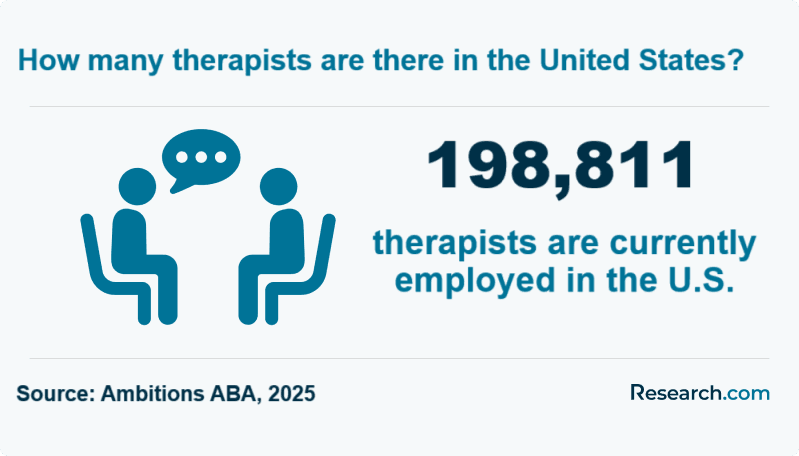
There are currently more than 198,000 therapists in the U.S. Some therapists move into private practice after gaining clinical experience, which can give them more control over schedule, services, and client focus, but also requires business, billing, and marketing skills.
How long does it take to become a therapist?
The timeline depends on degree level, licensure requirements, supervised hours, exam timing, and whether you study full time or part time. In general, how long does it take to be a therapist? It typically takes six to ten years to become fully licensed.
| Stage | Typical time | What happens during this stage |
| Bachelor’s degree | 4 Years | Students complete undergraduate coursework in psychology, social work, counseling, sociology, or a related field. |
| Master’s degree | 2–3 Years | Students complete graduate clinical coursework and practicum preparation for roles such as LPC, LCSW, or LMFT. |
| Doctoral degree | 4–7 Years | Clinical psychology candidates complete doctoral study, research, clinical training, and advanced assessment preparation. |
| Supervised clinical experience | 2–4 Years | Candidates complete 2,000 to 4,000 hours of supervised clinical work. |
| Licensure | Varies by State/Country | Candidates prepare for and pass required licensing exams and complete any state-specific requirements. |
Typical timeline by license path
- LPC, LCSW or LMFT: 6 to 8 years, including bachelor’s degree, master’s degree, and supervised experience.
- Clinical Psychologist: 8 to 10+ years, including bachelor’s degree, doctorate, and supervised experience.
Additional certifications, part-time enrollment, exam delays, state documentation requirements, or a change in specialization can extend the timeline. Your state’s licensing board should be your primary source for exact requirements.
Overall, aside from education and clinical experience, your specialization and the state where you decide to practice as a therapist or counselor will also influence the length of time it takes for you to obtain your license. And speaking of state, you will see in the chart below the states with the largest number of board-certified psychologists in 2023:
Why should you pick a therapy specialization?
Choosing a specialization is not just a branding decision. It shapes your training, supervision, caseload, work environment, ethical responsibilities, and long-term career direction. Before selecting among the types of counseling degrees, it helps to understand why specialization matters.
- It builds deeper clinical competence. Focused training in trauma, children, couples, addiction, workplace mental health, or another area helps you understand a specific set of client needs more thoroughly.
- It clarifies who you serve. A specialty helps you identify the populations and concerns you are best prepared to support, whether that means adolescents, families, LGBTQ+ clients, professionals, or clients with substance use concerns.
- It can improve career direction. Employers, referral partners, and clients often look for therapists with experience in specific issues, settings, or methods.
- It makes your work more personally meaningful. Therapists often do their best long-term work when their clinical focus connects with their values, strengths, and professional interests.
- It helps you stand out. Advanced training and a defined niche can distinguish you from generalists, especially in private practice or competitive job markets.
- It supports ongoing growth. A specialty gives you a clear roadmap for continuing education, consultation, certifications, and supervision.
- It helps with practice development. If you plan to operate a private practice, a clear specialty makes your services easier to explain and easier for clients and referral sources to understand.
Specialization also affects education planning. For example, students comparing addiction treatment and psychology should review the educational requirements for addiction counseling vs psychology degree before committing to a program.
How do you pick the best therapy specialization for you?
The right specialty should fit both your clinical interests and the practical realities of training, licensure, demand, supervision, and sustainability. Use the steps below to evaluate your options before investing in a program or certification.
Step 1: Identify the client problems that hold your attention
Notice which topics you keep returning to in coursework, internships, reading, or clinical discussions. Are you drawn to trauma recovery, child development, family systems, addiction, identity-affirming care, career stress, or crisis work? Interest alone is not enough, but it is a useful starting point.
Step 2: Match the specialty to your natural strengths
Different specialties reward different strengths. Child therapy often requires creativity and patience. Trauma work requires steadiness and careful pacing. Family therapy requires comfort managing conflict. Teletherapy requires strong verbal presence and risk planning. Workplace mental health may require coaching skills and organizational awareness.
Step 3: Study the client population carefully
Ask yourself whether you want short-term or long-term work, individual or systems-based care, high-acuity or lower-acuity cases, and clients at a specific life stage. The clients you choose will shape your daily work more than the title of the specialty itself.
Step 4: Review job demand, pay, and work settings
Look at job postings, employer requirements, salary data, supervision availability, and licensure rules in your state. A specialty may be appealing, but it still needs a viable employment path.
Step 5: Compare therapy approaches
Explore CBT, DBT, EMDR, family systems, psychodynamic therapy, mindfulness-based methods, play therapy, motivational interviewing, and other approaches. Your preferred model should match both the client population and the evidence base for the concerns you plan to treat.
Step 6: Use practicum and supervision strategically
Internships, practicums, and supervised clinical roles are the safest places to test a specialty. Seek placements that expose you to different settings and ask supervisors for honest feedback about your strengths and growth areas.
Step 7: Talk to therapists already doing the work
Ask experienced clinicians about caseload intensity, documentation, ethical challenges, reimbursement, burnout risk, and what they wish they had known before choosing the specialty.
Step 8: Leave room to evolve
Your first specialty does not have to be your final one. Many therapists begin broadly and later add focused expertise as they learn which clients, methods, and work settings fit them best.
| If you are drawn to... | Consider specializing in... | Be cautious if... |
| High-impact crisis support | Trauma and crisis counseling | You struggle with emotional boundaries or secondary trauma exposure. |
| Development, families, and early intervention | Child and adolescent therapy | You prefer working only with adults or dislike caregiver coordination. |
| Identity, advocacy, and culturally responsive care | LGBTQ+ affirmative therapy | You are not prepared for ongoing cultural humility, policy awareness, and self-reflection. |
| Flexible service delivery and access | Teletherapy and digital counseling | You dislike technology, remote documentation, or virtual risk planning. |
| Career stress and organizational systems | Workplace mental health | You prefer purely clinical work with no interest in coaching, consulting, or workplace dynamics. |
| Holistic, experiential, and nature-based work | Eco-therapy | You do not have access to appropriate settings, safety protocols, or relevant training. |
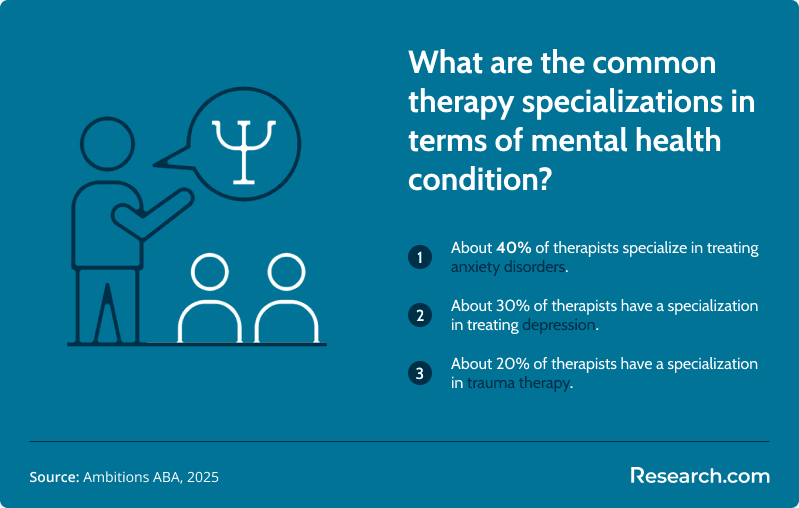
The image below shows what mental health conditions most therapists specialize in.
How do you stay current with therapy and mental health industry trends?
Therapists cannot rely only on what they learned in graduate school. New research, telehealth rules, treatment models, technology tools, ethical guidance, and client expectations continue to reshape practice. Staying current protects clients and strengthens your professional judgment.
- Complete continuing education. Licensing boards typically require CE credits for renewal, and these courses can cover ethics, assessment, treatment techniques, cultural competence, and specialty updates.
- Join professional associations. Organizations such as the American Psychological Association (APA), National Association of Social Workers (NASW), and American Counseling Association (ACA) offer research updates, ethics resources, conferences, and networking.
- Read peer-reviewed and professional publications. Useful sources include Journal of Clinical Psychology, The Counseling Psychologist, Psychology Today, and Journal of Trauma & Dissociation.
- Attend conferences and skills workshops. Events such as the APA Annual Convention, Psychotherapy Networker Symposium, and World Congress of Behavioral and Cognitive Therapies (WCBCT) expose therapists to emerging methods and professional debates.
- Use peer consultation and supervision groups. Regular case discussion with colleagues can sharpen judgment, reduce isolation, and help therapists manage complex ethical or clinical questions.
- Monitor legal and policy changes. State licensing boards, professional ethics codes, and mental health advocacy organizations can help therapists stay aware of changes in rules affecting practice.
- Evaluate technology carefully. Teletherapy platforms, AI-enabled tools, mental health apps, and virtual reality interventions may be useful, but therapists must assess privacy, evidence, ethics, and client fit.
- Follow credible thought leaders. Podcasts, professional blogs, and clinical educators can be helpful when they are grounded in research and ethics rather than hype.
Professional development also depends on understanding how education and licensure interact. For example, knowing the difference between MFT degree and LMFT license can help you choose continuing education that supports your actual scope of practice.
How do you pursue continuing education as a therapist?
Continuing education helps therapists maintain licensure, improve clinical skill, respond to new research, and expand into new specialties. The best CE plan is intentional: it should match your license renewal requirements, client population, ethical duties, and career goals.
1. Take approved CE courses
Most licensing boards require a specific number of CE credits during each renewal cycle. Courses may address ethics, cultural competence, teletherapy, assessment, diagnosis, treatment planning, or specialty techniques. Common providers include:
- Universities and psychology departments
- Professional organizations such as the American Psychological Association (APA) or National Board for Certified Counselors (NBCC)
- Online education providers focused on mental health professionals
2. Attend workshops, seminars, and conferences
Live training can be especially valuable when a specialty requires practice, feedback, or demonstrations. Relevant options include:
- APA Annual Convention
- National Association of Social Workers (NASW) Conferences
- Cognitive Behavioral Therapy Workshops
- Trauma and EMDR Training Seminars
3. Earn advanced certifications
Certifications can document focused training, but therapists should evaluate whether the credential is recognized, clinically useful, and aligned with their license. Examples include:
- Eye Movement Desensitization and Reprocessing Certification: Used for trauma-focused work.
- Dialectical Behavior Therapy Certification: Relevant for emotional regulation concerns and borderline personality disorder treatment.
- Certified Clinical Trauma Professional: Useful for therapists focused on trauma and crisis counseling.
- Marriage and Family Therapy Certification: Relevant for clinicians focusing on couples, families, and relationship systems.
4. Consider graduate or postgraduate study
Some therapists add a doctorate, MSW, postgraduate certificate, or specialized graduate credential to deepen expertise or expand career options. This can be valuable, but only if the program supports licensure, specialization, or advancement goals.
5. Join peer supervision or study groups
Peer consultation allows therapists to discuss cases, review research, examine ethical concerns, and learn from colleagues. This is especially useful when moving into a new specialty.
6. Read clinical books and journals
Regular reading keeps practice connected to research and clinical debate. Common resources include:
- Journal of Clinical Psychology
- Psychotherapy Networker
- The Body Keeps the Score by Bessel van der Kolk for trauma therapy
- Cognitive Behavioral Therapy: Basics and Beyond by Judith S. Beck for CBT practitioners
7. Use online learning and webinars selectively
Virtual training can be convenient and affordable, but therapists should verify CE approval, instructor qualifications, clinical rigor, and relevance to their license.
8. Refresh ethics and legal knowledge often
Ethics, teletherapy regulations, confidentiality, documentation, informed consent, and cultural competence should not be treated as one-time graduate school topics. They are ongoing responsibilities.
As you compare continuing education options, the difference between MSW and MFT can affect which advanced training is most useful. MSW-trained clinicians may pursue broader social work, clinical, or policy pathways, while MFT-trained clinicians often focus more directly on family and relationship systems.
Therapists need to hold a post-graduate degree to obtain a license and expand their credentials. In the U.S., about 60% of therapists hold a master's degree as their highest educational attainment, while about 40% hold a doctoral degree.
How do you choose an accredited training program to complement your specialization?
Accreditation and recognition matter because not every course, certificate, or online program will count toward licensure, certification, or employer requirements. Before enrolling, confirm that the institution, provider, or platform is accepted by your licensing board or professional credentialing body.
| What to check | Why it matters | Question to ask |
| Accreditation or approval | Licensing boards may reject training from unapproved providers. | Will this program count toward my license, certification, or renewal requirements? |
| Curriculum fit | A program should match the clients and interventions in your specialty. | Does the coursework teach skills I will actually use in practice? |
| Faculty expertise | Qualified instructors strengthen clinical relevance and credibility. | Do instructors have current clinical, research, or supervisory experience in this specialty? |
| Supervision or practice opportunities | Some specialties require guided skill development, not just lectures. | Does the program include consultation, supervised practice, role play, or case review? |
| Delivery format | Online, hybrid, and in-person formats differ in flexibility and hands-on learning. | Can I complete the format while meeting my work, supervision, and licensure obligations? |
| Cost and outcomes | The cheapest option is not always the best value. | What credential, CE credit, skill, or career advantage will I gain? |
Flexible online formats can help working professionals add training without leaving their jobs. For example, some clinicians explore online behavior analyst programs when their work overlaps with behavioral assessment, intervention planning, or populations that may benefit from behavior-focused expertise.
How can you effectively market your therapy specialization?
Marketing a therapy specialty should be ethical, accurate, and client-centered. The goal is not to overpromise outcomes; it is to help the right clients understand what you do, whom you serve, and how to access care.
- Define your niche clearly. Use plain language such as “trauma therapy for adults,” “affirming therapy for LGBTQ+ teens,” or “burnout counseling for healthcare professionals.”
- Keep your credentials visible and current. List your degree, license, certifications, states of practice, teletherapy availability, and areas of training accurately.
- Build referral relationships. Connect with physicians, school counselors, attorneys, social workers, community organizations, psychiatrists, and other therapists who may refer appropriate clients.
- Create educational content. Articles, FAQs, short videos, and workshops can explain common client concerns without giving misleading clinical advice.
- Use SEO responsibly. Your website should answer what clients actually search for, such as symptoms, specialty terms, session format, insurance, and location.
- Avoid exaggerated claims. Do not guarantee results, imply expertise you do not have, or advertise services outside your scope.
Marketing also depends on career stage. If you are still planning the path, this guide on the how long does it take to become a therapist timeline can help you set realistic goals before promoting a specialty.
Can you have more than one therapy specialization?
Yes. Many therapists develop more than one specialization, especially when the areas naturally overlap. The key is to build depth, not just collect labels. Multiple specialties work best when they share a client population, clinical method, or work setting.
- Broader client fit: A therapist trained in both child therapy and trauma counseling may be better prepared to help young clients who have experienced abuse, neglect, or sudden loss.
- More integrated treatment: Many concerns occur together. A clinician who understands both CBT and substance use treatment may be able to support clients with addiction and co-occurring mental health concerns. Students exploring this area can review what are the top online degree programs for addiction counseling.
- More career flexibility: Combining workplace mental health with teletherapy, for example, may allow a therapist to support remote employees, executives, and professionals across different settings.
- Credential planning: Each specialty may have separate training, supervision, or certification expectations. If you are interested in family systems work, start by learning how to become a marriage and family therapist and then decide which additional niche fits your license.
- Risk of overextension: Too many unrelated specialties can weaken credibility and increase burnout. Choose complementary areas that make sense together.
| Strong specialty combinations | Why they fit together |
| Trauma counseling + child and adolescent therapy | Many young clients need developmentally appropriate trauma-informed care. |
| LGBTQ+ affirmative therapy + family therapy | Identity, relationships, family acceptance, and communication often intersect. |
| Teletherapy + workplace mental health | Professionals and remote workers may prefer flexible virtual care. |
| Addiction counseling + CBT | Skills-based treatment can support relapse prevention and co-occurring symptoms. |
| Eco-therapy + burnout prevention | Nature-based methods may complement stress recovery and lifestyle change. |
What is the salary and job outlook for therapists?
Therapist earnings vary by license, specialization, degree level, employer, geography, experience, and whether the therapist works in private practice. Salary data should be treated as a reference point, not a guarantee for any individual clinician.
Average salary for common therapist and counselor roles
According to the United States Bureau of Labor Statistics (BLS), average annual pay for several common therapy and counseling roles is:
| Role category | Average annual salary |
| Mental Health, Substance Abuse, and Behavioral Disorder Counselors | $60,080 |
| Marriage and Family Therapists | $68,730 |
| Clinical and Counseling Psychologists | $106,600 |
| School Psychologists | $91,990 |
| All Other Types of Counselors | $52,360 |
What affects therapist income?
- Experience: Clinicians often earn more as they gain years of practice, supervision experience, leadership roles, or a stable referral base.
- Specialization: Advanced expertise in areas such as trauma therapy or EMDR may support stronger referral demand, depending on market needs.
- Work setting: Hospitals, government agencies, schools, nonprofits, clinics, telehealth companies, and private practices can pay differently.
- Location: Pay may be higher in urban or high-cost areas, but expenses can also be higher.
- Private practice: Self-employed therapists can set rates, but they also manage rent, technology, insurance billing, taxes, marketing, and unpaid administrative time.
Job outlook
The BLS projects strong demand for several mental health roles:
- Employment of behavioral disorder, mental health, and substance abuse counselor professionals is projected to grow 19% from 2023 to 2033, while employment of marriage and family therapists is projected to grow 16%.
- Demand for substance abuse, behavioral disorder, and mental health counselors is expected to increase as awareness of mental health needs and addiction treatment continues.
- Teletherapy and online counseling continue to create remote work opportunities and allow some therapists to reach clients outside their immediate local area, subject to licensure rules.
What are the common challenges you will experience in pursuing a career as a therapist?
Therapy can be deeply meaningful, but it is not an easy profession. Students and early-career clinicians should plan for the emotional, financial, legal, and administrative demands of the field.
- Long education and licensing process: A therapist may need a bachelor’s degree, graduate degree, supervised clinical hours, exams, and state approval before independent practice.
- Compassion fatigue and burnout: Repeated exposure to trauma, grief, crisis, and severe distress can affect therapists if they lack supervision, boundaries, and recovery time.
- Difficult clinical situations: Clients may be ambivalent, high-risk, resistant, court-involved, or facing complex diagnoses that require careful assessment and consultation.
- Early-career financial pressure: Supervised roles and community clinic positions may pay less than later-stage practice, while education and licensure costs can be significant.
- Ongoing CE and credential costs: Therapists must keep up with continuing education, license renewals, certifications, supervision, and professional memberships.
- Private practice business demands: Clinicians who open a practice must manage scheduling, documentation, billing, insurance, marketing, taxes, and client retention.
- Legal and ethical risk: Confidentiality, informed consent, mandated reporting, documentation, boundaries, and emergency response require constant attention.
- Work-life boundaries: Heavy caseloads, crisis availability, and emotional labor can spill into personal life if therapists do not set limits.
Common mistakes to avoid when choosing a therapy specialization
| Mistake | Why it creates problems | Better approach |
| Choosing a specialty based only on popularity | A high-demand area may not fit your temperament, training, or preferred clients. | Compare demand with your strengths, supervision options, and long-term sustainability. |
| Ignoring accreditation and board approval | Training may not count toward licensure, certification, or CE requirements. | Verify approval with your licensing board before enrolling. |
| Focusing only on tuition | Low-cost programs may lack supervision, clinical rigor, or recognized credentials. | Evaluate total value, including outcomes, faculty, accreditation, and applicability. |
| Assuming online training always meets licensure rules | Licensure and teletherapy rules can vary by state and profession. | Confirm state-specific requirements before relying on any program. |
| Collecting too many unrelated certifications | A scattered profile can weaken expertise and confuse referral sources. | Choose certifications that support a coherent client population or treatment model. |
| Underestimating emotional intensity | Some specialties carry high exposure to crisis, trauma, conflict, or risk. | Build consultation, supervision, boundaries, and self-care into your plan. |
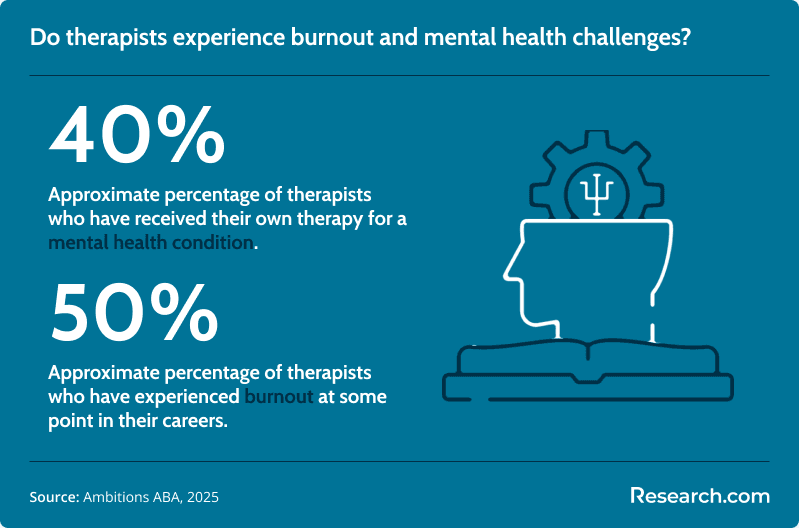
Being a therapist can take a toll on your emotional and mental well-being, as you can see in the image below. That is why building your own skills and maintaining a healthy work-life balance are very important.
How Do Legal and Ethical Considerations Impact Your Therapy Specialization?
Legal and ethical rules shape every therapy specialty. A therapist’s scope of practice, confidentiality duties, informed consent process, mandated reporting obligations, documentation standards, teletherapy procedures, and emergency protocols all depend on law, ethics codes, employer policies, and licensing board rules.
Specialization can add complexity. A child therapist must understand consent and parent involvement. A trauma therapist must manage risk and stabilization. A teletherapist must address privacy, client location, cross-state practice, and secure technology. A forensic or court-involved clinician may need training beyond general therapy preparation, which is why some professionals evaluate options such as cheap forensic psychology master's programs when their work intersects with legal systems.
Ethical practice also requires consultation. Therapists should seek supervision, legal guidance, or board clarification when a specialty introduces unfamiliar risks.
How do advanced certifications and credentials enhance your therapy specialization?
Advanced credentials can strengthen a specialization when they represent meaningful training, supervised skill development, and recognized standards. They can also help employers, referral sources, and clients understand your focus. However, a credential should not be used to imply a broader scope of practice than your license allows.
- Credibility: Certifications can show that you pursued structured training beyond a general graduate degree.
- Clinical skill: Strong programs may include case consultation, supervised practice, or method-specific competency development.
- Career positioning: Specialty credentials can support referral relationships and niche practice development.
- Professional clarity: A focused credential helps you communicate your services more clearly.
For counselors evaluating credential pathways, What is an LPC degree? explains how education, licensure, and career outcomes can connect.
Should I pursue an advanced degree to accelerate my therapy specialization?
An advanced degree can be valuable when it expands your legal scope, prepares you for a new license, supports leadership or teaching goals, or gives you deeper clinical preparation in a defined area. It may not be necessary if a focused certification, supervised training, or CE program can meet your goals more efficiently.
For example, clinicians who want an explicitly faith-integrated counseling path may compare programs such as a Christian counseling master's degree to determine whether the curriculum aligns with their clinical, ethical, and career needs.
What are the cost considerations for advancing your therapy specialization?
Specialization can require tuition, CE fees, certification costs, supervision expenses, exam fees, travel, books, software, insurance, and reduced work hours while training. Before committing, compare the full cost with the likely professional benefit.
| Cost category | What to include in your estimate |
| Tuition or course fees | Graduate programs, certificate programs, CE courses, or specialty training fees |
| Materials | Books, manuals, assessments, software, and platform subscriptions |
| Certification and exams | Application fees, test fees, renewal fees, and documentation costs |
| Supervision or consultation | Paid consultation groups, individual supervision, or required supervised practice |
| Lost income or reduced hours | Time away from paid clinical work while studying or attending training |
| Long-term return | Referral growth, employability, rate changes, promotion potential, or expanded services |
Students and clinicians trying to manage costs may compare options such as cheapest MFT online programs while still verifying accreditation, licensure fit, and clinical quality.
What Role Does Evidence-Based Practice Play in Enhancing Your Therapy Specialization?
Evidence-based practice helps therapists choose interventions that are supported by research, clinical expertise, client preferences, and cultural context. It does not mean using one rigid method for every client. It means making thoughtful clinical decisions based on the best available information.
For specialization, evidence matters because clients often seek help for complex concerns such as trauma, addiction, depression, anxiety, family conflict, or identity-related stress. Therapists should understand which interventions are appropriate, when to adapt them, when to refer out, and how to measure progress. Programs such as accredited online MFT programs can help students evaluate whether a curriculum emphasizes research-informed family and relationship practice.
Are online training platforms effective for advancing your therapy specialization?
Online training can be effective when it is credible, clinically rigorous, and accepted by the relevant licensing or credentialing body. It is especially useful for working therapists who need flexible schedules or access to niche topics not available locally.
Before enrolling, check whether the platform provides approved CE credit, qualified instructors, current curriculum, skill practice, assessments, and documentation you can submit for renewal or certification. Affordability matters, but low cost should not replace quality. Students comparing counseling education options may review cheapest online LPC programs as one starting point while still checking licensure alignment in their state.
What the Current Data Suggests About Therapy Specialization
- Prevalence of Specializations: According to a 2021 survey by the American Psychological Association (APA), the most common self-reported primary areas of specialty among licensed psychologists were clinical psychology (44%), clinical child and adolescent psychology (11%), behavioral and cognitive psychology (10%), and counseling psychology (10%).
- Board Certifications: In 2023, approximately 4% of licensed psychologists in the United States held at least one American Board of Professional Psychology (ABPP) board certification. Among these, the most common certifications were in clinical neuropsychology (30%), clinical psychology (27%), and clinical child and adolescent psychology (7%).
- Emerging Specializations: Therapists are increasingly pursuing specialized training in areas such as art therapy (30%), working with veterans and military personnel (20%), and addressing eating disorders (15%).
- Therapeutic Approaches: The most common therapeutic approach among therapists is cognitive-behavioral therapy (CBT). Around 30% of therapists use psychodynamic therapy in their practice. Approximately 15% of therapists incorporate mindfulness-based techniques.
- Therapist Demographics: The therapist workforce is predominantly white (76.4%), with Asian (10.6%), Hispanic or Latino (6.3%), and Black or African American (4.1%) therapists comprising smaller percentages.
References:
- Diena, Y. (2025, February 25). Therapist Statistics And Facts: How Many Are There? Ambitions ABA.
- Page, C. et al. (2024, March 1). Datapoint: The most and least common specialty areas for licensed psychologists. American Psychological Association.
- United States Bureau of Labor Statistics. (2024, August 19). Occupational Outlook Handbook: Marriage and Family Therapists. BLS.
- United States Bureau of Labor Statistics. (2024, August 19). Occupational Outlook Handbook: Substance Abuse, Behavioral Disorder, and Mental Health Counselors. BLS.
Key Insights
- The best therapy specialization is not simply the one with the most demand; it is the one that aligns with your preferred clients, emotional capacity, legal scope, training access, and long-term career goals.
- Most therapists need a graduate degree, supervised clinical experience, licensure exams, and continuing education before they can practice independently.
- Specialties such as trauma counseling, child and adolescent therapy, LGBTQ+ affirmative therapy, teletherapy, workplace mental health, and eco-therapy each require different skills, settings, and ethical considerations.
- Therapist salary and job outlook vary by role, with BLS average annual pay ranging from $52,360 for All Other Types of Counselors to $106,600 for Clinical and Counseling Psychologists among the categories listed.
- Licensure requirements, CE rules, teletherapy regulations, and scope of practice differ by location, so your state licensing board should guide program and certification decisions.
- Multiple specializations can strengthen your practice when they are connected and clinically coherent, but collecting unrelated credentials can dilute expertise.
- Before paying for advanced training, verify accreditation, CE approval, faculty expertise, clinical rigor, supervision options, and whether the credential supports your actual career plan.
Other Things You Should Know About Therapy Specialization
In 2027, therapy specializations projected to be in demand include mental health counseling, substance abuse counseling, and geriatric therapy. The rising awareness of mental health, the ongoing opioid crisis, and an aging population underscore the need for professionals in these fields.
Most aspiring therapists must pass a state licensing exam after graduation. For physical therapists, that is the NPTE; for occupational therapists, the NBCOT exam; and for many counselors and marriage and family therapists, the required test is the NCE or the MFT exam approved by the state board.
To specialize in therapy in 2027, certifications may vary by field. Common requirements include passing a licensure exam specific to the specialization, such as the National Counselor Examination (NCE) for counseling, and obtaining continuous education credits from recognized bodies.


