2027 How to Compare Online Digital Photography Degrees by Creative and Technical Depth

Co-Founder and Chief Data Scientist
Choosing an online digital photography degree is not just about finding a flexible art program; it is about judging whether the curriculum builds both visual judgment and market-ready technical skill. The Bureau of Labor Statistics reported a May 2024 median annual wage of $42,520 for photographers, which makes program quality, portfolio strength, and cost control important.
This guide is for students comparing online photography schools, career changers, and working creatives who need a practical way to evaluate accreditation, coursework, equipment, tuition, timelines, and career fit before enrolling.
Key Things You Should Know
- Strong online digital photography degrees combine image-making, lighting, editing, visual storytelling, business practice, and portfolio critique; weak programs overemphasize software tutorials without developing a professional body of work.
- Cost and timeline vary sharply by credential: College Board's 2024-25 averages list public two-year tuition and fees at $4,050 and public four-year in-state tuition and fees at $11,610, before equipment, software, and living costs.
- BLS data shows photographers had a May 2024 median annual wage of $42,520 and projected 4% employment growth from 2024 to 2034, so degree ROI depends heavily on specialization, portfolio quality, freelance strategy, and local market demand.
How do online digital photography degrees differ from campus programs in creative and technical depth?
Online digital photography degrees differ from campus programs less by the word "online" and more by how they deliver critique, studio practice, equipment access, and professional feedback. A rigorous online program can teach composition, lighting, digital workflow, color management, editing, image sequencing, and business skills, but students must be more self-directed about creating shoots, finding locations, and building a consistent practice schedule.
The biggest trade-off is access. Campus programs often provide studio spaces, lighting labs, print labs, peer shooting sessions, and in-person exhibitions. Online programs usually provide flexible lectures, recorded demonstrations, virtual critiques, cloud-based submissions, and instructor feedback, but students may need to supply or rent their own camera, lighting, storage, editing software, and printing services.
This comparison shows where online and campus formats usually differ, and what to ask before assuming one is stronger than the other.
| Comparison area | Online digital photography degree | Campus photography program | Decision point |
| Creative critique | Often delivered through discussion boards, video reviews, annotated submissions, and live sessions | Often delivered in studio critiques, gallery-style reviews, and peer workshops | Choose online only if critique is frequent, specific, and instructor-led |
| Technical depth | Can be strong if courses require RAW files, lighting diagrams, editing workflows, and final portfolios | Often reinforced through supervised labs and immediate equipment demonstrations | Compare assignments, not just course titles |
| Studio access | Usually student-managed through home setups, rentals, local studios, or workplace access | Often includes school studios, lighting kits, print labs, and checkout equipment | Online students should budget for tools or local access |
| Flexibility | Better for working adults, parents, military students, and freelancers | Better for students who want immersive daily studio culture | Match the format to your discipline and schedule |
| Networking | Depends on virtual events, alumni networks, internships, and local industry outreach | Often easier through campus shows, faculty referrals, and peer collaboration | Ask how online students meet employers and clients |
Online learning is also common in other creative-technical fields, including game design degrees, where students must prove both artistic judgment and production skill through projects. Photography students should use the same standard: the program should not merely teach tools; it should help you produce credible work that can be shown to clients, editors, agencies, galleries, or employers.
What types of online digital photography degrees are available and which level should you choose?
Online digital photography credentials are available at the certificate, associate, bachelor's, and sometimes master's level. The right choice depends on whether you need fast skill development, transfer credits, a full undergraduate credential, or advanced creative direction.
Use degree level as a strategy, not as a status symbol. A shorter credential may be enough if you already have clients and need stronger editing or lighting skills, while a bachelor's degree may make more sense if you want a broader foundation in visual communication, art history, media production, and business.
| Credential | Typical fit | Creative and technical depth | When it may not be enough |
| Certificate | Career changers, hobbyists becoming professionals, or working photographers updating skills | Focused training in camera control, lighting, editing, and portfolio basics | May lack general education, theory, internships, and broader degree recognition |
| Associate degree | Students seeking an affordable starting point or transfer pathway | Usually balances foundational photography, digital imaging, design, and general education | May be too limited for students seeking advanced art direction or management roles |
| Bachelor's degree | Students seeking a full creative credential for commercial, editorial, fine art, or media careers | Typically offers deeper critique, portfolio sequencing, visual theory, business, and specialization | May be more expensive than necessary for students who already have strong portfolios and clients |
| Master's degree | Artists, educators, curators, or advanced practitioners developing a mature body of work | Emphasizes concept development, research, critique, exhibition, and professional positioning | Usually not required for most entry-level photography jobs |
Students drawn to the therapeutic, community, or counseling side of visual arts may want to compare photography study with adjacent graduate pathways such as the best art therapy masters programs. That comparison matters because photography can support expressive work, but art therapy is a regulated clinical or counseling-adjacent path with different education and supervision expectations.
A practical rule is to choose the lowest-cost credential that credibly supports your next move. If you need a portfolio and freelance skills, a certificate or associate degree may work. If you want broader employment flexibility, transfer options, or future graduate study, a bachelor's degree is usually the safer academic credential.
How can you compare accredited online digital photography schools for quality and credibility?
Accreditation is the first credibility filter for online digital photography schools. In the U.S., institutional accreditation from an agency recognized by the U.S. Department of Education or the Council for Higher Education Accreditation is what usually affects federal financial aid eligibility, transfer credit acceptance, and graduate school recognition.
Program-level art and design accreditation can add value, but it is not always required for photography careers. What matters most is that the school is legitimate, the curriculum is current, the faculty have relevant creative or commercial experience, and the program produces portfolios that match your target market.
Before applying, use this sequence to reduce the risk of choosing a weak or expensive program.
- Confirm institutional accreditation through the school's official accreditation page and recognized accreditation databases.
- Review the curriculum for both creative development and technical production, including lighting, digital workflow, editing, color, business, and portfolio courses.
- Ask for examples of student portfolios, capstone projects, juried shows, or graduate exhibitions from online students specifically.
- Check whether online students receive faculty critique, career advising, internship support, equipment guidance, and access to software discounts.
- Compare transfer credit policies, prior learning assessment, military credit, and whether credits can apply to a higher degree later.
Accreditation checks are not unique to art programs; students evaluating an accredited online animal science degree face the same basic issue of verifying institutional legitimacy before comparing price or convenience. In photography, skipping this step can make credits harder to transfer and may limit access to federal aid.
Common red flags include vague accreditation language, no named faculty, no portfolio review process, unclear equipment expectations, unusually aggressive enrollment pressure, and total costs that are hard to find. A credible program should be willing to explain how online students get critique, build work, and receive career support.
What core creative and technical courses are included in online digital photography curricula?
A strong online digital photography curriculum should develop two kinds of depth at the same time: creative depth and technical depth. Creative depth means the ability to make intentional images with meaning, audience awareness, visual consistency, and a point of view. Technical depth means the ability to control exposure, lighting, editing, file management, color, output, and delivery standards.
The table below summarizes common course areas and what they should help you demonstrate in a portfolio.
| Course area | What students typically learn | Portfolio evidence to look for |
| Foundations of photography | Exposure, focus, lenses, framing, composition, visual intent, and basic camera control | Technically clean images that show deliberate framing and consistent exposure |
| Digital imaging and editing | RAW workflow, retouching, non-destructive editing, file formats, sharpening, and color correction | Before-and-after edits that improve the image without looking artificial or inconsistent |
| Lighting | Natural light, continuous light, flash, modifiers, metering, contrast control, and subject placement | Portraits, products, or interiors with controlled highlights, shadows, and mood |
| Visual storytelling | Sequencing, documentary practice, narrative structure, ethics, captions, and audience interpretation | Photo essays or series that work as a coherent story rather than isolated images |
| History and criticism | Major photographers, movements, visual culture, critique language, and ethical context | Artist statements that connect choices to context instead of only describing technique |
| Professional practice | Client communication, licensing, pricing, contracts, copyright basics, branding, and marketing | A portfolio site, client-ready project samples, estimates, and a business workflow |
Because photography tools are changing quickly, modern curricula should also address AI-assisted editing, metadata, content authenticity concerns, and ethical image manipulation. The goal is not to replace photographic judgment with software automation, but to understand where automation can speed workflow and where it can damage trust, accuracy, or authorship.
When comparing syllabi, look for assignments that require multiple shoots, revision after critique, and final image selection. A program that lets students submit one-off snapshots without reshooting is unlikely to build the depth needed for serious portfolio development.
How do online digital photography programs teach hands-on skills, studio work, and portfolio development?
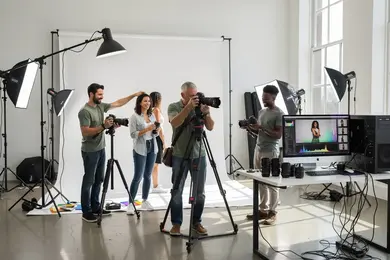
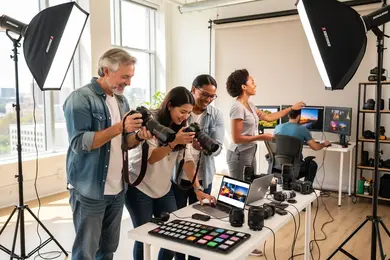
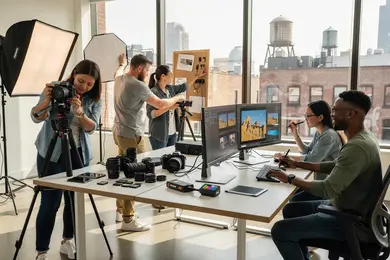
Hands-on learning in online photography is possible, but it must be intentionally designed. The strongest programs treat the student's home, community, workplace, or local rental studio as the production environment, then use online tools for demonstration, critique, revision, and portfolio review.
Good online programs usually make hands-on work visible through structured deliverables. These deliverables show whether students can plan, shoot, edit, explain, and revise work in a professional way.
- Shooting briefs that define the subject, client scenario, visual goal, location, and technical constraints.
- Contact sheets or image sets that show how the student worked through multiple frames rather than relying on one lucky shot.
- Lighting diagrams, camera settings, and editing notes that document technical decision-making.
- Instructor critique followed by required revision or reshooting, not just a final grade.
- Portfolio reviews that evaluate sequencing, consistency, niche fit, and presentation for a target audience.
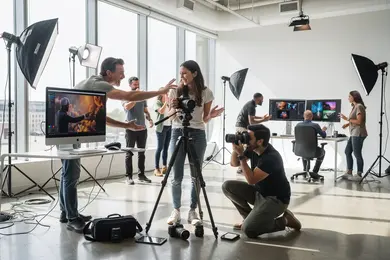
Studio work can be handled several ways. Some online programs require students to buy basic lighting kits, while others allow natural-light projects, local studio rentals, employer facilities, or school-approved equipment substitutes. What matters is whether the program teaches lighting principles that transfer across settings, not whether every student owns the same gear.
Portfolio development should begin early and continue throughout the degree. By the final term, students should have a curated body of work, not a folder of unrelated class assignments. For commercial paths, that may mean product, portrait, event, food, real estate, or branding images. For fine art or documentary paths, it may mean a sequenced project with a clear concept, statement, and exhibition-ready presentation.
What admission requirements, prerequisite skills, and technology access do online programs expect?
Admission requirements for online digital photography programs vary by credential level. Certificates and associate degrees may ask for a high school diploma or equivalent, while bachelor's completion programs may require transfer credits. Selective art programs may also request a portfolio, artist statement, or interview.
Most programs do not expect applicants to be professional photographers already, but they do expect enough readiness to participate in visual assignments and online critique. Before enrolling, students should confirm both academic requirements and practical technology needs.
| Requirement area | What schools may expect | Why it matters |
| Academic background | High school diploma, equivalent credential, prior college credits, or transfer transcripts | Determines admission path, placement, and time to completion |
| Portfolio | Required for some bachelor's, transfer, or advanced programs; optional for many entry-level programs | Helps schools assess visual readiness and appropriate course placement |
| Computer access | A reliable computer capable of editing high-resolution files | Slow hardware can make editing, storage, and submission difficult |
| Camera access | Often a DSLR or mirrorless camera with manual controls, though requirements vary | Manual control is important for exposure, lenses, lighting, and RAW workflow |
| Software | Photo editing, file management, and sometimes design or layout tools | Students need consistent tools for assignments, critique, and final delivery |
| Internet and storage | Broadband access, backup storage, and cloud submission capability | Image files are large, and lost work can delay projects |
Before applying, ask admissions whether the school publishes a required equipment list by course. A transparent program should tell you whether a smartphone is acceptable for introductory work, when manual camera control becomes required, and whether lighting equipment is mandatory or optional.
One common mistake is underestimating the time commitment. Even asynchronous courses require shooting, reshooting, editing, critique participation, and portfolio refinement. Students who work full time should look carefully at weekly production expectations before choosing an accelerated schedule.
How long do online digital photography degrees take and what tuition, fees, and costs should you expect?
Online digital photography degrees can take a few months for a certificate, about two years for an associate degree, and about four years for a bachelor's degree if taken full time from the start. Transfer credits, prior learning assessment, summer enrollment, and part-time pacing can change that timeline substantially.
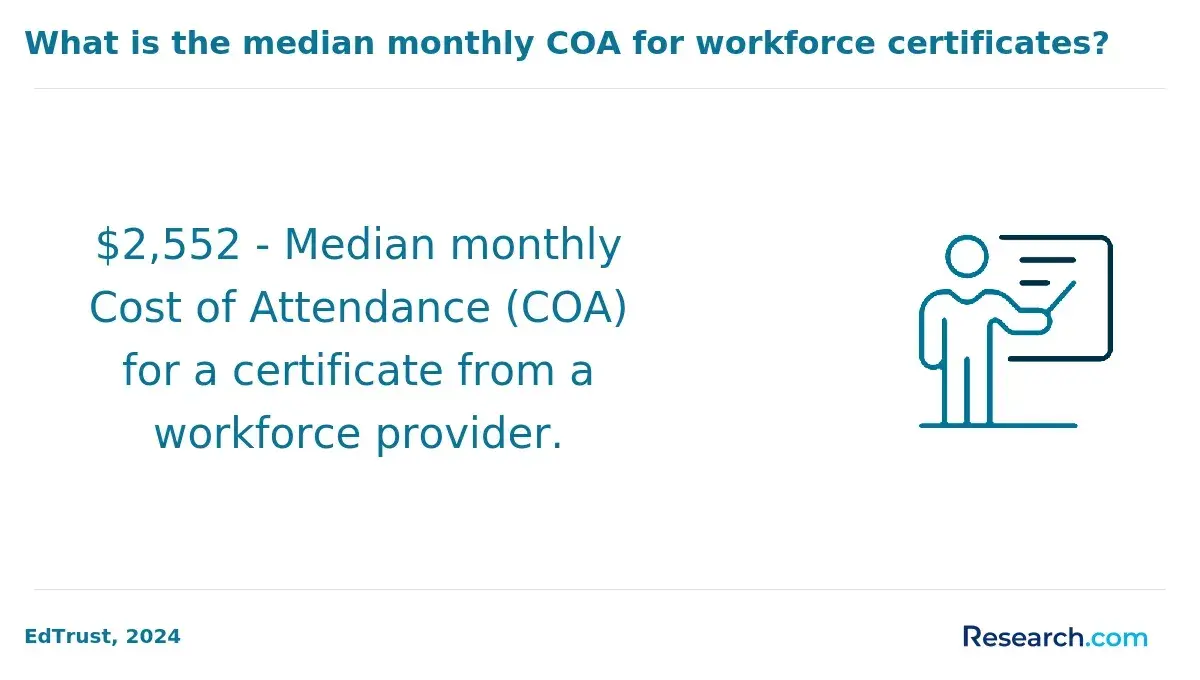
Tuition is only one part of the total cost. College Board's 2024-25 published tuition and fee averages give a useful baseline: $4,050 for public two-year in-district students, $11,610 for public four-year in-state students, and $43,350 for private nonprofit four-year students. These averages are not photography-specific, but they help students judge whether a quoted online price is unusually low, moderate, or high.
When comparing cost, include the items that are easy to overlook.
- Tuition and mandatory fees charged per credit, term, or program.
- Camera body, lenses, tripod, memory cards, batteries, storage drives, and backup systems.
- Lighting equipment, modifiers, stands, backgrounds, rentals, or local studio fees.
- Editing software, calibration tools, cloud storage, printing, mounting, and portfolio website costs.
- Travel for shoots, internship requirements, exhibitions, residencies, or optional campus sessions.
- Lost income if an intensive course load reduces work hours or freelance availability.
Students evaluating creative degrees should compare price with completion speed the same way they might when reviewing an online Spanish degree: the cheapest option is not automatically the best if credits do not transfer, support is weak, or the schedule prevents strong work. For photography, low tuition can lose value if the program does not produce a portfolio that helps you compete.
To estimate ROI, compare total net cost after grants and scholarships with your realistic career plan. Freelance photographers may need time to build clients, while salaried media roles may require broader design, video, marketing, or communications skills. A lower-cost associate degree plus targeted certificates may be smarter for some students than a high-cost bachelor's degree with limited career support.
Which photography careers can an online digital photography degree prepare you for?
An online digital photography degree can prepare students for creative, commercial, media, and self-employment paths, but the degree alone is rarely the deciding factor. Employers and clients typically judge photographers by portfolio quality, reliability, editing skill, communication, specialization, and ability to deliver usable images on deadline.
The most relevant career paths depend on the student's niche and supporting skills. This table summarizes common options and the kind of preparation that matters most.
| Career path | Typical work | Preparation that matters |
| Commercial photographer | Product, fashion, food, lifestyle, advertising, and brand imagery | Lighting control, client briefs, retouching, licensing, and consistent style |
| Portrait or event photographer | Headshots, weddings, family portraits, school portraits, and private events | People skills, posing, scheduling, delivery workflow, sales, and backup planning |
| Photojournalist or documentary photographer | News, community stories, editorial assignments, and long-form documentary projects | Ethics, captions, narrative sequencing, speed, accuracy, and field safety |
| Real estate or architectural photographer | Interior, exterior, property, hospitality, and construction-related imagery | Wide-angle technique, lighting balance, perspective correction, and fast delivery |
| Digital imaging specialist | Retouching, color correction, asset management, image preparation, and production support | Editing precision, file systems, color workflow, metadata, and software fluency |
| Studio assistant or production assistant | Lighting setup, equipment handling, digital tech support, and shoot logistics | Professional etiquette, gear knowledge, tethering, organization, and problem-solving |
Photography careers are also being shaped by short-form video, AI-assisted editing, e-commerce content demand, and social media marketing. Students who add motion, design, copywriting, marketing analytics, or web portfolio skills may have more ways to earn income than students who focus only on still images.
Students should consider a different path if they dislike client communication, irregular income, self-promotion, or repeated technical troubleshooting. Photography can be creatively rewarding, but many roles involve business administration, contracts, scheduling, backups, editing deadlines, and client revisions.
What salary ranges and job outlook can graduates in digital photography anticipate?
Salary expectations in photography should be handled carefully because many photographers are self-employed, part time, contract-based, or paid per project. The Bureau of Labor Statistics reported a May 2024 median annual wage of $42,520 for photographers, meaning half of workers in the occupation earned more and half earned less. This figure is useful as a national benchmark, but it does not predict an individual graduate's income.
The BLS also projected 4% employment growth for photographers from 2024 to 2034, which is about as fast as the average for all occupations. For students, the practical meaning is that opportunity exists, but competition remains real, especially in popular niches where clients can compare portfolios quickly online.
Income can vary by specialization, region, business model, and client type. Commercial and corporate work may pay differently from family portrait sessions, local events, editorial assignments, or retouching support. Freelancers also have expenses that salaried workers may not, including equipment replacement, insurance, marketing, software, taxes, and unpaid administrative time.
To evaluate career value realistically, compare programs by how well they help you build employable evidence.
- A specialized portfolio aimed at a clear market, such as products, portraits, editorial, real estate, or documentary work.
- Proof of technical consistency across lighting conditions, locations, and client scenarios.
- Business documents such as estimates, usage terms, model releases, invoices, and delivery workflows.
- Internship, assistantship, freelance, campus publication, or community project experience.
- A professional website and image archive that make your work easy to review and contact.
The strongest job outlook strategy is not simply earning a degree; it is using the degree to build a portfolio, network, and workflow that match a paying market. Students should ask schools for career services data cautiously and look for evidence specific to photography or visual media graduates, not only broad institutional placement claims.
Are professional certifications, memberships, or industry standards important for digital photography graduates?
Professional certifications, memberships, and industry standards can help digital photography graduates signal seriousness, but they are usually supplements rather than substitutes for a strong portfolio. In most photography careers, clients and employers want to see work quality first, then reliability, technical competence, and professional conduct.
Certifications may be useful when they align with your niche. Software credentials can support digital imaging or retouching roles. Professional photography credentials can help portrait, wedding, or commercial photographers demonstrate commitment to standards. Drone photography may require federal compliance if the work involves commercial drone operation, so students interested in aerial imaging should verify current FAA requirements before offering paid services.
Memberships can also provide networking, competitions, continuing education, critique, and business templates. However, students should avoid paying for memberships only to add logos to a website. The value comes from actively using the community, education, referrals, and portfolio review opportunities.
Industry standards matter in everyday practice. Graduates should understand copyright, licensing, releases, ethical editing, file backup, accessibility, metadata, and client privacy. As AI-generated and AI-edited images become more common, photographers who can explain what was captured, what was edited, and what rights are being granted may be better positioned to build trust.
A smart post-graduation plan is to choose one specialization, identify the standards that apply to it, and pursue only the credentials or memberships that directly improve credibility, workflow, or client access. Extra badges are less persuasive than a clear portfolio, reliable delivery, and professional business practices.
Other Things You Should Know About Digital Photography
A strong program should teach RAW and TIFF for editing, JPEG for delivery, plus EXIF and IPTC metadata for cataloging and rights management. Look for coursework that requires Lightroom or Capture One use, color profiles, and archiving practices that support print, web, and agency submission workflows.
Before enrolling in a 2027 online digital photography degree, basic familiarity with digital cameras and photo editing software like Adobe Photoshop or Lightroom is beneficial. Many programs offer introductory courses, so advanced skills aren't necessary, but understanding basics can enhance your learning experience.
It can help if the program includes portfolio development, client workflow, pricing, contracts, marketing, and critique. Freelance success also depends on networking, business discipline, and consistent client delivery.
Use backups, keep original files, add metadata when appropriate, read platform submission rules, and learn basic copyright and licensing practices. For client or model images, use written permissions when required.
References
- Online Information Technology Degrees: What You Need to Know https://www.ucumberlands.edu/blog/online-information-technology-degrees-what-you-need-know
- Credentials | Professional Photographers of America https://www.ppa.com/credentials/cpp
- Photography School, Degree, and Career Guide | All Art Schools https://www.allartschools.com/photography/
- Technical Skills for Online Learning - Southern Union State Community College https://www.suscc.edu/programs/technical_skills
- Online Photography Courses | All Levels | OCAD https://artcoursework.com/photography/
- Photography Jobs Outlook 2026: Is Studying Photography Still a Good Career Investment? https://www.baph.co.uk/blog/photography-jobs-outlook-2026--is-studying-photography-still-a-good-career-investment-
- How Much Does it Cost to Learn Photography? https://blog.nobledesktop.com/learn/photography/photography-cost-to-learn
- Would you do a photography degree later in life? — StreetSnappers Street Photography Workshops https://streetsnappers.com/street-photography-blog/a-photography-degree-later-in-life
- Top 5 reasons to study a photography degree online https://www.falmouth.ac.uk/news/top-5-reasons-study-photography-degree-online
- How Long Does it Take to Learn Photography? https://coursehorse.com/blog/learn/photography/how-long-does-it-take-to-learn-photography