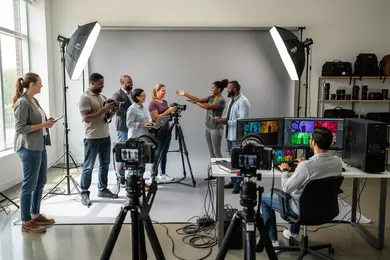
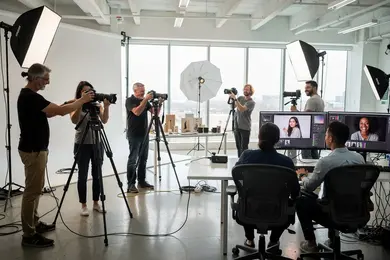
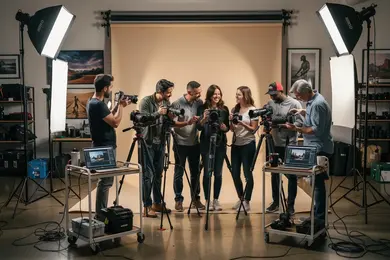
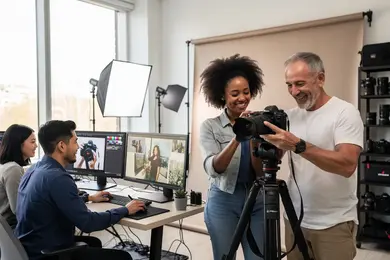
2027 Best Online Bachelor's in Digital Photography With the Strongest Visual Storytelling Preparation

Co-Founder and Chief Data Scientist
Choosing an online bachelor's in digital photography is really a decision about portfolio quality, career fit, and creative return on investment. The U.S. Bureau of Labor Statistics reported a $42,520 median annual wage for photographers in May 2024, but earnings vary widely by specialization, client base, and visual storytelling skill.
This guide is for students comparing accredited online programs that build narrative, documentary, editorial, commercial, and multimedia photography skills. You will learn how programs differ, what they cost, which schools stand out, and how to choose one that supports your career goals.
Key Things You Should Know
- Strong online digital photography bachelor's programs usually require 120 credits and combine technical image-making, editing, lighting, visual culture, ethics, business practices, and portfolio-based storytelling projects.
- College Board's 2024 data shows average published tuition and fees of $11,610 for in-state public four-year colleges, $30,780 for out-of-state public colleges, and $43,350 for private nonprofit four-year colleges, so total cost can vary sharply by school type and residency rules.
- BLS May 2024 data places the median annual wage for photographers at $42,520, making portfolio strength, internships, freelance business skills, and niche specialization especially important for ROI.
What is an online bachelor's in digital photography with a visual storytelling focus?
An online bachelor's in digital photography with a visual storytelling focus is a four-year undergraduate degree that teaches students how to create technically strong images that communicate ideas, emotions, events, identities, brands, or social issues. The "digital photography" part refers to camera operation, lighting, file management, editing software, color workflow, studio practice, and digital output. The "visual storytelling" part adds sequencing, narrative structure, documentary ethics, audience analysis, captions, multimedia presentation, and portfolio development.
These programs usually lead to a BA, BS, or BFA. A BA may include more liberal arts and communication coursework, a BS may emphasize applied digital media or production workflows, and a BFA usually provides the most intensive studio sequence. For students who want careers in editorial photography, documentary work, commercial campaigns, brand content, social media imagery, or fine-art portfolios, the BFA-style path often offers the deepest critique and portfolio preparation.
The degree is a good fit for students who want structured feedback, a broad creative foundation, and a credential that can support entry into media, marketing, arts, or graduate study. It may be less efficient for learners who only need one technical skill, such as product lighting or Lightroom editing, because a certificate, workshop sequence, or associate degree may cost less and take less time.
Students should also understand that photography careers are portfolio-driven. A degree can create discipline, mentorship, and access to critique, but it does not replace the need to publish work, build client relationships, understand usage rights, and keep improving a body of work after graduation.
How does an online digital photography degree compare to campus-based programs?
Online and campus-based digital photography programs can lead to similar learning outcomes, but they differ in how students access equipment, critiques, networking, and studio environments. The right format depends on how much structure, flexibility, physical studio access, and face-to-face collaboration you need.
The table below summarizes the practical trade-offs. Use it to decide whether an online format supports your learning style or whether a campus program would give you better access to facilities and peer critique.
| Factor | Online bachelor's in digital photography | Campus-based photography bachelor's | Best fit |
| Schedule | Often asynchronous or low-residency, making it easier to study while working | Usually requires set studio, critique, and lab times | Online works well for working adults and transfer students |
| Equipment access | Students may need their own camera, lighting, computer, and software | Students may access studios, lighting kits, printers, darkrooms, or equipment cages | Campus may be better if you need extensive shared facilities |
| Critique format | Usually conducted through discussion boards, live video, annotated files, and portfolio reviews | Often includes in-person wall critiques, studio visits, and gallery-style presentations | Online works if the program gives detailed, frequent faculty feedback |
| Networking | Can include remote internships, online exhibitions, visiting artist talks, and digital communities | May offer local gallery access, campus media roles, and in-person events | Campus may help students who need local arts-network exposure |
| Portfolio production | Strong when assignments require location scouting, self-directed shooting, sequencing, and web presentation | Strong when students benefit from controlled studio environments and in-person collaboration | Either can work if the final portfolio is cohesive and professionally reviewed |
Online learning can be especially effective for photography because students can shoot in their own communities, document real locations, and build stories around subjects they can access repeatedly. The main risk is choosing a program that is too software-focused and not demanding enough about critique, story development, editing, and final presentation.
Students comparing creative degrees should also look at how other online visual fields handle production-based learning. For example, some video game programs use portfolio milestones, team projects, and iterative critique, which are also useful signals when evaluating online photography programs.
Which accredited schools offer the best online digital photography bachelor's programs?
The best online digital photography bachelor's programs for visual storytelling are accredited, portfolio-centered, and transparent about course delivery, faculty feedback, equipment expectations, and career support. Because program names and online availability can change, students should verify each degree directly with the school before applying.
The following schools are commonly recognized for offering online or substantially online bachelor's-level photography, digital photography, or photography-focused visual arts pathways from accredited U.S. institutions. The comparison emphasizes storytelling preparation rather than name recognition alone.
| School | Online photography-related bachelor's option | Institutional accreditation | Why it stands out for visual storytelling | Best for |
| Southern New Hampshire University | BA in Digital Photography | New England Commission of Higher Education | Accessible online format with courses in digital imaging, media communication, and portfolio development | Working adults, transfer students, and students seeking flexible pacing |
| Arizona State University Online | BFA pathway in art with digital photography emphasis or related online art study, subject to current catalog availability | Higher Learning Commission | Strong university-scale online infrastructure and art-focused coursework that can support concept-driven image-making | Students who want a large public university environment online |
| Academy of Art University | BFA in Photography with online study options | WASC Senior College and University Commission | Studio-oriented curriculum with commercial, fine-art, lighting, and portfolio components | Students seeking intensive art-school-style critique online |
| Rocky Mountain College of Art + Design | BFA in Photography with online options, subject to current catalog availability | Higher Learning Commission | Emphasis on visual arts foundations, critique, professional practice, and portfolio presentation | Students who want a dedicated art and design school environment |
| Savannah College of Art and Design | Photography-related undergraduate study through SCADnow or other delivery formats, subject to current catalog availability | Southern Association of Colleges and Schools Commission on Colleges | Strong creative-industry orientation, visual culture, editorial sensibility, and professional presentation expectations | Students seeking a highly design- and arts-focused brand environment |
When comparing these schools, do not rely only on the degree title. A program called "digital photography" may be more applied and career-oriented, while a "photography" BFA may be more studio-intensive. A broader digital media degree can also work if it includes enough photography, storytelling, editing, and portfolio review.
Students who are still choosing among creative disciplines may also compare photography with adjacent design-heavy fields. For example, reviewing best online architecture schools can help clarify whether you prefer image-based storytelling, spatial design, or a more technical design pathway.
What core courses and visual storytelling projects are included in these programs?
Strong online digital photography programs go beyond camera settings. They teach students how to build a coherent visual argument: what the viewer should notice, why the sequence matters, and how the final work should be published or presented.
Most programs include a mix of foundations, technical production, history and theory, business preparation, and capstone work. The table below shows common course areas and why each one matters for visual storytelling.
| Course or project area | What students usually learn | Why it matters for storytelling |
| Digital camera and exposure | Manual controls, lenses, depth of field, motion, metering, and file formats | Technical control helps students make intentional visual choices instead of relying on accidents |
| Lighting and studio practice | Natural light, strobes, modifiers, portrait setups, product lighting, and location lighting | Lighting shapes mood, directs attention, and creates consistency across a series |
| Digital editing workflow | RAW processing, color correction, retouching, asset management, and output standards | Editing decisions affect tone, credibility, pacing, and professional polish |
| History of photography and visual culture | Documentary traditions, fine-art movements, media representation, and image ethics | Students learn how images carry cultural meaning and how to avoid shallow or exploitative storytelling |
| Documentary or editorial photography | Research, access, interviewing, sequencing, captions, and publication context | This is often the core storytelling course for students interested in journalism, nonprofits, or social issues |
| Commercial and brand photography | Client briefs, product imagery, campaign concepts, usage rights, and visual consistency | Students learn to tell stories that support brand identity and audience behavior |
| Professional portfolio or capstone | Artist statements, web portfolios, final image sequence, critique, and presentation | The capstone becomes the clearest evidence of readiness for internships, clients, or graduate study |
Students should look for assignments that require multiple images, not just single "best shots." Visual storytelling preparation is strongest when programs ask students to research a subject, revisit it over time, edit down a sequence, justify their choices, and present the work to a defined audience.
Examples of high-value portfolio projects include the following. These projects are useful because they show employers and clients that a graduate can sustain a concept from idea to final presentation.
- A documentary photo essay about a community, workplace, family system, cultural event, or social issue
- An editorial portrait series with consistent lighting, captions, and publication-style sequencing
- A commercial campaign that includes product images, lifestyle images, a client brief, and usage strategy
- A multimedia story that combines still images with audio, text, short video, or web presentation
- A final capstone portfolio with an artist statement, project rationale, contact sheets, edits, and final sequence
Current programs should also address AI-assisted editing and generative imagery. Students do not need to reject these tools, but they should learn disclosure norms, copyright concerns, authenticity standards, and when AI use can undermine trust in documentary, journalistic, or client-based work.
What admission requirements and application materials do these online programs expect?
Admission requirements vary by school, but most online bachelor's programs in digital photography are designed for first-year applicants, transfer students, and adult learners. Some are open-admission or test-optional, while more selective art schools may require portfolio review.
Before applying, students should prepare both academic and creative materials. The list below shows common requirements and why they matter in an online photography application.
- High school diploma, GED, or equivalent credential for first-year admission
- Official transcripts from high school and any colleges previously attended
- Transfer credit evaluation, especially for students with associate degrees or prior general education coursework
- Application form and fee, unless the school offers a fee waiver
- Personal statement or goals statement explaining creative interests, career goals, and readiness for online study
- Portfolio, if required, showing original images, visual consistency, experimentation, and basic technical control
- English proficiency documentation for applicants whose prior education was not completed in English
- Technology readiness, including access to a digital camera, reliable internet, editing software, storage, and a computer that can handle image files
A portfolio requirement is not always a barrier. For many undergraduate programs, schools are not expecting fully professional work. They want evidence of curiosity, persistence, point of view, and the ability to respond to critique. Applicants who do not yet have a strong portfolio can strengthen their submission by creating a short series around one theme instead of submitting unrelated images.
Transfer students should pay close attention to credit policies. A school may accept general education credits but still require most studio and upper-division photography courses to be completed in residence. That can affect both cost and graduation timeline.
How long do online digital photography bachelor's programs take, and what do they cost?
Most online bachelor's degrees in digital photography require about 120 credits. Full-time students commonly finish in four years, while transfer students with an associate degree or substantial prior credits may finish faster. Part-time students may need longer, especially if they are balancing freelance work, caregiving, or full-time employment.
Cost depends on tuition rate, transfer credits, fees, equipment, software, and whether the school charges different rates by residency. College Board's 2024 figures provide a useful national benchmark for published tuition and fees at four-year institutions:
- $11,610 for in-state students at public four-year colleges
- $30,780 for out-of-state students at public four-year colleges
- $43,350 for students at private nonprofit four-year colleges
These figures are not specific to photography programs, but they help frame the scale of the decision. Online programs may charge per-credit tuition, technology fees, portfolio fees, or flat online rates. Students should calculate total program cost rather than comparing only the advertised per-credit price.
The table below shows common cost factors that are especially important in photography programs. Use it to avoid underestimating the real price of earning the degree online.
| Cost factor | Why it matters | How to evaluate it |
| Tuition model | Per-credit, flat-rate, residency-based, and online-specific rates can produce very different totals | Ask for a full degree plan showing remaining credits and estimated total tuition |
| Transfer credits | Accepted credits can reduce time and cost, but studio requirements may limit transferability | Request an official transfer evaluation before committing |
| Camera and lenses | Students often need dependable equipment for repeated assignments | Ask whether entry-level gear is acceptable or whether specific models are required |
| Computer and storage | RAW image files, editing software, backups, and video elements can require more computing power | Compare the school's technical specifications with your current setup |
| Software | Image editing, layout, video, and portfolio tools may require subscriptions | Check whether software is included, discounted, or purchased separately |
| Printing and exhibition | Some portfolios require professional prints, books, or display materials | Ask whether final projects can be submitted digitally or require physical output |
Financial aid can include federal grants, loans, institutional scholarships, employer tuition benefits, military benefits, and payment plans for eligible students. The most important first step is confirming that the institution is accredited and eligible to participate in federal student aid programs.
What careers can graduates pursue in digital photography and visual storytelling fields?
Graduates with a bachelor's in digital photography can pursue creative, editorial, commercial, marketing, nonprofit, and media production roles. The degree is most valuable when it produces a strong portfolio and teaches students how to work with clients, deadlines, ethical constraints, and audience expectations.
The table below connects common career paths with the kind of storytelling preparation employers or clients often expect. Job titles vary by organization, and many photographers combine employment, contract work, and freelance projects.
| Career path | Typical responsibilities | Visual storytelling skills that matter |
| Editorial photographer | Create images for magazines, digital publications, news features, and long-form stories | Research, caption accuracy, sequencing, ethics, and quick adaptation to assignment needs |
| Commercial photographer | Produce product, lifestyle, fashion, food, or advertising images for brands and agencies | Client brief interpretation, lighting consistency, art direction, and brand alignment |
| Documentary photographer | Build long-term visual stories about communities, issues, institutions, or events | Access, trust-building, subject care, narrative pacing, and contextual captions |
| Social media content creator | Create still images, short-form visual assets, campaigns, and platform-specific content | Audience awareness, visual hooks, platform formatting, and fast editing workflows |
| Photo editor or digital asset coordinator | Select, organize, caption, license, and prepare images for publication or archives | Image judgment, metadata, rights awareness, consistency, and visual sequencing |
| Multimedia producer | Combine photography with video, audio, text, and web presentation | Cross-platform story design, pacing, interviewing, and publication planning |
| Fine-art photographer | Create exhibition, gallery, book, or grant-based bodies of work | Concept development, artist statements, critique, curation, and long-term project discipline |
Graduates can improve their options by pairing photography with a second skill. Marketing analytics, UX content, video editing, writing, Spanish, nonprofit communication, or web design can make a portfolio more useful to employers. For students interested in bilingual media or cross-cultural storytelling, an online degree in Spanish can complement photography work in journalism, education, travel, healthcare communication, or community-based projects.
This degree may not be the best path for students who want a highly predictable employment pipeline. Photography rewards persistence, networking, adaptability, and business skill. Students who prefer structured licensure, standardized job ladders, or guaranteed employer demand may want to compare photography with other applied fields before enrolling.
What are typical salaries and earning potential for digital photographers and visual storytellers?
Salary potential in digital photography depends heavily on specialization, location, employment type, reputation, portfolio quality, and business model. A salaried content role, freelance wedding business, editorial assignment practice, and commercial studio career can all produce different income patterns.
BLS May 2024 data reported a $42,520 median annual wage for photographers. This number is useful as a national benchmark, but it does not capture all freelance income variability, regional pricing, client budgets, or the higher earnings possible in specialized commercial markets.
The table below shows how to think about earning potential by role type without assuming that a degree creates a guaranteed outcome.
| Role category | Common income pattern | What can raise earning potential |
| Entry-level staff photographer or content assistant | More predictable pay but often limited creative control | Reliable editing speed, organization, captioning, and ability to cover varied assignments |
| Freelance photographer | Variable income based on bookings, pricing, referrals, and repeat clients | Clear niche, contracts, licensing knowledge, marketing, and client communication |
| Commercial or advertising photographer | Can be project-based and competitive, with higher upside for strong specialists | Lighting mastery, production planning, agency relationships, and polished campaign work |
| Photo editor or visual content specialist | Often tied to media, marketing, publishing, or institutional communication budgets | Strong judgment, metadata skills, rights management, and brand consistency |
| Multimedia storyteller | May combine photography, video, writing, audio, and digital publishing | Cross-platform production, narrative structure, and comfort with emerging tools |
Students should compare photography salaries with other fields using role-specific data, not broad assumptions about creative work. For example, looking at a technical healthcare pathway such as autopsy tech salary information can help students see how education costs, job structure, and income predictability differ across career paths.
For ROI, the smartest question is not "Will this degree pay for itself?" but "Will this program help me build a portfolio, network, business model, and technical skill set that match the work I want?" Students who plan to freelance should also budget for insurance, taxes, equipment replacement, contracts, marketing, and unpaid business development time.
How is the job outlook for digital photography professionals in the creative industries?
The job outlook for digital photography professionals is mixed rather than uniformly strong or weak. Demand for images remains high across marketing, e-commerce, media, nonprofits, education, events, and social platforms, but competition is intense because digital tools have lowered barriers to entry.
BLS projects photographer employment to grow more slowly than many high-demand technical fields over the 2024 to 2034 period. For readers, the practical takeaway is that a photography degree should be chosen for portfolio development and career strategy, not because the occupation has a broad labor shortage.
Several trends shape the current market. Students should understand these before committing to a program because they affect what skills will remain valuable after graduation.
- AI-assisted editing is changing production workflows: Employers may expect faster retouching, masking, image selection, and content adaptation, but documentary and journalistic work still require ethical transparency and authentic source material.
- Short-form and platform-specific content are expanding expectations: Many clients want photographers who can also shoot vertical video, create thumbnails, crop for multiple platforms, and understand campaign goals.
- Brands want a consistent visual identity: Commercial photographers increasingly need to understand mood boards, audience segments, content calendars, and usage rights.
- Freelance competition remains high: Strong storytelling, niche expertise, client service, and business systems can matter as much as technical camera skill.
- Local documentary and community storytelling still have value: Nonprofits, universities, hospitals, civic groups, and small businesses often need authentic stories that generic stock images cannot provide.
Graduates who combine photography with editing, motion, writing, marketing, web publishing, or data-informed content strategy may be better positioned than those who offer only general image capture. The strongest programs recognize this by including portfolio strategy, professional practice, and multimedia storytelling.
How can students evaluate and choose a reputable online digital photography program?
Choosing a reputable online digital photography program requires more than scanning rankings. Students should evaluate accreditation, curriculum depth, faculty feedback, portfolio outcomes, cost, student support, and whether the program's creative direction matches their goals.
Use the following steps before enrolling. They are designed to help you avoid costly mistakes and identify programs that can genuinely support visual storytelling growth.
- Confirm institutional accreditation through the school's official accreditation page and recognized accreditor records.
- Review the current catalog to verify that the photography bachelor's degree is available online and accepting students.
- Compare required courses, not just electives, to make sure storytelling, critique, lighting, editing, ethics, and portfolio work are built into the degree.
- Ask whether the faculty provides individualized critique through video, annotations, live sessions, or portfolio reviews.
- Request a full cost estimate that includes tuition, fees, software, equipment, printing, and remaining credits after transfer evaluation.
- Look for recent student portfolios, exhibitions, capstone examples, internship information, or alumni outcomes.
- Ask how the program teaches professional practice, including contracts, licensing, client communication, copyright, and business basics.
- Check whether the program supports your intended niche, such as editorial, documentary, commercial, fine art, social media, or multimedia storytelling.
Common red flags include vague portfolio requirements, little evidence of critique, unclear equipment expectations, outdated software workflows, no information about faculty experience, and admissions pressure before you receive a transfer or cost estimate. Be cautious if a school emphasizes the creative lifestyle but says little about assignments, student work, or professional preparation.
A reputable program should help you answer three questions clearly: what will I be able to make, who will review it, and how will the final portfolio help me compete for the work I want? If the admissions process cannot answer those questions, keep comparing options.
Other Things You Should Know About Digital Photography
While not mandatory, having a professional camera enhances learning by allowing students to apply techniques in real-world settings. Many programs in 2027 provide guidance on the best camera options, ensuring students can effectively practice and develop their visual storytelling skills.
Yes, but you should target roles that use photography within an organization, such as content specialist, communications assistant, photo editor, marketing production associate, or multimedia coordinator. Staff roles may still require portfolio evidence and strong editing skills.
Yes. Many 2027 online bachelor’s programs end with a capstone that combines a photo series, written artist statement, and visual narrative project. Programs often require 120 credit hours total, with the capstone completed in the final term and reviewed by faculty for technical and storytelling quality.
References
- Imagining a Career in Creative & Media Arts https://www.futuresforall.org/post/imagining-a-career-in-creative-media-arts
- Photography Course Toronto: Online Training vs In-Person School Comparison https://www.canadianphotographyschool.ca/blog/photography-course-toronto-online-vs-inperson-comparison/
- Introduction to Visual Storytelling https://collab.sundance.org/catalog/Introduction-to-Visual-Storytelling
- Online Photography Classes, Photography Courses https://www.sessions.edu/online-classes/photography-courses/
- How to Choose the Right Photography Program https://nossi.edu/how-to-choose-the-right-photography-program/
- Networking in Suffolk https://icanbea.org.uk/app/explore/sectors/film-video-photography-72/
- Computer graphic arts - digital photography https://www.starkstate.edu/academics/explore-all-programs/digital-photography-major/
- Digital Camera Recommendations for Photography Students https://collegeforartsandtech.com/digital-camera-recommendations-for-students/
- What Can You Do With A Photography Degree? - What Career Live https://www.whatcareerlive.co.uk/what-can-you-do-with-a-photography-degree/