2027 Best Online Bachelor's in Digital Photography With Capstone Project Support

Co-Founder and Chief Data Scientist
Choosing an online photography bachelor's is partly an art-school decision and partly a career-investment decision. The U. S. Bureau of Labor Statistics reports that photographers had a median annual wage of about $43,000 in May 2024, which makes portfolio quality, specialization, and career fit especially important. This guide is for students comparing accredited online digital photography degrees with capstone support. You will learn how programs work, what they cost, what equipment you need, and how to judge whether a degree can help you build a stronger creative career.
Key Things You Should Know
- The strongest online digital photography bachelor's programs combine regional or national institutional accreditation, studio critique, image-editing instruction, professional portfolio development, and a capstone project that can be shown to employers or clients.
- College Board's 2024 pricing data shows published annual tuition and fees of $11,610 for in-state public four-year colleges and $43,350 for private nonprofit four-year colleges, so transfer credits and equipment costs can materially change total ROI.
- BLS 2024 wage data places photographers near the low-to-mid $40,000 range nationally, so graduates often improve prospects by pairing photography with editing, branding, e-commerce, social media content, video, or design skills.
What is an online bachelor's in digital photography with a capstone project?
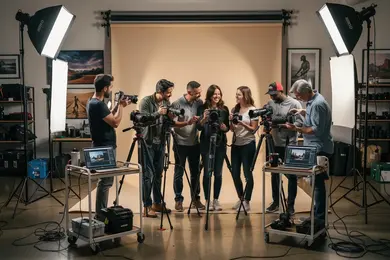
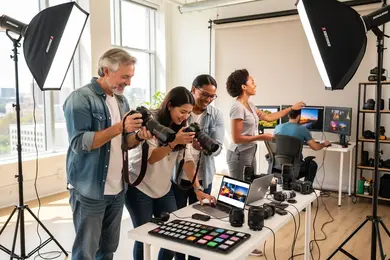
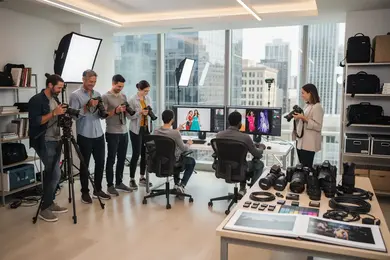
An online bachelor's in digital photography is an undergraduate degree that teaches camera operation, lighting, composition, digital editing, visual storytelling, art history, professional practice, and portfolio development through a virtual learning platform. Students usually complete asynchronous coursework, live critiques, peer reviews, instructor feedback, and project-based assignments that require them to shoot and edit original work in their own location.
The capstone project is the culminating academic and professional project. Instead of taking only a final exam, students typically produce a cohesive body of photographic work, write an artist or project statement, document their creative process, and present a polished portfolio. Strong capstone support may include faculty mentoring, milestone reviews, portfolio critique, career coaching, exhibition-style presentation, and feedback on how to tailor work for commercial, editorial, fine-art, or freelance markets.
This degree is usually a good fit for students who want structured creative training, a credential, and a guided portfolio-building process. It may not be the best first choice for someone who already has a strong client base, needs only one technical skill such as Lightroom editing, or wants the lowest-cost path into freelance work. In those cases, a certificate, mentorship, community college coursework, or focused workshops may be more efficient.
Because photography overlaps with design, advertising, social media, and digital publishing, some students compare photography programs with a graphic design bachelor degree. That comparison can be useful if your long-term goal is brand identity, digital campaigns, UX visuals, or creative direction rather than primarily image capture.
How does an online digital photography bachelor's compare to a campus-based program?
Online and campus-based photography degrees can cover similar concepts, but the learning experience differs. The best choice depends on how much equipment access, scheduling flexibility, in-person critique, and local networking you need.
The table below summarizes the main trade-offs. Use it to identify which format matches your learning style, work schedule, and access to studio resources.
| Factor | Online digital photography bachelor's | Campus-based photography bachelor's |
| Schedule | Often better for working adults, parents, military students, and transfer students because many courses are asynchronous. | Works well for students who can attend scheduled studio sessions, critiques, and labs in person. |
| Studio access | Students may need to create home or local shooting setups and rent specialized spaces when needed. | Students may have easier access to lighting studios, darkrooms, print labs, and equipment checkout. |
| Critique experience | Critiques happen through uploaded images, video meetings, annotated feedback, and discussion boards. | Critiques often happen in real time with classmates viewing prints or projected work together. |
| Networking | Networking depends heavily on virtual events, local internships, freelance work, and proactive outreach. | Networking may be more immediate through campus exhibitions, visiting artists, and local creative communities. |
| Best fit | Students with self-discipline, local shooting access, and a need for flexibility. | Students who want immersive studio culture and frequent in-person collaboration. |
Online programs can be especially effective when they require frequent image submission, detailed critique, and iterative revisions. A weak online program, by contrast, may rely too heavily on readings and discussion posts without enough production feedback. Ask admissions staff how many major projects you will complete, how often instructors critique work, and whether the capstone includes multiple review stages before final submission.
How do I choose an accredited, high-quality online digital photography program?
Start with accreditation. For most students, institutional accreditation is the baseline because it affects federal financial aid eligibility, transfer credit, graduate school options, and employer trust. Programmatic art or design accreditation can be a bonus, but it is not always required for photography careers.
A strong program should also show evidence that students build market-ready portfolios, not just complete isolated assignments. Before enrolling, review the school's curriculum, faculty backgrounds, student work, capstone process, career services, transfer policies, and total cost of attendance.
Use the following checklist when comparing schools, especially if you are choosing among several "best" online bachelor's options:
- Confirm that the institution is accredited by an agency recognized by the U.S. Department of Education or the Council for Higher Education Accreditation.
- Ask whether the photography curriculum includes lighting, digital workflow, color management, retouching, visual storytelling, copyright, business practices, and portfolio review.
- Request details on capstone support, including faculty mentoring, required milestones, critique frequency, presentation format, and career-facing deliverables.
- Check whether transfer credits, prior learning, military credit, or an associate degree can reduce time and cost.
- Review faculty portfolios and professional experience to see whether instructors work in areas that match your goals.
- Ask career services how they support creative students, including resume review, portfolio websites, internship searches, freelance preparation, and alumni networking.
- Look for transparent tuition, fees, software requirements, equipment expectations, and refund policies before signing an enrollment agreement.
One common mistake is choosing a program based only on attractive sample images or a broad university ranking. A better approach is to evaluate fit: the best online photography bachelor's for a future wedding photographer may not be the best program for a student interested in documentary, product, sports, or fine-art photography.
It can also help to compare how different online degrees structure flexibility and cost. For example, students exploring another language-driven creative or media path may review an online Spanish degree to understand how accelerated formats, transfer credits, and career-focused curricula vary across distance-learning programs.
What will I learn in a digital photography bachelor's curriculum and capstone?
A digital photography bachelor's curriculum usually blends technical image production, visual theory, digital editing, professional communication, and business preparation. The goal is not only to teach students how to take better photos, but also to help them develop a repeatable creative process and a coherent visual identity.
The table below shows common curriculum areas and why they matter. Course names vary by school, but high-quality programs usually cover these competencies in some form.
| Curriculum area | What students typically learn | Why it matters |
| Camera and exposure control | Aperture, shutter speed, ISO, lenses, file formats, metering, and manual shooting. | Builds technical consistency across commercial, editorial, portrait, and fine-art work. |
| Lighting | Natural light, studio strobes, continuous lighting, modifiers, and lighting ratios. | Helps students control mood, product detail, skin tone, and visual clarity. |
| Digital editing | RAW processing, retouching, color correction, compositing, export settings, and archiving. | Supports professional delivery standards and efficient post-production workflows. |
| Visual storytelling | Sequencing, concept development, documentary methods, narrative structure, and audience analysis. | Turns individual images into stronger series, campaigns, or portfolios. |
| History and criticism | Major movements, ethical debates, visual culture, and critique vocabulary. | Helps students explain creative choices and position their work professionally. |
| Business and professional practice | Pricing, contracts, client communication, copyright, releases, branding, and portfolio presentation. | Prepares students for freelance, agency, studio, or in-house creative work. |
| Capstone | A final image series, portfolio, presentation, written rationale, and revision process. | Creates evidence of skill, direction, and readiness for employers, clients, or graduate programs. |
Capstone support is valuable because photography hiring is often evidence-based. A transcript tells employers what you studied; a capstone portfolio shows how you see, plan, shoot, edit, revise, and communicate. The most useful capstones are specific enough to show a point of view and polished enough to be adapted for a website, interview, exhibition, or client pitch.
What admission requirements and application materials do these online programs expect?
Admission requirements vary by school, but most online bachelor's programs require proof of high school completion or prior college coursework. Some programs are open to beginners, while others ask for a portfolio or creative sample to assess readiness for upper-level studio work.
Applicants should prepare the materials below early because creative programs often review both academic readiness and visual potential:
- High school transcript, GED documentation, or official college transcripts for transfer applicants.
- Online application and application fee, unless the school offers a waiver.
- Personal statement describing creative interests, career goals, and reasons for choosing digital photography.
- Portfolio or sample images if required, usually submitted digitally with brief descriptions.
- Resume or activity list, especially for adult learners with freelance, military, studio, media, or design experience.
- FAFSA submission if the student plans to use federal financial aid at an eligible institution.
Transfer applicants should ask for a degree audit before enrolling. A generous transfer policy can shorten the path to graduation, but only if previous credits apply to general education, electives, or major requirements. Credits that transfer only as unused electives may not reduce your timeline as much as expected.
A common red flag is an admissions process that pushes rapid enrollment before you have reviewed accreditation, total cost, portfolio expectations, and technology requirements. Take time to compare written policies, not just verbal assurances from an enrollment representative.
How long do online digital photography bachelor's programs take and what do they cost?
Most bachelor's degrees require about 120 credits. Full-time students often finish in about four years, while transfer students with an associate degree or substantial prior credits may finish sooner. Part-time students may take longer, but the flexibility can make the degree more manageable for working photographers or career changers.
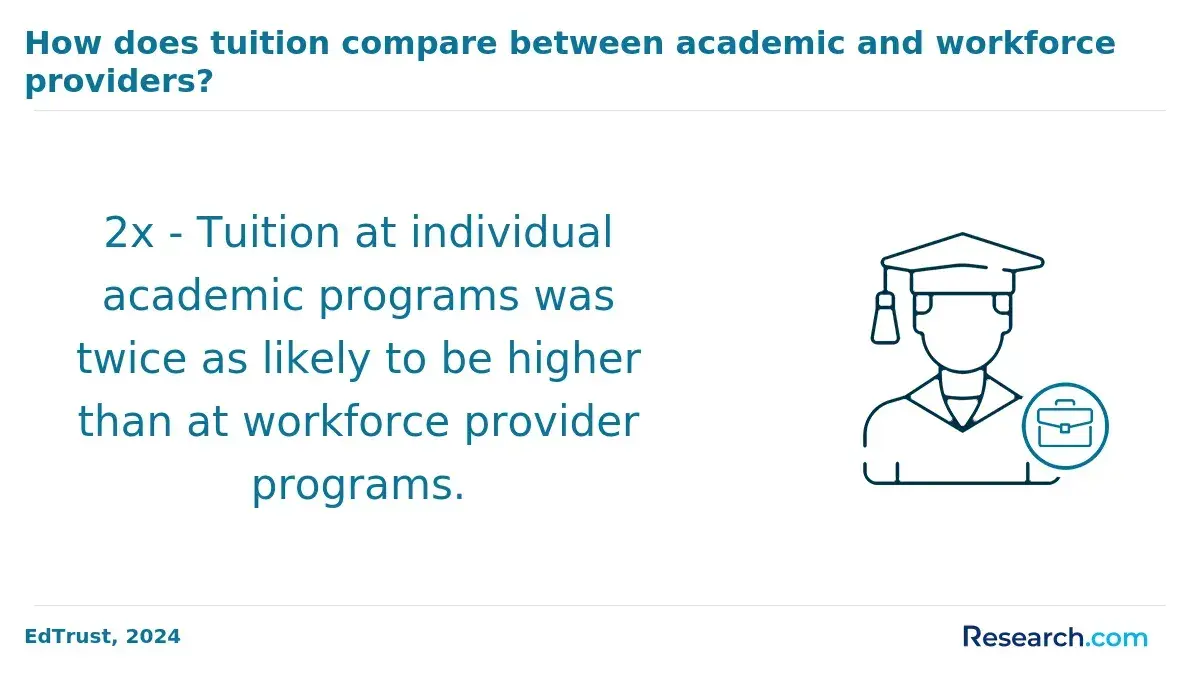
Cost depends on institution type, residency, transfer credit, course load, equipment, software, and fees. College Board's 2024 Trends in College Pricing data reports average published tuition and fees of $11,610 for in-state students at public four-year institutions and $43,350 at private nonprofit four-year institutions for the 2024-25 academic year. That gap does not automatically mean one option has better ROI, but it does show why students should compare net price after grants, scholarships, employer support, and transfer credits.
The table below breaks down major cost and timeline variables. It can help you estimate total investment beyond the advertised per-credit tuition rate.
| Variable | What to check | Why it affects total cost |
| Transfer credits | Maximum credits accepted, minimum grade requirements, and how credits apply to the major. | Accepted credits can reduce tuition and time, but only if they satisfy degree requirements. |
| Tuition model | Per-credit tuition, flat-rate tuition, residency rules, and online student rates. | Flat-rate tuition may benefit full-time students, while per-credit tuition may help part-time learners. |
| Fees | Technology, graduation, portfolio, lab, proctoring, and course-material fees. | Fees can increase the real cost beyond the headline tuition rate. |
| Equipment | Camera body, lenses, lighting, storage, calibration tools, and backup drives. | Photography students may need to buy or upgrade gear during the program. |
| Software | Photo-editing, layout, portfolio, cloud storage, and collaboration tools. | Monthly subscriptions add ongoing costs throughout enrollment. |
| Pace | Full-time, part-time, accelerated, or completion-degree options. | Faster programs may reduce opportunity cost, while part-time study may reduce financial strain per term. |
To control costs, ask schools for a full program map and a written estimate of tuition, required fees, and expected equipment. Also ask whether the school offers institutional scholarships for online students, creative portfolio scholarships, payment plans, or credit for prior learning.
What technology, software, and equipment do I need for online digital photography study?
Online photography students need more than a laptop and internet connection. Because the degree is production-based, you should plan for camera equipment, image-editing software, storage, and a workspace where you can shoot assignments reliably.
Exact requirements vary, but most programs expect students to have access to the following tools:
- A DSLR or mirrorless camera with manual exposure control and RAW capture.
- At least one versatile lens, with additional lenses depending on portrait, product, documentary, or event assignments.
- A computer that can run current image-editing software smoothly, especially when handling large RAW files.
- Photo-editing and asset-management software such as Adobe Lightroom, Photoshop, or school-approved alternatives.
- External storage and backup systems to protect original files, edited files, and capstone work.
- Reliable broadband internet for uploading large image files, joining critiques, and accessing learning platforms.
- Basic lighting equipment or access to lighting setups for portrait, product, or studio-style assignments.
- A calibrated or color-accurate monitor if the program emphasizes print, commercial color, or portfolio presentation.
AI is also changing creative workflows. Students may encounter AI-assisted masking, noise reduction, generative fill, metadata tagging, and image-search tools. These tools can speed up production, but ethical programs should still teach authorship, disclosure, copyright risk, consent, and the difference between editing assistance and misleading image manipulation.
If you are especially interested in the technical side of creative automation, an AI online degree may be a better fit than a photography degree. For many photographers, however, the practical goal is to understand AI tools well enough to use them responsibly in editing, workflow, marketing, and portfolio production.
What careers can a digital photography bachelor's degree prepare me for?
A digital photography bachelor's can support several creative paths, but it does not limit graduates to the job title "photographer." Many students use the degree to enter roles that combine image-making, editing, content strategy, brand storytelling, visual production, and client communication.
The table below summarizes common career directions and how the degree can support them. Actual hiring requirements vary by employer, portfolio strength, location, industry, and freelance experience.
| Career path | Typical responsibilities | How the degree helps |
| Portrait or wedding photographer | Plan shoots, direct subjects, manage lighting, edit galleries, communicate with clients, and deliver final images. | Builds technical consistency, client-ready portfolio work, and business practice knowledge. |
| Commercial or product photographer | Photograph products, food, apparel, interiors, or brand assets for advertising and e-commerce. | Develops lighting, composition, retouching, and brand-aligned visual problem-solving skills. |
| Photo editor or retoucher | Select, edit, retouch, color-correct, organize, and prepare images for publication or campaigns. | Strengthens post-production workflow, image sequencing, and quality-control skills. |
| Content creator or social media visual specialist | Produce visual assets for digital channels, campaigns, creators, nonprofits, or small businesses. | Combines photography with storytelling, branding, editing, and audience awareness. |
| Editorial or documentary photographer | Create visual stories for publications, institutions, nonprofits, or independent projects. | Supports narrative development, ethics, research, sequencing, and project presentation. |
| Studio or production assistant | Support shoots, maintain gear, set up lighting, manage files, and assist photographers or creative teams. | Provides entry-level production knowledge and a pathway to more specialized roles. |
| Creative entrepreneur | Run a photography business, market services, price projects, manage contracts, and build client relationships. | Combines portfolio development with business, branding, and professional practice coursework. |
Students who want stable full-time employment should pay close attention to adjacent skills. Employers increasingly value photographers who can also edit video, manage digital assets, write captions, understand brand guidelines, create short-form content, or coordinate production logistics. Freelancers, meanwhile, need pricing discipline, contracts, marketing, tax planning, and client-service skills in addition to technical ability.
What salary ranges and job outlook can digital photography graduates expect?
Salary outcomes in photography vary widely because the field includes freelancers, part-time creators, in-house studio employees, media workers, commercial specialists, and self-employed business owners. BLS May 2024 wage data places the national median annual wage for photographers at roughly $43,000, which is useful as a baseline but not a prediction for any individual graduate.
Job outlook should also be interpreted carefully. BLS projections show modest growth for photographers over the current 10-year projection period, but competition can be strong because many people enter the field through freelance, self-taught, or part-time routes. A bachelor's degree may help most when it produces a stronger portfolio, better workflow, a clearer niche, and broader digital-production skills.
The table below gives context for several related creative roles. Use it as a labor-market snapshot, not as a guarantee of earnings after graduation.
| Role category | Salary context | What can improve competitiveness |
| Photographer | BLS 2024 data places the national median near the low-to-mid $40,000 range. | Specialization, client relationships, lighting skill, retouching ability, and a polished portfolio. |
| Graphic designer | BLS 2024 data places the national median above typical photographer wages. | Brand systems, layout, typography, digital design tools, and cross-disciplinary portfolio work. |
| Art director | BLS 2024 data shows a higher median, but these roles usually require substantial experience. | Leadership, campaign strategy, visual direction, team management, and advanced portfolio evidence. |
| Media or content production specialist | Pay varies by employer, location, and whether the role includes video, social, or marketing duties. | Hybrid skills in photography, video, editing, analytics, and platform-specific content. |
When comparing photography with other career paths, look at wages, required education, job stability, and day-to-day work. For example, reading about autopsy tech salary can be useful if you are weighing a creative degree against a more specialized technical occupation with different training expectations and work conditions.
The practical takeaway is that photography ROI depends less on the diploma alone and more on what the program helps you produce. The strongest graduates leave with a focused portfolio, professional process, marketable niche, and enough business knowledge to pursue clients or employers strategically.
How do internships, portfolios, and capstone support strengthen employment prospects?
Internships, portfolios, and capstone projects turn coursework into evidence. In creative hiring, employers and clients usually want to see what you can make, how consistently you can make it, and whether your style fits their needs. A degree program with strong career support should help you translate academic projects into professional materials.
To get the most value from an online photography bachelor's, treat career preparation as a multi-step process rather than something you start after graduation:
- Choose a career direction early enough to shape elective choices, capstone topic, and portfolio style.
- Build a portfolio website before the final year so you can revise it based on faculty and employer feedback.
- Seek internships, assistant roles, campus media work, nonprofit projects, or freelance assignments that produce real client-facing examples.
- Use the capstone to create a cohesive series rather than a random collection of unrelated images.
- Document your process with contact sheets, lighting diagrams, edits, captions, and project statements when appropriate.
- Ask faculty and career advisors to review your resume, artist statement, pricing language, and interview talking points.
- Update your portfolio for the audience you want, such as commercial clients, editorial employers, graduate admissions committees, or local small businesses.
Common mistakes include showing too many average images, mixing unrelated styles without explanation, ignoring file organization, skipping model releases, and treating the capstone as only a school requirement. A stronger approach is to make every major assignment part of a professional pipeline: shoot, edit, critique, revise, sequence, publish, and explain.
Before enrolling, ask whether the program has internship partnerships, virtual portfolio reviews, alumni critiques, capstone exhibitions, or employer panels. Online students can build strong networks, but they often need a program that provides structured touchpoints and not just self-directed job-search advice.
Other Things You Should Know About Digital Photography
A photography certificate provides basic skills but may not offer the in-depth knowledge and project experience of a bachelor's degree. A bachelor's degree in digital photography, particularly one with capstone project support, offers comprehensive training, advanced techniques, and portfolio-building advantages crucial for career advancement.
Yes. Many students specialize through electives, project choices, internships, and capstone topics. Common specialties include portrait, wedding, commercial product, documentary, sports, fashion, food, travel, real estate, and fine-art photography.
Most programs expect students to use Adobe Photoshop and Lightroom, plus file-management tools for RAW editing, color correction, and asset organization. Some courses also require basic video or web-portfolio software. A capstone usually includes a polished portfolio built from edited images, often submitted in the final semester.
References
- Admission Requirements & Application Process for Studying Abroad: Detailed Explanation https://blogs.tclglobal.co.uk/admission-requirements/
- ASU debuts first online photography degree - The Arizona State Press https://www.statepress.com/article/2018/08/spartcult-asu-now-offering-digital-photography-degree-online
- Top 10 Photography Courses Online: Best for Beginners 2025 https://www.upskillist.com/blog/top-10-online-photography-courses-for-beginners/
- The Best Digital Tools For Your Photography Business https://elizabethnwansi.co/top-10-best-digital-tools-for-your-photography-business-blog/
- Should you Study Photography at College or are There Better Options Now? https://digital-photography-school.com/should-you-study-photography-at-college-or-are-there-better-options-now/
- Learn Digital Photography https://www.acs.edu.au/courses/digital-photography-227.aspx
- Top 5 reasons to study a photography degree online https://www.falmouth.ac.uk/news/top-5-reasons-study-photography-degree-online
- Digital Photography Equipment: What's in my bag? https://nature-photography-central.com/digital-photography-equipment-whats-in-my-bag.html
- 14 days to try NYIP risk-free https://www.nyip.edu/
- Guide to Online Masters Applications - MIA Digital University https://miauniversity.com/guide-to-online-masters-applications/