2027 Highest-Paying LPN Specialties

Co-Founder and Chief Data Scientist
LPN specialties provide diverse pathways within nursing, including hospice, dialysis, emergency, and travel care. In 2024, 651,400 licensed practical and vocational nurses worked across the US, but salaries vary significantly by specialty (U.S. BLS, 2025). By identifying the roles that pay the most, LPNs can strategically advance their careers while building specialized skills.
In this article, I will discuss the highest-paying LPN specialties, highlighting salary data, required skills, and emerging trends. I will also define how to identify lucrative opportunities, develop in-demand competencies, and make informed choices to maximize both earnings and professional growth.
What are the benefits of pursuing an LPN specialty?
- Pursuing an LPN specialty offers higher earning potential, as advanced skills in areas like dialysis, hospice, or emergency care command top salaries.
- Specialized roles provide professional fulfillment, allowing nurses to deliver focused, high-impact care while deepening clinical expertise.
- The profession supports career mobility, with pathways into leadership, advanced certifications, or transition programs such as LPN-to-RN for those seeking long-term growth.
- What are the highest-paying LPN specialties for 2027? Highest-Paying LPN
- How long does it take to train for a high-paying LPN specialty? How long does it take to train for a high-paying LPN specialty?
- Which employers pay LPNs the highest salaries? LPN Employers
- What factors determine LPN salaries in different specialties? LPN Salary Factors
- What strategies can LPNs use to increase their income potential? What strategies can LPNs use to increase their income potential?
- How can LPNs negotiate higher salaries and better benefits? Salary Negotiation
- What emerging trends are shaping the highest-paying LPN specialties for 2027? Emerging Trends
- What key skills help LPNs qualify for top-paying specialties? Valuable Skills
- How can further education expand career opportunities for LPNs? How can further education expand career opportunities for LPNs?
- How do advanced certifications increase earning potential for LPNs? Certifications
- What is the job outlook for LPNs in the most lucrative specialties? Job Outlook
Highest-paying LPN specialties in 2027: fast answer and comparison
If you are an LPN trying to raise your income, the decision is usually not as simple as finding the job title with the biggest number. Higher-paying LPN roles often come with trade-offs: more technical duties, evening or weekend shifts, travel, emotional intensity, stricter safety protocols, or additional certification requirements.
This guide is designed for licensed practical nurses and future LPNs comparing specialty paths, employer types, bridge programs, and salary strategies. You will learn which LPN specialties pay more, what the work actually involves, how preparation requirements differ, what factors affect compensation, and how to evaluate whether a higher-paying role is worth the schedule, stress, and training involved.
If you are not licensed yet, start with the cost side of the decision. Reviewing affordable LPN program options can help you compare tuition, fees, clinical requirements, and program format before estimating your return on investment.
Quick answer: which LPN specialty pays the most?
Among the specialties compared in this guide, dialysis LPN is the highest-paying option, with an average annual salary of $91,427 (Salary.com, 2025). Other strong-paying paths include hospice and home health, travel LPN work, emergency department roles, correctional nursing, and clinical support positions. For context, the national median annual salary for LPNs is $56,187 (Salary.com, 2025), so specialty choice, employer type, location, and schedule can meaningfully affect earnings.
| LPN specialty | Average annual salary cited | Best suited for LPNs who want | Main trade-off to consider |
| Dialysis LPN | $91,427 | A technical specialty, repeat patient contact, and one of the strongest income tracks for LPNs | Requires close patient monitoring and comfort caring for people with serious chronic kidney disease |
| Hospice and home health LPN | $59,663 | Individualized care, family education, and a more independent workday | Can involve driving, on-call coverage, emotionally difficult cases, and variable schedules |
| Travel LPN | $58,927 | Contract assignments, location flexibility, and exposure to different facilities | May require relocation, rapid adaptation, uncertain schedules, and careful contract review |
| Emergency department LPN | $58,182 | Urgent care experience, fast clinical decision support, and broad patient exposure | Work pace, patient volume, and stress levels can be high |
| Correctional facility LPN | $57,427 | Structured institutional practice and possible overtime or hazard-related compensation | Requires strict boundaries, safety awareness, and comfort working within security rules |
| Clinical support LPN | $56,105 | More predictable outpatient schedules and a routine clinical workflow | Compensation may sit closer to the overall LPN median than higher-acuity specialties |
Dialysis LPNs
Dialysis LPNs care for patients with kidney disease during dialysis treatment. Their work may include setting up or operating dialysis equipment, checking vital signs, watching for treatment reactions, recording patient changes, following facility protocols, and reinforcing education about ongoing care.
With an average annual salary of $91,427 (Salary.com, 2025), dialysis is the top-paying LPN specialty in this comparison. It is a strong fit for nurses who like focused clinical routines, technology-supported care, and long-term patient relationships. It may be less appealing if you prefer a different patient population each shift or want a role with less chronic-disease management.
Hospice and home health LPNs
Hospice and home health LPNs earn $59,663 annually (Salary.com, 2025). These nurses often monitor symptoms, assist with medications, support wound care, reinforce care plans, teach caregivers, and communicate changes to RNs, physicians, patients, and families.
Pay can improve when agencies offer mileage reimbursement, on-call pay, evening differentials, or incentives for hard-to-staff territories. Because local demand matters, comparing home health nurse pay by state can help you see where in-home care roles may offer stronger compensation.
Travel LPNs
Travel LPNs earn an average of $58,927 per year (Salary.com, 2025). They take temporary assignments in hospitals, clinics, long-term care facilities, and other healthcare settings that need short-term staffing coverage. Depending on the contract, compensation may include housing stipends, travel reimbursement, or completion bonuses.
This option can work well for LPNs who can relocate or commute temporarily, learn new systems quickly, and tolerate schedule changes. It is less practical for nurses who need consistent local work, predictable benefits, or a fixed routine with one employer.
Emergency department LPNs
Emergency department LPNs earn about $58,182 per year (Salary.com, 2025). Depending on state scope-of-practice rules and facility policy, they may help collect patient information, monitor vital signs, assist with urgent procedures, support RNs and physicians, and contribute to patient stabilization.
This specialty can build strong prioritization, communication, and rapid-response skills. The trade-off is intensity: patient volume can shift quickly, and LPN responsibilities may differ widely from one state or hospital to another.
Correctional facility LPNs
Correctional facility LPNs earn an average annual salary of $57,427 (Salary.com, 2025). They provide routine and urgent nursing care in jails, prisons, and similar environments while following detailed security and documentation procedures.
This path may fit LPNs who prefer a structured setting, steady demand, and the possibility of overtime or hazard-related compensation. Success in correctional nursing requires strong boundaries, professionalism, situational awareness, and the ability to provide care in a security-focused workplace.
Clinical support LPNs
Clinical support LPNs earn $56,105 annually (Salary.com, 2025). They commonly work in outpatient clinics, physician practices, specialty offices, and diagnostic centers, where they support intake, charting, medication-related tasks, procedures, test coordination, and patient follow-up.
The pay may be closer to the national LPN median, but the role can be valuable for nurses who prioritize regular hours, fewer overnight shifts, and a more predictable daily schedule.
How long does it take to move into a higher-paying LPN specialty?
The timeline depends on the role you want. Some LPNs qualify for better-paying jobs by building experience in long-term care, hospitals, clinics, or home health. Others need employer-sponsored training, specialty orientation, a formal certification, or a documented work history before they are competitive for higher-paying openings.
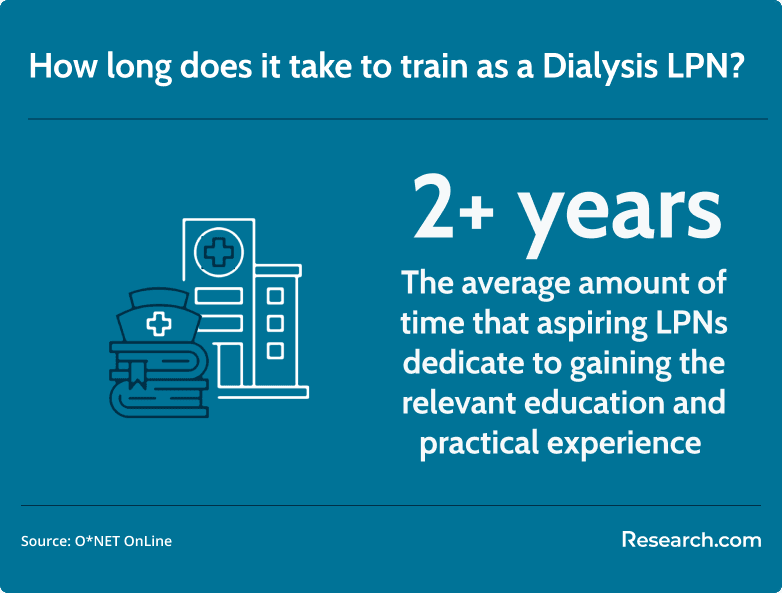
Dialysis shows how preparation can become more formal. To become a Certified Dialysis Licensed Practical Nurse (CD-LPN), candidates must complete more than two years of post-high school education, accumulate over two years of relevant work experience, and pass a written or oral exam through the Nephrology Nursing Certification Commission. The credential must be renewed every three years through continuing education units (CEUs) or re-examination (Nephrology Nursing Certification Commission, 2025).
| Career step | What preparation usually involves | When this option makes sense |
| Move into a specialty through employer training | Orientation, supervised practice, facility protocols, and role-specific competencies | You already have an LPN license and want to shift settings without immediately enrolling in another degree program |
| Pursue a specialty certification | Experience requirements, exam preparation, continuing education, and periodic renewal | You want a recognized credential in dialysis, IV therapy, wound care, or another defined practice area |
| Complete an accelerated LPN pathway | Condensed practical nursing coursework, lab work, and clinical preparation | You are not yet licensed and want a faster route into practical nursing |
| Bridge from LPN to RN or BSN | Expanded nursing theory, clinical judgment, leadership preparation, and broader scope development | You want career options that go beyond the LPN scope of practice |
Experience also affects compensation. Veteran Dialysis LPNs earn an average of $94,150 per year, while newer practitioners average $88,722 (Salary.com, 2025). If you are still preparing to enter practical nursing, fast-track LPN programs may shorten the path to eligibility, but you should verify clinical placement requirements, state approval, accreditation status, and total cost before enrolling.
Which employers pay LPNs more?
LPN salary is shaped by more than specialty. Employer type can be just as important because healthcare organizations differ in patient acuity, staffing shortages, scheduling needs, benefits, risk level, and contract structure.
According to US BLS (2025) data, management, scientific, and technical consulting services pay LPNs an average of $72,720 per year. Employment services are close behind at $72,200, reflecting the pay premium often associated with staffing agencies, contract placements, and flexible assignment coverage.
The lesson for income-focused LPNs is clear: the best-paying job may not be the most traditional one. A clinic role may provide steadier hours and benefits, while a contract or employment-services position may pay more but offer less predictability. Always compare base pay, overtime, shift differentials, benefits, commute, contract length, and cancellation rules before choosing.
| Employer category | Why compensation may be stronger | What to verify before accepting |
| Consulting services | Healthcare operations, compliance work, or project-based roles may require experienced LPNs | Whether the job is clinical or administrative, how much travel is expected, and how the contract is structured |
| Employment services | Temporary, per diem, and contract assignments may pay more when staffing needs are urgent | Guaranteed hours, benefits eligibility, shift cancellation terms, and housing or travel support |
| Hospitals and emergency settings | Higher-acuity work may include urgent-care duties and shift differentials | Exact LPN responsibilities under state law and facility policy |
| Correctional facilities | Security-sensitive environments may offer overtime or hazard-related compensation | Safety procedures, staffing levels, training, and access to RN or provider support |
| Home health and hospice agencies | Demand for in-home and end-of-life care can raise local wages | Mileage reimbursement, service area, on-call expectations, and documentation workload |
If you want to expand beyond practical nursing, compare bridge programs carefully. The accelerated LPN/LVN-to-BSN pathway can help some nurses prepare for broader roles, but program speed should not outweigh accreditation, state authorization, transfer-credit rules, and clinical placement support.
The US BLS chart below summarizes top-paying industries for LPNs.
What determines LPN salary by specialty?
Two LPNs can hold the same license and still earn different wages. Salary depends on where you work, what patients you serve, how much experience you have, which shifts you accept, what certifications you hold, and what your state allows LPNs to do.
- Geographic location: State and metro area can strongly influence pay. California and Rhode Island report some of the highest median annual wages for LPNs at $76,580 and $75,470, respectively (U.S. BLS, 2025). Labor demand, cost of living, and regional healthcare needs all affect these figures.
- Practice setting: Hospitals, correctional facilities, and higher-acuity environments may pay more than some outpatient or long-term care roles because they can involve more complex patients, irregular schedules, or added risk.
- Years of experience: LPN pay generally increases with time in the field. Entry-level LPNs with less than 1 year earn an average of $21.87 per hour, early-career LPNs with 1 to 4 years earn $23.52, mid-career LPNs with 5 to 9 years earn $24.85, experienced LPNs with 10 to 19 years earn $25.80, and late-career LPNs with 20+ years earn $26.00 per hour (Salary.com, 2025).
- Specialty demand: Employers may pay more for dialysis, home health, hospice, emergency, and travel roles when they need LPNs with specific competencies or schedule flexibility. Regional patterns in hospice nurse compensation can vary, especially in areas with growing end-of-life care needs.
- Schedule availability: Nights, weekends, holidays, overtime, per diem shifts, and on-call work may increase total earnings. The trade-off is that these schedules can also increase fatigue and burnout risk.
- Credentials and legal scope: Certifications in IV therapy, wound care, dialysis, or related areas can support a stronger application or salary request, but LPN duties are still limited by state law and employer policy.
| Salary factor | How it may increase earnings | Question to ask yourself |
| State or metro area | High-demand regions may offer higher wages | Will the higher wage still be worthwhile after housing, transportation, taxes, and relocation costs? |
| Specialty choice | Technical, high-need, or hard-to-staff roles may command better pay | Do I have the training, temperament, and support needed for this specialty? |
| Employer type | Contract, consulting, correctional, and high-acuity employers may pay more | Are benefits, guaranteed hours, safety procedures, and cancellation rules clear? |
| Experience level | Employers may reward independent judgment, reliability, and specialty knowledge | Can I document preceptor experience, performance results, or specialized responsibilities? |
| Certifications | Credentials can verify focused competencies | Do employers in my area recognize this certification and pay for it? |
Practical ways LPNs can increase earning potential
The strongest income strategy is rarely just taking more shifts. LPNs usually improve earnings by combining specialty selection, employer targeting, location research, schedule flexibility, credentials, and long-term education planning.
- Use overtime and per diem work strategically: Overtime generally pays one-and-a-half times the base hourly wage for hours worked beyond 40 per week (Johnson Becker, n.d.). Per diem shifts may offer higher rates, but they can also mean fewer benefits or less certainty.
- Cross-train in stronger-demand areas: Dialysis, hospice, emergency care, wound care, and IV therapy skills can make an LPN more competitive for specialty openings.
- Research pay by region before moving: A higher salary in another state or metro area only helps if the increase exceeds added rent, commuting, licensing, taxes, and other living costs.
- Apply to employers with known pay premiums: Staffing agencies, correctional systems, hospitals, and high-need home health agencies may offer stronger wages than some standard outpatient settings.
- Negotiate with documentation: Use salary benchmarks, certifications, years of experience, shift availability, and specialty competencies to support your request.
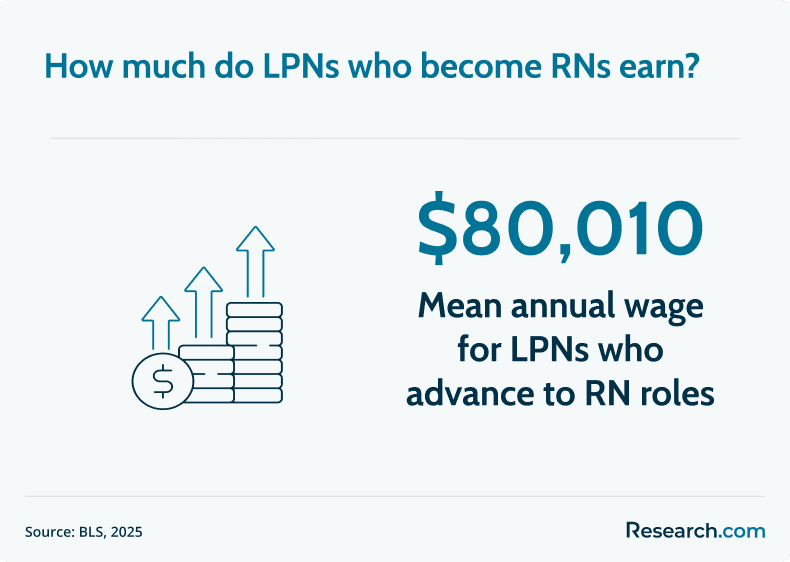
- Consider an LPN-to-RN bridge for broader long-term options: RNs earn a mean annual salary of $80,010, according to the cited US BLS source. The fastest LPN-to-RN program options may interest nurses who want a shorter timeline, but accreditation, clinical hours, licensure alignment, and transfer policies should come first.
| Common mistake | How it can reduce value | Better decision |
| Choosing a program only because it is short | A quick program is risky if it lacks proper approval or does not support licensure goals | Check accreditation, state approval, clinical placement, and graduate outcomes |
| Comparing only the hourly rate | A higher rate may come with canceled shifts, fewer benefits, unpaid travel, or unstable hours | Evaluate total compensation, differentials, benefits, commute time, and guaranteed hours |
| Assuming every specialty is available everywhere | State scope-of-practice rules and employer policies may restrict what LPNs can do | Review your board of nursing rules and ask employers for written duty expectations |
| Forgetting about certification renewal | Some credentials require continuing education, fees, or re-examination | Plan for renewal costs and time requirements before starting the credential |
| Treating salary averages as guarantees | Published averages do not predict your exact offer | Review local postings, speak with recruiters, and compare written offers side by side |
How LPNs can negotiate higher pay and stronger benefits
LPNs can negotiate more effectively when they treat compensation as a full package rather than a single hourly wage. Employers may have flexibility in shift differentials, tuition support, mileage reimbursement, sign-on bonuses, paid training, or schedule preferences even when the base rate is fixed.
- Bring local salary evidence: Compare pay by state, setting, and specialty before making your request. California, the state with the highest LPN employment, reports a mean annual salary of $76,580 (US BLS, 2025), which can help frame regional comparisons.
- Document specialized competencies: Training or certification in wound care, IV therapy, dialysis, emergency care, hospice, or electronic health records can strengthen your case.
- Choose the timing carefully: You may have more leverage after earning a credential, receiving a strong evaluation, accepting difficult-to-fill shifts, or helping during staffing shortages.
- Ask beyond base pay: Tuition reimbursement, health insurance, retirement contributions, paid time off, shift differentials, mileage reimbursement, bonuses, and flexible scheduling can change the real value of an offer.
- Confirm terms in writing: Before accepting, verify hourly rate, guaranteed hours, overtime rules, differential pay, bonus requirements, orientation pay, and cancellation policies.
| Negotiation topic | Why it affects total compensation | Question to ask the employer |
| Base hourly wage | It sets regular earnings and affects overtime calculations | “Can the rate be adjusted for my specialty experience, certifications, or schedule flexibility?” |
| Shift differentials | Night, weekend, and holiday pay can substantially increase earnings | “Which shifts qualify for differentials, and are those differentials included when calculating overtime?” |
| Tuition reimbursement | Employer support can lower the cost of certifications or bridge programs | “Does the organization reimburse LPN-to-RN, BSN, or specialty certification expenses?” |
| Travel and on-call pay | These terms matter especially in home health, hospice, and travel roles | “How are mileage, travel time, on-call hours, and after-hours visits compensated?” |
| Professional development | Training can help you qualify for higher-paying specialties | “Are there paid training opportunities in wound care, IV therapy, dialysis, or EHR systems?” |
Negotiation can also be part of a longer career plan. Some nurses move from LPN to RN, then to BSN, and later consider advanced clinical or provider-adjacent pathways. If you are thinking that far ahead, this guide on whether a nurse can become a physician assistant explains one possible route after additional education and prerequisites.
The US BLS chart below shows the states with the highest LPN employment levels and their corresponding mean annual wages.
Trends affecting high-paying LPN specialties in 2027
The market for LPNs is being influenced by chronic disease care, aging-related services, staffing shortages, technology adoption, and employer demand for flexible nurses. LPNs who combine dependable bedside care with digital documentation skills and specialty training may be better positioned for higher-paying roles.
These trends also matter if you are choosing between healthcare entry points. If you are comparing practical nursing with nursing assistant work, this LPN vs CNA comparison explains the differences in duties, training, and earning potential.
- Telehealth nursing: Remote and hybrid care models create opportunities for nurses who can communicate clearly, document accurately, and use digital platforms. Work-from-home telehealth LPN roles report average hourly pay of $29.88 (ZipRecruiter, 2025).
- Home health and hospice demand: Long-term care and end-of-life services continue to need LPNs who can educate families, monitor symptoms, coordinate with care teams, and maintain accurate records.
- Travel assignments: Travel roles may reward nurses who can adapt quickly. A broader travel nurse salary source reports annual salaries of $101,132 per year or $49 per hour (ZipRecruiter, 2025), but LPNs should verify whether each posting applies to LPNs, RNs, or both and compare it with LPN-specific travel salary figures.
- Technology-supported care: Employers increasingly expect LPNs to use electronic health records, telehealth systems, scheduling tools, and secure messaging platforms correctly.
- Credential-focused hiring: Certifications and documented competencies can help employers identify LPNs prepared for dialysis, wound care, IV therapy, hospice, emergency, and other specialty roles.
Skills that help LPNs qualify for better-paying roles
Higher-paying LPN jobs usually require more than basic patient-care tasks. Employers look for nurses who can monitor changes, communicate clearly, document accurately, follow safety protocols, use clinical technology, and perform specialty tasks within the legal LPN scope of practice.
- Clinical judgment: Dialysis, emergency, correctional, hospice, and home health roles require LPNs to notice changes in patient condition and report concerns promptly.
- Specialty procedure competence: Wound care, dialysis support, IV therapy, medication administration, and chronic disease monitoring can strengthen an LPN’s candidacy for specialized roles.
- Patient and family education: Home health, hospice, and long-term care settings depend on LPNs who can explain instructions clearly and reinforce care plans with empathy.
- Organization and documentation: Accurate charting, medication records, care coordination notes, and follow-up documentation support patient safety, reimbursement, and continuity of care.
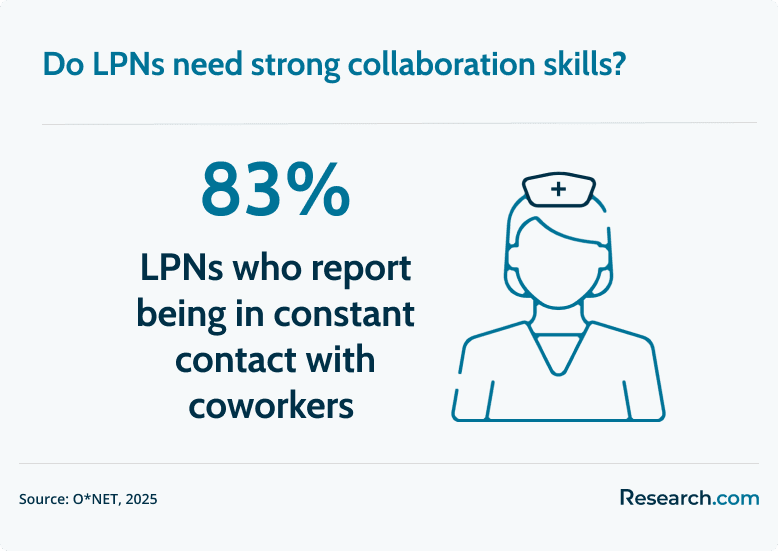
- Team collaboration: LPNs report constant contact with others in 83% of roles (O*NET, 2025), making communication with RNs, physicians, aides, case managers, patients, and families essential.
- Technology comfort: Experience with medical software such as Epic Systems, eClinicalWorks, and MEDITECH can improve documentation efficiency. Microsoft Outlook, Excel, and Zoom may also support communication, scheduling, and data tracking (O*NET OnLine, n.d.).
- Adaptability: Travel, emergency, correctional, and home-based jobs often require quick adjustment to unfamiliar policies, patient needs, and work environments.
| Skill area | Most useful settings | How to show evidence |
| Dialysis and chronic care monitoring | Dialysis clinics, nephrology practices, and chronic disease programs | Complete employer training, document relevant patient-care experience, and pursue certification when eligible |
| Wound care | Long-term care, home health, hospice, and post-acute care | Seek supervised practice, continuing education, and recognized wound care credential options |
| Emergency response | Emergency departments, urgent care centers, correctional facilities, and higher-acuity units | Build experience in fast-paced settings and maintain required life-support training when applicable |
| Digital documentation | Nearly every healthcare environment | List EHR systems, telehealth tools, and reporting platforms you can use confidently |
| Patient education | Home health, hospice, clinics, and chronic care programs | Track examples of caregiver teaching, patient instruction, and adherence support |
How additional education can expand LPN career options
Specialization can improve pay within practical nursing, but additional education can raise the career ceiling. Becoming an RN can expand scope of practice, clinical responsibility, and access to roles that are not available to LPNs. A BSN may later support leadership, public health, case management, specialty hospital roles, or graduate study.
An flexible RN-to-BSN online program may appeal to working nurses, but convenience should not replace quality checks. Compare accreditation, practicum or clinical expectations, transfer-credit policies, online support, tuition, employer partnerships, and alignment with your state’s licensing and employment requirements.
| Education or credential pathway | Best fit | Key decision factor |
| LPN specialty certification | LPNs who want to earn more while staying in practical nursing | Prioritize credentials that local employers recognize, require, or reward |
| LPN-to-RN bridge | LPNs seeking broader scope and more clinical options | Confirm accreditation, NCLEX-RN preparation, clinical placement, and state approval |
| RN-to-BSN | RNs who want leadership options, broader hiring access, or graduate-school preparation | Compare cost, flexibility, transfer credits, and employer tuition assistance |
| Long-term advanced practice route | Nurses planning for PA, NP, education, administration, or specialized practice | Map prerequisites early so each credential supports the next step |
Can advanced certifications improve LPN earning potential?
Certifications can help LPNs prove focused skills in areas employers value. They may support better job offers or salary negotiations, but they do not automatically guarantee higher pay. Their value depends on local demand, state scope-of-practice rules, employer policy, and how closely the credential matches the role you want.
For example, LPNs with IV therapy certification earn an average annual salary of $55,510 (Salary.com, 2025). LPNs with wound care certification report average annual earnings of $52,256, reflecting employer need for clinicians who can support healing and help reduce complications in long-term, home-based, and post-acute settings.
Certifications may also support movement into dialysis, hospice, emergency care, wound management, and related specialties. Before paying for a course or exam, ask whether local employers use the credential in hiring, pay grades, shift assignments, or promotion decisions.
| Certification or skill focus | How it may help | Question to ask first |
| IV therapy | Supports roles involving intravenous treatment and monitoring where LPNs are permitted to perform those duties | Is IV therapy included in the LPN scope of practice in my state and allowed by this employer? |
| Wound care | Useful in long-term care, home health, hospice, and post-acute care environments | Will this credential affect my duties, pay scale, or eligibility for specialty roles? |
| Dialysis | Can support entry into one of the strongest-paying LPN specialty tracks | Do I meet the experience requirements, and what renewal obligations apply? |
| Emergency or urgent care skills | Can improve readiness for fast-paced clinical environments | What training is required before LPNs are assigned urgent-care responsibilities? |
If your next step requires more nursing education, admissions rules may affect your timeline. Some applicants compare nursing schools with no TEAS or HESI requirement, but test flexibility should be considered alongside accreditation, clinical quality, licensure outcomes, total cost, and student support.
Job outlook for LPNs in higher-paying specialties
The overall outlook for licensed practical nurses remains stable. Employment of licensed practical nurses is projected to grow 3% from 2024 to 2034, with about 54,400 openings expected each year. By 2034, total LPN employment is projected to reach 668,500 (U.S. BLS, 2025).
Higher-paying specialties are likely to be influenced by the same forces shaping healthcare broadly: chronic disease management, aging-related care, in-home services, staffing gaps, and demand for flexible clinicians. Home health, hospice, dialysis, correctional care, private duty nursing, and travel assignments may all offer opportunities, but pay and availability will still depend on state rules, employer needs, patient population, and the local labor market.
How to choose the right high-paying LPN specialty
The best specialty is not automatically the one with the highest salary. A sustainable choice should match your clinical strengths, state scope of practice, schedule needs, stress tolerance, and long-term career plan.
- Check your state scope of practice: Confirm what LPNs are legally allowed to do in the specialty you are considering.
- Compare total compensation: Look at base pay, overtime, differentials, on-call pay, mileage, bonuses, benefits, and retirement contributions.
- Evaluate the work environment: Dialysis, hospice, correctional, emergency, and travel roles require different emotional and clinical strengths.
- Ask about training: Find out whether orientation is paid, how long it lasts, and whether certification is required or optional.
- Think beyond the first offer: Decide whether the role supports your next step, whether that is specialty advancement, LPN-to-RN education, or a BSN pathway.
Questions to ask before accepting a higher-paying LPN job
- Is this position fully within my state’s LPN scope of practice? Similar job titles may involve different duties depending on state law and facility policy.
- What training, certification, or experience is required? Ask whether training is paid, whether certification affects pay, and how long orientation lasts.
- How is total compensation calculated? Compare base wage, overtime, shift differentials, bonuses, mileage, on-call pay, health benefits, and retirement contributions.
- What schedule will I actually work? Nights, weekends, holidays, rotating shifts, travel, and on-call coverage can increase earnings but affect work-life balance.
- Which patient population will I serve? Dialysis, hospice, correctional, emergency, and home health work require different clinical and emotional strengths.
- Will this role help my long-term plan? A higher-paying LPN specialty may be the right move now, while an LPN-to-RN or BSN pathway may offer broader advancement later.
References
- Johnson Becker (n.d.). Licensed Practical Nurses Overtime: A Guide to LPN Wages. Retrieved from Johnson Becker LPN overtime guide
- O*NET OnLine (n.d.). Certification: Certified Dialysis - Licensed Practical Nurse (CD-LPN). Retrieved from O*NET CD-LPN certification profile
- O*NET OnLine (n.d.). Hot Technologies 29-2061.00 - Licensed Practical and Licensed Vocational Nurses. Retrieved from O*NET LPN hot technologies
- O*NET OnLine (n.d.). Licensed Practical and Licensed Vocational Nurses 29-2061.00. Retrieved from O*NET LPN occupation summary
- Payscale (n.d.). Hourly Rate for Certification: Intravenous Therapy Certification. Retrieved from Payscale IV therapy certification salary data
- Payscale (n.d.). Salary for Certification: Wound Care Certification (WCC). Retrieved from Payscale wound care certification salary data
- Salary.com (2025). Correctional LPN. Retrieved from Salary.com correctional LPN salary calculator
- Salary.com (2025). Dialysis LPN Salary in the United States. Retrieved from Salary.com dialysis LPN salary data
- Salary.com (2025). Hospice LPN. Retrieved from Salary.com hospice LPN salary calculator
- Salary.com (2025). LPN. Retrieved from Salary.com LPN salary calculator
- Salary.com (2025). LPN Clinical Support. Retrieved from Salary.com clinical support LPN salary calculator
- Salary.com (2025). LPN Emergency Department Salary in the United States. Retrieved from Salary.com emergency department LPN salary data
- Salary.com (2025). LPN Travel Nurse Salary in the United States. Retrieved from Salary.com travel LPN salary data
- US BLS (2025). Licensed Practical and Licensed Vocational Nurses. Retrieved from BLS Occupational Outlook Handbook for LPNs and LVNs
- US BLS (2025). Occupational Employment and Wages, May 2023 29-2061 Licensed Practical and Licensed Vocational Nurses. Retrieved from BLS May 2023 LPN and LVN wage data
- US BLS (2025). Occupational Employment and Wages, May 2020 29-1141 Registered Nurses. Retrieved from BLS May 2020 registered nurse wage data
- ZipRecruiter (2025). Travel Nurse Salary. Retrieved from ZipRecruiter travel nurse salary data
- ZipRecruiter (2025). Work From Home LPN Telehealth Salary. Retrieved from ZipRecruiter work-from-home LPN telehealth salary data
Key Insights
- Dialysis is the highest-paying LPN specialty in this comparison, with an average annual salary of $91,427 (Salary.com, 2025), but it requires technical comfort, close monitoring skills, and substantial preparation for CD-LPN certification.
- Hospice, home health, travel, emergency department, correctional, and clinical support jobs may improve income or lifestyle fit, but each role carries different schedule, stress, safety, and patient-care demands.
- Employer type can change earnings significantly. US BLS (2025) data lists management, scientific, and technical consulting services at $72,720 annually and employment services at $72,200.
- Location, experience, specialty demand, certifications, overtime, shift differentials, and benefits can matter as much as the job title itself.
- Certifications can strengthen your marketability, but you should confirm that the credential is recognized by local employers and allowed under your state’s LPN scope of practice.
- If your goal is long-term advancement rather than only a short-term raise, an LPN-to-RN or BSN pathway may open broader clinical, leadership, and future education options than specialization alone.
Other Things You Should Know About High-Paying LPN Specialties
In 2027, LPNs in California, Massachusetts, and Hawaii see the highest salaries due to cost of living and demand. Urban centers often pay more than rural areas, reflecting both market need and living expenses.
The salary of LPN specialties in 2027 is influenced by factors such as the region of employment, experience level, additional certifications, and the specific healthcare setting. Urban areas typically offer higher salaries, and LPNs with specialized skills or experience in demanding fields often earn more.
LPNs in hospital, long-term care, and correctional settings often receive shift differentials of $1 to $5 per hour for evenings, nights, weekends, and holidays. Facilities set these rates, and union contracts or state labor rules can change the amount.