
2027 Best Accelerated Online Journalism Degree Programs

Co-Founder and Chief Data Scientist
Choosing an accelerated online journalism degree is usually a speed-versus-fit decision. You may want to finish a bachelor’s degree faster, switch into media from another field, or turn writing and digital storytelling experience into a formal credential. The challenge is that “accelerated” does not mean the same thing at every school: some programs use short 5- to 8-week courses, some accept substantial transfer credit, and others simply offer flexible online terms that let motivated students move quickly.
This guide explains how accelerated online journalism degrees work, what they cost, which programs stand out, and how to judge whether a fast-track format is realistic for your schedule. It is designed for working adults, transfer students, aspiring reporters, content creators, communications professionals, and students comparing journalism with related fields such as digital media, public relations, creative writing, and social media strategy.
Quick Answer: Is an Accelerated Online Journalism Degree Worth It?
An accelerated online journalism degree can be worth it if you want a structured bachelor’s program that builds reporting, writing, multimedia, ethics, and digital publishing skills while letting you study around work or family responsibilities. According to the most recent data cited in this guide, about 30% of U.S. undergraduates were enrolled exclusively in online courses, which shows that online learning is now a common pathway rather than a niche option.
The strongest programs combine speed with accreditation, portfolio development, internship access, faculty feedback, and current coursework in digital reporting, audience analytics, social media, media law, and multimedia storytelling. The median annual salary for journalists in the U.S. is around $63,230, but outcomes depend heavily on location, employer, experience, specialization, and portfolio quality.
What are the benefits of getting an accelerated online journalism degree program?
- Faster completion: Many accelerated online journalism programs are built for students who want to finish more quickly than a traditional four-year schedule, often through compressed terms and year-round enrollment.
- Career-relevant training: Students typically study reporting, editing, media law, ethics, digital storytelling, multimedia production, social media, and audience engagement.
- Flexible access: Online delivery can help working adults, caregivers, military students, and transfer students continue their education without relocating.
- Multiple career directions: Graduates may pursue roles in news writing, broadcasting, digital media, content creation, public relations, corporate communications, and nonprofit storytelling.
- Potential cost savings: Online students may avoid housing, commuting, and some campus-based expenses, although tuition and fees vary widely by school.
What can I expect from an accelerated online journalism degree program?
An accelerated online journalism degree is usually a bachelor’s program that compresses coursework into shorter academic terms or allows students to move faster through transfer credits, heavier course loads, or continuous enrollment. Many programs still require 120 credits, but students may complete requirements in a shorter timeframe if they already have college credits or can manage intensive study periods.
Most programs emphasize both traditional journalism fundamentals and digital production. Core courses often include news writing, reporting, editing, media law, journalism ethics, multimedia storytelling, digital publishing, and audience strategy. Depending on the school, students may also choose electives in sports journalism, investigative reporting, broadcast journalism, photojournalism, public relations, social media, or environmental communication.
Tuition can differ substantially. Public universities may charge between $300 and $500 per credit on average, though some programs listed in this guide are lower or higher. Online students should also budget for technology fees, books, software, recording equipment, internet access, and possible internship-related expenses.
| Program Feature | What It Means for Students | Why It Matters |
| Short terms | Courses may run in 5- to 8-week sessions instead of traditional semesters. | Students can progress faster, but deadlines arrive quickly. |
| Asynchronous classes | Lectures and assignments are available online without set meeting times. | Helpful for working students, but requires strong self-management. |
| Portfolio-based assignments | Students produce articles, multimedia packages, podcasts, videos, or digital features. | Employers often want proof of published or publishable work. |
| Internship or capstone | Some programs include professional experience, final projects, or newsroom simulations. | Hands-on experience can help students compete for entry-level roles. |
| Specialization options | Students may focus on digital media, broadcast, sports, investigative reporting, or public relations. | A concentration can make the degree more aligned with a specific career goal. |
Where can I work with an online journalism degree?
An online journalism degree can prepare graduates for work in newsrooms, magazines, digital media companies, radio, television, nonprofit communications, higher education, healthcare organizations, government communication offices, content marketing teams, and public relations departments. The degree is not limited to traditional reporting; many journalism graduates use their research, writing, interviewing, editing, and digital production skills in broader media and communications roles.
According to the U.S. Bureau of Labor Statistics (BLS), there were approximately 49,300 news analysts, reporters, and journalists employed in the U.S. Many jobs are concentrated in major media markets such as New York, Washington, D.C., and Los Angeles, but remote publishing, local digital news, podcasting, brand media, and nonprofit communications have expanded the range of possible workplaces.
How much can I make with an accelerated online journalism degree?
The median annual wage for news analysts, reporters, and journalists is $63,230. Entry-level roles commonly start around $35,000 to $45,000, depending on the employer, location, beat, and required technical skills. Graduates with strong digital portfolios, internship experience, video or audio production skills, audience analytics knowledge, or subject-matter expertise may be more competitive.
Some professionals in digital media, corporate communications, national outlets, multimedia production, or editorial leadership can earn salaries exceeding $80,000 per year. The accelerated format itself does not guarantee higher pay, but it may help students enter or re-enter the job market sooner if they complete the program successfully.
- The Best Accelerated Online Journalism Degree Programs for 2027
- How long does it take to complete an accelerated online journalism degree program?
- How does an accelerated online journalism degree compare to an on-campus program?
- What is the average cost of an accelerated online journalism degree program?
- What are the financial aid options for students enrolling in an online journalism degree program?
- What are the prerequisites for enrolling in an accelerated online journalism degree program?
- What courses are typically in an accelerated online journalism degree program?
- What types of specializations are available in an accelerated online journalism degree program?
- How can business management skills strengthen a journalism career?
- Can journalism and business training work well together?
- Can project management skills help journalists advance?
- Do networking and mentorship matter in online journalism programs?
- How do you choose an accelerated online journalism degree program?
- What career paths are available for graduates of accelerated online journalism degree programs?
- What is the job market like for graduates of online journalism degree programs?
The Best Accelerated Online Journalism Degree Programs for 2027
How do we rank schools?
Research.com rankings are designed to help students compare programs using transparent, decision-focused information. For this guide, program details were reviewed using public data and trusted education sources, including the IPEDS database, Peterson’s, College Scorecard, and the National Center for Education Statistics. The goal is to identify online journalism and closely related media programs that combine affordability, academic credibility, online access, and career-focused training. More information about ranking practices is available on our methodology page.
| School | Program | Credits | Notable Strength |
| University of Florida | B.S. in Journalism | 120 credits | ACEJMC accreditation and on-campus curriculum alignment |
| Arizona State University | B.A. in Digital Media Literacy | 120 credits | Media verification, privacy, and misinformation focus |
| Southern Illinois University, Carbondale | B.S. in Journalism | 120 | 5-8 week terms and multiple specialization choices |
| Pennsylvania State University World Campus | B.A. in Digital Journalism & Media | 120 | Digital metrics, media law, and Penn State online support |
| Colorado State University | B.A. in Journalism & Media Communication | 120 | Faculty interaction and portfolio development |
1. University of Florida – B.S. in Journalism
The online B.S. in Journalism from the University of Florida is a strong option for students who want a reporting-centered bachelor’s program with multimedia training and a sports-oriented angle. The online curriculum reflects the on-campus program and includes applied courses such as Broadcast Writing Bootcamp and Multimedia Reporting. Students who want a recognized journalism pathway with virtual labs, internship connections, and a large alumni network should give this program serious consideration.
- Cost: ~$112 per credit hour (in-state rate + fees)
- Credit Hours: 120 credits
- Accreditation: ACEJMC
- What Makes It Stand Out: Same faculty and curriculum as the on-campus program
2. Arizona State University – B.A. in Digital Media Literacy
Arizona State University offers an online B.A. in Digital Media Literacy for students who want to study how media is created, verified, distributed, and challenged in a digital information environment. The program focuses on misinformation, privacy, verification, and media ethics, making it especially relevant for students interested in fact-checking, audience trust, platform accountability, and digital literacy. Courses are delivered in 7.5-week terms, and the program supports international students with a STEM-OPT extension.
- Cost: $552 per credit
- Credit Hours: 120 credits
- Accreditation: ACEJMC
- What Makes It Stand Out: Unique focus on misinformation and media ethics
3. Southern Illinois University, Carbondale – B.S. in Journalism
Southern Illinois University, Carbondale offers an online journalism bachelor’s pathway that may appeal to students looking for shorter course sessions and a more focused route through the major. Its 5-8 week terms can help disciplined students move through coursework efficiently. The program also gives students room to explore areas such as photojournalism, sports media, and news editorial work.
- Cost: ~$321.50 per credit
- Credit Hours: 120
- Accreditation: ACEJMC
- What Makes It Stand Out: Fast-track term structure and multiple specialization options
4. Pennsylvania State University (World Campus) – B.A. in Digital Journalism & Media
Penn State World Campus has offered fully online education since 1998, and its B.A. in Digital Journalism & Media is built for students who want the Penn State name in an online format. The curriculum emphasizes multimedia storytelling, digital metrics, and media law. Students also benefit from flexible asynchronous coursework and online student services designed for distance learners.
- Cost: In-state ~$576/credit; out-of-state ~$617/credit
- Credit Hours: 120
- Accreditation: ACEJMC
- What Makes It Stand Out: Institutional reputation and digital-first focus
5. Colorado State University – B.A. in Journalism & Media Communication
Colorado State University offers a B.A. in Journalism and Media Communication with a 17:1 student-to-faculty ratio. The program is a good match for students who want online access but still value faculty interaction through live chats, video conferencing, and feedback-driven coursework. The curriculum combines journalism foundations with internship opportunities and professional portfolio development.
- Cost: In-state ~$9,426/year; out-of-state ~$28,147/year
- Credit Hours: 120
- Accreditation: Higher Learning Commission
- What Makes It Stand Out: Faculty engagement and digital portfolio focus
6. Regent University – B.A. in Communication Studies (Journalism Track)
Regent University offers a B.A. in Communication Studies with a journalism track for students seeking a flexible online communication degree with journalism-related coursework. Small online classes of around 17 students may appeal to learners who want a more personal environment. The program includes print, video, and digital journalism formats and offers support for military and adult learners.
- Cost: ~$17,220/year
- Credit Hours: 120
- Accreditation: Southern Association of Colleges and Schools (SACSCOC)
- What Makes It Stand Out: Values-driven curriculum and supportive small classes
7. DePaul University – B.A. in Journalism
DePaul University gives journalism students access to a curriculum that aligns with campus-based coursework while connecting them to Chicago’s media environment. Students interested in urban reporting, professional media connections, and hands-on learning may find this program attractive. The school’s ties to organizations such as the Chicago Tribune, WGN News, and Reuters can be especially valuable for students who want exposure to established media outlets.
- Cost: $46,605/year
- Credit Hours: 120 traditional
- Accreditation: HLC
- What Makes It Stand Out: Chicago media access and hybrid options
8. University of Massachusetts Amherst – B.A. in Journalism (Sports Journalism Concentration)
The University of Massachusetts - Amherst offers a journalism program with a sports journalism concentration for students who want to build reporting skills around athletics, media production, and sports storytelling. Faculty credentials include Freedom Forum and Pulitzer awards, and students can access professional-grade multimedia studios along with internship opportunities.
- Cost: In-state ~$15,791/year; out-of-state ~$35,779/year
- Credit Hours: 120
- Accreditation: New England Commission of Higher Education (NECHE)
- What Makes It Stand Out: Award-winning faculty and top-tier sports journalism focus
9. Southern New Hampshire University – B.A. in Communication (Digital Media Focus)
Southern New Hampshire University serves over 170,000 students and has built a large online learning infrastructure. Its B.A. in Communication with a digital media focus is best suited for students who want broad communication training with emphasis on multimedia storytelling, broadcast techniques, and contemporary digital tools rather than a narrowly traditional journalism curriculum.
- Cost: $320–$350 per credit
- Credit Hours: 120
- Accreditation: NECHE
- What Makes It Stand Out: Digital-first curriculum and large-scale online infrastructure
10. Oregon State University Ecampus – B.A. in Environmental Journalism & Communication
Oregon State University Ecampus offers a B.A. in Environmental Journalism and Communication for students who want to combine reporting and communication with environmental topics. The program stands out for concentrations such as restoration ecology and wildlife management. Oregon State University Ecampus has been ranked among the top 10 online bachelor’s programs nationally for 11 straight years by U.S. News & World Report, and the program includes lab kits and optional field visits for students.
- Cost: In-state ~$350 per credit; out-of-state ~$390
- Credit Hours: 120
- Accreditation: Northwest Commission on Colleges and Universities (NWCCU)
- What Makes It Stand Out: Environmental emphasis
How long does it take to complete an accelerated online journalism degree program?
An accelerated online journalism degree program generally takes 18 to 24 months to complete, compared with a traditional 4-year path. That shorter timeline usually depends on transfer credits, condensed terms, year-round enrollment, and a willingness to take courses in a continuous sequence with limited breaks.
Students should be realistic about the workload. A 5- to 8-week journalism course can require frequent writing assignments, interviews, editing rounds, discussion posts, media projects, and fast deadlines. This format rewards students who can plan ahead, communicate clearly with instructors, and keep a weekly production schedule.
Accelerated study can work especially well for adult learners, career changers, and students who already have general education credits. It may be harder for first-time college students who need more time to adjust to college-level writing, research, source evaluation, and media production.
| Timeline Factor | How It Can Shorten Completion | Question to Ask |
| Transfer credits | Previously earned college credits may reduce remaining requirements. | How many credits will the school accept toward the major and general education? |
| Accelerated terms | Short sessions allow more courses to be completed in a calendar year. | Are courses 5, 7.5, or 8 weeks long? |
| Year-round enrollment | Taking summer and back-to-back terms can reduce downtime. | Can students enroll continuously, or are some courses offered only once per year? |
| Course load | Taking multiple courses per term speeds progress but increases workload. | What course load is recommended for working adults? |
| Capstone or internship timing | Internship requirements may affect graduation timing. | Can internships be completed remotely or locally? |
Students comparing accelerated media-related degrees may also look at the fastest online fashion merchandising degree programs, where flexible online formats and portfolio-building are also important for entering a competitive creative field.
How does an accelerated online journalism degree compare to an on-campus program?
An accelerated online journalism degree offers more scheduling flexibility and can reduce time to completion, while an on-campus program may provide more face-to-face newsroom collaboration, campus media access, and in-person networking. Neither format is automatically better. The better choice depends on your schedule, learning style, local media opportunities, and need for structure.
Online journalism programs often use discussion boards, cloud-based editing tools, virtual labs, video critiques, peer workshops, and remote interviews to recreate parts of the newsroom experience. Many classes are asynchronous, which lets students complete lectures and assignments around work. Some programs also include live sessions for Q&A, guest speakers, reporting workshops, or team projects.
On-campus programs can be stronger for students who want daily access to student newspapers, broadcast studios, faculty office hours, and local internship pipelines. Online programs can be stronger for students who already work, live far from campus, or want to report on their own communities while earning a degree remotely.
| Factor | Accelerated Online Journalism Degree | On-Campus Journalism Degree |
| Schedule | Often asynchronous and built around shorter terms. | Usually follows semester schedules with set meeting times. |
| Speed | May be completed faster through compressed courses and transfer credits. | Commonly follows a traditional four-year sequence. |
| Networking | Depends on virtual events, faculty outreach, alumni groups, and remote internships. | Often includes campus media, local newsroom access, and in-person events. |
| Hands-on work | Portfolio projects, remote interviews, multimedia assignments, and digital publishing. | Student newspapers, studios, campus media labs, and in-person production teams. |
| Best for | Working adults, transfer students, self-directed learners, and remote students. | Students who want campus life, daily structure, and in-person collaboration. |
Fast online creative programs often use similar portfolio-driven models. For example, fast-track online digital photography degrees also rely on project critiques, digital tools, and condensed production cycles to help students build professional work samples.
According to a report from Wiley University Services, 94% of online students said their education was worth the investment, and 78% felt it provided the same or better value than in-person learning. For journalism students, the key is not whether a program is online; it is whether the program gives you enough feedback, production practice, career support, and portfolio evidence to compete for the roles you want.
What is the average cost of an accelerated online journalism degree program?
An accelerated online bachelor’s degree typically costs between $47,000 and $63,000 in total tuition for a full 120-credit program. Per-credit tuition often falls between $300 and $500 at public universities, although the programs in this guide show that actual pricing can be lower or higher depending on residency, institution type, fees, and financial aid.
Online study may reduce costs tied to housing, transportation, relocation, and some campus-based fees. However, students should avoid comparing tuition alone. A lower per-credit price may not be the best deal if the school accepts fewer transfer credits, charges high fees, offers limited courses each term, or provides weak career support.
| Cost Category | What to Check | Why It Affects Affordability |
| Tuition per credit | In-state, out-of-state, online, military, and transfer-student rates | The published rate may not be the rate you actually pay. |
| Required credits | Total credits required after transfer evaluation | Accepted transfer credits can reduce both time and cost. |
| Fees | Technology, distance learning, graduation, course, and student service fees | Fees can make a low-tuition program more expensive. |
| Books and software | Editing software, media tools, textbooks, recording gear, and subscriptions | Journalism courses may require production equipment or applications. |
| Time to completion | Course availability, required sequencing, and capstone timing | A longer program can increase living and opportunity costs. |
Students who want targeted digital marketing skills alongside journalism may also compare degree options with shorter credentials, including the shortest social media marketing online programs. Certificates can sometimes supplement a journalism degree, but they should not replace an accredited bachelor’s degree if the jobs you want require one.
What are the financial aid options for students enrolling in an online journalism degree program?
Students in online journalism programs should begin by completing the Free Application for Federal Student Aid (FAFSA). The FAFSA determines eligibility for federal grants, loans, and work-study. Federal Pell Grants and Federal Supplemental Educational Opportunity Grants (FSEOG) do not need to be repaid, making them especially important for eligible students.
Universities may also offer institutional scholarships, transfer scholarships, adult learner awards, military benefits, department-level journalism scholarships, and need-based grants. Journalism students should also search for media-focused scholarships from press associations, journalism foundations, photojournalism organizations, and diversity-focused media groups. Some fellowships are highly specialized; for example, the Walter Bagehot fellowship offers a tuition-free year and a $70,000 stipend for business journalists.
Employer tuition assistance can also reduce out-of-pocket cost. A survey found that over 60% of large U.S. employers offer tuition reimbursement, which may help students enrolled in journalism and writing programs online balance work and study. Before enrolling, ask your employer whether benefits apply to online programs, part-time study, or accelerated terms.
- Submit the FAFSA early: Aid is often tied to deadlines, and some grants are limited.
- Ask whether online students qualify for the same scholarships: Do not assume campus and online aid policies are identical.
- Request a transfer credit review before committing: Accepted credits can reduce total tuition more than a small scholarship.
- Compare net price, not sticker price: Review tuition, fees, aid, payment plans, and estimated completion time together.
- Check renewal rules: Some scholarships require a minimum GPA, full-time enrollment, or annual applications.
What are the prerequisites for enrolling in an accelerated online journalism degree program?
Most accelerated online journalism bachelor’s programs require standard undergraduate admission materials, but some may add writing-focused requirements because journalism is deadline-driven and communication-intensive. Transfer students may need to submit transcripts from every college previously attended.
- High school diploma or GED: Most schools require proof of secondary education completion and may expect a minimum GPA, usually between 2.0 and 3.0.
- Official transcripts: Applicants usually submit high school transcripts and any prior college transcripts for admission and transfer credit evaluation.
- Writing samples or portfolio: Some programs ask for 2-3 writing samples, such as essays, published articles, blog posts, or class assignments.
- Letters of recommendation: One or two recommendations may be required to show academic readiness, work ethic, or professional potential.
- Personal statement: Many schools ask applicants to explain why they want to study journalism and what they hope to do professionally.
- Standardized test scores: Many schools are test-optional, but some may still review SAT or ACT scores.
Before applying, ask yourself whether you enjoy researching unfamiliar topics, interviewing people, checking facts, revising quickly, and working under deadline pressure. Accelerated journalism programs are best for students who can write frequently, receive critique constructively, and manage several assignments at once.
Students exploring adjacent media industries may notice overlapping requirements in programs such as accelerated online entertainment business degree programs. If your strongest interest is long-form storytelling, narrative nonfiction, essays, or editorial writing, an online creative writing degree may also be worth comparing.
What courses are typically in an accelerated online journalism degree program?
Accelerated online journalism degrees usually combine communication theory, reporting practice, editing, law, ethics, and digital production. Because the format moves quickly, students should expect a steady stream of writing, reporting, peer review, and multimedia assignments. Some students also compare journalism with creative writing accelerated programs online, especially if they want stronger narrative technique for features, essays, profiles, or long-form reporting.
| Course Area | What Students Learn | Career Relevance |
| News Writing and Reporting | How to find story ideas, interview sources, verify information, and write clear news copy. | Core preparation for reporting, editing, and content roles. |
| Media Law and Ethics | Legal responsibilities, privacy, libel, copyright, source protection, and ethical decision-making. | Essential for responsible journalism and public communication. |
| Multimedia Journalism | Video, audio, photography, web publishing, and cross-platform storytelling. | Supports digital newsroom, podcasting, broadcast, and social video roles. |
| Digital and Social Media Strategy | Audience engagement, SEO basics, analytics, platform behavior, and content planning. | Useful for digital media, social media, and audience development jobs. |
| Investigative Reporting | Document research, data analysis, source development, and in-depth reporting methods. | Prepares students for accountability journalism and complex story projects. |
What types of specializations are available in an accelerated online journalism degree program?
Specializations help students turn a broad journalism degree into a clearer career path. Not every online program offers every concentration, so students should review electives, faculty expertise, capstone options, and portfolio requirements before enrolling.
- Broadcast Journalism: Focuses on reporting for television, radio, and video platforms, including scriptwriting, presentation, and editing.
- Digital Media: Covers multimedia storytelling, social publishing, audience analytics, and content creation for web-first platforms.
- Photojournalism: Trains students to communicate news visually through photography, editing, sequencing, and field reporting.
- Investigative Reporting: Emphasizes source development, public records, data, accountability reporting, and long-form storytelling.
- Public Relations: Prepares students to write press materials, manage messaging, support campaigns, and communicate for organizations.
Digital skills are increasingly important across these tracks. According to O*NET, over 60% of journalists say that proficiency in digital tools and multimedia is important for long-term career success. This reflects how modern journalism roles often combine writing, video, audio, social media, analytics, and web publishing.
Students who want deeper specialization after a bachelor’s degree may consider graduate study in writing, journalism, public relations, or strategic communication. If you are asking what can you do with a master's in writing, the answer can include careers in publishing, content strategy, narrative nonfiction, media entrepreneurship, and advanced editorial roles.
How can business management skills strengthen a journalism career?
Business management skills can help journalists move beyond individual reporting assignments into roles that involve newsroom operations, audience strategy, product planning, budgeting, team leadership, and cross-functional media projects. This is especially useful in digital media organizations where editorial, product, marketing, analytics, and revenue teams often work together.
Students who want to combine storytelling with operational leadership may consider business-focused graduate study later in their career. For example, a cheapest online MBA in project management may be relevant for professionals who want to oversee digital campaigns, newsroom initiatives, or media production workflows.
Can journalism and business training work well together?
Journalism and business training can be a strong combination for professionals who want to lead media teams, launch independent publications, manage branded content, work in audience development, or make data-informed editorial decisions. Business coursework can add skills in finance, strategy, operations, and market analysis, while journalism training provides credibility in research, storytelling, editing, and ethics.
Professionals considering leadership roles may compare business options such as the quickest online MBA programs. This path is not necessary for every journalist, but it may be useful for those aiming at management, entrepreneurship, or strategic communications leadership.
Can project management skills help journalists advance?
Project management skills can be valuable in journalism because modern media projects often involve writers, editors, designers, videographers, data specialists, social media teams, and product managers. Knowing how to define scope, set timelines, manage stakeholders, track revisions, and deliver under deadline can make a journalist more effective in multimedia and leadership roles.
Students or working professionals who want formal training in workflow coordination may explore a fast track project management degree online. This type of credential can complement journalism experience when the goal is to manage editorial operations, content projects, or communication campaigns.
Do networking and mentorship matter in online journalism programs?
Networking and mentorship matter a great deal in journalism because many opportunities come through editors, instructors, alumni, internship supervisors, freelance contacts, and professional associations. Online students should look for programs that provide guest speakers, faculty mentorship, internship support, student media access, alumni events, portfolio reviews, and career coaching.
Students seeking broader leadership preparation may eventually pair journalism experience with graduate business study, including an online MBA best program. However, the most immediate priority for journalism students is usually building a strong portfolio and professional network before graduation.
How do you choose an accelerated online journalism degree program?
Start with accreditation. Institutional accreditation is essential for credit transfer, federal financial aid eligibility, and general academic credibility. Journalism-specific accreditation can also be useful. The Accrediting Council on Education in Journalism and Mass Communication (ACEJMC) has recognized only 120 journalism and mass communication programs in the U.S., making it a meaningful quality marker for students comparing journalism programs.
Next, review the curriculum. A strong program should include reporting, writing, editing, ethics, media law, digital storytelling, multimedia production, and portfolio development. If you want to specialize in political reporting, sports journalism, investigative work, social media, public relations, or broadcast, make sure the electives and faculty experience support that goal.
Finally, evaluate the online experience. Accelerated programs move quickly, so students need clear course navigation, responsive faculty, writing support, library access, technical help, academic advising, and internship guidance. Students who like condensed, career-focused writing programs may also compare journalism degrees with the fastest online professional writing degree programs.
Questions to ask before enrolling
- Is the institution regionally or nationally accredited?
- Does the journalism or communication program have ACEJMC accreditation?
- How many transfer credits will the school accept?
- Are courses asynchronous, synchronous, or a mix of both?
- How long are the terms, and how many courses can students take at once?
- Does the program require an internship, capstone, or professional portfolio?
- Can online students participate in student media or publish work through school-supported platforms?
- What career services are available to online students?
- Are faculty members experienced in journalism, digital media, or strategic communication?
- What is the total estimated cost after tuition, fees, books, equipment, and transfer credits?
Common mistakes to avoid
| Mistake | Why It Can Hurt You | Better Approach |
| Choosing only by speed | A fast program is not useful if it lacks feedback, portfolio work, or career support. | Compare completion time with curriculum quality and outcomes support. |
| Ignoring accreditation | Credits may not transfer, and financial aid eligibility can be affected. | Verify institutional accreditation and check whether ACEJMC applies. |
| Looking only at tuition | Fees, books, technology, and lost transfer credits can raise total cost. | Ask for a full cost estimate and transfer evaluation. |
| Assuming online means easier | Accelerated courses often require more weekly discipline than semester courses. | Review sample schedules and ask about expected weekly workload. |
| Graduating without a portfolio | Media employers often want work samples, not just transcripts. | Choose courses that produce publishable clips, multimedia pieces, and capstone work. |
| Overlooking internships | Experience can be critical in a competitive media job market. | Ask whether remote, local, or employer-based internships are allowed. |
What career paths are available for graduates of accelerated online journalism degree programs?
Graduates of accelerated online journalism programs can pursue both traditional journalism roles and broader communication careers. The best fit depends on the student’s portfolio, internship experience, technical skills, subject knowledge, and willingness to start in entry-level or freelance work.
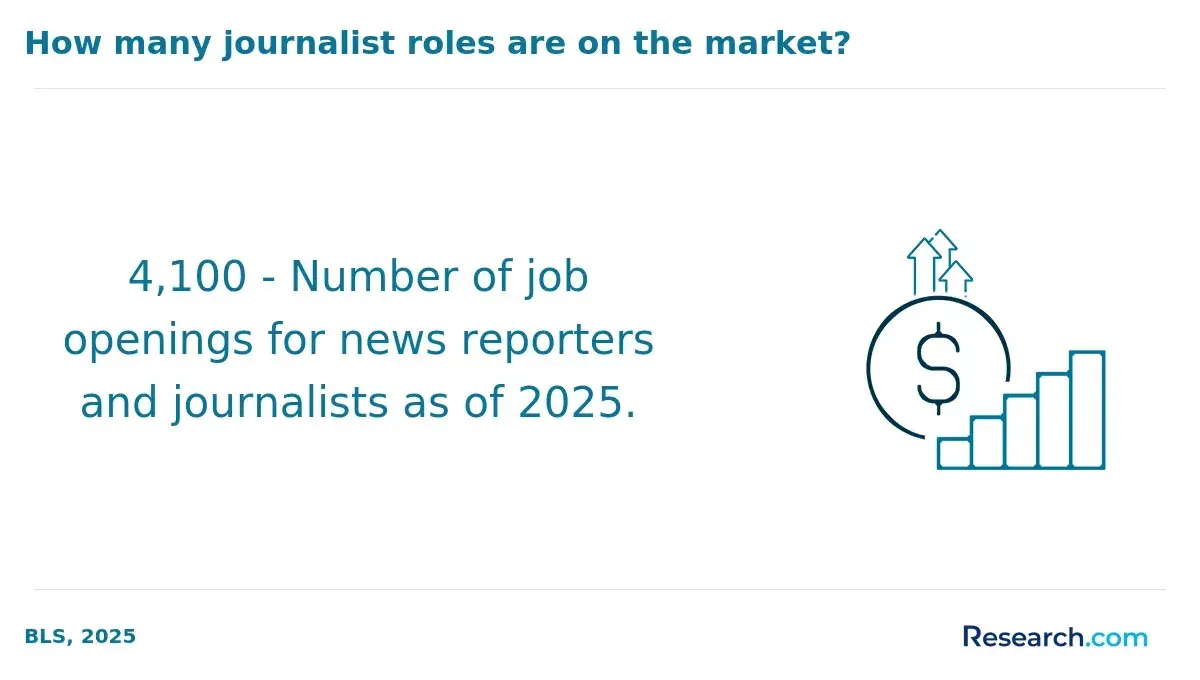
According to the U.S. Bureau of Labor Statistics, the media and communication sector is projected to add about 104,800 job openings annually through 2034, largely because employers need to replace workers who leave occupations permanently.
| Career Path | Typical Responsibilities | Useful Skills |
| News Reporter or Correspondent | Researches, interviews, writes, and reports stories for print, digital, TV, or radio outlets. | Reporting, interviewing, fact-checking, deadline writing, beat knowledge |
| Multimedia Journalist | Produces stories using text, video, audio, photos, and web formats. | Video editing, audio production, photography, digital publishing |
| Editor or Content Manager | Assigns stories, edits copy, manages writers, and maintains accuracy and style. | Editing, leadership, planning, audience judgment, quality control |
| Social Media Specialist | Creates platform-specific content, monitors engagement, and grows online audiences. | Analytics, short-form writing, visual storytelling, platform strategy |
| Digital Strategist or SEO Writer | Uses audience data and keyword research to plan and write digital content. | SEO, analytics, content planning, web writing |
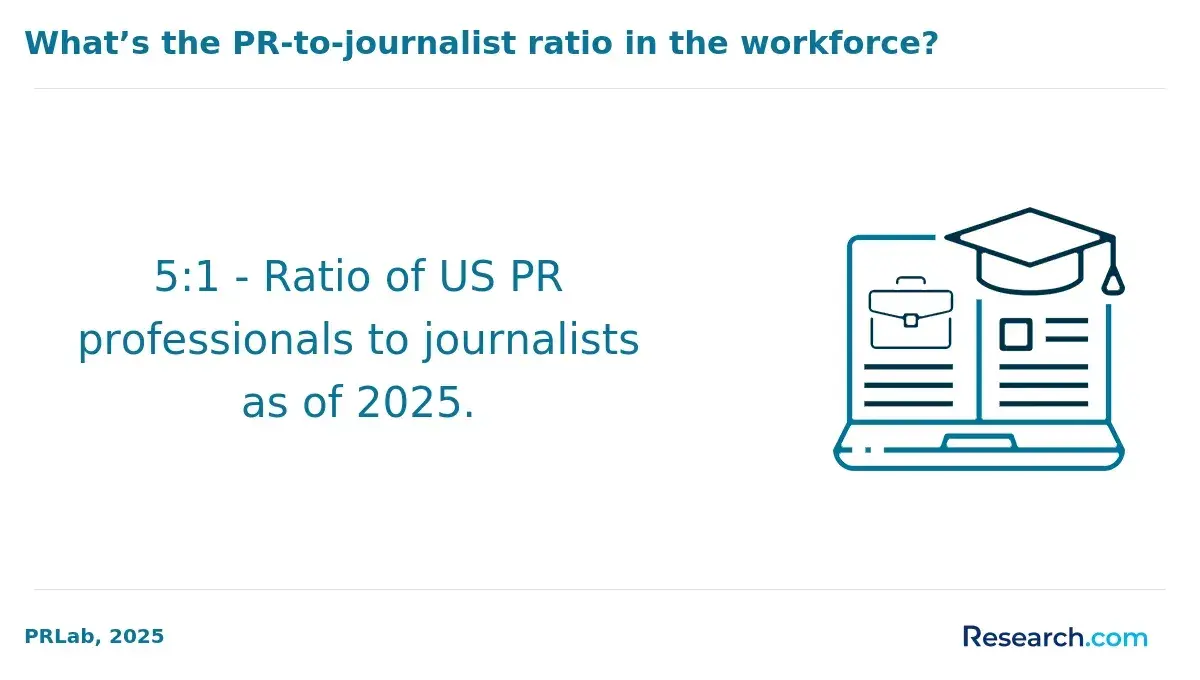
| PR Specialist | Writes press releases, develops messaging, works with media, and supports public image. | Strategic communication, media relations, writing, campaign planning |
Students interested in social platforms may pair journalism training with targeted programs such as the shortest online social media programs, which focus on content creation, analytics, branding, and audience strategy. Graduates leaning toward public relations may later consider a fast-track online public relations master's degree to deepen strategic communication skills.
Journalism also pairs well with specialized fields. Students interested in legal reporting, public policy, compliance communication, or government affairs may explore master of legal studies career opportunities. A Master of Legal Studies does not require a law degree, but it can strengthen legal research and regulatory communication skills.
What is the job market like for graduates of online journalism degree programs?
The journalism job market is competitive, especially for traditional reporting jobs, but graduates with strong digital skills may find opportunities across news, brand media, nonprofit communications, podcasting, social media, public relations, and content strategy. Employers increasingly look for candidates who can report accurately, write clearly, produce multimedia, understand audiences, and adapt to changing platforms.
The strongest candidates usually graduate with published clips, internship experience, multimedia samples, editing experience, and evidence that they can work under deadline. Some graduates also pursue advanced study, such as an online MFA in creative writing, to strengthen narrative voice, long-form writing, podcast scripting, literary nonfiction, or editorial craft.
Journalism can be demanding, but many professionals find the work meaningful. According to a Pew Research Center survey, 77% of journalists said they were either extremely or very proud of their work, and 70% felt their job had meaning and purpose.
Current trends affecting journalism graduates
- Digital-first publishing: Many organizations expect journalists to write for web, mobile, newsletters, social media, and multimedia channels.
- Audience analytics: Newsrooms and content teams increasingly use metrics to understand what readers watch, share, read, and return to.
- Multimedia expectations: Reporters may be asked to capture photos, record audio, shoot video, or produce social clips in addition to writing.
- Trust and verification: Misinformation concerns make fact-checking, source evaluation, and transparency more important.
- Portfolio-based hiring: Work samples, internships, freelance clips, and student media experience can carry significant weight.
Here's what graduates have to say about their Accelerated Online Journalism Degree
-
: "
"Completing my journalism degree in less than two years helped me move into the field sooner while still building serious reporting skills. Studying online let me interview sources during the day and turn in assignments at night, which felt very close to real newsroom pressure." –Ashley
"
-
: "
"The accelerated online format forced me to develop practical journalism skills quickly, but the teamwork surprised me the most. In one class, we worked as a remote newsroom to publish a weekly newsletter. We edited each other’s work, checked facts, planned story angles, and met over video. It taught me how to collaborate and lead when deadlines were tight." –Mavy
"
-
: "
"I was freelancing while studying part time, and the accelerated online journalism program gave me structure without locking me into a campus schedule. I could manage assignments around work and still graduate with portfolio pieces from interactive courses." –Janelle
"
Key Insights
- An accelerated online journalism degree is best for organized students who want a faster route to a bachelor’s credential and can handle frequent writing, reporting, and multimedia deadlines.
- Program quality matters more than speed alone. Prioritize accreditation, portfolio development, faculty feedback, internship support, and current digital media coursework.
- The median annual salary for journalists is $63,230, while entry-level roles typically start around $35,000 to $45,000. Higher earnings are more likely with experience, specialization, location advantages, and leadership responsibilities.
- Accelerated online bachelor’s programs often cost between $47,000 and $63,000 in total tuition for 120 credits, though some program-level tuition costs range from $9,000 to $30,000 depending on the institution and program format.
- Career options extend beyond newsrooms. Graduates may work in multimedia journalism, editing, social media, SEO writing, public relations, corporate communications, nonprofit storytelling, and digital content strategy.
- Before enrolling, ask for a transfer credit evaluation, total cost estimate, sample course schedule, internship details, and online student support information.
- Do not assume that an online program is easier. Accelerated courses can be more intense because assignments, feedback cycles, and deadlines are compressed into shorter terms.
References:
- Bureau of Labor Statistics. (n.d.-a). Broadcast, sound, and video technicians. U.S. Department of Labor. https://www.bls.gov/oes/current/oes273042.htm
- Bureau of Labor Statistics. (n.d.-b). Reporters, correspondents, and broadcast news analysts. U.S. Department of Labor. https://www.bls.gov/ooh/media-and-communication/reporters-correspondents-and-broadcast-news-analysts.htm
- CIOJ. Routes Into Journalism — Career Preparation Guidance. https://cioj.org/routes-into-journalism/
- Educause.org. Higher education and media curriculum insights. https://www.educause.edu/
- ERIC. Two-Year Journalism Diploma Program Employment & Salary Analysis. https://files.eric.ed.gov/fulltext/ED470921.pdf
- Journalists.org. Society of Professional Journalists professional standards and member resources. https://www.spj.org/
- Regional CTE. Journalism Occupational Group Employment & Education. https://regionalcte.org/storage/HU1YzympUJncmHmefoBEcJmh2Am4RzT1wnBuU8sS.pdf
- Wiley. Wiley network. https://www.wiley.com/en-us/network
- WHRO Digital Learning. (2025). Journalism and broadcasting education & salaries pathway PDF. https://digitallearning.whro.org/courses/MSCI/top1/documents/top1_content_pathways.pdf
Other Things You Should Know About Accelerated Online Journalism Degree Programs
Accelerated online journalism degree programs typically allow students to complete their studies in half the time of traditional programs. Many offer completion within 12 to 18 months, thanks to condensed coursework and flexible scheduling, making it an efficient option for those seeking to enter the field quickly.
The 2027 best accelerated online journalism degree programs emphasize technical skills like digital storytelling, multimedia journalism, data analytics, and proficiency in content management systems. These skills are crucial for navigating modern media landscapes and are integrated into the curriculum to ensure graduates are industry-ready.
Yes. Many accelerated online journalism programs require a capstone or final portfolio in the last term. Students usually complete a multimedia reporting project, feature package, or newsroom-style portfolio after earning about 60 to 120 credits, with faculty approval required for graduation.
Several universities provide financial aid options for accelerated online journalism degree programs, including scholarships, grants, and loans. Students should check specific university websites for details on available financial resources in 2027, as conditions and offerings vary by institution.


